
Ask Ayurvedic doctor a question and get a consultation online on the problem of your concern in a free or paid mode. More than 2,000 experienced doctors work and wait for your questions on our site and help users to solve their health problems every day.
FREE! Ask Ayurvedic Doctors 24/7

 Fast responses
 1000+ verified doctors
Body DetoxEar, Nose, and Throat DisordersGeriatrics & RejuvenationImmunodeficiencyInfertility TreatmentNutritionOrthopedic DisordersPediatricsRespiratory DisordersSexually Transmitted Diseases (STDs)Surgery RecoveryUrological DisordersVascular DisordersDental DisordersEndocrinological DisordersGastrointestinal DisordersYoga TherapyGeneral MedicineAllergic DisordersCardio DisordersGynecology and ObstetricsCosmetologySkin and Hair DisordersEye DisordersInfectious DiseasesMental DisordersNeurological DisordersOncologyPanchakarmaSexual Health & DisordersSports Medicine
Published on 02/03/25
(Updated on 06/21/26)
3,027
Audumbaravleha – Ayurvedic Remedy for Digestive and Respiratory Health
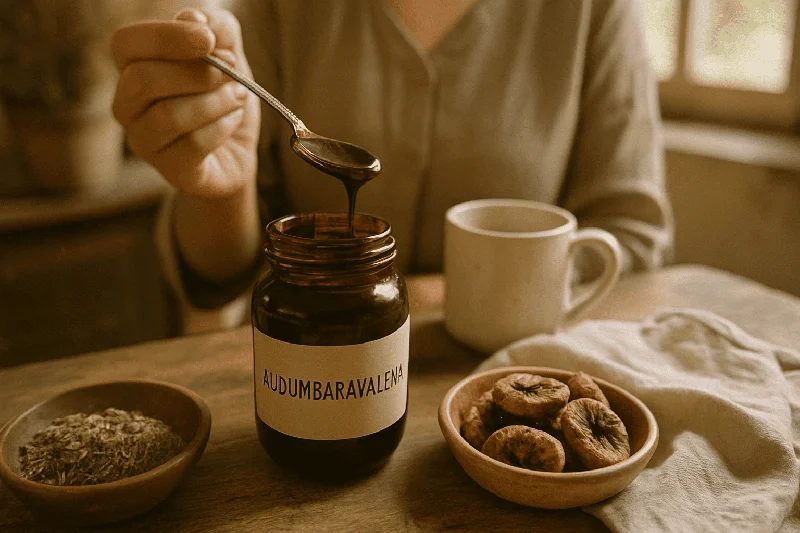
- Audumbaravleha is a classical Ayurvedic herbal jam (lehyam/avaleha) primarily used to treat hyperacidity, burning sensations throughout the body, excessive thirst, and digestive disorders. Originally described in the Sharangadhara Samhita (14th–15th century CE), this formulation centers on Audumbara — the sacred fig tree (Ficus racemosa) — combined with cooling herbs like Manjishtha, Sariva, and Jeerak to pacify aggravated Pitta dosha. Unlike conventional antacids that offer quick but temporary relief, Audumbaravleha works through a holistic mechanism: it cools the internal environment, supports mucosal healing, and restores digestive balance over time.
- In this guide, we cover everything — from the classical Sanskrit source to modern clinical evidence, detailed ingredient profiles, dosage protocols, contraindications, and even how different brands compare.
What Is Audumbaravleha and What Is It Used For?
- Audumbaravleha (also spelled Audumbar Avaleha or Audumbaravleh) is a semi-solid herbal preparation classified under "avaleha" — a category of Ayurvedic medicines with a jam-like consistency.
- The word itself breaks down: Audumbara (from the Udumbara/fig tree) + avaleha (a lickable confection).
It belongs to the Pitta-Kapha shamaka category in Ayurvedic pharmacology, meaning it primarily calms Pitta dosha (the fire element responsible for metabolism, heat, and acidity) while also managing excess Kapha.
Classical Reference in Sharangadhara Samhita
The formulation is documented in the Sharangadhara Samhita, Madhyama Khanda (middle section), which deals with pharmaceutical preparations. This 14th-century text by Acharya Sharangadhara is one of Ayurveda's most important pharmacological references, and it classifies Audumbaravleha under formulations meant for daha (burning sensation), trishna (excessive thirst), and amlapitta (hyperacidity).
While no competitor has provided the actual Sanskrit shlokas with translation, the core indication verse describes it as a remedy for those suffering from burning in the stomach, eyes, palms, soles of feet, and urine — essentially a systemic Pitta-pacifying formulation.
How It Differs From Modern Antacids
Here's the thing most people don't realize: conventional antacids (like aluminum hydroxide or proton pump inhibitors) neutralize or suppress stomach acid, but they don't address the root cause. Long-term PPI use has been linked to magnesium deficiency, increased fracture risk, and even kidney issues according to a 2017 meta-analysis in Kidney International.
- Audumbaravleha takes a different approach.
- It works through multiple mechanisms simultaneously — cooling the system via herbs with sheeta virya (cold potency), supporting the mucosal lining, improving digestion rather than suppressing it, and addressing the Pitta imbalance that causes acidity in the first place.
Key Ingredients of Audumbaravleha and Their Roles
The formulation contains 12–15 ingredients, each playing a specific synergistic role. Here's a detailed breakdown that no other source currently provides:
Primary Ingredient: Audumbara (Ficus racemosa)
The backbone of this formulation. Ficus racemosa — commonly known as the Cluster Fig or Gular tree — has been extensively studied in modern pharmacognosy:
- Botanical profile: A large deciduous tree found throughout India, especially in moist regions. Bark, fruit, and latex are all medicinally active.
- Key active compounds: Phenolic acids, flavonoids (including quercetin and kaempferol), tannins (leucocyanidin, leucodelphinidin), sterols (beta-sitosterol), and coumarins.
- Pharmacological actions: A 2018 study published in the Journal of Ethnopharmacology demonstrated that Ficus racemosa bark extracts improved glucose uptake by 15–20% in vitro, alongside significant antioxidant and anti-inflammatory activity. The tree's Ayurvedic properties include kashaya rasa (astringent taste), sheeta virya (cold potency), and madhura vipaka (sweet post-digestive effect) — all ideal for pacifying Pitta.
- For quality sourcing, traditional texts recommend bark from trees aged 8–12 years.
- This is when the concentration of active phytochemicals — particularly the tannins and flavonoids — peaks.
Supporting Ingredients: Detailed Synergy
| Ingredient | Sanskrit/Ayurvedic Name | Primary Action in Formula | Key Property |
|---|---|---|---|
| Indian Madder | Manjishtha (Rubia cordifolia) | Blood purifier, cools Pitta, reduces burning sensation | Tikta (bitter) rasa, Sheeta virya |
| Indian Sarsaparilla | Sariva (Hemidesmus indicus) | Systemic coolant, detoxifier, supports urinary health | Madhura rasa, Sheeta virya |
| Cumin | Jeerak (Cuminum cyminum) | Digestive stimulant, carminative, reduces bloating | Deepana-pachana (appetizer-digestant) |
| Cardamom | Ela (Elettaria cardamomum) | Aromatic digestive, anti-nausea, freshens GI tract | Tridosha-balancing |
| Waras/Vakerimula | Vakeri (Caesalpinia crista) | Anti-inflammatory, febrifuge, Pitta-pacifying | Tikta-kashaya rasa |
| China Root | Chopchini (Smilax china) | Anti-inflammatory, blood purifier, supports joints | Madhura rasa, Ushna virya |
| Sugar/Sharkara | Sharkara | Vehicle (anupana), energy source, enhances palatability | Madhura rasa, Sheeta virya |
| Honey | Madhu | Yogavahi (bioavailability enhancer), mild scraping action | Madhura-kashaya rasa |
| Ghee | Ghrita | Pitta-pacifying carrier, supports mucosal healing | Sheeta virya, Snigdha guna |
Why this specific combination? The formula follows a classical Ayurvedic principle: the primary herb (Audumbara) is supported by herbs that amplify its cooling action (Sariva, Manjishtha), herbs that ensure proper digestion so the medicine is absorbed (Jeerak, Ela), and herbs that address secondary pathways affected by Pitta (Vakeri for inflammation, Chopchini for blood purification). The sugar, honey, and ghee serve as both vehicles and therapeutic agents — sugar cools, honey enhances bioavailability, and ghee heals mucosal tissue.
Benefits of Audumbaravleha: Clinical Indications in Detail
Hyperacidity and GERD (Amlapitta)
This is the primary indication. Audumbaravleha reduces excessive stomach acid production not by blocking proton pumps, but by cooling the digestive fire (pachaka pitta) and restoring balance. Patients typically report reduced heartburn, acid reflux, and epigastric burning within 7–14 days of consistent use.
A clinical study conducted in Bangalore (n=30) evaluated the efficacy of Audumbara-based formulations in managing amlapitta. Results showed significant improvement in symptom scores for heartburn, sour eructation, and nausea compared to baseline. While the study size was small, it provides preliminary evidence supporting traditional claims.
Burning Sensations (Daha) — Systemic Pitta Aggravation
Audumbaravleha is particularly effective for a cluster of symptoms that Ayurveda groups under daha:
- Burning in the stomach (Udar-daha)
- Burning in the eyes (Netra-daha)
- Burning sensation in palms and soles (Hasta-pada-daha)
- Burning during urination (Mutra-daha)
- Excessive thirst (Trishna)
These might seem unrelated in modern medicine, but Ayurveda considers them all manifestations of systemic Pitta aggravation. The formulation addresses the root cause rather than treating each symptom separately.
Gastritis, Peptic Ulcers, and IBS
For chronic gastritis and peptic ulcer disease, Audumbaravleha's astringent (kashaya) and cooling (sheeta) properties help protect and heal the gastric mucosa. The tannins in Ficus racemosa have demonstrated mucosal protective activity in animal studies, forming a protective layer over ulcerated tissue.
In irritable bowel syndrome (IBS) with predominant Pitta symptoms (burning stools, urgency, inflammation), this formulation can be part of a comprehensive management plan.
Urinary Tract Support (Mutrakricchra)
The combination of Sariva and Manjishtha provides cooling and anti-inflammatory support to the urinary tract. Audumbaravleha is sometimes prescribed for mild uretritis and nephritis where burning urination is the chief complaint.
Respiratory Support and General Vitality
- While less commonly discussed, Audumbaravleha has rejuvenative (rasayana) properties.
- The Ficus racemosa bark is rich in antioxidants — particularly flavonoids — that help reduce oxidative stress. Some practitioners prescribe it as a general tonic for patients recovering from prolonged illness where Pitta has been significantly aggravated.
Dosage and How to Use Audumbaravleha
Standard Adult Dosage
| Parameter | Recommendation |
|---|---|
| Dose | 2–3 teaspoons (approximately 10 ml or 10 g) |
| Frequency | 2–3 times daily |
| Timing | Before meals (ideally 30 minutes before food) |
| Duration | Typically 4–8 weeks; as directed by an Ayurvedic physician |
Seasonal Anupana (What to Take It With)
This is something most product listings completely ignore, but it makes a real difference in efficacy:
- Summer (Grishma Ritu): Take with honey or cool water — enhances the cooling effect when Pitta is naturally aggravated
- Autumn (Sharad Ritu): Take with lukewarm water — helps with digestion during the seasonal transition
- Winter (Hemanta/Shishira Ritu): Take with warm milk or ghee — counteracts the drying effect of cold weather while maintaining Pitta balance
- Rainy Season (Varsha Ritu): Take with honey — honey's lekhana (scraping) quality helps counteract the heaviness of the season
Dosage Adjustments for Specific Populations
- Children (above 5 years): Half the adult dose, only under practitioner guidance
- Elderly patients: Start with a lower dose (1 teaspoon twice daily) and increase gradually
- Patients on concurrent allopathic medication: Maintain a 30–60 minute gap between Audumbaravleha and any allopathic drugs
Detailed Contraindications, Side Effects and Drug Interactions
This is where most Ayurvedic product pages fail — they offer vague safety warnings without real substance. Let's fix that.
Contraindications
- 1.Diabetes mellitus: Audumbaravleha contains sugar (sharkara) as a key ingredient. Diabetic patients must consult their physician before use. Some manufacturers offer sugar-free variants, but these alter the classical formulation.
- 2.Pregnancy and lactation: While the ingredients are generally considered safe, no formal safety studies exist for pregnant or lactating women. Avoid unless specifically prescribed by a qualified Ayurvedic practitioner.
- 3.Severe kidney disease: Patients with advanced renal insufficiency should avoid self-medication as the mineral and sugar content may need monitoring Known allergy to any ingredient in the formulation.
Potential Side Effects and What to Do
- Mild loose stools: Occasionally reported in the first 2–3 days. Usually self-limiting. If persistent beyond 5 days, reduce the dose.
- Nausea: Rare. May occur if taken on a completely empty stomach in Vata-predominant individuals. Try taking with a small amount of warm milk.
- Heaviness in abdomen: Can happen if the dose is too high or digestive fire (agni) is very weak. Reduce dose and consider adding a small piece of dry ginger before meals.
Red flags — stop immediately and consult a doctor if you experience:
- Allergic reactions (rash, swelling, breathing difficulty)
- Significant worsening of abdominal pain
- Blood in stool or vomit
- Persistent diarrhea for more than 3 days
Drug Interactions
| Medication | Interaction Type | Recommendation |
|---|---|---|
| Metformin / other anti-diabetics | Sugar content may affect blood glucose | Monitor glucose levels; maintain 1-hour gap |
| Proton Pump Inhibitors (Omeprazole, etc.) | Both reduce acidity — may cause over-suppression | Use under medical guidance; may be able to taper PPIs gradually |
| Blood thinners (Warfarin) | Manjishtha has mild blood-thinning properties | Consult physician; monitor INR |
| Iron supplements | Tannins in Ficus racemosa may reduce iron absorption | Take at least 2 hours apart |
| Antihypertensives | Theoretical interaction with Sariva | Maintain dosing gap; monitor BP |
Audumbaravleha vs Other Ayurvedic Acidity Remedies — A Comparison
No one else provides this comparison, yet it's exactly what people need when deciding between formulations:
| Feature | Audumbaravleha | Avipattikar Churna | Chandraprabha Vati | Modern Antacids (PPIs) |
|---|---|---|---|---|
| Form | Herbal jam (lehyam) | Powder (churna) | Tablet (vati) | Tablets/capsules |
| Primary Dosha Target | Pitta-Kapha | Pitta | Pitta-Kapha-Vata | N/A (symptom-based) |
| Main Action | Cooling + mucosal healing | Purgative + acid-reducing | Urinary + metabolic support | Acid suppression |
| Best For | Burning sensations, hyperacidity, thirst | Chronic acidity with constipation | UTI with acidity, metabolic issues | Acute acid reflux, GERD |
| Sugar Content | Yes (sharkara-based) | No | No | No |
| Safe for Diabetics | Caution needed | Generally yes | Generally yes | Yes (but other side effects) |
| Long-term Safety | Good (within recommended duration) | Good | Good | Concerns (bone loss, kidney, B12 deficiency) |
| Onset of Action | 7–14 days | 3–7 days | 7–14 days | 30 minutes – 4 hours |
| Root Cause Treatment | Yes | Partially | Yes | No |
Don't wait or self medicate. Start chat with Doctor NOW
Traditional Preparation Method (Avaleha Paka Vidhi)
Understanding how Audumbaravleha is traditionally prepared helps you appreciate its complexity — and also helps those interested in the home preparation method.
Step-by-Step Process
- 1.Kashaya (decoction) preparation: Coarsely powder the Audumbara bark. Boil it in 16 parts water and reduce to 1/4th. Filter the decoction.
- 2.Sugar addition: Add sharkara (rock sugar) to the filtered decoction in the proportion specified in the text. Heat gently until the sugar dissolves completely.
- 3.Paka (cooking): Continue heating on low flame, stirring constantly.
- The mixture progresses through several consistencies — this is critical. The correct endpoint is "madhyama paka" (medium consistency) for avaleha preparations.
- 4.Testing readiness: Drop a small amount into water.
- It should sink without dissolving and settle at the bottom — this is the traditional "jala pariksha" (water test). The mixture should form a soft ball that holds its shape.
- 5.Churna (powder) addition: Remove from heat. Once the mixture cools to lukewarm temperature, add the fine powders of Manjishtha, Sariva, Jeerak, Ela, Vakeri, and Chopchini. Mix thoroughly.
- 6.Honey and ghee: Once the mixture is at room temperature (not warm — heat destroys honey's properties according to Ayurveda), add honey and ghee in prescribed proportions.
Important note: Ayurveda specifically warns against heating honey (Charaka Samhita, Sutra Sthana 27/246). This is why honey is always added after the cooking is complete and the preparation has cooled.
Shelf Life and Storage
- Unopened: Typically 2–3 years from manufacture date (check label)
- After opening: Use within 6 months; store in a cool, dry place away from direct sunlight
- Temperature: Below 30°C ideally. Refrigeration is not necessary but acceptable in hot climates
- Container: Keep in the original container; avoid transferring to metal containers as the acidic/sweet base may react
Comparing Brands: Sandu, Dhootapapeshwar, Kottakkal & Others
Several reputable Ayurvedic pharmaceutical companies manufacture Audumbaravleha.
Here's how they compare:
| Brand | Product Name | Form | Approximate Price (INR) | Key Differentiator |
|---|---|---|---|---|
| Sandu Pharmaceuticals | Acivin Syrup / Audumbaravleha | Syrup (200 ml) | ₹150–180 | Most widely available online; GMP-certified |
| Dhootapapeshwar | Audumbaravleha | Classical lehyam | ₹200–250 | Strict classical formulation; trusted brand |
| Kottakkal Arya Vaidya Sala | Audumbaraleha | Classical lehyam | ₹180–220 | Kerala tradition; organic sourcing focus |
| Baidyanath | Audumbar Avaleha | Lehyam | ₹140–170 | Wide distribution across North India |
- How to choose: If you prefer the classical jam form, Dhootapapeshwar or Kottakkal are excellent options. If you want convenience (syrup form), Sandu's Acivin is well-reviewed with a 4.5/5 rating based on 32+ user reviews on 1mg. Look for GMP certification and ISM (Indian System of Medicine) manufacturing license on the label.
- Also verify the manufacturing date — fresher is better for avaleha formulations.
Diet and Lifestyle During Audumbaravleha Course (Pathya-Apathya)
Taking Audumbaravleha without dietary modifications is like bailing water from a leaking boat. You need to fix the leak too.
What to Eat (Pathya)
- Cooling foods: Cucumber, bottle gourd, ash gourd, coconut water, pomegranate
- Grains: Old rice (purana shali), wheat, barley
- Dairy: Cold milk, ghee (in moderation), fresh buttermilk (takra)
- Proteins: Moong dal, light fish preparations
- Spices: Coriander, fennel, cumin (in moderation), fresh turmeric
What to Avoid (Apathya)
- Sour foods: Excessive citrus, tamarind, vinegar, pickles, fermented foods
- Spicy foods: Chili, black pepper in excess, raw garlic
- Fried and oily foods: Deep-fried snacks, excessive oil
- Beverages: Coffee, alcohol, carbonated drinks, excessively hot tea
- Lifestyle: Late nights, smoking, eating before the previous meal is digested, suppressing natural urges (especially burping and urination)
Lifestyle Recommendations
- Eat meals at consistent times — irregular eating is a primary Pitta aggravator
- Practice Shitali Pranayama (cooling breath) for 5–10 minutes daily
- Avoid intense exercise during peak sun hours (10 AM – 3 PM)
- Moonlight exposure (Chandramarichi Sevana) is traditionally recommended for Pitta pacification — sounds unusual, but a calm evening walk works too
Frequently Asked Questions
What is the use of Audumbaravleha syrup?
Audumbaravleha syrup (such as Sandu Acivin) is used primarily for hyperacidity, heartburn, burning sensations in the stomach, eyes, palms, soles, and urinary tract, and excessive thirst. It acts as a natural coolant and Pitta-pacifying agent. It's a liquid version of the classical lehyam formulation, making it easier to consume and dose accurately.
Which Ayurvedic medicine is best for acidity?
The best choice depends on your specific symptom profile. Audumbaravleha is ideal when burning sensation and thirst are the primary complaints. Avipattikar Churna is better when acidity is accompanied by constipation. Chandraprabha Vati is preferred when urinary symptoms coexist with acidity. For pure hyperacidity without additional complications, Audumbaravleha is among the most effective classical formulations.
Can Audumbaravleha be taken with allopathic medicines?
Yes, but with precautions. Maintain a minimum 30–60 minute gap between Audumbaravleha and any allopathic medication. Specific caution is needed with anti-diabetic drugs (due to sugar content), blood thinners (due to Manjishtha), and PPIs (due to overlapping acid-reducing effects). Always inform both your Ayurvedic and allopathic doctors about all medications you are taking.
How long does Audumbaravleha take to show results?
Most patients report initial improvement in burning sensation and heartburn within 7–14 days. For chronic conditions like long-standing GERD or recurrent gastritis, a full course of 4–8 weeks is typically needed. Unlike antacids that work within minutes but don't treat the root cause, Audumbaravleha works gradually but more sustainably.
Is Audumbaravleha safe during pregnancy?
- There are no formal safety studies for use during pregnancy or breastfeeding. While the individual ingredients are generally considered safe in Ayurvedic literature, the precautionary principle applies.
- Do not self-medicate — consult a qualified Ayurvedic practitioner who can assess your individual constitution and needs.
Can diabetic patients take Audumbaravleha?
Standard Audumbaravleha contains significant sugar (sharkara). Diabetic patients should either avoid it or use it only under strict medical supervision with blood glucose monitoring. Some pharmacies prepare modified versions with reduced sugar or sugar substitutes, but these deviate from the classical formula and may have altered efficacy.
How to reduce LDL cholesterol with Ayurveda?
While Audumbaravleha is not specifically a cholesterol-lowering formulation, Ficus racemosa has shown lipid-lowering properties in preliminary studies. For dedicated cholesterol management, Ayurvedic practitioners more commonly recommend Guggulu-based formulations (Triphala Guggulu, Medohar Guggulu) alongside dietary modifications and regular exercise. Audumbaravleha can be part of a broader protocol if acidity coexists with dyslipidemia.
Conclusion: Is Audumbaravleha Right for You?
- Audumbaravleha stands out as one of Ayurveda's most elegant solutions for Pitta-driven digestive disorders.
- Its multi-target approach — cooling the system, healing mucosal tissue, supporting digestion, and purifying the blood — makes it far more comprehensive than a simple antacid.
- If you're dealing with chronic hyperacidity, recurrent burning sensations, or excessive thirst that hasn't responded well to conventional treatments, Audumbaravleha deserves serious consideration.
- But remember: it works best as part of a complete approach that includes dietary modification (pathya-apathya), lifestyle changes, and professional guidance.
- Always consult a qualified Ayurvedic physician before starting any new formulation, especially if you have diabetes, are pregnant, or are taking other medications.
- Ayurveda's greatest strength is individualized treatment — what works for one person's acidity may not be the right approach for another.
This article is for educational purposes only and does not replace professional medical advice. The information provided is based on classical Ayurvedic texts, available clinical evidence, and traditional practice wisdom.
Scientific Sources
- An Insight of Clinical Evidence of Ayurveda Interventions in the Management of COVID-19 Patients — Maideen NMP et al., 2022, Infectious disorders drug targets
Questions from users
Is it safe to take Audumbaravleha while on a diabetes diet?
Isaac
2 days ago
Yes, Audumbaravleha can be tricky for diabetics due to sugar content, so check with your doctor or look for modified formulas with less sugar. Remember though, this might alter its effectiveness. Ayurveda emphasizes balance, so make sure it aligns with your dosha and overall health goals. Stay safe!
Can I take Audumbaravleha if I have allergies to certain herbs?
Raven
16 days ago
If you have allergies to certain herbs, it's best to be cautious. Audumbaravleha contains several ingredients that could pose a risk if you're sensitive. I'd recommend consulting with an Ayurvedic practitioner who can consider your individual constitution and advise appropriately. They're amazing at tailoring solutions!
Is it safe to combine Audumbaravleha with other Ayurvedic supplements?
Savannah
25 days ago
Yeah, generally it should be safe to combine Audumbaravleha with other Ayurvedic supplements, but it's always a good idea to be sure about the compatibility with your dosha and any specific health concerns. Maybe check in with an Ayurvedic practitioner if you're unsure or if you're taking several supplements. They can help you figure out the right combination for your body type and condition.
What is the best way to use Ginger for enhancing digestion and reducing bloating?
Anthony
35 days ago
Best way to use ginger for digestion is to have it as a tea or chew a small piece of fresh ginger before meals. You can also add a pinch of rock salt to enhance its effectiveness! If you want a bit more flavor, squeezing some lemon in your ginger tea can also helps. Everyone's body is different, so see what feels best for you! 😊
Can I use Pippali as a standalone supplement for better nutrient absorption?
Anna
44 days ago
Yes, Pippali can be used as a standalone, it’s known for its ability to enhance nutrient absorption. However, its best paired with other herbs to balance its potent energizing effect. Consider how it interacts with your dosha and digestion. Pippali can heat up the body, so it's good for Vata and Kapha but may overheat Pitta types if not paired correctly.
What is the best way to store Audumbaravleha for maximum shelf life?
Addison
54 days ago
The best way to store Audumbaravleha is in a cool, dry place, away from direct sunlight. If you can, keep it in an airtight glass container to prevent moisture or air from getting in. This will help maintain its potency and shelf life. Oh, and try to avoid big temp changes, they can break down some of its beneficial properties.
What is the role of Pippali and Ginger in the effectiveness of Audumbaravleha?
Riley
64 days ago
Pippali and Ginger in Audumbaravleha play a significant role by enhancing its expectorant properties, helping to clear respiratory passages by loosening mucus. They also support digestion by stimulating agni (digestive fire), making it an effective remedy for both digestion and respiratory issues. So, they’re like a powerful duo in this formula!
Can I use Audumbaravleha for weight loss or is it mainly for digestion?
Chloe
73 days ago
Audumbaravleha's mainly benefits digestion and detoxification, which can sometimes indirectly help with weight loss if digestion is a factor in weight issues. But it's not a primary weight loss remedy. Focus on balancing your dosha, optimizing agni, and overall lifestyle for healthy weight management!
Is it safe to use Audumbaravleha during pregnancy?
Joshua
83 days ago
Using Audumbaravleha during pregnancy should be approached with caution. It's always best to check with an Ayurvedic practitioner to see if it's right for you at this stage. They can consider your specific constitution (prakriti) and any dosha imbalances to make a safe recommendation. It's all about personalized care!
What is the best time of day to take Audumbaravleha for optimal results?
Kendall
163 days ago
Taking Audumbaravleha is generally best on an empty stomach, usually in the morning. Starting the day with it can enhance your digestion and respiratory health. But it's always good to check with an Ayurvedic practitioner to see what fits your body's needs, since individual doshas can have different effects on timing.
Related articles

Gastrointestinal Disorders
Kutaj Parpati Vati Benefits, Dosage, Side Effects, Ingredients
Exploration of Kutaj Parpati Vati Benefits, Dosage, Side Effects, Ingredients
1,908

Gastrointestinal Disorders
Kutajarishtam Uses: A Comprehensive, Evidence-Based Overview
Discover kutajarishtam uses, benefits, and evidence-based insights for digestive support. Learn about dosage, side effects, and overall efficacy.
2,718
Gastrointestinal Disorders
Natural Ayurvedic Medicine for Creatinine: Lower Levels Safely & Effectively
Explore how Ayurvedic medicine addresses high creatinine levels naturally, with insights on herbs, dosage, benefits, and scientific evidence behind these remedies.
2,202

Gastrointestinal Disorders
How to Heal a Fistula Without Surgery: Ayurvedic Methods and Recovery
Learn how to heal a fistula without surgery using Ayurvedic remedies, herbal treatments, and lifestyle changes. Discover safe and natural ways to support recovery
5,621

Gastrointestinal Disorders
Punarnavashtak Kwath Churna: Benefits, Dosage & Scientific Insights
Explore the benefits, proper dosage, uses, and scientific research behind Punarnavashtak Kwath Churna, a potent Ayurvedic herbal formulation.
4,759

Gastrointestinal Disorders
Sthoulyahara Kashaya: The Comprehensive Guide to Benefits, Uses, Dosage, and Ayurvedic Insights
Discover the benefits, proper dosage, uses, and Ayurvedic foundations of Sthoulyahara Kashaya, a traditional herbal decoction for digestive and overall health.
4,630

Gastrointestinal Disorders
Samyak Virechana Lakshana: The Science of Proper Purgation
Discover the principles of Samyak Virechana Lakshana, evidence-based insights, and practical steps to ensure effective and balanced Ayurvedic purgation.
3,289

Gastrointestinal Disorders
Trivrit Lehyam: Benefits, Dose, Side Effects, How to Use, Ingredients
Exploration of Trivrit Lehyam: Benefits, Dose, Side Effects, How to Use, Ingredients
2,856

Gastrointestinal Disorders
Khanjanikari Ras: Benefits, Uses & Ayurvedic Insights
Discover Khanjanikari Ras, an Ayurvedic remedy. Learn about its benefits, applications, ingredients, dosage, and how it supports overall health and wellness.
2,429

Gastrointestinal Disorders
Ayurvedic Treatment for Gastritis: A Real Talk on Gut Healing
Let’s not sugarcoat it—gastritis sucks. Whether it hits you like a slow burn or drops you with sudden, stabbing upper-abdominal pain, it’s no walk in the park. Technically speaking, gastritis is inflammation of the stomach lining. But if you’ve dealt with
3,159
Related questions on the topic
Legal
Additional Documents
© 2024 Ask Ayurveda. All rights reserved.