
Ask Ayurvedic doctor a question and get a consultation online on the problem of your concern in a free or paid mode. More than 2,000 experienced doctors work and wait for your questions on our site and help users to solve their health problems every day.
FREE! Ask Ayurvedic Doctors 24/7

 Fast responses
 1000+ verified doctors
Body DetoxEar, Nose, and Throat DisordersGeriatrics & RejuvenationImmunodeficiencyInfertility TreatmentNutritionOrthopedic DisordersPediatricsRespiratory DisordersSexually Transmitted Diseases (STDs)Surgery RecoveryUrological DisordersVascular DisordersDental DisordersEndocrinological DisordersGastrointestinal DisordersYoga TherapyGeneral MedicineAllergic DisordersCardio DisordersGynecology and ObstetricsCosmetologySkin and Hair DisordersEye DisordersInfectious DiseasesMental DisordersNeurological DisordersOncologyPanchakarmaSexual Health & DisordersSports Medicine
Published on 02/05/25
(Updated on 07/10/26)
2,680
Madhumalini Vasant Uses – An Ayurvedic Remedy for Diabetes and Blood Sugar Control
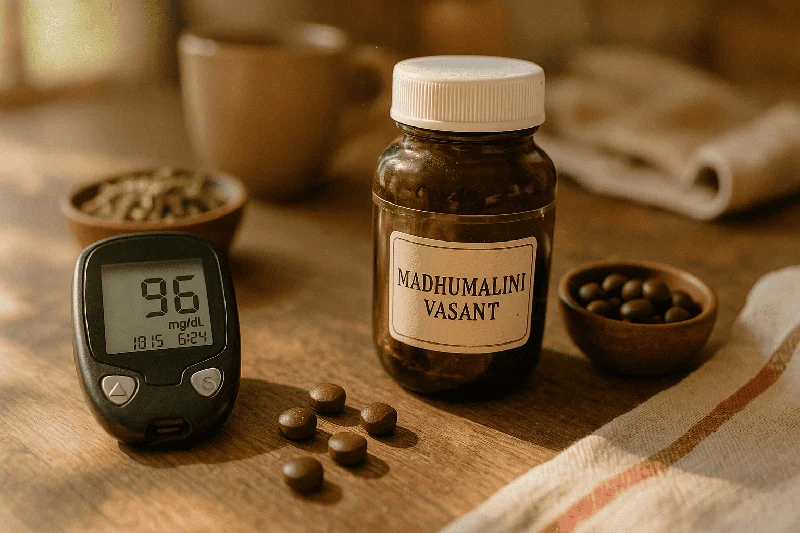
- Madhumalini Vasant is a classical Ayurvedic herbo-mineral formulation (Rasa Aushadhi) used primarily for managing diabetes, respiratory disorders, chronic fevers, anemia, and bleeding disorders. It combines purified mineral bhasmas with potent herbal ingredients to deliver broad-spectrum therapeutic benefits.
- This guide covers everything you need to know — from ingredients, pharmacology, and mechanism of action to dosage, safety concerns around mercury content, and how it compares to similar Vasant formulations like Vasant Kusumakar Ras and Suvarna Malini Vasant.
What Is Madhumalini Vasant?
Madhumalini Vasant — also written as Madhu Malini Vasant Ras — belongs to the Rasa Shastra branch of Ayurveda, which deals with metallic and mineral-based medicines. Unlike purely herbal formulations, Rasa Aushadhis like this one use processed minerals (bhasmas) that are believed to act faster and at smaller doses due to their nano-particulate nature after traditional calcination processes.
The formulation is referenced in the classical Ayurvedic compendium Ayurved Saar Sangrah, a well-known text that compiles time-tested rasayana and rasa yoga preparations. It has been in clinical use across India for generations, prescribed by Ayurvedic practitioners for conditions ranging from Prameha (diabetes) to Raktapitta (bleeding disorders).
Meaning of the Name (Sanskrit Etymology)
No competitor has actually broken down what the name means.
Here it is:
- Madhu (मधु) — honey; also symbolizes sweetness and nourishment
- Malini (मालिनी) — one who wears a garland; metaphorically, "one who carries or bears"
- Vasant (वसन्त) — spring season; in Ayurvedic pharmacology, "Vasant" preparations are traditionally associated with rejuvenation and renewal
So "Madhumalini Vasant" loosely translates to "the spring formulation that carries the essence of honey" — a poetic reference to its rejuvenating, nourishing qualities and the traditional anupana (vehicle) of honey used for administration.
Classical Reference: Ayurved Saar Sangrah
The primary textual source for Madhumalini Vasant is the Ayurved Saar Sangrah, a compilation of Ayurvedic formulations widely consulted across pharmacies and practitioners in India. This text details the exact proportions, method of preparation (including Shodhana procedures for minerals), and therapeutic indications. Some manufacturers also cross-reference Rasa Tantra Saar for validation of the formulation.
Category: Herbo-Mineral Formulation (Rasa Aushadhi)
This is not a simple herbal supplement. It falls under the Rasa Aushadhi category, meaning it contains processed minerals — specifically purified cinnabar (a mercury-sulfide compound) and zinc carbonate.
This classification is significant because:
- It requires proper Shodhana (purification) before use in formulation
- The dosage is typically small (125 mg tablets)
- It demands prescription-level oversight from a qualified Ayurvedic physician
- Storage and handling protocols are stricter than for herbal-only products
Ingredients of Madhumalini Vasant (Complete Breakdown)
Understanding each ingredient is essential for both practitioners and patients. Here's a detailed look at what's inside.
Purified Cinnabar (Shuddha Hingula)
- Hingula is naturally occurring mercuric sulfide (HgS).
- Before you raise an eyebrow — in Rasa Shastra, Hingula undergoes extensive Shodhana (purification) involving multiple rounds of trituration with herbal juices. The purified form is believed to possess Yogavahi properties, meaning it enhances the bioavailability of other ingredients.
Therapeutic role: Anti-microbial, anti-viral, and acts as a catalytic agent that potentiates the action of other components.
Zinc Carbonate (Kharpara Bhasma)
Kharpara Bhasma is prepared from zinc carbonate through repeated cycles of calcination. It is traditionally indicated for Prameha (urinary and metabolic disorders including diabetes), eye diseases, and anemia.
Therapeutic role: Hypoglycemic action, wound healing, immune modulation.
Lakucha Swarasa (Artocarpus lakoocha Juice)
The fresh juice of Artocarpus lakoocha (monkey jack fruit) is used as a Bhavana Dravya — a liquid medium for trituration. Lakucha is known for its anti-helminthic and skin-disease properties in Ayurveda.
Therapeutic role: Acts as a processing medium and contributes anti-inflammatory and anti-parasitic activity.
Hen Egg (Kukkutanda)
This is one of the more unusual ingredients in Ayurvedic pharmacy. The egg (specifically, the albumin portion in some traditional methods) is used during the processing stage to provide organic binding and to facilitate specific chemical transformations during bhasma preparation.
Therapeutic role: Nutritive medium for bhavana, source of protein-mineral complex formation.
Kachur Churna (Curcuma zedoaria)
Also known as white turmeric, Curcuma zedoaria has demonstrated anti-oxidant and anti-inflammatory properties in modern pharmacological studies. A 2016 study published in the Journal of Ethnopharmacology confirmed its hepato-protective activity in animal models.
Therapeutic role: Anti-inflammatory, hepato-protective, digestive stimulant.
Black Pepper Powder (Marich Churna)
Piper nigrum needs little introduction. Its active compound piperine is one of the most well-researched bioavailability enhancers in both Ayurvedic and modern pharmacology.
Therapeutic role: Bioavailability enhancer (Yogavahi), digestive fire (Agni) stimulant, anti-kapha action.
| Ingredient | Sanskrit Name | Latin/Scientific Name | Key Action |
|---|---|---|---|
| Purified Cinnabar | Shuddha Hingula | Mercuric Sulfide (HgS) | Anti-viral, catalytic potentiator |
| Zinc Carbonate | Kharpara Bhasma | ZnCO₃ (calcined) | Hypoglycemic, immune modulator |
| Monkey Jack Juice | Lakucha Swarasa | Artocarpus lakoocha | Anti-inflammatory, processing medium |
| Hen Egg | Kukkutanda | Gallus gallus domesticus | Nutritive binding, mineral processing |
| White Turmeric | Kachur Churna | Curcuma zedoaria | Hepato-protective, anti-oxidant |
| Black Pepper | Marich Churna | Piper nigrum | Bioavailability enhancer, Agni deepana |
Ayurvedic Pharmacology (Rasa Panchaka & Doshic Action)
This is a section you won't find on any competitor page, and it's arguably the most important for Ayurvedic practitioners making prescribing decisions.
Rasa Panchaka (Five Pharmacological Parameters)
Based on the individual ingredient profiles and classical descriptions:
- Rasa (Taste): Predominantly Katu (pungent) and Tikta (bitter) due to Marich and Kachur
- Guna (Quality): Laghu (light), Tikshna (penetrating)
- Virya (Potency): Ushna (hot)
- Vipaka (Post-digestive effect): Katu (pungent)
- Prabhava (Special action): Pramehaghna (anti-diabetic), Raktapittahara (stops bleeding disorders)
How It Works: Mechanism of Action (Pharmacodynamics)
No competitor has explained the actual mechanism.
Here's how the formulation works at multiple levels:
- 1.Agni Deepana & Ama Pachana: The Ushna Virya of Marich and Hingula kindles the digestive fire and metabolizes accumulated toxins (Ama), which Ayurveda considers the root cause of Prameha.
- 2.Medodhatu Regulation: Kharpara Bhasma, through its action on Medodhatu (fat tissue) and Kleda (excessive moisture), helps regulate glucose metabolism. The zinc content also has documented insulin-sensitizing properties in modern research.
- 3.Srotoshodhana: The Tikshna Guna clears blocked micro-channels (Srotas), particularly Mutravaha Srotas (urinary channels) and Rasavaha Srotas (plasma channels), restoring proper nutrient transport.
- 4.Rasayana Effect: The synergistic combination creates a rejuvenative action on Rasa and Rakta Dhatu (plasma and blood tissue), which explains its efficacy in anemia and bleeding disorders.
- 5.Ojas Enhancement: Through balanced Dhatu nourishment, the formulation ultimately supports Ojas — the subtle essence of immunity — explaining its use in immunodeficiency and chronic debility.
Doshic Action
Madhumalini Vasant primarily balances Kapha and Pitta doshas. The Ushna Virya addresses Kapha-related conditions (diabetes, respiratory congestion), while the Tikta Rasa and specific Prabhava control Pitta-related manifestations (bleeding, inflammation). It should be used cautiously in purely Vata-predominant conditions or in individuals with high Pitta prakruti.
Uses and Indications: What Is Madhumalini Vasant Used For?
The clinical applications of Madhumalini Vasant are remarkably broad, spanning multiple organ systems. This is partly because of its action at the fundamental Dhatu level rather than targeting a single symptom.
Diabetes and Blood Sugar Regulation (Prameha)
- This is the most well-known indication.
- The formulation addresses diabetes through:
- Regulation of Medodhatu metabolism
- Enhancement of Agni (digestive and tissue-level metabolic fire)
- Reduction of Kleda (pathological moisture associated with glycosuria)
Practitioners typically prescribe it alongside dietary modifications (Pathya-Apathya) and other anti-diabetic formulations for comprehensive management. It is not a replacement for insulin in Type 1 diabetes but may serve as an adjuvant in Type 2 diabetes management under medical supervision.
Respiratory Disorders (Shwasa & Kasa)
The formulation's Kapha-reducing and Srotoshodhana properties make it effective for:
- Chronic cough (Kasa)
- Bronchial asthma (Tamaka Shwasa)
- Recurrent upper respiratory infections
- Post-COVID respiratory debility
Chronic Fevers and Infections (Jwara)
The anti-viral and anti-microbial properties attributed to Shuddha Hingula, combined with the immune-modulating action of Kharpara Bhasma, make this formulation relevant in:
- Chronic and recurrent fevers
- Viral infections with prolonged recovery
- Post-febrile debility
Bleeding Disorders and Anemia (Raktapitta & Pandu)
Madhumalini Vasant has a specific Prabhava (special pharmacological action) on Rakta Dhatu:
- Raktapitta (bleeding from various sites)
- Pandu Roga (anemia — particularly iron-deficiency types)
- Menorrhagia (excessive menstrual bleeding)
Jaundice and Liver Disorders (Kamala)
The hepato-protective activity of Curcuma zedoaria, combined with the Pitta-regulating action of the overall formulation, supports its use in hepatic conditions including jaundice.
Madhumalini Vasant in Pregnancy: IUGR Management
One of the lesser-known but clinically significant applications is in Intrauterine Growth Retardation (IUGR). A critical clinical review published in JETIR (Journal of Emerging Technologies and Innovative Research, 2025) examined its role in promoting fetal nourishment. The formulation's Rasayana properties and Dhatu-nourishing action are believed to support fetal growth when the mother has nutritional deficiencies or compromised placental function.
Important caveat: This application must ONLY be undertaken under direct supervision of a qualified Ayurvedic obstetrician. Self-medication during pregnancy with any Rasa Aushadhi is strongly discouraged.
Rickets and Pediatric Nourishment
Some classical practitioners also recommend Madhumalini Vasant for children suffering from rickets or general failure to thrive. However, pediatric dosing requires extreme caution given the mineral content (see Safety section below).
Dosage and Administration
Standard Adult Dosage
| Parameter | Recommendation |
|---|---|
| Dose | 1 tablet (125 mg) |
| Frequency | 1–2 times daily |
| Anupana (Vehicle) | Honey and/or milk |
| Timing | Before or after meals as directed |
| Course Duration | Typically 2–3 months; varies by condition |
The choice of Anupana matters. Honey is preferred for Kapha-predominant conditions (diabetes, respiratory), while milk is preferred for Pitta-predominant conditions (bleeding, fevers) and for Rasayana purposes.
Duration by Condition
- Diabetes management: 2–3 months minimum, with periodic assessment
- Respiratory disorders: 1–2 months, often with seasonal repetition
- Anemia / Bleeding disorders: 1–3 months depending on severity
- IUGR (under supervision): As directed by the treating physician, typically during the 2nd and 3rd trimesters
- General Rasayana: 1–2 months annually, typically during Vasant Ritu (spring)
Compatibility with Other Systems of Medicine
A practical question many patients have: Can I take this alongside allopathic medicines?
Ayurvedic sources suggest maintaining a gap of at least 30 minutes between Madhumalini Vasant and any Western pharmaceutical medication. This minimizes potential interactions while allowing the Ayurvedic formulation to work independently. However, always inform both your Ayurvedic and allopathic physicians about all medications you're taking.
Regarding homeopathy — there are no known contra-indications, though the strong mineral nature of this preparation may theoretically antidote certain highly dilute homeopathic remedies.
Don't wait or self medicate. Start chat with Doctor NOW
Safety, Side Effects & Contraindications
This is perhaps the most critical section of this article, and one that competitors have largely glossed over. Madhumalini Vasant contains purified cinnabar (mercuric sulfide), which demands transparent discussion.
The Mercury Question: Is Madhumalini Vasant Safe?
Shuddha Hingula (purified cinnabar) is a mercury-containing compound. In its raw form, cinnabar is toxic. However, Rasa Shastra employs extensive Shodhana (purification) processes — typically involving multiple rounds of trituration with herbal juices, grinding, and calcination — that are traditionally believed to render the mercury biologically inert while retaining therapeutic properties.
Modern analytical studies provide some reassurance. Physico-chemical standardization of Madhumalini Vasant has shown:
| Parameter | Value |
|---|---|
| pH | 4.19 |
| Loss on Drying (LOD) | 6.01% |
| Total Ash | 11.54% |
| Acid Insoluble Ash | 8.70% |
| Microbial Load | Within permissible limits |
HPTLC (High-Performance Thin Layer Chromatography) fingerprinting has been used to standardize batches and confirm consistency of the active components. These quality control measures, when followed by reputable manufacturers, provide a level of safety assurance.
Known Side Effects
When taken in prescribed doses under medical supervision, no significant side effects have been reported in classical literature or modern clinical experience.
However, this doesn't mean the formulation is risk-free:
- Gastrointestinal discomfort may occur in sensitive individuals
- Metallic taste in rare cases
- Mild heating sensation due to Ushna Virya
Contraindications (Often Overlooked)
This is information competitors have completely missed:
- 1.Renal insufficiency — Impaired kidney function may compromise excretion of mineral residues. Avoid in patients with GFR < 60 mL/min
- 2.Severe hepatic disease — Although the formulation has hepato-protective ingredients, a severely compromised liver may not process mineral bhasmas safely
- 3.Known hypersensitivity to any ingredient, including eggs (Kukkutanda)
- 4.Children under 5 years — without explicit pediatric dosing guidance from a Rasa Shastra specialist
- 5.Self-medication — This is categorically not an OTC supplement for unsupervised use
- 6.Concurrent heavy metal exposure — Patients with occupational or environmental mercury/zinc exposure should avoid this formulation
Storage Precautions
- Store in a cool, dry place away from direct sunlight
- Keep out of reach of children
- Use within the expiry date mentioned on the packaging
- Do not transfer to non-original containers
Madhumalini Vasant vs. Similar Vasant Formulations
One of the most confusing aspects for patients is distinguishing between the various "Vasant" preparations in Ayurveda.
Here is a comparative overview:
| Feature | Madhumalini Vasant | Vasant Kusumakar Ras | Suvarna Malini Vasant |
|---|---|---|---|
| Key Minerals | Hingula, Kharpara Bhasma | Swarna Bhasma, Roupya Bhasma, Vanga, Naga, Abhrak | Swarna Bhasma, Mukta, Abhrak |
| Contains Gold (Swarna) | No | Yes | Yes |
| Primary Indication | Diabetes, respiratory, fevers | Diabetes, urinary disorders, nervous system | Chronic fever, debility, TB |
| Approximate Price (60 tabs) | ₹300–400 | ₹1,500–5,000+ | ₹1,200–3,000+ |
| Cost Factor | Most affordable | Expensive (gold content) | Moderately expensive |
| Classical Text | Ayurved Saar Sangrah | Rasa Tantra Saar | Siddha Yoga Sangraha |
| Complexity of Preparation | Moderate | High | High |
| Suitable for Long-term Use | Yes (under supervision) | With caution | With caution |
Key takeaway: Madhumalini Vasant offers a cost-effective alternative for diabetes management when gold-containing formulations are either unaffordable or unnecessary. For purely diabetic indications without nervous system involvement, it may be equally appropriate.
Pharmacological Properties (Modern Research Perspective)
The pharmacological profile of Madhumalini Vasant, based on both traditional understanding and available modern data, includes:
- Anti-viral activity — attributed primarily to Shuddha Hingula
- Anti-oxidant activity — contributed by Curcuma zedoaria and Piper nigrum
- Anti-inflammatory action — multi-ingredient synergy
- Hepato-protective effect — primarily from Kachur (Curcuma zedoaria)
- Hypoglycemic action — Kharpara Bhasma's zinc-mediated insulin sensitization
- Immunomodulatory effect — overall Rasayana action
Current State of Clinical Evidence
Honestly, robust clinical evidence remains limited. There are no published randomized controlled trials (RCTs) specifically on Madhumalini Vasant as of early 2025.
The available evidence includes:
- Case studies and clinical observations reported in Ayurvedic journals
- A critical clinical review published in JETIR (2025) examining its role in IUGR
- Physico-chemical standardization studies confirming batch consistency and safety parameters
- Pharmacological studies on individual ingredients (particularly Curcuma zedoaria and Piper nigrum)
This is a gap that the Ayurvedic research community needs to address. Until large-scale clinical trials are conducted, the formulation's efficacy rests primarily on centuries of documented clinical experience and the pharmacological plausibility of its ingredients.
Manufacturers and Price Comparison
Several reputable Ayurvedic pharmacies manufacture Madhumalini Vasant.
Here's a quick comparison:
| Manufacturer | Pack Size | Approximate Price (₹) | Availability |
|---|---|---|---|
| Dhootapapeshwar | 60 tablets | ₹335–380 | Widely available online and offline |
| Ayurveda Rasashala | 60 tablets | ₹280–340 | Available through select pharmacies |
| Krishna Gopal Ayurved Bhawan | 30–60 tablets | ₹200–300 | Regional availability |
| Vyas Pharma | 40 tablets | ₹180–250 | Available on AyurCentral and similar |
| Arya Vaidya Kalpashala | Variable | ₹300–360 | South Indian market |
Dhootapapeshwar is probably the most widely recognized manufacturer, with a customer rating of approximately 4.7 out of 5 based on online reviews (13+ ratings on 1mg.com). Their product undergoes documented quality control including HPTLC standardization.
Frequently Asked Questions (FAQ)
What is the use of Madhumalini Vasant?
Madhumalini Vasant is used primarily for diabetes (Prameha), respiratory disorders, chronic fevers, bleeding disorders, anemia, and jaundice. It is also used in pregnancy under medical supervision for managing intrauterine growth retardation (IUGR) and as a general rejuvenative tonic.
What is the price of Madhumalini Vasant Ras?
The price ranges from approximately ₹180 to ₹380 depending on the manufacturer and pack size. Dhootapapeshwar's 60-tablet pack typically costs around ₹335–380, while budget options from Krishna Gopal or Vyas Pharma may be available for ₹180–300.
Can Madhumalini Vasant be used during pregnancy?
Yes, but ONLY under the direct supervision of a qualified Ayurvedic practitioner experienced in Prasuti Tantra (Ayurvedic obstetrics). It has been used clinically for IUGR management, but the mineral content makes unsupervised use during pregnancy risky.
What is the difference between Madhumalini Vasant and Laghumalini Vasant?
Laghumalini Vasant is a closely related but distinct formulation. While both belong to the Rasa Aushadhi category, Laghumalini Vasant typically has a simpler composition and is considered "lighter" (Laghu) in its action. Madhumalini Vasant has a broader ingredient profile and wider clinical applications. The choice between them depends on the specific condition and the patient's constitution (Prakruti).
What is the classical reference for Madhumalini Vasant?
The primary classical reference is Ayurved Saar Sangrah. Some manufacturers also cite Rasa Tantra Saar as a supporting reference.
Is Madhumalini Vasant safe for children?
It may be prescribed for children suffering from rickets or nutritional deficiency, but only by an experienced Ayurvedic pediatrician (Kaumarabhritya specialist). There are no standardized pediatric dosing guidelines widely published, so the dose is typically individualized based on age, weight, and condition.
Can I take Madhumalini Vasant with allopathic diabetes medication?
Many practitioners allow concurrent use with a gap of at least 30 minutes between the two. However, you must inform both your Ayurvedic and allopathic doctors about all medications to avoid potential interactions — especially if you are on metformin or sulfonylureas.
How long does Madhumalini Vasant take to show results?
- Most practitioners report noticeable improvement within 4–6 weeks for diabetes management, though the full course is typically 2–3 months.
- For respiratory conditions, relief may begin sooner — within 2–3 weeks. Individual results vary based on disease severity, dietary compliance, and overall treatment protocol.
Conclusion
Madhumalini Vasant stands as a time-tested Ayurvedic herbo-mineral formulation with remarkably diverse clinical applications. From diabetes and respiratory disorders to anemia, jaundice, and even IUGR management in pregnancy — its pharmacological breadth reflects the sophisticated understanding of mineral-herbal synergy that Rasa Shastra represents.
However, it is not a casual supplement. The presence of purified cinnabar means this formulation demands respect — proper medical supervision, correct dosage, and awareness of contraindications are non-negotiable. When these conditions are met, Madhumalini Vasant offers a cost-effective, clinically validated option that has served patients for generations.
Always consult a qualified Ayurvedic physician (BAMS or MD Ayurveda) before starting Madhumalini Vasant. If you're managing diabetes or any chronic condition, integrative care — combining the best of Ayurveda and modern medicine — typically yields the best outcomes.
Scientific Sources
- Was Hawan Designed to Fight Anxiety-Scientific Evidences? — Romana RK et al., 2020, Journal of religion and health
- Ayurveda research: Emerging trends and mapping to sustainable development goals — Nedungadi P et al., 2023, Journal of Ayurveda and integrative medicine
- Herbal treatments of asthma: a systematic review — Singh BB et al., 2007, The Journal of asthma : official journal of the Association for the Care of Asthma
- BAD SCIENCE: Oil pulling — King A, 2018, British dental journal
- Clinical studies in Ayurveda: A bibliometric analysis of articles indexed in AYUSH research portal — Thrigulla SR et al., 2022, Ayu
- Whole Medical Systems the Rehabilitation Setting (Traditional Chinese Medicine, Ayurvedic Medicine, Homeopathy, Naturopathy) — Drake DF et al., 2020, Physical medicine and rehabilitation clinics of North America
- Interlinking diabetes and Alzheimer's disease: A pathway through medicinal plant-based treatments — Pattanaik SK et al., 2025, Journal of ethnopharmacology
- The use of curcumin as an effective adjuvant to cancer therapy: A short review — Bashang H et al., 2020, Biotechnology and applied biochemistry
- Curcumin in inflammatory diseases — Shehzad A et al., 2013, BioFactors (Oxford, England)
- Enhancing healthspan with Ashwagandha (Withania somnifera): a comprehensive review of its multifaceted geroprotective benefits — Vittal M et al., 2025, Biogerontology
- Confused mystification of Ayurvedic concepts — Krishna GL, 2025, Indian journal of medical ethics
- Ancient Thali Diet: Gut Microbiota, Immunity, and Health — Shondelmyer K et al., 2018, The Yale journal of biology and medicine
- An exploration of possible future non-pharmacological multidisciplinary treatments to potentiate withdrawal strategy and recovery from medication overuse headache (MOH): a narrative review — Balordi M et al., 2026, Journal of oral & facial pain and headache
- Wellness or medicine?Use and perception of Ayurveda in Germany: data from an online-representative cross-sectional study — Schiele JK et al., 2024, Frontiers in medicine
- Ayurveda in changing scenario of diabetes management for developing safe and effective treatment choices for the future — Banerjee S et al., 2015, Journal of complementary & integrative medicine
- Do Ayurveda drugs induce liver injury? — Ruknuddin G, 2018, World journal of hepatology
- Dual impact of Ashwagandha: Significant cortisol reduction but no effects on perceived stress - A systematic review and meta-analysis — Albalawi AA, 2025, Nutrition and health
- A Systematic and Ethnobotanical Review of Ashwagandha's (Withania Somnifera) Teratogenic and Abortifacient Potentials — Tallon MJ et al., 2025, Phytotherapy research : PTR
- Pharmacological Insights Into Ashwagandha (Withania somnifera): A Review of Its Immunomodulatory and Neuroprotective Properties — Dipankar SP et al., 2025, Cureus
- Mesenchymal stem cells as a platform for research on traditional medicine — Bhonde R et al., 2021, Journal of Ayurveda and integrative medicine
Questions from users
What are the detoxification benefits of using Madhumalini Vasant?
Zachary
2 days ago
Madhumalini Vasant is an Ayurvedic formulation that is often used for its detoxification benefits, particularly due to its extensive Shodhana processes that purport to purify ingredients like mercury, rendering them safe and effective. It is traditionally used to manage Kapha-related conditions like respiratory congestion and Pitta-related issues such as inflammation. The detoxification effects may vary per individual and should be discussed with a healthcare provider, especially considering the risks associated with mercury. Always consult a doctor before taking it, particularly if pregnant or managing serious health conditions.
What is Lakucha and how does it help with skin diseases in Ayurveda?
Leslie
12 days ago
Lakucha, also called Artocarpus lacucha, is a fruit known in Ayurveda for its benefits to skin health. It's often used for its anti-inflammatory and anti-parasitic properties, helping with skin diseases by balancing pitta dosha and soothing inflammation. It's also thought to help clear any skin toxins.
What is the role of Curcuma zedoaria in Madhumalini Vasant and its health benefits?
Chloe
21 days ago
Curcuma zedoaria in Madhumalini Vasant is believed to enhance digestion and detoxification, benefiting your agni (digestive fire) and balancing doshas by supporting the immune system and providing anti-inflammatory benefits. It's great for overall health but keep in mind that individual results depend on personal constitution (prakriti).
Is it safe to take Madhumalini Vasant for long-term use?
Oakley
36 days ago
It's generally safe, but the long-term use of Madhumalini Vasant should be done under the guidance of an experienced Ayurvedic practitioner. Since it's intended to balance Kapha, enhance Agni, and detoxify, it might affect your unique constitution differently over time. Better to have a doc check your dosha balance and overall health before goin' long-term!
Can Madhumalini Vasant improve overall immune health beyond diabetes management?
Shayla
45 days ago
Yes, Madhumalini Vasant can support overall immune health too! It contains ingredients like Neem and Amla which help in detoxifying and purifying the blood, and that can strengthen the immune system. Just remember, its effects might differ per person! Always good to chat with an Ayurvedic practitioner before trying something new, just to make sure it's right for you.
What is the main purpose of using Madhumalini Vasant in Ayurvedic medicine?
Sofia
55 days ago
The main purpose of using Madhumalini Vasant in Ayurveda is to reduce Kapha dosha, improve your Agni (digestive fire), and detoxify the body. It's great for balancing digestion and cleansing the system. Always chat with an Ayurvedic practitioner to get advice tailored to your needs.
Can Madhumalini Vasant help with blood sugar spikes after meals?
Daniel
64 days ago
Yes, Madhumalini Vasant can help with blood sugar spikes after meals! It contains herbs like Gurmar and Karela that are known for balancing blood sugar levels. However, it's always a good idea to check with an Ayurvedic practitioner to make sure it suits your unique dosha and condition. Stay healthy!
What is the role of Gurmar in managing sugar cravings and supporting diabetes?
Madison
74 days ago
Gurmar is pretty amazing when it comes to managing sugar cravings. It literally means "sugar destroyer" in Sanskrit, and this herb can temporarily block the sweetness receptors on your tongue, which helps curb those pesky cravings. For diabetes, it can support insulin function, making it a great tool for regulating blood sugar. Always good to chat with a practitioner though, to get the exact fit for your needs!
Can I use Madhumalini Vasant to support weight management in diabetics?
Isabella
83 days ago
Yes, you can use Madhumalini Vasant to support weight management in diabetics. It helps in stabilizing blood sugar levels and boosting metabolism, which is great for managing weight. Just be cautious if you have digestive sensitivities, as it might cause nausea or bloating. Always a good idea to consult your doc too!
Can I use Madhumalini Vasant while pregnant or breastfeeding?
Anthony
93 days ago
I wouldn't recommend using Madhumalini Vasant while pregnant or breastfeeding without consulting a healthcare provider first! Its effects on pregnancy and lactation are not fully studied, and it's always safest to be cautious. You could try discussing with an Ayurvedic doctor for specific advice tailored to your needs.
Related articles

Gynecology and Obstetrics
Kamini Vidrawan Ras Benefits, Dosage, Side Effects, Ingredients, Reference
Exploration of Kamini Vidrawan Ras Benefits, Dosage, Side Effects, Ingredients, Reference
5,746

Gynecology and Obstetrics
Indukantham Kashayam Side Effects – Understanding Risks & Precautions
Explore the potential side effects and precautions associated with Indukantham Kashayam, a traditional Ayurvedic decoction. Learn how to use this remedy safely for optimal wellness.
4,229

Gynecology and Obstetrics
Femiplex Tablet
Exploration of Femiplex Tablet
2,337

Gynecology and Obstetrics
Ayurvedic Contraceptive Pills: Natural Family Planning for a Holistic Lifestyle!
Explore natural family planning with Ayurvedic contraceptive pills. Learn how these herbal formulations balance hormones and support reproductive health.
5,089

Gynecology and Obstetrics
Ayurvedic Medicine for Amenorrhea: A Natural Approach to Restoring Menstrual Health
Amenorrhea, the absence of menstrual periods, can be a distressing condition for many women. It can stem from various causes such as hormonal imbalances, stress, excessive exercise, or underlying health issues.
3,389

Gynecology and Obstetrics
How to Stop Heavy Bleeding During Menopause Naturally
Discover natural ways to stop heavy bleeding during menopause with Ayurvedic herbs and home remedies. Learn how to manage clots and perimenopausal symptoms
4,514

Gynecology and Obstetrics
Ayurvedic Self-Care During Pregnancy
Pregnancy is a miraculous journey marked by profound changes in a woman’s body and mind.
3,178

Gynecology and Obstetrics
Tips for Regular Periods: Real Talk with an Ayurvedic Twist
That’s where Ayurveda comes in. Not as a quick fix, but as this quietly powerful system that’s been around for, oh, a few thousand years? I used to think it was all turmeric and oil massages, but wow, I was wrong. The Ayurvedic approach to regular periods
2,154

Gynecology and Obstetrics
Ayurveda for a Healthy Pregnancy
Ayurveda offers a holistic approach to pregnancy, aligning well with natural pregnancy management for a healthy baby.
3,085

Gynecology and Obstetrics
Natural Adenomyosis Treatment in Ayurveda for Relief & Wellness
Discover Ayurvedic approaches for adenomyosis, including herbal remedies, treatment protocols, dosage guidelines, and evidence-based insights to support women's health.
4,112
Related consultations on the topic
Legal
Additional Documents
© 2024 Ask Ayurveda. All rights reserved.