Ask Ayurvedic doctor a question and get a consultation online on the problem of your concern in a free or paid mode. More than 2,000 experienced doctors work and wait for your questions on our site and help users to solve their health problems every day.
FREE! Ask Ayurvedic Doctors 24/7

 Fast responses
 1000+ verified doctors
Body DetoxEar, Nose, and Throat DisordersGeriatrics & RejuvenationImmunodeficiencyInfertility TreatmentNutritionOrthopedic DisordersPediatricsRespiratory DisordersSexually Transmitted Diseases (STDs)Surgery RecoveryUrological DisordersVascular DisordersDental DisordersEndocrinological DisordersGastrointestinal DisordersYoga TherapyGeneral MedicineAllergic DisordersCardio DisordersGynecology and ObstetricsCosmetologySkin and Hair DisordersEye DisordersInfectious DiseasesMental DisordersNeurological DisordersOncologyPanchakarmaSexual Health & DisordersSports Medicine
Published on 02/14/25
(Updated on 07/05/26)
3,099
Vasarishtam Benefits – Ayurvedic Tonic for Respiratory Health and Digestion
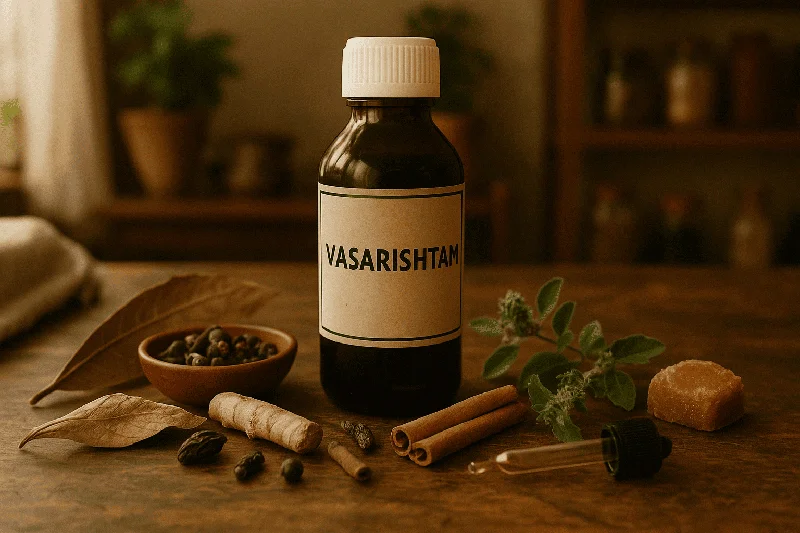
Vasarishtam is a classical Ayurvedic fermented tonic (Arishta) primarily used to treat respiratory conditions such as cough, bronchial asthma, bronchitis, and bleeding disorders — especially epistaxis (nosebleeds). It is prepared through the traditional Sandhana Kalpana (fermentation) process with Vasa (Adhatoda vasica) as the principal herb. This time-tested formulation balances Kapha and Pitta doshas, supports lung function, loosens stubborn mucus, and promotes overall respiratory wellness. It does not require a prescription in India, but consulting an Ayurvedic physician before starting is always recommended.
In this comprehensive guide, we'll cover everything you need to know about Vasarishtam — from its ancient origins and full ingredient breakdown to dosage for adults and children, side effects, how it compares to similar formulations, and practical tips that no other guide covers.
What Is Vasarishtam?
Definition & Classification as an Arishta
Vasarishtam belongs to the Arishta category of Ayurvedic medicines — liquid formulations prepared by fermenting herbal decoctions with jaggery or sugar. During fermentation, a self-generated alcohol content of approximately 4–8% is produced. This naturally occurring alcohol acts as both a preservative and a bioavailability enhancer, helping the body absorb the active herbal compounds more efficiently.
Unlike modern syrups that may contain artificial preservatives, Arishta formulations rely entirely on this traditional fermentation to remain shelf-stable — sometimes for years.
Historical Origins & Classical References
Vasarishtam is not a modern invention. Its formulation is documented in authoritative classical Ayurvedic texts including:
- Bhaishajya Ratnavali — one of the most comprehensive Ayurvedic pharmacopeias, compiled in the 18th century
- Ayurveda Saar Sangreh — another respected compendium of Ayurvedic formulations
These texts prescribe Vasarishtam specifically for Kasa (cough), Shwasa (breathlessness/asthma), Raktapitta (bleeding disorders), and Kshaya (wasting conditions). The fact that this formulation has survived centuries of clinical use across generations of Ayurvedic practitioners speaks to its enduring efficacy.
Ayurvedic Significance: Dosha Balancing (Kapha & Pitta)
From the Ayurvedic perspective, most respiratory disorders arise from an aggravation of Kapha dosha (causing excess mucus, congestion, and heaviness in the chest) and Pitta dosha (causing inflammation, burning sensation, and bleeding tendencies).
Vasarishtam works by:
- Pacifying Kapha — dissolving accumulated mucus and clearing the respiratory passages
- Balancing Pitta — reducing inflammation in the airways and controlling bleeding tendencies (Raktapitta)
- Strengthening Agni (digestive fire) — improving nutrient assimilation and preventing the formation of Ama (metabolic toxins)
This dual-dosha action is what makes Vasarishtam remarkably versatile — it addresses both the productive, phlegmy cough and the dry, inflamed, irritated kind.
Key Ingredients of Vasarishtam
Vasa (Adhatoda vasica) — The Primary Herb
The entire formulation is built around Vasa (Malabar Nut), which is arguably the most important respiratory herb in the entire Ayurvedic pharmacopoeia. Modern pharmacological studies have confirmed several of its properties:
- Vasicine and vasicinone — two alkaloids in Adhatoda vasica that exhibit significant bronchodilatory and mucolytic activity (Claeson et al., 2000, Journal of Ethnopharmacology)
- Anti-inflammatory action — reduces airway inflammation
- Hemostatic (styptic) properties — helps control bleeding, which is why Vasarishtam is indicated for Raktapitta
- Antibacterial activity — a 2015 study published in the Asian Pacific Journal of Tropical Biomedicine demonstrated that Adhatoda vasica leaf extracts showed significant activity against common respiratory pathogens
Vasa is used in the form of a fresh juice or decoction (Kashaya) that forms the base liquid for the fermentation process.
Supporting Herbs: Pippali, Maricha, Ginger, Ela, Twak & Others
While Vasa is the star ingredient, the supporting herbs play critical synergistic roles:
| Ingredient | Latin/Botanical Name | Part Used | Key Role in Formulation |
|---|---|---|---|
| Vasa | Adhatoda vasica | Leaves | Primary bronchodilator, mucolytic, hemostatic |
| Pippali (Long Pepper) | Piper longum | Fruit | Bioavailability enhancer (Yogavahi), expectorant |
| Maricha (Black Pepper) | Piper nigrum | Fruit | Kapha-reducing, improves absorption |
| Shunti/Sunti (Dry Ginger) | Zingiber officinale | Rhizome | Anti-inflammatory, digestive stimulant |
| Ela (Cardamom) | Elettaria cardamomum | Seed | Flavoring agent, mild bronchodilator |
| Twak (Cinnamon) | Cinnamomum zeylanicum | Bark | Anti-microbial, warming, Kapha-pacifying |
| Dhataki (Woodfordia) | Woodfordia fruticosa | Flowers | Fermentation initiator (natural yeast source) |
| Madhu/Guda (Jaggery) | — | — | Fermentation substrate, nutrient base |
| Patra (Tejpata) | Cinnamomum tamala | Leaves | Carminative, aromatic digestive |
| Nagakesara | Mesua ferrea | Stamens | Hemostatic, anti-bleeding |
Note: The exact quantities and minor variations differ between manufacturers. The classical reference formula from Bhaishajya Ratnavali remains the standard, but brands like AVP, Kottakkal Arya Vaidya Sala, Vaidyaratnam, and Nagarjuna may have slight proportional differences. More on this comparison below.
The Pharmacognosy Behind the Formula
What makes this formulation elegant is how each ingredient reinforces the others:
- Trikatu combination (Pippali + Maricha + Shunti) acts as a powerful bioavailability enhancer, ensuring the bronchodilatory alkaloids from Vasa reach systemic circulation effectively
- Dhataki flowers serve as a natural source of wild yeast that initiates and controls fermentation — without them, the Sandhana process wouldn't occur
- Nagakesara specifically targets bleeding disorders, complementing Vasa's hemostatic properties for conditions like hemoptysis (coughing up blood) and epistaxis
How Is Vasarishtam Made? The Sandhana Kalpana Process
This is something no other guide covers in detail — and it's fascinating.
The traditional manufacturing process follows the Sandhana Kalpana (fermentation technique) described in Ayurvedic texts:
Step 1: Kashaya Preparation — Fresh Vasa leaves are boiled in water (typically 16 parts water reduced to 4 parts) to create a concentrated decoction. This is filtered and cooled. Step 2: Adding Sweetening Agent — Jaggery (Guda) or sugar is dissolved into the decoction. This provides the carbohydrate substrate that yeast will convert into alcohol during fermentation. Step 3: Adding Prakshepa Dravyas — The fine powders of supporting herbs (Pippali, Maricha, Shunti, Ela, Twak, etc.) are mixed in. Step 4: Adding Dhataki Pushpa — Woodfordia flowers are added as the natural fermentation initiator. These flowers harbor wild yeast strains that drive the fermentation. Step 5: Sealing & Fermentation — The mixture is poured into a mud pot or stainless steel vessel, sealed with a lid (traditionally with clay/mud sealing), and left to ferment in a cool, dry place for 25–45 days depending on climatic conditions. Step 6: Filtration & Maturation — After fermentation, the liquid is filtered through clean cloth and stored. The self-generated alcohol content typically ranges from 4–8%.
The longer the maturation period, the more potent the formulation. Some traditional manufacturers allow aging for several months, similar to wine aging, which enhances both potency and taste.
Uses and Benefits of Vasarishtam
Is Vasarishtam Good for Lungs?
Absolutely. Vasarishtam is one of the most trusted Ayurvedic formulations for lung health.
Here's how it supports the respiratory system:
- Bronchodilation — relaxes the smooth muscles of bronchial tubes, easing breathing in asthmatic patients
- Mucolytic action — breaks down thick, sticky mucus making it easier to expel. Particularly effective for productive cough with yellow or green sputum
- Anti-inflammatory — reduces swelling and irritation in airway linings
- Antibacterial — helps fight upper respiratory tract infections that often trigger or worsen chronic respiratory conditions
Effectiveness in Bronchial Asthma
Vasarishtam is classically indicated for Tamaka Shwasa (bronchial asthma). The vasicine alkaloids from Vasa have been compared pharmacologically to theophylline — a modern bronchodilator — in their mechanism of action, though milder in effect. For mild to moderate asthma, Vasarishtam can serve as an effective adjunct therapy alongside prescribed medications.
Relief in Chronic and Acute Cough
Whether it's a nagging chronic cough that's lasted weeks or an acute cough from a recent cold — Vasarishtam addresses both. The combination of expectorant herbs helps clear the airways while the anti-inflammatory components soothe irritated throat and bronchial membranes.
Use in Post-COVID Respiratory Complications
An emerging application worth mentioning: several Ayurvedic practitioners across India have been using Vasarishtam as part of post-COVID respiratory rehabilitation protocols. Patients recovering from COVID-19 often experience lingering cough, breathlessness, and reduced lung capacity. The bronchodilatory and immunomodulatory properties of Vasarishtam make it a logical choice in this context — though formal clinical trials specific to COVID recovery are still needed.
Digestive Health Support
Beyond the lungs, Vasarishtam offers significant digestive benefits that are often overlooked:
- Improves appetite by stimulating Agni (digestive fire)
- Relieves indigestion and bloating — thanks to carminative herbs like Ela, Twak, and Shunti
- Detoxifies by eliminating Ama — metabolic toxins that accumulate from poor digestion and contribute to systemic inflammation
Anti-inflammatory and Pain-Relieving Properties
The anti-inflammatory action of Vasarishtam extends beyond the respiratory tract.
It may help with:
- General inflammatory conditions
- Joint stiffness associated with Kapha-Pitta imbalances
- Mild pain relief as an adjunct therapy
Bleeding Disorders (Raktapitta)
One of the classical primary indications.
Vasarishtam has hemostatic properties that help manage:
- Epistaxis (nosebleeds)
- Hemoptysis (blood in sputum)
- Other Pitta-related bleeding conditions
Immune System Support & Detoxification
By clearing Ama and supporting proper digestion, Vasarishtam indirectly but powerfully strengthens immunity. A clean, toxin-free internal environment allows the immune system to function optimally. The antibacterial properties of Vasa and the warming spices add another layer of immune defense.
Dosage of Vasarishtam
Standard Adult Dosage
| Parameter | Recommendation |
|---|---|
| Dose | 15–25 mL |
| Frequency | Twice daily |
| Timing | After food |
| Adjuvant (Anupana) | Equal quantity of lukewarm water |
| Duration | As directed by physician (typically 1–3 months) |
Should it be taken before or after food? Always after food. Taking Vasarishtam on an empty stomach may cause mild gastric irritation due to its acidic, fermented nature.
Dosage for Children
| Age Group | Dose | Frequency |
|---|---|---|
| 5–12 years | 10–15 mL | Twice daily, after food |
| 12–18 years | 15–20 mL | Twice daily, after food |
| Below 5 years | Not recommended without direct physician supervision |
Important: For infants and toddlers (below 5 years), Vasarishtam is generally avoided due to its alcohol content. Pediatric respiratory conditions in very young children should be managed under strict medical guidance with age-appropriate formulations.
How Long Does It Take to Show Results?
Most patients report noticeable improvement in cough frequency and sputum production within 1–2 weeks. For chronic conditions like bronchial asthma or long-standing bronchitis, consistent use for 4–8 weeks is typically needed before significant results become apparent. Some practitioners recommend continuing for up to 3 months for chronic respiratory disorders.
Don't wait or self medicate. Start chat with Doctor NOW
Vasarishtam vs. Similar Ayurvedic Formulations
This is a comparison that no other guide provides, but it's extremely useful for anyone trying to choose the right Ayurvedic respiratory medicine.
| Feature | Vasarishtam | Kanakasavam | Dasamoolarishtam | Vasakadyarishtam |
|---|---|---|---|---|
| Primary Herb | Vasa (Adhatoda vasica) | Kanaka (Datura metel) | Dashamoola (10 roots) | Vasa (Adhatoda vasica) |
| Main Indication | Cough, asthma, bleeding disorders | Bronchial asthma, severe wheezing | General weakness, respiratory + rheumatic conditions | Cough, bronchitis, TB |
| Dosha Action | Kapha-Pitta | Kapha-Vata | Tridosha (all three) | Kapha-Pitta |
| Unique Strength | Hemostatic + bronchodilator | Strong antispasmodic | Broad-spectrum tonic | Anti-tubercular support |
| Alcohol Content | 4–8% | 5–10% | 5–10% | 4–8% |
| Best For | Productive cough with phlegm + nosebleeds | Acute asthmatic episodes | Post-illness recovery + general debility | Chronic bronchitis, respiratory TB |
Vasarishtam and Kanakasavam are often prescribed together for bronchial asthma — Kanakasavam addresses the acute bronchospasm while Vasarishtam manages the mucus and inflammation. If your physician has prescribed both, they're complementary, not redundant.
Differences Between Major Brands
Another practical gap that we're filling here. The four most popular manufacturers of Vasarishtam in India are:
| Brand | Volume | Approx. Price (₹) | Notable Feature |
|---|---|---|---|
| Kottakkal Arya Vaidya Sala | 450 mL | ₹120–145 | Strictest adherence to classical texts; Kerala tradition |
| AVP (Arya Vaidya Pharmacy) | 450 mL | ₹110–135 | GMP-certified; widely available online |
| Vaidyaratnam | 450 mL | ₹100–130 | Affordable; traditional Kerala manufacturing |
| Nagarjuna Ayurveda | 450 mL | ₹105–125 | Good quality; strong distribution in South India |
All four brands follow the classical Bhaishajya Ratnavali formulation. Differences are minor and mainly relate to sourcing of raw herbs, fermentation duration, and manufacturing scale. Any of these brands is a reliable choice.
Side Effects, Precautions & Contraindications
Common Side Effects
Vasarishtam is generally well-tolerated when taken in recommended doses.
Possible side effects include:
- Mild gastric discomfort or acidity (especially if taken on an empty stomach)
- Loose stools in some individuals (due to the Pitta-clearing action)
- A warming sensation in the chest — this is usually normal and subsides quickly
Who Should Avoid Vasarishtam?
| Condition | Reason |
|---|---|
| Diabetes | Contains jaggery/sugar; may elevate blood glucose levels |
| Pregnancy & Lactation | Contains self-generated alcohol; not enough safety data |
| Active peptic ulcer / Ulcerative colitis | Fermented nature may aggravate mucosal irritation |
| Alcohol-intolerant individuals | Contains 4–8% self-generated alcohol |
| Children below 5 years | Alcohol content; dose sensitivity |
Drug Interactions with Modern Medicines
This is a critical topic that other guides overlook entirely:
- Anticoagulants (Warfarin, Aspirin) — Vasarishtam has hemostatic properties that may theoretically counteract blood-thinning medications. Consult your doctor before combining.
- Anti-diabetic medications — The sugar content in Vasarishtam may interfere with blood glucose control. Monitor sugar levels closely.
- Bronchodilators (Salbutamol, Theophylline) — Generally safe to combine, but inform your pulmonologist to avoid excessive bronchodilation.
- Antibiotics — No known interactions, but spacing doses (1 hour apart) is advisable as a general precaution.
Always inform both your Ayurvedic practitioner and allopathic doctor about all medications you're taking.
Storage Conditions & Shelf Life
- Store in a cool, dry place away from direct sunlight
- Temperature: Below 30°C is ideal. Do not refrigerate unless specified by the manufacturer
- Shelf life: Typically 3–5 years from the date of manufacture (Arishta formulations are known for their long shelf life due to natural alcohol preservation)
- After opening: Use within 6–8 months; always close the cap tightly to prevent contamination
- A slight sediment at the bottom of the bottle is normal — shake gently before use
Pathya-Apathya: Diet & Lifestyle During Vasarishtam Use
Following the right dietary regimen significantly enhances the efficacy of Vasarishtam. Classical Ayurvedic texts emphasize Pathya (favorable practices) and Apathya (unfavorable practices):
Foods to Favor (Pathya)
- Warm, freshly cooked meals
- Light grains like old rice, barley, and jowar
- Warm water and herbal teas (ginger tea, tulsi tea)
- Steamed vegetables, soups, and broths
- Honey (in small quantities, not heated)
Foods to Avoid (Apathya)
- Cold foods and beverages — ice cream, cold milk, chilled water
- Heavy, oily, fried foods — these aggravate Kapha
- Curd/yogurt at night — increases Kapha and mucus production
- Bananas, especially at night
- Excessive sweets and refined sugar
Lifestyle Recommendations
- Avoid exposure to cold wind, dust, and smoke
- Practice Pranayama (breathing exercises) — especially Nadi Shodhana and Kapalbhati
- Steam inhalation with eucalyptus or Tulsi leaves before bed
- Avoid sleeping during daytime (increases Kapha)
Seasonal Considerations: When Is Vasarishtam Most Effective?
According to Ayurvedic Ritucharya (seasonal regimen):
- Hemanta & Shishira Ritu (Winter: November–February) — Peak Kapha season. Respiratory conditions flare up most during this period. Vasarishtam is most beneficial as a preventive and therapeutic measure during winter.
- Varsha Ritu (Monsoon: July–September) — Another high-risk period for respiratory infections. Vasarishtam can be used prophylactically.
- Greeshma Ritu (Summer: May–June) — Generally less needed, as Kapha naturally decreases. However, if symptoms persist, continued use is fine under medical guidance.
Frequently Asked Questions (FAQ)
Can Vasarishta be taken daily?
Yes, Vasarishtam can be taken daily as prescribed by your Ayurvedic physician. For chronic respiratory conditions, daily use for 1–3 months is common. However, it's not meant for indefinite use without periodic reassessment. Most practitioners recommend a review every 4–6 weeks.
Which Ayurvedic medicine removes mucus from the lungs?
Vasarishtam is one of the most effective Ayurvedic formulations for removing mucus from the lungs, thanks to the mucolytic action of Vasa (Adhatoda vasica). Other formulations that also help include Kanakasavam (for asthmatic mucus), Talisadi Churna, and Sitopaladi Churna. For severe congestion, Vasarishtam combined with Kanakasavam is a popular and effective combination.
What is the price of Vasarishtam?
A 450 mL bottle of Vasarishtam typically costs between ₹100 and ₹145 depending on the brand. Kottakkal tends to be slightly more expensive, while Vaidyaratnam and Nagarjuna are usually at the lower end. It's widely available online through platforms like 1mg, Amazon India, and the manufacturers' own websites.
Can Vasarishtam be used alongside Kanakasavam?
- Yes. In fact, Vasarishtam and Kanakasavam are frequently prescribed together for bronchial asthma.
- They have complementary mechanisms — Vasarishtam for mucus clearance and inflammation, Kanakasavam for bronchospasm relief. The usual practice is to mix equal quantities (15 mL each) with water, taken after food.
Is there any clinical research supporting Vasarishtam?
While large-scale randomized controlled trials specific to Vasarishtam as a finished formulation are limited, the primary ingredient — Adhatoda vasica — has substantial scientific backing. A 2000 study in the Journal of Ethnopharmacology confirmed the bronchodilatory activity of vasicine. A 2013 review in the International Journal of Green Pharmacy documented the plant's anti-asthmatic, anti-inflammatory, and antimicrobial properties. The traditional evidence base spanning several centuries, combined with pharmacological validation of key ingredients, supports its continued therapeutic use.
What is the regulatory status of Vasarishtam?
In India, Vasarishtam is classified as an Ayurvedic patent/proprietary medicine regulated by the AYUSH Ministry under the Drugs and Cosmetics Act. It does not require a prescription. In countries like Australia (TGA), UAE, and parts of Europe, Ayurvedic medicines face varying regulatory frameworks — some may require import permits or may not be available over-the-counter. Always check local regulations when purchasing from abroad.
Conclusion
Vasarishtam stands as one of Ayurveda's most reliable respiratory medicines — a formulation that has earned its place through centuries of documented use in classical texts and continuous clinical practice across India. Whether you're dealing with chronic bronchitis, seasonal asthma flare-ups, persistent cough with thick phlegm, or even post-viral respiratory weakness, this fermented tonic offers a well-rounded, multi-targeted approach.
Its strength lies not just in Vasa alone, but in the carefully orchestrated synergy of bronchodilatory, mucolytic, anti-inflammatory, hemostatic, and digestive herbs — all made bioavailable through the ancient science of Sandhana Kalpana.
If you're considering Vasarishtam, consult a qualified Ayurvedic practitioner who can assess your Prakriti (constitution), current Vikruti (imbalance), and any existing medications. The right dose, the right combination, and the right dietary regimen will make all the difference. Have specific questions about Vasarishtam or your respiratory health? Ask our certified Ayurvedic doctors for personalized guidance — available 24/7 on Ask Ayurveda.
Scientific Sources
- Honey in dermatology and skin care: a review — Burlando B et al., 2013, Journal of cosmetic dermatology
- Herbal Remedies for Hair Loss: A Review of Efficacy and Safety — Ahmed A et al., 2025, Skin appendage disorders
- Allergies and Natural Alternatives — Jongbloed WM et al., 2022, Otolaryngologic clinics of North America
- Science and Experience: Repairing a Fractured Medicine — Loughlin M, 2021, Complementary medicine research
- Persian Traditional Medicine and Ocular Health — Namdar H et al., 2015, Medical hypothesis, discovery & innovation ophthalmology journal
Questions from users
What is the best time of day to take Vasarishtam for maximum effectiveness?
Hunter
8 days ago
The best time to take Vasarishtam is typically after meals, maybe once in the morning and once in the evening, but it's always wise to check with an Ayurvedic practitioner who knows your specific dosha and health situation. It helps align with your body's natural rhythms and digestive fire, or agni. So, listen to how your body responds.
Is Vasarishtam suitable for elderly patients with lung conditions?
Daniel
17 days ago
Vasarishtam can be suitable for the elderly with lung issues like asthma or bronchitis, since it helps with bronchodilation and breaks down mucus. But, always best to consult an Ayurvedic doctor as elderly people may have specific needs or sensitivities, they need to consider other health conditions or medications too.
Can Vasarishtam be used to soothe a sore throat caused by a cough?
Henry
27 days ago
Yes, Vasarishtam can help with a sore throat from a cough! It's known for its ability to manage respiratory issues, like cough, by clearing mucus and relieving irritation. But if you're experiencing a sore throat, you might also wanna try some honey or ginger for added soothing relief. Stay hydrated too!
Can I use Vasarishtam for detoxification even if I don’t have any digestive issues?
Wallace
36 days ago
Yup, you can use Vasarishtam for detox even if you don’t have digestive issues! It's meant to help cleanse by getting rid of toxins (Ama), supporting overall health. Just remember to stick with the recommended dosage and maybe chat with an Ayurvedic practitioner to make sure it fits with your unique body and needs. 🌿
Is Vasarishtam effective for managing chronic cough or asthma symptoms?
Mason
45 days ago
Yes, Vasarishtam can be quite effective for managing chronic cough and asthma symptoms. Its bronchodilator properties help open up airways and clear mucus. Just remember, it's best used consistently over a few weeks. If you notice any discomfort or symptoms persist, consider consulting with an ayurvedic dr. about it!
Can I take Vasarishtam if I have existing digestive issues like IBS?
Wyatt
55 days ago
Taking Vasarishtam with IBS can be a bit tricky since it can sometimes cause mild gastric discomfort. It's great for digestion overall, but since IBS varies so much with individuals, I’d suggest chatting with an Ayurvedic doc first. They can help figure out if it's right for your unique digestive balance.
Can Vasa, Tulsi, and Pippali help reduce inflammation in the airways effectively?
Hannah
64 days ago
Yes, Vasa, Tulsi, and Pippali can help reduce inflammation in the airways. They work together to relieve congestion and support lung function. Vasa acts as a bronchodilator, Tulsi and Pippali boost immunity, so your body's better at dealing with infections. It's a balanced mix that helps with Vata and Kapha doshas too!
Can Vasarishtam improve my immune system during cold and flu season?
Claire
74 days ago
Yes, Vasarishtam can help boost your immune system during cold and flu season! It contains Tulsi and Pippali, which are great for stimulating the immune system, helping your body fight off infections. Plus, improving digestion with ginger and mustaka helps your system stay balanced. Just make sure to check if it fits your unique dosha balance!
Can Vasarishtam be used as a natural detoxifier for overall health?
Zoe
84 days ago
Yes, Vasarishtam can work as a natural detoxifier! It supports digestion and boosts the immune system, which helps detoxify the body over time. But remember, it's important to consider your personal dosha balance and maybe consult with an Ayurvedic practitioner who could dive deeper into your unique needs.
Can I use Vasarishtam to help clear mucus during a respiratory infection?
Alexander
93 days ago
Yes, Vasarishtam can be helpful for clearing mucus during a respiratory infection. It's known as a natural expectorant, which means it can help reduce congestion and support easier breathing, especially if you’re dealing with Kapha dosha imbalances. Just be sure to check with an Ayurvedic practitioner to ensure it’s the right fit for your needs!
Related articles

Respiratory Disorders
Is Tea Good for Sore Throat: Ayurvedic Guide on Best Teas
Exploration of Ayurvedic and Herbal Teas for Sore Throat Relief
7,826

Respiratory Disorders
Can Bronchitis Kill You? Ayurvedic Insight into Risks and Prevention
Can bronchitis kill you? Learn the real risks of acute and chronic bronchitis, possible death complications, and how Ayurveda helps prevent serious outcomes
2,415

Respiratory Disorders
Shwas: Health Benefits & Clinical Perspectives
Explore the science behind Shwas. Understand its benefits, clinical evidence, and practical tips for everyday health and wellness.
2,297

Respiratory Disorders
Swasanandam Gulika Benefits, Dosage, Side Effects, Ingredients
Exploration of Swasanandam Gulika Benefits, Dosage, Side Effects, Ingredients
1,690
Respiratory Disorders
Kanakasavam Uses: Ayurvedic Insights and Practical Benefits
Discover Kanakasavam uses, an Ayurvedic formulation often used for respiratory health. Learn its key ingredients, benefits, safety tips, and scientific insights.
2,516

Respiratory Disorders
Asanadi Kashayam Benefits, Dosage, Ingredients, Side Effects
Exploration of Asanadi Kashayam Benefits, Dosage, Ingredients, Side Effects
1,717

Respiratory Disorders
How Long Does Bronchitis Last? Recovery Timeline and Ayurvedic Insights
How long does bronchitis last? Discover the duration of acute bronchitis, typical recovery timeline, and Ayurvedic tips to shorten symptoms and support healing
1,637

Respiratory Disorders
Patanjali Ashvashila Capsule
Exploration of Patanjali Ashvashila Capsule
3,251

Respiratory Disorders
Khadiradi Vati
Exploration of Khadiradi Vati
3,057
Related consultations on the topic
Legal
Additional Documents
© 2024 Ask Ayurveda. All rights reserved.