Ask Ayurvedic doctor a question and get a consultation online on the problem of your concern in a free or paid mode. More than 2,000 experienced doctors work and wait for your questions on our site and help users to solve their health problems every day.
FREE! Ask Ayurvedic Doctors 24/7

 Fast responses
 1000+ verified doctors
Body DetoxEar, Nose, and Throat DisordersGeriatrics & RejuvenationImmunodeficiencyInfertility TreatmentNutritionOrthopedic DisordersPediatricsRespiratory DisordersSexually Transmitted Diseases (STDs)Surgery RecoveryUrological DisordersVascular DisordersDental DisordersEndocrinological DisordersGastrointestinal DisordersYoga TherapyGeneral MedicineAllergic DisordersCardio DisordersGynecology and ObstetricsCosmetologySkin and Hair DisordersEye DisordersInfectious DiseasesMental DisordersNeurological DisordersOncologyPanchakarmaSexual Health & DisordersSports Medicine
Published on 02/18/25
(Updated on 07/05/26)
1,969
Chavikasavam – Ayurvedic Proprietary Medication for Digestive & Urinary Health
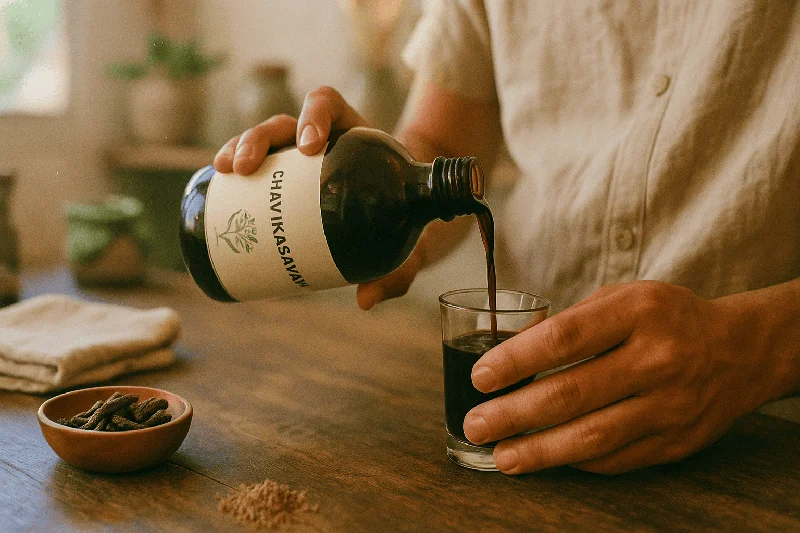
Chavikasavam (also spelled Chavikasava) is a classical Ayurvedic fermented liquid formulation primarily used to treat digestive disorders, urinary problems, abdominal tumors, piles, and gout. Referenced in the ancient text Yogaratnakara (Gulma Rogadhikara, verses 33/149–155), this potent herbal preparation combines over 30 medicinal herbs through a traditional fermentation process that produces 5–10% self-generated alcohol — acting as a natural bioenhancer for faster absorption of therapeutic compounds. If you've been searching for a reliable, time-tested Ayurvedic remedy for chronic indigestion, IBS, or urinary difficulties, Chavikasavam is one of the most well-documented options in classical Ayurvedic pharmacopoeia.
In this comprehensive guide, we cover everything you need to know: ingredients with their individual benefits, classical preparation method, exact dosage guidelines, health benefits backed by pharmacological research, side effects, drug interactions, brand comparisons, storage instructions, and dietary advice during the course of treatment.
What Is Chavikasavam and Why Is It Important in Ayurveda?
Chavikasavam belongs to the Asava category of Ayurvedic medicines. Before we go further, lets clarify an important distinction that most resources overlook:
- Asava preparations use raw (unboiled) herbal juices or decoctions as the base for fermentation.
- Arishta preparations use boiled decoctions (Kashaya/Kwatha) as the base.
Chavikasavam is technically a hybrid — it uses a Kwatha (boiled decoction) of herbs but is traditionally classified as an Asava. This unique preparation method combines the concentrated potency of a decoction with the bioavailability advantages of fermentation.
Classical Textual References (Shloka Origin)
The formulation is described in Yogaratnakara, specifically in the Gulma Rogadhikara section (verses 33/149–155). The original Sanskrit shloka outlines the precise combination of herbs, quantities, and indications. This text, compiled approximately in the 17th century, synthesized knowledge from earlier Ayurvedic treatises and remains a primary reference for practitioners today.
Effect on Doshas (Tridosha Action)
According to Ayurvedic pharmacology, Chavikasavam primarily pacifies Kapha and Vata doshas. Its pungent (Katu), bitter (Tikta), and warm (Ushna) properties help:
- Kapha reduction: Clears mucus accumulation, reduces bloating, improves sluggish metabolism
- Vata regulation: Relieves abdominal pain, flatulence, and irregular bowel movements
- Pitta neutrality: When taken in prescribed doses, it does not significantly aggravate Pitta, though individuals with high Pitta should use it cautiously
What Are the Ingredients in Chavikasavam?
Chavikasavam contains a complex blend of over 30 herbs and natural substances, systematically categorized by their functional role in the formulation. Understanding these categories helps you appreciate why this medicine is so versatile.
Kwatha Dravya (Decoction Base Herbs)
These herbs are boiled in water to create the primary decoction:
| Herb (Common Name) | Botanical Name | Key Therapeutic Role |
|---|---|---|
| Chavya (Java Long Pepper) | Piper chaba | Primary herb — carminative, digestive stimulant |
| Chitraka (Leadwort) | Plumbago zeylanica | Powerful Agni (digestive fire) enhancer |
| Haritaki (Chebulic Myrobalan) | Terminalia chebula | Mild laxative, detoxifier |
| Vibhitaki (Beleric Myrobalan) | Terminalia bellirica | Astringent, anti-inflammatory |
| Amalaki (Indian Gooseberry) | Emblica officinalis | Antioxidant, vitamin C source |
| Pippali (Long Pepper) | Piper longum | Bioavailability enhancer, respiratory support |
| Pippali Moola (Long Pepper Root) | Piper longum (root) | Anti-inflammatory, analgesic |
| Nagara (Ginger) | Zingiber officinale | Digestive, antiemetic |
| Maricha (Black Pepper) | Piper nigrum | Carminative, enhances absorption |
| Bilva (Bael) | Aegle marmelos | Antidiarrheal, digestive |
| Gambhari | Gmelina arborea | Anti-inflammatory, analgesic |
| Patala | Stereospermum suaveolens | Diuretic, anti-inflammatory |
| Shyonaka | Oroxylum indicum | Anti-inflammatory, immunomodulatory |
| Agnimantha | Premna integrifolia | Digestive stimulant, anti-rheumatic |
| Gokshura (Tribulus) | Tribulus terrestris | Diuretic, urinary tonic |
| Brihati | Solanum indicum | Expectorant, carminative |
| Kantakari | Solanum xanthocarpum | Respiratory support, anti-asthmatic |
| Shalaparni | Desmodium gangeticum | Anti-inflammatory, nervine |
| Prishniparni | Uraria picta | Anti-inflammatory, febrifuge |
| Mudgaparni | Phaseolus trilobus | Nutritive, digestive |
| Mashaparni | Teramnus labialis | Nutritive, restorative |
Prakshep Dravya (Adjunct/Fermentation Ingredients)
| Ingredient | Botanical/Common Name | Purpose |
|---|---|---|
| Dhataki Pushpa | Woodfordia fruticosa | Natural fermentation initiator |
| Guda (Jaggery) | — | Carbon source for fermentation, natural sweetener |
| Madhu (Honey) | — | Preservative, synergistic therapeutic agent |
Madhur Dravya (Sweetening/Binding Agents)
Jaggery and honey serve dual roles: they act as carbon substrates enabling the fermentation process while also contributing their own medicinal properties. Jaggery is rich in iron and minerals; honey adds antimicrobial and wound-healing qualities.
Pharmacological Benefits of Key Individual Ingredients
Piper chaba (Chavya) — the primary ingredient from which the formulation gets its name. A 2017 study published in the Journal of Ethnopharmacology demonstrated that Piper chaba extracts exhibit significant gastroprotective activity, reducing gastric ulcer index by 67% in animal models. It also showed anti-Helicobacter pylori activity. Plumbago zeylanica (Chitraka) — research published in Pharmaceutical Biology (2016) confirmed its hepatoprotective and anti-inflammatory properties. The active compound plumbagin has shown anticancer potential in multiple in vitro studies. Woodfordia fruticosa (Dhataki) — beyond its role as a fermentation starter, a 2019 study in BMC Complementary Medicine and Therapies found that Woodfordia fruticosa flowers possess potent antioxidant activity (IC50 = 12.3 µg/mL in DPPH assay) and significant immunomodulatory effects.
How Is Chavikasavam Prepared? (Traditional Method)
The traditional preparation method of Chavikasavam follows the classical Sandhana Kalpana (fermentation pharmacology) described in Ayurvedic texts.
Here's the step-by-step process:
Step 1: Kwatha (Decoction) Preparation
The Kwatha Dravya herbs (listed above) are coarsely powdered and boiled in a specified quantity of water — typically reduced to one-quarter or one-eighth of the original volume. This concentrated decoction extracts water-soluble active compounds from all herbs.
Step 2: Adding Prakshep and Madhur Dravya
Once the decoction cools to lukewarm temperature, jaggery (Guda) is dissolved into it thoroughly. Honey is added after further cooling. The fine powders of Dhataki Pushpa and other Prakshep Dravya are then mixed in.
Step 3: Fermentation (Sandhana)
The mixture is transferred into a clean earthen pot (Mrit Patra), which is then sealed with a lid and mud-plaster to make it airtight. The sealed pot is stored in a cool, dry place away from direct sunlight.
Fermentation duration: approximately 30 days.
During this period, the Dhataki flowers facilitate natural alcoholic fermentation, converting sugars from jaggery into approximately 5–10% self-generated alcohol. This alcohol acts as a natural preservative and significantly enhances the bioavailability of fat-soluble herbal compounds.
Step 4: Filtration and Quality Check
After 30 days the seal is broken, and the liquid is filtered through clean muslin cloth.
The final product should have:
- Taste (Rasa): Katu (Pungent)
- Smell: Characteristic mild alcoholic aroma
- Appearance: Dark brown, clear liquid
If it smells foul or shows mold, the batch is considered compromised and should be discarded.
What Are the Uses and Health Benefits of Chavikasavam?
Chavikasavam's therapeutic applications span multiple body systems. Here are the primary indications organized by the Ayurvedic pharmacological actions (Karma):
Digestive System Benefits
This is the primary domain of Chavikasavam.
Its key Ayurvedic actions on digestion include:
- Deepana (appetizer) — kindles digestive fire
- Pachana (digestive) — promotes proper digestion of food
- Rochana (relish) — restores taste perception and appetite
- Amahara (toxin eliminator) — clears undigested metabolic waste (Ama)
- Anulomana (carminative) — normalizes downward movement of Vata
For IBS (Irritable Bowel Syndrome)
Chavikasavam is particularly useful in managing IBS symptoms — alternating constipation and diarrhea, bloating, gas, and abdominal discomfort. The combination of Triphala (Haritaki, Vibhitaki, Amalaki) with Trikatu (Maricha, Pippali, Nagara) addresses both hypomotility and hypermotility patterns.
For Gulma (Abdominal Tumors/Masses)
The classical text Yogaratnakara specifically indicates Chavikasavam for Gulma — a condition describing abdominal lumps or phantom tumors. In modern clinical correlation, this may correspond to fibroids, cysts, or functional abdominal masses.
For Piles (Arsha)
The combination of Chitraka and Haritaki has a well-documented effect on hemorrhoids. Chitraka improves local circulation, while Haritaki ensures smooth bowel movements, reducing straining.
Urinary System Benefits
Chavikasavam is a reliable formulation for urinary complaints, thanks to the inclusion of Gokshura (Tribulus terrestris), one of Ayurveda's most respected urinary tonics.
- Mutrala (diuretic) — promotes healthy urine flow
- Ashmarihara — helps in management of urinary calculi (kidney stones)
- Mutrakrichra — relieves painful or difficult urination
For Dysuria and Urinary Tract Infections
While not a direct antibacterial, the diuretic and anti-inflammatory properties of Chavikasavam help flush bacteria and reduce urethral inflammation. It is often prescribed alongside specific UTI formulations for synergistic benefit.
Respiratory System Benefits
The Dashamoola (ten-root) component and herbs like Kantakari and Brihati provide notable respiratory benefits:
- Reduces chronic cough and bronchial congestion
- Supportive in bronchial asthma management (Kapha-type)
- Helps clear accumulated mucus from the respiratory tract
Hepatoprotective (Liver Support) Benefits
Chitraka and Amalaki in this formulation offer strong liver-protective properties. A 2018 study in Evidence-Based Complementary and Alternative Medicine demonstrated that polyherbal formulations containing Plumbago zeylanica and Emblica officinalis significantly reduced elevated liver enzymes (ALT and AST) in chemically induced liver damage models.
Anti-inflammatory and Anti-gout Benefits
Chavikasavam is traditionally indicated for Vatarakta (gout). The anti-inflammatory properties of Dashamoola herbs combined with the uric acid–clearing action of Gokshura make it a valid supportive therapy for hyperuricemia and gouty arthritis.
Immunomodulatory Properties
The presence of Amalaki, Dhataki, and Dashamoola herbs provides mild immunomodulatory effects. Regular use during convalescence can support recovery and improve general resistance to infections.
Chavikasavam Dosage: How Much to Take?
| Category | Dosage | Frequency | Timing |
|---|---|---|---|
| Adults | 15–30 mL | 1–2 times daily | After meals |
| Children (5–12 years) | 5–10 mL | 1–2 times daily | After meals |
| Elderly | 10–15 mL | 1–2 times daily | After meals |
Anupana (Adjuvant/Vehicle)
- Chavikasavam should be taken with an equal quantity of lukewarm water.
- This is important — taking it undiluted may cause gastric irritation in sensitive individuals.
How Long Should You Take Chavikasavam? (Course Duration)
This is a critical piece of information that most resources completley miss.
Based on classical Ayurvedic guidelines and clinical practice:
- Acute digestive complaints (bloating, indigestion): 2–4 weeks
- Chronic conditions (IBS, piles, urinary issues): 1–3 months
- Gulma and abdominal masses: 3–6 months (with periodic physician evaluation)
Never self-medicate beyond 4 weeks without consulting a qualified Ayurvedic practitioner. Reassessment is important to adjust dosage and evaluate progress.
Don't wait or self medicate. Start chat with Doctor NOW
Side Effects and Contraindications of Chavikasavam
Chavikasavam is generally safe when taken in prescribed doses.
However, certain precautions are necessary:
Known Side Effects
- Gastric irritation: May occur if taken on an empty stomach or in excessive doses
- Burning sensation: Individuals with high Pitta constitution may experience mild heartburn
- Loose stools: Rarely, the laxative effect of Triphala components may cause loose motions in sensitive patients
Contraindications
- Pregnancy and lactation: Not recommended due to the alcohol content and the presence of Chitraka (Plumbago zeylanica), which has known uterine stimulant properties
- Gastric ulcers/GERD: The pungent nature may aggravate existing ulcers
- Alcohol intolerance: Contains 5–10% self-generated alcohol
- Diabetic patients: Contains jaggery — consult your doctor regarding blood sugar monitoring. While the quantity consumed per dose is small, patients on strict glycemic control should exercise caution
Drug Interactions — What You Need to Know
No formal drug interaction studies have been conducted on Chavikasavam specifically. However, based on the pharmacological profiles of its key ingredients:
- Anticoagulants (Warfarin, Aspirin): Piper species may enhance anticoagulant effects. Monitor INR closely.
- Antidiabetic medications: Jaggery content may slightly affect blood sugar. Dose adjustment of diabetes medications may be needed.
- Metronidazole and Disulfiram: The alcohol content can cause severe adverse reactions (disulfiram-like reaction). Do not combine.
- Hepatotoxic drugs: Since Plumbagin (from Chitraka) is processed by the liver, concurrent use with hepatotoxic medications requires medical supervision.
Always inform your allopathic doctor about any Ayurvedic medications you are taking, and vice versa.
Chavikasavam vs Similar Asava/Arishta Preparations — How to Choose?
One of the most common confusions is choosing between Chavikasavam and similar-sounding formulations.
Here's a practical comparison:
| Parameter | Chavikasavam | Pippalyasavam | Abhayarishtam | Dasamoolarishtam |
|---|---|---|---|---|
| Primary Herb | Chavya (Piper chaba) | Pippali (Piper longum) | Abhaya/Haritaki (Terminalia chebula) | Dashamoola (10 roots) |
| Best For | Digestive + Urinary | Digestive + Respiratory | Piles + Constipation | Pain + Inflammation |
| Dosha Action | Kapha-Vata | Kapha-Vata | Vata | Vata-Kapha |
| Alcohol Content | 5–10% | 5–10% | 5–10% | 5–12% |
| Classical Text | Yogaratnakara | Bhaishajya Ratnavali | Sahasrayogam | Ashtanga Hridayam |
| Unique Strength | Gulma, urinary calculi | Chronic respiratory issues | Chronic constipation, fistula | Postpartum recovery, arthritis |
Simple decision rule: If your primary concern is digestive plus urinary, choose Chavikasavam. If its purely respiratory, consider Pippalyasavam. For piles with constipation, Abhayarishtam may be more appropriate. For musculoskeletal pain and inflammation, Dasamoolarishtam is the classic choice.
Available Brands and Pricing in India
Unlike many obscure formulations, Chavikasavam is widely manufactured by reputable Ayurvedic pharmacies.
Here's a comparative overview:
| Brand | Pack Size | Approximate Price (INR) | Availability |
|---|---|---|---|
| Kottakkal Arya Vaidya Sala (AVS) | 450 mL | ₹120–140 | Pan-India, online & offline |
| Sitaram Ayurveda | 450 mL | ₹110–130 | Kerala, online platforms |
| Nagarjuna Ayurveda | 450 mL | ₹100–125 | South India, online |
| Arya Vaidya Pharmacy (AVP), Coimbatore | 450 mL | ₹115–135 | Pan-India, online |
| Vaidyaratnam Oushadhasala | 450 mL | ₹100–120 | Kerala, online platforms |
Prices as of 2024–2025, may vary by retailer and region. Tip: When purchasing, always check the manufacturing date and batch number. Asava preparations actually improve with age (up to a point), so a slightly older batch is not a concern — its often considered more potent.
Storage Conditions and Shelf Life
Another area that's surprisingly neglected in available resources online:
- Store in a cool, dry place away from direct sunlight
- Temperature: Below 30°C (room temperature in most Indian climates is acceptable; avoid hot kitchens or near stoves)
- - Container: Keep in the original glass or food-grade plastic bottle.
- If transferring, use only glass or ceramic containers — avoid metal containers as the acidic nature of the fermented liquid can react with metals
- Shelf life: Generally 3–5 years from manufacture, though some classical texts suggest Asavas become more effective with aging
- After opening: Use within 6–12 months. Always ensure the cap is tightly closed after each use to prevent further uncontrolled fermentation or contamination
Dietary Guidelines During Chavikasavam Treatment (Pathya-Apathya)
Following proper dietary discipline significantly enhances the efficacy of Chavikasavam. Classical Ayurvedic practice emphasizes Pathya (favorable) and Apathya (unfavorable) foods during treatment:
Pathya (Recommended)
- Light, warm, freshly cooked meals
- Old rice (Purana Shali), moong dal, barley
- Cumin, coriander, fennel, ginger in cooking
- Warm water throughout the day
- Buttermilk (especially for digestive issues)
- Seasonal vegetables — bottle gourd, pointed gourd, ash gourd
Apathya (Avoid)
- Heavy, oily, deep-fried foods
- Cold drinks and ice cream
- Incompatible food combinations (milk + fish, milk + sour fruits)
- Excessive raw salads (especially at dinner)
- Fermented foods in excess (pickles, idli/dosa batter left too long)
- Alcohol consumption beyond the medicine itself
- Stale or reheated food
- Curd at night
Frequently Asked Questions (FAQ)
Can Chavikasavam be taken with other Ayurvedic medicines?
Yes, Chavikasavam is commonly prescribed alongside other Ayurvedic formulations like Gulma Kalanal Rasa, Chitrakadi Vati, or Chandraprabha Vati. However, combining multiple Asava/Arishta preparations simultaneously should only be done under practitioner guidance, as the cumulative alcohol content may become significant.
Is Chavikasavam safe for diabetic patients?
Chavikasavam contains jaggery as a key fermentation ingredient. However, much of the sugar is converted during fermentation, so the residual sugar content per dose (15–30 mL) is relatively low. That said, diabetic patients should monitor their blood glucose levels closely during initial use and consult their physician. It's not strictly contraindicated but requires careful supervision.
Can I take Chavikasavam with alcohol?
No. The formulation already contains 5–10% self-generated alcohol. Adding external alcohol consumption increases the risk of liver stress and may potentiate sedative effects. Avoid recreational alcohol during the treatment course.
What is the difference between Chavikasavam and Kumaryasavam?
Kumaryasavam is a different formulation where the primary herb is Kumari (Aloe vera). It is primarily indicated for liver disorders, jaundice, splenic enlargement, and anemia. Chavikasavam focuses more on digestive and urinary disorders. They have distinct ingredient profiles and indications, though both belong to the Asava category.
Can Chavikasavam be taken on an empty stomach?
It is generally recommended after meals to prevent gastric irritation. However, some practitioners prescribe it before meals (Pragbhakta) in cases of severe appetite loss. Follow your physician's specific advice.
Is Chavikasavam habit-forming?
No. Despite containing self-generated alcohol, the quantity per dose is insufficient to cause dependence. Thousands of patients use Asava/Arishta preparations for months without developing any form of dependency.
How will I know if Chavikasavam is working?
Improvements typically noticed within the first 1–2 weeks include: better appetite, reduced bloating and gas, more regular bowel movements, and decreased abdominal discomfort. For urinary symptoms, improvement may take 2–4 weeks. If no improvement is felt after 4 weeks, consult your practitioner for reassessment.
Conclusion: Is Chavikasavam Right for You?
Chavikasavam is a time-tested, classically documented Ayurvedic formulation with genuine therapeutic potential for digestive disorders, urinary problems, abdominal masses, piles, and gout. Its unique fermentation-based preparation ensures excellent bioavailability and shelf life, while the scientifically validated properties of its individual ingredients provide a solid pharmacological foundation.
However — and this is crucial — no Ayurvedic medicine works in isolation. Proper diet (Pathya), lifestyle modifications, and professional guidance are essential for optimal results. Self-medication is acceptable for mild, short-term digestive discomfort, but chronic conditions absolutely require the oversight of a qualified Ayurvedic practitioner.
Ready to start your healing journey? Consult with a certified Ayurvedic doctor to determine whether Chavikasavam is the right formulation for your specific Prakriti (constitution) and Vikruti (current imbalance). If you're already taking allopathic medications, an integrative approach with proper medical supervision ensures safety and efficacy. Disclaimer: This article is for educational purposes only and does not replace professional medical advice. Always consult a qualified healthcare practitioner before starting any new medication or supplement.
Scientific Sources
- Dentistry and Ayurveda - IV: classification and management of common oral diseases — Amruthesh S, 2008, Indian journal of dental research : official publication of Indian Society for Dental Research
- Prevention of diseases an Ayurvedic approach — Upadyay RL, 1998, Indian journal of medical sciences
- Lead poisoning due to Ayurvedic medicine: how about the risk? — Joob B et al., 2016, International journal of occupational and environmental health
- Complete Functional Recovery in Full-Thickness Rotator Cuff Tear through Ayurvedic Medicine and Rehabilitative Exercises: A Case Report — Benny GA et al., 2025, Alternative therapies in health and medicine
- Ayurved for digestion — Krebs K, 2004, Gastroenterology nursing : the official journal of the Society of Gastroenterology Nurses and Associates
- Caraka Samhita(https://pubmed.ncbi.nlm.nih.gov/336923/) — Yano M, 1977, Nihon rinsho. Japanese journal of clinical medicine
- Ayurveda — Fleischman PR, 1976, The International journal of social psychiatry
- Elucidating the nanomaterialistic basis for ayurvedic bhasmas using physicochemical experimentation — Bhattacharya B, 2011, Journal of biomedical nanotechnology
- Conquering the common cough with ayurveda — Ziment I, 1996, The National medical journal of India
- Obituary — 1971, Indian journal of medical sciences
- Presidential address — Joshi GV, 1970, Journal of the Indian Medical Association
- Ayurvedic medicine.Conceptual and philosophical aspects]](https://pubmed.ncbi.nlm.nih.gov/3293188/) — Peny JM et al., 1988, La Revue du praticien
- The selling of ayurvedic medicine — Goldman B, 1991, CMAJ : Canadian Medical Association journal = journal de l'Association medicale canadienne
- Traditional medicine — Skeet M, 1981, Nursing times
- EVALUATION OF TOXIC HEAVY METALS IN AYURVEDIC SYRUPS SOLD IN LOCAL MARKETS OF HAZARA, PAKISTAN — Hajra B et al., 2015, Journal of Ayub Medical College, Abbottabad : JAMC
- Whole Medical Systems the Rehabilitation Setting (Traditional Chinese Medicine, Ayurvedic Medicine, Homeopathy, Naturopathy) — Drake DF et al., 2020, Physical medicine and rehabilitation clinics of North America
- Acute Lead Encephalopathy Secondary to Ayurvedic Medication Use: Two Cases with Review of Literature — Raut TP et al., 2021, Neurology India
- Ayurvedic medicine use and lead poisoning in a child: a continued concern in the United States — Datta-Mitra A et al., 2015, Clinical pediatrics
- In defence of Ayurvedic medicine — Lovell-Smith HD, 2006, The New Zealand medical journal
- Terminalia arjuna — 1999, Alternative medicine review : a journal of clinical therapeutic
Questions from users
Is it safe for diabetic patients to use Chavikasavam for digestive issues?
Sandra
9 days ago
Hey! Good question. Chavikasavam contains jaggery, which can spike blood sugar levels. So diabetic patients should be careful and monitor their blood sugar closely if they're using it. It's a good idea to talk to your doctor or an Ayurvedic practitioner before starting. Maybe they can suggest adjustments or alternatives based on your dosha and overall health.
What is the role of jaggery in Chavikasavam and how does it affect digestion?
Wallace
18 days ago
Jaggery in Chavikasavam serves as a fermenting agent, which helps preserving the decoction and enhancing its properties. For digestion, jaggery balances Vata and Kapha, providing a warming effect that aids digestion and supports Agni (digestive fire). However, too much might increase Pitta, so folks with high Pitta should use caution!
What is the best time of day to take Chavikasavam for digestive support?
James
28 days ago
Morning and evening are generally good times to take Chavikasavam, ideally with meals or right after. This can help integrate it into your digestive process and support agni when it's needed most. Everybody's different, though, so listen to your body and see what works best for you! Can't hurt to consult an Ayurvedic practitioner, either.
What is the recommended dosage for Chavikasavam to improve digestive health?
Shelby
38 days ago
For Chavikasavam, it's usually taken around 15 to 30 ml, once or twice a day, typically after meals. But! It's best to check in with an Ayurvedic doc who'll get what balance your doshas need. If you feel unsure, maybe start on the lower side and see how it feels. Remember to consider how your personal prakriti affects things!
Can Chavikasavam help with bloating and gas relief during digestion?
Vesper
47 days ago
Yes, Chavikasavam can indeed be helpful for bloating and gas relief. It's traditionally used to support digestive health, so it might ease those symptoms. But remember, it's best to get advice from an Ayurvedic doctor before using it to make sure it fits your unique needs and constitution.
Can Chavikasavam help improve overall gut health beyond just digestion?
Paul
56 days ago
Yeah, Chavikasavam can actually help with gut health overall. By stimulating Agni (your digestive fire), it can improve food breakdown and nutrient absorption, reducing digestive discomforts. It also supports urinary tract health. But of course, it's always good to consider your unique Prakriti and any specific dosha imbalances.
What is Chavikasavam used for in traditional healing practices?
Makayla
66 days ago
Chavikasavam is often used in traditional healing for its digestive and diuretic benefits. It helps in harmonizing bodily functions by improving digestion and supporting urinary tract health. It's usually tailored to individual needs, so it works uniquely for each person. Just a heads up, some might feel mild digestive changes at first!
Can I take Chavikasavam with other medications or herbal supplements?
Harper
76 days ago
You can take Chavikasavam with other medications or supplements, but it's best to be cautious! Ayurveda emphasizes balance... so combining too many things could affect that balance. I'd suggest chatting with an Ayurvedic practitioner or your healthcare provider to understand potential interactions, especially if yer on other meds. Just to be safe!
Is Chavikasavam suitable for children with digestive or urinary issues?
Makayla
85 days ago
Chavikasavam might be helpful for kids with digestive or urinary issues, but it's essential to be careful. Kids have different requirements, and dosage matters a lot. Best to consult a qualified Ayurvedic practitioner who can recommend based on the child's specific dosha and needs.
Can Chavikasavam help with urinary tract infections or just digestive issues?
Asher
95 days ago
Chavikasavam could potentially aid with urinary tract infections due to its diuretic properties. It's mainly known for digestive and urinary benefits, so for a UTI, it's worth a try but definitely consult with a healthcare professional too. Your body type and any dosha imbalances would be the main factors!
Related articles

Gastrointestinal Disorders
Does Cold Milk Reduce Acidity? Ayurvedic Explanation and Uses
Explore if cold milk reduces acidity, its benefits at night, how and when to drink it. Learn if cold milk is good for acidity relief according to Ayurveda
13,350

Gastrointestinal Disorders
Pushyanuga Churna Benefits, Dosage, Ingredients, Side Effects, Reference
Exploration of Pushyanuga Churna Benefits, Dosage, Ingredients, Side Effects, Reference
1,635

Gastrointestinal Disorders
Amavatari Kashayam: Uses, Benefits & Ayurvedic Insights
Discover the uses, benefits, proper dosage, and Ayurvedic foundations of Amavatari Kashayam, a traditional herbal decoction for holistic health and wellness.
2,413
Gastrointestinal Disorders
Yogaraja Guggulu Benefits: A Comprehensive Ayurvedic Guide
Explore Yogaraja Guggulu benefits in this in-depth guide. Learn its uses, scientific findings, and safety tips for holistic health and wellness.
3,703

Gastrointestinal Disorders
Takrarishta
Exploration of Takrarishta
1,860

Gastrointestinal Disorders
Shankh Vati Benefits, Dosage, Ingredients and Side Effects
Exploration of Shankh Vati Benefits, Dosage, Ingredients and Side Effects
3,140

Gastrointestinal Disorders
Peptic Ulcer Ayurvedic Treatment: Natural Ways to Heal Stomach Ulcers
Discover effective Ayurvedic treatments for peptic ulcers, including herbal remedies, therapies, and lifestyle changes supported by scientific research to alleviate symptoms and promote healing.
3,434

Gastrointestinal Disorders
Annadrava Shoola – Ayurvedic Approach to Managing Deep-Seated Pain
Discover targeted Ayurvedic therapies for managing chronic pain and restoring balance with annadrava shoola solutions.
2,336

Gastrointestinal Disorders
How Long Does Diarrhea Last and How to Support Recovery Naturally
How long does diarrhea last? Discover diarrhea duration from food poisoning, norovirus, alcohol, or stress. Explore Ayurvedic ways to restore gut balance
2,063

Gastrointestinal Disorders
Jatiphaladi Churna – Traditional Ayurvedic Powder for Digestive & Systemic Health
Discover the benefits and uses of Jatiphaladi Churna, a traditional Ayurvedic powder known for promoting digestive health, detoxification, and overall vitality through a blend of potent herbs.
2,718
Related consultations on the topic
Legal
Additional Documents
© 2024 Ask Ayurveda. All rights reserved.