Ask Ayurvedic doctor a question and get a consultation online on the problem of your concern in a free or paid mode. More than 2,000 experienced doctors work and wait for your questions on our site and help users to solve their health problems every day.
FREE! Ask Ayurvedic Doctors 24/7

 Fast responses
 1000+ verified doctors
Body DetoxEar, Nose, and Throat DisordersGeriatrics & RejuvenationImmunodeficiencyInfertility TreatmentNutritionOrthopedic DisordersPediatricsRespiratory DisordersSexually Transmitted Diseases (STDs)Surgery RecoveryUrological DisordersVascular DisordersDental DisordersEndocrinological DisordersGastrointestinal DisordersYoga TherapyGeneral MedicineAllergic DisordersCardio DisordersGynecology and ObstetricsCosmetologySkin and Hair DisordersEye DisordersInfectious DiseasesMental DisordersNeurological DisordersOncologyPanchakarmaSexual Health & DisordersSports Medicine
Published on 02/20/25
(Updated on 06/16/26)
5,208
Deepana Pachana – Ayurvedic Digestive Stimulant & Metabolic Enhancer
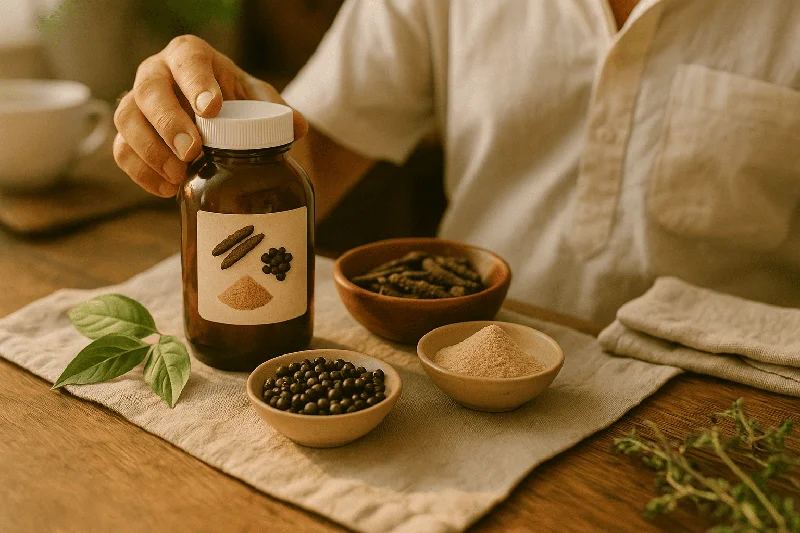
Deepana Pachana refers to two foundational therapeutic actions in Ayurveda: Deepana (kindling the digestive fire, or Agni) and Pachana (digesting and neutralizing metabolic toxins, or Ama). Together, they form the essential first step in virtually every Ayurvedic treatment protocol — without properly functioning Agni and the clearance of Ama, no medicine, Panchakarma procedure, or dietary intervention can deliver its full benefit. This guide covers everything from classical definitions and self-diagnosis to practical at-home protocols, specific herb classifications, dietary rules, contraindications, and modern clinical evidence so you can understand exactly when, why, and how to apply Deepana Pachana in real life.
What Is Deepana and Pachana? Definitions and Key Differences
- The terms Deepana and Pachana are often used together, almost like a single compound word, but they represent two distinct pharmacological actions.
- Understanding the difference is not academic — it directly determines which herb or formulation an Ayurvedic physician selects for a given patient.
Deepana (Agni Deepana) — Kindling the Digestive Fire
Deepana literally means "that which enkindles." A Deepana Dravya (substance) specifically increases the potency and activity of Jatharagni — the central digestive fire seated in the stomach and duodenum. It does this without necessarily acting on already-formed Ama.
Think of Deepana as adding fuel to a smoldering campfire. The fire itself grows stronger. Classical texts like the Charaka Samhita (Sutra Sthana 22/10) describe Deepana substances as those that stimulate appetite (Kshudha Vardhana) and enhance the capacity of Agni to process incoming food.
Key pharmacological profile of Deepana Dravya:
- Predominant Rasa: Katu (pungent)
- Guna: Laghu (light), Ushna (hot), Tikshna (sharp)
- Virya: Ushna (hot potency)
- Vipaka: Katu (pungent post-digestive effect)
Classic example: Maricha (Black Pepper, Piper nigrum) — powerfully stimulates Agni but has limited direct Ama-digesting action on its own.
Pachana (Ama Pachana) — Digesting and Neutralizing Toxins
Pachana means "that which digests." A Pachana Dravya specifically targets Ama — the sticky, toxic, undigested metabolic residue — and breaks it down without necessarily increasing Agni itself.
Using the campfire analogy: Pachana is like drying out the wet logs that are smothering the fire. The fire doesn't get hotter per se, but the obstruction is removed and it burns more cleanly.
Sharangadhara Samhita (Purva Khanda 4/2) specifically differentiates Pachana as the action of digesting Ama (Ama Pachana Krit) while keeping Agni at its current level. Classic example: Nagakeshara (Mesua ferrea) — digests Ama without dramatically stimulating appetite.
Deepana vs Pachana: Side-by-Side Comparison Table
| Parameter | Deepana | Pachana | Deepana-Pachana (Dual Action) |
|---|---|---|---|
| Primary action | Increases Agni | Digests Ama | Both simultaneously |
| Effect on appetite | Markedly increases | May or may not increase | Increases |
| Effect on Ama | Indirect (stronger Agni eventually burns Ama) | Direct digestion of Ama | Direct |
| Classic herb example | Maricha (Black Pepper) | Nagakeshara | Shunthi (Dry Ginger) |
| Formulation example | Agnitundi Vati | Chitrakadi Vati | Hingvashtak Churna |
| When to use | Mandagni without significant Ama | Ama present, Agni not critically low | Mandagni + Ama (most common clinical scenario) |
What Are Deepana-Pachana Dravya (Dual-Action Substances)?
In clinical practice, the most commonly used herbs perform both actions simultaneously. These are called Deepana-Pachana Dravya. They kindle Agni and digest Ama at the same time, making them the workhorse of Ayurvedic digestive therapy.
- The most celebrated example is Shunthi (Dry Ginger, Zingiber officinale).
- Acharya Bhavaprakasha called it "Mahaushadha" — the great medicine — precisely because it addresses both problems in one substance. Other dual-action herbs include Pippali (Piper longum), Chitraka (Plumbago zeylanica), Ajamoda (Trachyspermum roxburghianum), and the compound formulation Trikatu (Shunthi + Maricha + Pippali).
Agni and Ama — The Foundation of Ayurvedic Pathology
To truly understand why Deepana Pachana is so critical, you need to understand the Agni-Ama axis. This is arguably the single most important concept in Ayurvedic medicine.
The 4 Types of Agni: Sama, Vishama, Tikshna, and Manda
According to Charaka Samhita (Chikitsa Sthana 15/39-40), Agni manifests in four states:
- 1.Samagni (balanced): Digests proper quantity of food in proper time. No Ama production. This is the goal.
- 2.Vishamagni (irregular): Fluctuates — sometimes strong, sometimes weak. Associated with Vata vitiation. One day you can eat anything; the next day, even light food feels heavy.
- 3.Tikshnagni (sharp/hyperactive): Digests food too quickly, creates excessive hunger. Associated with Pitta vitiation. The person eats large quantities but still feels hungry.
- 4.Mandagni (weak/sluggish): Cannot digest even normal quantities of food. Associated with Kapha vitiation. This is the primary target of Deepana Pachana therapy.
How Ama Forms and Why It Is Called the Root of All Disease
When Mandagni persists, food is not completely digested.
The partially processed material — neither useful nutrient nor properly eliminated waste — becomes Ama. Acharya Vagbhata (Ashtanga Hridaya, Sutra Sthana 13/25) describes Ama as having these characteristics:
- Avipakva (uncooked/unprocessed)
- Durgandha (foul-smelling)
- Bahupicchila (excessively sticky)
- Guru (heavy)
- Tantuvat (stringy, thread-like)
- Ama doesn't just sit in the gut. It circulates through Srotas (body channels), lodges in weak tissues (Khavaigunya), and creates the foundation for disease.
- This is why classical texts state: "Rogah Sarve Api Mandagnau" — all diseases arise from weakened Agni.
The Pathogenesis Chain: Mandagni → Ama → Vyadhi
The sequence is clear and linear:
- Nidana Sevana (exposure to causative factors): overeating, incompatible food combinations (Viruddha Ahara), suppression of natural urges, stress, sedentary lifestyle
- Agni Dushti (impairment of digestive fire) → Mandagni
- Ama Utpatti (formation of Ama)
- Srotodushti (blockage of body channels)
- Dosha Prakopa (vitiation of Doshas)
- Vyadhi (manifestation of disease)
Deepana Pachana intervenes at steps 2 and 3 — making it a causative treatment, not merely symptomatic.
How to Know If You Need Deepana Pachana: Self-Diagnosis Checklist
Before taking any herbs, you need to assess whether Mandagni and Ama are actually present. Here's a practical checklist drawn from classical Ama Lakshanas (signs of Ama):
Signs of Mandagni (Weak Digestive Fire)
- ☐ Loss of appetite or irregular appetite
- ☐ Feeling heavy even after eating small meals
- ☐ Food feels like it sits in the stomach for hours
- ☐ Frequent belching or acid reflux after meals
- ☐ Abdominal distension or bloating
- ☐ Nausea, especially in the morning
Signs of Ama (Metabolic Toxins)
- ☐ Thick white or yellowish coating on the tongue (the single most reliable sign)
- ☐ Foul-smelling breath, sweat, or stool
- ☐ Sticky, mucoid stool that is difficult to clean
- ☐ Generalized body aches and heaviness (Angamarda, Gaurava)
- ☐ Lethargy, brain fog, lack of enthusiasm (Alasya)
- ☐ Stiffness in joints, especially in the morning
- ☐ Turbid or cloudy urine
If you check 3 or more boxes in each category, Deepana Pachana is likely indicated. If you check items mostly in the Mandagni section but few in the Ama section, you may benefit from Deepana alone. If Ama signs dominate, Pachana becomes the priority.
> Important: This self-assessment is a guide, not a diagnosis. Consult a qualified Ayurvedic practitioner for personalized evaluation, especially if symptoms are severe or longstanding.
Should an Ayurvedic Physician Always Start Treatment with Deepana Pachana?
This is one of the most frequently asked questions — and the answer is nuanced.
When Deepana Pachana Is Mandatory
Deepana Pachana is an essential Purvakarma (preparatory procedure) before:
- Panchakarma therapies (Vamana, Virechana, Basti, Nasya): Without prior Deepana Pachana, toxins are not adequately mobilized from tissues, and the Shodhana procedures become less effective — or even dangerous. Acharya Charaka explicitly states that Snehana and Swedana should be preceded by Deepana Pachana.
- Shamana Chikitsa (palliative treatment) for chronic conditions involving Ama: diseases like Amavata (rheumatoid arthritis), Grahani (IBS-like conditions), Sthoulya (obesity), and Prameha (diabetes).
- Any condition where tongue coating, heaviness, and loss of appetite are present.
When Deepana Pachana Can Be Skipped
Not every patient needs this step. According to EasyAyurveda's clinical analysis and classical references:
- Samagni patients with no signs of Ama — treatment can proceed directly
- Emergency conditions (Atyayika Chikitsa) where immediate intervention is needed
- Patients with Tikshnagni (hyperactive digestion) — Deepana would worsen the condition
- Ksheena/Durbala patients (severely debilitated) — aggressive Deepana-Pachana herbs can further deplete tissues
Graduated Treatment Based on Severity
Charaka Samhita provides an elegant clinical algorithm:
| Severity of Ama/Mandagni | Recommended Approach |
|---|---|
| Mild (Alpa Ama) | Langhana (fasting/light diet) alone is sufficient |
| Moderate (Madhyama Ama) | Langhana + Pachana herbs |
| Severe (Bahu Ama) | Deepana + Pachana herbs followed by Shodhana (Panchakarma) |
Classical Herbs, Formulations, and the Right Dosage Forms for Deepana Pachana
Key Single Herbs (Dravya)
| Herb (Sanskrit) | Botanical Name | Primary Action | Best For |
|---|---|---|---|
| Shunthi | Zingiber officinale | Deepana + Pachana | Universal digestive; Ama in all Doshas |
| Maricha | Piper nigrum | Primarily Deepana | Kapha-dominant Mandagni |
| Pippali | Piper longum | Deepana + Pachana | Vata-Kapha conditions, respiratory Ama |
| Chitraka | Plumbago zeylanica | Strong Deepana + Pachana | Severe Mandagni, Medodushti (fat metabolism) |
| Ajamoda | Trachyspermum roxburghianum | Deepana + mild Pachana | Bloating, flatulence, Vataja Gulma |
| Musta | Cyperus rotundus | Primarily Pachana | Pitta-safe Ama digestion, diarrhea with Ama |
| Hingu (Asafoetida) | Ferula assa-foetida | Deepana + Pachana | Vata disorders, intestinal gas |
| Haritaki | Terminalia chebula | Mild Deepana + Pachana | Gentle detox, elderly patients |
Important Classical Formulations
- - Trikatu Churna (Shunthi + Maricha + Pippali): The most widely used Deepana-Pachana combination.
- Dosage: 1–3 g with honey or warm water before meals.
- - Hingvashtak Churna: Eight-ingredient formula centered on Hingu. Excellent for Vataja indigestion with bloating and gas.
- Dosage: 3–6 g with first morsel of food.
- - Chitrakadi Vati: Tablet form, particularly strong Pachana action.
- Useful in sluggish metabolism and obesity.
- Dosage: 1–2 tablets before meals.
- - Panchakola Churna (Pippali, Pippalimula, Chavya, Chitraka, Shunthi): Powerful combination for severe Mandagni.
- Dosage: 1–3 g with warm water.
- Agnitundi Vati: Focuses on Agni kindling. Contains strong Deepana herbs including Vatsanabha (processed Aconite) — should only be used under medical supervision.
- Shaddharana Churna: Gentle Deepana-Pachana suitable for prolonged use. Good for chronic Ama conditions.
Which Dosage Form (Kalpana) Is Best?
The Ayurvedic dosage form matters significantly for Deepana Pachana effectiveness:
| Kalpana (Dosage Form) | Advantages | Best Situation |
|---|---|---|
| Churna (powder) | Fast absorption, easy dose adjustment, direct contact with Jatharagni | Acute Mandagni, short-term use |
| Vati/Gutika (tablets) | Convenient, palatable, standardized dose | Patients who can't tolerate pungent taste |
| Kashaya (decoction) | Strong action, liquid form aids absorption in compromised digestion | Moderate to severe Ama |
| Asava/Arishta (fermented) | Self-generated alcohol aids bio-availability, Deepana by nature | Chronic conditions, long-term use, elderly |
| Ghrita (medicated ghee) | Lipophilic, penetrates deep tissues (Sukshma Srotogami) | Preparation for Panchakarma (Snehapana) |
Clinical tip: In acute Mandagni with heavy Ama, start with Churna or Kashaya for rapid action. Transition to Vati for maintenance. Reserve Asava/Arishta for chronic, low-grade Ama that needs weeks of management.
Don't wait or self medicate. Start chat with Doctor NOW
Step-by-Step At-Home Deepana Pachana Protocol
This is the practical section no competitor covers adequately. Here's an actionable 5–7 day protocol for mild to moderate Mandagni with Ama. This is for generally healthy adults. Severe conditions require professional supervision.
Day 1–2: Langhana (Lightening) Phase
- Morning: Drink 200 ml warm water with 1/2 tsp fresh grated ginger juice and 1/2 tsp lemon juice on empty stomach.
- Breakfast: Skip entirely, or take only Peya (thin rice gruel — 1 part rice to 14 parts water, boiled until rice is fully dissolved). Season with rock salt and 1/4 tsp dry ginger powder.
- Lunch: Vilepi (thick rice gruel — 1 part rice to 4 parts water). Add cumin tempering (Jeera tadka) and a pinch of Hingu.
- Dinner: Yusha (lentil soup — green gram/Mudga is ideal). Light, warm, easy to digest.
- Before bed: 1/2 tsp Trikatu Churna with 1 tsp honey.
- Avoid: Heavy foods, dairy (except buttermilk), raw salads, fried food, cold drinks, sleeping during daytime.
Day 3–5: Active Deepana-Pachana Phase
- On waking: 200 ml warm water with 1 tsp Hingvashtak Churna.
- 30 minutes before lunch and dinner: 1–2 g Trikatu Churna with warm water, OR 1 tablet Chitrakadi Vati.
- Meals: Gradually introduce Khichdi (rice + moong dal 1:1), steamed vegetables (bottle gourd, ash gourd, snake gourd), buttermilk with roasted cumin and curry leaves.
- Between meals: Drink warm water only. You can add fennel seeds or cumin seeds to the water.
- Tongue check: Each morning, examine your tongue coating. It should be gradually reducing.
Day 6–7: Transition Phase
- Continue Deepana-Pachana herbs at reduced dosage (half the previous dose).
- Gradually reintroduce normal foods: chapati, cooked vegetables, dal, light non-vegetarian food if applicable.
- Do NOT immediately return to heavy, fried, cold, or processed food — this will undo the entire protocol.
Signs That the Protocol Is Working
- Tongue coating clearing
- Return of natural appetite (Kshudha Pravritti)
- Feeling of lightness in body (Laghava)
- Well-formed stool without excessive odor
- Reduction in bloating and gas
- Improved energy levels and mental clarity
Diet During Deepana Pachana: Pathya and Apathya
What to Eat (Pathya)
| Food Category | Recommended Items |
|---|---|
| Grains | Old rice (Purana Shali), barley (Yava), little millet (Kutki) |
| Lentils | Green gram (Mudga) — considered the best during Deepana Pachana |
| Vegetables | Bottle gourd (Lauki), pointed gourd (Parwal), ash gourd, drumstick |
| Spices | Ginger, cumin, black pepper, asafoetida, coriander, turmeric |
| Liquids | Warm water, buttermilk (Takra), thin gruel (Peya), ginger tea |
| Others | Rock salt, honey (in small amounts, never heated), pomegranate |
What to Avoid (Apathya)
- Heavy-to-digest grains: freshly harvested rice, wheat in excess
- Urad dal (black gram), Rajma (kidney beans), Chole (chickpeas)
- Dairy: milk, cheese, paneer, ice cream (buttermilk is the exception)
- Cold water, cold foods, iced drinks
- Fried foods, processed foods, bakery items
- Incompatible combinations: fruit with milk, fish with dairy
- Excessive salt, sour, and sweet tastes
- Daytime sleeping (Divaswapna) — suppresses Agni further
- Late night eating — anything after 8 PM during the protocol
Deepana Pachana in Specific Diseases
Amavata (Rheumatoid Arthritis)
- Amavata is perhaps the most Ama-dependent disease in Ayurveda.
- The protocol here is aggressive:
- Langhana (complete fasting for 1–2 days if the patient can tolerate)
- Deepana-Pachana with Shunthi Churna (2–3 g twice daily) + Eranda Taila (castor oil, 10–15 ml at bedtime)
- Simhanada Guggulu is the classical formulation that combines Deepana-Pachana with Ama-eliminating and anti-inflammatory action
- A 2015 study published in AYU Journal demonstrated that Simhanada Guggulu significantly reduced ESR and CRP levels in Amavata patients over 30 days
IBS (Grahani Roga)
Grahani is directly linked to Agni dysfunction.
Approach:
- Mild Deepana with Shunthi and Musta (Pitta-safe combination)
- Takrarishta (fermented buttermilk preparation) — acts as a gentle, sustained Deepana-Pachana
- Avoid strong Tikshna herbs like Chitraka if Pitta is co-vitiated
Sthoulya (Obesity)
Obesity in Ayurveda involves Medodhatvagni Mandya (weak fat tissue metabolism):
- Chitrakadi Vati (2 tablets before meals) + Trikatu Churna
- Ushnodaka Pana (drinking warm water throughout the day)
- A clinical trial published in International Journal of Ayurveda Research (2010) showed that Lekhaniya and Deepana-Pachana herbs reduced BMI by an average of 2.3 points over 90 days
Prameha (Diabetes / Pre-diabetes)
Ama in Medas (fat) and Kleda (excess fluid) disrupts glucose metabolism:
- Panchakola Churna as primary Deepana-Pachana
- Musta + Guduchi combination for Ama Pachana without aggravating Pitta
- Fenugreek (Methika) serves as both Deepana and hypoglycemic — a 2014 study in Journal of Diabetes & Metabolic Disorders confirmed its dual action
Deepana Pachana and the Gut Microbiome: Modern Science Meets Ancient Wisdom
One of the most exciting areas of convergence between Ayurveda and modern medicine is the effect of Deepana-Pachana herbs on the gut microbiome. A 2020 review published in the Journal of Ayurveda and Integrative Medicine (JAIMS) proposed that the Ayurvedic concept of Agni correlates strongly with microbial diversity and enzymatic activity in the gut.
Key findings from modern research:
- Piperine (active compound in Maricha and Pippali) has been shown to increase the bioavailability of nutrients by 30–200% and modulate gut bacterial composition (Planta Medica, 2016).
- Gingerols and Shogaols (from Shunthi) stimulate gastric motility, increase bile secretion, and promote the growth of beneficial Lactobacillus and Bifidobacterium species.
- Curcumin (from Haridra/Turmeric, often co-prescribed with Deepana-Pachana herbs) has demonstrated prebiotic-like effects, increasing microbial diversity in a 2019 RCT published in BMJ Open Gastroenterology.
- The concept of Ama parallels what modern medicine calls "metabolic endotoxemia" — the translocation of bacterial lipopolysaccharides (LPS) from a "leaky gut" into systemic circulation, causing chronic low-grade inflammation.
This convergence suggests that when classical texts say Deepana-Pachana "destroys Ama and kindles Agni," the mechanism likely involves restoring healthy gut microbiota, improving enzymatic output, strengthening gut barrier integrity, and reducing endotoxin load.
Contraindications and Side Effects: When Deepana Pachana Can Harm
This is a critical section that most resources overlook entirely.
Absolute Contraindications
- - Tikshnagni / Atyagni (hypermetabolic states): Adding Deepana herbs to already excessive fire causes tissue depletion (Dhatu Kshaya).
- Symptoms: constant hunger, burning sensation, acid reflux, weight loss.
- Ksheena Deha (severely emaciated patients): Strong Deepana-Pachana further depletes an already weak body. Use only the mildest herbs (Musta, Haritaki) if needed at all.
- Raktapitta (bleeding disorders): Most Deepana herbs are Ushna Virya (hot potency) and can aggravate bleeding.
- Garbhini (pregnancy): Pungent, hot herbs like Chitraka, Maricha, and strong Trikatu are contraindicated, especially in the first trimester. Mild Shunthi in small doses may be permissible under supervision.
- Stanya (breastfeeding): Pungent herbs can alter breast milk quality and affect the infant.
Relative Contraindications / Cautions
- Children under 5 years: Agni is naturally developing; use only very mild formulations (diluted ginger water, Brahmi Ghrita) under practitioner guidance.
- - Pitta Prakriti individuals: May tolerate Deepana-Pachana herbs poorly.
- Prefer Pitta-safe options: Musta, Guduchi, Dhaniya (coriander).
- Patients on blood thinners: Piperine and ginger can interact with anticoagulant medications.
- Active gastric ulcers or gastritis: Strong Deepana herbs will aggravate the ulcer.
Potential Side Effects of Improper Use
- Burning sensation in the stomach (Vidaha)
- Excessive thirst (Atipipasa)
- Dizziness or lightheadedness (from over-Langhana)
- Loose stools or diarrhea (if Pachana is too aggressive)
- Nasal or rectal bleeding in Pitta-dominant individuals
Deepana Pachana and Panchakarma: Why This Step Cannot Be Skipped
The relationship between Deepana Pachana and Panchakarma deserves special emphasis because misunderstanding it is clinically dangerous.
The Preparation Sequence
The correct Panchakarma preparation sequence is:
Deepana Pachana → Snehana (oleation) → Swedana (sudation) → Pradhana Karma (main procedure)
When a patient undergoes Vamana (therapeutic emesis) or Virechana (therapeutic purgation) without prior Deepana-Pachana:
- Doshas remain adhered to tissues because Ama acts as a binding glue (Leena Dosha)
- Snehana fails — medicated ghee cannot penetrate Ama-clogged channels
- Incomplete Shodhana — the purification procedure expels surface-level waste but leaves deep-seated toxins undisturbed
- Risk of complications — Vamana without preparation can cause Ayama (excessive/forceful vomiting), and Virechana can cause Atiyoga (over-purgation) or Parikartika (anal fissures)
How to Know Deepana Pachana Is Complete Before Proceeding
Classical signs that Ama has been adequately digested and Agni is ready for Snehana:
- Vatanulomana — proper downward movement of flatus
- Kshudha — genuine, clean hunger
- Jihva Shuddhi — tongue becomes clean and pink
- Laghavam — lightness of body
- Udgara Shuddhi — belching is clean (no foul odor or taste)
- Mala Shuddhi — stool is well-formed and doesn't stick to the toilet bowl
Only when these signs appear should the practitioner proceed to Snehana. Rushing this step is one of the most common errors in contemporary Panchakarma practice.
Frequently Asked Questions
What is included in Nidan Panchak and how does it relate to Deepana Pachana?
Nidan Panchak refers to the five diagnostic tools in Ayurveda: Nidana (causative factors), Purvarupa (prodromal symptoms), Rupa (clinical features), Upashaya (diagnostic tests by treatment response), and Samprapti (pathogenesis). Deepana Pachana directly addresses the Samprapti by breaking the chain of Mandagni → Ama → disease at its earliest stages.
What are the key Deepana Pachana shlokas from classical texts?
The most important reference is from Charaka Samhita (Sutra 22/10): "Deepanam Pachananam cha..." which classifies both actions. Ashtanga Hridaya (Sutra 13/25-28) describes Ama Lakshanas. Sharangadhara Samhita (Purva Khanda 4/1-3) gives the clearest pharmacological differentiation between Deepana and Pachana substances.
How to remove Pitta from the liver — is Deepana Pachana relevant?
Deepana Pachana can be relevant in early-stage Pitta accumulation when Ama is present in the liver (Yakrit). However, if Pitta is already aggravated with signs like burning, acidity, or yellowish discoloration, strong Deepana herbs (which are typically Ushna) should be avoided. Instead, Pitta-specific Pachana herbs like Musta, Guduchi, and Neem are preferred, followed by Virechana (therapeutic purgation) as the definitive treatment for liver Pitta.
Can Deepana Pachana herbs be taken long-term?
Mild formulations like Hingvashtak Churna or ginger-lemon water can be used for extended periods (weeks to months) in individuals with chronic Mandagni. However, strong formulations like Agnitundi Vati, Chitrakadi Vati at full dose, or Panchakola Churna should not be used beyond 2–4 weeks without reassessment. Long-term use of potent Ushna-Tikshna herbs can lead to Pitta vitiation, Dhatu Kshaya, and Raktadushti.
What is the cost of Deepana Pachana as part of a 21-day Panchakarma program?
In India, a full 21-day Panchakarma program (which includes the Deepana Pachana phase, typically 3–7 days) ranges from ₹25,000 to ₹2,50,000 depending on the facility, location, and physician credentials. The Deepana Pachana component itself is one of the least expensive phases since it primarily involves herbal formulations and dietary modification rather than elaborate procedures.
Conclusion: Start with the Fire
- Every building needs a foundation. In Ayurveda, that foundation is strong Agni and clean tissues free from Ama.
- Deepana Pachana isn't glamorous — it won't make headlines like Panchakarma or exotic Rasayana therapies — but without it, nothing else works properly.
Whether you're dealing with chronic indigestion, preparing for Panchakarma, managing a complex condition like Amavata, or simply wanting to optimize your health, assessing your Agni and addressing Ama
Scientific Sources
- Management of juvenile spondyloarthropathy through Ayurveda:- a case report — Verma J et al., 2021, Journal of Ayurveda and integrative medicine
- Management of Amavata (rheumatoid arthritis) with diet and Virechanakarma — Gupta SK et al., 2015, Ayu
Questions from users
What is the best way to prepare herbs for deepana pachana to boost digestion?
Christian
12 days ago
For deepana pachana, the best way to prepare herbs usually involves making a decoction or tea. Boil the herbs in water gently to extract their active compounds. Common choices are ginger, cumin, fennel or ajwain. Sip this warm concoction before meals to stoke your digestive fire, or Agni. Remember, always consider your body type and any dosha imbalances too!
What is the connection between Agni and overall health in Ayurvedic medicine?
Maya
21 days ago
Agni is like the engine of your digestion in Ayurveda. When it's strong, you digest food well, absorb nutrients, and avoid toxins, so you feel healthy and energetic. But if agni is weak, digestion suffers, leading to toxin build-up and illness. Keeping agni balanced through diet, herbs, and lifestyle helps in maintaining overall health.
What are the signs that my digestive fire is weak according to Ayurveda?
Titus
30 days ago
Signs of weak digestive fire (or agni) in Ayurveda can include bloating, gas, frequent indigestion, tiredness after eating, and even a coated tongue. You might notice heaviness or loss of appetite too. Try adjusting your diet to suit your dosha, use spices like ginger to kindle agni, and avoid heavy or cold foods. Remember, everyone's body is unique, so listen to what yours is saying!
Can I use deepana pachana for bloating and gas relief?
Uriah
40 days ago
Oh yeah, definitely! Deepana pachana can be really effective for relief from bloating and gas. It kindles the digestive fire, aiding in better breakdown of food which can reduce gas and bloating. But remember, it's best to consult an Ayurvedic professional to make sure it's the right fit for your unique body constitution!
What are the main benefits of practicing deepana pachana for digestive health?
Mia
49 days ago
Practicing Deepana Pachana helps ignite Agni, your digestive fire, making digestion smoother and reducing bloating. It supports better metabolism and energy levels by stimulating the secretion of digestive juices. Plus, by balancing your digestive system, it can help your body absorb nutrients more efficiently. If your digestion feels sluggish, looking into Deepana Pachana might be a good step.
What is the role of digestive fire in Ayurveda and how does it influence health?
Kayden
59 days ago
Digestive fire, or "Agni", is crucial in Ayurveda. It helps digest food, absorb nutrients, and eliminates toxins called "ama". When Agni is strong, it keeps you healthy and energized. But if it's weak, you might face digestion issues, fatigue, or even illnesses. So, keeping Agni balanced with diet and lifestyle is key for good health!
Is it safe to combine deepana pachana with other digestive supplements?
Presley
69 days ago
It can be safe to combine deepana pachana with other digestive supplements but it really depends on what you're using and your specific needs. Ayurveda focuses a lot on balancing your unique dosha, so it's best to get advice from an Ayurvedic pro who can tailor things just for you. Also, keeping an eye on how you feel after taking them can guide adjustments!
What is the best time of day to practice deepana pachana for optimal digestion benefits?
Henry
78 days ago
For deepana pachana, the best time is usually in the morning, right before breakfast, when your digestive fire (Agni) is ready to ignite. This helps set a good foundation for the day's digestion. But everyone’s different, so checking in with an Ayurvedic pro for a plan tailored to your unique constitution could be helpful.
What specific dietary changes should I make while practicing deepana pachana for better results?
Joshua
156 days ago
For deepana pachana, focus on warm, easily digestible foods like soups and stews. Go for freshly cooked meals, avoid raw, cold, or processed stuff. Use spices like ginger and cumin to boost digestive fire. Better to avoid lactose, heavy meats, and fried things as they're tougher on digestion. Keep it light and nourishing to enhance the process!
What is the historical significance of deepana pachana in traditional Ayurvedic practices?
Nathan
164 days ago
Deepana pachana has historically been vital in Ayurveda for boosting Agni, or digestive fire, and balancing digestion. It's mentioned in ancient texts as a remedy to enhance nutrient absorption and clear ama (toxins). So, it's always aimed at improving digestion, which is key in maintaining overall health.
Related articles

Gastrointestinal Disorders
Shankha Bhasma – Benefits, Dosage, Ingredients, Side Effects and Preparation
Exploration of Shankha Bhasma – Benefits, Dosage, Ingredients, Side Effects and Preparation
4,223
Gastrointestinal Disorders
Natural Ayurvedic Medicine for Creatinine: Lower Levels Safely & Effectively
Explore how Ayurvedic medicine addresses high creatinine levels naturally, with insights on herbs, dosage, benefits, and scientific evidence behind these remedies.
2,182

Gastrointestinal Disorders
Amavatari Kashayam: Uses, Benefits & Ayurvedic Insights
Discover the uses, benefits, proper dosage, and Ayurvedic foundations of Amavatari Kashayam, a traditional herbal decoction for holistic health and wellness.
2,269

Gastrointestinal Disorders
Punarnavarishta
Exploration of Punarnavarishta
9,701
Gastrointestinal Disorders
Yogaraja Guggulu Benefits: A Comprehensive Ayurvedic Guide
Explore Yogaraja Guggulu benefits in this in-depth guide. Learn its uses, scientific findings, and safety tips for holistic health and wellness.
3,425

Gastrointestinal Disorders
Ayurvedic Medicine for Cystitis: Natural Relief and Healing
Explore Ayurvedic medicine for cystitis, natural remedies, and holistic treatment approaches to manage urinary tract inflammation and promote healing using ancient wisdom.
2,741
Gastrointestinal Disorders
Bhallataka Uses – Ayurvedic Benefits for Health and Wellness
Explore the powerful uses of Bhallataka (Semecarpus anacardium) in Ayurveda for treating various health conditions, promoting joint health, and boosting immunity.
4,322

Gastrointestinal Disorders
How to Cool Stomach Heat Instantly: Natural Ayurvedic Solutions
How to cool stomach heat instantly? Discover Ayurvedic ways to stop burning sensation in stomach, cool down heat fast, and keep your stomach cool naturally
4,482

Gastrointestinal Disorders
Ayurvedic Approach to SIBO Treatment: Natural Remedies and Insights
Discover how Ayurveda addresses SIBO (Small Intestinal Bacterial Overgrowth) through holistic dietary changes, herbal remedies, and detoxification therapies. Learn about natural treatments and lifestyle tips to restore digestive health.
5,735

Gastrointestinal Disorders
How Long Does Diarrhea Last and How to Support Recovery Naturally
How long does diarrhea last? Discover diarrhea duration from food poisoning, norovirus, alcohol, or stress. Explore Ayurvedic ways to restore gut balance
1,929
Related questions on the topic
Legal
Additional Documents
© 2024 Ask Ayurveda. All rights reserved.