Ask Ayurvedic doctor a question and get a consultation online on the problem of your concern in a free or paid mode. More than 2,000 experienced doctors work and wait for your questions on our site and help users to solve their health problems every day.
FREE! Ask Ayurvedic Doctors 24/7

 Fast responses
 1000+ verified doctors
Body DetoxEar, Nose, and Throat DisordersGeriatrics & RejuvenationImmunodeficiencyInfertility TreatmentNutritionOrthopedic DisordersPediatricsRespiratory DisordersSexually Transmitted Diseases (STDs)Surgery RecoveryUrological DisordersVascular DisordersDental DisordersEndocrinological DisordersGastrointestinal DisordersYoga TherapyGeneral MedicineAllergic DisordersCardio DisordersGynecology and ObstetricsCosmetologySkin and Hair DisordersEye DisordersInfectious DiseasesMental DisordersNeurological DisordersOncologyPanchakarmaSexual Health & DisordersSports Medicine
Published on 02/24/25
(Updated on 06/17/26)
2,691
Dhanyapanchak Kwath – Traditional Ayurvedic Decoction for Digestive Harmony
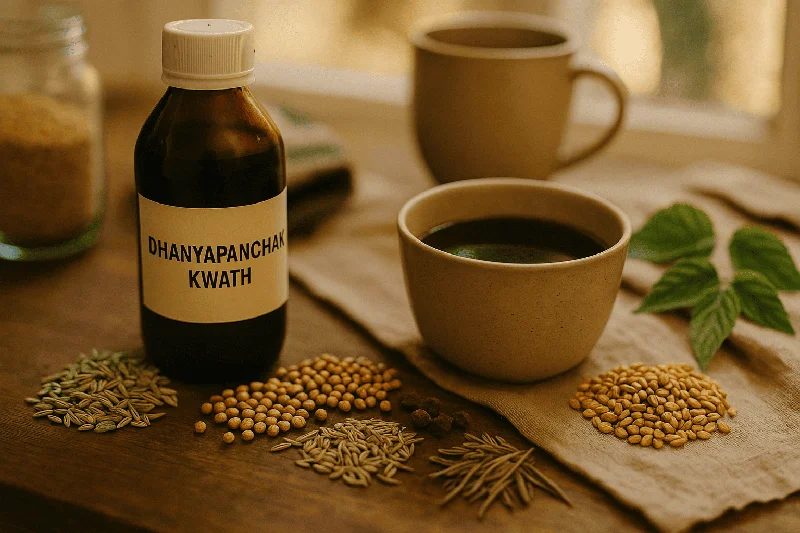
Dhanyapanchak Kwath is a classical Ayurvedic decoction (kashaya) made from five potent herbs — Dhania (coriander), Sonth (dry ginger), Nagarmotha (nutgrass), Sugandh Bala (Indian valerian), and Belgiri (bael fruit) — traditionally prescribed to strengthen digestive fire (Agni), eliminate metabolic toxins (ama), and restore gastrointestinal balance. This time-tested formulation has been referenced in authoritative texts like the Sharangdhara Samhita and the Ayurvedic Formulary of India (A.F.I.), and remains one of the most widely recommended kwath preparations for chronic diarrhea, loss of appetite, abdominal bloating, and ama-related digestive disorders.
If you've been searching for a natural, holistic approach to persistent digestive issues — one that addresses the root cause rather than just symptoms — this guide covers everything you need to know. From the exact ingredient proportions and home preparation method to age-specific dosages, drug interactions, dietary guidelines, and what the emerging clinical evidence actually says.
What Is Dhanyapanchak Kwath?
Dhanyapanchak Kwath belongs to the kwath (kashaya) category of Ayurvedic medicine — a water-based decoction where coarsely powdered herbs are boiled until the liquid reduces to a concentrated therapeutic extract. Unlike arishtas (fermented preparations) or churnas (dry powders), a kwath delivers water-soluble bioactive compounds in a form that's rapidly absorbed by the gastrointestinal tract. This makes it particularly effective for digestive conditions where quick onset of action matters.
Meaning and Etymology of the Name
The name itself reveals the formulation's identity:
- Dhanya (धान्य) = Dhania, meaning coriander (Coriandrum sativum), the principal ingredient
- Panchak (पञ्चक) = a group of five, referring to the five core herbs
- Kwath (क्वाथ) = a decoction prepared by boiling herbs in water
So, "Dhanyapanchak Kwath" literally translates to "the decoction of five herbs led by coriander."
Historical Origins and Classical References
This formulation has deep roots in the Ayurvedic classical tradition. It is documented in the Sharangdhara Samhita (Madhyama Khanda), one of the most important medieval Ayurvedic pharmacological texts composed around the 13th-14th century CE. The formulation also appears in the Ayurvedic Formulary of India (A.F.I.), Part I, published by the Government of India — giving it official pharmacopeial recognition.
Classical Sanskrit references describe its primary action as Agni-deepana (kindling digestive fire) and ama-pachana (digesting metabolic toxins), positioning it as a frontline treatment for conditions arising from impaired digestion.
Why Kwath and Not Churna or Arishta?
This is a question most people don't think to ask, but it's important. Different Ayurvedic dosage forms serve different therapeutic purposes:
| Dosage Form | Preparation | Best For | Onset of Action |
|---|---|---|---|
| Kwath (Decoction) | Boiled in water, reduced | Acute digestive issues, fever, toxin elimination | Fast (30–60 min) |
| Churna (Powder) | Dried, powdered herbs | Chronic, mild conditions; daily use | Moderate (1–2 hrs) |
| Arishta/Asava | Fermented liquid | Long-term tonics, appetite stimulation | Slow but sustained |
| Vati (Tablet) | Compressed pills | Convenience, travel, standardized doses | Moderate |
Kwath is chosen when the therapeutic goal is rapid detoxification and immediate digestive correction. The boiling process extracts volatile oils, tannins, and water-soluble phytochemicals more efficiently than cold preparations, wich makes it ideal for acute presentations of ama accumulation.
Ingredients of Dhanyapanchak Kwath — The Five Herbs in Detail
The formulation contains five herbs in equal proportion. Each herb brings a distinct pharmacological action that complements the others, creating a synergistic formula greater than the sum of its parts.
Complete Ingredient List with Botanical Names
| # | Sanskrit / Hindi Name | Botanical Name | Part Used | Proportion |
|---|---|---|---|---|
| 1 | Dhania (Dhanyaka) | Coriandrum sativum | Dried seeds | 1 part |
| 2 | Sonth (Nagara) | Zingiber officinale | Dried rhizome | 1 part |
| 3 | Nagarmotha (Musta) | Cyperus rotundus | Tuber/Rhizome | 1 part |
| 4 | Sugandh Bala | Pavonia odorata / Valeriana wallichii | Root | 1 part |
| 5 | Belgiri (Bilva) | Aegle marmelos | Unripe fruit pulp | 1 part |
Note on Sugandh Bala: There is some variation in classical texts. Some formulations identify Sugandh Bala as Pavonia odorata (fragrant swamp mallow), while others use Valeriana wallichii (Indian valerian). Both possess carminative and aromatic digestive properties. The A.F.I. references Pavonia odorata, which is considered the more authentic source for this particular formulation.
Sonth (Zingiber officinale) — The Digestive Catalyst
Sonth (dry ginger) is called Vishwabheshaja in Ayurveda — literally, "the universal medicine." Its primary active compound, gingerol (which converts to shogaol upon drying, making dry ginger more potent than fresh), has been extensively studied:
- A 2019 systematic review published in Food Science & Nutrition confirmed that ginger significantly accelerates gastric emptying and stimulates gastric motility
- Acts as a potent deepana (appetite stimulant) and pachana (digestive)
- Rasa: Katu (pungent); Virya: Ushna (hot); Vipaka: Madhura (sweet post-digestive effect)
- Balances Vata and Kapha doshas
In this formulation, Sonth serves as the primary Agni-stimulant, ensuring the digestive fire is strong enough to process both food and accumulated toxins.
Nagarmotha (Cyperus rotundus) — The Ama Destroyer
Nagarmotha is considered one of the finest ama-pachana drugs in the Ayurvedic materia medica. Its tuber contains cyperene, cyperol, and sesquiterpenes with documented anti-inflammatory and gastroprotective properties.
- A 2015 study in the Journal of Ethnopharmacology demonstrated that Cyperus rotundus extract showed significant antidiarrheal activity in experimental models, reducing intestinal motility and fluid accumulation
- Rasa: Tikta (bitter), Katu (pungent); Virya: Sheeta (cool); Vipaka: Katu
- Key action: Grahi (absorbent/binding) — critical for managing diarrhea
The combination of Nagarmotha's cooling nature with Sonth's heating nature creates a balanced thermal profile in the formulation.
Dhania (Coriandrum sativum) — The Harmonizer
As the namesake herb, Dhania plays a central role. Coriander seeds contain linalool, geraniol, and borneol — volatile compounds with carminative, antispasmodic, and mild sedative effects on the GI tract.
- Rasa: Kashaya (astringent), Tikta (bitter), Madhura (sweet); Virya: Sheeta (cool)
- Acts as a natural antacid and helps in conditions where Pitta aggravation coexists with digestive weakness
- A 2017 study in the Journal of Food Science reported significant antioxidant activity, particularly in neutralizing free radicals in the GI lining
Dhania essentially acts as the harmonizer — it mediates between the heating herbs (Sonth) and cooling herbs (Nagarmotha) to prevent any one doshic tendency from dominating.
Sugandh Bala (Pavonia odorata) — The Aromatic Soother
Sugandh Bala is an aromatic herb with a sweet, pleasant fragrance. It's classified as hridya (cardiac tonic) and deepaniya (appetizing) in classical texts.
- Rasa: Tikta (bitter), Madhura (sweet); Virya: Sheeta (cool)
- Supports healthy bile secretion and has mild hepatoprotective properties
- The aromatic compounds help relieve nausea and vomiting, common symptoms in ama-predominant conditions
Belgiri (Aegle marmelos) — The Binding Agent
Unripe Bael fruit is one of Ayurveda's most reliable antidiarrheal agents. The unripe fruit is rich in tannins and marmelosin, which give it powerful astringent and grahi (absorbent) properties.
- A 2011 study published in Pharmacognosy Reviews confirmed the antidiarrheal, antimicrobial, and gastroprotective effects of Aegle marmelos
- Rasa: Kashaya (astringent), Tikta (bitter); Virya: Ushna (hot when unripe)
- Particularly effective against chronic diarrhea and IBS-D (Irritable Bowel Syndrome, diarrhea-predominant)
Important distinction: Ripe Bael fruit is a laxative, while unripe Bael fruit is antidiarrheal. This formulation uses specifically the unripe fruit.
Role of Gur (Jaggery) in the Formulation
Some traditional preparations add Gur (jaggery) or Mishri (rock sugar) as a prakshepa dravya (adjuvant).
This serves multiple purposes:
- Improves palatability of the bitter decoction
- Acts as a yogavahi (bioenhancer) that helps carry herbal compounds deeper into tissues
- Provides quick energy to a weakened digestive system
- Jaggery specifically contains iron and minerals that complement the detoxification process
How to Prepare Dhanyapanchak Kwath at Home — Step-by-Step Guide
Traditional Classical Method
The classical method follows the standard kwath preparation outlined in Sharangdhara Samhita:
- 1.Measure the herbs: Take all five herbs in equal quantities (e.g., 10 grams each = 50 grams total). Ensure all herbs are properly dried.
- 2.Coarse grinding: Grind the combined herbs into a yavakuta (coarsely crushed) powder — not a fine powder. The pieces should be roughly the size of cracked wheat. Fine powder makes the decoction cloudy and difficult to filter.
- 3.Add water: Place the coarse powder in a clay or stainless steel vessel. Add 16 parts water (for 50 grams of herbs, use 800 ml of water).
- 4.Boil and reduce: Heat on medium flame. Once boiling starts, reduce to a gentle simmer. Continue heating until the liquid reduces to one-quarter (1/4) of its original volume — so 800 ml becomes approximately 200 ml.
- 5.Filter: Strain through a clean muslin cloth or fine strainer while still warm.
- 6.Add sweetener (optional): Add 1-2 teaspoons of jaggery or rock sugar if desired.
- 7.Serve warm: Consume immediately for maximum potency.
Pro tip: Prepare fresh each time if possible. A freshly prepared kwath retains maximum volatile oil content and therapeutic efficacy.
Storage Conditions and Shelf Life
| Form | Storage | Shelf Life | Signs of Spoilage |
|---|---|---|---|
| Fresh kwath (liquid) | Refrigerate in glass container | 24 hours maximum | Sour smell, cloudiness, mold |
| Kwath churna (dry powder mix) | Airtight container, cool dry place | 6–12 months | Loss of aroma, moisture clumping, insect activity |
| Commercial bottled kwath | As per manufacturer label | Usually 2–3 years (with preservatives) | Check expiry date, unusual taste |
Never store freshly prepared kwath at room temperature for more than 6-8 hours, especially in India's warm climate. Bacterial contamination occurs rapidly in sugar-containing warm liquids.
Medicinal Properties and How Dhanyapanchak Kwath Works
Ayurvedic Pharmacological Actions (Karma)
The formulation possesses the following classical therapeutic actions:
- Deepana — Kindles the digestive fire (Agni)
- Pachana — Digests and eliminates ama (metabolic toxins)
- Grahi — Absorbs excess fluid in the intestines (antidiarrheal)
- Anulomana — Regulates the downward movement of Vata
- Yakrit-uttejaka — Stimulates liver function and bile secretion
Action on Doshas (Dosha Karma)
Dhanyapanchak Kwath primarily balances Vata and Kapha doshas, which are typically aggravated in conditions of weak digestion, bloating, and heavy ama accumulation. It also regulates Pitta without excessively aggravating it, thanks to the cooling herbs (Dhania, Nagarmotha, Sugandh Bala) that counterbalance the heating herbs (Sonth, unripe Belgiri).
This balanced doshic action is one reason why the formulation is so widely applicable — it doesn't push the system in one direction too aggressively.
The Science Behind the Decoction — Pharmacological Mechanisms
On a modern pharmacological level, the combined action of these five herbs targets several key mechanisms:
- 1.Enhanced enzymatic secretion: Gingerols/shogaols from Sonth stimulate secretion of salivary amylase, gastric lipase, and pancreatic enzymes, improving both carbohydrate and fat digestion
- 2.Bile flow stimulation (cholagogue effect): Nagarmotha and Sugandh Bala promote bile secretion from the liver and its release from the gallbladder, aiding fat emulsification
- 3.Intestinal fluid regulation: Tannins from Belgiri and Nagarmotha reduce excessive intestinal secretion — the direct mechanism behind the antidiarrheal effect
- 4.Carminative action: Volatile oils (particularly linalool from Dhania and gingerol from Sonth) relax smooth muscle spasms in the intestinal wall, reducing gas formation and bloating
- 5.Antimicrobial activity: Multiple studies have confirmed that Aegle marmelos and Cyperus rotundus extracts inhibit common gut pathogens including E. coli and Shigella species
Indications — When Should You Use Dhanyapanchak Kwath?
Primary Indications (Strongly Supported)
- Agnimandya — Loss of appetite and weak digestive fire
- Ama dosha — Metabolic toxin accumulation (white-coated tongue, heavy feeling after meals, lethargy)
- Atisara — Chronic and acute diarrhea
- Adhmana — Abdominal bloating and distension
- Arsha — Hemorrhoids (as supportive therapy)
- Grahani — IBS-like conditions, malabsorption syndromes
- Aruchi — Tastelessness and loss of appetite
How It Promotes Digestive Health — The Ama Connection
In Ayurveda, most digestive diseases begin with ama — a concept that aligns closely with the modern understanding of endotoxins, undigested food particles, and gut-derived inflammatory mediators. When Agni is weak, food is incompletely processed, creating this toxic residue.
Dhanyapanchak Kwath addresses this through a two-step mechanism: First, the deepana herbs (Sonth, Dhania) strengthen the digestive fire. Then, the pachana herbs (Nagarmotha, Sugandh Bala) digest and neutralize the existing ama. Finally, the grahi action of Belgiri prevents further fluid loss and stabilises bowel movements.
Think of it as both fixing the engine and cleaning out the exhaust system simultaneously.
Don't wait or self medicate. Start chat with Doctor NOW
Dosage, Administration & Duration of Treatment
Standard Adult Dosage
| Parameter | Recommendation |
|---|---|
| Dose | 40–80 ml of freshly prepared kwath (or 3–6 grams of kwath churna mixed in 200ml water, boiled and reduced) |
| Frequency | Twice daily |
| Timing | Before meals (bhukta-purva) on an empty stomach |
| Anupana (vehicle) | Warm water; or with honey/jaggery for palatability |
Age-Specific Dosages
No competitor covers this, but it's crucial for safe practice:
Dosage for Children
- Children 5–12 years: One-quarter to one-half of adult dose (10–40 ml), preferably sweetened with mishri (rock sugar)
- Children below 5 years: Not generally recommended without direct supervision of a qualified Vaidya. Breastfeeding mothers may take the kwath, allowing the child to receive benefits through breast milk.
Dosage for the Elderly
- Above 65 years: Start with half the standard dose (20–40 ml). Elderly patients often have naturally reduced Agni and may respond to lower doses. Increase gradually if tolerated well.
Dosage by Prakriti (Constitutional Type)
- Vata prakriti: Full dose with jaggery and a pinch of rock salt
- Pitta prakriti: Reduced dose (30–50 ml) with mishri to prevent excess heat
- Kapha prakriti: Full dose with honey as anupana
Duration of Treatment for Specific Conditions
| Condition | Recommended Duration | Notes |
|---|---|---|
| Acute diarrhea | 3–5 days | Discontinue once stools normalize |
| Chronic diarrhea / Grahani | 4–8 weeks | Monitor weekly; adjust dose as needed |
| Loss of appetite (Agnimandya) | 2–4 weeks | Usually shows results within 5-7 days |
| Ama detoxification | 2–3 weeks | Best combined with light diet (laghu ahara) |
| IBS (diarrhea-predominant) | 6–12 weeks | Combine with Pathya diet; may need intermittent courses |
| Post-Panchakarma digestive recovery | 1–2 weeks | Supports re-establishment of Agni after shodhana |
Dietary Recommendations During Treatment (Pathya-Apathya)
This is one of the most overlooked aspects of Ayurvedic treatment. The kwath works best when supported by appropriate diet.
What to Eat (Pathya)
- Old rice (purana shali) — easy to digest, light
- Moong dal — lightest among pulses, high in digestibility
- Buttermilk (takra) — probiotic-like action, supports Agni
- Light soups — with cumin, ginger, black pepper
- Pomegranate — astringent fruit that complements the grahi action
- Well-cooked vegetables — lauki (bottle gourd), parwal (pointed gourd), tender pumpkin
What to Avoid (Apathya)
- Heavy, oily, fried foods — directly weaken Agni
- Raw salads and cold beverages — suppress digestive fire
- Curd/yogurt at night — increases kapha and ama
- Fermented and excessively spicy foods — can irritate an already sensitive GI tract
- Maida (refined flour) products — difficult to digest, promotes ama
- Incompatible food combinations (viruddha ahara) — e.g. milk with sour fruits, fish with milk
Dhanyapanchak Kwath vs Other Ayurvedic Kwaths — Comparison
| Feature | Dhanyapanchak Kwath | Dashamoola Kwath | Pathyadi Kwath | Phaltrikadi Kwath |
|---|---|---|---|---|
| Number of herbs | 5 | 10 | 6+ | 3 |
| Primary target | Digestion, ama, diarrhea | Pain, inflammation, Vata disorders | Headache, sinusitis, fever | Diabetes, metabolic disorders |
| Dosha focus | Vata-Kapha | Vata primarily | Pitta-Kapha | Kapha-Pitta |
| Key strength | Digestive correction | Musculoskeletal & neurological | Upper respiratory & head disorders | Blood sugar regulation |
| When to choose | Digestive complaints are primary | Body pain, joint stiffness dominant | Headache, sinusitis, febrile conditions | Prameha (diabetes-related) symptoms |
This comparison should help you understand when Dhanyapanchak Kwath is the right choice versus other popular kwath formulations.
Interaction with Modern (Allopathic) Medications
This is an area that no existing resource adequately covers, yet it's one of the most practical concerns for patients using both systems of medicine simultaneously.
Known and Potential Interactions
- - Antidiabetic drugs (Metformin, Glimepiride): Sonth has mild hypoglycemic activity.
- Concurrent use may potentiate blood sugar lowering — monitor glucose levels closely
- Anticoagulants (Warfarin, Aspirin): Ginger has documented antiplatelet activity. A 2018 review in Phytotherapy Research noted that high-dose ginger may increase bleeding risk when combined with blood thinners
- Antidiarrheal drugs (Loperamide): Additive effect — may cause excessive constipation if taken together
- Iron supplements: Tannins from Belgiri can reduce iron absorption. Space administration by at least 2 hours
- Antibiotics: Generally safe to combine; Dhanyapanchak Kwath may actually support gut recovery during antibiotic use
General rule: Maintain a gap of at least 1-2 hours between this kwath and any allopathic medication. Always inform both your Ayurvedic practitioner and allopathic doctor about concurrent medications.
Side Effects, Precautions, and Contraindications
Dhanyapanchak Kwath is generally considered safe when taken in recommended doses for appropriate durations. However, certain precautions are necessary.
Possible Side Effects
- Mild burning sensation in the epigastric region (due to Sonth) — usually transient
- Constipation if taken excessively — the grahi action can over-bind stools
- Dry mouth in Vata-dominant individuals
Precautions
- Pregnancy: Avoid unless specifically prescribed by a qualified Ayurvedic practitioner. Sonth in therapeutic doses may stimulate uterine contractions.
- Breastfeeding: Generally safe in moderate doses; herbs may pass into breast milk (which can actually benefit the infant's digestion)
- Hyperacidity / Gastric ulcers: Use with caution — the heating nature of Sonth may aggravate Pitta in sensitive individuals. Reduce Sonth proportion or add more Dhania to compensate.
- Diabetes: Monitor blood sugar regularly due to potential hypoglycemic interaction
- Chronic kidney disease: Consult physician before use — some herbs may affect renal clearance
Absolute Contraindications
- Known allergy to any of the five ingredient herbs
- Active gastrointestinal bleeding
- Severe dehydration (rehydrate first, then begin kwath therapy)
Integration with Other Ayurvedic Treatments
Combining with Panchakarma
Dhanyapanchak Kwath is often prescribed during the Paschat Karma (post-procedure) phase of Panchakarma therapy. After shodhana procedures like Virechana (purgation) or Basti (medicated enema), the digestive fire is typically weakened. This kwath helps re-establish Agni gradually.
It can also be used during the Purva Karma (preparatory) phase to clear ama before the main panchakarma procedure, ensuring better outcomes from shodhana.
Combining with Other Formulations
- With Hingvastak Churna: For severe bloating with loss of appetite
- With Kutajarishta: For chronic diarrhea with mucus or blood
- With Panchamrit Parpati: For Grahani (malabsorption syndrome)
- With Chitrakadi Vati: For stubborn Agnimandya unresponsive to kwath alone
Clinical Evidence and Research
While large-scale RCTs (Randomized Controlled Trials) specifically on Dhanyapanchak Kwath are limited, the existing evidence is encouraging:
- A clinical study published in the International Journal of Ayurveda and Pharmaceutical Research (IJAPR) evaluated the efficacy of Dhanya Panchak Kwatha in patients with Grahani (IBS-like condition) and reported significant improvement in symptoms including stool consistency, appetite, and abdominal pain over a 4-week treatment period
- Individual ingredient studies provide robust support: a 2020 meta-analysis of ginger's effects on gastrointestinal function (Nutrients journal) analyzed 14 RCTs and found significant improvements in gastric motility and nausea reduction
- Aegle marmelos has been studied in multiple pharmacological investigations — a 2016 study in BMC Complementary and Alternative Medicine confirmed its antidiarrheal efficacy through inhibition of prostaglandin-mediated intestinal secretion
The evidence gap exists not because the formulation doesn't work, but because polyherbal formulations are inherently more difficult (and expensive) to study in conventional RCT frameworks. More research is absolutely needed.
Where to Purchase Authentic Dhanyapanchak Kwath
Authenticity matters enormously with Ayurvedic formulations.
Here's what to look for:
- GMP-certified manufacturers: Look for products from pharmacies holding Good Manufacturing Practice certification from the AYUSH Ministry
- Ingredient transparency: The label should clearly list all five herbs with botanical names and proportions
- Batch number and expiry date: Non-negotiable for quality assurance
- Reputable brands: Established Ayurvedic pharmacies with decades of manufacturing history tend to maintain better quality control
- Avoid "proprietary" versions with undisclosed additional ingredients — the classical formula is well-defined and doesn't need modification
You can purchase from licensed Ayurvedic pharmacies, hospital dispensaries, or verified online Ayurvedic stores. When in doubt, ask your practitioner to recommend a specific brand.
Frequently Asked Questions (FAQ)
What is the use of kwath in Ayurveda?
A kwath (kashaya) is a water-based herbal decoction used for therapeutic purposes. Herbs are boiled in water until the liquid reduces to 1/4th of its original volume, concentrating the active compounds. Kwaths are used for a wide range of conditions including digestive disorders, fever, respiratory issues, and pain management. They are considered faster-acting than powders or tablets.
How long does it take to see results from Dhanyapanchak Kwath?
Most patients report noticeable improvement in appetite and bloating within 3–5 days. For chronic diarrhea or Grahani, meaningful clinical improvement typically takes 2–4 weeks of consistent use. Severe, long-standing conditions may require 8–12 weeks.
Can Dhanyapanchak Kwath be combined with other Ayurvedic treatments?
Yes, it is commonly combined with other Ayurvedic formulations and even Panchakarma procedures. It works synergistically with Hingvastak Churna, Kutajarishta, and Panchamrit Parpati for complex digestive conditions. Always combine under practitioner guidance.
What are the dietary recommendations while using Dhanyapanchak Kwath?
Follow a light, warm, easily digestible diet. Favor old rice, moong dal, buttermilk, and well-cooked vegetables. Avoid heavy, fried, cold, and raw foods. Curd at night, excess spice, and incompatible food combinations should be strictly avoided during the treatment period.
What precautions should I take when starting Dhanyapanchak Kwath?
Start with the lower end of the dosage range and increase gradually. Pregnant women should avoid it unless prescribed by a qualified Vaidya. If you are on blood thinners, antidiabetic drugs, or any chronic medication, maintain a 2-hour gap and inform your doctor. Discontinue if you experience persistent burning sensation or excessive constipation.
What is dhanyaka in Ayurveda?
Dhanyaka is the Sanskrit name for coriander (Coriandrum sativum). It is classified as a tridoshahara herb (balances all three doshas) with particular affinity for the digestive and urinary systems. Its seeds are cooling, carminative, and diuretic, making them valuable in numerous Ayurvedic formulations.
How does Dhanyapanchak Kwath differ from Phaltrikadi Kwath?
- While both are classical kwath preparations, they serve very different purposes. Dhanyapanchak Kwath targets digestive disorders (diarrhea, bloating, ama), while Phaltrikadi Kwath is primarily indicated for Prameha (diabetes and urinary disorders).
- Their ingredient compositions are completely different — the only commonality is the dosage form (kwath).
Conclusion — Restoring Digestive Harmony the Ayurvedic Way
- Dhanyapanchak Kwath represents centuries of clinical wisdom distilled into five carefully chosen herbs.
- Its elegance lies in its simplicity — each ingredient addresses a specific aspect of digestive dysfunction, and together they create a comprehensive therapeutic response that modern single-molecule drugs rarely achieve.
- Whether you're dealing with stubborn digestive issues, recovering from a bout of illness, or simply looking to strengthen your Agni as part of a preventive health routine, this classical formulation deserves serious consideration.
- But remember — Ayurvedic medicine works best as part of a complete system that includes appropriate diet, lifestyle, and professional guidance.
- Don't self-medicate for chronic conditions. Consult a qualified Ayurvedic practitioner (BAMS or MD Ayurveda) who can assess your prakriti, evaluate the nature of your condition, and prescribe the right dosage and duration for your specific needs.
- The information in this article is educational — personalized medical advice from a trained Vaidya is irreplaceable.
This article is for informational purposes only and should not be considered a substitute for professional medical advice. Always consult a qualified healthcare practitioner before starting any new treatment.
Scientific Sources
- Herbal treatments for migraine: A systematic review of randomised-controlled studies — Lopresti AL et al., 2020, Phytotherapy research : PTR
- Phytotherapy in periodontics as an effective and sustainable supplemental treatment: a narrative review — Gawish AS et al., 2024, Journal of periodontal & implant science
- Spices: Therapeutic Potential in Cardiovascular Health — Rastogi S et al., 2017, Current pharmaceutical design
- Coriander Genomics Database: a genomic, transcriptomic, and metabolic database for coriander — Song X et al., 2020, Horticulture research
- Ethnobotanical and phytochemical aspects of the edible herb Coriandrum sativum L — Sobhani Z et al., 2022, Journal of food science
- A review of effective herbal medicines in controlling menopausal symptoms — Kargozar R et al., 2017, Electronic physician
- A Systematic Review and Meta-Analysis of Ayurvedic Herbal Preparations for Hypercholesterolemia — Gyawali D et al., 2021, Medicina (Kaunas, Lithuania)
- Cumin — 2006
- Anise — 2006
- Black Cumin Seed — 2012
- Polycystic ovaries and herbal remedies: A systematic review — Manouchehri A et al., 2023, JBRA assisted reproduction
- Nutritional and herbal interventions for polycystic ovary syndrome (PCOS): a comprehensive review of dietary approaches, macronutrient impact, and herbal medicine in management — Muhammed Saeed AA et al., 2025, Journal of health, population, and nutrition
- Efficacy of herbal medicine (cinnamon/fennel/ginger) for primary dysmenorrhea: a systematic review and meta-analysis of randomized controlled trials — Xu Y et al., 2020, The Journal of international medical research
- Dietary supplements for dysmenorrhoea — Pattanittum P et al., 2016, The Cochrane database of systematic reviews
- Fennel — 2006
- Integration of molecular docking, molecular dynamics and network pharmacology to explore the multi-target pharmacology of fenugreek against diabetes — Luo W et al., 2023, Journal of cellular and molecular medicine
- Herbal Products Used in Menopause and for Gynecological Disorders — Kenda M et al., 2021, Molecules (Basel, Switzerland)
- Herbal Teas and their Health Benefits: A Scoping Review — Poswal FS et al., 2019, Plant foods for human nutrition (Dordrecht, Netherlands)
- Examining the Effects of Herbs on Testosterone Concentrations in Men: A Systematic Review — Smith SJ et al., 2021, Advances in nutrition (Bethesda, Md.)
- Health Benefits of Culinary Herbs and Spices — Jiang TA, 2019, Journal of AOAC International
Questions from users
What is the best time of day to take Dhanyapanchak Kwath for maximum effectiveness?
Grayson
13 days ago
The ideal time to take Dhanyapanchak Kwath is usually on an empty stomach, either in the morning or 30 minutes before meals. This timing can help enhance digestion and detoxification effects. Just make sure you’re consistent with the timing for the best results. And don't forget, listen to your body's unique response too!
Can I take Dhanyapanchak Kwath if I have a sensitive stomach?
Oakley
22 days ago
If you have a sensitive stomach, it's wise to start with a small dose of Dhanyapanchak Kwath and observe how your body reacts. It might be gentle on digestion, but everyone's different. Definitely check in with an Ayurvedic practitioner to see if it's suitable for you, they’ll have more personalized advice given your unique constitution and current conditions!
What are the main health benefits of using Dhanyapanchak Kwath for digestion?
Walker
32 days ago
Dhanyapanchak Kwath is great for digestion! It helps stimulate Agni, your digestive fire, which boosts digestion and detoxifies by eliminating ama (toxins). Plus, it balances the doshas, helping with overall harmony. It's important to choose good quality herbs though to get these benefits, ya know? 😊
What is the traditional preparation method for making Dhanyapanchak Kwath?
Grayson
41 days ago
Dhanyapanchak Kwath is traditionally made by combining equal quantities of cumin, coriander, fennel, dill, and ajwain seeds. You boil a tablespoon of these mixed seeds in about 2 cups of water until it reduces by half. Strain and drink warm. It boosts digestion and detox! If needed, consult an Ayurvedic practitioner for specific guidance.
Is it safe to combine Dhanyapanchak Kwath with other herbal remedies?
Mason
51 days ago
Combining Dhanyapanchak Kwath with other herbal remedies is generally safe if they're compatible, but it's important to pay attention to your individual constitution (prakriti) and any health issues. If you're not sure, or you're taking it with other remedies, it might be best to consult with an Ayurvedic practitioner. They can help ensure the combinations won't disturb your dosha balance or cause any unintended effects!
Can I use Dhanyapanchak Kwath for improving my energy levels?
Hannah
60 days ago
Dhanyapanchak Kwath is great for digestion and detoxing, so it can support energy by improving how your body absorbs nutrients. If your tiredness is digestion-related, it could help! But, for direct energy boosts, other methods like balancing your doshas or lifestyle changes might be more effective.
Can I take Dhanyapanchak Kwath while pregnant or breastfeeding?
Jayden
70 days ago
Hmm, tricky question. While Dhanyapanchak Kwath is generally used for digestion and detox, it's always better to be cautious during pregnancy and breastfeeding. It's essential to consult an Ayurvedic practitioner to see if it’s safe for your specific situation. Everyone's body reacts differently, especially when things get that delicate.
Can I take Dhanyapanchak Kwath for weight management alongside a balanced diet?
Meredith
80 days ago
Yes, you can take Dhanyapanchak Kwath for weight management alongside a balanced diet. This Ayurvedic decoction supports digestion and detoxification, which can help with overall metabolic health. Just make sure it's under professional guidance, so it's an aligned fit with your personal dosha balance and health needs.
Can Dhanyapanchak Kwath be used alongside other Ayurvedic supplements or remedies?
Allison
157 days ago
Yes, Dhanyapanchak Kwath can usually be taken with other Ayurvedic supplements, but it's best to consult an Ayurvedic practitioner first. Different remedies can interact depending on your dosha or if there's any imbalance. A practitioner can ensure it complements your overall care and helps balance your agni without conflicts.
What are the potential long-term effects of using Dhanyapanchak Kwath regularly?
Rae
163 days ago
Regular use of Dhanyapanchak Kwath can enhance digestion by boosting Agni, but using it long-term without breaks might lead to imbalances in the body's natural rhythms. It could also affect your dosha balance if it's not aligned with your individual constitution. It's always good to check with an Ayurvedic practitioner regularly to ensure its still suitable for you.
Related articles

Gastrointestinal Disorders
Kutaj Parpati Vati Benefits, Dosage, Side Effects, Ingredients
Exploration of Kutaj Parpati Vati Benefits, Dosage, Side Effects, Ingredients
1,908

Gastrointestinal Disorders
Kutajarishtam Uses: A Comprehensive, Evidence-Based Overview
Discover kutajarishtam uses, benefits, and evidence-based insights for digestive support. Learn about dosage, side effects, and overall efficacy.
2,718
Gastrointestinal Disorders
Natural Ayurvedic Medicine for Creatinine: Lower Levels Safely & Effectively
Explore how Ayurvedic medicine addresses high creatinine levels naturally, with insights on herbs, dosage, benefits, and scientific evidence behind these remedies.
2,202

Gastrointestinal Disorders
How to Heal a Fistula Without Surgery: Ayurvedic Methods and Recovery
Learn how to heal a fistula without surgery using Ayurvedic remedies, herbal treatments, and lifestyle changes. Discover safe and natural ways to support recovery
5,621

Gastrointestinal Disorders
Punarnavashtak Kwath Churna: Benefits, Dosage & Scientific Insights
Explore the benefits, proper dosage, uses, and scientific research behind Punarnavashtak Kwath Churna, a potent Ayurvedic herbal formulation.
4,759

Gastrointestinal Disorders
Sthoulyahara Kashaya: The Comprehensive Guide to Benefits, Uses, Dosage, and Ayurvedic Insights
Discover the benefits, proper dosage, uses, and Ayurvedic foundations of Sthoulyahara Kashaya, a traditional herbal decoction for digestive and overall health.
4,630

Gastrointestinal Disorders
Samyak Virechana Lakshana: The Science of Proper Purgation
Discover the principles of Samyak Virechana Lakshana, evidence-based insights, and practical steps to ensure effective and balanced Ayurvedic purgation.
3,289

Gastrointestinal Disorders
Trivrit Lehyam: Benefits, Dose, Side Effects, How to Use, Ingredients
Exploration of Trivrit Lehyam: Benefits, Dose, Side Effects, How to Use, Ingredients
2,856

Gastrointestinal Disorders
Khanjanikari Ras: Benefits, Uses & Ayurvedic Insights
Discover Khanjanikari Ras, an Ayurvedic remedy. Learn about its benefits, applications, ingredients, dosage, and how it supports overall health and wellness.
2,429

Gastrointestinal Disorders
Ayurvedic Treatment for Gastritis: A Real Talk on Gut Healing
Let’s not sugarcoat it—gastritis sucks. Whether it hits you like a slow burn or drops you with sudden, stabbing upper-abdominal pain, it’s no walk in the park. Technically speaking, gastritis is inflammation of the stomach lining. But if you’ve dealt with
3,159
Related questions on the topic
Legal
Additional Documents
© 2024 Ask Ayurveda. All rights reserved.