FREE! Ask Ayurvedic Doctors 24/7

 Fast responses
 1000+ verified doctors
Hingvadi Churna – Traditional Ayurvedic Powder for Digestion and Detoxification
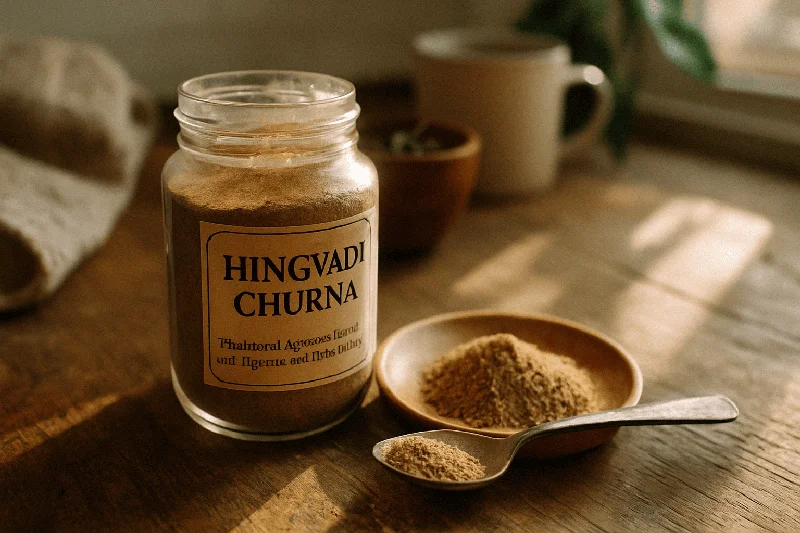
Hingvadi Churna is a classical Ayurvedic herbal powder formulation primarily used to treat digestive disorders such as bloating, flatulence, abdominal pain, loss of appetite, and accumulation of toxins (ama). Referenced in revered texts like the Yogaratnakara and Ayurved Sar Sangrah, this churna combines asafoetida (Hing) with a carefully balanced set of aromatic spices and alkaline salts to reignite digestive fire (Agni), pacify Vata and Kapha doshas, and restore gastrointestinal comfort. If you've been searching for an authentic, time-tested remedy for chronic indigestion, this guide covers everything — from ingredients and preparation to dosage protocols, clinical evidence, and safety considerations you won't find anywhere else.
What Is Hingvadi Churna?
Definition and Classical References
Hingvadi Churna (also spelled Hingwadi Churna) is a polyherbal powder classified under "Churna Prakarana" (powder formulations) in Ayurvedic pharmacology. The prefix "Hingvadi" literally means "starting with Hingu (asafoetida)" — which is the principal herb in this blend.
The formulation is documented in the Yogaratnakara, a 17th-century Ayurvedic compendium, and is also found in the Ayurved Sar Sangrah, one of the most widely used reference texts for Ayurvedic pharmacies across India. Different editions of these texts present slightly different compositions, which explains why you may see variations between manufacturers — a topic we cover in detail below.
Historical Roots in Ayurvedic Tradition
The use of asafoetida as a digestive aid stretches back thousands of years. Ancient Ayurvedic physicians recognized that hing's pungent, hot properties could dispel accumulated gas (Vayu) and stimulate sluggish digestion almost immediately. Over time, formulations evolved to combine hing with complementary herbs — alkaline salts (kshara), ginger, and pepper — creating synergistic blends far more effective than any single ingredient alone.
Hingvadi Churna represents one such evolved formula. It was designed not merely to relieve symptoms but to address the root cause of digestive imbalance: weakened Agni and excessive ama. The formulation became a staple in Ayurvedic clinical practice, particularly for patients presenting with chronic abdominal distension, irregular bowel movements, and a coated tongue — all classic signs of ama accumulation.
Hingvadi Churna vs Hingvashtak Churna — Key Differences
This is probably the most common question people have, and surprisingly, no other resource answers it clearly.
So here's a straightforward comparison:
| Feature | Hingvadi Churna | Hingvashtak Churna |
|---|---|---|
| Primary text | Yogaratnakara, Ayurved Sar Sangrah | Sharangdhara Samhita, Ashtanga Hridaya |
| Number of ingredients | 5–8 (varies by manufacturer) | 8 core ingredients (ashta = eight) |
| Key distinguishing herbs | Contains kshara (alkaline salts), sajjikshar, or yavakshar | Contains cumin (Jeeraka), caraway (Krishna Jeeraka), ajwain |
| Primary action | Strong ama-pachana (toxin digestion), Vata-anulomana | Deepana (appetite stimulation), mild laxative |
| Best suited for | Bloating with toxin accumulation, abdominal heaviness, sluggish metabolism | Loss of appetite, gas, mild indigestion |
| Potency | Generally hotter and more potent due to kshara | Milder, more suitable for everyday use |
| Pregnancy safety | Not recommended | Also not recommended during pregnancy without supervision |
In short: If your primary complaint is heavy, toxic-feeling indigestion with coated tongue and lethargy, Hingvadi Churna is the better choice. If you simply have poor appetite or mild gas, Hingvashtak Churna may suffice.
Ingredients of Hingvadi Churna
Complete List of Ingredients
Below is the composition based on the Yogaratnakara reference, which is the most commonly followed formulation:
| # | Sanskrit Name | Hindi Name | English/Latin Name | Part Used | Proportion |
|---|---|---|---|---|---|
| 1 | Hingu | Hing | Asafoetida (Ferula asa-foetida) | Oleo-gum resin | 1 part |
| 2 | Shunthi | Sonth | Dried Ginger (Zingiber officinale) | Rhizome | 1 part |
| 3 | Maricha | Kali Mirch | Black Pepper (Piper nigrum) | Fruit | 1 part |
| 4 | Pippali | Pippal | Long Pepper (Piper longum) | Fruit | 1 part |
| 5 | Haritaki | Harad | Chebulic Myrobalan (Terminalia chebula) | Fruit rind | 1 part |
| 6 | Saindhava Lavana | Sendha Namak | Rock Salt | Mineral | 1 part |
| 7 | Yavakshara | Javakhar | Barley Alkali (ash of Hordeum vulgare) | Processed ash | 1 part |
| 8 | Sajjikshar | Sajji Khar | Sajji Kshara (sodium carbonate) | Mineral salt | 1 part |
Note: Some formulations also include Ajamoda (celery seeds) or Chitraka (leadwort root), depending on the manufacturer's reference text.
Role and Properties of Key Ingredients (Rasa, Veerya, Vipaka)
| Ingredient | Rasa (Taste) | Veerya (Potency) | Vipaka (Post-digestive) | Primary Role in Formula |
|---|---|---|---|---|
| Hingu | Katu (Pungent) | Ushna (Hot) | Katu | Vata-anulomana (downward movement of gas), anti-spasmodic |
| Shunthi | Katu | Ushna | Madhura (Sweet) | Deepana-Pachana (kindles Agni, digests ama), anti-inflammatory |
| Maricha | Katu | Ushna | Katu | Bioavailability enhancer, clears Kapha, stimulates gastric secretions |
| Pippali | Katu | Anushna-Sheeta (mildly hot) | Madhura | Rasayana (rejuvenative), enhances absorption, bronchodilator |
| Haritaki | Pancharasa (five tastes, predominantly Kashaya) | Ushna | Madhura | Mild laxative, detoxifier, balances all three doshas |
| Saindhava Lavana | Lavana (Salty) | Sheeta (Cool) | Madhura | Improves taste, supports electrolyte balance, mild digestive |
| Yavakshara | Katu, Lavana | Ushna | Katu | Strongly alkaline — dissolves ama, reduces abdominal distension |
| Sajjikshar | Katu | Ushna | Katu | Antacid-like action, breaks down undigested food material |
The combination of Trikatu (Shunthi + Maricha + Pippali) creates a powerful digestive triad, while the two kshara components provide an alkaline environment that literally helps dissolve accumulated metabolic waste. Haritaki adds a gentle laxative action, ensuring that mobilized toxins are actually eliminated rather than simply redistributed.
Variations in Composition Across Manufacturers
This is something that confuses a lot of people. If you compare the ingredient lists of Hingvadi Churna from, say, Baidyanath, DAV Pharmacy, Planet Ayurveda, and Tansukh, you'll notice they're not identical.
Here's why: different manufacturers follow different classical references — some use Yogaratnakara, others prefer Ayurved Sar Sangrah, and a few follow regional Ayurvedic compendia. Additionally, the Ayurvedic Formulary of India (AFI) standardizes certain formulations, but Hingvadi Churna has multiple legitimate variants.
Practical takeaway: Always check the ingredient list on the specific product you buy. If your Ayurvedic practitioner has prescribed a specific composition, make sure the product matches.
Original Sanskrit Shloka
The classical verse from Yogaratnakara (Gulma Rogadhikara section) describes the formulation as:
> हिङ्गु सैन्धवयोः चूर्णं यवक्षारं सजिक्षारम् ।
> शुण्ठी मरिचपिप्पलीभिः हरीतकी सहितं चूर्णम् ॥
This shloka outlines the combination of Hingu, Saindhava, Yavakshara, Sajjikshara, Shunthi, Maricha, Pippali, and Haritaki in equal parts.
Method of Preparation
Traditional Preparation Process
- 1.Purification of Hingu: Raw asafoetida is first purified (shodhana) by frying it in ghee until it swells and becomes fragrant. This step removes impurities and enhances its digestive potency.
- 2.Individual powdering: Each herb is separately dried and powdered to a fine consistency (at least 80-mesh sieve).
- 3.Bhavana (Levigation): In some traditional preparations, the mixed powder is subjected to bhavana — a process where the powder is ground with fresh ginger juice (Ardraka svarasa) or lemon juice (Nimbu rasa) and then dried. This process may be repeated 3–7 times.
- 4.Final mixing: All powdered ingredients are combined in equal proportions and thoroughly mixed to ensure uniform distribution.
- 5.Storage: The final churna is stored in airtight glass or food-grade containers, away from moisture and direct sunlight.
Why Bhavana with Ginger Juice Matters
The bhavana process isn't just ceremonial. A study published in the Journal of Ayurveda and Integrative Medicine (2016) demonstrated that levigation with herbal juices enhances the bioavailability of active compounds and can increase the shelf stability of churna formulations. In the case of Hingvadi Churna, ginger juice bhavana amplifies the digestive potency of every ingredient it touches.
Benefits and Uses of Hingvadi Churna
How Does Hingvadi Churna Aid in Digestion and Detoxification?
The primary mechanism involves three simultaneous actions:
- 1.Agni Deepana (Kindling Digestive Fire): The Trikatu combination (ginger, black pepper, long pepper) directly stimulates gastric acid secretion and digestive enzyme production. A 2012 study in Planta Medica found that piperine from black pepper increases pancreatic lipase and amylase activity by up to 20%.
- 2.Ama Pachana (Digesting Toxins): The kshara (alkaline) components — Yavakshara and Sajjikshara — create an alkaline micro-environment that helps break down incompletely digested food material. Think of it as the Ayurvedic equivalent of an enzymatic cleanse.
- 3.Vata Anulomana (Normalizing Downward Movement): Hingu is perhaps the most powerful carminative in the Ayurvedic pharmacopoeia. It relaxes intestinal smooth muscle spasms while simultaneously promoting the downward movement of gas (Apana Vayu). This directly addresses bloating, distension, and flatulence.
Specific Conditions Where Hingvadi Churna Is Used
Based on classical indications and clinical practice, Hingvadi Churna is prescribed for:
- Adhmana (Abdominal bloating/distension)
- Gulma (Abdominal tumors/lumps — in Ayurvedic context, this includes functional masses like trapped gas)
- Agnimandya (Weak digestive fire / loss of appetite)
- Ajirna (Indigestion)
- Vibandha (Constipation — especially when caused by Vata imbalance)
- Udara Shoola (Abdominal pain/colic)
- Krimi (Intestinal worms — traditional indication)
- Aruchi (Anorexia/tastelessness)
Application in IBS (Irritable Bowel Syndrome)
While no specific RCT exists on Hingvadi Churna for IBS, the individual ingredients have substantial evidence. A 2013 systematic review in BMC Complementary and Alternative Medicine found that asafoetida-based formulations showed significant improvement in IBS symptoms, particularly bloating and abdominal pain. The combination of carminative, antispasmodic, and mild laxative actions makes Hingvadi Churna particularly well-suited for IBS with predominant bloating (IBS-B) and constipation-predominant IBS (IBS-C).
Suggested protocol: 3g twice daily with warm water, 30 minutes before meals, for 4–6 weeks. Follow up with a practitioner after the initial course.
Application in GERD and Hyperacidity
This requires caution. Hingvadi Churna is hot in potency and contains strong digestive stimulants. In cases of active acid reflux or Pitta-predominant GERD, this formula may worsen symptoms. However, in cases where GERD is caused by sluggish digestion (Mandagni) with secondary acid accumulation, a low dose (1–2g) with cool water may be appropriate under practitioner guidance.
Can Hingvadi Churna Help with Weight Management?
- Yes, indirectly. The formula accelerates metabolism by strengthening Agni and clearing metabolic channels (srotas). When the body efficiently digests and eliminates food, fat metabolism (Medo Dhatu Agni) also improves. A 2019 study in Evidence-Based Complementary and Alternative Medicine found that piperine supplementation (a key component of black pepper in this formula) reduced body fat percentage in overweight adults over 8 weeks.
- However, Hingvadi Churna alone is not a weight-loss pill — it works best as part of a comprehensive Ayurvedic protocol that includes dietary modifications and exercise.
Role in Strengthening Immunity
Ayurveda has always maintained that strong Agni is the foundation of strong immunity (Vyadhikshamatva). When digestion is weak, ama accumulates, which directly suppresses the immune response. By restoring optimal Agni and clearing ama, Hingvadi Churna indirectly supports immune function. Haritaki in the formula is classified as a Rasayana (rejuvenative) in the Charaka Samhita and has demonstrated immunomodulatory activity in a 2017 study published in the International Journal of Green Pharmacy.
Anti-Inflammatory and Metabolic Support
The cumulative anti-inflammatory action of ginger, black pepper, and long pepper is well-documented. Gingerols from Shunthi inhibit COX-2 and 5-LOX pathways (a 2015 meta-analysis in Nutrients confirmed this across 9 clinical trials), while piperine modulates NF-κB signaling. For patients with chronic low-grade inflammation manifesting as sluggish digestion, joint stiffness, and fatigue — Hingvadi Churna addresses multiple pathways simultaneously.
Respiratory and Cardiac Applications
The Ayurved Sar Sangrah mentions Hingvadi Churna in the context of Kasa (cough), Shwasa (dyspnea), and Hridroga (heart conditions). The Vata-pacifying and Kapha-liquefying properties of the formula make it useful for productive cough with chest congestion. However, for cardiac applications, this should only be used under direct supervision of a qualified Ayurvedic physician.
Effect on Tridosha
Hingvadi Churna primarily pacifies Vata and Kapha doshas due to its hot potency (Ushna Veerya), pungent taste, and drying quality.
- Vata: Strongly pacifies — through carminative, antispasmodic, and anulomana actions
- Kapha: Pacifies — through hot, pungent, and channel-clearing properties
- Pitta: May aggravate in excess — due to the strong Ushna Veerya of most ingredients
Individuals with Pitta-predominant constitution (Pitta Prakriti) should use this formula in lower doses and ideally with cooling adjuvants like coconut water or gulkand.
Dosage and Administration
Recommended Dose
| Age Group | Dose | Frequency | Adjuvant (Anupana) |
|---|---|---|---|
| Adults (18–60 yrs) | 2–4 g (approximately ½ to 1 teaspoon) | Twice daily | Warm water, buttermilk, or honey |
| Elderly (60+ yrs) | 1–2 g | Twice daily | Warm water with a pinch of ghee |
| Children (5–12 yrs) | 500 mg – 1 g | Once or twice daily | Warm water with honey |
| Children below 5 | Not recommended without practitioner supervision | — | — |
When Is the Best Time to Take Hingvadi Churna?
The optimal time is 30 minutes before meals (Pragbhakta Kala) for digestive complaints. This allows the churna to prime the digestive system before food arrives. For abdominal bloating and gas, immediately after meals (Adhobhakta Kala) with warm water works better for some patients.
Adjuvants (Anupana) and How They Change the Effect
- Warm water: General digestive support, Vata pacification
- Buttermilk (Takra): Specifically beneficial for chronic indigestion, IBS, and ama conditions — this is classically the most recommended anupana
- Honey: Useful when Kapha is predominant (heaviness, nausea, coated tongue)
- Ghee: Recommended for elderly patients or those with dry constitution to buffer the hot potency
Course Duration and Long-Term Safety
A typical course lasts 4–8 weeks. For chronic conditions, some practitioners prescribe it for up to 12 weeks with periodic breaks (e.g., 6 weeks on, 2 weeks off).
Is Hingvadi Churna safe for long-term use? The kshara components (Yavakshara and Sajjikshara) are potent alkaline substances. Prolonged continuous use beyond 3 months without breaks may irritate the gastric mucosa or affect electrolyte balance. Always follow the duration recommended by your Ayurvedic physician.
Side Effects, Contraindications & Precautions
Potential Side Effects
When taken in recommended doses, Hingvadi Churna is generally well-tolerated.
However, possible side effects include:
- Burning sensation in the stomach or chest (especially in Pitta-dominant individuals)
- Loose stools — particularly if the dose is too high
- Excessive thirst or dryness of the mouth
- Skin rashes — rare, but possible in asafoetida-sensitive individuals
Contraindications
- Pregnancy: Hingu is classified as Garbhashaya Sankochaka (uterine stimulant). Hingvadi Churna is strictly contraindicated during pregnancy.
- Lactation: Use with caution. Hing can pass into breast milk and may cause colic in some nursing infants. Consult a practitioner before use.
- Active peptic ulcers or gastritis: The hot potency and kshara content can worsen active mucosal inflammation.
- Bleeding disorders: Some ingredients (particularly Maricha and Pippali) may have mild blood-thinning activity.
- Children under 5 years: Insufficient safety data for very young children.
Impact on Male Fertility
This is an important and often-overlooked point. Kshara substances (Yavakshara and Sajjikshara) are traditionally noted to be Shukra-dushaka — they may adversely affect sperm quality with prolonged excessive use. Men actively trying to conceive should use this formulation in low doses and for short durations, or discuss alternatives with their practitioner.
Drug Interactions
| Drug Category | Interaction Risk | Notes |
|---|---|---|
| Anticoagulants (Warfarin, Heparin) | Moderate | Piperine may enhance anticoagulant effect — monitor INR |
| Antidiabetic drugs (Metformin, Glimepiride) | Low to Moderate | May potentiate hypoglycemic effect; monitor blood sugar |
| Antihypertensives | Low | Theoretical; hing may have mild hypotensive activity |
| PPIs/Antacids (Omeprazole, Ranitidine) | Low | Kshara may alter gastric pH; space apart by 2 hours |
| Immunosuppressants | Low | Haritaki's immunomodulatory action may theoretically interfere |
Always maintain a gap of at least 1–2 hours between Hingvadi Churna and any allopathic medication.
Diet and Lifestyle During Use (Pathya-Apathya)
No Ayurvedic formulation works in isolation. Following appropriate dietary and lifestyle guidelines dramatically improves outcomes.
Pathya (Favorable)
- Foods: Freshly cooked warm meals, moong dal khichdi, buttermilk, cumin-coriander-fennel tea, steamed vegetables, old rice (purana shali)
- Lifestyle: Regular meal timings, light post-meal walk (100 steps — Shatapavali), adequate sleep, stress management
Apathya (Unfavorable)
- Foods to avoid: Cold beverages, raw salads (in excess), heavy-to-digest foods (cheese, fried items, red meat), incompatible food combinations (Viruddha Ahara) such as milk with fish or fruit with meals
- Lifestyle to avoid: Eating before the previous meal is digested (Adhyashana), sleeping immediately after meals, suppressing natural urges (Vegadharana), excessive screen time during meals
Storage and Shelf Life
- Storage: Airtight glass container or HDPE jar, in a cool dry place, away from direct sunlight and moisture
- Shelf Life: Generally 2–3 years from date of manufacture when stored properly. However, churna formulations gradually lose potency over time — fresher is always better
- Forms available: Predominantly available as loose powder. Some manufacturers offer Hingvadi Vati (tablet form), which is more convenient for travel but may have a slightly different composition due to binding agents
Frequently Asked Questions (FAQ)
What is the primary purpose of Hingvadi Churna?
The primary purpose is to treat digestive disorders — specifically bloating, flatulence, abdominal pain, and indigestion caused by weak Agni (digestive fire) and ama (toxin) accumulation. It works by stimulating digestive enzymes, expelling trapped gas, and creating conditions for proper nutrient absorption.
How does Hingvadi Churna differ from Avipattikar Churna?
Avipattikar Churna is a Pitta-pacifying formulation used primarily for hyperacidity, heartburn, and acid reflux. Hingvadi Churna, on the other hand, is a Vata-Kapha pacifying formula that is hot in potency. If your problem is excess acid, Avipattikar is better. If your problem is sluggish digestion with gas and bloating, Hingvadi is the appropriate choice.
Where can I purchase authentic Hingvadi Churna?
Authentic Hingvadi Churna is available from reputed Ayurvedic pharmacies like DAV Pharmacy, Baidyanath, Tansukh Herbals, and Planet Ayurveda. You can purchase it online through their official websites or through platforms like Amazon India and Healthmug. Always check for the manufacturing license number (Ayush License), batch number, and expiry date.
What are the ingredients in Hingwadi Churna?
The standard formulation contains eight ingredients: Hingu (Asafoetida), Shunthi (Dried Ginger), Maricha (Black Pepper), Pippali (Long Pepper), Haritaki (Terminalia chebula), Saindhava Lavana (Rock Salt), Yavakshara (Barley Alkali), and Sajjikshara (Soda Ash). See the detailed ingredient table above for Latin names and proportions.
Can I take Hingvadi Churna with homeopathic medicines?
Generally, Ayurvedic churna formulations do not interfere with homeopathic medicines. However, the strong aromatic nature of asafoetida may antidote certain homeopathic remedies according to some homeopathic practitioners. It's best to maintain a 30-minute gap between the two, and inform both your Ayurvedic and homeopathic practitioners.
Is Hingvadi Churna safe during breastfeeding?
Caution is advised. While small doses are unlikely to cause problems, asafoetida can pass into breast milk and may cause digestive discomfort in the infant. Consult your Ayurvedic physician before use during lactation.
Conclusion
Hingvadi Churna stands as one of Ayurveda's most targeted and effective digestive formulations. Its unique combination of carminative herbs, digestive stimulants, and alkaline salts addresses the root cause of indigestion rather than merely masking symptoms. Whether you're dealing with chronic bloating, sluggish metabolism, or the general heaviness that comes with ama accumulation, this classical formula offers a time-tested solution backed by both traditional wisdom and emerging scientific evidence.
However, like all potent Ayurvedic medicines, it requires proper dosing, appropriate adjuvants, and dietary discipline to deliver its full benefits. Self-medication without understanding your Prakriti (constitution) and Vikriti (current imbalance) can lead to unintended side effects.
Consult a qualified Ayurvedic practitioner to determine if Hingvadi Churna is right for your specific condition, get a personalized dosage plan, and integrate it into a holistic treatment protocol that includes diet, lifestyle, and complementary therapies where needed. Disclaimer: This article is for informational purposes only and does not replace professional medical advice. Always consult a qualified Ayurvedic physician or healthcare provider before starting any new supplement or herbal formulation. References:
- Yogaratnakara, Gulma Rogadhikara section
- Ayurved Sar Sangrah, Churna Prakarana
- Khandelia S. et al., "Bioavailability enhancement through Bhavana process" — J Ayurveda Integr Med, 2016
- Srinivasan K., "Black pepper and its pungent principle—piperine" — Food Reviews International, 2007
- Mahendra P., Bisht S., "Ferula asafoetida: Traditional uses and pharmacological activity" — Pharmacogn Rev, 2012
- Bag A. et al., "The development of Terminalia chebula Retz. in clinical research" — Int J Green Pharm, 2017
- Mashhadi N.S. et al., "Anti-oxidative and anti-inflammatory effects of ginger" — Int J Prev Med, 2013
Scientific Sources
- Piperine: A review of its biological effects — Haq IU et al., 2021, Phytotherapy research : PTR
- Health Benefits of Culinary Herbs and Spices — Jiang TA, 2019, Journal of AOAC International
- Liver Injury Associated with Turmeric-A Growing Problem: Ten Cases from the Drug-Induced Liver Injury Network DILIN(https://pubmed.ncbi.nlm.nih.gov/36252717/) — Halegoua-DeMarzio D et al., 2023, The American journal of medicine
- Herbal formulation "turmeric extract, black pepper, and ginger" versus Naproxen for chronic knee osteoarthritis: A randomized, double-blind, controlled clinical trial — Heidari-Beni M et al., 2020, Phytotherapy research : PTR
- Aromatherapy and Essential Oils: Holistic Strategies in Complementary and Alternative Medicine for Integral Wellbeing — Caballero-Gallardo K et al., 2025, Plants (Basel, Switzerland)
Ask Ayurvedic doctor a question and get a consultation online on the problem of your concern in a free or paid mode.
More than 2,000 experienced doctors work and wait for your questions on our site and help users to solve their health problems every day.
Related articles