FREE! Ask Ayurvedic Doctors 24/7

 Fast responses
 1000+ verified doctors
Indraluptha Lepam – Natural Ayurvedic Formulation for Skin Rejuvenation and Wellness

Indraluptha Lepam is a classical Ayurvedic herbal paste (lepam) specifically formulated for treating alopecia areata, patchy hair loss, and scalp disorders. Rooted in centuries-old Ayurvedic pharmacology, this external application works by rebalancing disturbed doshas — primarily Pitta and Vata — at the scalp level, stimulating dormant hair follicles, and promoting natural regrowth. If you have been searching for a natural, steroid-free solution for hair loss, this guide covers everthing you need to know: ingredients, pharmacological actions, step-by-step usage, expected results timeline, precautions, and how it compares to both modern treatments and other Ayurvedic remedies.
What Is Indraluptha Lepam?
Definition & Ayurvedic Classification
Indraluptha Lepam belongs to the "Lepana Chikitsa" category of Ayurvedic therapeutics — external medicinal pastes applied directly to affected areas. The word "Indralupta" itself is the Ayurvedic term for alopecia (pathological hair loss), derived from classical Sanskrit texts. So the name literally translates to "the paste for Indralupta disease."
In Ayurvedic classification, it falls under Kshudra Roga (minor diseases) according to Sushruta Samhita and under Shiroroga (diseases of the head) according to certain other texts. Despite being classified as "minor," the psychological impact of alopecia is significant, and Ayurvedic scholars dedicated detailed treatment protocols to it.
Historical Origins & Classical References
The formulation traces its origins to foundational Ayurvedic texts including Sushruta Samhita (circa 600 BCE), Ashtanga Hridayam by Vagbhata, and Sahasrayogam — a compilation of thousands of Ayurvedic formulas widely practiced in the Kerala tradition. Sushruta was among the first to describe Indralupta as a distinct clinical entity, detailing its pathogenesis, signs, and treatment approaches that included both internal medicines and external applications like lepams.
The Sahasrayogam, particularly popular in South Indian Ayurvedic practice, provides specific formulation details that most modern manufacturers follow today. This is why Kerala-based companies dominate the production of this remedy.
Manufacturers & Forms Available
Indraluptha Lepam is available in two primary forms:
| Form | Description | Typical Use |
|---|---|---|
| Churna (Powder) | Fine herbal powder to be mixed with medicated oil before application | Allows customization of consistency; longer shelf life |
| Ready-made Paste | Pre-mixed paste ready for direct application | Convenient; consistent formulation |
Major manufacturers include Kottakkal Arya Vaidya Sala (AVS), AVN Arogya Ayurvedic Hospital, Enpees Herbal, and SNA Oushadhasala. Each follows slightly different proportional variations, but the core herbal composition remains faithful to classical references. Prices typically range from ₹80 to ₹250 depending on the brand, form, and quantity.
Ayurvedic Pathogenesis of Alopecia (Indralupta Roga)
- Understanding why hair falls out according to Ayurveda helps explain how Indraluptha Lepam works.
- This isn't just theoretical — it directly informs the treatment strategy.
Role of Bhrajaka Pitta in Scalp Health
Bhrajaka Pitta is the subtype of Pitta dosha that resides in the skin. It governs complexion, absorption of topically applied substances, and — crucially — the health of hair follicles on the scalp. When Bhrajaka Pitta becomes vitiated (aggravated), it creates localised inflammation, damages the hair root (kesha moola), and disrupts melanin production, which is also why premature greying often accompanies hair loss.
Vata-Pitta-Kapha Imbalance & Hair Loss Mechanism
According to Sushruta (Sushruta Samhita, Nidana Sthana 13/33-34), the pathogenesis unfolds in a specific sequence:
- Vitiated Vata enters the hair follicle channels (romakupa) and constricts blood supply
- Aggravated Pitta (specifically Bhrajaka Pitta) then causes inflammation and destroys the hair root
- Disturbed Kapha along with Rakta (blood tissue) blocks the follicle, preventing new hair from growing
This triple-dosha involvement explains why treatment requires a multi-action formulation — not just a single-herb remedy. Each ingredient in Indraluptha Lepam targets a specific part of this pathological chain.
How Indraluptha Lepam Restores Dosha Balance
The lepam works through three simultaneous mechanisms:
- Vata Shamana (pacifying Vata): Herbs like Gunja and Karanja penetrate deep to relax the constricted follicle channels
- Pitta Shamana (cooling Pitta): Bhringaraj and other Pitta-pacifying herbs reduce scalp inflammation
- Kapha-Rakta Shodhana (clearing blockages): Pungent and penetrating herbs clear follicular obstruction, allowing new hair to emerge
Ingredients of Indraluptha Lepam
Complete Composition with Properties
The exact composition varies slightly by manufacturer, but the classical formulation from Sahasrayogam includes:
| Sanskrit Name | Botanical Name | Part Used | Primary Action |
|---|---|---|---|
| Bhringaraj | Eclipta alba | Whole plant | Hair growth promoter, Pitta pacifier |
| Karanja | Pongamia pinnata | Seeds | Anti-inflammatory, Kapha-Vata pacifier |
| Gunja | Abrus precatorius | Seeds (processed) | Follicle stimulant, Vata shamana |
| Chitraka | Plumbago zeylanica | Root | Penetration enhancer, clears channels |
| Maricha | Piper nigrum | Fruit | Bioavailability enhancer, improves absorption |
| Haritaki | Terminalia chebula | Fruit | Rasayana (rejuvenative), all tridosha balance |
| Kumari (Aloe) | Aloe barbadensis | Leaf gel | Moisturizing, wound healing, Pitta shamana |
| Nimba | Azadirachta indica | Leaves | Antimicrobial, anti-fungal, blood purifier |
Some formulations also include Neeli (Indigofera tinctoria) and Japa (Hibiscus rosa-sinensis), which are well-established hair tonics.
Pharmacological Action of Each Key Herb
This is where most guides stop at just listing ingredients. Let's go deeper.
Eclipta alba (Bhringaraj): A 2009 study published in the Journal of Ethnopharmacology (Datta et al.) demonstrated that methanol extracts of Eclipta alba showed superior hair growth-promoting activity compared to 2% minoxidil in animal models. The study attributed this to Wedelolactone, a coumestan compound that increases the number of hair follicles in anagen (growth) phase.
- Pongamia pinnata (Karanja): Research published in Phytomedicine has confirmed significant anti-inflammatory and anti-microbial properties.
- Its flavonoids — particularly karanjin and pongamol — suppress inflammatory cytokines that damage hair follicles in alopecia areata, where autoimmune inflammation is a key driver.
Piper nigrum (Maricha): Beyond its own anti-inflammatory activity, black pepper contains piperine, which has been extensively studied for enhancing the bioavailability and transdermal penetration of other compounds. A 2012 study in Planta Medica confirmed that piperine increases skin permeability, essentially helping other herbs in the formulation work more effectively. Abrus precatorius (Gunja): The processed seeds (Shuddha Gunja — purification is critical as raw seeds contain abrin, a toxin) contain triterpenoid saponins that stimulate local blood circulation. This addresses the Vata-induced vascular constriction described in Ayurvedic pathogenesis.
Synergistic Effect of the Formulation
- What makes Indraluptha Lepam more effective than using individual herbs is the synergy between its components.
- Chitraka and Maricha act as "yogavahi" — bioenhancers that improve the penetration and efficacy of other herbs. Bhringaraj provides the primary hair-growth stimulus. Karanja and Nimba handle inflammation and infection. Gunja stimulates circulation. This multi-target approach addresses alopecia at every stage of its pathogenesis rather than just treating one symptom.
Benefits of Indraluptha Lepam
Alopecia Areata Treatment & Hair Regrowth
The primary indication. Alopecia areata involves patchy, often circular areas of complete hair loss. Indraluptha Lepam is applied directly to these patches to stimulate dormant follicles, reduce the autoimmune-mediated inflammation, and promote regrowth. Many Ayurvedic practitioners consider it the first-line external therapy for this condition.
Hair Fall & Hair Thinning Prevention
Even in cases of generalized hair thinning (not patchy loss), the formulation strengthens hair roots by nourishing kesha moola (hair roots) and improving scalp circulation. It's particularly useful for diffuse hair loss associated with stress, nutritional deficiencies, or post-illness recovery.
Scalp Health & Premature Greying
By pacifying Bhrajaka Pitta, the formulation helps maintain melanocyte function at the hair root. While it won't reverse existing grey hair, regular use may slow down premature greying when it's caused by Pitta aggravation — a common pattern in young adults with stress-related greying.
Skin Rejuvenation & Pigmentation Correction
Though less commonly discussed, Indraluptha Lepam has applications beyond the scalp. Some Ayurvedic practitioners prescribe it for hypopigmented skin patches, minor scars, and dull complexion. The same Pitta-balancing and Rakta-purifying properties that help the scalp also benefit facial skin when applied as directed by a qualified practitioner.
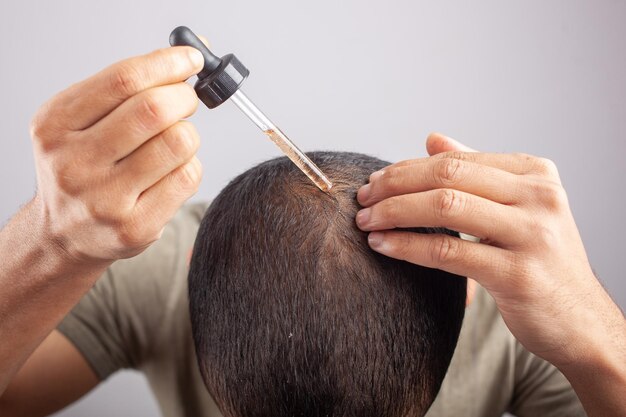
How to Use Indraluptha Lepam — Step-by-Step Guide
Preparing the Affected Area
Before application, the affected area needs proper preparation:
- Wash the scalp or skin with lukewarm water and a mild cleanser (Ayurvedic herbal shampoos preferred)
- Pat dry gently — don't rub vigorously, as this can further irritate compromised follicles
- If using the powder form, mix approximately 1-2 teaspoons with sufficient medicated oil to form a smooth, spreadable paste (consistency of thick yogurt)
Mixing with Medicated Oils
This is an important detail that many users miss. Don't mix with plain coconut oil. Ayurvedic physicians recommend specific medicated oils for maximum efficacy:
- Neelibhringadi Kera Tailam — ideal for Pitta-predominant hair loss with scalp heat and irritation
- Dinesavalyadi Kera Tailam — better suited for Vata-predominant hair loss with dry, flaky scalp
- Kanjunnyadi Tailam — for cases involving dandruff or fungal scalp infections alongside hair loss
The oil serves as both a vehicle for the herbs and provides its own therapeutic benefits.
Application Technique & Duration
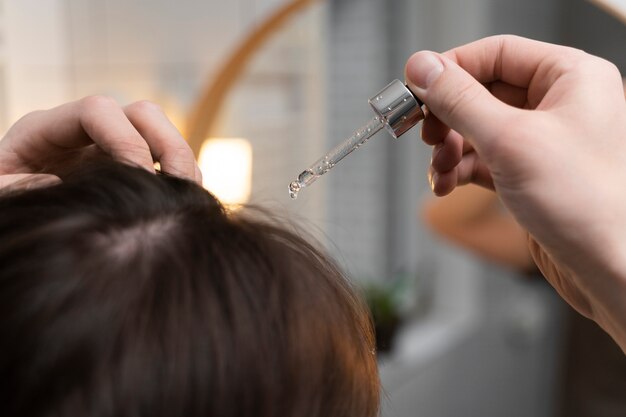
- Apply the prepared paste in a thin, even layer directly on the bald patches or thinning areas
- Extend slightly beyond the affected area borders (about 1 cm) to cover the transition zone
- Gently massage in circular motions for 2-3 minutes to enhance absorption
- Leave the application on for 30 to 45 minutes. Some practitioners advise upto 60 minutes for stubborn patches
- Wash off with lukewarm water. Avoid hot water as it aggravates Pitta
Frequency of Use & Course Duration
- Standard protocol: Once daily for 21-30 days initially
- Maintenance: 3-4 times per week for the next 2-3 months
- Minimum course: Most Ayurvedic texts recommend a minimum of 90 days for meaningful results
- Severe cases: May require 4-6 months of consistent use
Complementary Tips
The Lemon Treatment: Once every two weeks, gently rub a fresh lemon half over the bald patches before applying the lepam. The citric acid acts as a mild exfoliant, removing dead cells and improving the penetration of herbs. Wait 5 minutes before applying the paste. Scalp Massage (Murdha Taila): On days you don't apply the lepam, perform a gentle warm oil scalp massage with the same medicated oil you use for mixing. This maintains blood flow and keeps the scalp nourished.
Expected Results: Timeline & What to Expect
One of the biggest frustrations with hair loss treatments, whether conventional or Ayurvedic, is unrealistic expectations. Here's an honest timeline.
Week 1–2: Initial Phase
Don't expect visible hair growth. During this phase the lepam is working at the sub-surface level — reducing inflammation, clearing follicular blockages, and improving blood supply. You might notice reduced scalp itching or tingling sensations in the affected area, which is actually a positive sign indicating improved circulation.
Week 3–6: Early Signs
Fine, light-colored vellus hair (peach fuzz) may begin appearing in the patches. The patches may appear slightly less shiny or smooth, indicating follicular activity beneath the surface. Some patients also report a slight darkening of the patch area.
Month 2–3: Visible Improvement
Vellus hair gradually converts to terminal (normal, pigmented) hair. The patches begin to fill in, though hair may initially grow in a different texture or color before normalizing. By the end of month 3, most patients with moderate alopecia areata see 50-70% improvement.
Month 4–6: Consolidation
- Continued use helps ensure complete coverage and prevents recurrence.
- Discontinuing too early is one of the most common mistakes — hair may start growing and then fall again if the underlying dosha imbalance hasn't been fully corrected.
> Important note: Results vary significantly based on the type and severity of alopecia, patient's overall health, adherence to the protocol, and whether complementary internal medicines and dietary changes are also followed.
Indraluptha Lepam vs. Other Hair Loss Treatments
Comparison with Steroid Treatments
Many patients come to Ayurveda after trying dermatological treatments, often involving corticosteroid injections or topical steroids.
Here's how they compare:
| Factor | Indraluptha Lepam | Steroid Treatment |
|---|---|---|
| Speed of results | Slower (4-12 weeks) | Faster (2-4 weeks) |
| Recurrence rate | Lower with complete course | Higher after discontinuation |
| Side effects | Minimal (mild irritation possible) | Skin atrophy, telangiectasia, rebound |
| Root cause treatment | Addresses dosha imbalance | Suppresses immune response only |
| Long-term safety | Established over centuries | Concerns with prolonged use |
| Cost | ₹80-250 per month | ₹500-3000+ per session |
This isn't to say steroids don't have their place — in severe, rapidly progressing alopecia, they may be necesary for initial control. But for mild-to-moderate cases and for long-term maintenance, the Ayurvedic approach offers a safer profile.
Comparison with Other Ayurvedic Hair Remedies
| Remedy | Best For | How It Differs from Indraluptha Lepam |
|---|---|---|
| Bhringraj Oil | General hair health, premature greying | Oil-based; for overall maintenance, not targeted patch treatment |
| Mahabhringraj Oil | Intensive hair nourishment | Stronger oil formulation; complements but doesn't replace lepam |
| Kunthala Kanthi Tailam | Hair lustre and thickness | Cosmetic focus; not designed for alopecia treatment |
| Neelibhringadi Tailam | Pitta-type hair loss, scalp cooling | Best used as a vehicle for Indraluptha Lepam, not alone for alopecia |
Indraluptha Lepam is uniquely formulated as a targeted paste for direct application on affected patches, making it more concentrated and site-specific than oil-based treatments.
Treatment Protocol by Severity
No other guide provides this differentiation, but it's essential for practical application.
Mild Alopecia (1-2 small patches, less than 3 cm diameter)
- Indraluptha Lepam application daily for 30 days, then alternate days for 60 days
- Companion oil: Neelibhringadi Kera Tailam
- Internal medicine: Typically not required; dietary modifications may suffice
- Expected duration: 2-3 months
Moderate Alopecia (Multiple patches or patches 3-5 cm diameter)
- Indraluptha Lepam application daily for 45-60 days, then 4 times per week for 90 days
- Companion oil: Based on dosha assessment by a practitioner
- Internal medicines: Thikthaka Ghritham or Mahatikthaka Ghritham may be prescribed
- Panchakarma: Shirodhara and Nasya recommended
- Expected duration: 3-5 months
Severe Alopecia (Alopecia totalis, extensive patches, or rapidly spreading)
- Combined approach essential: Indraluptha Lepam + Indraluptha Mashi (ash-based formulation)
- Internal medicines mandatory under practitioner supervision
- Full Panchakarma course including Virechana (purgation) for Pitta shodhana
- May need to combine with conventional treatment initially
- Expected duration: 6-12 months; must be supervised
Side Effects, Precautions & Contraindications
Known Side Effects
Indraluptha Lepam is generally well-tolerated.
Possible side effects include:
- Mild burning or warmth sensation at the application site (usually subsides within minutes)
- Temporary redness, especially in Pitta-predominant individuals
- Rare allergic reactions to specific herbal ingredients
If burning persists beyond 15 minutes or causes significant discomfort, wash off immediately and reduce the concentration by adding more oil.
Who Should Avoid It (Contraindications)
This information is conspicuously absent from every competitor guide, which is a real oversight:
- Pregnant and breastfeeding women — some ingredients (particularly Chitraka and processed Gunja) are contraindicated during pregnancy
- Children under 5 years — use only under strict medical supervision; the formulation is potent
- Open wounds, cuts, or actively bleeding scalp areas — wait until wounds heal before application
- Known allergy to any ingredient — perform a patch test on the inner forearm 24 hours before first use
- Sunburned or acutely inflamed skin — wait until acute inflammation subsides
Can It Be Used with Minoxidil or Finasteride?
This is a question many patients have but rarely gets answered. While there are no formal drug-interaction studies, most Ayurvedic practitioners recommend:
- - Minoxidil: Avoid applying both on the same day or at the same time.
- If using both, alternate days — Lepam on one day, Minoxidil on the next. The penetration enhancers in the Lepam could theoretically increase Minoxidil absorption beyond intended levels
- Finasteride (oral): Can generally be used alongside the Lepam as they work through different mechanisms. However, inform both your dermatologist and Ayurvedic practitioner
- Topical steroids: Do not apply simultaneously. Maintain at least a 6-hour gap if using both in the same day
Diet & Lifestyle During Treatment
Alopecia treatment is incomplete without addressing diet — a point that competitors mention vaguely but never elaborate on.
Foods to Favor
- Pitta-pacifying foods: Bitter gourd, leafy greens (especially amaranth), ash gourd, cucumber
- Protein-rich: Moong dal, sprouted lentils, almonds (soaked), milk (if tolerated)
- Iron and biotin sources: Spinach, dates, black sesame seeds, amla (Indian gooseberry)
- Healthy fats: Ghee (clarified butter) — 1-2 teaspoons daily supports Bhrajaka Pitta balance
Foods to Avoid
- Excessively spicy, sour, and salty food (aggravates Pitta)
- Fermented foods in excess (increases Pitta and acidity)
- Processed and fried foods
- Excessive caffeine and alcohol
Lifestyle Recommendations
- Yoga: Sarvangasana (shoulder stand), Uttanasana (forward bend), and Adho Mukha Svanasana (downward dog) — these inversions increase blood flow to the scalp
- Meditation & stress management: Chronic stress is a well-documented trigger for alopecia areata. Even 15 minutes of daily pranayama (breathing exercises) can significantly reduce cortisol
- Sleep: Aim for 7-8 hours. Sleep deprivation directly aggravates Pitta dosha
- Abhyanga (self-oil massage): Weekly full-body oil massage with sesame or coconut oil supports overall Vata balance
Storage & Shelf Life
Another gap no competitor addresses:
- - Powder form: Store in an airtight container away from moisture and direct sunlight.
- Shelf life: typically 2-3 years from manufacturing
- - Ready-made paste: Refrigerate after opening.
- Use within 6 months of opening.
- Shelf life sealed: 2 years
- Mixed paste (powder + oil): Prepare fresh each time. Do not store mixed paste for more than 24 hours
- Check for changes in color, smell, or texture before each use. Discard if mold appears or the paste develops an off-putting odor
Frequently Asked Questions (FAQ)
What is Indraluptha Lepam used for?
Indraluptha Lepam is primarily used for treating alopecia areata (patchy hair loss), promoting hair regrowth in bald patches, and improving overall scalp health. It also has secondary applications in skin rejuvenation, hypopigmentation, and minor cosmetic concerns.
Which fruit is best for alopecia?
Amla (Indian Gooseberry) is widely considered the best fruit for alopecia in Ayurveda. It is extremely rich in Vitamin C, supports collagen production, and is a potent Pitta shamaka. Consuming 1-2 fresh amla fruits daily or taking Amalaki Rasayana supports hair health from within. Other beneficial fruits include pomegranate, figs, and dates.
What is Indralupta — what are the symptoms?
- Indralupta is the Ayurvedic term for alopecia. Symptoms include sudden appearance of smooth, shiny, circular bald patches on the scalp (or occasionally the beard area), sometimes preceded by mild itching or tingling. In advanced cases, patches may merge and expand.
- Sushruta described it as "romakoopa shoonyata" — emptiness of hair follicle openings.
Is Indraluptha Lepam suitable for all skin types?
Yes, when used correctly with appropriate companion oils. Pitta-predominant individuals (who tend to have sensitive, reddish skin) should use it with cooling oils like Neelibhringadi Tailam. Vata-predominant individuals (dry skin) benefit from mixing with sesame-based oils. Kapha types can use it with slightly warming oils.
How long does it take to see visible results?
Most patients notice initial fuzz-like hair growth within 3-6 weeks. Significant visible improvement typically appears by 8-12 weeks. A full course of 3-6 months is recommended for lasting results. Individual results vary based on the type and severity of alopecia.
Can Indraluptha Lepam be used alongside other skincare products?
Avoid using chemical-based skincare products on the same area during treatment. Ayurvedic products like kumkumadi tailam for the face or natural aloe vera gel are compatible. Leave at least a 2-hour gap between applying the lepam and any other product.
What is Indraluptha Mashi and how is it different?
Indraluptha Mashi is a bhasma (ash-based) preparation used for alopecia. While the Lepam is a paste applied as a thick layer, Mashi is a fine ash typically mixed with honey or ghee for application. Mashi is generally reserved for more stubborn or chronic cases and is often used in combination with the Lepam for enhanced results.
Where can I buy Indraluptha Lepam online?
Authentic Indraluptha Lepam is available through official websites of manufacturers like Kottakkal Arya Vaidya Sala, AVN, and Enpees. It's also available on Amazon India, PharmAyush, and specialized Ayurvedic e-commerce platforms. Always verify authenticity by checking for batch numbers and manufacturing license details. Prices typically range from ₹80 to ₹250.
Final Thoughts: Is Indraluptha Lepam Worth Trying?
Indraluptha Lepam represents one of Ayurveda's most targeted and time-tested formulations for hair loss. Unlike many general hair-care products that promise vague "nourishment," this lepam was specifically designed — centuries ago — for the exact condition it treats. The classical pathogenesis it addresses, the pharmacological evidence now emerging for its key ingredients, and the clinical experience of generations of Ayurvedic physicians all support its therapeutic value.
- That said, it's not a magic cure.
- It works best when used as part of a comprehensive approach: proper application technique, appropriate companion oils, dietary modifications, stress management, and — for moderate to severe cases — internal Ayurvedic medicines prescribed by a qualified practitioner.
If you're dealing with alopecia areata or unexplained hair loss, consult a certified Ayurvedic physician who can assess your Prakriti (constitution), identify the specific dosha imbalance driving your hair loss, and design a personalized treatment protocol. Indraluptha Lepam will almost certainly be part of that protocol — but the best results come when the whole picture is addressed. Have specific questions about Indraluptha Lepam for your condition? Ask our verified Ayurvedic doctors for personalized guidance based on your unique case.
Scientific Sources
- Valerian Root in Treating Sleep Problems and Associated Disorders-A Systematic Review and Meta-Analysis — Shinjyo N et al., 2020, Journal of evidence-based integrative medicine
- Herbal Remedies and Their Possible Effect on the GABAergic System and Sleep — Bruni O et al., 2021, Nutrients
- A systematic review of medicinal plants and herbal products' effectiveness in oral health and dental cure with health promotion approach — Amanpour S et al., 2023, Journal of education and health promotion
- Traditional Chinese Medicine and orthopedic biomaterials: Host of opportunities from herbal extracts — Tang H et al., 2021, Materials science & engineering. C, Materials for biological applications
- Herbal extracts in orofacial pain: a systematic review and direct and indirect meta-analysis — Barrera SD et al., 2024, Scientific reports
- Natural Oils for Skin-Barrier Repair: Ancient Compounds Now Backed by Modern Science — Vaughn AR et al., 2018, American journal of clinical dermatology
- Herbal-Based Dressings in Wound Management — Nikam A et al., 2023, Current diabetes reviews
- Herbal Oils for Treatment of Chronic and Diabetic Wounds: A Systematic Review — Thomas A et al., 2022, Current diabetes reviews
- Can Essential Oils/Botanical Agents Smart-Nanoformulations Be the Winning Cards against Psoriasis? — Ashraf M et al., 2023, Pharmaceutics
- Potential of nanoemulsions for accelerated wound healing: innovative strategies — Chhabra J et al., 2023, International journal of surgery (London, England)
Ask Ayurvedic doctor a question and get a consultation online on the problem of your concern in a free or paid mode.
More than 2,000 experienced doctors work and wait for your questions on our site and help users to solve their health problems every day.
Related articles