Ask Ayurvedic doctor a question and get a consultation online on the problem of your concern in a free or paid mode. More than 2,000 experienced doctors work and wait for your questions on our site and help users to solve their health problems every day.
FREE! Ask Ayurvedic Doctors 24/7

 Fast responses
 1000+ verified doctors
Body DetoxEar, Nose, and Throat DisordersGeriatrics & RejuvenationImmunodeficiencyInfertility TreatmentNutritionOrthopedic DisordersPediatricsRespiratory DisordersSexually Transmitted Diseases (STDs)Surgery RecoveryUrological DisordersVascular DisordersDental DisordersEndocrinological DisordersGastrointestinal DisordersYoga TherapyGeneral MedicineAllergic DisordersCardio DisordersGynecology and ObstetricsCosmetologySkin and Hair DisordersEye DisordersInfectious DiseasesMental DisordersNeurological DisordersOncologyPanchakarmaSexual Health & DisordersSports Medicine
Published on 03/11/25
(Updated on 07/08/26)
3,047
Food Allergy Treatment in Ayurveda: Natural Relief Through Holistic Healing
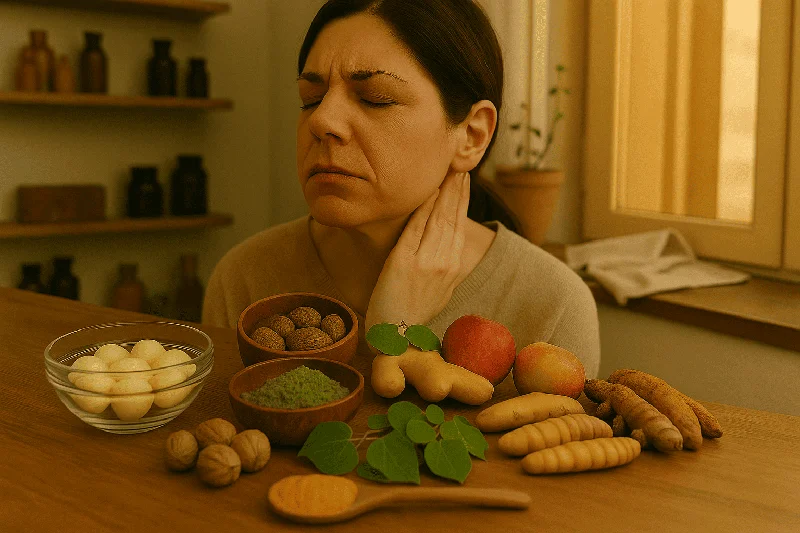
Food allergy treatment in Ayurveda focuses on correcting the root cause — a weakened digestive fire (Agni), accumulated toxins (Ama), and dosha imbalances — rather than just suppressing symptoms. Through personalized diet modifications, herbal formulations like Haridra Khanda and Guduchi, Panchakarma detox protocols, and lifestyle adjustments based on your unique constitution (Prakriti), Ayurveda offers a comprehensive framework for reducing allergic sensitivity and building long-term immune tolerance.
Unlike conventional medicine, which primarily relies on allergen avoidance and emergency medications, Ayurveda treats food allergy as a systemic disorder rooted in impaired digestion and immunity. This article covers everything from dosha-specific symptoms and step-by-step Ayurvedic diagnosis to Panchakarma protocols, herbal remedies with actual dosages, children's treatment considerations, and critically — when to seek emergency medical care instead.
What Are Food Allergies According to Ayurveda?
Modern medicine defines food allergy as an abnormal immune response mediated by Immunoglobulin E (IgE) antibodies, triggered by specific proteins in foods. The immune system mistakenly identifies a harmless food protein as a threat, releasing histamine and other chemicals that cause symptoms ranging from mild hives to life-threatening anaphylaxis.
Ayurveda recognized these same clinical presentations thousands of years ago, though it described them through a different lens. Classical Ayurvedic texts reference several conditions that directly correlate with modern allergic disorders:
- Sheetapitta — closely corresponds to urticaria (hives), characterized by raised, itchy wheals on the skin after exposure to certain foods
- Udarda — a more severe form of allergic dermatitis with extensive skin involvement
- Kotha — allergic rashes and skin eruptions triggered by dietary factors
The fundamental Ayurvedic understanding is this: food allergies arise not just from the food itself, but from the body's inability to properly process it. When Agni (digestive fire) is compromised, incompletely digested food particles form Ama (toxins). This Ama enters the bloodstream, triggers immune dysregulation, and manifests as allergic reactions through whichever dosha is already imbalanced.
The Concept of Ama and Its Role in Allergic Reactions
Ama is perhaps the single most important concept for understanding food allergies in Ayurveda. Think of it as a sticky, toxic residue that accumulates when your digestion doesn't fully break down food. In modern terms, this loosely parallels the concept of increased intestinal permeability ("leaky gut"), where partially digested food molecules cross the gut barrier and trigger immune responses.
A 2017 review published in the Journal of Ayurveda and Integrative Medicine noted that the Ayurvedic concept of Ama formation shares remarkable parallels with modern understanding of how gut dysbiosis and impaired digestion contribute to food hypersensitivity reactions.
When Ama accumulates in the GI tract, it:
- Blocks the channels (Srotas) through which nutrients flow
- Vitiates the Rasa Dhatu (plasma tissue), spreading toxins systemically
- Compromises Vyadhikshamatva (immunity), making the body hyperreactive to normally harmless food proteins
The Four Types of Agni and Their Connection to Allergy
Not all digestive fires are equal. Ayurveda describes four states of Agni, and each creates a different predisposition to food allergies:
| Agni Type | Dominant Dosha | Digestive Pattern | Allergy Risk |
|---|---|---|---|
| Sama Agni | Balanced | Regular, complete digestion | Low — minimal Ama formation |
| Vishama Agni | Vata | Irregular, fluctuating appetite | Moderate — inconsistent digestion creates intermittent Ama |
| Tikshna Agni | Pitta | Hyperactive, burns through food too quickly | Moderate — inflammation-driven reactions |
| Manda Agni | Kapha | Sluggish, slow metabolism | High — significant Ama accumulation |
Understanding your Agni type is the first step toward effective treatment. A person with Manda Agni, for instance, will generate far more Ama from the same food than someone with Sama Agni, explaining why two people can eat the same dish and only one develops an allergic response.
Types of Food Allergies Based on Dosha Constitution
Your Prakriti (innate body constitution) determines not only which foods you're likely to react to, but also how the allergic reaction manifests. This is one of Ayurveda's most practical contributions to allergy management.
Vata-Type Food Allergies
Vata-dominant individuals tend to have Vishama Agni, making their allergic responses unpredictable and variable.
Symptoms primarily affect the digestive and nervous systems:
- Bloating, gas, and abdominal distension after eating
- Irregular bowel patterns — alternating constipation and loose stools
- Anxiety or restlessness following allergen exposure
- Dry, rough skin patches
- Joint pain or body aches that worsen after certain foods
Common Vata triggers: Raw foods, cold foods, dried fruits, beans and legumes (especially when poorly cooked), nightshade vegetables.
Pitta-Type Food Allergies
Pitta-dominant constitutions react with intense inflammation and heat. Their Tikshna Agni creates sharp, acute reactions that are often the most visually dramatic:
- Burning sensation in the stomach, acid reflux
- Red, inflamed skin rashes and hives (Sheetapitta)
- Diarrhea, sometimes with burning quality
- Headaches, irritability, anger
- Eye inflammation or redness
Common Pitta triggers: Spicy foods, fermented foods, citrus fruits, tomatoes, shellfish, alcohol, sour or acidic foods.
Kapha-Type Food Allergies
Kapha-dominant individuals with their characteristic Manda Agni produce the most Ama and tend toward chronic, mucus-heavy allergic responses:
- Excessive mucus production, sinus congestion
- Heaviness and lethargy after eating
- Nausea and slow digestion
- Water retention and facial puffiness
- Respiratory symptoms — wheezing, chest congestion
Common Kapha triggers: Dairy products, wheat, sugar, heavy/oily foods, cold beverages, bananas.
How Ayurvedic Doctors Diagnose Food Allergies: A Step-by-Step Process
This is an area where no one seems to talk about in detail, yet it's crucial for understanding how Ayurvedic treatment actually works in practice. Here's what a comprehensive Ayurvedic diagnostic process looks like:
Nadi Pariksha (Pulse Diagnosis)
An experienced Ayurvedic physician can assess the state of all three doshas, the quality of Agni, and the presence of Ama through pulse diagnosis. The practitioner places three fingers on the radial artery and evaluates:
- Vata pulse (index finger) — irregular, thin, snake-like movement suggests Vata-type allergy
- Pitta pulse (middle finger) — sharp, bounding, frog-like movement indicates Pitta-type inflammation
- Kapha pulse (ring finger) — slow, heavy, swan-like movement points to Kapha congestion and Ama
Prakriti Assessment
- A detailed questionnaire covering physical characteristics, mental tendencies, digestive patterns, sleep quality, and disease history helps determine the patient's baseline constitution.
- This isn't a five-minute quiz — a thorough Prakriti assessment can take 45–60 minutes.
Ayurvedic Food Diary (Ahara Pariksha)
Unlike a standard Western food diary that simply tracks foods and symptoms, an Ayurvedic food diary also records:
- Time of eating relative to previous meals
- Food combinations consumed together (critical for identifying Viruddha Ahara)
- Emotional state during meals
- Digestive symptoms with timing (immediate vs. delayed reactions)
- Quality of stool the following day (Mala Pariksha)
How This Differs From Western Diagnosis
| Diagnostic Aspect | Western Medicine | Ayurvedic Medicine |
|---|---|---|
| Primary tool | Skin prick test, IgE blood test, DBPCFC | Nadi Pariksha, Prakriti analysis |
| Focus | Identifying specific allergen protein | Identifying underlying dosha imbalance and Agni dysfunction |
| Approach | Standardized testing protocols | Individualized assessment |
| Outcome | List of allergens to avoid | Personalized treatment plan addressing root cause |
| Limitation | Doesn't address why sensitivity developed | Requires highly skilled practitioner; less standardized |
The most effective approach, honestly, combines both. Use Western diagnostic tools to identify specific allergens for immediate avoidance, then apply Ayurvedic principles to address the underlying imbalance.
Best Ayurvedic Medicines and Herbs for Food Allergy
Ayurvedic treatment for food allergy employs both single herbs and classical compound formulations. Below are the most evidence-backed options with actual dosages — something that most resources frustratingly leave out.
Internal Medicines (Abhyantara Chikitsa)
Key Single Herbs
Guduchi (Tinospora cordifolia) — Often called "Amrita" (the divine nectar), Guduchi is the primary immunomodulatory herb for food allergies. A 2015 study in the International Journal of Pharmaceutical Sciences Review and Research demonstrated its antihistaminic and mast cell stabilizing properties.
- Dosage: 500 mg of Guduchi Satva twice daily with warm water, or 30–40 ml of fresh Guduchi juice
- Duration: 2–3 months minimum for immune modulation
Haridra (Turmeric / Curcuma longa) — The curcumin in turmeric inhibits the release of histamine from mast cells. A 2020 randomized controlled trial published in Annals of Allergy, Asthma & Immunology showed curcumin supplementation significantly reduced allergic symptoms compared to placebo.
- Dosage: 500 mg curcumin standardized extract twice daily with black pepper for absorption
- Duration: 8–12 weeks
Shirish (Albizia lebbeck) — Known as the "anti-allergy tree" in Ayurveda, it has demonstrated anti-anaphylactic activity in preclinical studies.
- Dosage: 3–6 g of bark powder daily in divided doses
Classical Compound Formulations
| Formulation | Key Ingredients | Dosage | Primary Action |
|---|---|---|---|
| Haridra Khanda | Haridra, sugar, ghee, milk | 3–6 g twice daily with warm milk | Anti-allergic, blood purifier |
| Sanjeevani Gutika | Vidanga, Shunthi, Pippali, Vacha | 125–250 mg twice daily | Ama-digesting, anti-toxic |
| Punarnavasavam | Punarnava, Dashamoola, Guduchi | 15–20 ml twice daily after meals | Reduces edema and inflammation |
| Dasamoolarishtam | Ten roots (Dashamoola) | 15–20 ml twice daily after meals | Vata-Kapha balancing |
| Mahatiktaka Ghrita | Tikta Rasa (bitter) herbs in ghee | 1 tsp twice daily before meals | Pitta-type skin allergies |
> Important: These dosages are general guidelines for adults. Individual dosage must be determined by a qualified Ayurvedic physician (BAMS/MD Ayurveda) based on your specific Prakriti, Vikruti, and severity.
External Medicines (Bahya Chikitsa)
For skin manifestations of food allergies like hives, rashes, and itching:
- Eladi Gan Choornam — mixed with coconut oil and applied to affected areas for immediate itch relief
- Triphala Churna wash — 1 tsp in warm water as a topical wash for allergic dermatitis
- Nalpamaradi Keram — a medicated oil for chronic allergic skin conditions
A Real Clinical Case
A documented case published in the International Journal of AYUSH described a 38-year-old male patient who had experienced 8 previous episodes of anaphylactic shock triggered by food allergens. After treatment with a combination of Sanjeevani Gutika (for acute Ama digestion) and Haridra Khanda (for long-term anti-allergic effect), along with dietary modifications based on his Prakriti, the patient showed significant improvement and no recurrence of anaphylactic episodes over the 6-month follow-up period.
Panchakarma Protocols for Food Allergy Treatment
Panchakarma — Ayurveda's flagship detoxification system — is perhaps the most powerful intervention for chronic food allergies, yet it's rarely discussed in detail in online resources.
Here's how it works specifically for allergic conditions:
Pre-Procedure (Purvakarma)
Before any main Panchakarma procedure, the patient undergoes:
- Snehana (oleation): Internal consumption of medicated ghee (typically Mahatiktaka Ghrita or Panchatikta Ghrita) for 3–7 days to mobilize deep-seated toxins
- Swedana (sudation): Herbal steam therapy to open channels and prepare the body for purification
Main Procedures (Pradhanakarma)
Vamana (Therapeutic Emesis) — Most effective for Kapha-type food allergies with mucus, congestion, and heaviness. The patient drinks medicated decoctions that induce controlled vomiting, expelling accumulated Kapha and Ama from the upper GI tract.
- Best for: Dairy allergies, wheat sensitivities with respiratory symptoms
- Contraindications: Children under 12, pregnancy, cardiac conditions, extreme weakness
Virechana (Therapeutic Purgation) — The treatment of choice for Pitta-type food allergies with skin rashes, burning, and inflammation. Medicated purgatives cleanse the small intestine and liver.
- Best for: Allergies manifesting as hives, eczema, acid reflux
- Typical medicines: Trivrit Lehya, Avipattikar Churna, or castor oil with milk
- Basti (Medicated Enema) — Essential for Vata-type food allergies and for any chronic allergic condition.
- Two types are used in alternation:
- Niruha Basti (decoction enema) — Dashamoola decoction for cleansing
- Anuvasana Basti (oil enema) — medicated oils for nourishment
A typical Basti protocol for food allergies runs 8–16 days in alternating sequence.
Post-Procedure (Paschatkarma)
After Panchakarma, a carefully graded diet called Samsarjana Krama is followed:
- 1.Days 1–2: Thin rice gruel (Peya) only
- 2.Days 3–4: Thicker rice soup (Vilepi)
- 3.Days 5–6: Rice with light dal (Akrita Yusha)
- 4.Days 7+: Gradual reintroduction of regular foods
This graduated reintroduction is remarkably similar to the modern elimination diet reintroduction protocol, and it serves the same purpose — allowing the reset digestive system to rebuild tolerance.
Don't wait or self medicate. Start chat with Doctor NOW
The Role of Viruddha Ahara (Incompatible Food Combinations)
This is a concept that's unique to Ayurveda and completely absent from competing resources, yet it may explain many food allergy-like reactions that don't show up on standard IgE tests.
Viruddha Ahara refers to food combinations that are individually harmless but become toxic when consumed together. Charaka Samhita describes 18 types of food incompatibilities.
The most clinically relevant for food allergy:
- Milk + Fish — combining these creates a chemical opposition between the cooling nature of milk and the heating nature of fish, potentially triggering skin allergies and Sheetapitta
- Honey + Hot Water — heated honey is considered toxic in Ayurveda; a 2010 study in AYU journal demonstrated that heated honey showed increased hydroxymethyl furfuraldehyde (HMF), a potentially harmful compound
- Milk + Sour Fruits — the combination curdles milk in the stomach, creating Ama
- Ghee + Honey in Equal Proportions — considered Visha (toxic) in Ayurvedic pharmacology
- Curd at Night — increases Kapha and blocks Srotas, worsening allergic tendencies
Many patients who present with "food allergies" may actually be experiencing Viruddha Ahara reactions. When these incompatible combinations are eliminated, symptoms often resolve without any other intervention.
Food Allergy in Children: The Ayurvedic Approach
Childhood food allergies affect approximately 6–8% of children under age 3, according to WHO estimates. This is a topic that essentially no Ayurvedic resource online addresses properly, but Kaumarabhritya (Ayurvedic pediatrics) has specific guidelines.
Why Children Are More Vulnerable
In Ayurvedic understanding, children are naturally Kapha-predominant with developing Agni. Their digestive fire is not yet strong enough to process complex proteins, which is why:
- Milk, egg, wheat, and soy allergies are most common in early childhood
- Many children naturally "outgrow" food allergies as their Agni matures — approximately 80% of milk and egg allergies resolve by age 16
Safe Ayurvedic Approaches for Children
Dietary management is always first-line for children. Herbal interventions should be gentle:
- Guduchi Swarasa — 5–10 ml (diluted) for children above 5 years
- Sitopaladi Churna — ¼ to ½ tsp with honey for respiratory allergy symptoms
- Haridra milk — ¼ tsp turmeric in warm milk at bedtime (for children above 2 years with no dairy allergy)
- Aravindasavam — 5 ml twice daily, a classical pediatric tonic that strengthens digestion
Dosage Adjustments by Age
| Age Group | General Dose (fraction of adult dose) | Agni Consideration |
|---|---|---|
| 1–3 years | 1/6th of adult dose | Very mild herbs only; dietary focus |
| 3–7 years | 1/4th of adult dose | Gentle digestive support |
| 7–12 years | 1/2 of adult dose | Can introduce stronger formulations |
| 12–16 years | 2/3rd of adult dose | Near-adult protocols with monitoring |
> Critical note: Panchakarma procedures like Vamana and Virechana are generally contraindicated in children under 12. Focus should be on Ahara (diet), Vihara (lifestyle), and mild herbal support.
What Naturally Reduces Food Allergies? Diet and Lifestyle Recommendations
Dosha-Specific Dietary Guidelines
- For Vata-type allergies: Favor warm, cooked, oily, and grounding foods. Use spices like ginger, cumin, and asafoetida liberally. Avoid raw salads, cold drinks, and dried foods.
- Eat at regular times — Vata thrives on routine.
For Pitta-type allergies: Choose cooling, mildly spiced foods. Favor bitter and astringent tastes. Coconut, coriander, fennel, and aloe vera are your allies. Avoid spicy, sour, fermented foods and alcohol. For Kapha-type allergies: Light, warm, dry foods with pungent and bitter tastes. Ginger tea before meals. Avoid heavy, oily, sweet, and cold foods. Dairy minimization is particularly important for Kapha types.
Yoga and Meditation as Complementary Therapy
Stress significantly worsens allergic responses — a 2019 study in Brain, Behavior, and Immunity confirmed that psychological stress amplifies IgE-mediated allergic reactions.
Specific yoga practices help:
- Surya Namaskar — 5–12 rounds daily to stimulate Agni and improve overall circulation
- Halasana (Plow Pose) — stimulates thyroid and improves immune regulation
- Matsyasana (Fish Pose) — opens the chest, benefits respiratory allergies
- Sarvangasana (Shoulder Stand) — balances hormonal function
- Pranayama (Nadi Shodhana) — alternate nostril breathing calms the nervous system and reduces hypersensitivity
- Shavasana — deep relaxation to reduce cortisol and stress-driven inflammation
Even 20 minutes of daily pranayama and meditation can measurably reduce allergic flare-ups according to preliminary research from AIIMS.
Seasonal Considerations (Ritucharya)
Allergies often worsen during seasonal transitions.
Ayurvedic seasonal regimen recommends:
- Spring (Vasanta): Kapha naturally aggravates — reduce dairy, do light fasting, use honey and warm water
- Summer (Grishma): Pitta rises — avoid fermented and sour trigger foods, favor cooling diet
- Monsoon (Varsha): Agni weakens significantly — eat only freshly cooked, light meals; avoid street food
- Autumn/Winter: Ideal time for Panchakarma and Rasayana (rejuvenation) therapies to build immunity for the year ahead
Rasayanas for Long-Term Immune Tolerance
Rasayana therapy — Ayurveda's rejuvenation science — represents a promising frontier for food allergy management. A 2018 review in PubMed highlighted the need for rigorous clinical trials on Rasayana formulations for allergic conditions, noting their theoretical potential to rebuild Ojas (vital immunity) and modulate immune response.
Key Rasayana formulations relevant to allergy:
- Chyawanprash — 1–2 tsp daily (avoid if allergic to any ingredient)
- Brahma Rasayana — for stress-related immune dysfunction
- Guduchi Rasayana — specifically immunomodulatory
Ayurvedic Approach vs Western Medicine: An Honest Comparison
| Parameter | Western Medicine | Ayurvedic Medicine |
|---|---|---|
| Philosophy | Suppress immune overreaction | Correct root cause (Agni, Ama, dosha) |
| Acute treatment | Epinephrine, antihistamines — fast, lifesaving | Limited in emergencies — slower acting |
| Chronic management | Allergen avoidance, OIT (oral immunotherapy) | Panchakarma detox, herbal formulations, diet |
| Personalization | Standard protocols by allergen | Individualized by Prakriti and Vikruti |
| Side effects | Drowsiness (antihistamines), dependency | Minimal when properly prescribed |
| Evidence base | Strong RCTs, meta-analyses | Growing but limited; mostly observational |
| Cost | Can be expensive (EpiPen, specialist visits) | Generally affordable and accessible in India |
| Best for | Acute reactions, anaphylaxis, diagnosis | Chronic management, prevention, immune rebuilding |
When Ayurveda Is NOT Enough: Emergency Warning Signs
This cannot be stressed enough. Anaphylaxis is a life-threatening emergency that requires immediate Western medical intervention.
Call emergency services (112 in India) or rush to the nearest hospital if you experience:
- Difficulty breathing or throat tightening
- Severe swelling of lips, tongue, or throat
- Sudden drop in blood pressure, dizziness, or fainting
- Rapid, weak pulse
- Loss of consciousness
Epinephrine (adrenaline) is the only first-line treatment for anaphylaxis. No Ayurvedic remedy can replace it in an emergency. Ayurveda's strength lies in preventing these episodes through long-term immune modulation and digestive correction — not in treating them once they occur.
After stabilization, Ayurvedic treatment can then be initiated to reduce the frequency and severity of future episodes, as demonstrated in the clinical case of the 38-year-old patient described earlier.
Frequently Asked Questions
Is there a permanent cure for food allergy in Ayurveda?
- Ayurveda doesn't use the word "cure" lightly. What it offers is a systematic reduction in allergic sensitivity through Agni correction, Ama removal, and dosha balancing.
- Many patients experience significant improvement — some to the point where previously triggering foods no longer cause reactions. However, this depends on the severity of the allergy, patient compliance, and individual constitution. Mild to moderate food sensitivities respond best; severe IgE-mediated allergies may be managed but not always completely eliminated.
What 8 foods cause 90% of allergies?
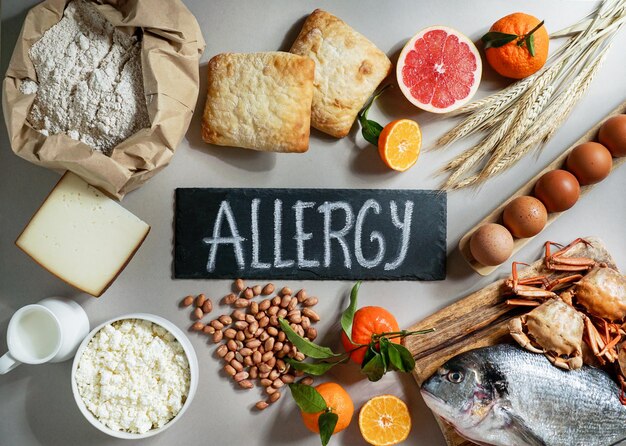
The "Big 8" food allergens recognized globally are: milk, eggs, peanuts, tree nuts, wheat, soy, fish, and shellfish. In India, mustard and sesame are also significant allergens. From an Ayurvedic standpoint, many of these are either Kapha-aggravating (dairy, wheat, soy) or Pitta-aggravating (shellfish, peanuts), which aligns with dosha-based understanding.
What is the concept of allergy in Ayurveda?
Ayurveda views allergy as a manifestation of impaired Agni leading to Ama formation, combined with individual dosha vulnerability (Prakriti). The classical terms Sheetapitta (urticaria), Udarda (severe allergic dermatitis), and Kotha (allergic rashes) describe specific allergic presentations. The root cause is always traced back to digestive dysfunction and accumulated toxins, rather than blaming the allergen alone.
Can Ayurvedic treatment be used alongside conventional allergy medication?
- Yes, integrative use is often the most practical approach. Continue your prescribed antihistamines or emergency medications while gradually introducing Ayurvedic dietary changes and herbal formulations. Inform both your allopathic doctor and Ayurvedic physician about all treatments being used.
- Some herbs may interact with medications — for instance, Guduchi may potentiate immunosuppressants — so professional guidance is essential.
How long does Ayurvedic treatment take to show results for food allergies?
Initial improvement in digestive symptoms typically appears within 2–4 weeks. Skin symptoms may take 4–8 weeks. Significant immune modulation and reduced sensitivity to allergens generally requires 3–6 months of consistent treatment. Panchakarma can accelerate results considerably, with some patients reporting improvement within the first treatment cycle.
Final Thoughts: A Balanced Path Forward
Food allergy treatment in Ayurveda isn't about choosing ancient wisdom over modern medicine — it's about using both intelligently. Use Western diagnostics to identify your specific allergens. Carry your EpiPen if you have severe allergies. And simultaneously, work with a qualified Ayurvedic physician to address the deeper imbalances that made you susceptible in the first place.
The most promising outcomes happen when patients commit to the full Ayurvedic framework: correcting Agni through proper diet, removing Ama through Panchakarma, rebalancing doshas through herbal formulations, and maintaining health through seasonal routines and Rasayana therapy.
- If you're dealing with food allergies and want to explore Ayurvedic options, start by consulting a BAMS or MD (Ayurveda) practitioner who can assess your Prakriti and design a personalized treatment protocol.
- Your body already knows how to heal — sometimes it just needs the right conditions to do so.
Scientific Sources
- Nanhai Jigui Neifa Zhuan: exploration of and research on hygiene, medicine and health care knowledge in ancient India — Zhang T et al., 2024, Journal of ethnobiology and ethnomedicine
- Ayurveda Rasayana as antivirals and immunomodulators: potential applications in COVID-19 — Singh R et al., 2021, Environmental science and pollution research international
- Ayurveda and yoga in cardiovascular diseases — Mamtani R et al., 2005, Cardiology in review
- Ayurvĕda gleaned through Buddhism — Narayana A et al., 2005, Bulletin of the Indian Institute of History of Medicine (Hyderabad)
- Analyzing the Use of Medicinal Herbs During the First Wave and Second Wave of COVID-19 — Singh T et al., 2022, Proceedings of the National Academy of Sciences, India. Section B
- Ayurvedic Treatment in the Rehabilitation of Ischemic Stroke Patients in India: A Randomized Controlled Trial Study Protocol — Sylaja PN et al., 2023, Cerebrovascular diseases (Basel, Switzerland)
- Unique contributions of Keraleeya Ayurveda in pediatric health care — Chandran S et al., 2018, Journal of Ayurveda and integrative medicine
- Are Ayurvedic herbs for diabetes effective? — Shekelle PG et al., 2005, The Journal of family practice
- Hinduism and medical practice — Sinha PK, 1998, Journal of the Medical Association of Georgia
- Prakriti and its associations with metabolism, chronic diseases, and genotypes: Possibilities of new born screening and a lifetime of personalized prevention — Dey S et al., 2014, Journal of Ayurveda and integrative medicine
- An Ayurvedic approach to postpartum depression — Posmontier B et al., 2009, Holistic nursing practice
- Reversal of type 2 diabetes mellitus through integrated Ayurveda dietary protocol - A case report — Kumari S et al., 2024, Journal of Ayurveda and integrative medicine
- A systematic review and meta-analysis focusing on the use of ayurvedic medicine in cerebral palsy — Rocha AMO et al., 2024, Journal of Ayurveda and integrative medicine
- Entrainment and the cranial rhythmic impulse — McPartland JM et al., 1997, Alternative therapies in health and medicine
- From coastal to global: The transnational flow of Ayurveda and its relevance for Indo-African linkages — Meier Zu Biesen C, 2018, Global public health
- Ayurveda for diabetes mellitus: a review of the biomedical literature — Elder C, 2004, Alternative therapies in health and medicine
- Ayurveda: (W)here is the evidence — Narayana DBA et al., 2021, Journal of Ayurveda and integrative medicine
- COVID 19: Prevention and treatment through the Indian perspective — Chandra H et al., 2024, Cytokine
- Desiring foods: Cultivating non-attachment to nourishment in Buddhist Sri Lanka — Van Daele W, 2016, Appetite
- Antimalarial potential of Kerala Ayurvedic Water "Pathimugam" — Kaushik NK et al., 2024, Journal of vector borne diseases
Questions from users
How can maintaining a healthy Agni alleviate allergy symptoms?
Nevaah
4 days ago
Maintaining a healthy Agni, or digestive fire, can help alleviate allergy symptoms by ensuring efficient digestion and reducing the formation of Ama, or toxins, which may contribute to inflammatory responses. Strengthening Agni can involve adhering to dietary changes such as avoiding heavy, oily, and cold foods, and incorporating digestion-enhancing options like ginger tea. Incorporation of Ayurvedic herbs like Guduchi and Haridra (Turmeric) has shown some promise in reducing allergic responses due to their antihistaminic properties. It is often suggested to try these interventions for at least 2–3 months for potential immune modulation. Severe or persistent allergy symptoms should be evaluated by a healthcare provider.
Is it safe to consume fermented foods if I have a Kapha-type allergy?
Zoe
13 days ago
Fermented foods for kapha can be tricky—often too heavy and sour, which aren't ideal for kapha imbalances. Generally better to stick to light, dry, and warm foods to balance kapha. But ya know, everybody's different, so it might be worth consulting with an ayurvedic practitioner to see what suits you.
Can Ayurveda help with seasonal allergies and what treatments are recommended?
Caleb
25 days ago
Yes, Ayurveda can help with seasonal allergies by addressing the root cause, often linked to dosha imbalances or toxins. Treatments might include herbal remedies like turmeric and ginger, panchakarma for detoxification, and diet changes. You could try boosting your agni (digestive fire) or connecting with an ayurvedic practitioner for personalized help!
What is the connection between rest and cellular repair in Ayurveda?
Logan
34 days ago
In Ayurveda, rest (nidra) is key for cellular repair because it helps restore balance to your doshas and supports your body's agni (digestive fire). Proper rest allows your tissues (dhatus) to heal and rebuild. It's like giving your body a chance to reboot, letting cells repair themselves better and boosting overall health!
Can I detox my body using Ayurvedic methods to help with food allergies?
Hannah
43 days ago
Detoxing can help with food allergies. Try some basic Ayurveda methods like sipping warm ginger tea to boost Agni or doing a light kitchari cleanse. Also, an elimination diet's key to spotting trigger foods. Restoring balance takes time, align the changes with your dosha. Aim for consistancy for the best results!
What are some Ayurvedic techniques for managing seasonal allergies effectively?
Daniel
53 days ago
For seasonal allergies, Ayurveda suggests techniques like Nasya, which involves lubrcating the nasal passages with a bit of sesame oil or medicated oil like Anu taila. Practicing daily rituals like tongue scraping and drinking warm water can also help balance Kapha dosha often linked to allergies. Always listen to your body, and maybe consult with an ayurvedic practitioner.
Is it safe to combine Ayurvedic remedies with modern allergy medications?
Tenley
63 days ago
Mixing Ayurvedic remedies with modern allergy meds can be okay, but it's essential to be careful. Both can interact, so it's best to consult a healthcare provider who knows about both systems. They can help you balance real thing like doshas, agni, and medication effects. Better safe than sorry!
What is the role of consistency in Ayurvedic treatment for food allergies?
Tiffany
72 days ago
Consistency plays a huge role cos Ayurvedic treatments for food allergies often require time and dedication. Regular practice and adherence to the recommended dietary and lifestyle changes help balance your doshas and strengthen agni (digestive fire). This consistent effort aids in reducing symptoms and promoting overall well-being over time.
What is the importance of Agni in Ayurveda and how does it affect food allergies?
Kendall
82 days ago
Agni, which is our digestive fire, is super important in Ayurveda. It's how we process not just food but experiences too. When Agni is weak, digestion isn't smooth and partly digested food creates toxins (Ama). This can lead to food allergies as the body sees this 'Ama' as a foreign threat and reacts. Strengthening Agni through diet n lifestyle can help balance things.
Can I use Ayurvedic herbs to improve my immune system during allergy season?
Sage
91 days ago
Absolutely, Ayurvedic herbs can help boost your immune system during allergy season! Consider herbs like Guduchi, Tulsi, and Ashwagandha. They support the immune system and balance doshas. Just remember, it's best to consult with an Ayurvedic practitioner for personalized advice, especially if you're taking other medications. Keep it natural and balanced! 😊
Related articles

Allergic Disorders
Kerala Ayurvedic Medicine for Allergic Rhinitis – Natural Relief & Healing
Discover effective Kerala Ayurvedic treatments for allergic rhinitis, a natural approach to reducing symptoms and boosting immunity through time-tested remedies.
3,887

Allergic Disorders
Allergies and Ayurveda’s Way of Curing It
It can be very frustrating when your body rejects it and you can’t wear your favorite perfume or enjoy certain foods.
3,719

Allergic Disorders
Ayurvedic Management of Food Allergies: A Natural Solution
Food allergies have become increasingly common in our modern society, affecting millions of people worldwide.
3,672

Allergic Disorders
Eosinophil Tablet – Benefits and Uses for Health Management
Learn about the Eosinophil tablet, its uses, benefits, and how it supports health in managing conditions related to eosinophils, allergies, and immune system responses.
4,449
Allergic Disorders
Haridra Khanda Uses: A Scientific, Ayurveda-Based Guide
Explore Haridra Khanda uses for allergies and inflammation, backed by research and Ayurvedic wisdom. Learn benefits, dosage, and precautions here.
4,733

Allergic Disorders
Is Pomegranate Good for Cough? Ayurvedic Benefits and Usage
Discover if pomegranate is good for cough and cold. Learn Ayurvedic insights, pomegranate juice benefits, and how it helps in cough and fever conditions
14,655

Allergic Disorders
How to Reduce Eosinophil Count in Ayurveda – Natural Remedies & Lifestyle Adjustments
Discover Ayurvedic strategies to reduce eosinophil count naturally. Learn about diet, herbal remedies, and detoxification methods that balance the immune system and alleviate allergies.
4,388
Related consultations on the topic
Legal
Additional Documents
© 2024 Ask Ayurveda. All rights reserved.