Ask Ayurvedic doctor a question and get a consultation online on the problem of your concern in a free or paid mode. More than 2,000 experienced doctors work and wait for your questions on our site and help users to solve their health problems every day.


Body DetoxEar, Nose, and Throat DisordersGeriatrics & RejuvenationImmunodeficiencyInfertility TreatmentNutritionOrthopedic DisordersPediatricsRespiratory DisordersSexually Transmitted Diseases (STDs)Surgery RecoveryUrological DisordersVascular DisordersDental DisordersEndocrinological DisordersGastrointestinal DisordersYoga TherapyGeneral MedicineAllergic DisordersCardio DisordersGynecology and ObstetricsCosmetologySkin and Hair DisordersEye DisordersInfectious DiseasesMental DisordersNeurological DisordersOncologyPanchakarmaSexual Health & DisordersSports Medicine
Published on 08/11/25
(Updated on 08/06/26)
20,728
Can We Eat Corn During Pregnancy?

Pregnancy brings a lot of questions about what’s safe to eat and what should be avoided. One common curiosity is about corn — can we eat corn during pregnancy without worry? Many expectant mothers wonder if corn, especially sweet corn, fits into a healthy pregnancy diet. The good news is that corn in pregnancy is generally considered safe and can actually provide some nutritional benefits. But like with anything, moderation and the right preparation are key.
In this article, we'll explore everything you need to know about corn during pregnancy, including its nutritional value, benefits, and the best ways to include it in your diet throughout all trimesters. So if you’ve been asking yourself, "can we eat corn in pregnancy?" or “is sweet corn during pregnancy good for me?”, you’re in the right place.
Corn During Pregnancy: Is It Safe to Eat?
First off, the big question: is corn safe to eat during pregnancy? The simple answer is yes. Corn is a whole grain, packed with fiber and other nutrients that can support your pregnancy. However, it’s important to eat corn that’s well cooked and fresh. Raw or undercooked corn might pose some risks of bacterial infection or digestive upset, which pregnant women want to avoid.
Also, how the corn is prepared matters. Avoid canned corn with lots of added sodium or preservatives. Instead, opt for fresh sweet corn or frozen corn that’s been minimally processed. These options are much healthier and safer during pregnancy.
Many moms-to-be ask specifically about sweet corn during pregnancy because it’s a popular summer treat. Sweet corn in pregnancy is not only safe but also a tasty way to add some natural sweetness and crunch to your meals. So, you don’t have to feel guilty when craving those kernels!

Nutritional Value of Sweet Corn in Pregnancy
Sweet corn is a powerhouse of nutrition, which makes it a great addition to a prenatal diet. It contains important vitamins like B-complex vitamins, including folate and thiamine, which are crucial for fetal development. Folate especially is well-known for its role in preventing neural tube defects in the baby.
Besides vitamins, sweet corn offers minerals such as magnesium and potassium. These help regulate blood pressure and muscle function, both important during pregnancy. Plus, corn provides fiber, which aids digestion and helps prevent the constipation many pregnant women experience.
One thing to keep in mind though, is that corn is relatively high in carbohydrates and natural sugars, so it’s best consumed in moderation to avoid blood sugar spikes, especially for those who are at risk of gestational diabetes.
Benefits of Eating Sweet Corn During Pregnancy
So, what are the sweet corn benefits in pregnancy? Aside from being a tasty snack, sweet corn is a good source of antioxidants like lutein and zeaxanthin. These compounds support eye health — something important for both mom and baby.
Eating sweet corn in pregnancy can also help maintain energy levels thanks to its complex carbohydrates. Unlike simple sugars, these carbs provide a steady energy release, which can be a lifesaver during those exhausting days.
Sweet Corn in the First Trimester
During the first trimester, your body undergoes rapid changes and needs plenty of folate to support early fetal growth. Sweet corn in pregnancy first trimester can be a good folate source, but it’s not a substitute for folic acid supplements. Also, the fiber in corn can help ease early pregnancy constipation, which is pretty common.
Sweet Corn in the Second Trimester
The second trimester is often called the “honeymoon phase” of pregnancy — many women feel better and more energetic. Sweet corn in pregnancy second trimester can continue to support this by providing essential nutrients like vitamin B6, which helps with nausea and supports brain development in the baby. Plus, the fiber content keeps digestion smooth as your baby grows.
At this stage, it’s important to balance your diet, and sweet corn fits nicely because it’s low in fat and naturally gluten-free. You can add it to salads, soups, or simply enjoy it steamed. Just be sure not to overdo it — corn is still a starchy vegetable and too much can lead to unwanted weight gain.
Sweet Corn During Pregnancy Third Trimester
In the third trimester, your baby is growing rapidly, and your nutritional needs peak. Sweet corn during pregnancy third trimester can be a good source of energy and also helps in keeping your digestive system regular. Constipation tends to worsen later in pregnancy, so the fiber in corn can be a relief.
Moreover, sweet corn contains some antioxidants that may help protect your cells from damage, which is crucial for maintaining your health during these final months. However, as the baby grows, you might find eating large amounts of corn or other heavy foods a bit uncomfortable. Listen to your body and eat smaller portions if needed.
How Much Corn Is Safe to Eat During Pregnancy?
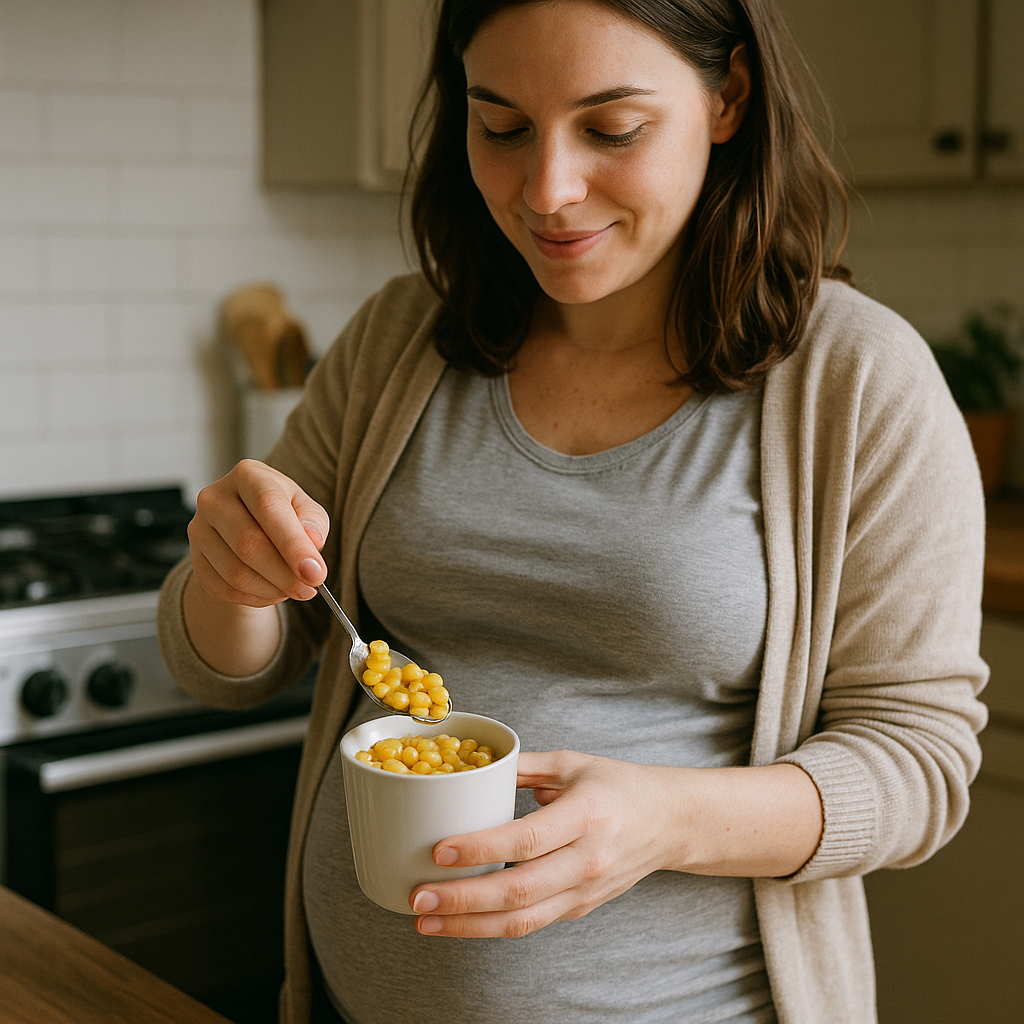
It’s natural to wonder how much corn during pregnancy is safe. The general recommendation is moderation. Eating corn as part of a balanced diet is great, but relying heavily on it or any single food is not ideal. A serving or two of sweet corn a few times a week is usually safe for most pregnant women.
If you have gestational diabetes or blood sugar issues, talk to your healthcare provider before adding more corn to your diet. Corn’s carbohydrate content can affect blood sugar, so monitoring your intake is wise.
Precautions and Best Ways to Eat Corn While Pregnant
When eating corn during pregnancy, keep these tips in mind:
-
Choose fresh or frozen sweet corn over canned varieties, which can have added sodium or preservatives.
-
Cook corn thoroughly to avoid any risk of bacteria or parasites.
-
Avoid buttery, heavily salted toppings; instead, try fresh herbs, a squeeze of lemon, or a sprinkle of chili powder for flavor.
-
Pair corn with protein and healthy fats to balance blood sugar spikes. For example, corn with avocado or beans makes a satisfying and nutritious meal.
-
If you notice any digestive discomfort, reduce the amount you eat and consult your doctor.
Don't wait or self medicate. Start chat with Doctor NOW
Conclusion
So, can we eat corn during pregnancy? Absolutely — corn, especially sweet corn, is safe and can be a nutritious addition to your pregnancy diet. It offers valuable vitamins, minerals, and fiber that support both you and your baby throughout the trimesters. From easing constipation to providing steady energy, sweet corn benefits in pregnancy are worth considering.
However, as with all foods, balance and moderation are important. Eating too much corn, particularly processed varieties, might lead to unnecessary sugar intake or digestive issues. Always choose fresh or properly cooked corn and pair it with other healthy foods.
Pregnancy is a time to nourish yourself wisely and enjoy the journey. If you’re craving corn, go ahead and indulge in this natural, tasty vegetable. Just keep an eye on portions and listen to your body. And if you ever feel unsure, consulting a healthcare provider is the best way to make personalized choices.
Remember, sharing your food experiences with fellow moms-to-be can be really helpful. So, if you found this article useful, why not share it with your friends or family who might also be wondering about corn during pregnancy? Sharing knowledge helps everyone make better decisions!
FAQs
Is corn meal good during pregnancy?
Corn meal, like corn flour used in tortillas or cornbread, can be eaten during pregnancy but should be consumed in moderation. It is a source of carbohydrates and some fiber but often lacks the vitamins and antioxidants found in fresh corn. Opt for whole-grain corn meal products to maximize nutritional benefits.
Can we eat sweet corn post pregnancy?
Yes! Sweet corn remains a healthy food choice after pregnancy. It provides fiber and important nutrients that help with postpartum recovery and breastfeeding. Eating a balanced diet including sweet corn can support your energy levels as a new mom.
Is corn good for getting pregnant?
While corn itself doesn't directly influence fertility, its nutrient content — like folate and fiber — supports overall reproductive health. A balanced diet rich in whole grains, fruits, and vegetables, including corn, can contribute to a healthy body ready for pregnancy.
Questions from users
How does corn consumption impact pregnancy cravings?
Client_b949cf
1 day ago
Corn consumption during pregnancy does not significantly impact cravings directly. Cravings are generally driven by hormonal changes and nutritional needs rather than specific foods like corn. However, incorporating corn into your diet can contribute to overall nutrition, as it provides carbohydrates for energy and fiber that can alleviate common pregnancy issues like constipation. If cravings for corn become overwhelming or if you're prone to gestational diabetes, consult your doctor or a nutritionist for personalized advice.
How does eating corn affect fetal development during pregnancy?
Client_735117
6 days ago
Eating corn during pregnancy can provide valuable nutrients that support fetal development. Corn is rich in vitamins such as folate, which is crucial for preventing neural tube defects in the developing baby. It also contains dietary fiber, supporting maternal digestive health. Generally, consuming moderate amounts of corn is considered safe and beneficial, but it's best to avoid processed corn products high in sodium or preservatives. If you have specific dietary concerns or food allergies, consult your healthcare provider for personalized advice.
What is the best way to incorporate corn into pregnancy meals?
Client_0254f0
11 days ago
To incorporate corn into pregnancy meals, focus on fresh or frozen corn as part of balanced dishes. Corn provides fiber and essential nutrients like folate and thiamine, important for fetal development and postpartum recovery. Enjoy corn as a side dish, add it to salads or soups, or include it in casseroles. Moderation and varied preparation, such as grilling or steaming, ensure a nutritious diet. Corn is generally safe, but if you experience digestive issues, consider limiting intake and consult a healthcare provider if concerns persist.
How can I prepare corn safely during pregnancy?
Client_5e7024
16 days ago
To prepare corn safely during pregnancy, opt for fresh sweet corn or frozen corn that has been minimally processed. Cook the corn thoroughly to reduce the risk of bacterial infections that could be harmful during pregnancy. Boiling, steaming, or grilling corn until fully cooked are safe methods. Avoid raw or undercooked corn to minimize digestive upset or potential foodborne illness. As corn contains beneficial nutrients such as fiber, antioxidants, and B-complex vitamins, including folate, incorporating it into a varied and balanced diet supports both maternal and fetal health. If you experience any digestive issues or suspect food poisoning after eating corn, consult a healthcare professional promptly.
What should I know about corn meal recipes during pregnancy?
Client_808035
21 days ago
Corn meal can be included in a pregnancy diet but should be consumed in moderation. It offers carbohydrates and some fiber, useful for maintaining energy levels, but lacks the vitamins and antioxidants present in fresh corn. It's especially helpful in the first trimester as a folate source, though it should not replace folic acid supplements. Opt for minimally processed options like fresh or frozen corn. If you experience digestive issues, consult your healthcare provider. Always ensure corn meal is stored properly to prevent mold, which can be harmful.
How much corn can I safely eat each week during pregnancy?
Client_41d46e
31 days ago
You can safely eat corn during pregnancy as part of a balanced diet, but moderation is key. Including corn a few times a week is generally considered safe and beneficial due to its fiber and nutrients. However, it is important not to rely heavily on corn or any single food source. If you experience any digestive discomfort after eating corn, it is advisable to reduce your intake and consult your healthcare provider. To ensure you are getting a variety of nutrients, pair corn with other healthy foods like beans or vegetables, and always opt for fresh or properly cooked corn.
Can I eat sweet corn during pregnancy if I have gestational diabetes?
Client_a9b358
40 days ago
Yes, you can eat sweet corn during pregnancy if you have gestational diabetes, but moderation is key. Sweet corn contains carbohydrates that can affect blood sugar levels, so it’s essential to monitor your portion sizes. Pairing sweet corn with a protein or healthy fat can help manage glucose spikes. Speak with your healthcare provider for personalized advice, especially regarding portion and frequency. Regular blood sugar monitoring is crucial, and any significant changes should be discussed with your doctor. Always prioritize a balanced diet that aligns with your gestational diabetes management plan.
What are the benefits of sweet corn for energy during the third trimester?
Client_a90822
50 days ago
Sweet corn can be beneficial for energy during the third trimester as it is a good source of carbohydrates, providing a quick energy boost. Additionally, the fiber in sweet corn can alleviate constipation, a common issue in the later stages of pregnancy. Sweet corn also contains antioxidants, which may help protect cells from damage. However, it is important to consume it in moderation due to its starchy nature, which can contribute to unwanted weight gain if overconsumed. If you experience discomfort or any other health concerns, consult with a healthcare provider.
Is sweet corn beneficial for postpartum recovery and breastfeeding?
Client_aecc5a
59 days ago
Yes, sweet corn can be beneficial for postpartum recovery and breastfeeding. It is a good source of carbohydrates, providing energy essential for recovery after childbirth. Sweet corn is rich in dietary fiber, which helps prevent constipation, a common postpartum issue. Additionally, it contains vitamins and minerals such as folate, magnesium, and potassium, which support overall health and help maintain a nutritious diet while breastfeeding. Eating sweet corn in moderation as part of a balanced diet can support your energy levels. However, if you have concerns about allergies or digestive issues, or any other health questions, consult a doctor.
Is it safe to eat corn chips during pregnancy, and what should I look out for?
Client_aa1b02
69 days ago
It’s generally safe to eat corn chips during pregnancy, but watch out for high salt content and unhealthy fats. Try not to overdo it as they're often processed and might lack the nutrients of whole corn. And if you're worried about gestational diabetes, be mindful of the carbs, y'know? Maybe balance them with healthy snacks like veggies or nuts!
Related articles

Gynecology and Obstetrics
Ashoka Vati: Benefits, Uses, and How It Supports Women’s Health Naturally
Discover the proven benefits, proper dosage, side effects, and scientific research behind Ashoka Vati, the powerful Ayurvedic remedy for women's health.
5,201

Gynecology and Obstetrics
Rajah Pravartini Vati Uses – Natural Ayurvedic Remedy for Women’s Health
Explore the powerful uses of Rajah Pravartini Vati, an Ayurvedic remedy designed to balance menstrual health, regulate hormones, and promote overall well-being in women.
4,304

Gynecology and Obstetrics
Tips for Regular Periods: Real Talk with an Ayurvedic Twist
That’s where Ayurveda comes in. Not as a quick fix, but as this quietly powerful system that’s been around for, oh, a few thousand years? I used to think it was all turmeric and oil massages, but wow, I was wrong. The Ayurvedic approach to regular periods
2,314

Gynecology and Obstetrics
Uttarbasti for Female Infertility: Ayurvedic Uttarbasti Treatments to Enhance Fertility
Explore Uttarbasti for female infertility, its benefits, proper dosage, uses, and the scientific evidence supporting this Ayurvedic treatment for enhancing fertility and reproductive health.
2,748

Gynecology and Obstetrics
Femiplex Tablet Uses: Dosage, Benefits, and Ayurvedic View
Explore Femiplex tablet uses, dosage, and side effects. Learn how to use this Ayurvedic medicine for women’s health and hormonal balance safely and effectively
16,967

Gynecology and Obstetrics
Sukumara Ghrita Benefits, Dosage, How To Use, Side Effects, Ingredients, Reference
Exploration of Sukumara Ghrita Benefits, Dosage, How To Use, Side Effects, Ingredients, Reference
4,315

Gynecology and Obstetrics
Fibroadenoma Ayurvedic Treatment – Natural Remedies & Holistic Healing
Fibroadenoma Ayurvedic Treatment – Natural Remedies & Holistic Healing
6,431

Gynecology and Obstetrics
How to Check Male Fertility Naturally: Ayurvedic and At-Home Insights
Explore natural and at-home methods to check male fertility. Learn about Ayurvedic signs, lifestyle checks, and tests to check male fertility at home safely
1,995

Gynecology and Obstetrics
Femiplex Tablet
Exploration of Femiplex Tablet
3,107
Gynecology and Obstetrics
How to Manage Your Gynaecological Disorders with Ayurveda
In today’s fast-paced world, women often find themselves juggling multiple roles, leaving little time for self-care.
3,255
Related consultations on the topic
Legal
Additional Documents
© 2024 Ask Ayurveda. All rights reserved.