Ask Ayurvedic doctor a question and get a consultation online on the problem of your concern in a free or paid mode. More than 2,000 experienced doctors work and wait for your questions on our site and help users to solve their health problems every day.


Body DetoxEar, Nose, and Throat DisordersGeriatrics & RejuvenationImmunodeficiencyInfertility TreatmentNutritionOrthopedic DisordersPediatricsRespiratory DisordersSexually Transmitted Diseases (STDs)Surgery RecoveryUrological DisordersVascular DisordersDental DisordersEndocrinological DisordersGastrointestinal DisordersYoga TherapyGeneral MedicineAllergic DisordersCardio DisordersGynecology and ObstetricsCosmetologySkin and Hair DisordersEye DisordersInfectious DiseasesMental DisordersNeurological DisordersOncologyPanchakarmaSexual Health & DisordersSports Medicine
Published on 08/28/25
(Updated on 08/07/26)
star_border 5
14,207
How to Remove Dark Spots on Feet and Ankles Naturally

Dark spots on feet and ankles can be frustrating. They don’t just affect how your skin looks, they also sometimes chip away at confidence when wearing sandals or shoes that show your feet. If you’ve ever wondered how to remove dark spots on feet and ankles or searched endlessly for home solutions, you’re not alone. These spots can show up for many reasons — from sun exposure to medical conditions — but the good news is there are natural remedies and lifestyle tweaks that can help. In this article, we’ll dive into why these dark patches appear, simple remedies to try at home, Ayurvedic options, and when you should actually see a doctor. Let’s get into it.
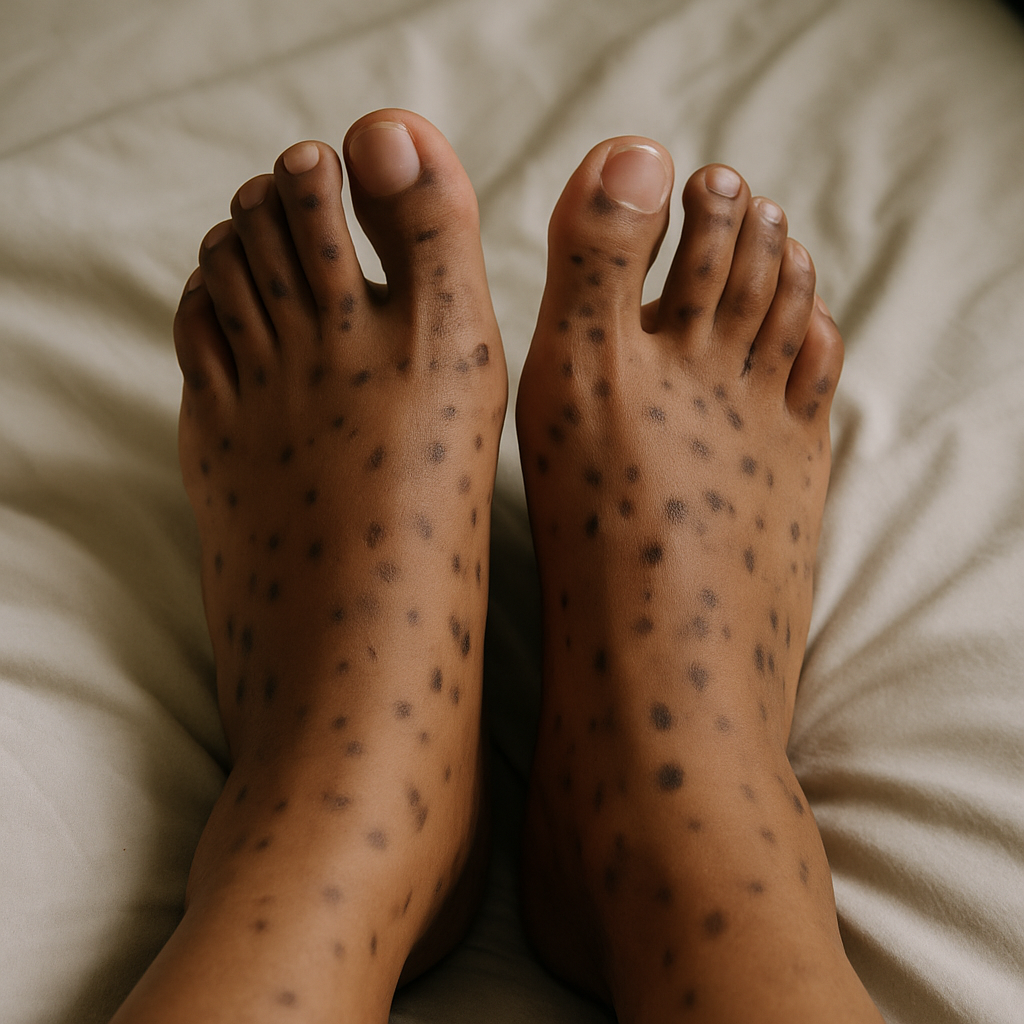
Why Do Dark Spots Appear on Feet and Ankles
Dark spots on feet and ankles can happen to anyone, regardless of age or skin type. But before we jump into how to remove dark spots from feet at home, it’s worth understanding what’s causing them. Identifying the root cause makes it easier to treat effectively and prevent them from coming back.
Common Causes of Hyperpigmentation on Feet
One of the most common reasons behind dark spots on ankles and feet is hyperpigmentation. This simply means your skin is making too much melanin in that area. Sometimes it’s because of:
-
Sun exposure – Your feet often get ignored when applying sunscreen, which leads to tanning and patchy darkening.
-
Injury or friction – Shoes that rub or repeated minor injuries can leave marks that take forever to fade.
-
Post-inflammatory hyperpigmentation – If you had rashes, cuts, or even mosquito bites, they may heal leaving behind stubborn dark spots on skin around ankles.
Many people don’t realize how sensitive the skin on feet is. Even small irritations can leave behind pigmentation that’s not easy to remove.
Skin Conditions and Lifestyle Triggers
Certain skin conditions also play a role. For example, eczema or fungal infections can cause discoloration. Lifestyle choices matter too. Poor circulation, standing for long hours, or even something as simple as tight socks can leave lasting marks. In some cases, medical issues like diabetes or venous insufficiency can cause dark spots on ankles that don’t fade easily. That’s why, before treating, it’s smart to check if there’s an underlying health problem.
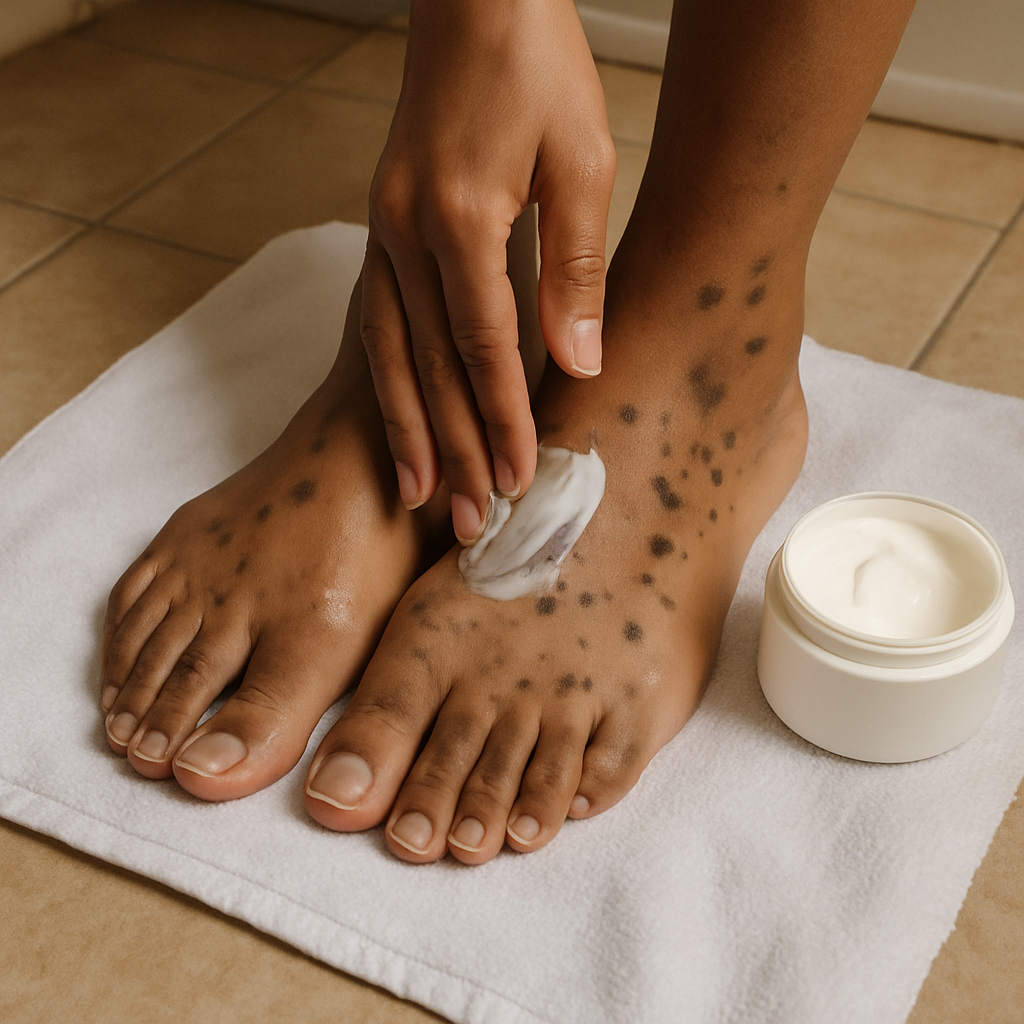
Home Remedies to Remove Dark Spots on Feet and Ankles
If you’re wondering how to get rid of dark spots on ankles without spending too much, the answer often lies in your kitchen. Natural ingredients have been used for centuries to fade marks, brighten skin, and improve overall clarity.
Natural Ingredients You Can Try at Home
A few powerful natural ingredients include:
-
Lemon juice – Its citric acid works as a natural bleaching agent. But careful, don’t use it on broken skin or go out in the sun right after.
-
Aloe vera – Helps soothe irritation and gradually lightens dark spots on feet.
-
Turmeric – Known for its skin-brightening properties, a turmeric paste can reduce pigmentation when used regularly.
-
Apple cider vinegar – Works as a mild exfoliant, encouraging the skin to renew itself.
These remedies may not give overnight results, but with consistency, they can show visible improvement.
Simple DIY Remedies for Daily Use
Here are two easy DIY routines you can try:
-
Lemon and honey mask – Mix equal parts, apply on dark spots for 10–15 mins, then rinse. Honey helps balance the dryness lemon can cause.
-
Aloe vera bedtime routine – Apply fresh aloe gel on your feet before sleeping. It works while you rest, and it’s hydrating too!
These simple steps can become part of your daily skincare, helping fade dark spots on feet and ankles over time.
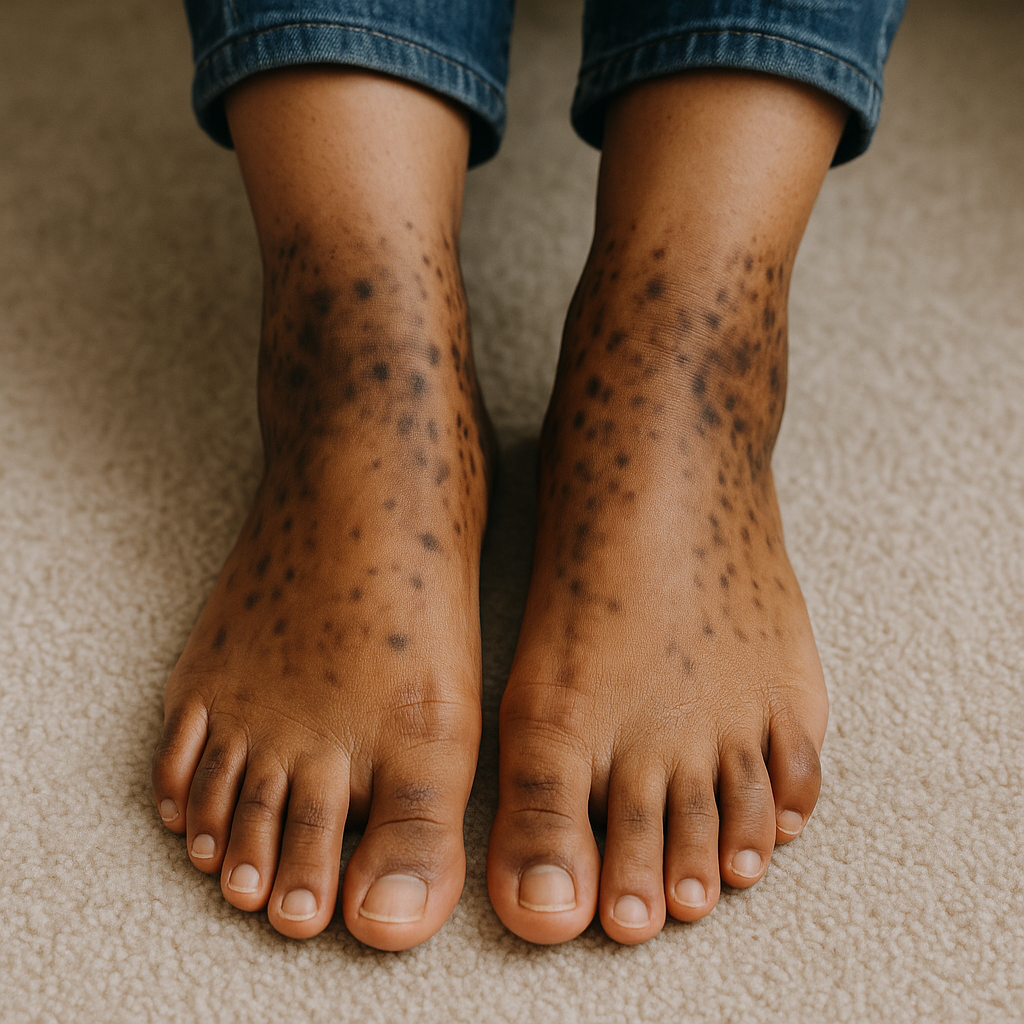
Ayurvedic Treatments for Dark Spots on Ankles and Feet
Ayurveda, the ancient Indian system of medicine, has always emphasized natural balance in the body and skin. When it comes to dark spots on ankles and feet, Ayurvedic remedies focus not only on external applications but also on improving internal health.
Ayurvedic Herbs for Skin Brightening
A few key herbs often recommended in Ayurveda for pigmentation include:
-
Manjistha (Indian Madder) – This herb is famous for blood purification. It helps clear toxins from the system, which reflects on the skin’s brightness.
-
Neem – Known for its antibacterial and healing properties, neem supports skin clarity and prevents further darkening.
-
Sandalwood – Used in many traditional pastes, sandalwood has a cooling effect that reduces inflammation and pigmentation.
-
Turmeric – Again, turmeric appears here because of its dual role in Ayurveda and modern skincare; it’s one of the strongest herbs for pigmentation correction.
External Applications: Pastes and Oils
Ayurvedic remedies often come in the form of simple pastes or oils:
-
Sandalwood-turmeric paste – Mix sandalwood powder with a pinch of turmeric and rose water, apply on affected areas for 15 minutes, then wash off.
-
Neem oil massage – Gently rubbing neem oil into the ankles can help lighten spots and improve circulation.
-
Manjistha powder mask – Mixed with honey or yogurt, manjistha paste can reduce dark spots on skin around ankles with regular use.
Ayurveda recommends patience. Results are not instant, but over weeks or months, these remedies can help fade even stubborn dark spots on feet and ankles.
Lifestyle and Skincare Tips to Prevent Dark Spots
Dark spots don’t just appear because of one cause. Sometimes it’s a combination of lifestyle, hygiene, and diet. Making a few changes can prevent new spots and help existing ones fade quicker.
Foot Hygiene and Protection
-
Wash daily – Seems obvious, but proper cleaning (and drying) of feet helps prevent fungal infections that leave pigmentation.
-
Moisturize – Dry skin often darkens and cracks. A good foot cream or even coconut oil at night can make a big difference.
-
Use sunscreen – Yes, feet need sun protection too! Apply SPF if you’re wearing sandals or flip-flops outdoors.
-
Avoid tight shoes and socks – Friction causes marks that later turn into dark spots on ankles and feet.
Foods That Support Skin Clarity
Skin health begins inside. Adding certain foods to your diet can naturally help:
-
Vitamin C–rich fruits like oranges, kiwis, and guavas encourage skin repair.
-
Green leafy vegetables are packed with antioxidants that fight pigmentation.
-
Hydration – Drinking enough water seems cliché, but dehydration often makes pigmentation look darker.
Some Ayurvedic texts also suggest avoiding excessive spicy, oily, and fried foods as they “increase heat” in the body, which in turn can worsen dark patches. While science may not fully confirm this, many people report improvement after diet changes.
When to See a Doctor for Dark Skin on Ankles
Most dark spots fade with home care and lifestyle changes, but there are times when you should get medical advice. If the dark spots on ankles and feet are spreading, painful, itchy, or accompanied by swelling, it may signal an underlying condition like venous insufficiency, diabetes, or dermatitis. Dermatologists can also prescribe stronger treatments like chemical peels or laser therapy if home remedies don’t work.
Don't wait or self medicate. Start chat with Doctor NOW
Conclusion
Dealing with dark spots on feet and ankles can be frustrating, but it doesn’t have to be a permanent struggle. By understanding the causes — whether it’s sun exposure, friction, skin conditions, or lifestyle factors — you can take the right steps toward clearer skin. Natural remedies like lemon, aloe vera, turmeric, and Ayurvedic treatments provide safe options to gradually lighten dark spots on ankles and feet. Pair these with good foot hygiene, proper diet, and preventive care, and you’ll notice improvements over time.
Remember, results won’t come overnight. Consistency is key, whether you’re applying a DIY mask or trying Ayurvedic oils. If the spots don’t fade or if they’re linked to swelling, pain, or medical issues, don’t hesitate to consult a dermatologist. At the end of the day, healthy skin is a mix of self-care, patience, and sometimes professional guidance.
So the next time you catch yourself hiding your feet in closed shoes, remind yourself: you’ve got plenty of safe, natural, and effective ways to handle this. Start small, stay consistent, and give your skin the love it deserves.
FAQs
Why are my ankles and feet dark?
Dark spots on ankles and feet can result from many causes: friction from shoes, sun exposure, post-inflammatory marks, fungal infections, or even medical issues like poor circulation. Sometimes it’s just hyperpigmentation, but persistent or spreading patches should be checked by a doctor.
How long does it take to fade dark spots on feet?
It depends on the cause and method you’re using. Home remedies and Ayurvedic treatments usually take several weeks to months of consistent use to show visible improvement. Medical treatments like chemical peels or laser can work faster, but they’re more expensive. Patience really matter here.
Is it safe to exfoliate dark spots on the feet?
Yes, gentle exfoliation can help remove dead skin and lighten spots. But don’t overdo it — harsh scrubbing can worsen pigmentation. Use mild scrubs once or twice a week, and always moisturize after. If you have cuts, infections, or sensitive skin, skip exfoliation until it heals.
Questions from users
What are the best practices for foot skin care at night?
Client_b31f44
20 hours ago
For effective foot skin care at night, begin by thoroughly cleansing your feet to remove dirt and sweat. After drying them completely, apply a good foot cream or coconut oil to moisturize and nourish the skin. This can help prevent dryness and cracks over time. Consider using a thick cream containing urea or glycerin for added hydration. You may also wear cotton socks to lock in moisture. If persistent issues like calluses or dry, cracked skin occur, it might be beneficial to consult a dermatologist. Regular foot massages may improve circulation, and choosing properly fitting shoes can prevent discomfort and blemishes.
What are the benefits of professional treatments for dark spots on feet?
Client_08a134
5 days ago
Professional treatments for dark spots on feet, such as chemical peels and laser therapy, offer targeted solutions that go beyond what home remedies and over-the-counter products can achieve. These treatments can significantly lighten hyperpigmentation by removing the outer skin layers or targeting melanin directly. Results can be seen in a few sessions, typically a few weeks apart. It's important to monitor skin reactions and consult a dermatologist, especially if there are concerns of scarring or irritation, to ensure appropriate care.
What dietary changes can help reduce dark spots on feet?
Client_fd8170
10 days ago
To help reduce dark spots on your feet, focus on a diet rich in antioxidants and vitamins. Consume foods high in vitamin C, such as citrus fruits, strawberries, and bell peppers, to support skin health and promote even skin tone. Vitamin E-rich foods like nuts, seeds, and spinach can also help. Hydration is crucial, so drink plenty of water to keep your skin moisturized and aid in the removal of toxins. If dark spots persist or worsen, consult a dermatologist to rule out any underlying health conditions such as diabetes or skin disorders.
How long does it take for dark spots on feet to fade?
Client_0ed08e
15 days ago
Dark spots on feet can take several weeks to months to fade, depending on their cause and your skin type. Over-the-counter treatments like creams with vitamin C, hydroquinone, or kojic acid can help speed up the process. More expensive treatments, such as chemical peels or laser therapy, offer faster results. It’s crucial to apply sunscreen to protect the area and prevent further darkening. If dark spots persist despite home remedies or medical treatments, or if you notice changes in size or color, consult a dermatologist to rule out any underlying conditions.
What lifestyle changes can help prevent dark spots on feet?
Client_54e4b4
20 days ago
Lifestyle changes that can help prevent dark spots on feet include protecting your skin from sun exposure by wearing protective clothing or sunscreen. Additionally, keeping your feet moisturized daily helps maintain skin health and prevent dark spots from developing. Exfoliating gently once or twice a week can remove dead skin cells, potentially reducing pigmentation. Avoid tight-fitting shoes that may irritate the skin and cause discoloration. If dark spots persist despite these measures, consult a dermatologist for further advice and potential treatments.
What home remedies are effective for reducing dark spots on feet?
Client_152612
30 days ago
Home remedies for reducing dark spots on feet include applying lemon juice, which is a natural skin-lightening agent, or aloe vera for its soothing properties. Consistent use of these remedies, typically over several weeks, can help lighten the spots. However, it's crucial to do a patch test first to ensure no adverse reaction occurs. Use mild exfoliation with scrubs and always moisturize to prevent further skin damage. If spots persist or worsen, consult a dermatologist who might suggest treatments like chemical peels or laser therapy. Be aware that results can vary, and persistent irritations should be evaluated by a healthcare professional.
Is it possible for dark spots on feet to fade naturally over time?
Client_e8fe15
40 days ago
Yes, dark spots on feet can naturally fade over time, although the process can be slow, often taking several months. This hyperpigmentation occurs due to an excess of melanin, and fading can be facilitated by consistently protecting the skin from the sun with sunscreen and wearing protective clothing. Home remedies such as lemon juice or aloe vera may offer some improvement by gently exfoliating or soothing the skin, while maintaining good foot hygiene and a balanced diet helps overall skin health. If the spots persist or worsen, consult a healthcare provider to rule out underlying conditions.
What underlying health conditions can cause dark spots on feet?
Client_50bf5e
49 days ago
Dark spots on feet can be caused by underlying health conditions such as venous insufficiency, diabetes, and dermatitis. Venous insufficiency can lead to pooling of blood in the lower extremities, causing pigmentation. Diabetes may result in skin changes called diabetic dermopathy. Dermatitis, particularly eczema or contact dermatitis, can cause inflammation and pigmentation changes. If the dark spots are spreading, painful, itchy, or accompanied by swelling, it is advisable to consult a doctor for evaluation and appropriate treatment options.
How can stress impact the appearance of dark spots on feet?
Client_0fa80a
59 days ago
Stress can indirectly impact the appearance of dark spots on your feet by exacerbating skin conditions like eczema or psoriasis, both of which can cause hyperpigmentation. Stress often triggers inflammation and can affect hormone levels, which might alter melanin production, leading to dark spots. If you notice persistent or spreading dark patches, consult a healthcare professional to rule out underlying conditions. A dermatologist can help determine the cause, whether it's stress-related or due to other factors, and advise on effective treatment options.
What should I do if dark spots on my feet don’t improve with natural remedies?
Client_4298ac
69 days ago
If natural remedies aren't working, it might be time to see a dermatologist or Ayurvedic practitioner. They can help identify any skin conditions or lifestyle factors behind it. Sometimes it’s more about understanding your dosha or digestion then just surface treatment. Keep an eye on lifestyle triggers too, like eczema or stress!
Related articles

Skin and Hair Disorders
How to Use Chirata for Skin: Ayurvedic Remedies and Benefits
Exploration of Chirata: The Ayurvedic Herb for Clearer and Brighter Skin
4,670

Skin and Hair Disorders
What Are the 10 Benefits of Aloe Vera Juice for Health, Skin, and Hair
Discover the 10 key benefits of aloe vera juice for skin, hair, digestion, and more. Learn how to take it daily and why it's great for both men and women
11,062

Skin and Hair Disorders
Sindooradi Lepam – An Ayurvedic Remedy for Skin Health and Radiance
Learn about Sindooradi Lepam, a powerful Ayurvedic paste that promotes healthy, radiant skin by treating blemishes, acne, pigmentation, and signs of aging.
3,657

Skin and Hair Disorders
Can We Use Almond Oil for Hair: Benefits, Growth, and Ayurvedic Insights
Find out if almond oil is good for hair and its benefits. Learn about almond oil for hair growth, low porosity hair, and safe application methods
11,372

Skin and Hair Disorders
Does Honey Make Hair White? Ayurvedic Truth and Misconceptions
Does honey make hair white or lighten it? Explore if applying honey to hair causes whitening, whether it’s safe, and how Ayurveda views honey for hair care
10,033

Skin and Hair Disorders
Is Coconut Oil Good for Hair? Ayurvedic Benefits, Growth & Usage Tips
Is coconut oil good for hair? Discover its benefits for hair growth, fall, low porosity, and how to apply or mix pure coconut oil for best Ayurvedic results
6,501

Skin and Hair Disorders
Panchavalkala Kashaya – Traditional Ayurvedic Herbal Decoction for Wound Healing & Skin Health
Discover the benefits of Panchavalkala Kashaya, a time-tested Ayurvedic herbal decoction renowned for its wound healing, anti-inflammatory properties, and promotion of healthy skin.
3,630

Skin and Hair Disorders
Madhusnuhi Rasayanam Uses: Boost Immunity and Purify Blood Naturally
Madhusnuhi Rasayanam, an Ayurvedic formulation known for its rejuvenating properties. Learn how it supports longevity, boosts immunity, reduces inflammation, and promotes overall well-being.
2,587

Skin and Hair Disorders
How to Remove Facial Hair Permanently – Ayurveda
Let’s talk about something that’s not exactly a dinner-table conversation, but definitely something most of us have obsessed over in front of a mirror at some point: facial hair. And not just removing it for a few days — we’re talking about permanent remo
7,069

Skin and Hair Disorders
Nimba Taila – Ayurvedic Neem Oil for Skin and Health
Discover the benefits of Nimba Taila, an Ayurvedic neem oil known for its antimicrobial, anti-inflammatory, and healing properties. Learn how this traditional remedy supports skin health and overall well-being.
4,638
Related consultations on the topic
Legal
Additional Documents
© 2024 Ask Ayurveda. All rights reserved.