Ask Ayurvedic doctor a question and get a consultation online on the problem of your concern in a free or paid mode. More than 2,000 experienced doctors work and wait for your questions on our site and help users to solve their health problems every day.


Body DetoxEar, Nose, and Throat DisordersGeriatrics & RejuvenationImmunodeficiencyInfertility TreatmentNutritionOrthopedic DisordersPediatricsRespiratory DisordersSexually Transmitted Diseases (STDs)Surgery RecoveryUrological DisordersVascular DisordersDental DisordersEndocrinological DisordersGastrointestinal DisordersYoga TherapyGeneral MedicineAllergic DisordersCardio DisordersGynecology and ObstetricsCosmetologySkin and Hair DisordersEye DisordersInfectious DiseasesMental DisordersNeurological DisordersOncologyPanchakarmaSexual Health & DisordersSports Medicine
Published on 12/11/24
(Updated on 08/12/26)
star_border 3
3,960
Ras Pachak Vati: Unlocking the Secrets of Ayurvedic Digestive Health
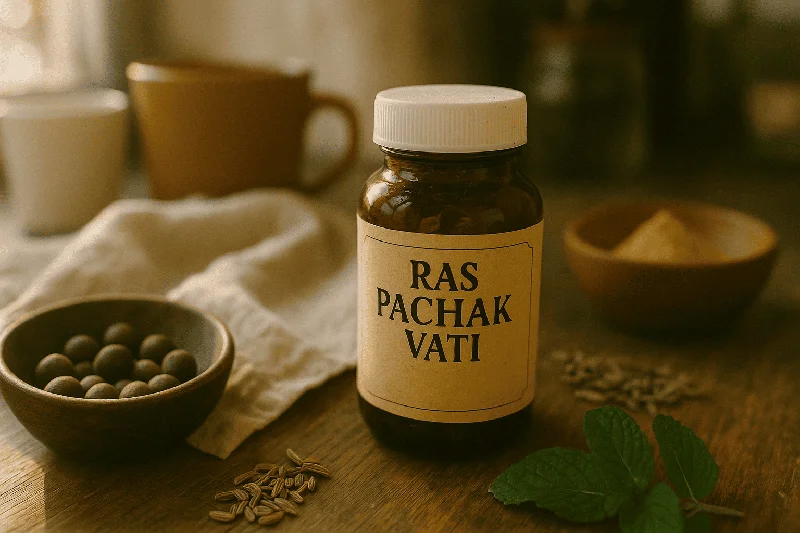
- Ras Pachak Vati is a classical Ayurvedic tablet formulation specifically designed to digest and metabolize Rasa Dhatu — the first and most foundational tissue element in the body. Unlike generic digestive pills that simply neutralize acid, Ras Pachak Vati works at a deeper level: it strengthens Agni (digestive fire), corrects Rasa Dhatu metabolism, and helps resolve a wide range of conditions that stem from improperly processed nutrition — from chronic bloating and loss of appetite to thyroid dysfunction and skin problems.
- In this guide, we break down everything you need to know: ingredients, benefits, dosage, side effects, how it compares to other formulations, and what science says about its key herbs.
What Is Ras Pachak Vati?
- Ras Pachak Vati (रस पाचक वटी) is a polyherbal Ayurvedic vati (tablet) formulated to support the digestion and proper transformation of Rasa Dhatu.
- The name itself reveals its purpose: Ras refers to Rasa Dhatu, Pachak means "that which digests," and Vati means tablet.
- In practical terms, it's prescribed by Ayurvedic practitioners for conditions like indigestion, flatulence, acid reflux, loss of appetite, and sluggish metabolism.
- But its scope goes beyond simple stomach complaints — and that's what makes it unique among digestive formulations.
The Concept of Rasa Dhatu in Ayurveda
To truly understand Ras Pachak Vati, you need to understand Rasa Dhatu. Ayurveda describes seven Dhatus (tissue elements) that form the body in a sequential chain:
- Rasa (plasma/nutrient fluid)
- Rakta (blood)
- Mamsa (muscle)
- Meda (fat)
- Asthi (bone)
- Majja (marrow)
- Shukra (reproductive tissue)
- Rasa Dhatu is the first in this chain. It's formed directly from the food you eat after the action of Jatharagni (stomach fire) and Rasa Dhatvagni (tissue-level fire specific to Rasa).
- Think of it as the liquid essence of digested food — the nutrient-rich plasma that nourishes every subsequent tissue.
Here's the critical point: if Rasa Dhatu is not properly formed or metabolized, every tissue downstream suffers. It's a domino effect. Improperly digested Rasa leads to the accumulation of Ama (metabolic toxins), which then causes what Ayurveda calls Raspradoshaj Vikar — diseases arising from vitiated Rasa Dhatu.
What Is Raspradoshaj Vikar?
- Classical texts like the Charaka Samhita describe Raspradoshaj Vikar as a category of diseases caused by the corruption of Rasa Dhatu.
- Symptoms and conditions include:
- Aruchi — loss of taste and appetite
- Asya Vairasya — abnormal taste in the mouth
- Arasajnata — inability to perceive taste
- Hrillasa / Nausea
- Gaurava — heaviness in the body
- Tandra — drowsiness
- Angamarda — body aches
- Jwara — fever
- Tama — fainting/darkness before eyes
- Panduta — pallor/anemia
- Srotorodha — blockage of body channels
- Klaibya — impotence
- Shaithilya — laxity of body tissues
- Agninasha — destruction of digestive fire
- Vali, Palitya, Khalitya — premature wrinkles, greying, hair loss
- This is exactly where Ras Pachak Vati steps in.
- It doesn't just treat surface-level indigestion — it targets the root metabolic failure at the Rasa Dhatu level.
How Ras Pachak Vati Fits Into the Dhatu Pachan System
- Ras Pachak Vati is part of a broader Ayurvedic system of Dhatu-specific Pachak formulations.
- Some manufacturers produce an entire range:
| Formulation | Target Dhatu | Primary Use |
|---|---|---|
| Ras Pachak Vati | Rasa (plasma) | Indigestion, bloating, loss of appetite, Rasa Dhatu disorders |
| Rakta Pachak Vati | Rakta (blood) | Blood purification, skin disorders, detox |
| Mamsa Pachak Vati | Mamsa (muscle) | Muscle-related disorders, tissue wasting |
| Medo Pachak Vati | Meda (fat) | Obesity, high cholesterol, lipid metabolism |
| Asthi Majja Pachak Vati | Asthi/Majja (bone/marrow) | Joint disorders, osteoporosis, bone weakness |
None of the other formulations can substitute for Ras Pachak Vati because each Dhatvagni (tissue fire) is unique. This is a concept that modern Ayurvedic practice often overlooks, but classical texts are very clear about it.
Ras Pachak Vati Ingredients: What's Inside and Why
- The composition of Ras Pachak Vati varies slightly between manufacturers, but the classical formulation and major branded versions share core ingredients.
- Here's a detailed breakdown:
Core Classical Ingredients
| Ingredient | Sanskrit/Hindi Name | Latin Name | Key Action |
|---|---|---|---|
| Kutaki | कुटकी | Picrorhiza kurroa | Bitter hepato-protective, Pitta regulator, Agni kindler |
| Patol | पटोल | Trichosanthes dioica | Pitta-shamak, anti-inflammatory, blood purifier |
| Indrayava | इन्द्रयव | Holarrhena antidysenterica (seeds) | Anti-diarrheal, Deepan (appetizer), anti-parasitic |
| Guduchi | गुडूची | Tinospora cordifolia | Immuno-modulator, Ama-pachak (toxin digester), Rasayana |
| Musta | मुस्ता | Cyperus rotundus | Digestive stimulant, anti-spasmodic, Kapha-Pitta balancer |
Additional Ingredients Found in Some Branded Versions
Certain manufacturers — such as Arya Vaidya Kalpashala — use a different formulation approach with ingredients like:
- Trikatu (Sunthi + Maricha + Pippali) — powerful Agni-kindling trio
- Hing (Asafoetida) — Ferula assa-foetida — anti-flatulent, Vata-pacifying
- Jeera (Cumin) — Cuminum cyminum — digestive stimulant
- Ajamoda (Celery seeds) — Apium graveolens — carminative, anti-spasmodic
Why Do Compositions Differ Between Manufacturers?
- This is something no other source explains properly. The reason is rooted in different classical references.
- Ayurveda doesn't have a single "recipe book" — formulations appear across multiple texts (Sharangdhara Samhita, Bhaisajya Ratnavali, Yoga Ratnakara, Rasatantra Sara), and each text may describe a variant with slightley different herbs or proportions.
Practically speaking:
- Formulations with Kutaki + Patol + Indrayava lean more towards treating Raspradoshaj Vikar and Pitta-related digestive issues
- Formulations with Trikatu + Hing + Jeera are more suited for Mandagni (sluggish digestion), Vata-type bloating, and flatulence
If you're unsure which version to choose, consult a qualified Ayurvedic physician (Vaidya) who can assess your Prakriti and current Vikriti.
Benefits of Ras Pachak Vati
The benefits of Ras Pachak Vati extend well beyond simple digestive comfort. Let's go through them systematically.
Digestive Benefits: Agni, Appetite, and Gut Health
This is the primary domain of Ras Pachak Vati:
- Strengthens Jatharagni and Rasa Dhatvagni — the two fires most directly responsible for converting food into usable Rasa Dhatu
- Relieves bloating and gas — by improving the complete breakdown of food and reducing Ama formation
- Restores appetite — through Deepana (appetizing) action of ingredients like Musta and Pippali
- Reduces acid reflux and heartburn — Kutaki and Patol are Pitta-regulatory, helping to normalize gastric acid without suppressing it entirely (unlike chemical antacids that simply neutralize acid)
- Combats chronic constipation — by improving overall metabolic efficiency rather than acting as a direct laxative
A 2015 study published in the Journal of Ethnopharmacology found that Picrorhiza kurroa (Kutaki) exhibited significant hepatoprotective and digestive enzyme-stimulating activity in animal models, supporting its traditional use as a digestive tonic. Another study (Srinivasan, 2007, Critical Reviews in Food Science and Nutrition) demonstrated that piperine — the active compound in Pippali and Maricha — increases the bioavailability of nutrients by up to 2,000% for certain compounds.
Dosha Balancing Effects
Ras Pachak Vati acts across all three doshas, though its primary affinity is with Pitta and Kapha:
- Pitta: Kutaki and Patol pacify excess Pitta without extinguishing digestive fire — a delicate but crucial balance
- Kapha: Musta and Trikatu (in applicable formulations) reduce Kapha-type sluggishness, heaviness, and mucous accumulation in the GI tract
- Vata: Hing and Ajamoda specifically target Vata-type bloating, cramping, and irregular peristalsis
Support for Thyroid and Metabolic Disorders
This is perhaps the most underappreciated benefit. Since Rasa Dhatu is the foundational tissue that feeds all other tissues — including those of the thyroid gland — its proper metabolism is essential for healthy endocrine function.
- In Ayurvedic clinical practice, Ras Pachak Vati is sometimes prescribed as part of a multi-drug protocol for hypothyroidism (particularly subclinical hypothyroidism) and other metabolic syndromes.
- The logic is straightforward: if Rasa Dhatu is laden with Ama, the thyroid tissue (which depends on nourishment from Rasa) cannot function optimally.
A 2019 review in Ancient Science of Life noted that Guduchi (Tinospora cordifolia) possesses immunomodulatory and thyroid-stimulating properties, which may partly explain this traditional application.
> Important: Ras Pachak Vati is not a standalone thyroid treatment. It's used as adjunct therapy alongside formulations like Kanchanara Guggulu and Punarnava Mandur under professional supervision.
Skin Health and Detoxification
Because Rasa Dhatu directly transforms into Rakta Dhatu (blood), purifying Rasa automatically improves blood quality. Patients with conditions like acne, eczema, and dull complexion often have underlying Rasa Dhatu vitiation. By correcting this root cause, Ras Pachak Vati can contribute to clearer skin over time — though results typically take 4-8 weeks to become noticeable.
Who Can Benefit from Ras Pachak Vati?
- Not everyone needs this specific formulation.
- Here's who stands to benefit the most:
- People with chronic indigestion that hasn't responded well to conventional antacids
- Those experiencing persistent bloating, gas, and heaviness after meals
- Individuals with low appetite or complete loss of taste (Aruchi)
- Patients with sluggish metabolism and early-stage metabolic syndrome
- People suffering from frequent nausea without an identifiable acute cause
- Those with skin issues rooted in poor digestion — recurrent acne, pallor, dullness
- Individuals recovering from illness where digestive capacity has weakened
People with Pitta-dominant Prakriti should use Kutaki-based formulations cautiously and under guidance, as excessive Kutaki can sometimes aggravate Pitta in sensitive individuals despite its overall Pitta-shamak classification.
How to Use Ras Pachak Vati: Dosage and Administration
Standard Dosage
| Parameter | Recommendation |
|---|---|
| Adults | 1–2 tablets, twice daily |
| Timing | After meals (lunch and dinner) |
| Anupana (vehicle) | Warm water or lukewarm buttermilk |
| Children (above 5) | 1 tablet, once or twice daily (as directed by Vaidya) |
How Long Should You Take It?
- This is a question that almost no source answers clearly.
- Based on classical guidelines and clinical practice:
- Acute indigestion/bloating: 1–2 weeks is usually sufficient
- Chronic digestive issues: 4–6 weeks as a standard course
- Raspradoshaj Vikar (Rasa Dhatu disorders): 8–12 weeks, often in combination with other formulations
- Maintenance/prevention: Some practitioners recommend cyclical use — 2 weeks on, 2 weeks off — for people with constitutionally weak digestion
When to Expect Results
Most patients report noticeable improvement in appetite and reduction in bloating within 5–7 days. Deeper benefits like improved energy, reduced body heaviness, and skin improvement typically emerge after 3–4 weeks of consistent use.
Don't wait or self medicate. Start chat with Doctor NOW
Side Effects and Precautions
One of the biggest gaps in existing information online is the lack of honest discussion about side effects. Let's fix that.
Potential Side Effects
- Ras Pachak Vati is generally well-tolerated when taken in recommended doses.
- However:
- Loose stools: Some users experience mild loose motions in the first 2-3 days, particularly with Kutaki-heavy formulations. This usually self-resolves.
- Gastric irritation: In individuals with active gastric or duodenal ulcers, bitter herbs like Kutaki may worsen irritation. Do not take if you have an active peptic ulcer.
- Excessive Pitta aggravation: Rare, but possible in Pitta-dominant individuals during hot weather. Signs include burning sensation in the stomach, acid taste in the mouth, or loose/warm stools.
Who Should Avoid It?
- Pregnant and lactating women — safety not established; avoid unless specifically prescribed by a qualified Ayurvedic doctor
- People with active peptic ulcers or gastric bleeding
- Children under 5 years — insufficient data on safety
- People with known allergy to any of the ingredients
Drug Interactions
- This is completely absent from all competing sources.
- Here's what you should know:
- Antidiabetic medications: Guduchi and Kutaki may have hypoglycemic effects. If you're on metformin, glimepiride, or insulin, monitor blood sugar levels closely and inform your physician.
- Immunosuppressants: Guduchi is an immunomodulator. If you're taking drugs like cyclosporine or tacrolimus (post-transplant), consult both your allopathic and Ayurvedic doctor before starting.
- Anticoagulants/blood thinners: Some ingredients may have mild blood-thinning properties. If you're on warfarin or similar medications, exercise caution.
- Antacids/PPIs: Taking Ras Pachak Vati alongside proton pump inhibitors (omeprazole, pantoprazole) may be counterproductive — the Vati aims to optimize acid production, while PPIs suppress it.
Ras Pachak Vati vs. Chemical Digestive Medications
- This comparison is important because many people consider Ras Pachak Vati as an alternative to OTC digestive aids.
- Here's an honest assessment:
| Parameter | Ras Pachak Vati | Chemical Antacids (Tums, Gelusil) | PPIs (Omeprazole) | Digestive Enzymes |
|---|---|---|---|---|
| Mechanism | Strengthens Agni, digests Ama, balances Doshas | Neutralizes stomach acid | Blocks acid production | Supplements missing enzymes |
| Speed of relief | 3–7 days for noticeable effect | Minutes | 1–3 days | 30–60 minutes |
| Root cause treatment | Yes | No | No | Partially |
| Long-term safety | Generally safe for prescribed duration | Aluminum/magnesium toxicity risk with prolonged use | Bone fracture risk, B12 deficiency, rebound acidity | Generally safe |
| Dependency | No known dependency | Possible rebound acidity | Significant rebound acidity on withdrawal | Possible enzyme dependency |
| Holistic benefits | Skin, immunity, energy, metabolism | None | None | None |
The key takeaway: Ras Pachak Vati is not a "quick fix" for acute heartburn. If you need immediate relief from severe acid reflux, an antacid will work faster. But if your goal is to resolve chronic digestive weakness rather than just mask symptoms, Ras Pachak Vati offers a fundamentaly different — and often more sustainable — approach.
Lifestyle Tips to Maximize the Benefits
Taking Ras Pachak Vati without addressing dietary and lifestyle factors is like pouring water into a leaking bucket. Here are complementary practices that enhance its effectiveness:
Dietary Guidelines
- Eat warm, freshly cooked meals — cold, stale, and processed foods increase Ama
- Avoid ice-cold water during meals — it dampens Jatharagni
- Include digestive spices in cooking: cumin, coriander, fennel, ginger, asafoetida
- Don't eat until the previous meal is digested — wait at least 3–4 hours between meals
- Avoid incompatible food combinations (Viruddha Ahara): milk with fruit, fish with dairy, honey in hot beverages
Yoga and Movement
- Vajrasana (thunderbolt pose) after meals for 10–15 minutes — clinically shown to improve digestion by enhancing blood flow to the abdominal region
- Pawanmuktasana (wind-relieving pose) — directly targets gas and bloating
- Agnisar Kriya — an abdominal breathing exercise that stimulates Agni
- A short 10-minute walk after dinner — simple but remarkably effective
Mindful Eating
- This sounds cliché, but it matters more than most people realize. Eating while distracted (phone, TV, work) activates the sympathetic nervous system, which diverts blood away from the digestive tract.
- Eating mindfully — chewing thoroughly, sitting calmly — activates parasympathetic dominance and significantly improves digestive efficiency.
Ras Pachak Vati Price and Availability
- Ras Pachak Vati is widely available across India through Ayurvedic pharmacies, online platforms like 1mg, Amazon India, and manufacturer websites.
- Pricing varies by brand:
| Brand | Approximate Price | Quantity |
|---|---|---|
| BVG Life Sciences | ₹80–120 | 60 tablets |
| Arya Vaidya Kalpashala | ₹100–150 | 100 tablets |
| Riddhish Herbals | ₹150–200 | 500 gm (bulk) |
| Other regional manufacturers | ₹60–100 | 60 tablets |
Storage: Keep in a cool, dry place away from direct sunlight. Most brands recommend using within 3 years of manufacture, though always check the label.
Frequently Asked Questions (FAQ)
What is Ras Pachak Vati used for?
Ras Pachak Vati is primarily used for improving digestion, relieving bloating and gas, restoring appetite, and treating conditions caused by vitiated Rasa Dhatu (Raspradoshaj Vikar). It strengthens the digestive fire (Agni) and helps the body properly metabolize the first tissue element (Rasa Dhatu), which is essential for overall health.
What are the ingredients of Ras Pachak Vati?
The classical formulation typically contains Kutaki (Picrorhiza kurroa), Patol (Trichosanthes dioica), Indrayava (Holarrhena antidysenterica), Guduchi (Tinospora cordifolia), and Musta (Cyperus rotundus). Some branded versions include Trikatu, Hing, Jeera, and Ajamoda instead. The composition varies by manufacturer and classical reference text.
Is Ras Pachak Vati the same as regular Pachak Vati?
No. "Pachak Vati" is a general term for digestive tablets, and many formulations exist under this name with different compositions. Ras Pachak Vati is specifically designed to digest Rasa Dhatu — it has a narrower and deeper therapeutic target compared to generic Pachak Vati formulations that are general-purpose digestive aids.
Can I take Ras Pachak Vati with allopathic medicines?
In most cases, yes — but with precautions. If you're taking antidiabetic drugs, blood thinners, immunosuppressants, or proton pump inhibitors (PPIs), consult both your allopathic doctor and Ayurvedic practitioner. Some ingredients may interact with these medications.
Is Ras Pachak Vati safe during pregnancy?
Safety during pregnency has not been established. Most Ayurvedic practitioners advise against using it during pregnancy and lactation unless there is a specific clinical indication and the treatment is supervised by a qualified Vaidya.
How is Ras Pachak Vati different from Rakta Pachak Vati?
- Ras Pachak Vati targets Rasa Dhatu (plasma/nutrient fluid) — the first tissue.
- Rakta Pachak Vati targets Rakta Dhatu (blood) — the second tissue. They have different ingredient profiles and are used for different conditions. Ras Pachak is for digestive issues and Rasa Dhatu disorders; Rakta Pachak is for blood purification, skin diseases, and detoxification.
What is the classical reference for Ras Pachak Vati?
The formulation appears in multiple Ayurvedic texts including Sharangdhara Samhita, Bhaisajya Ratnavali, and Rasatantra Sara. The specific reference depends on the composition used by a particular manufacturer.
Can Ras Pachak Vati help with weight loss?
It's not a weight loss medication per se, but by improving metabolism and reducing Ama (metabolic toxins), it can support healthy weight management as part of a broader protocol. For obesity-specific treatment, Medo Pachak Vati or formulations like Triphala Guggulu and Medohar Guggulu are more directly indicated.
Conclusion: Is Ras Pachak Vati Right for You?
- Ras Pachak Vati is one of those Ayurvedic formulations that does far more than its humble name suggests.
- It's not just a "digestive tablet" — it's a Dhatu-level metabolic corrector that addresses the very first link in the chain of tissue nourishment. When Rasa Dhatu is properly formed and free of Ama, the benefits cascade through every tissue, every organ, and every system in the body.
- If you've been struggling with chronic digestive issues that don't fully resolve with antacids or dietary changes alone, Ras Pachak Vati deserves serious consideration.
- But remember — Ayurvedic treatment works best when personalized. Your Prakriti, your current state of imbalance, your diet, your lifestyle — all of these matter.
Consult a qualified Ayurvedic physician to determine whether Ras Pachak Vati is appropriate for your specific condition, which formulation variant suits you best, and how long you should take it. Self-medication, even with herbal remedies, is never the ideal approach when dealing with chronic health issues. Have questions about Ras Pachak Vati or your digestive health? Drop them in the comments below or consult with a certified Ayurvedic doctor for personalized guidance. Disclaimer: This article is for informational and educational purposes only. It is not a substitute for professional medical advice, diagnosis, or treatment. Always seek the advice of a qualified Ayurvedic practitioner or healthcare provider with any questions regarding a medical condition.
Scientific Sources
- Ayurvedic treatment in the rehabilitation of ischemic stroke patients in India: A randomized controlled trial (RESTORE) — Sylaja PN et al., 2025, International journal of stroke : official journal of the International Stroke Society
- Snake stone for snake envenomization — Rasquinha D, 1996, The American journal of emergency medicine
- Critical Review on Balanites aegyptiaca Delile: Phytoconstituents, Pharmacological Properties and Nanointerventions — Gautam SK et al., 2024, Chinese journal of integrative medicine
- Deep Learning in Drug Discovery and Medicine; Scratching the Surface — Dana D et al., 2018, Molecules (Basel, Switzerland)
- A small plant with big benefits: Fenugreek (Trigonella foenum-graecum Linn.) for disease prevention and health promotion — Nagulapalli Venkata KC et al., 2017, Molecular nutrition & food research
- Benefits, barriers and determinants of practicing yoga: A cross sectional study from Kathmandu, Nepal — Khanal H et al., 2021, Journal of Ayurveda and integrative medicine
- A Systematic and Ethnobotanical Review of Ashwagandha's (Withania Somnifera) Teratogenic and Abortifacient Potentials — Tallon MJ et al., 2025, Phytotherapy research : PTR
- Need for Flipped Classroom Model in Ayurveda Education — Pardhekar AD et al., 2025, Journal of pharmacy & bioallied sciences
- Rasayana drugs from the Ayurvedic system of medicine as possible radioprotective agents in cancer treatment — Baliga MS et al., 2013, Integrative cancer therapies
- Boldine: a narrative review of the bioactive compound with versatile biological and pharmacological potential — Lamba D et al., 2024, Journal of complementary & integrative medicine
- Therapeutic potential of Ficus benghalensis in thromboembolic disorders — Sahu AK et al., 2024, Journal of Ayurveda and integrative medicine
- Vata dynamics with special reference to cardiac disorders - A cross-disciplinary approach — Baikampady SV, 2020, Journal of Ayurveda and integrative medicine
- Drimia indica: A Plant Used in Traditional Medicine and Its Potential for Clinical Uses — Aswal S et al., 2019, Medicina (Kaunas, Lithuania)
- Evolution of dietary preferences and the innate urge to heal: Drug discovery lessons from Ayurveda — Shrungeswara AH et al., 2019, Journal of Ayurveda and integrative medicine
- Health benefits of ghee: Review of Ayurveda and modern science perspectives — Kataria D et al., 2024, Journal of Ayurveda and integrative medicine
- An Overview on Genistein and its Various Formulations — Jaiswal N et al., 2019, Drug research
- Health Benefits of Uses and Applications of Moringa oleifera in Bakery Products — Milla PG et al., 2021, Plants (Basel, Switzerland)
- Meditation: Process and effects — Sharma H, 2015, Ayu
- Deciphering the Potentials of Cardamom in Cancer Prevention and Therapy: From Kitchen to Clinic — Bano S et al., 2024, Biomolecules
- A review on the therapeutic effects of NetiKriya with special reference to JalaNeti — Meera S et al., 2020, Journal of Ayurveda and integrative medicine
Questions from users
What ingredients are in Ras Pachak Vati and their benefits?
Client_8761fb
25 days ago
Ras Pachak Vati is an Ayurvedic formulation primarily used to aid digestion. Its ingredients typically include herbs like amla (Indian gooseberry), ginger, black pepper, pippali, and saunth (dried ginger), each of which contributes to digestive health by enhancing appetite, reducing bloating, and facilitating the breakdown of food. Ras Pachak Vati can often improve gut health within a few weeks of consistent use. However, it is crucial to avoid self-medication and consult a healthcare professional, especially if you're on medications like warfarin or proton pump inhibitors, as interactions may occur.
How does Ras Pachak Vati compare to other herbal digestive remedies?
Client_7f6f74
35 days ago
Ras Pachak Vati, an herbal digestive remedy, targets the root causes of digestive issues, whereas some other remedies may offer more temporary symptom relief. Unlike treatments that solely focus on alleviating symptoms like bloating or indigestion, Ras Pachak Vati aims to enhance digestion and nutrient absorption, creating a long-term digestive balance. Lifestyle changes like diet modifications often enhance its effectiveness. Consult a healthcare provider if you are pregnant or on medications, as interactions may occur.
What precautions should I take when using Ras Pachak Vati?
Client_7417b9
44 days ago
When using Ras Pachak Vati, consult a healthcare professional if you're on medications like cyclosporine, tacrolimus, or anticoagulants since these may interact with its ingredients. Monitor for gastric irritation, as bitter herbs in the formulation may exacerbate ulcers. While it supports digestion, it may not provide immediate relief for conditions like acid reflux; an antacid may be more effective. If symptoms persist, or you experience adverse reactions, seek medical advice promptly.
What should I consider when choosing a digestive aid like Ras Pachak Vati?
Client_0ddc0a
54 days ago
When choosing a digestive aid like Ras Pachak Vati, consider the specific digestive issues you are facing. Ras Pachak Vati is designed to support overall digestion and metabolism of Rasa Dhatu, but it may not provide immediate relief for acute symptoms like acid reflux. Ingredients like Kutaki and Guduchi suggest potential benefits for enhancing digestion and reducing inflammation. Look for potential allergens or ingredients you may be sensitive to, and note that effects may take a few weeks. Consult a healthcare provider if you have ongoing digestive issues or before starting a new supplement, especially if you are pregnant, nursing, or taking other medications.
Is Ras Pachak Vati suitable for people with food allergies?
Client_c6a9fa
64 days ago
Ras Pachak Vati can be tricky if you have food allergies since its ingredients vary. The best way to figure out if it's safe for you is to consult an Ayurvedic doctor. They can consider your specific allergies and suggest the right formulation if it's suitable for you. It's always better to be safe when allergies are involved!
What is the difference between Ras Pachak Vati and regular Ayurvedic digestive aids?
Client_a0a1d5
73 days ago
Ras Pachak Vati focuses on digesting and metabolizing Rasa Dhatu, which is basically the first tissue element in the body and foundational for good health. It goes beyond regular digestion aids by supporting deeper tissue nourishment and addressing subtle imbalances. Regular digestive aids don't normally target these deeper levels. But, hey, actual formulations can differ based on manufacturer or the classical text they follow, so it's good to check specific compositions.
Can I take Ras Pachak Vati while pregnant or breastfeeding?
Client_2c887f
82 days ago
It's best to be cautious with Ras Pachak Vati during pregnancy or breastfeeding. Herbs can be potent and affect your system and the baby's, even through milk or the womb. Talk to an experienced Ayurvedic practitioner, they can suggest alternatives if needed based on your specific constitution and needs. Keep safe!
What do I need to know before starting Ras Pachak Vati for digestion?
Client_1f7454
91 days ago
Before starting Ras Pachak Vati, know your digestion type (agni) and whether it complements your dosha. It's great for balancing vitiated Rasa Dhatu, but always check with an Ayurvedic doc, they might suggest specific doses or lifestyle tweaks for ya. Remember it’s not just a pill, it’s part of a lifestyle. Check the expiration, and make sure it aligns with your constitution and current condition.
Can I use Ras Pachak Vati alongside probiotics for better digestive health?
Client_700beb
101 days ago
Yes, you can definitely use Ras Pachak Vati with probiotics. They can work together in harmony! While Ras Pachak Vati helps balance your doshas for improved digestion, probiotics can support a healthy gut flora. Just keep an eye on your body's response and maybe chat with an Ayurvedic practitioner if you have any concerns about your specific constitution or dosha imbalance. It's all about finding what works best for you!
What digestive symptoms indicate that I should try Ras Pachak Vati?
Client_a6e122
110 days ago
If you're experiencing digestion troubles like bloating, indigestion, acidity, or constipation, these are clear signals to give Ras Pachak Vati a try. It’s crafted to help balance the digestive fire (agni) and boost the gut health. If issues persist, though, it's worth checking with an ayurvedic practitioner for more personalized advice.
Related articles

Gastrointestinal Disorders
Mustharishtam Uses, Dose, Ingredients, And Side Effects
Exploration of Mustharishtam Uses, Dose, Ingredients, And Side Effects
1,772
Gastrointestinal Disorders
Arshoghni Vati Uses – Ayurvedic Remedy for Piles and Hemorrhoids
Discover the benefits and uses of Arshoghni Vati, a powerful Ayurvedic remedy for piles (hemorrhoids). Learn how it helps alleviate symptoms and promotes rectal health.
4,059
Gastrointestinal Disorders
Pittashamak Vati: Balance Your Pitta with Effective Ayurvedic Remedies
Discover Pittashamak Vati, an Ayurvedic remedy to balance Pitta dosha. Learn its benefits, usage guidelines, dosage, and scientific insights for optimal health.
4,932

Gastrointestinal Disorders
Ponnaavaarai Chooranam
Exploration of Ponnaavaarai Chooranam
2,289

Gastrointestinal Disorders
Kapardika Bhasma: Seashell-Based Ayurvedic Remedy for Digestive Health
Discover Kapardika Bhasma, an Ayurvedic mineral preparation made from conch shell. Learn about its benefits, traditional uses, dosage guidelines, and safety precautions for holistic health.
3,394

Gastrointestinal Disorders
Ulset Syrup: Ayurvedic Relief for Gastric Issues
Learn about Ulset Syrup, an Ayurvedic solution for acidity, ulcers, and indigestion. Find its benefits, dosage, and usage instructions for better gut health.
4,022

Gastrointestinal Disorders
Is Lemon Good for Gastric Problems? Ayurvedic Guide and Insights
Exploration of Exploring the Benefits and Precautions of Lemon for Gastric Health
7,877
Gastrointestinal Disorders
Sudha Varga in Ayurveda – Health Benefits and Scientific Insight
Explore the Ayurvedic concept of Sudha Varga, its therapeutic uses, and the latest scientific findings supporting its role in holistic health.
3,292

Gastrointestinal Disorders
Patolamooladi Kashayam Benefits, Dose, Side Effects, Ingredients
Exploration of Patolamooladi Kashayam Benefits, Dose, Side Effects, Ingredients
1,986
Gastrointestinal Disorders
Shadangodak: An In-Depth Exploration of an Ayurvedic Six-Herb Infusion
Discover Shadangodak, an Ayurvedic six-herb water infusion. Learn its benefits, scientific basis, and practical tips for safe use in daily wellness.
3,207
Related consultations on the topic
Legal
Additional Documents
© 2024 Ask Ayurveda. All rights reserved.