Ask Ayurvedic doctor a question and get a consultation online on the problem of your concern in a free or paid mode. More than 2,000 experienced doctors work and wait for your questions on our site and help users to solve their health problems every day.


Body DetoxEar, Nose, and Throat DisordersGeriatrics & RejuvenationImmunodeficiencyInfertility TreatmentNutritionOrthopedic DisordersPediatricsRespiratory DisordersSexually Transmitted Diseases (STDs)Surgery RecoveryUrological DisordersVascular DisordersDental DisordersEndocrinological DisordersGastrointestinal DisordersYoga TherapyGeneral MedicineAllergic DisordersCardio DisordersGynecology and ObstetricsCosmetologySkin and Hair DisordersEye DisordersInfectious DiseasesMental DisordersNeurological DisordersOncologyPanchakarmaSexual Health & DisordersSports Medicine
Published on 12/26/24
(Updated on 08/09/26)
3,258
Tonsari Capsule: Benefits, Dosage & Science-Backed Insights
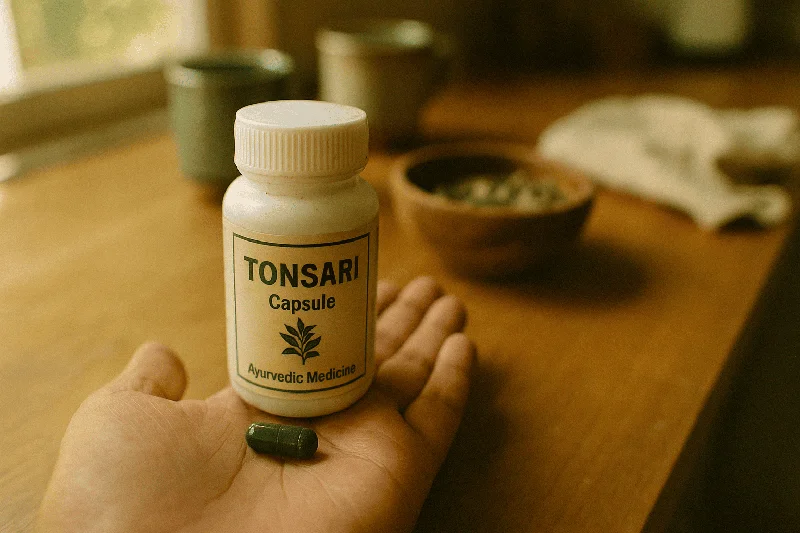
Tonsari Capsule is a polyherbal Ayurvedic formulation manufactured by Sagar Pharma (also known as Sagar Ayur Pharma / Sagar Pharmaceuticals) specifically designed to treat tonsillitis, pharyngitis, and other upper respiratory tract infections. Unlike single-herb supplements, Tonsari combines seven potent ingredients—Daruharidra, Indrajav, Karanja Twak, Nimba Twak, Haritaki, Pippali, and Nimba Taila—that work synergistically to reduce inflammation, fight microbial infections, and prevent recurrence of throat disorders. If you're dealing with recurrent tonsillitis and want to avoid repeated antibiotic courses, this capsule offers a well-documented Ayurvedic alternative worth considering.
In this comprehensive guide, we cover everything from the Ayurvedic rationale behind Tonsari Capsule to its exact composition, dosage schedules, potential side effects, and how it compares to conventional treatment options.
What Is Tonsari Capsule?
Tonsari Capsule is classified as a proprietary Ayurvedic medicine indicated for acute and chronic tonsillitis, pharyngitis, uvulitis (inflammation of the uvula), and laryngitis. It comes in capsule form and is designed to address both the symptoms and root causes of recurring throat infections from an Ayurvedic perspective.
Manufacturer & Brand Information
Tonsari Capsule is manufactured by Sagar Pharmaceuticals (Sagar Ayur Pharma), a company that specializes in classical and proprietary Ayurvedic formulations. The product is marketed primarily in India and is available through select Ayurvedic pharmacies and online retailers.
Presentation & Packaging
The capsules are available in blister packs of 12 strips × 10 capsules (120 capsules per box). The shelf life is 3 years from the date of manufacture, and the product should be stored in a cool, dry place away from direct sunlight. At the time of writing, the approximate MRP is ₹660 for 120 capsules, which translates to roughly ₹5.50 per capsule.
Ayurvedic Concept of Tonsillitis (Tundikeri)
Understanding why Tonsari Capsule works requires a brief look at how Ayurveda conceptualizes tonsillitis. In classical Ayurvedic texts, tonsillitis is described as Tundikeri—a condition characterized by swelling, redness, and pain in the tonsillar region of the throat.
Dosha Involvement: Kapha-Pitta Imbalance
According to Ayurvedic pathology, Tundikeri arises primarily from a Kapha-Pitta dosha imbalance. Excess Kapha leads to congestion, mucus accumulation, and swelling in the throat tissues, while aggravated Pitta drives the inflammatory response—causing redness, heat, and pain.
Contributing factors include:
- Aharaja (dietary): Excessive consumption of cold, heavy, oily, or sweet foods that aggravate Kapha
- Viharaja (lifestyle): Exposure to cold winds, suppression of natural urges, irregular sleep patterns
- Agni Mandya: Weakened digestive fire leading to accumulation of Ama (metabolic toxins) that settles in the throat region
How Tonsari Capsule Restores Balance
The formulation of Tonsari Capsule is designed to address this Kapha-Pitta pathology on multiple levels:
- 1.Kapha Shamana (Kapha pacification): Ingredients like Pippali and Haritaki have strong Kapha-reducing properties, helping to clear congestion and reduce tonsillar swelling
- 2.Pitta Shamana (anti-inflammatory action): Nimba (Neem) and Daruharidra cool the inflammatory Pitta component
- 3.Krimighna (antimicrobial): Multiple ingredients possess documented antibacterial and antiviral properties that address the infectious etiology
- 4.Rasayana (immunomodulatory): The combination builds long-term resistance, reducing the frequency of recurrent episodes
This multi-pronged approach is what differentiates Tonsari from simple throat lozenges or single-action medications.
It doesn't just suppress symptoms—it aims to correct the underlying doshic imbalance that makes a person susceptible to tonsillitis in the first place.
Tonsari Capsule Ingredients (Composition)
Each Tonsari Capsule contains a precise blend of six herbal powders and one herbal oil. Below is the detailed breakdown with pharmacological relevance to tonsillitis treatment.
| # | Ingredient (Sanskrit) | Botanical Name | Quantity per Capsule | Key Action in Tonsillitis |
|---|---|---|---|---|
| 1 | Daruharidra | Berberis aristata | 110 mg | Anti-inflammatory, antibacterial (berberine) |
| 2 | Indrajav | Holarrhena antidysenterica | 110 mg | Antimicrobial, febrifuge |
| 3 | Karanja Twak | Pongamia pinnata (bark) | 110 mg | Anti-inflammatory, immunomodulatory |
| 4 | Nimba Twak | Azadirachta indica (bark) | 110 mg | Antibacterial, blood purifier |
| 5 | Haritaki | Terminalia chebula | 110 mg | Rasayana, mild laxative, anti-inflammatory |
| 6 | Pippali | Piper longum | 110 mg | Bioavailability enhancer, Kapha reducer |
| 7 | Nimba Taila | Azadirachta indica (oil) | 300 mg | Soothing, antimicrobial carrier base |
Daruharidra (Berberis aristata) — 110 mg
Daruharidra, or Indian Barberry, is the star ingredient when it comes to fighting throat infections. It contains berberine, an alkaloid extensively studied for its broad-spectrum antimicrobial activity. A 2014 review published in Frontiers in Microbiology demonstrated that berberine exhibits significant antibacterial activity against Streptococcus pyogenes—the primary bacterial pathogen responsible for streptococcal tonsillitis (Peng et al., 2014). In Ayurveda, Daruharidra is classified as Pitta-Kapha Shamaka, making it ideal for conditions where both inflammation and congestion coexist.
Indrajav (Holarrhena antidysenterica) — 110 mg
While Indrajav is commonly known for its antidiarrheal properties, its role in Tonsari relates to its potent antimicrobial and febrifuge (fever-reducing) properties. The seeds contain conessine, an alkaloid with documented antibacterial effects. In the context of tonsillitis, where fever often accompanys the infection, Indrajav serves a dual purpose.
Karanja Twak (Pongamia pinnata) — 110 mg
Karanja bark contains flavonoids like karanjin and pongamol that demonstrate significant anti-inflammatory activity. A 2016 study in the Journal of Ethnopharmacology showed that Pongamia pinnata extracts inhibited COX-2 enzyme activity, a key mediator of inflammation—essentially mimicking the action of NSAIDs but through a natural mechanism. This makes it particularly usefull for reducing the painful swelling of inflamed tonsils.
Nimba Twak (Azadirachta indica) — 110 mg
- Neem bark is one of the most well-researched antimicrobial herbs in Ayurveda.
- Its active compounds—nimbin, nimbidin, and azadirachtin—provide broad-spectrum antibacterial, antiviral, and antifungal properties. A 2018 systematic review in Evidence-Based Complementary and Alternative Medicine confirmed neem's efficacy against multiple respiratory pathogens. In Tonsari Capsule, neem bark works as a Rakta Shodhaka (blood purifier) and Krimighna (antimicrobial agent).
Haritaki (Terminalia chebula) — 110 mg
- Known as the "King of Medicines" in Tibetan medicine, Haritaki is a powerful Rasayana (rejuvenative) that strengthens immunity while offering mild analgesic and anti-inflammatory benefits. Its high tannin content gives it astringent properties that help reduce swelling and discharge in the throat.
- It also improves Agni (digestive fire), helping to clear Ama—the metabolic toxin load that Ayurveda considers a root cause of recurrent infections.
Pippali (Piper longum) — 110 mg
Pippali serves a critical dual function in this formulation. First, it is the most potent Kapha Shamaka (Kapha-reducing) herb in the mix—its sharp, heating nature helps dry up excess mucus and reduce congestion. Second, and perhaps more importantly, Pippali acts as a bioavailability enhancer. Research published in Planta Medica (2004) showed that piperine (and its analogs in Pippali) can increase the bioavailability of co-administered compounds by up to 30–200%, essentially making every other ingredient in the capsule more effective.
Nimba Taila (Neem Oil) — 300 mg
Nimba Taila constitutes the largest portion of each capsule at 300 mg. Neem oil serves as both an active antimicrobial agent and a carrier medium that facilitates absorption of the other ingredients. Its oily nature also provides a soothing, protective coating effect when it comes in contact with inflamed throat tissues.
Uses and Benefits of Tonsari Capsule
Primary Indications
Tonsari Capsule is indicated for the following conditions:
- Acute and chronic tonsillitis (Tundikeri)
- Pharyngitis (inflammation of the pharynx)
- Uvulitis (inflammation and swelling of the uvula)
- Laryngitis (inflammation of the larynx)
- Recurrent upper respiratory tract (URT) infections
- ENT infections and inflammations
Key Benefits
Beyond treating active infections, Tonsari Capsule offers several broader benefits:
- 1.Reduces inflammation quickly: The combination of Daruharidra, Karanja, and Nimba provides multi-pathway anti-inflammatory action
- 2.Fights infection naturally: Berberine, conessine, and nimbidin provide broad-spectrum antimicrobial coverage without contributing to antibiotic resistance
- 3.Builds resistance and prevents recurrence: Haritaki and Pippali strengthen the immune system over time, breaking the cycle of recurrent tonsillitis—this is something antibiotics simply cannot do
- 4.Relieves pain and difficulty swallowing: Anti-inflammatory and mild analgesic properties of Haritaki and Karanja reduce odynophagia (painful swallowing)
- 5.Clears excess mucus and congestion: Pippali's Kapha-reducing property helps clear throat congestion
Unique Method: Direct Throat Application
- Here's something most people don't know—you can actually open the capsule and sprinkle the powdered contents directly deep into the throat for immediate pain relief. This method provides faster topical action on inflamed tonsils compared to swallowing the capsule whole.
- However, be warned: the contents are quite bitter, so having water ready is advisable.
Dosage: How to Take Tonsari Capsule
Recommended Dosage
| Patient Group | Dosage | Frequency | Duration |
|---|---|---|---|
| Adults | 2 capsules | Twice daily | 4–6 weeks |
| Children (above 5 years) | 1 capsule | Twice daily | 4–6 weeks |
Should You Take It Before or After Food?
- Tonsari Capsule is best taken after meals with lukewarm water.
- Taking it after food serves two purposes: it reduces the chances of gastric irritation (since the formulation contains bitter herbs like neem), and the presence of food in the stomach helps with better absorption of the oil-based components.
How Long Does It Take to See Results?
Most patients report noticeable improvement in acute symptoms—pain, swelling, difficulty swallowing—within 5 to 7 days. However, for chronic or recurrent tonsillitis, a full course of 4 to 6 weeks is typically recommended to achieve lasting results and prevent recurrence. Some practitioners recommend a second course after a 2-week gap for patients with severe chronic tonsillitis.
Full Course Cost Estimate
For a 6-week course for an adult (2 capsules × 2 times × 42 days = 168 capsules), you would need approximately 1.5 boxes. At ₹660 per box of 120 capsules, the total cost comes to roughly ₹924 for the complete course—making it significantly more affordable than repeated courses of antibiotics combined with anti-inflammatory drugs.
Don't wait or self medicate. Start chat with Doctor NOW
Side Effects and Safety Profile
Known Side Effects
Tonsari Capsule is generally well-tolerated when taken at the recommended dosage.
However, some individuals may experience:
- Mild gastric discomfort (usually if taken on an empty stomach)
- Bitter aftertaste, especially if using the direct throat application method
- Rare instances of loose stools due to the laxative property of Haritaki
No serious adverse effects have been reported in published literature or manufacturer post-market surveillance data.
Safety During Pregnancy and Lactation
Tonsari Capsule should be used during pregnancy only under medical supervision. Some of the ingredients (particularly Pippali and Haritaki) have uterine-stimulating properties that could theoretically pose a risk. During lactation, the safety profile is not well-established so consult your physician before use.
When NOT to Take Tonsari Capsule
You should avoid self-medicating with Tonsari Capsule and consult a doctor immediately if:
- You have a fever exceeding 103°F (39.4°C)
- You notice pus or white patches on the tonsils (possible peritonsillar abscess)
- You experience difficulty breathing or severe difficulty swallowing liquids
- Symptoms persist beyond 10 days despite treatment
- You are a known diabetic (neem may lower blood sugar levels)
- The patient is a child under 5 years of age
These situations may require antibiotic intervention or even surgical evaluation, and delaying proper medical care could be dangerous.
Can Tonsari Capsule Be Taken with Other Medicines?
With Allopathic (Western) Medicines
Yes, Tonsari Capsule can generally be taken alongside allopathic medicines. However, it is advisable to maintain a gap of at least 30 minutes between taking the capsule and any allopathic medication. This prevents potential interactions and ensures optimal absorption of both.
With Homeopathic Medicines
Tonsari Capsule can be taken concurrently with homeopathic treatments. Since the mechanisms of action are different, there are no known interactions. Maintain the standard 30-minute gap.
With Other Ayurvedic Supplements and Herbs
Tonsari Capsule is compatible with most Ayurvedic supplements and can be safely combined with immune-boosting formulations like Chyawanprash or Tulsi preparations for enhanced results. If you're already taking other bitter or Pitta-reducing herbs, monitor for excessive cooling effects.
Is It Safe for Long-Term Use?
For most people, Tonsari Capsule is safe for courses lasting up to 6 weeks. Long-term continuous use beyond 8 weeks is not recommended without medical supervision. If you have recurrent tonsillitis, it's better to take the capsule in cycles (6 weeks on, 2 weeks off) rather than continuous use.
Tonsari Capsule vs. Other Tonsillitis Treatments
One of the questions nobody seems to answer online is: how does Tonsari compare to other treatment options?
Here's a practical comparison:
| Parameter | Tonsari Capsule | Antibiotics (e.g., Amoxicillin) | Tonsillectomy (Surgery) |
|---|---|---|---|
| Approach | Addresses root cause (dosha imbalance) + symptoms | Kills bacteria; no effect on viral causes | Permanently removes tonsils |
| Onset of Relief | 5–7 days | 2–3 days | Immediate (post-recovery) |
| Recurrence Prevention | Yes (immunomodulatory) | No (often recurs after course) | Yes (no tonsils to infect) |
| Antibiotic Resistance Risk | None | Significant with repeated use | N/A |
| Side Effects | Minimal | GI disturbance, allergic reactions, dysbiosis | Post-surgical pain, bleeding risk, anesthesia risks |
| Cost (approx.) | ₹924 for full course | ₹200–500 per course (but often multiple courses) | ₹25,000–₹60,000 |
| Best For | Recurrent tonsillitis, chronic cases, prevention | Acute bacterial tonsillitis with high fever | Severe, non-responsive chronic tonsillitis |
Important note: Tonsari Capsule is not a replacement for antibiotics in cases of severe bacterial tonsillitis with high fever and pus formation. It works best for mild-to-moderate cases and as a preventive strategy between acute episodes.
Diet and Lifestyle Recommendations During Treatment (Pathya-Apathya)
Taking Tonsari Capsule is only part of the equation. Ayurveda emphasises equally the role of diet and lifestyle in managing Tundikeri. Following these recommendations can significantly enhance treatment outcomes.
Foods to Favor (Pathya)
- Warm, light, easily digestible foods (khichdi, vegetable soups, steamed vegetables)
- Warm water with honey and a pinch of turmeric (excellent for sore throats)
- Ginger tea or Tulsi tea 2–3 times daily
- Seasonal fruits rich in Vitamin C (amla, orange, guava)
- Warm milk with turmeric (golden milk) at bedtime
Foods to Avoid (Apathya)
- Cold foods and beverages (ice cream, cold water, chilled drinks)
- Heavy, oily, and fried foods that aggravate Kapha
- Excessively sweet foods (sweets, chocolates, sugary drinks)
- Sour and fermented foods (pickles, curd at night, vinegar)
- Refrigerated or stale food
Lifestyle Practices
- Gargling: Warm salt water gargling 2–3 times daily (ideally with a pinch of turmeric)
- Steam inhalation: 5–10 minutes before bed with a few drops of eucalyptus oil
- Adequate rest: Ensure 7–8 hours of sleep; the body repairs during rest
- Avoid cold exposure: Cover your throat in cold or windy weather
- Nasya: A drop of Anu Taila in each nostril in the morning can help prevent recurrence (consult your Ayurvedic practitioner first)
Acute vs Chronic Tonsillitis: How Tonsari Usage Differs
Understanding whether you're dealing with acute or chronic tonsillitis changes how you should approach Tonsari Capsule therapy.
Acute Tonsillitis
- Characteristics: Sudden onset, severe sore throat, high fever, difficulty swallowing, swollen tonsils with possible white patches
- Tonsari Approach: Standard dosage (2 capsules twice daily) for 2–3 weeks. Consider opening the capsule for direct throat application during the first 3–5 days for faster relief
- Expected Results: Symptom relief within 5–7 days; complete resolution within 2 weeks in most cases
- When to escalate: If fever doesn't subside within 3 days or symptoms worsen, consult a physician—you may need antibiotics
Chronic/Recurrent Tonsillitis
- Characteristics: Repeated episodes (3+ per year), persistent mild sore throat, enlarged tonsils, bad breath, tonsillar stones
- Tonsari Approach: Full 6-week course at standard dosage, followed by a 2-week break, then a second 6-week course if needed. Combine with Pathya-Apathya recommendations strictly
- Expected Results: Gradual reduction in episode frequency over 2–3 months. Many patients report going from 5–6 episodes per year to 1–2
- When to escalate: If there's no improvement after two complete courses, surgical evaluation (tonsillectomy) may be necessary
Where to Buy Tonsari Capsule
Tonsari Capsule is available through several channels:
- Ayurvedic pharmacies and medical stores — especially those stocking Sagar Pharma products
- Online retailers — available on platforms like 1mg, Amazon India, and specialty Ayurvedic e-commerce sites
- Direct from Sagar Pharma distributors — check the manufacturer's website for authorized stockists in your region
When purchasing online, always verify that the product has a valid manufacturing date, batch number, and the Sagar Pharma hologram or seal. Counterfeit Ayurvedic products are unfortunately not uncommon.
Frequently Asked Questions (FAQ)
What is the use of Tonsari Capsule?
Tonsari Capsule is used to treat tonsillitis (acute and chronic), pharyngitis, uvulitis, laryngitis, and other upper respiratory and ENT infections. It reduces inflammation, fights infection, and helps prevent recurrence of throat disorders.
What is the price of Tonsari Capsule?
The MRP is approximately ₹660 for a box of 120 capsules (12 strips of 10). A full 6-week adult course requires about 168 capsules, costing roughly ₹924 in total.
Can Tonsari Capsule be taken with other supplements?
Yes, it can be safely combined with most Ayurvedic supplements, homeopathic medicines, and allopathic drugs. Maintain a 30-minute gap between Tonsari and any other medication for optimal absorption.
Is Tonsari Capsule suitable for vegetarians and vegans?
The capsule shell is typically made from gelatin, which is animal-derived. If you're strictly vegan, you can open the capsule and consume only the herbal contents with warm water—though this will be quite bitter. Check the product label for the latest capsule shell composition, as formulations can change.
Can Tonsari Capsule help with weight loss?
No. Tonsari Capsule is formulated specifically for throat and upper respiratory conditions. It has no direct weight loss properties.
Does Tonsari Capsule improve skin health?
While Neem (a key ingredient) is known for skin benefits, Tonsari Capsule is not designed or dosed for dermatological conditions. If you're looking for skin health support, there are more appropriate Ayurvedic formulations available.
Is there a Tonsari Syrup available?
Yes, Sagar Pharma also manufactures Tonsari Syrup, which may be more suitable for children or those who have difficulty swallowing capsules. The syrup form contains similar ingredients but in a liquid base. Consult your Ayurvedic practitioner for appropriate dosage.
Are there any clinical studies on Tonsari Capsule?
As of now, there are no large-scale randomized controlled trials specifically on the Tonsari Capsule formulation. However, individual ingredients like berberine (from Daruharidra), piperine (from Pippali), and nimbidin (from Nimba) have been extensively studied and published in peer-reviewed journals including Frontiers in Microbiology, Journal of Ethnopharmacology, and Planta Medica. More clinical research on the complete formulation would be valuable.
Final Thoughts
Tonsari Capsule represents a thoughtfully designed Ayurvedic approach to a problem that millions of Indians deal with every year—recurrent tonsillitis. Its seven-ingredient formulation addresses the condition from multiple angles: reducing inflammation, fighting infection, clearing congestion, and most importantly, building long-term immune resilience to prevent future episodes.
That said, it's not a magic pill. Best results come when you combine it with proper dietary discipline (Pathya-Apathya), adequate rest, and common-sense lifestyle practices like warm water gargling. And it's crucial to recognize when the condition is beyond the scope of herbal medicine—severe bacterial tonsillitis with high fever and pus formation needs medical attention, not self-treatment.
If you've been stuck in the frustrating cycle of tonsillitis → antibiotics → temporary relief → tonsillitis again, Tonsari Capsule may be worth discussing with your Ayurvedic practitioner. It offers an evidence-informed, affordable, and holistic alternative that addresses the root cause rather than just supressing symptoms.
Consult a qualified Ayurvedic physician before starting any new supplement, especially for children, pregnant or lactating women, and individuals on existing medication.
Scientific Sources
- Sida cordifolia L.: Ethnobotany, Phytochemistry, Phytonanotechnology, and Commercial Application — Kumar S et al., 2024, Current pharmaceutical biotechnology
- The genus Sida L. - A traditional medicine: Its ethnopharmacological, phytochemical and pharmacological data for commercial exploitation in herbal drugs industry — Dinda B et al., 2015, Journal of ethnopharmacology
- Extracts of Sida cordifolia contain polysaccharides possessing immunomodulatory activity and rosmarinic acid compounds with antibacterial activity — Iqbal H et al., 2022, BMC complementary medicine and therapies
- Quality by design-based optimization of Soxhlet extraction and identification of ephedrine by a HPTLC method for Sida rhombifolia and Sida Cordifolia — Imran M et al., 2022, Biomedical chromatography : BMC
- Ayurvedic Management of Presbycusis (Project TOPMAC): Protocol for an Exploratory Randomized Controlled Trial — V KK et al., 2024, JMIR research protocols
Questions from users
Can I use Tonsari Capsule for preventive care against tonsillitis?
Client_b6f3e4
3 days ago
Tonsari Capsule is not specifically proven for preventing tonsillitis, though it is used in treating acute and chronic cases. The capsule contains berberine, piperine, and nimbidin, which offer anti-inflammatory and antimicrobial benefits. If you have recurrent tonsillitis and wish to avoid repetitive antibiotic use, some evidence suggests it might be beneficial. However, it is crucial to consult a healthcare provider before starting any new supplement, especially if you have underlying health conditions or are taking other medications.
How can dietary discipline improve recovery from tonsillitis?
Client_96a32f
8 days ago
Dietary discipline can aid recovery from tonsillitis by reducing inflammation and boosting the immune system. Opt for a soft, nutrient-rich diet that is easy to swallow and avoids irritants. Incorporate foods rich in vitamins C and E, like citrus fruits and nuts, to strengthen immunity. Hydration is crucial, so drink plenty of fluids, such as herbal teas or broths. Avoid spicy, acidic, or crunchy foods that may aggravate the throat. Although Ayurveda suggests some dietary restrictions, consult a healthcare provider for personalized advice, especially if symptoms persist beyond a week.
How effective is Tonsari Capsule for treating chronic tonsillitis?
Client_d76ed8
13 days ago
Tonsari Capsule may offer relief for chronic tonsillitis, but its effectiveness isn't well-documented through rigorous scientific studies. Tonsillitis involves inflammation of the tonsils, often requiring antibiotics or surgery for chronic cases. Tonsari Capsule is an Ayurvedic supplement said to reduce inflammation and alleviate symptoms, like redness and pain. However, for any persistent or severe symptoms, consulting a healthcare professional is recommended to rule out the need for more conventional treatments.
How does Haritaki in Tonsari Capsule support digestive health?
Client_8cee8d
18 days ago
Haritaki, an ingredient in Tonsari Capsule, supports digestive health primarily by acting as a laxative and promoting regular bowel movements. It may help improve digestion by enhancing gastrointestinal motility and aiding in the detoxification of the digestive tract. Typically, some users report noticing effects within a few days to a week, but individual experiences can vary. If digestive issues persist or worsen, it is advisable to consult a healthcare professional to rule out any serious conditions.
What are the side effects of taking Tonsari Capsule daily?
Client_f7ac54
28 days ago
Taking Tonsari Capsule daily may lead to some side effects, primarily due to its ingredients like Pippali and Haritaki. Pippali may have uterine-stimulating properties, potentially posing a risk for pregnant women. Haritaki, while beneficial for its antimicrobial properties, may cause gastrointestinal issues in some individuals. Neem is generally safe but can lead to liver issues if consumed in high doses over long periods. Watch for symptoms like stomach upset or allergic reactions. Consult a healthcare provider if adverse effects occur or if you have underlying health conditions.
How does Pippali enhance the absorption of herbal supplements?
Client_815355
38 days ago
Pippali enhances the absorption of herbal supplements primarily through the compound piperine. Piperine can increase the bioavailability of compounds by 30-200% by inhibiting enzymes that would otherwise break down these compounds too quickly, thus allowing them to remain in the body longer and at higher levels. This can make the supplements more effective. It's important to note that long-term use of Pippali beyond 8 weeks should be under medical supervision due to potential side effects. Always consult with a healthcare professional before starting any new supplement regimen.
What are the long-term benefits of using Tonsari Capsule for immune health?
Client_02fd06
47 days ago
The long-term benefits of using Tonsari Capsule for immune health include enhanced immune resilience, reduced inflammation, and decreased recurrence of throat infections. Ingredients like Pongamia pinnata may inhibit COX-2 enzyme activity, leading to anti-inflammatory effects similar to NSAIDs, without their downsides. However, supplements like Tonsari Capsule are most effective when combined with a healthy diet and lifestyle. Consult a healthcare professional before starting any new supplement, especially if you have existing health conditions or are taking other medications.
How does tonsillitis impact overall immune system health?
Client_2b6c6e
57 days ago
Tonsillitis, an inflammation of the tonsils usually caused by viral or bacterial infections, primarily affects the upper respiratory tract rather than the immune system's general functionality. However, chronic or severe tonsillitis can strain the immune system, making it busier fighting infections in the throat, potentially impairing its ability to respond to other pathogens. Most cases improve with rest, hydration, and sometimes antibiotics if a bacterial infection is present. Recurrent tonsillitis may require surgical removal (tonsillectomy) if it frequently disrupts daily life or leads to significant health issues. It's crucial to consult a healthcare provider if symptoms persist beyond two weeks, worsen suddenly, or are paired with high fever, difficulty breathing, or swallowing, as these can indicate complications requiring medical intervention. While Ayurveda offers remedies like Tonsari Capsule, consulting a healthcare professional for an integrated treatment approach is advisable.
What is the role of Neem oil in Tonsari and how does it enhance its effectiveness?
Client_4d5ee6
67 days ago
Neem oil, or Nimba Taila, in Tonsari acts like a superhero. It’s super effective at battling microbes and also helps the other herbs get absorbed better. This makes Tonsari more powerful in easing up throat issues like tonsillitis. Neem oil supports balancing out the Kapha-Pitta doshas too. Just a little multitasker :)
What is the best way to combine Tonsari Capsule with dietary changes for better health?
Client_ca6520
76 days ago
Combining Tonsari Capsules with dietary changes can be quite effective! Focus on reducing Kapha and Pitta imbalances — that means avoiding excessively oily, spicy, and sour foods. Instead, opt for a diet of fresh fruits, veggies and whole grains like barley and millet. Sip warm herbal teas, and stay well hydrated. Listen to your body and adjust as needed! 🌿✨
Related articles

General Medicine
Is Supari Good for Health: Benefits, Risks, and Ayurvedic Perspective
Explore is supari good for health, its Ayurvedic uses, benefits, and potential risks. Learn the truth about betel nut consumption and its impact on well-being
10,868

General Medicine
Clevira Tablet
Exploration of Clevira Tablet
2,459

General Medicine
Mahayograj Guggul: Benefits, Dosage, How to Use, Side Effects, Ingredients, Reference
Exploration of Mahayograj Guggul: Benefits, Dosage, How to Use, Side Effects, Ingredients, Reference
4,799

General Medicine
Punarnavadi Kashayam Benefits, Dose, Side Effects, And Ingredients
Exploration of Punarnavadi Kashayam Benefits, Dose, Side Effects, And Ingredients
4,172

General Medicine
Mukta Sukti Bhasma – Benefits, Dosage, Ingredients, Side Effects
Exploration of Mukta Sukti Bhasma – Benefits, Dosage, Ingredients, Side Effects
3,415

General Medicine
R Compound Tablet
Exploration of R Compound Tablet
1,843

General Medicine
Mahayograj Guggul Benefits, Dosage, How to Use, Side Effects, Ingredients, Reference
Exploration of Mahayograj Guggul Benefits, Dosage, How to Use, Side Effects, Ingredients, Reference
3,069

General Medicine
Sri Gopal Taila – Benefits, How To Use, Side Effects, Ingredients
Exploration of Sri Gopal Taila – Benefits, How To Use, Side Effects, Ingredients
13,471

General Medicine
How to Check Nadi: Ayurvedic Guide to Nadi Pariksha
Learn how to check nadi in Ayurveda. Discover what is nadi pariksha, benefits, types of nadi, and how pulse reading helps in health, pregnancy, and diagnosis
9,752

General Medicine
Balaguluchyadi Kashayam Uses – Traditional Ayurvedic Elixir for Wellness
Discover the benefits and uses of Balaguluchyadi Kashayam, a traditional Ayurvedic decoction known for its healing properties, digestive support, and skin rejuvenation benefits.
4,342
Related consultations on the topic
Legal
Additional Documents
© 2024 Ask Ayurveda. All rights reserved.