Ask Ayurvedic doctor a question and get a consultation online on the problem of your concern in a free or paid mode. More than 2,000 experienced doctors work and wait for your questions on our site and help users to solve their health problems every day.


Body DetoxEar, Nose, and Throat DisordersGeriatrics & RejuvenationImmunodeficiencyInfertility TreatmentNutritionOrthopedic DisordersPediatricsRespiratory DisordersSexually Transmitted Diseases (STDs)Surgery RecoveryUrological DisordersVascular DisordersDental DisordersEndocrinological DisordersGastrointestinal DisordersYoga TherapyGeneral MedicineAllergic DisordersCardio DisordersGynecology and ObstetricsCosmetologySkin and Hair DisordersEye DisordersInfectious DiseasesMental DisordersNeurological DisordersOncologyPanchakarmaSexual Health & DisordersSports Medicine
Published on 12/27/24
(Updated on 08/09/26)
3,751
Lakshadi Kera Thailam: Ayurvedic Hair Nourishment
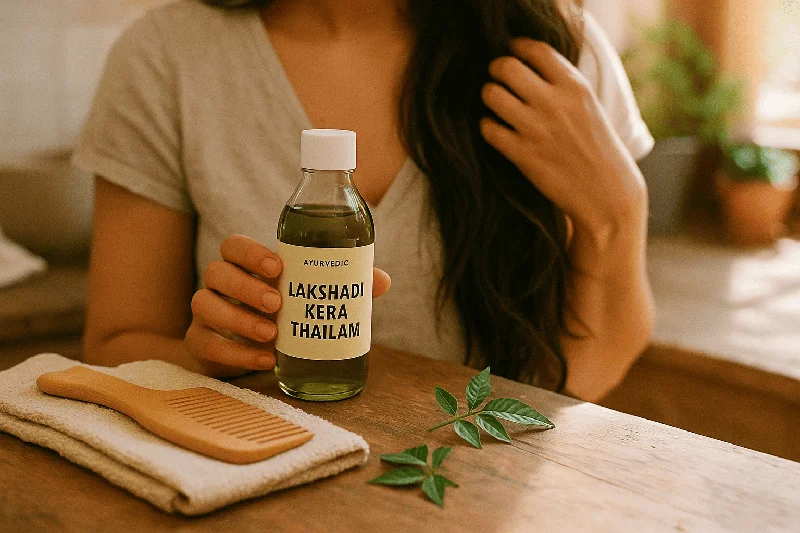
Lakshadi Kera Thailam is a classical Ayurvedic medicated oil prepared with a coconut oil base, traditionally used to strengthen bones, nourish skin, promote healthy hair growth, and support overall physical development — especially in infants, children, and individuals recovering from debility or emaciation. Referenced in the ancient text Ashtanga Hridayam, this formulation combines lac resin (Laksha) with powerful herbs like Ashwagandha, turmeric, and sandalwood to deliver deep tissue nourishment through external application.
If you've been searching for a natural, time-tested oil for your baby's massage, post-illness recovery, or daily self-care ritual, this guide covers everything you need to know — from the exact mechanism of each ingredient to step-by-step massage instructions, seasonal recommendations, and a honest comparison between major manufacturers.
What Is Lakshadi Kera Thailam?
Lakshadi Kera Thailam is a polyherbal medicated oil (Taila) where "Laksha" refers to lac — the resinous secretion of the insect Laccifer lacca — and "Kera" denotes coconut oil (Cocos nucifera), which serves as the base. The word "Thailam" simply means oil in Sanskrit and Malayalam.
This formulation belongs to the category of Bahya Prayoga (external-use medicines) in Ayurvedic pharmacology. It is prepared through a meticulous traditional process called Taila Paka Vidhi, where herbal decoctions and pastes are cooked repeatedly in coconut oil until the oil absorbs the therapeutic properties of every ingredient.
Classical Ayurvedic Reference (Ashtanga Hridayam)
The original formula is documented in Ashtanga Hridayam (Uttarasthana, Bala Roga chapter), one of the most authoritative Ayurvedic texts authored by Acharya Vagbhata around the 7th century CE. The Sanskrit shloka describes this oil as particularly beneficial for Bala (children) and conditions involving Shosha (emaciation) and Daurbalya (weakness).
The original verse recommends this oil for abhyanga (therapeutic massage) in children to promote healthy bone development and physical growth. This classical reference gives Lakshadi Kera Thailam a level of textual authenticity that many modern formulations simply lack.
Lakshadi Kera Thailam vs Lakshadi Thailam — What's the Difference?
This is perhaps the most common point of confusion, and surprisingly, none of the major Ayurvedic websites explain it clearly.
| Feature | Lakshadi Kera Thailam | Lakshadi Thailam |
|---|---|---|
| Base Oil | Coconut oil (Kera Tailam) | Sesame oil (Tila Tailam) |
| Best Suited For | Warm/tropical climates, Pitta constitutions | Cold climates, Vata constitutions |
| Cooling/Heating | Cooling in nature | Warming in nature |
| Ideal Season | Summer, spring | Autumn, winter |
| Common In | Kerala tradition | North Indian Ayurvedic practice |
| Absorption Rate | Lighter, faster absorption | Deeper, slower penetration |
Both formulations share the same herbal ingredients — the only difference is the carrier oil. In Kerala's tropical climate, coconut oil has traditionally been the prefered base due to its cooling properties and lighter texture. Sesame-based Lakshadi Thailam is more commonly prescribed in colder regions where the warming nature of sesame oil provides additional Vata-balancing benefits.
Practical tip: If you live in South India or any hot, humid region, Lakshadi Kera Thailam is generally the better choice. For colder Northern states or during winter months, the sesame-based version may offer more comfort.
Key Ingredients and Their Roles
- What sets Lakshadi Kera Thailam apart from ordinary hair or body oils is its carefully designed multi-herb formula.
- Each ingredient serves a specific pharmacological purpose — they're not just thrown together randomly.
Laksha (Laccifer lacca) — The Core Ingredient
Laksha, or lac resin, is the signature component.
In Ayurvedic pharmacology, it has the following properties:
- Rasa (taste): Astringent, bitter
- Virya (potency): Cooling
- Vipaka (post-digestive effect): Pungent
Lac resin is exceptionally rich in natural compounds that support bone mineralization and tissue repair. A 2016 study published in the Journal of Ethnopharmacology confirmed that lac resin exhibits significant anti-inflammatory and wound-healing properties, which explains its traditional use in fracture healing and bone strengthening. Its astringent nature helps tone skin tissue and improve skin integrity when applied externally.
Ashwagandha (Withania somnifera)
Often called "Indian Ginseng," Ashwagandha in this formulation works as a Balya (strength-promoting) and Brimhana (nourishing) agent. When absorbed through the skin during massage, its withanolides — the primary active compounds — help reduce cortisol-related muscle tension and support tissue regeneration.
A 2015 systematic review in the Journal of Alternative and Complementary Medicine documented Ashwagandha's adaptogenic and anti-stress properties. In Lakshadi Kera Thailam, it specifically addresses the weakness and debility components.
Haridra (Curcuma longa)
- Turmeric needs little introduction, but its role in this oil deserves attention.
- Curcumin, the active compound in turmeric, is lipophilic — meaning it dissolves well in oil, which actually enhances its bioavailability compared to oral consumption.
Important note about hair: Turmeric can temporarily stain light-colored hair with a yellowish tinge. This is purely cosmetic and washes out within 2-3 shampoos. For dark hair, its not noticeable at all. The anti-microbial and anti-inflammatory benefits for the scalp far outweigh this minor inconvenience.
Chandana (Santalum album)
- Sandalwood contributes its renowned cooling and skin-soothing properties.
- Its primary active compounds — α-santalol and β-santalol — have been shown in a 2017 study (Planta Medica) to exhibit anti-inflammatory and anti-proliferative effects on skin cells. In this formulation, Chandana helps calm irritated skin, reduce redness, and impart a subtle, pleasant fragrance.
Other Botanicals in the Formula
| Ingredient (Sanskrit) | Latin Name | Primary Role in Formula |
|---|---|---|
| Kushta | Saussurea lappa | Anti-inflammatory, pain relief, joint support |
| Musta | Cyperus rotundus | Skin purification, anti-microbial action |
| Rasna | Alpinia galanga | Anti-rheumatic, reduces Vata-related stiffness |
| Yashtimadhu / Madhuka | Glycyrrhiza glabra | Skin brightening, moisturizing, wound healing |
| Manjishtha | Rubia cordifolia | Blood purification, complexion enhancement |
| Sariva | Hemidesmus indicus | Cooling, detoxifying, anti-pruritic |
Each herb undergoes Kalka (paste) preparation before being cooked into the oil, ensuring maximum extraction of active phytochemicals.
Full Ingredient Table with Dosages
Based on the classical formulation as prepared by traditional manufacturers:
| Ingredient | Quantity (per standard batch) |
|---|---|
| Laksha (Laccifer lacca) | 0.13 g |
| Ashwagandha (Withania somnifera) | 0.13 g |
| Haridra (Curcuma longa) | 0.13 g |
| Chandana (Santalum album) | 0.13 g |
| Kushta (Saussurea lappa) | 0.13 g |
| Musta (Cyperus rotundus) | 0.13 g |
| Rasna (Alpinia galanga) | 0.13 g |
| Yashtimadhu (Glycyrrhiza glabra) | 0.13 g |
| Kera Thailam (Coconut oil base) | q.s. (quantum sufficit) |
Note: Exact proportions may vary slightly between manufacturers while adhering to the classical ratio.
Benefits of Lakshadi Kera Thailam
Strengthens Bones and Joints
This is the primary traditional indication. The combination of Laksha (with its bone-supporting minerals), Ashwagandha (tissue-building), and Rasna (anti-rheumatic) creates a synergistic formula that, when applied through regular massage, helps support bone density and joint mobility. Particularly valuable for growing children whose skeletal system is still developing.
Supports Recovery from Emaciation and Debility
For individuals recovering from prolonged illness, post-surgical weakness, or general debility (Daurbalya), regular oil massage with Lakshadi Kera Thailam helps improve muscle tone and tissue nourishment. The oil penetrates through the skin layers and, according to Ayurvedic principles, nourishes the deeper Dhatus (tissues) — particularly Mamsa (muscle), Asthi (bone), and Majja (marrow).
Soothes and Nourishes the Skin
- The cooling properties of coconut oil, sandalwood, and Sariva make this oil excellent for skin care.
- Regular application can help with:
- Dry, rough skin
- Mild skin irritation and rashes
- Uneven skin tone
- General skin nourishment and hydration
While some users search for "Lakshadi Thailam for skin whitening," it's more accurate to say the oil promotes even skin tone and natural complexion enhancement rather than actual whitening. The Yashtimadhu and Manjishtha in the formula do have documented melanin-modulating properties.
Promotes Mental Clarity and Calm
Head massage (Shiro Abhyanga) with this oil helps calm the nervous system. The cooling nature of the coconut oil base combined with Chandana's anxiolytic properties creates a soothing effect that can improve sleep quality, reduce mental restlessness, and promote overall emotional balance. This is largely through its Vata-pacifying action on the nervous system.
Balances Vata Dosha
- In Ayurvedic terms, Lakshadi Kera Thailam is primarily a Vata-shamaka (Vata-pacifying) formulation.
- Since Vata governs all movement in the body — including nerve impulses, circulation, and joint mobility — balancing Vata through external oil application is considered foundational in Ayurvedic wellness.
- This makes the oil especially relevant for:
- Elderly individuals with age-related Vata aggravation
- People with naturally Vata-dominant constitutions
- Anyone experiencing dryness, cracking joints, or nervousness
Is Lakshadi Oil Good for Hair Growth?
- Yes, but with a nuance. Lakshadi Kera Thailam is not a "hair growth serum" in the modern cosmetic sense.
- Its mechanism works differently — by nourishing the scalp deeply, improving blood circulation through massage, reducing inflammation that may contribute to hair fall, and strengthening hair roots from within. The Ashwagandha and Yashtimadhu in the formula specifically support follicular health.
For best hair results, combine the oil application with gentle scalp massage for 10-15 minutes, leave it overnight, and wash with a mild herbal shampoo the next morning. Consistent use over 8-12 weeks typically shows noticeable improvements in hair texture and reduced breakage.
Lakshadi Kera Thailam for Babies and Children
This is one of the most popular applications of this oil, and rightfully so. The Ashtanga Hridayam specifically recommends it in the Balaroga (pediatrics) chapter.
Why It's Ideal for Infants
Babies have predominantly Kapha-dominant constitutions with rapidly developing bones and tissues. The Laksha in this oil provides natural support for bone mineralization, while Ashwagandha promotes healthy weight gain and physical development. The coconut oil base is gentle enough for delicate infant skin and less likely to cause irritation compared to sesame-based formulations.
How to Massage Babies with This Oil
- Warm the oil slightly — test on your inner wrist to ensure its comfortable (lukewarm, never hot)
- Apply generously to the baby's body, starting from the limbs
- Use gentle, long strokes on arms and legs
- Circular motions on joints (elbows, knees, ankles)
- Very light pressure on the fontanelle (soft spot) and head
- Allow the oil to absorb for 20-30 minutes before a warm water bath
- Ideal time: morning, before the first feed
Important: Always consult a qualified Ayurvedic pediatrician before starting any oil massage regimen for newborns, especially premature babies or those with skin conditions.
Benefits for Children During Growth Phases
For toddlers and school-age children, regular massage with Lakshadi Kera Thailam can support:
- Healthy bone growth and structural development
- Improved sleep patterns (especially when applied to the scalp and soles of feet before bedtime)
- Better skin health and natural immunity
- Calming hyperactive temperaments
How to Use Lakshadi Kera Thailam (Step-by-Step Abhyanga Guide)
For Adults — Full Body Self-Massage
A proper Abhyanga (self-massage) with Lakshadi Kera Thailam should follow this procedure:
Step 1: Preparation
Warm about 30-50 ml of oil in a small bowl placed in hot water (don't microwave). The oil should be comfortably warm, not hot.
Step 2: Application Sequence
- Start with the scalp — apply oil to the crown and massage with fingertips in circular motions for 3-5 minutes
- Move to the face — gentle upward strokes on forehead and cheeks
- Neck and shoulders — kneading motions to release tension
- Arms — long strokes along the bones, circular motions at joints
- Chest and abdomen — clockwise circular movements on the abdomen
- Back — reach as much as possible, or ask someone for help
- Legs — same as arms: long strokes, circular at joints
- Feet — spend extra time here; the soles of feet have important Marma points (vital energy points)
Step 3: Absorption
- Allow the oil to remain on the body for 15-30 minutes.
- This is critical — the therapeutic compounds need time to penetrate through the skin layers. Use this time for gentle stretching, pranayama, or meditation.
Step 4: Bathing
Wash off with lukewarm water and a mild, natural cleanser. Avoid harsh chemical soaps that strip away the oil's benefits.
Application on Feet — A Special Practice
- Applying Lakshadi Kera Thailam specifically to the soles of feet (Padabhyanga) before bedtime is a traditional practice worth highlighting. According to Ayurvedic theory, the soles contain nerve endings connected to every organ system.
- Oil application here can help:
- Improve sleep quality dramatically
- Reduce anxiety and mental agitation
- Relieve cracked heels and foot dryness
- Support eye health (the feet are connected to the eyes via the Alochaka Pitta pathway)
Seasonal Recommendations
Ayurveda emphasizes Ritucharya (seasonal regimen), and oil selection should align with this:
| Season | Recommendation |
|---|---|
| Summer (Grishma) | Ideal time — coconut base provides cooling relief |
| Monsoon (Varsha) | Use moderately; humidity may delay absorption |
| Autumn (Sharad) | Good — helps transition from Pitta to Vata season |
| Winter (Hemanta/Shishira) | Consider switching to sesame-based Lakshadi Thailam for added warmth |
| Spring (Vasanta) | Use moderately; Kapha season — lighter application recommended |
Duration of Course — How Long Before You See Results?
This is something no competitor addresses, so let me be direct:
- Skin nourishment: Visible improvement in 2-4 weeks of daily use
- Hair health: 8-12 weeks for noticeable reduction in hair fall
- Bone and joint support: 3-6 months of consistent application
- Baby growth and development: Ongoing daily use as part of routine care
- Post-illness recovery: 4-8 weeks alongside appropriate internal medicines
Consistency matters more than quantity. A small amount applied daily is far more effective than a large amount used sporadically.
Don't wait or self medicate. Start chat with Doctor NOW
Combining with Other Ayurvedic Treatments
Lakshadi Kera Thailam works best as part of a comprehensive Ayurvedic protocol rather than as a standalone treatment. Here are some complementary formulations often recommended alongside:
- Lakshadi Guggulu (internal tablets) — for fractures, bone weakness, and osteoporosis-related conditions
- Ashwagandharishtam (internal liquid) — for general debility and strength building
- Bala Thailam (external oil) — can be alternated for specific Vata conditions
- Dhanwantharam Gulika (internal tablets) — traditionally used alongside for pediatric care
Always consult a qualified Ayurvedic physician before combining treatments. Self-prescribing internal medications is not advisable.
Safety, Side Effects & Who Should Not Use It
General Safety Profile
Lakshadi Kera Thailam has an excellent safety profile when used as directed for external application only. It has been used for centuries with no documented serious adverse effects. That said, some precautions apply.
Precautions and Contraindications
- Allergies: Individuals with known allergies to any ingredient — particularly lac or coconut — should avoid use. Perform a patch test on the inner forearm 24 hours before first full application
- Active skin infections: Do not apply on open wounds, fungal infections, weeping eczema, or actively inflamed skin
- Fever: Avoid oil massage during acute fever or active infection — Ayurveda contraindicates Abhyanga during Jwara (fever)
- Immediately after meals: Wait at least 1-2 hours after eating before oil massage
- Pregnancy: While traditionally considered safe for pregnant women (particularly in the third trimester for perineal massage and general nourishment), always consult your Ayurvedic doctor and obstetrician first
- Lactation: Generally considered safe; the oil's nourishing properties can benefit both mother and nursing infant
Storage
Store in a cool, dry place away from direct sunlight. Shelf life is typically 3 years from date of manufacture when stored properly. Always check the expiry date on your specific bottle.
Comparing Major Manufacturers
| Feature | Kottakkal (AVS) | Vaidyaratnam | Kerala Ayurveda | Sitaram Ayurveda |
|---|---|---|---|---|
| Classical Adherence | Strict traditional formula | Strict traditional formula | Slightly modernized | Traditional with minor variations |
| Available Volumes | 200 ml, 450 ml | 200 ml | 100 ml | 200 ml |
| Price Range (approx.) | ₹180-350 | ₹160-300 | ₹200-250 | ₹150-280 |
| GMP Certified | Yes | Yes | Yes | Yes |
| Best Known For | Authenticity, legacy | Consistency, value | Modern packaging, accessibility | Affordability |
| Available on 1mg/Amazon | Yes | Limited | Yes | Yes |
Prices are approximate and may vary by retailer and location.
All four manufacturers produce quality products. The choice often comes down to regional availability and personal preference. Kottakkal (Arya Vaidya Sala) is generally considered the gold standard for classical Ayurvedic formulations, having been established in 1902.
For Elderly Individuals — A Special Note
- Aging is fundamentally a Vata-aggravating process in Ayurveda.
- Joint stiffness, dry skin, brittle bones, sleep disturbances — these are all Vata manifestations. Lakshadi Kera Thailam addresses each of these concerns directly.
For elderly users:
- Use slightly more oil than younger adults (skin absorbs more slowly with age)
- Focus especially on joints, spine, and soles of feet
- Massage duration can be shorter (10-15 minutes) but frequency should be daily
- Warm the oil a bit more for deeper penetration
- If in a cold climate, consider alternating with sesame-based Lakshadi Thailam
Regular Abhyanga with this oil can significantly improve quality of life for elderly individuals, reducing dependence on pain medications for age-related musculoskeletal discomfort.
Frequently Asked Questions
What is Lakshadi Kera Thailam used for?
Lakshadi Kera Thailam is used externally for strengthening bones, nourishing skin, promoting hair growth, supporting physical development in babies and children, and aiding recovery from weakness or emaciation. It is applied through massage on the head and body.
Is Lakshadi Kera Thailam safe for newborn babies?
Yes, it is traditionally considered safe for newborns and is one of the most commonly recommended baby massage oils in Kerala's Ayurvedic tradition. However, for premature babies or infants with skin sensitivities, consult an Ayurvedic pediatrician before use.
Can I use Lakshadi Kera Thailam during pregnancy?
Traditionally, this oil is considered beneficial for pregnant women, particulary in the later stages of pregnancy for general body nourishment. However, always consult both your Ayurvedic doctor and obstetrician before use during pregnancy.
What is the difference between Lakshadi Kera Thailam and Lakshadi Thailam?
The only difference is the base oil. Lakshadi Kera Thailam uses coconut oil (cooling, ideal for warm climates), while Lakshadi Thailam uses sesame oil (warming, better for cold climates). The herbal ingredients remain the same.
Does Lakshadi Thailam help with skin whitening?
It does not "whiten" skin in the bleaching sense. However, ingredients like Yashtimadhu and Manjishtha help even out skin tone, reduce pigmentation, and enhance natural complexion over consistent use.
Can I apply this oil on my hair overnight?
Yes. Applying Lakshadi Kera Thailam to the scalp and leaving it overnight is actually the recommended method for hair benefits. Wash with a mild herbal shampoo in the morning.
How should I store this oil, and what is its shelf life?
- Store in a cool, dry place away from sunlight. The typical shelf life is 3 years from date of manufacture.
- Check the expiry date printed on your bottle — some current batches have expiry dates extending to 2028.
Can Lakshadi Kera Thailam be taken internally?
No. This is strictly for external application only. Never ingest medicated Ayurvedic oils unless specifically formulated and prescribed for internal use.
Final Thoughts
Lakshadi Kera Thailam represents one of Ayurveda's most thoughtfully designed external formulations — a blend where every ingredient serves a specific purpose, backed by centuries of clinical observation documented in the Ashtanga Hridayam. Whether you're a new parent looking for a safe baby massage oil, someone recovering from illness, or an elderly individual seeking natural joint and bone support, this classical oil delivers gentle yet effective results.
The key to getting real benefits? Consistency, proper technique, and patience. Ayurveda works on the principle of gradual, sustainable healing — not overnight miracles. Start with daily application for at least 4-6 weeks before evaluating results. And as always, for specific health conditions, work with a qualified Ayurvedic practitioner who can tailor a complete protocol to your individual constitution and needs.
Scientific Sources
- Efficacy of a Multimodal Ayurveda Regimen in the Management of Primary Knee Osteoarthritis: Protocol for an Open-Label Randomized Controlled Trial — Rai AK et al., 2025, JMIR research protocols
- Role of Laksha Churna and Madhu Pratisarana after ultrasonic scaling in the management of Dantasharkara (dental calculus): An open-label, standard controlled randomized clinical trial — Kathad D et al., 2020, Ayu
- Vranaropaka effect of Laksha Churna with Madhu on wound after removal of Danta Sharkara — Maurya M et al., 2012, Ayu
- Natural Oils for Skin-Barrier Repair: Ancient Compounds Now Backed by Modern Science — Vaughn AR et al., 2018, American journal of clinical dermatology
- Herbal Remedies for Hair Loss: A Review of Efficacy and Safety — Ahmed A et al., 2025, Skin appendage disorders
- The effect of oil pulling with coconut oil to improve dental hygiene and oral health: A systematic review — Woolley J et al., 2020, Heliyon
- African oils in dermatology — Ayanlowo O et al., 2022, Dermatologic therapy
- Coconut Oil and Immunity: What do we really know about it so far? — Joshi S et al., 2020, The Journal of the Association of Physicians of India
- Immune and metabolic effects of African heritage diets versus Western diets in men: a randomized controlled trial — Temba GS et al., 2025, Nature medicine
- A Review on Herbal Drugs Used in the Treatment of Peptic Ulcer — Roy AJ et al., 2023, Current drug discovery technologies
- Traditional uses, phytochemistry and pharmacology of wild banana (Musa acuminata Colla): A review — Mathew NS et al., 2017, Journal of ethnopharmacology
- Traditional Chinese Medicine, Food Therapy, and Hypertension Control: A Narrative Review of Chinese Literature — Zou P, 2016, The American journal of Chinese medicine
- Depigmenting effect of banana stem and flower on melanocytes — N K S et al., 2022, Journal of oral biology and craniofacial research
Questions from users
Can Lakshadi Kera Thailam be used for scalp massage?
Client_2402d7
2 days ago
Yes, Lakshadi Kera Thailam can be used for scalp massage. This classical Ayurvedic oil is specifically formulated with ingredients beneficial for soothing the scalp and nourishing the hair. For infants, it is considered particularly ideal due to its gentle properties, aligning well with their Kapha-dominant constitution. Although the exact time it takes to see benefits may vary, regular application three to four times a week typically contributes to improvements in scalp and hair health. If you notice any irritation or adverse reactions, discontinue use and consult a healthcare professional.
What is the best time of day to apply Lakshadi Kera Thailam?
Client_6696e0
7 days ago
The best time to apply Lakshadi Kera Thailam is typically at night, allowing it to work on your skin or hair while you rest. This Ayurvedic oil contains ingredients like Yashtimadhu and Manjishtha, which help even out skin tone and reduce pigmentation over time. For optimal results, leave it on overnight, letting the skin or hair absorb its nutrients. Be cautious if you have allergies to ingredients like lac or coconut. If irritation occurs, discontinue use and consult a doctor, especially if symptoms persist.
What are the recommended dosages of Lakshadi Guggulu for bone health?
Client_492225
12 days ago
The recommended dosage of Lakshadi Guggulu for bone health can vary greatly depending on individual needs and the advice of a healthcare provider. Generally, it's prescribed in doses of 1-2 tablets, taken two to three times daily after meals. However, it's crucial to consult a qualified Ayurvedic physician to determine the correct dosage for your specific condition, such as fractures or osteoporosis. Monitoring for side effects, like gastrointestinal discomfort, is important. If symptoms persist or worsen, it is advisable to consult your doctor for further evaluation.
How long does it take to see results from Lakshadi Kera Thailam?
Client_2e8f22
17 days ago
You can typically expect to see results from Lakshadi Kera Thailam after about 4-6 weeks of regular, daily application. This Ayurvedic oil is designed for external use and is believed to support bone density and joint mobility. It combines ingredients like Laksha, Ashwagandha, and Rasna, which work together to provide benefits such as stronger bones and improved joint function. If you experience any irritation or unusual symptoms, it’s wise to stop using the product and consult with a healthcare provider. If no improvement is seen or if symptoms worsen, seeking medical advice is recommended.
How does coconut oil enhance the benefits of Lakshadi Kera Thailam?
Client_d20c7c
27 days ago
Coconut oil enhances the benefits of Lakshadi Kera Thailam by serving as a base that helps in better absorption of the herbal ingredients into the skin. Known for its cooling properties and lighter texture, coconut oil can effectively deliver the active compounds while also soothing and moisturizing the skin. This is especially important in tropical climates, where coconut oil is traditionally favored for its ability to maintain hydration without feeling greasy. While using Lakshadi Kera Thailam, ensure consistency and proper technique for best results, typically observed over weeks with regular use. If new symptoms or skin reactions occur, consult with a healthcare provider.
How can Lakshadi Kera Thailam aid in post-surgical recovery?
Client_96bf5b
37 days ago
Lakshadi Kera Thailam can aid post-surgical recovery by improving muscle tone and tissue nourishment through regular external application. Typically used in hot, humid regions, this coconut oil-based formulation supports recovery from emaciation and debility, helping to alleviate post-surgical weakness when applied consistently. Its safety profile is excellent for external use but consult a doctor if there are any skin reactions. While it might be beneficial, always follow your healthcare provider's guidance for post-surgical care to ensure comprehensive recovery.
What are the benefits of using Lakshadi Kera Thailam for muscle recovery?
Client_85b15a
47 days ago
Lakshadi Kera Thailam offers therapeutic benefits for muscle recovery, particularly by enhancing muscle tone and providing tissue nourishment. It is commonly used in Ayurvedic practices for individuals recovering from prolonged illness or surgery to address weakness and emaciation. While the use of this oil may support muscle recovery, it is essential to track improvement over weeks or months, as results may vary. Watch for any skin irritation or allergic reactions. It's important to consult with a healthcare provider or Ayurvedic physician before using it, especially if combined with other treatments like Lakshadi Guggulu or Ashwagandharishtam.
Is Lakshadi Kera Thailam effective for improving skin health and moisture?
Client_30a12a
56 days ago
Lakshadi Kera Thailam can be effective for improving skin health and moisture when used topically, as it is known for its nourishing properties. This herbal oil, often used in Ayurvedic massage, contains compounds that may help with hydration and promote healthy skin over time. Effects vary from person to person, but benefits might be noticeable within a few weeks of consistent use. Always patch-test to avoid allergic reactions and consult a healthcare provider if you have skin sensitivities or conditions. If your skin issues persist, or if you notice irritation, it's important to seek medical advice.
What is the ideal temperature for storing Lakshadi Kera Thailam to keep it effective?
Client_15b1e8
66 days ago
Lakshadi Kera Thailam doesn't need anything too fancy for storage. Room temperature is usually fine, just try to keep it away from direct sunlight or any place that gets too hot. If it's really humid where you live, keep an eye that the bottle’s cap is sealed tight. Stability in temperature helps keep the oil potent.
What is the best way to store Lakshadi Kera Thailam to maintain its potency?
Client_e587a2
76 days ago
Keep the Lakshadi Kera Thailam in a cool, dry place away from direct sunlight to help maintain its potency. Make sure the cap is tightly sealed to prevent oxidation. If you have a dark, cool cupboard, that's perfect. Avoid keeping it in the bathroom due to humidity and temperature changes. Hope that helps!
Related articles

Skin and Hair Disorders
Can We Use Rice Water Daily on Hair: Benefits and Risks
Discover if you can use rice water daily on hair, its benefits, side effects, and Ayurvedic tips for healthy, strong hair with natural shine
10,185
Skin and Hair Disorders
Pithorin: Ayurvedic Remedy for Skin Disorders and Healthy Skin
Discover the proven benefits, proper dosage, side effects, and scientific research behind Pithorin, a powerful natural supplement for holistic wellness.
4,603

Skin and Hair Disorders
How to Use Baheda for Hair: Ayurvedic Remedies and Benefits
Exploration of Discover the Hair Benefits and Uses of Baheda in Ayurvedic Hair Care
3,212

Skin and Hair Disorders
How to Remove Facial Hair Permanently in Ayurveda
Explore Ayurvedic methods for permanent facial hair removal. Learn evidence-based tips, real research findings, and practical steps for smoother skin.
8,225

Skin and Hair Disorders
Which Oil Is Best for Face Massage: Ayurvedic Guide by Skin Type
Discover which oil is best for face massage based on your skin type. Explore Ayurvedic benefits of almond, coconut, castor, and jojoba oils for healthy glow
23,244
Skin and Hair Disorders
Yashad Bhasma Uses for Skin – Ayurvedic Remedy for Skin Health and Rejuvenation
Discover the benefits and uses of Yashad Bhasma, an Ayurvedic zinc-based formulation, renowned for its ability to treat skin conditions like acne, pigmentation, and aging signs.
5,018

Skin and Hair Disorders
How to Use Nutmeg Powder Effectively in Daily Life
Learn how to use nutmeg powder for skin, face, sleep, and pigmentation. Discover its Ayurvedic benefits, recipes, and practical tips for daily wellness
7,527

Skin and Hair Disorders
Cyst Treatment in Ayurveda: A Comprehensive Overview
Explore cyst treatment in Ayurveda, backed by scientific insights. Learn herbs, lifestyle tips, and evidence-based approaches for holistic cyst management.
6,341

Skin and Hair Disorders
Lohasava for Hair Loss – Ayurvedic Solution to Promote Hair Growth and Prevent Balding
Discover how Lohasava, an Ayurvedic herbal tonic, helps in preventing hair loss and promoting healthy hair growth. Learn its benefits, uses, and how it can improve hair health naturally.
3,172

Skin and Hair Disorders
Panchvalkal Kwath: A Comprehensive Exploration of Ayurveda’s Ancient Remedy
Discover Panchvalkal Kwath—its benefits, scientific insights, and usage. Learn how this Ayurvedic formulation supports holistic wellness and skin care.
2,978
Related consultations on the topic
Legal
Additional Documents
© 2024 Ask Ayurveda. All rights reserved.