Ask Ayurvedic doctor a question and get a consultation online on the problem of your concern in a free or paid mode. More than 2,000 experienced doctors work and wait for your questions on our site and help users to solve their health problems every day.


Body DetoxEar, Nose, and Throat DisordersGeriatrics & RejuvenationImmunodeficiencyInfertility TreatmentNutritionOrthopedic DisordersPediatricsRespiratory DisordersSexually Transmitted Diseases (STDs)Surgery RecoveryUrological DisordersVascular DisordersDental DisordersEndocrinological DisordersGastrointestinal DisordersYoga TherapyGeneral MedicineAllergic DisordersCardio DisordersGynecology and ObstetricsCosmetologySkin and Hair DisordersEye DisordersInfectious DiseasesMental DisordersNeurological DisordersOncologyPanchakarmaSexual Health & DisordersSports Medicine
Published on 12/31/24
(Updated on 08/09/26)
4,050
Nimbadi Guggulu: Ayurvedic Formula for Skin and Joint Health
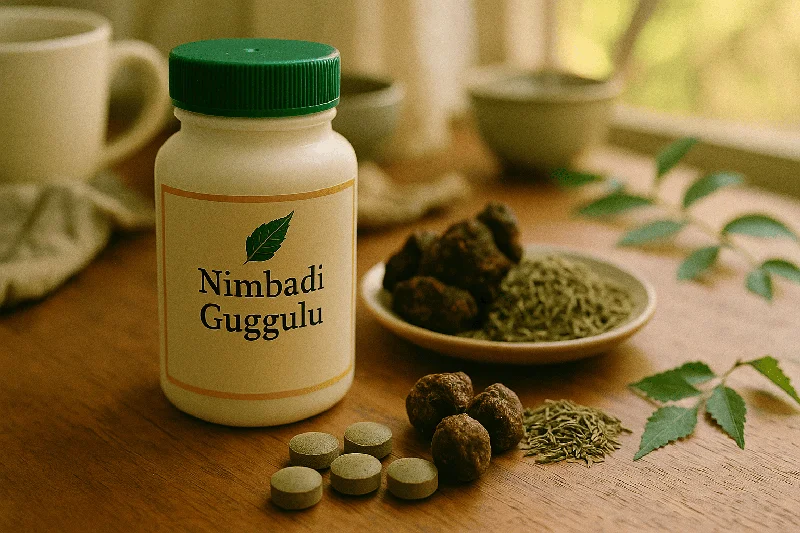
Nimbadi Guggulu is a classical Ayurvedic formulation primarily used for managing chronic skin disorders, purifying the blood, and reducing inflammation in joints and soft tissues. Rooted in centuries-old Ayurvedic pharmacology, this polyherbal compound combines the bitter potency of Neem (Azadirachta indica) with the deep-penetrating, bioavailability-enhancing resin of Guggulu (Commiphora wightii) — creating a synergistic formula that addresses the root cause of skin and inflammatory conditions rather than merely suppressing symptoms.
- If you're dealing with stubborn acne, recurrent eczema, psoriasis flare-ups, or even joint stiffness that won't let up, this formulation deserves your attention. But understanding how it works, what's actually inside it, and how it compares to other Guggulu preparations is critical before you start taking it.
- That's exactly what this guide covers — in more depth than you'll find anywhere else.
What Is Nimbadi Guggulu?
- Nimbadi Guggulu (also written as Nimbadi Guggul) is a Guggulu-based Ayurvedic compound classified under the Guggulu Kalpana category of formulations.
- The name itself tells you the two anchoring ingredients: Nimba (Neem) and Guggulu (Indian Bdellium resin). It is traditionally indicated for Kushtha (skin diseases), Vatarakta (gout), Shotha (swelling/inflammation), Vrana (wounds and ulcers), and Raktadosha (blood impurities).
Unlike many modern supplements that isolate single compounds, Nimbadi Guggulu works through the Ayurvedic principle of Samyoga — the intelligent combination of multiple herbs where each ingredient amplifies or modulates the action of others.
Classical Ayurvedic Reference and Textual Source (Shloka)
One of the most commonly asked questions about this formulation is: where does it actually come from? Nimbadi Guggulu finds mention in Bhaishajya Ratnavali, specifically in the Kushtha Rogadhikara (chapter on skin diseases). Some practitioners also trace variants of this formulation to Sharangdhara Samhita and Chakradatta.
The classical shloka describes the combination of Nimba, Guggulu, Triphala, and other herbs processed with specific methods to create vati (tablets). Unfortunately, most websites referencing Nimbadi Guggulu fail to cite the actual text — but knowing the source matters because different classical texts may list slightly different proportions or additional ingredients.
Ayurvedic Properties — Rasa Panchaka
Understanding the pharmacological profile of Nimbadi Guggulu in Ayurvedic terms (its Rasa Panchaka) helps clarify why it works the way it does:
| Property | Description |
|---|---|
| Rasa (Taste) | Tikta (Bitter), Kashaya (Astringent), Katu (Pungent) |
| Guna (Qualities) | Laghu (Light), Ruksha (Dry), Tikshna (Sharp/Penetrating) |
| Virya (Potency) | Ushna (Hot) |
| Vipaka (Post-digestive effect) | Katu (Pungent) |
| Dosha Karma | Primarily pacifies Kapha and Pitta; balances Vata in moderation |
| Prabhava (Special action) | Raktashodhaka (Blood purifier), Kushthaghna (Anti-dermatosis) |
The predominantly bitter and astringent taste profile makes this formulation especially effective at clearing excess Pitta from Rakta Dhatu (blood tissue) — which is the fundamental pathological mechanism behind most inflammatory skin conditions in Ayurveda.
What Are the Ingredients in Nimbadi Guggulu?
This is where things get interesting, because the full ingredient list goes well beyond just Neem and Guggulu. The classical formulation includes a carefully calibrated combination of herbs, each serving a specific therapeutic role.
Full Recipient Composition with Proportions
Based on the Bhaishajya Ratnavali reference, the composition of Nimbadi Guggulu typically includes the following ingredients. Note that exact proportions can vary slightly between manufacturers, but the classical ratio is generally maintained:
| Ingredient | Sanskrit Name | Latin Name | Part Used | Proportion | Primary Action |
|---|---|---|---|---|---|
| Neem | Nimba | Azadirachta indica | Bark/Leaves | 1 part | Blood purifier, antimicrobial |
| Indian Bdellium | Guggulu | Commiphora wightii | Resin | Equal to total of other herbs | Anti-inflammatory, bioenhancer |
| Chebulic Myrobalan | Haritaki | Terminalia chebula | Fruit | 1 part | Mild laxative, Vata balancer |
| Indian Gooseberry | Amalaki | Emblica officinalis | Fruit | 1 part | Antioxidant, Pitta pacifier |
| Belleric Myrobalan | Bibhitaki | Terminalia bellirica | Fruit | 1 part | Kapha reducer, detoxifier |
| Giloy / Guduchi | Guduchi | Tinospora cordifolia | Stem | 1 part | Immunomodulator, anti-inflammatory |
| Malabar Nut | Vasa | Adhatoda vasica | Leaves | 1 part | Anti-allergic, blood purifier |
| Indian Nightshade | Brihati | Solanum indicum | Root/Fruit | 1 part | Anti-inflammatory, Kapha-Vata pacifier |
| Pointed Gourd | Patola | Trichosanthes dioica | Leaves | 1 part | Skin healing, Pitta pacifier |
| Leadwort | Chitrak | Plumbago zeylanica | Root | 1 part | Digestive stimulant, metabolic enhancer |
| Long Pepper | Pippali | Piper longum | Fruit | 1 part | Bioavailability enhancer, Kapha reducer |
The Guggulu resin acts as the Yoga Vahi — a carrier substance that enhances the absorption and tissue-penetration of all other ingredients. This is why Guggulu-based formulations are considered more potent than simple herbal powders.
How Each Key Ingredient Works
- Neem (Nimba): The star ingredient.
- Neem's bitter compounds — nimbin, nimbidin, and azadirachtin — have demonstrated significant antimicrobial, antifungal, and anti-inflammatory activities. A study published in the Journal of Ethnopharmacology (2011) confirmed neem bark extract's efficacy against multiple dermatophytes responsible for skin infections.
Guggulu: The purified resin of Commiphora wightii contains guggulsterones (E and Z forms), which research published in Molecular and Cellular Biochemistry (2009) has shown to modulate NF-κB signaling pathways — essentially reducing inflammatory cascading at the cellular level. This explains its traditional use in both skin and joint conditions. Triphala (Haritaki + Amalaki + Bibhitaki): This classic trio provides gentle detoxification of the GI tract, which Ayurveda considers the origin point of most skin diseases. A 2012 study in the Indian Journal of Medical Research demonstrated Triphala's antioxidant capacity comparable to standard ascorbic acid preparations. Guduchi: Often called "Amrita" (the nectar of immortality), Guduchi is a potent immunomodulator. Research in International Immunopharmacology (2014) showed tinosporin and berberine from Guduchi significantly modulate both innate and adaptive immune responses. Chitrak and Pippali: These two ingredients serve a critical but often overlooked role — they stoke Agni (digestive fire) and enhance the bioavailability of the entire formulation. Without proper digestion and absorption, even the best herbs won't reach target tissues.
Key Benefits and Uses of Nimbadi Guggulu
Skin Health — Acne, Eczema, and Psoriasis
This is the primary therapeutic domain of Nimbadi Guggulu. In Ayurvedic pathology, most chronic skin conditions arise from vitiation of Pitta dosha in Rakta dhatu (blood tissue), often with secondary Kapha involvement that creates the characteristic oozing, itching, or thickening of skin lesions.
Nimbadi Guggulu addresses this through a multi-pronged approach:
- Acne (Yauvan Pidika): The bitter herbs purify blood, Guggulu reduces the inflammatory component, and Triphala ensures proper bowel clearance (a common contributing factor in hormonal acne). Typically, improvement begins to show within 4–6 weeks of regular use.
- Eczema (Vicharchika): The combination of Neem and Patola targets the itching-oozing cycle, while Guduchi modulates the overactive immune response that drives eczematic flares.
- Psoriasis (Kitibha Kushtha): Perhaps the most challenging skin condition, psoriasis requires long-term treatment. Nimbadi Guggulu is often prescribed for 3–6 months as part of a comprehensive protocol that includes Panchakarma procedures like Virechana.
Detailed Protocols: Acne vs. Psoriasis vs. Eczema
| Condition | Typical Dosage | Duration | Recommended Anupana | Complementary Therapy |
|---|---|---|---|---|
| Acne | 1 tablet twice daily | 4–8 weeks | Warm water | Topical Neem paste, Kumkumadi oil |
| Eczema | 2 tablets twice daily | 8–12 weeks | Warm water or Neem decoction | Panchatikata Ghrita, external Karanja oil |
| Psoriasis | 2 tablets twice daily | 12–24 weeks | Warm water with Triphala kwath | Virechana, Takra Dhara, strict Pathya |
Blood Purification and Detoxification
The concept of Raktashodhana (blood purification) in Ayurveda isn't merely metaphorical. Modern interpretation suggests it involves improving hepatic detoxification pathways, enhancing renal clearance of metabolic waste, and reducing systemic inflammatory markers.
Nimbadi Guggulu achieves this through the combined hepatoprotective action of Neem, the free-radical scavenging capacity of Triphala, and Guduchi's proven effect on liver enzyme normalization. A 2017 study in Phytomedicine showed that Guduchi extract significantly reduced elevated SGPT and SGOT levels in subjects with mild hepatic stress.
Anti-Inflammatory and Analgesic Properties
Beyond skin, Nimbadi Guggulu is prescribed for various inflammatory conditions including:
- Tonsillitis (Tundikeri): The anti-inflammatory and antimicrobial properties make it useful in recurrent tonsillar infections
- Synovitis: Inflammation of synovial membranes responds well to the Guggulu-Guduchi combination
- Non-healing wounds and ulcers (Dushta Vrana): The formulation promotes healing from within by correcting the underlying Dosha imbalance
Joint Health and Arthritis Support
While not its primary indication, Nimbadi Guggulu does offer meaningful joint health benefits. The guggulsterones in Guggulu have been shown to inhibit COX-2 and 5-LOX enzymes — the same pathways targeted by modern NSAIDs, but without the gastrointestinal side effects.
For joint-specific conditions, it's worth noting that dedicated formulations like Yograj Guggulu or Mahayograj Guggulu may be more appropriate. Nimbadi Guggulu works best when joint symptoms coexist with skin or blood-related issues.
Digestive Health Support
The inclusion of Chitrak, Pippali, and Triphala gives Nimbadi Guggulu a secondary digestive benefit. It stimulates Jatharagni (digestive fire), helps reduce Ama (metabolic toxins), and promotes regular bowel movements. This is particularly relevant because Ayurveda considers impaired digestion the root cause (Nidana) of most skin diseases.
How Nimbadi Guggulu Works: Mechanism of Action (Samprapti Vighatana)
Understanding the Ayurvedic pathogenesis helps explain why this specific combination of herbs was chosen.
The Disease Pathway (Samprapti):
- Impaired Agni (digestive fire) leads to formation of Ama (toxins)
- Ama enters Rasa and Rakta dhatu (plasma and blood tissues)
- Vitiated Pitta and Kapha in blood tissues manifest as skin symptoms — redness, pus, itching, discoloration
- Chronic accumulation leads to deep-seated conditions like psoriasis or eczema
How the Formula Breaks This Cycle (Samprapti Vighatana):
- Chitrak + Pippali → Correct Agni, stop Ama production at source
- Triphala → Clear accumulated Ama through mild purgation (Anulomana)
- Neem + Patola + Vasa → Directly pacify Pitta in Rakta dhatu
- Guduchi → Modulate immune response, prevent relapse
- Guggulu → Deliver all active compounds deep into tissues (Yogavahi property), resolve inflammation
- Brihati → Balance Kapha component that causes oozing and chronicity
This multi-level approach is what makes classical Ayurvedic formulations fundamentally different from single-herb supplements.
Dosage, Anupana, and Duration of Treatment
Standard Dosage
The general recommended dosage is:
- Adults: 1–2 tablets (250–500 mg each), twice daily
- Timing: After meals, preferably after lunch and dinner
- Always consult a qualified Ayurvedic practitioner before starting
Anupana — What to Take It With
This is a critical detail that most resources completely overlook. In Ayurveda, the Anupana (vehicle/adjuvant) can significantly alter how a medicine works:
| Condition | Recommended Anupana | Rationale |
|---|---|---|
| Skin diseases (general) | Warm water | Enhances absorption, supports Agni |
| Severe blood impurity | Neem bark decoction (lukewarm) | Amplifies blood-purifying action |
| Joint inflammation | Warm water with Dashamoola kwath | Adds Vata-pacifying support |
| With digestive weakness | Warm water with honey | Honey enhances bioavailability (Yogavahi) |
Important: Guggulu preparations should generally NOT be taken with cold water or cold milk, as this can impair the resin's absorption and cause digestive discomfort.
How Long Does It Take for Nimbadi Guggulu to Show Results?
This depends entirely on the condition being treated and its chronicity:
- Mild acne: 3–4 weeks for noticeable improvement
- Moderate eczema: 6–8 weeks with consistent use
- Chronic psoriasis: 3–6 months (often requires Panchakarma alongside)
- Joint inflammation: 4–6 weeks
- Blood purification / general detox: 4–8 weeks
A general rule in Ayurveda: the longer a disease has been present, the longer it takes to resolve. Don't expect overnight results from a condition that's been building for years.
Don't wait or self medicate. Start chat with Doctor NOW
Nimbadi Guggulu vs. Other Guggulu Formulations
This is perhaps the most practical question practitioners and patients face — and it's a gap no other resource has adequately addressed.
Here's a clear comparison:
| Formulation | Primary Focus | Best For | Key Differentiator |
|---|---|---|---|
| Nimbadi Guggulu | Skin + Blood purification | Acne, eczema, psoriasis, blood toxicity | Strong Neem base for antimicrobial action |
| Kaishore Guggulu | Pitta-Rakta disorders + Gout | Gout (Vatarakta), burning joints, high uric acid | Stronger Pitta-pacifying action |
| Triphala Guggulu | Metabolic detox + Fistula | Anal fistula (Bhagandara), lipid disorders, obesity | Simpler formula focused on Triphala's detox |
| Yograj Guggulu | Musculoskeletal (Vata) | Osteoarthritis, sciatica, nerve pain | Strongest Vata-pacifying Guggulu |
| Mahayograj Guggulu | Severe Vata disorders | Rheumatoid arthritis, paralysis, chronic pain | Contains minerals/bhasmas for deeper action |
| Medohar Guggulu | Obesity + Lipid metabolism | Weight loss, high cholesterol, metabolic syndrome | Targeted fat-metabolism herbs |
When to choose Nimbadi Guggulu specifically: When the primary complaint involves skin + there's an element of blood impurity or recurrent infections. If the issue is purely joint-related without skin involvement, Yograj or Kaishore Guggulu would likely be more appropriate.
Manufacturing Process: How Nimbadi Guggulu Is Made
Understanding the Guggulu Kalpana (Guggulu preparation method) reveals why quality matters so much:
- 1.Guggulu Shodhana (Purification): Raw Guggulu resin is purified by boiling it in Triphala Kwatha (Triphala decoction) or Gomutra (cow's urine). This removes impurities and enhances therapeutic potency while reducing potential GI irritation. Purification typically takes 3–4 hours.
- 2.Herb Processing: Individual herbs are cleaned, dried, and powdered to a fine consistency (Churna).
- 3.Mixing: The purified, softened Guggulu is placed in a mortar (Khalva Yantra) and the herbal powders are added one by one, with continuous trituration until a homogeneous mass forms.
- 4.Tablet Formation (Vati): The final mass is rolled into uniform pills (typically 250–500 mg each) and dried in shade. Traditional preparations avoid heat-drying to preserve volatile compounds.
- 5.Quality markers: Well-prepared Nimbadi Guggulu should have a characteristic bitter taste, dark brownish-black color, and should dissolve partially when placed in warm water.
Diet and Lifestyle During Treatment (Pathya-Apathya)
This is a critical aspect that directly impacts treatment outcomes — yet almost no online resource covers it.
Foods to Favor (Pathya)
- Bitter vegetables: bitter gourd (karela), drumstick, neem flowers
- Light grains: old rice, barley, green gram (moong dal)
- Warm, freshly cooked meals
- Adequate water intake (preferably warm or room temperature)
- Ghee in moderate quantities (supports fat-soluble herb absorption)
Foods to Avoid (Apathya)
- Sour foods: tamarind, pickles, fermented items, curd/yogurt (especially at night)
- Excessively salty or spicy food
- Junk food, fried items, processed sugar
- Fish with milk, or any Viruddha Ahara (incompatible food combinations)
- Excessive non-vegetarian food during treatment
- Alcohol (directly vitiates Pitta and Rakta)
Lifestyle Recommendations
- Avoid excessive sun exposure during active skin flares
- Wear loose, breathable cotton clothing
- Manage stress through Yoga and Pranayama (stress is a major Pitta aggravator)
- Maintain regular sleep schedule — sleep before 10 PM to align with the Pitta cycle
- Avoid daytime sleeping (Divaswapna), which aggravates Kapha and Pitta
Side Effects of Nimbadi Guggulu
When taken in recommended doses under proper guidance, Nimbadi Guggulu is generally well-tolerated.
However, potential side effects include:
- Gastric irritation: Some individuals may experience mild stomach upset, especially if taken on an empty stomach. Taking it after food minimizes this.
- Loose stools: Due to the Triphala component, mild loosening of bowels is possible — this is usually transient and sometimes even therapeutic.
- Allergic reactions: Rare, but individuals with known allergy to Neem or Guggulu should avoid this formulation.
- Excessive dryness: The Ruksha (dry) quality of the formula may aggravate Vata in susceptible individuals, leading to dry skin or constipation if taken in excess. Countering with a small amount of ghee in the diet helps.
- Hypoglycemia risk: Neem has blood sugar-lowering properties. Diabetic patients on medication should monitor blood glucose closely and inform their prescribing doctor.
Interaction with Modern Medications
This is an area that demands caution:
- Anticoagulants (Warfarin, Aspirin): Guggulu may have mild blood-thinning properties. Concurrent use requires medical supervision.
- Antidiabetic drugs: As mentioned, Neem may potentiate hypoglycemic effects. Dose adjustments might be needed.
- Thyroid medications: Guggulsterones have been shown to influence thyroid function (specifically T3/T4 conversion). Patients on levothyroxine should consult their endocrinologist.
- Immunosuppressants: Guduchi's immunomodulatory action may theoretically interfere with immunosuppressive therapy. Use only under supervision.
Precautions and Safety Considerations
- Pregnancy: Not recommended during pregnancy. Several ingredients (particularly Guggulu and Chitrak) have Garbhashaya Uttejakatva (uterine stimulant properties).
- Lactation: Insufficient safety data. Consult your Ayurvedic physician.
- Children: Generally not prescribed for children under 12 unless specifically directed by a qualified Vaidya. For children aged 12–16, half the adult dose is typically used.
- Chronic kidney or liver disease: Requires careful dose adjustment and monitoring.
Tips for Choosing a Quality Product
- Look for GMP-certified manufacturers — this ensures standardized manufacturing processes
- Purified Guggulu (Shuddha Guggulu) should be listed on the label — unpurified Guggulu can cause GI irritation
- Prefer products that list individual ingredient proportions
- Check for AYUSH license number on the packaging
- Established manufacturers like Kottakkal Arya Vaidya Sala, AVN Arogya, or similar traditional pharmacies tend to follow classical proportions more faithfully
- Store in a cool, dry place away from direct sunlight. Guggulu-based preparations can soften or melt in high temperatures. Shelf life is typically 2–3 years.
Frequently Asked Questions (FAQ)
Can Nimbadi Guggulu be taken with other supplements?
Yes, it can generally be combined with other Ayurvedic formulations. In fact, practitioners often prescribe it alongside Mahamanjisthadi Kwath (for enhanced blood purification) or Arogyavardhini Vati (for liver support). However, avoid combining multiple Guggulu preparations simultaneously without professional guidance, as this may lead to excessive Guggulu intake.
Can Nimbadi Guggulu help with dandruff?
Yes, it can. Dandruff (Darunaka) is often related to Pitta-Kapha imbalance in the scalp. The blood-purifying and anti-fungal properties of Nimbadi Guggulu can address the internal component of dandruff, especially when combined with external treatments like Neem oil or medicated hair oils.
Is Nimbadi Guggulu suitable for pregnant women?
No. It should be avoided during pregnancy due to the uterine-stimulating properties of Guggulu and Chitrak. It should also be used cautiously during the postpartum period and only under medical supervision during lactation.
Can I take Nimbadi Guggulu with conventional medications?
It's possible, but you must inform both your Ayurvedic practitioner and allopathic doctor. Specific interactions exist with blood thinners, diabetes medications, and thyroid drugs. A gap of at least 1–2 hours between Ayurvedic and allopathic medicines is generally recommended.
What is the best Ayurvedic medicine for diabetes?
While Nimbadi Guggulu is not primarily a diabetes medicine, its Neem content does offer mild hypoglycemic benefits. Dedicated Ayurvedic formulations for diabetes include Nishamalaki, Chandraprabha Vati, and Shilajit. That said, never substitute evidence-based diabetes management with herbal remedies alone.
How should I store Nimbadi Guggulu supplements?
Store in an airtight container in a cool, dry place away from direct sunlight and moisture. Temperatures above 40°C can cause the Guggulu base to soften or melt. Keep out of reach of children. Do not refrigerate unless specifically instructed by the manufacturer.
Final Thoughts
Nimbadi Guggulu represents one of the most thoughtfully designed formulations in classical Ayurveda — a compound where every ingredient has a defined role in breaking the disease pathway of chronic skin and inflammatory conditions. Its combination of blood purification, immune modulation, anti-inflammatory action, and digestive support makes it uniquely effective for conditions where modern medicine often relies on long-term steroids or immunosuppressants.
But here's the thing: no Ayurvedic medicine works optimally in isolation. The dietary guidelines (Pathya-Apathya), the right Anupana, adequate treatment duration, and — when necessary — complementary Panchakarma procedures all play a role in achieving lasting results.
- If you're considering Nimbadi Guggulu for a chronic skin condition or inflammatory disorder, consult a qualified Ayurvedic practitioner who can assess your Prakriti (constitution), identify the specific Dosha imbalance, and design a comprehensive treatment protocol tailored to your individual needs.
- Self-medication with classical formulations is never ideal — the same medicine that works beautifully for one person can be completely wrong for another.
Scientific Sources
- Bangladeshi medicinal plant dataset — Borkatulla B et al., 2023, Data in brief
- Therapeutic Applications of Neem (Azadirachta indica): A Narrative Review — Mehnaz S et al., 2024, Advances in mind-body medicine
- The Antimicrobial Potential of the Neem Tree Azadirachta indica — Wylie MR et al., 2022, Frontiers in pharmacology
- Neem (Azadirachta indica): An indian traditional panacea with modern molecular basis — Gupta SC et al., 2017, Phytomedicine : international journal of phytotherapy and phytopharmacology
- Anti-COVID-19 potential of Azadirachta indica (Neem) leaf extract — Eze MO et al., 2022, Scientific African
Questions from users
How long should I take Nimbadi Guggulu for optimal results?
Client_27c7d1
20 hours ago
Nimbadi Guggulu is typically advised for a duration of 3 to 6 months to achieve optimal results, especially when used as part of a comprehensive treatment plan that may include Panchakarma procedures like Virechana. It's crucial to consult a healthcare provider for personalized guidance, as the duration can vary based on the specific condition being treated and the individual's overall health. Monitor for any side effects such as gastrointestinal discomfort, and seek medical advice if you notice unusual symptoms. This herbal formulation is not usually recommended for children under 12 unless a qualified healthcare practitioner advises it.
How does Nimbadi Guggulu influence hormone balance in the body?
Client_5f732d
5 days ago
Nimbadi Guggulu does not directly influence hormone balance in a targeted manner. Its primary use is in managing skin conditions like acne, eczema, and psoriasis by supporting blood purification and reducing inflammation, which may indirectly promote hormonal harmony if these conditions are stress-related. Although Guggul in the formula could indirectly impact thyroid hormones by enhancing T3/T4 conversion, this is not its primary function. If you're concerned about hormonal imbalances, consult a healthcare provider for a comprehensive evaluation, as these conditions often require targeted therapies.
How does Nimbadi Guggulu affect metabolic health and function?
Client_48ac38
10 days ago
Nimbadi Guggulu, a herbal formulation in Ayurvedic medicine, may support metabolic health by promoting digestion and enhancing the bioavailability of nutrients. Some of its key ingredients, such as Chitrak and Pippali, are known to boost the digestive process, which can aid metabolism. However, individual results can vary, and it may take several weeks to observe noticeable effects. Be cautious if taking thyroid medications, as guggulsterones in the formulation could affect thyroid function. Also, due to neem's blood sugar-lowering properties, monitor for hypoglycemia if you are diabetic. Always consult a healthcare provider, especially if you have pre-existing conditions or are on medications.
What is the role of Guggulu in detoxifying the body?
Client_a3d02a
15 days ago
Guggulu, particularly in formulations like Nimbadi Guggulu, plays a supportive role in detoxifying the body by purifying the blood and addressing chronic skin disorders such as acne, eczema, and psoriasis. Its anti-inflammatory properties also help reduce inflammation in joints and soft tissues. For detoxification, Guggulu aids in removing metabolic waste, which can support clearer skin and healthier joints. Its effects may be observed within a few weeks to months, depending on individual conditions and consistency in use. If symptoms persist or worsen, consulting a healthcare professional is advised. While Ayurveda recognizes Guggulu's benefits, its effectiveness can vary based on an individual's specific health needs and conditions.
What other herbal ingredients enhance the effectiveness of Guggulu?
Client_a8e98d
20 days ago
To enhance the effectiveness of Guggulu, common complementary herbal ingredients include Chitrak (Plumbago zeylanica) and Pippali (Piper longum). These herbs are believed to support digestion and improve the bioavailability of Guggulu, making it more potent in addressing issues like skin conditions and joint inflammation. Neem is another supportive ingredient that works synergistically with Guggulu for inflammatory skin conditions. Always consult a healthcare provider before using these herbal formulations, especially if pregnant or dealing with chronic conditions.
How should I choose a quality Nimbadi Guggulu product?
Client_ab1bd0
25 days ago
To choose a quality Nimbadi Guggulu product, look for GMP-certified manufacturers, as this ensures standardized, safe manufacturing practices. Ensure the label lists "Purified Guggulu (Shuddha Guggulu)" to avoid potential gastrointestinal irritation from unpurified forms. Products should specify the proportions of individual ingredients, and a legitimate AYUSH license number should be visible on the packaging. Consider established manufacturers like Kottakkal Arya Vaidya Sala, known for adhering to classical formulations. Store properly in a cool, dry place. Consult a healthcare provider if pregnant or if you have chronic health conditions.
What are the potential side effects of taking Nimbadi Guggulu?
Client_0af2dc
35 days ago
Nimbadi Guggulu, while often used for skin conditions and inflammation, may cause side effects like gastrointestinal issues, nausea, or allergic reactions in sensitive individuals. If you are allergic to any ingredients such as Neem or Guggulu, avoid the product. Nimbadi Guggulu can interact with other medications, so maintain a gap of 1-2 hours between it and other allopathic medicines. Consult a healthcare professional if you experience unusual symptoms, are pregnant, breastfeeding, or if you have a chronic medical condition.
How does Nimbadi Guggulu support joint health and mobility?
Client_1e19e6
45 days ago
Nimbadi Guggulu is traditionally used to support joint health by addressing inflammation and discomfort associated with joint conditions. This herbal formulation contains neem and guggulu, which are believed to have anti-inflammatory and analgesic properties. While some users may experience improvements in joint mobility over weeks to months, individual responses can vary. Monitor for potential side effects, such as hypoglycemia or digestive changes, like loose stools. Consult a healthcare provider before starting, especially if you have underlying health conditions or are taking other medications.
Is Nimbadi Guggulu beneficial for managing anxiety or stress?
Client_ec3301
55 days ago
Nimbadi Guggulu is not typically recommended for managing anxiety or stress. It is an Ayurvedic formulation primarily used for skin conditions and inflammation due to its antimicrobial and anti-inflammatory properties, with main ingredients like Neem and Guggulu. For anxiety, therapies such as cognitive behavioral therapy, mindfulness, exercise, and medications prescribed by a healthcare provider are generally more effective. If you're considering herbal supplements, it's crucial to consult with a healthcare professional to ensure they won't interact with other medications. If anxiety symptoms persist, seeking advice from a qualified mental health professional is advisable.
Can Nimbadi Guggulu improve overall skin texture and tone?
Client_5d1243
64 days ago
Nimbadi Guggulu may improve skin texture and tone due to its anti-inflammatory and antimicrobial properties. Specifically, its ingredients like Neem (Nimba) contain compounds such as nimbin and azadirachtin, which can help reduce inflammation and fight skin infections, potentially leading to improved skin health. However, the effects can vary based on individual skin conditions, and noticeable improvements might take several weeks. Always consult a healthcare provider before starting any new supplement, especially if you are pregnant, breastfeeding, or taking other medications.
Related articles

Skin and Hair Disorders
Lakshadi Kera Thailam: Ayurvedic Hair Nourishment
Discover the benefits, proper dosage, side effects, and scientific research behind Lakshadi Kera Thailam, a potent Ayurvedic herbal oil for hair and scalp health.
3,788

Skin and Hair Disorders
Which Dry Fruit Is Good for Skin and Hair: Ayurvedic Guide
Exploration of Unlock Radiant Skin and Lustrous Hair with Dry Fruits: A Comprehensive Guide
5,917

Skin and Hair Disorders
How to Apply Curd in Hair: Ayurvedic Tips and Benefits
Exploration of Unlock the Benefits of Curd for Healthier, Shinier Hair with Ayurveda
5,637

Skin and Hair Disorders
Which Oil Is Best for Hair Growth and Thickness?
Looking for the best oil for hair growth and thickness? Discover Ayurvedic oils like castor, rosemary, almond, and more to boost hair strength and scalp health
5,548

Skin and Hair Disorders
Ayyappala Keratailam Benefits, How To Use, Ingredients
Exploration of Ayyappala Keratailam Benefits, How To Use, Ingredients
3,401

Skin and Hair Disorders
Ayurvedic Treatment for Cellulitis: Safe & Natural Healing
Explore Ayurvedic treatment for cellulitis. Discover holistic remedies, herbal therapies, and lifestyle changes to alleviate symptoms, reduce inflammation, and promote natural healing of cellulitis.
5,000

Skin and Hair Disorders
Is Coconut Oil Good for Hair? Ayurvedic Benefits, Growth & Usage Tips
Is coconut oil good for hair? Discover its benefits for hair growth, fall, low porosity, and how to apply or mix pure coconut oil for best Ayurvedic results
6,555

Skin and Hair Disorders
How to Increase Beard Growth Naturally at Home
Discover how to increase beard growth naturally at home, grow beard faster, use Ayurvedic tips, foods, and remedies. Does testosterone increase beard growth?
12,453

Skin and Hair Disorders
Dhurdhurapatradi Oil Uses: Benefits, Research, and Application
Explore Dhurdhurapatradi oil uses, potential benefits, and current research. Learn how this Ayurvedic remedy supports scalp health and hair care naturally.
4,784

Skin and Hair Disorders
Understanding Skin Pigmentation Problems
Skin pigmentation problems can be caused by factors such as sun exposure and hormonal changes, affecting skin tone and texture.
2,614
Related consultations on the topic
Legal
Additional Documents
© 2024 Ask Ayurveda. All rights reserved.