Ask Ayurvedic doctor a question and get a consultation online on the problem of your concern in a free or paid mode. More than 2,000 experienced doctors work and wait for your questions on our site and help users to solve their health problems every day.


Body DetoxEar, Nose, and Throat DisordersGeriatrics & RejuvenationImmunodeficiencyInfertility TreatmentNutritionOrthopedic DisordersPediatricsRespiratory DisordersSexually Transmitted Diseases (STDs)Surgery RecoveryUrological DisordersVascular DisordersDental DisordersEndocrinological DisordersGastrointestinal DisordersYoga TherapyGeneral MedicineAllergic DisordersCardio DisordersGynecology and ObstetricsCosmetologySkin and Hair DisordersEye DisordersInfectious DiseasesMental DisordersNeurological DisordersOncologyPanchakarmaSexual Health & DisordersSports Medicine
Published on 01/08/25
(Updated on 08/11/26)
2,463
Karpuradi Vati Revealed: Detox & Rejuvenate with Ancient Ayurvedic Wisdom!
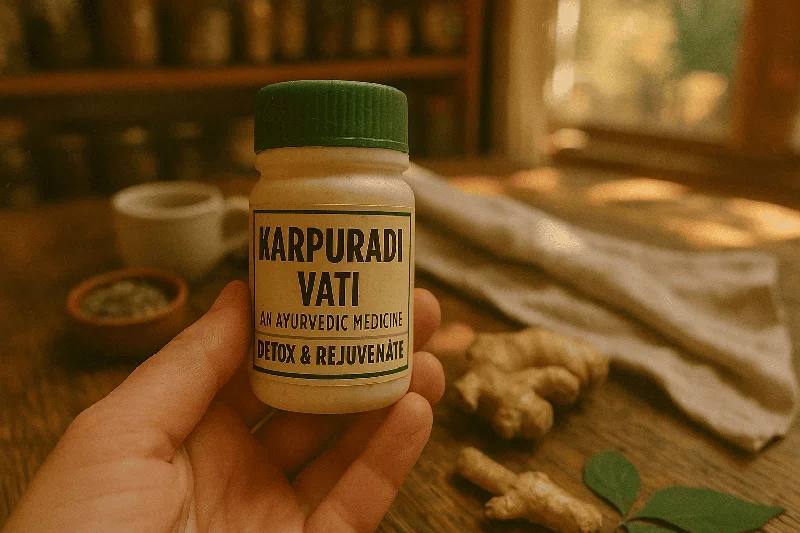
Karpuradi Vati is a classical herbomineral Ayurvedic formulation primarily used for oral health conditions such as gingivitis, pyorrhea, bad breath, and sore throat. It's a small tablet meant to be chewed slowly, releasing camphor-based therapeutic compounds directly into the oral cavity. Referenced in revered Ayurvedic texts like Bhaishajya Ratnavali and Ayurved Saar Sangrah, this time-tested remedy combines the antiseptic power of camphor with astringent, anti-inflammatory, and analgesic herbs to address a wide range of mouth, gum, and respiratory complaints.
If you've been searching for a natural solution to bleeding gums, persistent bad breath, or recurrent throat infections — this guide covers everything you need to know about Karpuradi Vati, from its exact composition and mechanism of action to dosage, side effects, contraindications, and how it compares to similar Ayurvedic formulations.
What Is Karpuradi Vati?
Definition and Ayurvedic Classification
Karpuradi Vati (also spelled Karpooradi Bati or Karpuradi Gutika) is classified as a Vati — a tablet or pill form of Ayurvedic medicine. The prefix "Karpur" refers to Camphor (Cinnamomum camphora), which is the principal active ingredient. The suffix "Vati" simply means tablet.
In Ayurvedic pharmacology, it falls under the category of Mukha Roga Chikitsa (oral disease therapeutics) and is considered a herbomineral preparation because it contains both plant-derived ingredients and mineral substances like Tankan Bhasma (purified borax) and Shudh Phitkari (purified alum).
The formulation is predominantly Kapha-pacifying due to its pungent, bitter, and astringent properties. It also has a mild Vata-balancing effect, though individuals with aggravated Pitta should exercise caution because of the heating nature of camphor and clove.
Historical Context and Classical References
Karpuradi Vati finds mention in several classical Ayurvedic texts:
- Bhaishajya Ratnavali — One of the most comprehensive compilations of Ayurvedic formulations (compiled around 18th century), which lists Karpuradi Vati under treatments for Mukha Roga (oral diseases).
- Vaidyaka Chintamani — References this formulation in the context of Kasa (cough) and Kantharoga (throat diseases).
- Ayurved Saar Sangrah — A popular compendium that documents the standard composition and indications.
These classical references are important — they establish Karpuradi Vati not as a modern commercial invention but as a formula with centuries of documented clinical use in the Indian subcontinent.
Ingredients of Karpuradi Vati
Key Active Ingredients and Their Properties
The standard composition of Karpuradi Vati includes the following ingredients.
Each one plays a specific therapeutic role:
| Ingredient | Sanskrit/Hindi Name | Key Properties | Therapeutic Role |
|---|---|---|---|
| Camphor | Karpur | Antiseptic, analgesic, cooling sensation followed by warmth | Primary antimicrobial agent; numbs oral pain |
| Clove | Lavang | Eugenol-rich, analgesic, antibacterial | Dental pain relief; fights oral pathogens |
| Nutmeg | Jaiphal | Anti-inflammatory, carminative | Reduces gum inflammation; aids digestion |
| Cardamom | Elaichi | Aromatic, antimicrobial, digestive | Freshens breath; mild expectorant |
| Betel Nut | Supari | Astringent, stimulant | Tightens gum tissue; reduces bleeding |
| Cubeb Pepper | Kabab Chini | Expectorant, antiseptic | Clears throat congestion; fights infections |
| Purified Borax | Tankan Bhasma | Alkaline, antiseptic, anti-inflammatory | Neutralizes oral acidity; heals mouth ulcers |
| Catechu | Kattha (Khadira Sara) | Highly astringent, anti-inflammatory | Controls gum bleeding; strengthens gingival tissue |
| Purified Alum | Shudh Phitkari | Astringent, hemostatic | Stops bleeding gums; tightens oral mucosa |
| Rock Candy | Mishri | Demulcent, soothing | Palatability agent; soothes irritated tissue |
Some formulations also include Triphala Kwath (decoction of three fruits), Babul ki Chal (Acacia bark), and Gular ke Patte ka Kwath (fig leaf decoction) as binding or supplementary agents — particularly in preparations by certain manufacturers.
Variations in Composition by Manufacturer
Here's something no one really talks about: the composition of Karpuradi Vati is not identical across all brands. Different manufacturers follow slightly different classical references or proprietary modifications.
| Component | Baidyanath | Seva Sadan | Sharmayu | Bhrigu |
|---|---|---|---|---|
| Camphor | ✅ | ✅ | ✅ | ✅ |
| Clove | ✅ | ✅ | ✅ | ✅ |
| Tankan Bhasma | ✅ | ✅ | ✅ | ✅ |
| Kattha | ✅ | ✅ | ✅ | ✅ |
| Shudh Phitkari | ❌ | ✅ | ❌ | ✅ |
| Triphala Kwath | ❌ | ✅ | ❌ | ❌ |
| Babul ki Chal | ❌ | ✅ | ❌ | ❌ |
| Nutmeg | ✅ | ❌ | ✅ | ✅ |
| Cardamom | ✅ | ❌ | ✅ | ✅ |
| Standard Pack Size | 10g | 80 tablets | 10g | Varies |
This matters because if you're specifically seeking the astringent benefits of alum and Triphala for severe gum bleeding, a Seva Sadan formulation might be more appropriate than the standard Baidyanath version. Always check the ingredient label.
Rasa, Virya, and Vipaka of Key Compounds
From an Ayurvedic pharmacology perspective (Dravyaguna Shastra), the overall formulation profile looks like this:
- Rasa (Taste): Predominantly Katu (pungent) and Tikta (bitter), with secondary Kashaya (astringent) notes
- Virya (Potency): Ushna (heating) — primarily due to camphor, clove, and nutmeg
- Vipaka (Post-digestive effect): Katu (pungent)
- Prabhava (Special action): Mukha Shodhana (oral purification) and Krimighna (antimicrobial)
Health Benefits and Therapeutic Uses of Karpuradi Vati
Oral Health: Gingivitis, Pyorrhea, and Bad Breath
This is the primary domain of Karpuradi Vati. The combination of camphor's antiseptic action, catechu's powerful astringency, and borax's alkaline nature creates a triple-action formula that:
- 1.Kills oral pathogens — Camphor and eugenol from clove have demonstrated antimicrobial activity against Streptococcus mutans and Porphyromonas gingivalis, two key bacteria implicated in dental caries and periodontitis. A 2015 study published in the Journal of Clinical and Diagnostic Research confirmed eugenol's significant antibacterial activity against common oral pathogens.
- 2.Reduces gum inflammation — The anti-inflammatory compounds in nutmeg (myristicin) and borax help reduce swollen, tender gum tissue characteristic of gingivitis.
- 3.Controls bleeding — Alum and catechu are potent hemostatic agents. They cause local vasoconstriction and protein precipitation on the mucosal surface, physically sealing bleeding gum tissue.
- 4.Eliminates halitosis — Bad breath is usually caused by volatile sulfur compounds produced by anaerobic bacteria. Camphor and cardamom directly neutralize these compounds while the antibacterial ingredients address the root cause.
Dental Health: Tartar, Plaque, and Gum Strengthening
- Beyond treating active disease, regular use of Karpuradi Vati can serve a preventive function.
- The astringent ingredients — particularly Kattha and Phitkari — help tighten the gum-tooth interface (gingival sulcus), making it harder for plaque to accumulate subgingivally.
Tankan Bhasma's mild abrasive and alkaline properties may help inhibit tartar formation by maintaining a slightly alkaline oral pH, which discourages the mineralization of dental plaque into calculus.
Cough and Respiratory Support
While oral health is the primary indication, classical texts also document Karpuradi Vati for Kasa (cough) — particularly dry, irritative cough with throat discomfort. Camphor acts as a mild expectorant and bronchial relaxant. Cubeb pepper (Kabab Chini) has traditional use as a respiratory antiseptic.
A pilot study referenced in Ayurvedic clinical literature (n=30) evaluated a camphor-containing Ayurvedic formulation for respiratory support and reported a notable improvement in spirometric parameters in approximately 60-70% of subjects after 4 weeks. While this wasn't specifically on Karpuradi Vati tablets, the key active ingredients overlap significantly.
Throat Diseases and Tonsillitis
For sore throat, pharyngitis, and mild tonsillitis, the slow chewing of Karpuradi Vati allows the therapeutic compounds to coat the pharyngeal mucosa. The local analgesic effect of camphor and clove provides almost immediate symptomatic relief, while the antimicrobial action addresses underlying infection.
How Karpuradi Vati Works: Mechanism of Action
Ayurvedic Pharmacological Perspective (Doshic Action)
From the Ayurvedic standpoint, most oral diseases fall under Kapha-Pitta vitiation — excessive Kapha leads to mucus accumulation, bacterial overgrowth, and biofilm formation, while Pitta vitiation causes inflammation, bleeding, and tissue destruction.
Karpuradi Vati works primarily through:
- Kapha Shamana (Kapha pacification) — The Ushna Virya and Katu Rasa dry up excess oral secretions and reduce Kapha-mediated congestion
- Krimighna (antimicrobial action) — Directly destroys Krimi (pathogens) in the oral cavity
- Raktashodhaka (blood purification) — Through the astringent and bitter components
- Shothahara (anti-inflammatory) — Reduces Shotha (swelling) in gum and throat tissue
Key Srotamsi (channels) affected: Rasavaha Srotas, Raktavaha Srotas, and Pranavaha Srotas (respiratory channels when used for cough).
Modern Pharmacological Perspective
Looking at it through a contemporary pharmacological lens:
- Camphor activates TRPM8 receptors, producing a cooling sensation followed by mild local anesthesia. It also disrupts bacterial cell membranes.
- Eugenol (from clove) inhibits cyclooxygenase-2 (COX-2) enzyme, reducing prostaglandin synthesis — the same mechanism as many NSAIDs, but local and plant-derived.
- Tannic acid (from catechu) precipitates proteins on the mucosal surface, creating a protective barrier that reduces irritation and bleeding.
- Borax creates an alkaline micro-environment that is hostile to acidogenic bacteria like S. mutans.
The beauty of the formulation is that it delivers these compounds directly to the site of action through slow chewing — essentially functioning as a sustained-release local drug delivery system. No first-pass metabolism, no systemic dilution.
Doshic Suitability
Kapha Balancing Properties
- Karpuradi Vati is most suited for Kapha-predominant conditions and individuals with Kapha Prakriti.
- Signs that suggest Kapha-type oral problems include: thick, sticky saliva; white-coated tongue; dull aching rather than sharp pain; slow-developing but persistent gum disease; and a generally heavy, congested feeling in the mouth and throat.
Vata and Pitta Considerations
For Vata-type oral issues (receding gums, dry mouth, cracking lips), Karpuradi Vati can help but should be combined with oil pulling (Gandusha with sesame oil) to counter the drying effect of its astringent ingredients.
For Pitta-type conditions (acute inflammation, sharp burning pain, mouth ulcers), use with caution. The heating potency of camphor and clove can temporarily aggravate Pitta. If you have a strong Pitta constitution, consider taking it with Mishri (rock candy) dissolved in cool water as anupana, or choose a Pitta-pacifying alternative like Khadiradi Vati instead.
Don't wait or self medicate. Start chat with Doctor NOW
Dosage and Administration
Recommended Dosage
The standard dosage for adults:
- 1 tablet, 5 to 6 times daily
- Chew slowly, allowing the tablet to dissolve gradually in the mouth
- Do not swallow whole — the entire therapeutic value depends on local contact with oral and pharyngeal tissues
Dosage for Children
Children above 5 years of age may take half a tablet, 2-3 times daily, but only under the supervision of a qualified Ayurvedic practitioner. The camphor content makes it unsuitable for children under 5.
Duration of Use
For acute conditions (sore throat, sudden gum bleeding): 5-7 days is usually sufficient.
For chronic conditions (pyorrhea, chronic gingivitis): Use for 2-4 weeks, then reassess with your practitioner. Long-term continuous use beyond 6 weeks is generally not recommended without medical supervision, primarily due to the cumulative exposure to camphor.
Anupana (Adjuvants) for Enhanced Efficacy
Classical texts recommend specific accompanying substances depending on the condition:
| Condition | Recommended Anupana | Rationale |
|---|---|---|
| Cough with mucus | Honey (Madhu) | Kapha-reducing, expectorant vehicle |
| Sore throat | Warm milk with turmeric | Soothing, anti-inflammatory |
| Pyorrhea with bleeding | Cool water with Mishri | Pitta-pacifying, reduces heat |
| General oral health | Plain warm water | Enhances absorption |
Note: If you're using it primarily for oral health, the anupana is less critical since the tablet itself is chewed and retained in the mouth. Anupana becomes more relevant when addressing throat or respiratory complaints.
Side Effects, Precautions & Contraindications
Known Side Effects
When taken in recommended doses, Karpuradi Vati is generally well tolerated.
However, some individuals may experience:
- Burning sensation in the mouth — especially common in Pitta-dominant individuals; usually mild and transient
- Excessive salivation — due to the pungent and stimulant properties
- Mild nausea — if accidentally swallowed in larger quantities on an empty stomach
- Oral mucosal irritation — in sensitive individuals, particularly from camphor
These effects are dose-dependent and typically resolve once you stop taking the medication.
Detailed Contraindications
This is an area that most sources gloss over.
Here are the specific contraindications:
- 1.Pregnancy — Camphor can cross the placental barrier and has been associated with fetal toxicity in animal studies. Absolutely avoid during pregnancy.
- 2.Lactation — Camphor metabolites may pass into breast milk. Not recommended for nursing mothers.
- 3.Children under 5 years — Risk of camphor toxicity is significantly higher in young children due to their lower body weight and immature hepatic metabolism.
- 4.Diabetes — The formulation contains Mishri (rock candy/crystallized sugar). While the amount per tablet is small, diabetic patients taking 5-6 tablets daily should factor this into their carbohydrate intake. Consult your doctor.
- 5.Camphor allergy or sensitivity — Some individuals develop contact dermatitis or mucosal reactions to camphor. Discontinue immediately if you notice unusual rash, swelling, or difficulty breathing.
- 6.Active mouth ulcers with severe Pitta aggravation — The Ushna Virya (heating potency) can worsen ulcerative conditions.
- 7.Liver disease — Camphor is metabolized hepatically. Impaired liver function could lead to accumulation.
Drug Interactions
Karpuradi Vati may interact with:
- Blood thinners (Warfarin, Aspirin) — Eugenol from clove has mild antiplatelet activity. Combined use could theoretically increase bleeding risk.
- Antidiabetic medications — Due to the sugar content (Mishri), monitor blood glucose if using concurrently.
- Other camphor-containing products — Topical camphor preparations (balms, inhalers) used simultaneously could increase total camphor exposure beyond safe limits.
- Homeopathic medicines — Camphor is known to antidote many homeopathic remedies. If you're undergoing homeopathic treatment, avoid Karpuradi Vati or consult both practitioners.
How Karpuradi Vati Is Made: Traditional Manufacturing Process
The classical preparation method follows these steps, as documented in Ayurvedic pharmaceutical texts (Sharngadhara Samhita describes the general Vati-making process):
- 1.Purification (Shodhana) — Mineral ingredients like Tankan (borax) and Phitkari (alum) undergo purification through heating and processing with specific media to remove impurities and enhance bioavailability.
- 2.Powdering (Churna preparation) — All dry herbal ingredients are individually powdered to a fine mesh (approximately 80-100 mesh size).
- 3.Mixing — Powdered ingredients are combined in precise proportions as specified in the classical reference being followed.
- 4.Bhavana (Wet grinding) — The mixed powder is wet-ground with specific kwath (decoctions) — such as Triphala Kwath or Gular patte ka Kwath — to form a homogeneous paste. This step is crucial as it activates certain compounds and improves binding.
- 5.Tablet formation — The paste is rolled into small, uniform tablets (approximately 250-500 mg each) and dried in shade (not direct sunlight, to prevent camphor sublimation).
- 6.Quality testing — Traditional parameters include uniform size, proper hardness, characteristic aroma (camphor-clove), and taste profile.
The camphor is typically added last and mixed gently, since excessive mechanical processing can cause it to sublimate (convert directly from solid to gas).
Karpuradi Vati vs. Similar Ayurvedic Formulations
- One of the most common questions is how Karpuradi Vati compares to other Ayurvedic oral health tablets.
- Here's a detailed comparison:
| Parameter | Karpuradi Vati | Khadiradi Vati | Lavangadi Vati | Eladi Vati |
|---|---|---|---|---|
| Primary Ingredient | Camphor (Karpur) | Khadira (Acacia catechu) | Lavang (Clove) | Ela (Cardamom) |
| Best For | Gingivitis, pyorrhea, bad breath | Mouth ulcers, sore throat, hoarseness | Cough, nausea, throat irritation | Nausea, vomiting, taste disorders |
| Doshic Action | Kapha ↓, mild Vata ↓ | Kapha ↓, Pitta ↓ | Kapha ↓, Vata ↓ | Kapha ↓, Pitta ↓ |
| Virya | Ushna (hot) | Sheeta (cool) | Ushna (hot) | Sheeta (cool) |
| Safe in Pitta? | Use with caution | Yes — Pitta-friendly | Use with caution | Yes — Pitta-friendly |
| Respiratory Use | Moderate (cough) | Minimal | Strong (cough, cold) | Minimal |
| Gum Bleeding | Excellent | Good | Moderate | Poor |
| Classical Reference | Bhaishajya Ratnavali | Sharangdhara Samhita | Bhaishajya Ratnavali | Sahasrayogam |
Key takeaway: If your primary concern is gum disease and bleeding, Karpuradi Vati is your best bet. If you have mouth ulcers with Pitta aggravation, Khadiradi Vati is gentler. For predominantly cough-related complaints, Lavangadi Vati may be more effective.
Diet and Lifestyle During Karpuradi Vati Use (Pathya-Apathya)
This is something most resources completely ignore, but Ayurveda emphasizes that medicine alone is insufficient — dietary and lifestyle compliance determines outcomes.
What to Follow (Pathya)
- Eat warm, freshly cooked food — supports Agni (digestive fire) and reduces Ama (toxins)
- Include astringent foods — pomegranate, green tea, unripe banana — they complement the medicine's action
- Oil pulling (Gandusha) with sesame or coconut oil every morning before brushing — synergistic with Karpuradi Vati for gum health
- Maintain oral hygiene — use a soft-bristled brush, tongue scraper, and Ayurvedic tooth powder
- Stay hydrated with warm water throughout the day
What to Avoid (Apathya)
- Cold foods and beverages — ice cream, cold drinks counteract the Ushna Virya of the medicine
- Excessive sugar — feeds oral bacteria, directly opposes the treatment goal
- Tobacco in any form — smoking and chewing tobacco are the single biggest risk factors for pyorrhea progression
- Very spicy or very sour foods — can irritate already inflamed gum tissue
- Sticky, processed snacks — promote plaque accumulation
Storage Conditions
Proper storage is particularly important for Karpuradi Vati because of its camphor content.
Camphor undergoes sublimation — it converts directly from solid to gas at room temperature. Poor storage accelerates this process, reducing potency.
- Store in an airtight container — the original packaging is often not sufficient after opening
- Keep in a cool, dry place below 25°C (77°F)
- Avoid direct sunlight and heat — both accelerate camphor loss
- Do not refrigerate — moisture condensation can degrade the tablets
- Shelf life: Typically 3 years from date of manufacture, but camphor content may diminish noticeably after 18-24 months if storage conditions are suboptimal
If your tablets have lost their characteristic strong camphor smell, they've likely lost significant potency and should be replaced.
Price and Availability Across Brands
| Brand | Pack Size | Approximate Price (INR) | Available On |
|---|---|---|---|
| Baidyanath | 10g | ₹55–75 | 1mg, Amazon, Flipkart |
| Seva Sadan | 80 tablets | ₹80–110 | 1mg, local Ayurvedic stores |
| Sharmayu | 10g | ₹45–65 | Planet Ayurveda, Amazon |
| Bhrigu | Varies | ₹50–80 | IndiaMART, regional stores |
Prices vary based on platform, location, and ongoing offers. Baidyanath remains the most widely available brand across both online and offline channels in India. Seva Sadan offers better value per tablet if you need a larger quantity for prolonged use.
Frequently Asked Questions (FAQ)
What are the ingredients in Karpuradi Vati?
The core ingredients include Camphor (Karpur), Clove (Lavang), Nutmeg (Jaiphal), Cardamom (Elaichi), Betel Nut (Supari), Cubeb Pepper (Kabab Chini), Purified Borax (Tankan Bhasma), Catechu (Kattha), and Rock Candy (Mishri). Some manufacturers additionally include Purified Alum (Phitkari), Triphala Kwath, and Babul bark. The exact composition varies by brand and classical reference followed.
What is the use of Karpuradi Churna (powder form)?
- Karpuradi Churna is essentially the same formulation in powder rather than tablet form.
- It's used as a tooth powder — massaged directly onto gums with a finger — for gingivitis, pyorrhea, and gum strengthening. The churna form allows for direct topical application but is less convenient than the Vati for throat-related conditions.
Can Karpuradi Vati be taken during pregnancy?
No. Camphor is the dominant ingredient and is known to cross the placental barrier. Animal studies have shown potential fetal toxicity. It should be strictly avoided during pregnancy and lactation unless specifically prescribed by a qualified Ayurvedic physician who can assess risk-benefit.
How quickly does Karpuradi Vati work?
For symptomatic relief (pain, bad breath, throat irritation), most people notice effects within 15-30 minutes of chewing a tablet — this is primarily the local anesthetic and aromatic action of camphor and clove. For structural improvements in gum health (reduced bleeding, tighter gums), expect 2-4 weeks of consistent use.
Is Karpuradi Vati safe for daily long-term use?
- Short courses of 2-4 weeks are generally safe for most adults. Long-term daily use beyond 6 weeks is not advisable without medical supervision due to cumulative camphor exposure.
- For maintenance, you could use it intermittently — for example, one week per month — alongside good oral hygiene practices.
What is Khadiradi Vati used for?
Khadiradi Vati is a related but distinct Ayurvedic formulation based on Khadira (Acacia catechu heartwood). It is primarily used for mouth ulcers, sore throat, hoarseness of voice, and dental caries. Unlike Karpuradi Vati, it has a cooling potency (Sheeta Virya), making it more suitable for Pitta-dominant conditions. See the comparison table above for detailed differences.
Can I take Karpuradi Vati with allopathic medicines?
Generally yes, but maintain a 30-minute gap between Karpuradi Vati and any allopathic medication. Specifically avoid combining with blood thinners without medical guidance, as eugenol has mild antiplatelet activity. If you're on any regular medication, inform both your allopathic and Ayurvedic practitioner.
Does Karpuradi Vati help with tooth pain?
It provides temporary relief from mild to moderate tooth pain due to the local anesthetic properties of camphor and eugenol (from clove). However, it is not a substitute for dental treatment of cavities, abscesses, or structural tooth damage. Think of it as a supportive remedy, not a cure for dental decay.
Conclusion
Karpuradi Vati remains one of Ayurveda's most effective and time-tested formulations for oral and gum health. Its multi-ingredient design addresses the problem from multiple angles simultaneously — antimicrobial, anti-inflammatory, astringent, and analgesic — something that single-ingredient modern mouthwashes often fail to achieve.
Whether you're dealing with bleeding gums, chronic bad breath, recurring sore throats, or simply want to strengthen your oral health naturally, Karpuradi Vati offers a practical, affordable, and well-documented solution.
That said, always consult a qualified Ayurvedic practitioner before starting any new medication — especially if you are pregnant, nursing, diabetic, or taking other medications. The information in this guide is meant to educate and inform, not to replace professional medical advise.
Have you used Karpuradi Vati? Share your experience in the comments below, or consult with our verified Ayurvedic doctors for personalized guidance on your specific condition.
Scientific Sources
- Hot and Cold Theory: Evidence in Physiology — Namiranian P et al., 2021, Advances in experimental medicine and biology
- Cancer--an ayurvedic perspective — Balachandran P et al., 2005, Pharmacological research
- Successful Ayurvedic Management of Dermatophytosis-A case report — Singh NK et al., 2022, Journal of Ayurveda and integrative medicine
- Personality types in Ayurveda — Dube KC et al., 1983, The American journal of Chinese medicine
- Phytochemicals from Ayurvedic plants as potential medicaments for ovarian cancer: an in silico analysis — Qazi S et al., 2021, Journal of molecular modeling
- Psychodermatology: An Indian perspective — Shenoi SD et al., 2018, Clinics in dermatology
- Ayurvedic management of chemotherapy induced adverse effects in sigmoid colon carcinoma - a case report — Divya P, 2025, Journal of Ayurveda and integrative medicine
- From covalent bonds to eco-physiological pharmacology of secondary plant metabolites — Chatterjee SS, 2015, Biochemical pharmacology
- Effectiveness of ayurvedic formulation, NAOQ19 along with standard care in the treatment of mild-moderate COVID-19 patients: A double blind, randomized, placebo-controlled, multicentric trial — Bhardwaj P et al., 2023, Journal of Ayurveda and integrative medicine
- Ayurvedic approach for management of ankylosing spondylitis: A case report — Singh SK et al., 2016, Journal of Ayurveda and integrative medicine
- Transforming Medicinal Oil into Advanced Gel: An Update on Advancements — Maurya R et al., 2024, Gels (Basel, Switzerland)
- Utilization of Ayurveda in health care: an approach for prevention, health promotion, and treatment of disease.Part 2--Ayurveda in primary health care — Sharma H et al., 2007, Journal of alternative and complementary medicine (New York, N.Y.)
- Evaluation of traditional ayurvedic Kadha for prevention and management of the novel Coronavirus (SARS-CoV-2) using in silico approach — Maurya DK et al., 2022, Journal of biomolecular structure & dynamics
- Ayurveda therapy in the management of epilepsy — Adiga SH et al., 2024, Epilepsy & behavior : E&B
- Evidence-based approaches for the Ayurvedic traditional herbal formulations: toward an Ayurvedic CONSORT model — Narahari SR et al., 2008, Journal of alternative and complementary medicine (New York, N.Y.)
- Ayurvedic Stress Management: Balancing Mind Body in Men Women — Swaroop A, 2025, Advances in mind-body medicine
- Ayurvedic research and methodology: Present status and future strategies — Chauhan A et al., 2015, Ayu
- First ayurvedic approach towards green drugs: anti cervical cancer-cell properties of Clerodendrum viscosum root extract — Sun C et al., 2013, Anti-cancer agents in medicinal chemistry
- Ayurvedic approach to clinical medicine - part ii — Mishra SK, 1985, Ancient science of life
- Ayurvedic medicine and NADPH oxidase: a possible approach to the prevention of ESRD in hyperoxaluria — Gambaro G et al., 2011, Nephrology, dialysis, transplantation : official publication of the European Dialysis and Transplant Association - European Renal Association
Questions from users
What natural remedies can enhance the effectiveness of Karpuradi Vati?
Client_e22352
2 days ago
To enhance the effectiveness of Karpuradi Vati, consider incorporating natural remedies that support oral and respiratory health. Saltwater gargles can help soothe throat inflammation and reduce bacteria in the mouth. Supplementing with vitamin C-rich foods like citrus fruits may improve gum health. Drinking herbal teas like ginger or turmeric may also aid respiratory function owing to their anti-inflammatory properties. Typically, improvements in symptoms like bad breath and gum bleeding can be observed in a few weeks. If symptoms persist or worsen, consulting a healthcare provider is recommended.
How does Karpuradi Vati interact with other dental treatments?
Client_548556
7 days ago
Karpuradi Vati is often considered a supportive remedy in dental care rather than a standalone treatment, indicating it is best used alongside other dental treatments. It may interact positively by enhancing oral hygiene through its antibacterial and anti-inflammatory properties, helping to address issues like gum inflammation and mouth ulcers. However, it should not replace conventional dental treatments such as cleanings, fillings, or prescribed medication. Always consult your dentist before use, especially if pregnant, nursing, or taking other medications.
What are the potential side effects of taking Karpuradi Vati?
Client_7ac9b3
12 days ago
Karpuradi Vati, a traditional Ayurvedic formulation, can sometimes cause side effects like nausea, gastrointestinal discomfort, and dry mouth. While its ingredients are generally considered safe in recommended doses, individual reactions can vary. If you experience adverse effects such as persistent upset stomach, allergic reactions like rashes, or breathing difficulties, it is crucial to stop using it and consult a healthcare professional. Always discuss with a doctor before combining it with other medications, to avoid interactions, particularly if you are on treatment for serious conditions.
What is the recommended dosage for Karpuradi Vati in adults?
Client_2470ce
17 days ago
The recommended dosage for Karpuradi Vati in adults typically ranges from 1 to 2 tablets, taken once or twice a day, depending on the individual's needs and the advice of an Ayurvedic practitioner. It's important to follow this guideline due to its camphor content, which is metabolized by the liver and can be toxic in high doses. Avoid using it if you have active mouth ulcers, liver disease, or if you experience any adverse reactions like a rash or breathing difficulties. For compatibility with allopathic medicines, keep a 30-minute interval to prevent interactions. Consult a healthcare provider for personalized advice, especially if symptoms persist.
What are the primary ingredients in Karpuradi Vati and their effects?
Client_b12d38
27 days ago
Karpuradi Vati primarily contains camphor, clove, and nutmeg, which give it its antimicrobial and oral purification effects. These ingredients make it especially useful for addressing oral health issues like gingivitis, pyorrhea, and bad breath. Camphor provides a heating effect (Ushna) and has mild expectorant properties, which can also help alleviate minor respiratory issues. For oral health, improvements might be noticeable in a few weeks, but persistent symptoms should be evaluated by a dentist. Checking the ingredient label for allergies or sensitivities is always advisable.
How long can Karpuradi Vati be used for throat infections?
Client_69ffb1
37 days ago
Karpuradi Vati can typically be used for throat infections, such as sore throat or mild tonsillitis, for about 5-7 days. This timeframe is generally sufficient for acute conditions. If symptoms persist beyond a week, it is advisable to see a healthcare professional for further guidance. For chronic oral health issues, usage may extend to 2-4 weeks, but it's important to consult with a healthcare practitioner before continuing. It should be avoided by pregnant or lactating women because camphor metabolites could pose risks, and it's unsuitable for children under 5.
How does Karpuradi Vati support oral health and prevent cavities?
Client_203b01
46 days ago
Karpuradi Vati supports oral health and helps prevent cavities by neutralizing harmful compounds with camphor and cardamom. The antibacterial properties target the root cause of tooth decay. Astringent components like Kattha and Phitkari strengthen the gums, reducing plaque buildup by tightening the gum-tooth interface. Additionally, Tankan Bhasma helps maintain an alkaline pH in the mouth, inhibiting tartar formation. While beneficial, if you experience persistent oral health issues, it is advisable to consult a dentist for personalized care.
What are the benefits of using cubeb pepper for respiratory health?
Client_f25338
56 days ago
Cubeb pepper, often referred to as Kabab Chini, may offer benefits for respiratory health by acting as a respiratory antiseptic. Its traditional use suggests it might help in clearing respiratory tract infections and reducing congestion. While some Ayurvedic formulations including camphor and cubeb have shown improvements in respiratory parameters after four weeks in small studies, individual responses vary. It is crucial to consider potential risks, especially for children under five and nursing mothers, due to toxicity concerns. For personalized advice, especially if symptoms persist, consult a healthcare professional.
Can Karpuradi Churna be used for children with gum issues?
Client_5a9909
65 days ago
Karpuradi Churna might be safe for kids with gum issues, but it's always best to consult an Ayurvedic practitioner or pediatrician first. Kids can be more sensitive to certain ingredients like camphor. It's all about ensuring it aligns with their unique dosha and constitution. Always go gentle with doses for kids!
Is it safe to use camphor products while taking antidiabetic medications?
Client_7ba018
75 days ago
It's generally safe, but be cautious. Camphor's not directly affecting blood sugar, but keep an eye on it, especially if there's sweeteners like Mishri in the mix. Camphor might also interact with other topicals, just don't overdo it. If insensitive, consult with a healthcare expert for personal advice.
Related articles

Ear, Nose, and Throat Disorders
Natural Ways to Reduce Acoustic Neuroma
Understanding the basics of acoustic neuroma is essential for exploring natural remedies and how they can be integrated into daily life.
3,714

Ear, Nose, and Throat Disorders
Parnayavani – Ayurvedic Herb for Digestion, Detoxification, and Overall Health
Explore the benefits and uses of Parnayavani, a valuable Ayurvedic herb known for its role in improving digestion, detoxifying the body, and supporting overall health and vitality.
2,555

Ear, Nose, and Throat Disorders
Talisadi Churna: Ayurvedic Remedy for Dry Cough and Respiratory Health
Discover Talisadi Churna for dry cough, its benefits, proper dosage, side effects, and the scientific research supporting its use as an effective Ayurvedic remedy.
4,052

Ear, Nose, and Throat Disorders
Karnapooranam – Natural Ayurvedic Relief for Ear Health
Discover Karnapooranam, an Ayurvedic approach to ear health. Learn about its benefits, techniques, and traditional practices for holistic ear care.
3,258

Ear, Nose, and Throat Disorders
Best Ayurvedic Nasal Drops for Sinusitis: Natural Remedies & Benefits
Discover the best Ayurvedic nasal drops for sinusitis. Learn how Anu Taila, Shadbindu Taila, and other herbal oils can alleviate sinusitis symptoms naturally. Explore benefits, usage tips, and expert insights based on traditional Ayurvedic wisdom.
7,172

Ear, Nose, and Throat Disorders
Ayurvedic Tips To Improve Hearing
In contemporary times, hearing loss has become increasingly prevalent, often attributed to factors like loud noise exposure, medications, infections, or the natural aging process.
5,417

Ear, Nose, and Throat Disorders
Alopecia Areata Ayurvedic Treatment – Natural Remedies for Hair Regrowth & Scalp Health
Explore holistic Ayurvedic treatment for alopecia areata. Discover natural remedies that detoxify, balance doshas, and nourish the scalp to promote hair regrowth and scalp health.
4,058

Ear, Nose, and Throat Disorders
Tundikeri: A Comprehensive Guide to Its Medicinal Uses
Explore Tundikeri’s origins, health benefits, scientific research, and practical uses. Learn how this herbal remedy supports well-being and cautious usage.
2,384

Ear, Nose, and Throat Disorders
AYURVEDIC REMEDIES FOR SINUSITIS
Sinusitis, a condition characterized by inflammation of the sinus cavities, can be a persistent source of discomfort for many. From the pressure in the forehead to the congestion in the nasal passages, its symptoms can significantly impact one’s quality o
4,361
Related consultations on the topic
Legal
Additional Documents
© 2024 Ask Ayurveda. All rights reserved.