Ask Ayurvedic doctor a question and get a consultation online on the problem of your concern in a free or paid mode. More than 2,000 experienced doctors work and wait for your questions on our site and help users to solve their health problems every day.


Body DetoxEar, Nose, and Throat DisordersGeriatrics & RejuvenationImmunodeficiencyInfertility TreatmentNutritionOrthopedic DisordersPediatricsRespiratory DisordersSexually Transmitted Diseases (STDs)Surgery RecoveryUrological DisordersVascular DisordersDental DisordersEndocrinological DisordersGastrointestinal DisordersYoga TherapyGeneral MedicineAllergic DisordersCardio DisordersGynecology and ObstetricsCosmetologySkin and Hair DisordersEye DisordersInfectious DiseasesMental DisordersNeurological DisordersOncologyPanchakarmaSexual Health & DisordersSports Medicine
Published on 02/10/25
(Updated on 08/08/26)
4,415
Hearing Loss Treatment in Ayurveda – Natural Remedies for Enhanced Auditory Health

Hearing loss treatment in Ayurveda centers on balancing Vata dosha — the primary force governing sound perception — through targeted therapies like Karnapurana (medicated ear oil therapy), Nasya (nasal administration of herbal oils), dietary corrections, and specific Rasayana herbs that nourish the auditory nerve. Unlike conventional medicine, which often relies on hearing aids or surgical intervention, Ayurveda addresses the root cause of auditory decline: doshic imbalance, toxin accumulation in the ear channels, and degeneration of the delicate structures responsible for hearing.
But let's be honest upfront. Not every type of hearing loss is fully reversible through Ayurveda — or any system of medicine. Conductive hearing loss caused by fluid buildup, infections, or earwax impaction responds remarkably well. Early-to-moderate sensorineural hearing loss (SNHL) shows promising improvement. However, congenital nerve damage or complete cochlear destruction requires realistic expectations.
This guide covers everything: the Ayurvedic understanding of hearing loss, clinically proven therapies, home remedies you can start today, specific herbs with their mechanisms, dietary and lifestyle protocols, yoga practices, and a transparent comparison with modern medicine.
What Is Hearing Loss (Badhirya) in Ayurveda?
In classical Ayurvedic texts — particularly the Sushruta Samhita and Charaka Samhita — hearing loss is described as Badhirya, classified under the diseases of the ear (Karna Roga). Acharya Sushruta lists it among the conditions arising primarily from vitiated Vata dosha, since Vata is the bio-energy responsible for all sensory perceptions, movement, and nerve impulses.
- The ear, in Ayurvedic philosophy, is intimately connected to Akash Mahabhuta (the space element) and Shabda Tanmatra (the subtle essence of sound).
- When Vata dosha becomes aggravated — through aging, excessive noise exposure, improper diet, or lifestyle choices — it disrupts the Shabdavaha Srotas (channels carrying sound), leading to diminished or distorted hearing.
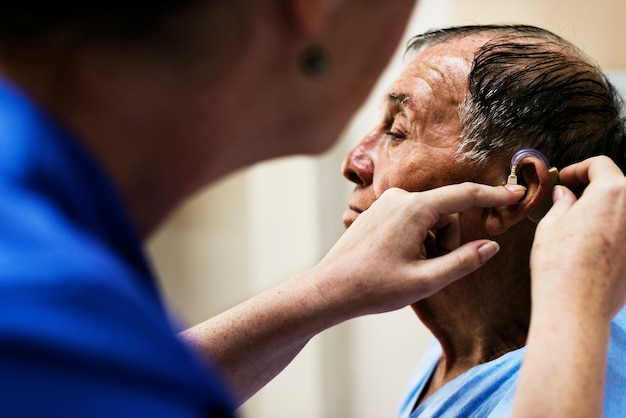
Ayurvedic Understanding: Role of Vata Dosha and Akash Mahabhuta
Vata dosha governs the space and air elements in the body. The ear canal itself is a hollow space (Akash predominant), and the transmission of sound waves through the ear requires the movement principle of Vata. When Prana Vayu (the sub-type of Vata governing sensory perception) is disturbed, the ear's ability to receive, transmit, and process sound deteriorates.
Key Ayurvedic pathology of Badhirya:
- Vata aggravation dries out the ear canal and damages nerve function
- Kapha involvement can cause fluid accumulation, congestion, and blockages
- Pitta vitiation may lead to inflammation and infections in the middle ear
- Combined doshic imbalance often manifests as mixed hearing loss with tinnitus
How Ama (Toxins) Blocks Ear Channels (Srotas)
One concept that modern medicine doesn't directly address, but Ayurveda considers fundamental, is Ama — metabolic toxins produced by incomplete digestion. When Agni (digestive fire) weakens, Ama accumulates and circulates through the body, eventually lodging in subtle channels.
In hearing loss, Ama blocks the Srotas (micro-channels) of the ear, preventing proper nourishment of auditory tissues and impairing nerve conduction. This is why Panchakarma detoxification is often the first step in Ayurvedic hearing loss treatment — you have to clear the channels before herbal medicines can effectively reach and heal the target tissues.
Types of Hearing Loss: Ayurvedic and Modern Classification
Understanding the type of hearing loss is critical because it determines whether Ayurvedic treatment can help — and how much improvement is realistically achievable.
Conductive Hearing Loss
This occurs when sound waves cannot efficiently travel through the outer ear canal, tympanic membrane (eardrum), or middle ear ossicles.
Common causes include:
- Earwax (cerumen) impaction
- Middle ear infections (Otitis Media)
- Fluid accumulation behind the eardrum
- Perforated eardrum
- Eustachian tube dysfunction
Ayurvedic prognosis: Excellent. Conductive hearing loss is the most treatable form. Karnapurana, Nasya, and specific herbal formulations typically resolve or significantly improve this type within 2-6 weeks.
Sensorineural Hearing Loss (SNHL)
This involves damage to the inner ear (cochlea) or the auditory nerve itself. It accounts for approximately 90% of all hearing loss cases and is the most challenging type to treat in any medical system.
Subtypes of SNHL: What Is Treatable and What Is Not
| Subtype | Cause | Ayurvedic Treatability | Expected Improvement |
|---|---|---|---|
| Age-related (Presbycusis) | Natural degeneration | Moderate — better if caught early | 20-40% improvement possible |
| Noise-induced | Prolonged loud exposure | Moderate — depends on duration of damage | Variable; early cases respond well |
| Sudden SNHL | Viral, vascular, idiopathic | Good — if treated within 2-4 weeks of onset | Significant recovery possible |
| Drug-induced (Ototoxic) | Aminoglycosides, cisplatin, etc. | Limited to moderate | Partial recovery in some cases |
| Congenital / Genetic | Birth defects, hereditary | Very limited | Supportive care primarily |
| Autoimmune inner ear disease | Immune-mediated | Moderate | Anti-inflammatory herbs help |
| Meniere's disease related | Endolymphatic hydrops | Good | Significant symptom control |
Mixed Hearing Loss
A combination of conductive and sensorineural components. Ayurveda can typically address the conductive component effectively while providing supportive treatment for the sensorineural aspect.
Temporary vs. Permanent Hearing Loss
This distinction is crucial for patients. Temporary hearing loss from earwax, infections, fluid buildup, or sudden noise exposure often resolves completely with Ayurvedic intervention. Permanent hearing loss from long-standing nerve damage or structural destruction may only see partial improvement — though many patients report meaningful gains in hearing clarity even when audiometric thresholds don't dramatically change.
Core Ayurvedic Therapies for Hearing Loss
These are the primary clinical procedures administered by qualified Ayurvedic practitioners. They form the backbone of any Badhirya treatment protocol.
Karnapurana (Karna Poorana) — Medicated Ear Oil Therapy
Karnapurana is arguably the most important Ayurvedic procedure for hearing loss. It involves filling the ear canal with warm medicated oil and allowing it to remain for a specified duration (typically 15-20 minutes per ear).
How it works:
- Warm medicated oil (usually Bilwa Taila, Nirgundi Taila, or Kshara Taila) is gently poured into the ear canal
- The patient lies on their side with the affected ear facing upward
- The oil is retained for 15-20 minutes while gentle massage is performed around the ear
- The procedure is repeated daily for 7-14 days
Karnapurana pacifies Vata dosha locally, nourishes the tympanic membrane and ossicles, dissolves earwax naturally, and improves nerve conduction in the inner ear. A clinical case published in the Journal of Ayurveda and Integrated Medical Sciences (JAIMS) documented a patient who received Karnapurana with Bilwa Taila for 7 days followed by 45 days of oral medications, showing measurable improvement in audiometric assessment.
Nasya — Nasal Administration of Medicated Oils
It might seem counterintuitive to treat ear problems through the nose. But Ayurveda recognizes that the nasal passage, throat, and ears are interconnected — a fact that modern ENT anatomy fully confirms (via the Eustachian tube and nasopharyngeal connections).
Nasya involves instilling 4-8 drops of medicated oil (commonly Anu Taila or Shadbindu Taila) into each nostril.
This:
- Clears Kapha congestion in the head and ear regions
- Opens the Eustachian tubes
- Nourishes the cranial nerves, including the vestibulocochlear nerve
- Removes accumulated Ama from the head channels
Nasya is typically performed in the morning on an empty stomach, for 7-21 consecutive days depending on the severity.
Panchakarma Detoxification Protocol
- For chronic or severe hearing loss, a full Panchakarma detox is often recommended before starting specific ear therapies.
- The rationale is straightforward: if the channels are blocked with Ama, even the most potent medicines cannot reach the target tissue.
A typical Panchakarma protocol for Badhirya includes:
- 1.Snehapana (internal oleation) — 3-7 days
- 2.Swedana (therapeutic sweating) — to open channels
- 3.Virechana (therapeutic purgation) — to eliminate Pitta and Ama
- 4.Nasya — focused on head and ENT channels
- 5.Karnapurana — direct ear treatment
- 6.Basti (medicated enema) — to pacify systemic Vata
Marmachikitsa — Marma Point Therapy
Marma therapy involves stimulating specific vital energy points connected to the auditory system.
Key marma points for hearing loss include:
- Vidhura Marma — located behind the ear, directly governing auditory function
- Shanka Marma — at the temple region
- Krikatika Marma — at the junction of the head and neck, influencing blood supply to the ear
Gentle pressure or oil application on these points improves circulation, releases energy blockages, and enhances nerve function in the ear. This is a specialized technique that not all Ayurvedic practitioners are trained in, so seek someone with specific experience in Marmachikitsa.
Ayurvedic Herbs and Medicines for Hearing Loss
Key Herbs with Mechanisms of Action
| Herb | Sanskrit/Common Name | Mechanism of Action | Primary Use |
|---|---|---|---|
| Ashwagandha | Withania somnifera | Neuroprotective, reduces oxidative stress on auditory nerve, adaptogenic | SNHL, age-related hearing loss |
| Bilwa | Aegle marmelos | Anti-inflammatory, Vata-pacifying, improves local circulation | Karnapurana oil, middle ear conditions |
| Sariva | Hemidesmus indicus | Blood purifier, cooling, anti-inflammatory | Sarivadi Vati formulation |
| Nirgundi | Vitex negundo | Analgesic, anti-inflammatory, clears congestion | Ear oils, pain with hearing loss |
| Brahmi | Bacopa monnieri | Enhances nerve transmission, cognitive function, neuroprotective | SNHL, tinnitus |
| Shankhapushpi | Convolvulus pluricaulis | Calms Vata, improves neural health | Tinnitus with hearing loss |
| Guggulu | Commiphora mukul | Anti-inflammatory, clears Ama from channels | Chronic middle ear conditions |
| Vacha (Calamus) | Acorus calamus | Opens channels, improves nerve conduction, Medhya (brain tonic) | All types of hearing loss |
Specific Formulations Used in Clinical Practice
Based on the clinical protocol documented in the JAIMS case study, a comprehensive medication regimen included:
- Sarivadi Vati — 2 tablets twice daily (classical formulation for ear diseases)
- Dashamoola Arishta — 15ml twice daily after meals (anti-inflammatory, Vata-pacifying)
- Ashwagandha Arishta — 15ml twice daily (neuroprotective, rejuvenative)
- Shirbala Taila 101 Avrti — for Nasya (101-times processed sesame oil with Bala herb — extremely potent for nerve nourishment)
- Bilwa Taila — for Karnapurana
The treatment duration was 7 days of in-clinic Panchakarma followed by 45 days of oral medications. This is a good benchmark for realistic treatment timelines.
Home Remedies for Hearing Loss You Can Start Today
While clinical Ayurvedic treatment requires professional guidance, several home remedies can support hearing health and may provide relief for mild cases.
Garlic Oil Ear Drops (Lashuna Taila)
Crush 2-3 fresh garlic cloves and cook them in 2 tablespoons of sesame oil on low heat until the garlic turns slightly brown. Strain, cool to lukewarm, and instill 2-3 drops in the affected ear. Garlic has natural antimicrobial and anti-inflammatory properties. A 2014 study in the Journal of Nutrition confirmed garlic's protective effects against noise-induced hearing loss in animal models.
Sesame Oil Self-Karnapurana
Warm pure cold-pressed sesame oil (til oil) to body temperature. Lie on your side, instill 4-5 drops in the ear, and remain in position for 10 minutes. Sesame oil is the base oil in most Ayurvedic ear formulations due to its Vata-pacifying and deeply penetrating properties. Do this daily for 7-14 days.
Onion Juice
Extract fresh onion juice, warm slightly, and instill 2-3 drops. Onion juice has been used traditionally for earwax softening and mild infections. Use 2-3 times per week.
Holy Basil (Tulsi) Extract
Crush fresh Tulsi leaves and extract the juice. Instill 2-3 drops in the ear. Tulsi has antibacterial and anti-inflammatory properties helpful for infection-related hearing loss.
> Important caution: Never put anything in your ear if you suspect a perforated eardrum. If you experience pain, discharge, or bleeding, consult a qualified practitioner before attempting home remedies.
Don't wait or self medicate. Start chat with Doctor NOW
Diet (Ahara) for Better Hearing: What to Eat and What to Avoid
This is a major gap in existing information online — no one has provided detailed dietary guidance for hearing loss from an Ayurvedic perspective. Yet diet is one of the three pillars (Traya Upastambha) of health in Ayurveda.
Foods That Support Hearing Health (Vata-Pacifying)
- Warm, cooked foods — soups, stews, khichdi, and porridges pacify Vata
- Healthy fats — ghee, sesame oil, almonds, and walnuts nourish nerve tissue
- Garlic and ginger — improve circulation to the ear, reduce Ama
- Root vegetables — sweet potatoes, beets, carrots ground Vata energy
- Milk boiled with Ashwagandha — 1/2 tsp Ashwagandha powder in warm milk before bed nourishes the nervous system
- Zinc-rich foods — pumpkin seeds, chickpeas, spinach (zinc deficiency is linked to SNHL — a 2011 study in Otology & Neurotology found that zinc supplementation improved hearing in elderly patients with presbycusis)
- Omega-3 fatty acids — walnuts, flaxseeds (a 2010 American Journal of Clinical Nutrition study found that omega-3 intake was associated with reduced risk of age-related hearing loss)
Foods to Avoid (Vata-Aggravating)
- Cold, raw foods — salads, cold drinks, raw vegetables in excess
- Dry, crunchy snacks — chips, crackers, dry cereals
- Excessive caffeine and carbonated beverages
- Processed and frozen foods
- Bitter and astringent tastes in excess — these increase Vata
- Refined sugar — promotes inflammation and Ama formation
A Simple Hearing-Support Recipe: Ashwagandha-Ghee Milk
Combine 1 cup warm A2 cow's milk + 1 tsp pure ghee + 1/2 tsp Ashwagandha churna + a pinch of turmeric. Drink nightly. This is a traditional Rasayana preparation that nourishes Majja Dhatu (nerve tissue) — the tissue layer directly responsible for auditory nerve function.
Yoga and Pranayama for Improving Hearing
Another topic completely ignored by competitors — yet incredibly relevant. Specific yoga practices improve blood circulation to the ear, calm Vata dosha, and enhance auditory nerve function.
Bhramari Pranayama (Humming Bee Breath)
This is the single most effective pranayama for hearing health. The vibration created during humming directly stimulates the auditory apparatus.
How to practice:
- Sit comfortably with eyes closed
- Place index fingers on the tragus (the cartilage flap in front of the ear canal) and gently press to close the ears
- Inhale deeply through the nose
- While exhaling, produce a steady humming sound like a bee
- Feel the vibrations in your head and ears
- Repeat 7-11 times
A 2018 study published in the International Journal of Yoga found that Bhramari pranayama significantly improved auditory reaction time and hearing sensitivity in healthy volunteers.
Shanmukhi Mudra
This is a pratyahara (sense withdrawal) technique that rejuvenates all sensory organs, including the ears. Close both ears with thumbs, eyes with index fingers, nostrils with middle fingers (release to breathe), and lips with ring and little fingers. Hold for 2-5 minutes while practicing slow breathing.
Supportive Asanas
- Matsyasana (Fish Pose) — increases blood flow to the head and neck
- Sarvangasana (Shoulder Stand) — improves venous drainage from the head
- Halasana (Plow Pose) — stimulates thyroid and improves circulation to ears
- Trikonasana (Triangle Pose) — stretches and stimulates the neck region
Practice these daily for at least 15-20 minutes. Results typically become noticeable within 4-6 weeks of consistent practice.
Lifestyle (Vihara) and Prevention: Ayurvedic Daily Routine for Ear Health
Dinacharya (Daily Routine) Recommendations
Ayurvedic daily routine includes specific practices for ear health that most people completely overlook:
- Karna Pratisarana — Daily application of a thin layer of sesame oil inside the ear using the little finger. This is mentioned in classical texts as a preventive measure against Badhirya.
- Nasya — 2 drops of Anu Taila in each nostril every morning prevents accumulation of Kapha in the head region
- Abhyanga — daily self-massage with warm sesame oil, paying attention to the area around the ears, mastoid process, and neck
- Avoid suppressing natural urges — Charaka specifically mentions that suppressing the urge to yawn or sneeze can aggravate Vata and harm ear function
Ritucharya (Seasonal Recommendations)
- Winter and late autumn (Vata season): Increase oil applications, warm foods, and ear protection from cold wind
- Monsoon season: Ear infections are most common — keep ears dry, use preventive Karnapurana weekly
- Summer: Pitta-related ear inflammation may occur — use cooling oils like coconut-based formulations
Ear Hygiene the Ayurvedic Way
- Never insert cotton swabs or hard objects into the ear canal
- Weekly warm sesame oil drops naturally soften and expel earwax
- Dry ears thoroughly after bathing or swimming
- Avoid prolonged headphone use — if unavoidable, keep volume below 60% and take 10-minute breaks every hour
Rasayana Therapy: Preventing Age-Related Hearing Loss
- Rasayana (rejuvenation therapy) is Ayurveda's answer to anti-aging medicine.
- For preventing presbycusis — the gradual hearing loss that affects approximately one-third of adults over 65 — specific Rasayana protocols are invaluable.
Key Rasayana Herbs for Auditory Longevity
- Ashwagandha — protects against oxidative stress-induced nerve damage; a 2019 study in Neurochemistry International demonstrated its neuroprotective properties on auditory pathways in animal models
- Brahmi — enhances neural plasticity and nerve regeneration capacity
- Amalaki (Indian Gooseberry) — potent antioxidant that protects delicate cochlear hair cells from free radical damage
- Shatavari — nourishes all tissues, particularly effective for Pitta-related degeneration
- Guggulu — removes Ama from channels and prevents atherosclerotic changes in the blood vessels supplying the cochlea
Recommended Rasayana Protocol for Adults Over 50
| Formulation | Dose | Timing | Duration |
|---|---|---|---|
| Chyawanprash | 1 tablespoon | Morning, with warm milk | Year-round |
| Ashwagandha Churna | 1/2 tsp with ghee and milk | Bedtime | 3 months on, 1 month off |
| Brahmi Ghrita | 1 tsp | Morning, empty stomach | 2-month courses, twice yearly |
| Sarivadi Vati | 1 tablet | Twice daily after meals | When mild hearing changes noticed |
| Weekly Karnapurana | Sesame or Bilwa oil | Weekend morning | Ongoing preventive practice |
Ayurveda vs Modern Medicine: An Honest Comparison
| Parameter | Ayurvedic Treatment | Modern Medicine |
|---|---|---|
| Approach | Root-cause correction, holistic | Symptom management, structural |
| Conductive hearing loss | Excellent results | Excellent results (surgery, antibiotics) |
| Mild-moderate SNHL | Promising results, especially early cases | Hearing aids (amplification, not cure) |
| Severe SNHL | Supportive, limited reversal | Cochlear implants (effective) |
| Tinnitus | Very effective (Vata pacification) | Limited options (masking, TRT) |
| Side effects | Minimal when administered properly | Surgical risks, device dependency |
| Cost | Low to moderate | High (devices, surgery, maintenance) |
| Treatment duration | 1-3 months for most protocols | Lifelong device use in many cases |
| Preventive care | Strong framework (Rasayana, Dinacharya) | Limited preventive protocols |
| Sudden hearing loss | Effective if treated early | Steroids (effective, significant side effects) |
A note on hearing aids: Hearing aids amplify sound — they do not restore hearing. Some Ayurvedic practitioners argue that long-term hearing aid dependence may actually reduce the ear's own processing capacity, as the auditory system becomes reliant on external amplification. While this is debated, it's worth considering Ayurvedic treatment as a first line approach for mild-to-moderate cases before committing to devices.
Hearing Loss in Children: Early Signs Every Parent Should Know
Hearing loss in children requires special attention because delayed diagnosis can severely impact speech development, learning, and social skills.
Signs by Age Group
Infants (0-12 months):
- Not startling at loud sounds
- Not turning toward sound sources by 6 months
- Not babbling or attempting vocalization by 9 months
Toddlers (1-3 years):
- Delayed speech development
- Not responding to their name consistently
- Wanting TV volume unusually high
- Frequent ear pulling or tugging
School-age children (4+ years):
- Difficulty following instructions
- Speaking loudly without awareness
- Academic underperformance
- Social withdrawal
Ayurvedic treatment for children involves gentler protocols — milder oils for Karnapurana, reduced Nasya dosages, and emphasis on dietary correction. Sarivadi Vati in pediatric doses and Ashwagandha Ghrita are commonly prescribed. Always work with an experienced Ayurvedic paediatrician for children's hearing issues.
The Diagnostic Process: What to Expect at an Ayurvedic Consultation
A thorough Ayurvedic evaluation for hearing loss includes:
- 1.Prakriti and Vikriti assessment — determining your constitutional type and current doshic imbalance
- 2.Review of existing audiograms — any modern diagnostic reports are valuable
- 3.Physical examination of the ear canal — checking for wax, inflammation, perforation
- 4.Voice test at varying distances — the practitioner speaks at different distances and volumes to assess functional hearing
- 5.Nadi Pariksha (pulse diagnosis) — to understand systemic doshic state
- 6.Dietary and lifestyle history — identifying Vata-aggravating patterns
- 7.Assessment of associated symptoms — tinnitus, vertigo, ear pain, discharge
This comprehensive evaluation typically takes 45-60 minutes and forms the basis for a personalized treatment protocol.
Realistic Treatment Timeline and Expectations
| Stage | Duration | What to Expect |
|---|---|---|
| Initial detox (Panchakarma) | 7-14 days | Channel clearing, may feel slight increase in symptoms initially |
| Active treatment phase | 30-45 days | Noticeable improvement in hearing clarity, reduced tinnitus |
| Consolidation phase | 45-90 days | Continued improvement, stabilization of gains |
| Maintenance | Ongoing | Weekly Karnapurana, daily Nasya, dietary adherence, Rasayana herbs |
Important: Some patients experience noticeable improvement within the first week of Karnapurana. Others require the full 90-day protocol. Age, duration of hearing loss, type, and severity all influence the timeline. Generally, hearing loss present for less than 2 years responds better than long-standing cases.
Side Effects and Contraindications
Ayurvedic ear treatments are generally very safe, but awareness of contraindications is essential:
- Perforated eardrum — Karnapurana is contraindicated until the perforation heals
- Active ear infection with discharge — oil-based treatments should be delayed until acute infection resolves
- Pregnancy — certain Nasya formulations and Virechana are contraindicated
- Very young children — reduced dosages and milder formulations required
- Allergic reactions — rare, but possible with specific herbal oils; always do a small patch test
- Vertigo — if Karnapurana causes dizziness, the oil temperature may be too warm or too cold; it should be exactly body temperature
Frequently Asked Questions
Can Ayurveda cure deafness completely?
It depends on the type and severity. Complete deafness from congenital nerve damage or total cochlear destruction cannot be fully reversed by any medical system, including Ayurveda. However, partial hearing loss, especially conductive types and early sensorineural loss, often shows significant improvement. Many patients classified as having "moderate" hearing loss have regained near-normal hearing through consistent Ayurvedic treatment over 2-3 months.
Which Ayurvedic medicine is best for hearing loss?
Sarivadi Vati is considered the classical gold-standard internal medicine for hearing loss (Badhirya). For external application, Bilwa Taila for Karnapurana and Anu Taila for Nasya are most widely used. Ashwagandha Arishta and Dashamoola Arishta provide systemic Vata pacification and nerve nourishment.
How long does it take for hearing to come back?
Mild cases with recent onset may show improvement within 1-2 weeks. Moderate hearing loss typically requires 6-12 weeks of consistent treatment. Chronic or severe cases may need 3-6 months for maximum benefit. Some improvement in hearing clarity is often noticed even when audiometric measurements show modest changes.
Is tinnitus an indicator of hearing loss?
Yes, in many cases. Tinnitus (ringing, buzzing, or humming in the ears) often accompanies hearing loss and may precede measurable audiometric changes. In Ayurveda, both conditions are linked to Vata vitiation. The good news is that Ayurvedic treatment for hearing loss simultaneously addresses tinnitus — Karnapurana and Bhramari pranayama are particularly effective for both.
Can certain medicines cause hearing loss?
Absolutely. Ototoxic medications include aminoglycoside antibiotics (gentamicin, streptomycin), loop diuretics (furosemide), certain chemotherapy drugs (cisplatin), high-dose aspirin, and some antimalarials. If you suspect medication-induced hearing loss, consult both your prescribing physician and an Ayurvedic practitioner. Ayurvedic neuroprotective herbs like Ashwagandha and Brahmi may help mitigate ototoxic damage when caught early.
Is there a Kerala-specific Ayurvedic treatment for hearing loss?
Kerala Ayurveda (Keraliya Panchakarma) includes specialized procedures like Dhara (continuous pouring of medicated liquids), Thalam (application of herbal paste on the crown), and Pichu (retention of oil-soaked cotton) that complement standard Karnapurana and Nasya. These therapies are performed in specialized Kerala Ayurveda centers and are particularly effective for chronic SNHL and tinnitus.
Do hearing aids actually help, or should I try Ayurveda first?
For mild-to-moderate hearing loss, especially if the onset is recent (within the past 1-2 years), it's reasonable to try Ayurvedic treatment first for 2-3 months before committing to hearing aids. Hearing aids amplify sound but don't restore the ear's natural function. However, for severe hearing loss significantly impacting daily life, don't delay getting aids while pursuing Ayurvedic treatment — you can use both simultaneously.
What is the best naturopathy treatment for hearing loss?
Ayurveda is the most comprehensive natural system for hearing loss, but naturopathic approaches that complement it include hydrotherapy (warm compresses around the ears), acupuncture targeting auricular points, and craniosacral therapy. These can be combined with Ayurvedic protocols for enhanced results.
Final Thoughts: Your Path to Better Hearing Starts Now
Hearing loss doesn't have to be a one-way decline. Ayurveda offers a comprehensive, time-tested, and scientifically promising approach to restoring and preserving auditory health — one that addresses not just the ear, but the whole person.
Start with what you can do today: daily sesame oil ear drops, Bhramari pranayama, a Vata-pacifying diet, and removal of hearing-damaging habits. For more significant hearing loss, seek a qualified Ayurvedic practitioner who can design a personalized protocol including Karnapurana, Nasya, appropriate internal medicines, and Panchakarma if needed.
- The earlier you begin, the better the outcomes. Hearing loss that is treated within the first 6-12 months of onset consistently shows the strongest response to Ayurvedic intervention.
- Don't wait for it to become "bad enough" — the time to act is now.
Scientific Sources
- Neuroadaptability and Habit: Modern Medicine and Ayurveda — Wallace RK et al., 2021, Medicina (Kaunas, Lithuania)
- Bioethics and ayurveda — Valiathan MS, 2008, Indian journal of medical ethics
- [[Ajurveda in modern medical science]](https://pubmed.ncbi.nlm.nih.gov/27211357/) — Korossy A et al., 2016, Orvosi hetilap
- Stress and Ayurveda: Selye--Mehta dialogue in context of the current findings — Dhuri KD et al., 2000, The Journal of the Association of Physicians of India
- A review of immunomodulators in the Indian traditional health care system — Kumar D et al., 2012, Journal of microbiology, immunology, and infection = Wei mian yu gan ran za zhi
- Research, biomedicine and Ayurveda: From evidence-based medicine to evidence-informed healthcare — Chaturvedi S et al., 2021, Indian journal of medical ethics
- Acute Lead Encephalopathy Secondary to Ayurvedic Medication Use: Two Cases with Review of Literature — Raut TP et al., 2021, Neurology India
- [[Nepal]](https://pubmed.ncbi.nlm.nih.gov/4662604/) — Allenbach C, 1972, Revue medicale de la Suisse romande
- Ayurved for digestion — Krebs K, 2004, Gastroenterology nursing : the official journal of the Society of Gastroenterology Nurses and Associates
- Research in Ayurveda: where do we go from here? — Hardy ML, 2001, Alternative therapies in health and medicine
- Is there anything good about aging? — Maiti AK, 1998, Journal of the Indian Medical Association
- Ayurvedic Herbal Therapies: A Review of Treatment and Management of Dementia — Srivastava V et al., 2022, Current Alzheimer research
- Oxidative Stress and Male Infertility: Role of Herbal Drugs — Malik J et al., 2022, Advances in experimental medicine and biology
- Ayurvedic Profiling of Alzheimer's Disease — Bredesen DE et al., 2017, Alternative therapies in health and medicine
- Can Ayurveda medicine supplement modern medical treatments in chronic disease management? — Ravindran V et al., 2024, The journal of the Royal College of Physicians of Edinburgh
- Overview of Ayurveda and Ashwagandha: Bioactive Phytochemicals and Potential Applications to Gliomas — Newton HB, 2025, Molecules (Basel, Switzerland)
- Withaferin A in the Treatment of Liver Diseases: Progress and Pharmacokinetic Insights — Xia Y et al., 2022, Drug metabolism and disposition: the biological fate of chemicals
- Merger of ayurveda and tissue culture-based functional genomics: inspirations from systems biology — Deocaris CC et al., 2008, Journal of translational medicine
- Keeping the doctor in the loop: Ayurvedic pharmaceuticals in Kerala — Kudlu C, 2016, Anthropology & medicine
- Mainstreaming AYUSH: an ethical analysis — Gopichandran V et al., 2012, Indian journal of medical ethics
Questions from users
What essential oils are beneficial for improving hearing health?
Client_87e4a5
4 days ago
While there is limited scientific evidence supporting essential oils for directly improving hearing health, some people use oils like tea tree, garlic, and lavender for their potential to support ear health and reduce ear discomfort. To use, dilute the essential oil in a carrier oil and apply it around the outer ear—never into the ear canal directly—ensuring to conduct a patch test for allergies first. Essential oils should not replace medical treatments for hearing loss. If experiencing significant hearing issues, seek professional medical advice.
What are the specific benefits of Sarivadi Vati for children with hearing loss?
Client_345ec6
9 days ago
Sarivadi Vati is traditionally used in Ayurvedic medicine to support hearing health, but evidence specifically supporting its benefits for children with hearing loss is limited. It may be used as part of a broader Ayurvedic treatment plan that includes other interventions such as Karnapurana and Nasya. Expected improvements could take 2-3 months or longer, depending on the individual's condition and response to treatment. Always consult a healthcare provider before starting Ayurvedic treatments, especially for children, to ensure safety and integrate with conventional medical advice as needed.
What dietary changes are recommended for enhancing ear health in Ayurveda?
Client_8cbcb1
14 days ago
Certain dietary changes can support ear health according to Ayurveda. Emphasize foods rich in antioxidants and omega-3 fatty acids, such as leafy greens, nuts, seeds, and oily fish like salmon, as these can help maintain cellular health, including those in the ears. Additionally, ensure adequate intake of vitamins A, C, and E, which are crucial for combating oxidative stress. Avoid processed foods, excessive salt, and caffeine, which might contribute to toxin accumulation and inflammation. Persistent symptoms like pain or discharge warrant a visit to a healthcare provider to rule out serious conditions.
How long does it take to see results from Ayurvedic treatments for hearing loss?
Client_da9dfa
19 days ago
The duration to see results from Ayurvedic treatments for hearing loss can vary widely based on several factors, such as the severity and duration of the hearing loss. Generally, if you have mild-to-moderate hearing loss and initiate treatment within 1-2 years of onset, you might notice improvements in 2-3 months. Common Ayurvedic practices include Karnapurana and Nasya using oils like Bilwa Taila and Anu Taila. While some experience benefits, it's crucial to recognize Ayurveda usually supports rather than replaces conventional methods. If there's no improvement within the expected timeframe, consult a medical professional.
What lifestyle habits can support recovery from sensorineural hearing loss?
Client_d4091a
29 days ago
To support recovery from sensorineural hearing loss, focus on avoiding loud noises, using hearing protection, avoiding ototoxic medications, and maintaining cardiovascular health through regular exercise and a balanced diet. While lifestyle changes alone cannot reverse this type of hearing loss, they can prevent further damage. If you notice sudden changes in hearing or if loss significantly impacts your daily life, consult an audiologist or an ENT specialist promptly. Early intervention may improve outcomes, including the timely use of hearing aids where appropriate.
What lifestyle changes can improve hearing health naturally?
Client_9a74d8
39 days ago
To improve hearing health naturally, prioritize reducing exposure to loud noises, as prolonged exposure can lead to irreversible damage. Incorporate a balanced diet rich in omega-3 fatty acids and antioxidants, found in foods like fish and vegetables, which may support ear health. Regular physical activity can also enhance blood flow, including to the ears, potentially assisting in the prevention of hearing loss. If you experience hearing changes or loss, consult an audiologist to assess the cause and determine the appropriate course of action. Natural remedies, like using warm compresses or exploring acupuncture, may offer supplemental support, but they should not replace professional advice.
How often should I use Karnapurana for hearing improvement?
Client_823f5e
48 days ago
Karnapurana, or medicated ear oil therapy, is typically recommended once daily for hearing improvement. For chronic or severe hearing loss, the therapy often spans 3-6 months to see maximum benefit. Improvement in hearing clarity may be noticed even if audiometric changes are modest. It's crucial to monitor your response to treatment and seek professional advice if there are no improvements after a few months or if symptoms worsen. While Ayurveda can support hearing health, persistent or significant hearing loss should always be evaluated by a healthcare professional.
How does oil retention therapy support ear health in Ayurveda?
Client_223f0e
58 days ago
In Ayurveda, oil retention therapy, known as Karnapurana, involves placing warm, medicated oils in the ears to potentially support ear health. This practice aims to soothe the ear canal and is often used to address conditions like tinnitus and mild conductive hearing issues. For effective results, it's typically suggested over a few weeks, but outcomes can vary based on the severity and cause of the ear concern. Persistent ear symptoms warrant a doctor's evaluation, as some conditions may require conventional medical treatment.
Can Ayurvedic treatments help with age-related hearing loss?
Client_3d1373
67 days ago
Ayurvedic treatments can definitely offer support for age-related hearing loss. Remedies like Ashwagandha Arishta and practices like Bhramari pranayama may help pacify Vata, which is often linked with age-related issues. However, results can vary, especially since this type of hearing loss can be quite stubborn. Regular practices and dietary adjustments might slowly improve the condition, but patience and consistency are key!
What is the role of digestion in Ayurvedic approaches to hearing loss?
Client_1e02a1
77 days ago
In Ayurveda, digestion is key because a weakened Agni (digestive fire) can lead to Ama buildup. This Ama can block the Srotas (micro-channels) in the ears, impacting hearing by preventing nourishment to tissues. Strengthening Agni and reducing Ama through diet and lifestyle can potentially support healthy ears. Consider consulting an Ayurvedic practitioner for personalized advice!
Related articles
Ear, Nose, and Throat Disorders
Natural Ways to Reduce Acoustic Neuroma
Understanding the basics of acoustic neuroma is essential for exploring natural remedies and how they can be integrated into daily life.
3,714

Ear, Nose, and Throat Disorders
Parnayavani – Ayurvedic Herb for Digestion, Detoxification, and Overall Health
Explore the benefits and uses of Parnayavani, a valuable Ayurvedic herb known for its role in improving digestion, detoxifying the body, and supporting overall health and vitality.
2,555

Ear, Nose, and Throat Disorders
Talisadi Churna: Ayurvedic Remedy for Dry Cough and Respiratory Health
Discover Talisadi Churna for dry cough, its benefits, proper dosage, side effects, and the scientific research supporting its use as an effective Ayurvedic remedy.
4,052

Ear, Nose, and Throat Disorders
Karnapooranam – Natural Ayurvedic Relief for Ear Health
Discover Karnapooranam, an Ayurvedic approach to ear health. Learn about its benefits, techniques, and traditional practices for holistic ear care.
3,258

Ear, Nose, and Throat Disorders
Best Ayurvedic Nasal Drops for Sinusitis: Natural Remedies & Benefits
Discover the best Ayurvedic nasal drops for sinusitis. Learn how Anu Taila, Shadbindu Taila, and other herbal oils can alleviate sinusitis symptoms naturally. Explore benefits, usage tips, and expert insights based on traditional Ayurvedic wisdom.
7,172

Ear, Nose, and Throat Disorders
Ayurvedic Tips To Improve Hearing
In contemporary times, hearing loss has become increasingly prevalent, often attributed to factors like loud noise exposure, medications, infections, or the natural aging process.
5,417
Ear, Nose, and Throat Disorders
Alopecia Areata Ayurvedic Treatment – Natural Remedies for Hair Regrowth & Scalp Health
Explore holistic Ayurvedic treatment for alopecia areata. Discover natural remedies that detoxify, balance doshas, and nourish the scalp to promote hair regrowth and scalp health.
4,058

Ear, Nose, and Throat Disorders
Karpuradi Vati Revealed: Detox & Rejuvenate with Ancient Ayurvedic Wisdom!
Unlock the secrets of Karpuradi Vati for detoxification and rejuvenation. Discover how this ancient Ayurvedic tablet can transform your wellness journey.
2,463

Ear, Nose, and Throat Disorders
Tundikeri: A Comprehensive Guide to Its Medicinal Uses
Explore Tundikeri’s origins, health benefits, scientific research, and practical uses. Learn how this herbal remedy supports well-being and cautious usage.
2,384

Ear, Nose, and Throat Disorders
AYURVEDIC REMEDIES FOR SINUSITIS
Sinusitis, a condition characterized by inflammation of the sinus cavities, can be a persistent source of discomfort for many. From the pressure in the forehead to the congestion in the nasal passages, its symptoms can significantly impact one’s quality o
4,361
Related consultations on the topic
Legal
Additional Documents
© 2024 Ask Ayurveda. All rights reserved.