Ask Ayurvedic doctor a question and get a consultation online on the problem of your concern in a free or paid mode. More than 2,000 experienced doctors work and wait for your questions on our site and help users to solve their health problems every day.


Body DetoxEar, Nose, and Throat DisordersGeriatrics & RejuvenationImmunodeficiencyInfertility TreatmentNutritionOrthopedic DisordersPediatricsRespiratory DisordersSexually Transmitted Diseases (STDs)Surgery RecoveryUrological DisordersVascular DisordersDental DisordersEndocrinological DisordersGastrointestinal DisordersYoga TherapyGeneral MedicineAllergic DisordersCardio DisordersGynecology and ObstetricsCosmetologySkin and Hair DisordersEye DisordersInfectious DiseasesMental DisordersNeurological DisordersOncologyPanchakarmaSexual Health & DisordersSports Medicine
Published on 01/10/25
(Updated on 08/12/26)
3,017
Patoladi Ghrita: Ayurvedic Remedy for Skin, Hair & Digestive Health
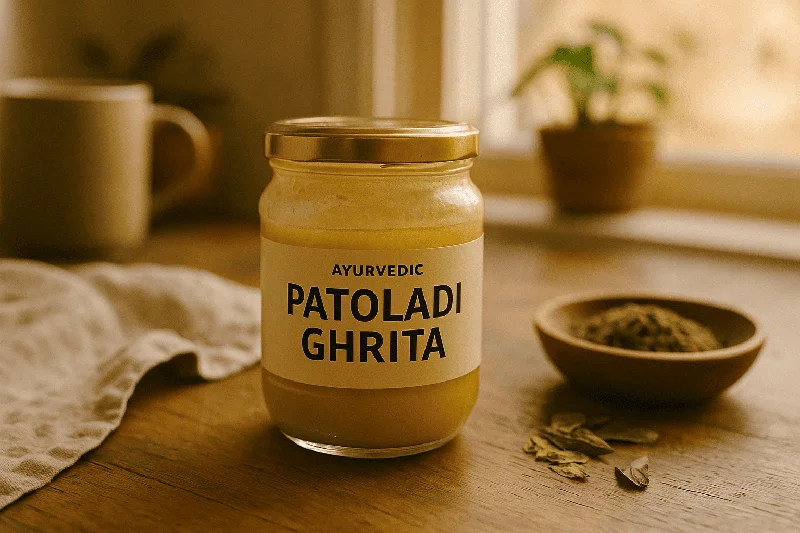
Patoladi Ghrita is a classical Ayurvedic medicated ghee (ghrita) formulation primarily used to treat chronic skin diseases, eye disorders, and ENT conditions. Described in ancient texts like Ashtanga Hridayam (Uttarasthana 13/6-9), this preparation combines cow's ghee with bitter herbs — most notably Patola (Trichosanthes dioica) — to pacify aggravated Pitta and Kapha doshas. If you've been searching for a comprehensive, evidence-based guide on this formulation, you're in the right place. This article covers everything from its ingredients and pharmacological rationale to step-by-step preparation, dosage protocols, comparisons with similar formulations, and safety considerations.
What Is Patoladi Ghrita?
Definition & Ayurvedic Classification
- Patoladi Ghrita belongs to the Sneha Kalpana (medicated fat preparations) category of Ayurvedic pharmacy.
- The name breaks down simply: "Patoladi" means "beginning with Patola" (pointed gourd), and "Ghrita" means clarified butter or ghee. In Ayurvedic pharmacology, ghrita serves as the ideal lipid medium for extracting and delivering fat-soluble phytochemicals from medicinal herbs deep into the body's tissues (dhatus).
This formulation is classified as a Tikta Ghrita — a bitter ghee preparation. Bitter taste (tikta rasa) is considered the most effective rasa for purifying blood (rakta dhatu), clearing skin, and reducing inflammatory conditions driven by Pitta dosha. The ghee base itself is sweet (madhura rasa), cooling (sheeta virya), and acts as a yogavahi — a substance that carries the properties of other herbs into the body without losing its own therapeutic qualities.
Historical Origins & Classical References
The primary reference for Patoladi Ghrita appears in Ashtanga Hridayam, Uttarasthana, Chapter 13, Verses 6-9, authored by Acharya Vagbhata. This chapter deals specifically with eye diseases (Netra Roga Chikitsa), where the formulation is prescribed for inflammatory and infectious conditions of the eyes.
However, Patoladi Ghrita is not confined to a single text.
Additional references appear in:
- Charaka Samhita — where variations are described in the context of Kushtha Chikitsa (skin disease management)
- Vangasena Samhita — with a slightly different herb composition
- Gadanigraha — mentioning its use in complex fever (Jwara) with skin manifestations
The fact that multiple classical authors included this formulation underscores its clinical importance across centuries of Ayurvedic practice.
Variations of Patoladi Ghrita Across Classical Texts
One detail that most resources miss entirely: there isn't just one Patoladi Ghrita. At least five distinct formulations carry this name across different Samhitas. The differences lie in the number and type of herbs used, proportions, and specific indications.
| Text | Key Distinguishing Herbs | Primary Indication |
|---|---|---|
| Ashtanga Hridayam (Uttarasthana 13) | Patola, Nimba, Triphala, Bhunimba, Draksha | Eye diseases, skin disorders |
| Charaka Samhita (Chikitsa Sthana) | Patola, Chandana, Musta, Pippali | Kushtha (chronic dermatoses) |
| Vangasena Samhita | Patola, Katuka, Guduchi, Yashtimadhu | Fever with skin eruptions |
| Gadanigraha | Patola, Nimba, Haridra, Daruharidra | Abscess, non-healing wounds |
| Sharangadhara Samhita (general reference) | Patola, Kantakari, Triphala | Pitta-Kapha disorders |
When purchasing commercially available Patoladi Ghrita, the Ashtanga Hridayam version is the most commonly manufactured by companies like Kottakkal Arya Vaidya Sala, Sitaram Ayurveda, and Vaidyaratnam. Always check the label for the specific textual reference.
Ingredients of Patoladi Ghrita
Decoction Herbs (Kashaya Dravya)
The following herbs are used to prepare the decoction (kashaya) in the standard Ashtanga Hridayam formulation:
| Sanskrit Name | Botanical Name | Part Used | Key Property |
|---|---|---|---|
| Patola | Trichosanthes dioica | Leaves | Tikta (bitter), antipyretic, anti-inflammatory |
| Nimba | Azadirachta indica (Neem) | Bark/Leaves | Blood purifier, antimicrobial |
| Triphala (Haritaki, Vibhitaki, Amalaki) | Terminalia chebula, T. bellirica, Emblica officinalis | Fruit | Tridosha balancing, antioxidant, mild laxative |
| Bhunimba (Kirata Tikta) | Swertia chirata | Whole plant | Intensely bitter, hepatoprotective |
| Draksha | Vitis vinifera | Dried fruit | Madhura (sweet), nutritive, balances excess bitterness |
| Chandana | Santalum album | Heartwood | Cooling, anti-inflammatory, pitta-shamaka |
| Musta | Cyperus rotundus | Rhizome | Digestive, anti-inflammatory |
Paste Herbs (Kalka Dravya)
The kalka (fine paste) typically includes smaller quantities of the same herbs — primarily Patola, Nimba, and Triphala — ground fresh.
Some formulations add:
- Pippali (Piper longum) — bioavailability enhancer
- Haridra (Curcuma longa) — potent anti-inflammatory
- Daruharidra (Berberis aristata) — antimicrobial, particularly for eye infections
Base Ingredient: Cow's Ghee
- Cow's ghee (Go-Ghrita) serves as the lipid base.
- According to Ayurvedic pharmacology, old ghee (Purana Ghrita — aged 1+ years) is even more effective for skin diseases and eye disorders due to enhanced penetrating ability. A 2011 study published in the Journal of Ayurveda and Integrative Medicine confirmed that ghee preparations increase the bioavailability of lipophilic herbal compounds by 2-3x compared to water-based decoctions.
Role & Pharmacological Action of Each Key Ingredient
- This is where the genius of the formulation becomes clear.
- Each herb isn't randomly selected — they work synergistically:
Patola serves as the lead herb (pradhana dravya). It is the primary Pitta-Kapha pacifier, with documented anti-inflammatory, antimicrobial, and wound-healing properties. A 2016 study in the International Journal of Pharmaceutical Sciences and Research demonstrated significant anti-inflammatory activity of Trichosanthes dioica leaf extract in animal models. Nimba (Neem) amplifies the antimicrobial spectrum. It targets bacterial, fungal, and parasitic skin infections. This is the herb that gives Patoladi Ghrita its particular potency against infected eczema, non-healing ulcers, and purulent eye conditions. Triphala acts as the balancing triad. Haritaki addresses Vata component of skin diseases (dryness, cracking), Vibhitaki handles Kapha (oozing, swelling), and Amalaki provides antioxidant protection and vitamin C for tissue repair. Bhunimba provides hepatoprotective support — critical because Ayurveda considers liver dysfunction (Yakrit Vikara) a root cause of many chronic skin conditions. By supporting liver function, the formulation addresses the disease at its origin rather than just treating symptoms. Draksha serves a crucial but often overlooked role: it moderates the intensely bitter nature of the other herbs, making the formulation tolerable for internal consumption while adding its own nutritive and mild laxative properties.
Method of Preparation (Sneha Paka Vidhi)
No competitor provides a truly complete preparation guide. Here's the detailed process based on Sharangadhara Samhita's guidelines for Ghrita preparation.
Proportions & Measurements
The standard Sneha Kalpana ratio for Ghrita preparations is:
- Kalka (paste): 1 part
- Sneha (ghee): 4 parts
- Drava (liquid/decoction): 16 parts
For practical home preparation: if you use 100g of kalka paste, you need 400ml of cow's ghee and 1600ml of herbal decoction.
Step-by-Step Preparation Process
- 1.Prepare the Kashaya (decoction): Take coarsely powdered Patola, Nimba, Triphala, Bhunimba, Draksha, Chandana, and Musta. Add 16 parts water to 1 part herb mix. Boil on medium flame and reduce to 1/4th of the original volume. Strain through muslin cloth.
- 2.Prepare the Kalka (paste): Grind the same herbs (or the specific kalka herbs) into a smooth, fine paste using a stone mortar (silbatta) or wet grinder. The paste should have no coarse particles.
- 3.Combine and cook: In a thick-bottomed stainless steel or bronze vessel, add the cow's ghee. Heat gently until melted. Add the kalka paste first, stirring continuously on low-medium heat for 5-7 minutes until the raw smell diminishes. Then slowly add the strained kashaya.
- 4.Cook on medium-low heat — this is the most important step. Maintain temperature between 100-110°C. Stir every 10-15 minutes. The total cooking time ranges from 4 to 8 hours depending on volume.
Monitor for Siddha Lakshana (signs of completion).
Signs of Proper Preparation (Siddha Lakshana)
This is perhaps the most critical knowledge for anyone attempting home preparation — and no competitor covers it adequately:
- Varti Lakshana: When a small amount of kalka is rolled between fingers, it forms a smooth, non-sticky wick (varti) that holds its shape
- Shabda Rahita: When a drop of the ghrita is placed on fire, it burns without crackling sound — indicating all moisture has evaporated
- Gandha: The ghee develops a characteristic pleasant herbal aroma, distinct from the raw smell of initial cooking
- Varna: The ghee takes on a greenish-golden hue (specific to Patoladi Ghrita due to Patola and Nimba)
- Phenodgama Abhava: No foam appears on the surface — all water content has been driven off
After confirming these signs, remove from heat, allow to cool slightly, and filter through clean muslin cloth while still warm. Store in glass or food-grade container.
Health Benefits & Therapeutic Uses
Skin Diseases (Kushtha, Abscess, Eczema, Psoriasis)
This is the primary indication.
Patoladi Ghrita addresses a wide spectrum of skin conditions:
- Vicharchika (Eczema): Both internal consumption and external application reduce itching, oozing, and skin thickening. The Nimba and Patola combination provides antimicrobial and anti-inflammatory action simultaneously.
- Kitibha (Psoriasis): The tikta rasa (bitter taste) profile of this ghrita directly counteracts the Vata-Kapha pathology underlying psoriatic plaques. External application softens scales while internal use addresses the autoimmune inflammatory cascade.
- Vidradhi (Abscess): Particularly effective for internal abscesses (Abhyantara Vidradhi) where surgical drainage isn't feasible.
- Non-healing wounds: The ghee base provides an occlusive, moisturizing environment while herbs combat infection.
A clinical observation worth noting: in Ayurvedic practice, Patoladi Ghrita for skin conditions is rarely used alone. It's typically part of a comprehensive protocol including Shodhana (purification), dietary modifications (Pathya), and complementary internal medicines.
Eye Disorders — Patoladi Ghrita for Eyes
The Ashtanga Hridayam specifically prescribes this formulation for Netra Roga (eye diseases):
Conjunctivitis (Abhishyanda)
- Both bacterial and allergic conjunctivitis respond to Patoladi Ghrita when applied as Tarpana — a procedure where ghee is retained around the eyes using a dough ring made from black gram flour.
- Duration: 15-20 minutes per session, typically for 7 consecutive days.
Night Blindness (Naktandhya)
- Internal consumption of Patoladi Ghrita (1-2 teaspoons daily) combined with Vitamin A-rich diet shows supportive results.
- The Triphala component — especially Amalaki — provides natural vitamin C and antioxidants that protect retinal cells.
Inflammatory Eye Conditions
For conditions like episcleritis, anterior uveitis, and blepharitis, the formulation's anti-inflammatory properties are beneficial as an adjunct therapy. Always consult an ophthalmologist for serious eye conditions alongside Ayurvedic treatment.
ENT Disorders
Patoladi Ghrita is used for Nasya (nasal administration) in select ENT conditions including chronic sinusitis, nasal polyps (early stage), and Pratishyaya (chronic rhinitis). The dose for Nasya is typically 2-4 drops in each nostril, administered in the morning on an empty stomach.
Fever & Infections
In cases of Jwara (fever) — particularly chronic or recurring fevers with skin manifestations — Patoladi Ghrita helps through its antipyretic herbs (Patola, Nimba, Bhunimba). It is especially useful in Pitta-type fevers characterized by burning sensation, yellowish discoloration of skin, and irritability.
Digestive Health Support
- The bitter herbs in Patoladi Ghrita stimulate Agni (digestive fire) and promote healthy bile secretion. This makes it supportive for conditions like Kamala (jaundice), Yakrit Vikara (liver disorders), and sluggish digestion related to Pitta-Kapha imbalance.
- However, this is a secondary indication — dedicated digestive formulations would be more appropriate for primary GI complaints.
Use in Panchakarma (Snehana / Snehakarma)
Patoladi Ghrita serves as an excellent choice for Snehapana (internal oleation) as a preparatory procedure before Virechana (therapeutic purgation).
The protocol involves increasing doses over 3-7 days:
- Day 1: 30ml on empty stomach
- Day 2: 60ml
- Day 3: 90ml
- Continue until Samyak Snigdha Lakshana (proper oleation signs) appear
This must only be done under direct supervision of a qualified Ayurvedic physician. Self-administered Snehapana can cause serious complications.
Patoladi Ghrita vs Other Tikta Ghritas: How to Choose
This comparison is something you won't find anywhere else. There are several "bitter ghee" formulations in Ayurveda, and knowing which one to use — and when — matters significantly.
Comparison with Mahatiktakam Ghritam
| Parameter | Patoladi Ghrita | Mahatiktakam Ghritam |
|---|---|---|
| Number of herbs | 7-12 herbs | 20+ herbs |
| Primary indication | Eye diseases + skin diseases | Predominantly skin diseases |
| Potency | Moderate | Strong (Tikshna) |
| Suitability for eyes | Excellent (Tarpana-grade) | Generally not used for Tarpana |
| Classical reference | Ashtanga Hridayam | Ashtanga Hridayam (Chikitsa Sthana) |
| Best for | Pitta-dominant skin + eye conditions | Deep-seated, chronic Kushtha |
Comparison with Panchatikta Guggulu Ghrita
Panchatikta Guggulu Ghrita contains Guggulu resin, which gives it stronger anti-inflammatory and bone/joint-supporting properties. Choose this over Patoladi Ghrita when the skin condition involves joint pain (psoriatic arthritis) or when there's significant Ama (metabolic toxins) involved. Patoladi Ghrita is gentler and better suited for conditions involving the eyes or when the patient has a delicate constitution.
Comparison with Tiktakam Ghritam
Tiktakam Ghritam is essentially a simpler version with fewer herbs. Think of it as the "basic" tikta ghrita, while Patoladi Ghrita is more specialized. For straightforward Pitta-aggravated skin rashes, Tiktakam Ghritam suffices. For complex presentations involving eyes, chronic dermatoses, or infections, Patoladi Ghrita's broader herbal spectrum is preferable.
Don't wait or self medicate. Start chat with Doctor NOW
Dosage of Patoladi Ghrita
Internal Administration
| Patient Group | Dose | Frequency | Anupana (Vehicle) |
|---|---|---|---|
| Adults (general) | 5-10ml (1-2 tsp) | Once or twice daily | Warm water or warm milk |
| Adults (Snehapana) | 30-90ml (escalating) | Once daily, early morning | Warm water (sips) |
| Children (5-12 years) | 2.5-5ml (½-1 tsp) | Once daily | Warm milk |
| Children (under 5) | Not recommended without physician supervision | — | — |
Best time to take: On an empty stomach, preferably 30 minutes before meals. For skin conditions, morning administration aligns with Pitta kala.
External Application
For skin lesions: Apply thin layer directly on affected area after gentle cleansing. Can be left overnight.
For eye procedures (Tarpana, Aschotana): Must only be administered by a trained Ayurvedic practitioner.
The Role of Anupana
Anupana (co-drink or vehicle) significantly impacts efficacy:
- Warm water: Best for general use, fever, and detoxification
- Warm milk: Preferred for eye disorders and conditions with Vata involvement
- Honey (in small quantity): Enhances absorption for Kapha-dominant conditions.
- Note — never mix honey with ghee in equal proportions, as Ayurveda considers this combination toxic (Viruddha Ahara)
Seasonality of Intake (Ritucharya)
Ghrita preparations are best absorbed during Sharad Ritu (autumn) and Vasanta Ritu (spring) according to Charaka Samhita's Ritucharya guidelines. These are Pitta-aggravation seasons when tikta ghrita formulations are most needed and most effective. Avoid heavy ghee intake during Varsha Ritu (monsoon) when Agni is naturally weak.
Side Effects, Precautions & Drug Interactions
Known Side Effects
Patoladi Ghrita is generally well-tolerated when taken in recommended doses.
Potential side effects include:
- Loose stools or mild diarrhea — especially in higher doses or in individuals with weak Agni
- Nausea — due to the intense bitter taste; taking with warm water helps
- Increased cholesterol — ghee-based preparations can raise lipid levels in susceptible individuals
Contraindications
- Diabetes mellitus: Ghee preparations increase caloric load and may interfere with glycemic control. Use only under medical supervision with dose adjustments.
- Hyperlipidemia / Dyslipidemia: Avoid in patients with elevated cholesterol or triglycerides unless part of a monitored Panchakarma protocol.
- Severe Kapha disorders: Obesity, Kapha-type asthma, acute congestion
- Pregnancy: Not recommended without explicit guidance from an Ayurvedic gynecologist
- Acute diarrhea or Ama conditions: Ghee is contraindicated when Ama (undigested metabolic waste) is predominant
Interaction with Modern Medications
This is a critical gap no other resource addresses. While formal drug-interaction studies specifically on Patoladi Ghrita are lacking, pharmacological reasoning suggests caution with:
- Statins and lipid-lowering drugs: Ghee base may counteract their effects
- Anti-diabetic medications: May require dose adjustment due to caloric content
- Immunosuppressants: Neem (Nimba) has immunomodulatory effects that could theoretically interact
- Anticoagulants (Warfarin, etc.): Some component herbs may have mild blood-thinning properties
Always inform your allopathic physician if you are taking Ayurvedic ghrita preparations alongside conventional medications.
Shelf Life & Storage
Properly prepared Ghrita preparations have a shelf life of 16 months according to Ayurvedic Pharmacopoeia of India (API). However, commercially manufactured products with proper quality control may last up to 2-3 years.
Store in:
- Airtight glass or food-grade container
- Cool, dry place away from direct sunlight
- Avoid using wet spoons — moisture contamination is the primary cause of spoilage
- Interestingly, Purana Ghrita (old ghee) is considered therapeutically superior — some practitioners age ghee for 5-10 years for enhanced neurological and skin benefits
Choosing a Quality Patoladi Ghrita Product
When purchasing commercially manufactured Patoladi Ghrita, look for:
- 1.GMP certification — ensures standardized manufacturing
- 2.Specific classical reference on label — confirms which formulation variant you're getting
- 3.Batch number and manufacturing date — freshness matters
- 4.FSSAI license — mandatory for Indian market
- 5.Reputable manufacturers — Kottakkal Arya Vaidya Sala, Sitaram Ayurveda, Vaidyaratnam, and Nagarjuna are among the established brands
Avoid products that don't disclose their complete ingredient list or classical reference.
Frequently Asked Questions (FAQ)
How long does it take to see results from Patoladi Ghrita?
For chronic skin conditions, most Ayurvedic practitioners report noticeable improvement within 4-6 weeks of consistent internal use. For eye conditions treated with Tarpana, results may appear sooner — within 1-2 weeks. Acute conditions like mild conjunctivitis may respond within 3-5 days. Individual results vary based on disease severity, constitution (Prakriti), and adherence to dietary guidelines.
Can I apply Patoladi Ghrita daily?
Yes, for external skin application, daily use is generally safe. Apply a thin layer on affected areas once or twice daily. For eye application (Tarpana), daily use is only recommended for the duration prescribed by your practitioner — typically 7-14 days per course, not indefinitely.
Is Patoladi Ghrita safe for children?
- For children above 5 years, Patoladi Ghrita can be given in reduced doses (½ to 1 teaspoon) under medical guidance. For children under 5, it should only be administered under direct supervision of a qualified Ayurvedic pediatrician (Kaumarabhritya specialist).
- The bitter taste can be challenging — mixing with warm milk and a small amount of jaggery helps with palatability.
Can Patoladi Ghrita be taken with other supplements?
Generally, yes. It combines well with other Ayurvedic formulations like Kaishor Guggulu (for skin + joint conditions), Gandhaka Rasayana (for skin infections), or Triphala Churna (for digestive support). However, avoid combining with other ghee-based preparations simultaneously, as excessive ghee intake can overwhelm digestion. Space different Sneha preparations at least 4-6 hours apart.
Are there any dietary restrictions while taking Patoladi Ghrita?
- Ayurveda recommends following a Pathya (wholesome diet) during treatment.
- Specifically avoid: excessive sour foods, fermented items, curd/yogurt at night, heavy non-vegetarian food, and incompatible food combinations (Viruddha Ahara). Favor bitter vegetables (bitter gourd, drumstick leaves), light grains (old rice, barley), and warm cooked meals. Avoid cold water and cold foods immediately after taking ghrita — they impair absorption.
What is the use of Patola Kera Ghrutham?
Patola Kera Ghrutham is a related but distinct formulation where coconut oil (Kera Taila) partially or fully replaces ghee as the base medium. It is more commonly used in Kerala Ayurvedic tradition for external application on skin diseases, particularly in humid climates where heavy ghee application can be uncomfortable. The therapeutic herbs remain similar.
Which classical reference (Shloka) mentions Patoladi Ghrita?
The most widely cited shloka is from Ashtanga Hridayam, Uttarasthana, Chapter 13, Verses 6-9:
"Patoladi Ghritam prokta, Kushtha Nethraroganut..."
This verse describes it as a formulation that destroys Kushtha (skin diseases) and Netra Roga (eye diseases). The complete Sanskrit shloka with commentary is available in standard editions of Ashtanga Hridayam with Sarvangasundara and Ayurveda Rasayana commentaries.
Conclusion
- Patoladi Ghrita stands as one of Ayurveda's most elegant formulations — a bitter ghee that addresses skin diseases, eye disorders, and inflammatory conditions through a carefully designed synergy of herbs.
- What makes it particularly valuable is its versatility: it works internally as a medicine, externally as a topical application, as a Panchakarma preparation medium, and even as a specialized ophthalmic treatment.
Whether you're dealing with chronic eczema, recurrent eye inflammation, or simply exploring Ayurvedic approaches to skin health — this time-tested formulation deserves consideration. However, remember that Ayurvedic treatment is most effective when personalized. Consult a qualified Ayurvedic practitioner who can assess your Prakriti (constitution), Vikriti (current imbalance), and design a comprehensive treatment protocol where Patoladi Ghrita plays its appropriate role.
The information in this article is for educational purposes and should not replace professional medical advice. Always consult a qualified Ayurvedic physician before starting any new medication or herbal formulation.
Scientific Sources
- Bangladeshi medicinal plant dataset — Borkatulla B et al., 2023, Data in brief
- Therapeutic Applications of Neem (Azadirachta indica): A Narrative Review — Mehnaz S et al., 2024, Advances in mind-body medicine
- The Antimicrobial Potential of the Neem Tree Azadirachta indica — Wylie MR et al., 2022, Frontiers in pharmacology
- Neem (Azadirachta indica): An indian traditional panacea with modern molecular basis — Gupta SC et al., 2017, Phytomedicine : international journal of phytotherapy and phytopharmacology
- Anti-COVID-19 potential of Azadirachta indica (Neem) leaf extract — Eze MO et al., 2022, Scientific African
- Ulcerative colitis: molecular insights and intervention therapy — Liang Y et al., 2024, Molecular biomedicine
- Turmeric and Curcumin: From Traditional to Modern Medicine — Akaberi M et al., 2021, Advances in experimental medicine and biology
- Curcumin (Turmeric) and cancer — Unlu A et al., 2016, Journal of B.U.ON. : official journal of the Balkan Union of Oncology
- The Essential Medicinal Chemistry of Curcumin — Nelson KM et al., 2017, Journal of medicinal chemistry
- Neuroprotective Herbs for the Management of Alzheimer's Disease — Gregory J et al., 2021, Biomolecules
Questions from users
What are the contraindications for using Patoladi Ghrita in treatment?
Client_70ddbb
26 days ago
Patoladi Ghrita should be used cautiously, particularly in individuals with hyperlipidemia or dyslipidemia, as it may worsen cholesterol or triglyceride levels unless used under a monitored Panchakarma protocol. It is also contraindicated for treating severe Kapha disorders such as obesity or Kapha-type asthma due to its oily nature, which could aggravate these conditions. Pregnant women should avoid it unless directed by an Ayurvedic gynecologist. It is not suitable for those with acute diarrhea or when Ama dominates since ghee can further complicate such conditions. Always consult a healthcare provider if you're on other medications to avoid interactions.
What are the potential side effects of using Patoladi Ghrita?
Client_a5543b
35 days ago
When using Patoladi Ghrita, potential side effects can include gastrointestinal issues such as diarrhea, loose stools, and abdominal discomfort. These effects are generally due to improper usage or self-administration of Snehapana (therapeutic ghee ingestion) without professional guidance. It is crucial to follow dosage instructions carefully and consult with an Ayurvedic doctor to mitigate risks. Avoid using Patoladi Ghrita if you have a history of ghee intolerance. If side effects persist or worsen, seek medical advice promptly.
How does Patoladi Ghrita interact with other skin treatments?
Client_f4dbef
45 days ago
Patoladi Ghrita can be used alongside other skin treatments, but it's crucial to avoid combining it with other ghee-based products at the same time. This is to prevent overwhelming the digestive system with excessive ghee intake. Patoladi Ghrita is known for targeting bacterial, fungal, and parasitic skin infections, and it enhances the absorption of other medicinal herbs due to its yogavahi or carrier properties. Watch for any signs of skin irritation or digestive issues, and consult a healthcare professional if symptoms persist or worsen.
How to prepare Patoladi Ghrita at home for skin issues?
Client_a75432
55 days ago
Patoladi Ghrita can be prepared at home but requires specific ingredients and careful attention to detail. To make it, you'll need ingredients like Patola (pointed gourd), clarified butter (ghee), and other herbs. The typical process involves mixing one part of the herbal blend with 16 parts of water, boiling the mixture until only the ghee remains. This preparation is used to treat skin conditions due to its anti-inflammatory and antimicrobial properties. Watch out for any allergic reactions or worsening symptoms and consult a healthcare provider for persistent or severe skin issues.
Is it safe to use Patoladi Ghrita during pregnancy for skin issues?
Client_b35d82
64 days ago
It's great you're seeking safe options during pregnancy! Patoladi Ghrita is typically used for skin issues related to Pitta imbalance. But during pregnancy, it's super important to consult with an Ayurvedic practitioner first. They can guide you based on your unique Prakriti and any imbalances. Stay safe!
Can Patoladi Ghrita be used for treating sunburn, and how should I apply it?
Client_6afc9c
74 days ago
Patoladi Ghrita can definitely help with sunburn due to its anti-inflammatory properties. You can apply a thin layer gently over the affected area several times a day. But remember, everyone's prakriti (body constitution) is different, so if you notice any irritation, it’s better to stop & consult an ayurvedic practitioner. Stay hydrated too! :)
What is the difference between Patoladi Ghrita and Patola Kera Ghrutham in usage?
Client_6f75e1
83 days ago
Patoladi Ghrita and Patola Kera Ghrutham are both for purifying and reducing inflammation, but they differ in their base and uses. Patoladi Ghrita uses ghee, making it gentler especially for eye conditions or delicate constitutions. Patola Kera Ghrutham, with coconut oil, may be better for people with oily skin or in warmer climates. Depending on your prakriti, one might suit you better, so it's good to check in with an Ayurvedic practitioner!
Can Patoladi Ghrita help with joint pain relief, and how should I apply it?
Client_96abc5
94 days ago
Patoladi Ghrita isn't directly linked to joint pain relief, it's more for skin and internal nourishment. For joint issues, you might look into applying Mahanarayan oil or trying formulas w/turmeric or ashwagandha. But hey, always worth checking with an Ayurvedic practitioner to pinpoint what's best for your unique situation, ya know?
What is Patoladi Ghrita and how is it traditionally used in Ayurvedic medicine?
Client_97e8d4
104 days ago
Patoladi Ghrita is a blend of ghee (clarified butter) with herbs like Patola, Neem, and Turmeric. Traditionally, it's used to soothe digestive issues and support metabolism due to its anti-inflammatory properties. It can be taken with warm water or milk, but always best to check with an Ayurvedic practitioner, as your dosha type and constitution might influence what's best for you!
What is the recommended dosage of Patoladi Ghrita for digestion and general health?
Client_83935c
114 days ago
For digestion and general health, you can take 1 to 2 teaspoons of Patoladi Ghrita daily, preferably with warm milk or water. But remember, it's really important to chat with a healthcare pro, especially if you got any health stuff going on or you're pregnant or taking meds. Everyone's different so getting that advice is key!
Related articles

Ear, Nose, and Throat Disorders
Natural Ways to Reduce Acoustic Neuroma
Understanding the basics of acoustic neuroma is essential for exploring natural remedies and how they can be integrated into daily life.
3,714
Ear, Nose, and Throat Disorders
Parnayavani – Ayurvedic Herb for Digestion, Detoxification, and Overall Health
Explore the benefits and uses of Parnayavani, a valuable Ayurvedic herb known for its role in improving digestion, detoxifying the body, and supporting overall health and vitality.
2,555

Ear, Nose, and Throat Disorders
Talisadi Churna: Ayurvedic Remedy for Dry Cough and Respiratory Health
Discover Talisadi Churna for dry cough, its benefits, proper dosage, side effects, and the scientific research supporting its use as an effective Ayurvedic remedy.
4,052
Ear, Nose, and Throat Disorders
Karnapooranam – Natural Ayurvedic Relief for Ear Health
Discover Karnapooranam, an Ayurvedic approach to ear health. Learn about its benefits, techniques, and traditional practices for holistic ear care.
3,258

Ear, Nose, and Throat Disorders
Best Ayurvedic Nasal Drops for Sinusitis: Natural Remedies & Benefits
Discover the best Ayurvedic nasal drops for sinusitis. Learn how Anu Taila, Shadbindu Taila, and other herbal oils can alleviate sinusitis symptoms naturally. Explore benefits, usage tips, and expert insights based on traditional Ayurvedic wisdom.
7,172
Ear, Nose, and Throat Disorders
Ayurvedic Tips To Improve Hearing
In contemporary times, hearing loss has become increasingly prevalent, often attributed to factors like loud noise exposure, medications, infections, or the natural aging process.
5,417
Ear, Nose, and Throat Disorders
Alopecia Areata Ayurvedic Treatment – Natural Remedies for Hair Regrowth & Scalp Health
Explore holistic Ayurvedic treatment for alopecia areata. Discover natural remedies that detoxify, balance doshas, and nourish the scalp to promote hair regrowth and scalp health.
4,058
Ear, Nose, and Throat Disorders
Karpuradi Vati Revealed: Detox & Rejuvenate with Ancient Ayurvedic Wisdom!
Unlock the secrets of Karpuradi Vati for detoxification and rejuvenation. Discover how this ancient Ayurvedic tablet can transform your wellness journey.
2,463
Ear, Nose, and Throat Disorders
Tundikeri: A Comprehensive Guide to Its Medicinal Uses
Explore Tundikeri’s origins, health benefits, scientific research, and practical uses. Learn how this herbal remedy supports well-being and cautious usage.
2,384

Ear, Nose, and Throat Disorders
AYURVEDIC REMEDIES FOR SINUSITIS
Sinusitis, a condition characterized by inflammation of the sinus cavities, can be a persistent source of discomfort for many. From the pressure in the forehead to the congestion in the nasal passages, its symptoms can significantly impact one’s quality o
4,361
Related consultations on the topic
Legal
Additional Documents
© 2024 Ask Ayurveda. All rights reserved.