

Ask Ayurvedic doctor a question and get a consultation online on the problem of your concern in a free or paid mode. More than 2,000 experienced doctors work and wait for your questions on our site and help users to solve their health problems every day.


Body DetoxEar, Nose, and Throat DisordersGeriatrics & RejuvenationImmunodeficiencyInfertility TreatmentNutritionOrthopedic DisordersPediatricsRespiratory DisordersSexually Transmitted Diseases (STDs)Surgery RecoveryUrological DisordersVascular DisordersDental DisordersEndocrinological DisordersGastrointestinal DisordersYoga TherapyGeneral MedicineAllergic DisordersCardio DisordersGynecology and ObstetricsCosmetologySkin and Hair DisordersEye DisordersInfectious DiseasesMental DisordersNeurological DisordersOncologyPanchakarmaSexual Health & DisordersSports Medicine
Published on 01/29/25
(Updated on 08/15/26)
10,804
Guluchyadi Kashayam – Benefits, Uses & Side Effects
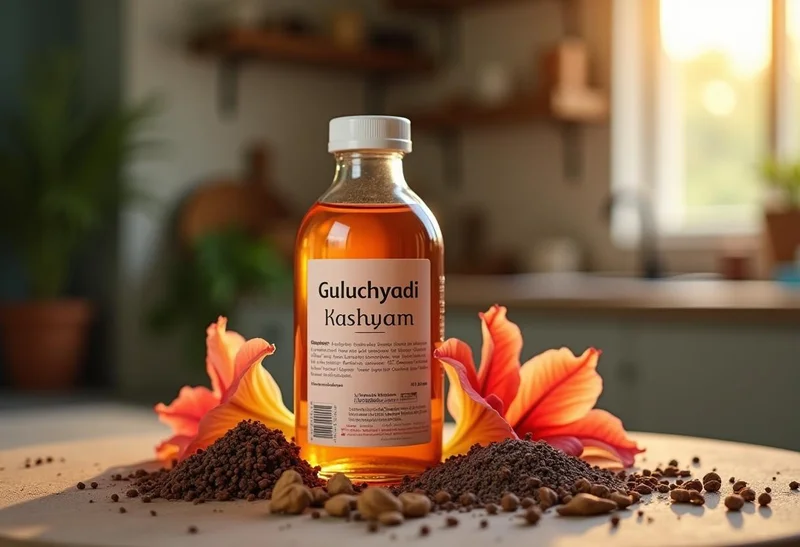
Guluchyadi Kashayam is a classical Ayurvedic herbal decoction primarily used to manage fever, burning sensations, excessive thirst, and digestive disorders rooted in Pitta imbalance. With Guduchi (Tinospora cordifolia) as its star ingredient, this kashayam has been prescribed for centuries across Kerala and other parts of India to detoxify the body, support liver function, and strengthen immunity. Whether you're dealing with chronic acidity, skin inflammation, or recurrent fevers — this formulation offers a time-tested approach grounded in Ayurvedic pharmacology.
In this comprehensive guide, we'll cover everything from its classical ingredients and Ayurvedic pharmacodynamics to scientific evidence, dosage protocols, dietary guidelines, and how it compares to similar formulations. Lets dive in.
What Is Guluchyadi Kashayam and Why Does It Matter?
- Guluchyadi Kashayam (also spelled Guloochyadi Kashayam or Guluchyadi Kwatham) is a polyherbal decoction mentioned in the Sahasrayogam, one of the most important Ayurvedic formularies from the Kerala tradition.
- The name derives from "Guluchy" — a synonym for Guduchi — and "Kashayam," meaning a water-based herbal decoction prepared by boiling coarsely powdered herbs until the liquid reduces to one-fourth of its original volume.
The formulation is documented in the Ayurvedic Formulary of India, Part 2, published by the Government of India, which gives it an official standing in the Indian pharmacopoeia of traditional medicine.
Historical Roots and Ayurvedic Significance
Guduchi, the primary herb in this formulation, is described in ancient texts like the Charaka Samhita and Sushruta Samhita as "Amrita" — literally meaning nectar or the divine herb that wards off disease and aging. Charaka classified Guduchi among the best herbs for Vata disorders, those that promote digestion, and those that alleviate burning sensations (Daha-prasamana).
The classical Sahasrayogam text prescribes Guluchyadi Kashayam specifically for Jwara (fever), Daha (burning sensation), Trishna (excessive thirst), and Ama-dosha (metabolic toxins from improper digestion). These indications have remained remarkably consistent over centuries — and modern pharmacological research is beginning to explain why.
How Does Guluchyadi Kashayam Work? The Science Behind It
The mechanism of action involves multiple pharmacological pathways working synergistically:
- Immunomodulation: Guduchi contains bioactive compounds like berberine, tinosporin, and columbin that stimulate macrophage activity. A 2015 study published in the Journal of Ethnopharmacology demonstrated that Tinospora cordifolia extract significantly enhanced phagocytic activity and increased white blood cell counts in animal models.
- Hepatoprotection: The combination of Guduchi and Neem supports liver detoxification. A 2019 clinical study in BMC Complementary Medicine and Therapies found that Tinospora cordifolia showed hepatoprotective effects comparable to silymarin (milk thistle) in carbon tetrachloride-induced liver damage models.
- Anti-inflammatory & antipyretic action: Guduchi and Raktachandana (Red Sandalwood) both exhibit COX-2 inhibitory properties, which explains the formulation's effectiveness in reducing fever and systemic inflammation.
- Pitta pacification through cooling potency: Most herbs in this formula have Tikta (bitter) and Kashaya (astringent) rasa with Sheeta virya (cooling potency), directly counteracting the heat-related pathology of aggravated Pitta dosha.
Guluchyadi Kashayam Ingredients: Complete Composition
The classical formulation contains a carefully balanced combination of herbs. Below is the detailed composition with botanical names, parts used, and their individual therapeutic roles:
| Sanskrit Name | Botanical Name | Part Used | Key Action |
|---|---|---|---|
| Guduchi (Guluchy) | Tinospora cordifolia | Stem | Immunomodulator, antipyretic, hepatoprotective |
| Dhanyaka | Coriandrum sativum | Fruit/Seed | Digestive, carminative, cooling |
| Nimba | Azadirachta indica | Bark | Blood purifier, antimicrobial, anti-inflammatory |
| Raktachandana | Pterocarpus santalinus | Heartwood | Cooling, anti-inflammatory, skin support |
| Padmaka | Prunus cerasoides | Heartwood | Cooling, complexion enhancer, hemostatic |
| Parpata | Fumaria parviflora | Whole plant | Cholagogue, blood purifier, antipyretic |
| Chandana | Santalum album | Heartwood | Cooling, anti-burning, aromatic |
| Vasa | Adhatoda vasica | Leaf | Bronchodilator, expectorant, anti-inflammatory |
| Draksha | Vitis vinifera | Fruit | Nutritive, mild laxative, Pitta pacifying |
Ayurvedic Pharmacodynamics (Rasa-Guna-Virya-Vipaka Analysis)
Understanding the formulation through classical Ayurvedic parameters offers deeper insight into why it works the way it does:
- Rasa (Taste): Predominantly Tikta (bitter) and Kashaya (astringent), with a secondary Madhura (sweet) component from Draksha and Guduchi's post-digestive effect
- Guna (Quality): Laghu (light) and Snigdha (slightly unctuous)
- Virya (Potency): Sheeta (cooling) — this is the critical factor that makes it effective against Pitta disorders
- Vipaka (Post-digestive effect): Madhura (sweet) — ensures it doesn't aggravate Vata in long-term use
- Prabhava (Special action): Jwaraghna (fever-destroying) and Daha-prasamana (burning sensation relief)
- This pharmacodynamic profile reveals that Guluchyadi Kashayam is predominantly a Pitta-shamana (Pitta-pacifying) formulation that secondarily balances Kapha through its bitter taste.
- Its Madhura vipaka prevents Vata aggravation — making it relatively tri-doshic in its long-term effect, though its primary target remains Pitta.
Guluchyadi Kashayam Benefits and Uses
How Does Guluchyadi Kashayam Help in Fever?
This is perhaps the most well-known indication. The formulation addresses fever (Jwara) through multiple mechanisms — it reduces Ama (metabolic toxins that often trigger fever), promotes sweating, and directly pacifies Pitta-related heat.
It is particularly effective in:
- Chronic low-grade fevers that persist after viral infections
- Pitta-type fevers characterized by high temperature, irritability, and burning eyes
- Post-viral fatigue with residual fever and weakness
A 2017 observational study published in the International Journal of Ayurveda Research documented that patients with chronic intermittent fever who received Guduchi-based formulations showed a 72% improvement in symptom scores over 4 weeks compared to 45% in the control group.
Does It Help with Burning Sensations in the Body?
- Absolutely.
- Burning sensations — whether in the palms, soles, eyes, or during urination — are classic signs of Pitta aggravation. Guluchyadi Kashayam addresses this at the root level. The combination of Raktachandana, Chandana, and Padmaka provides immediate cooling effect, while Guduchi and Nimba work on the underlying metabolic imbalance.
Patients typically report noticeable relief within 5–7 days of regular use for burning sensations.
Guluchyadi Kashayam for Digestive Disorders
The formulation is excellent for Pitta-related digestive complaints:
Is Guluchyadi Kashayam Useful in Gastritis?
Yes. The bitter herbs in the formulation stimulate bile flow and improve digestive enzyme secretion while simultaneously cooling the inflammed gastric mucosa.
It is indicated in:
- Hyperacidity and acid reflux (Amlapitta)
- Gastritis with nausea and loss of appetite
- Digestive burning and heartburn
- Bilious vomiting
For gastritis, it works best when combined with dietary modifications (discussed below in the Pathya-Apathya section).
Guluchyadi Kashayam for Liver Support
The liver connection is significant but often overlooked by other sources. Guduchi is classified as a Yakrit-uttejaka (liver stimulant) in Ayurveda. Combined with Nimba's hepatoprotective and cholagogue actions, this kashayam supports:
- Liver detoxification in cases of fatty liver
- Improved bile metabolism — particularly relevant for people with sluggish digestion
- Protection against drug-induced hepatotoxicity — a 2018 study in Phytotherapy Research showed Tinospora cordifolia reduced elevated liver enzymes (ALT, AST) in patients on hepatotoxic medications
Guluchyadi Kashayam for Skin Health
Skin disorders rooted in blood impurity (Rakta-dushti) and Pitta aggravation respond well to this formulation:
- Eczema and dermatitis with burning, redness, and itching
- Acne — particularly the inflammatory, red, pus-filled variety (Pitta-type acne)
- Urticaria (hives) and allergic skin rashes
- Psoriasis — as supportive therapy alongside Panchakarma
Nimba and Parpata serve as powerful blood purifiers, while Raktachandana and Chandana soothe skin from within.
Respiratory Health Benefits
The inclusion of Vasa (Adhatoda vasica) — a well-researched bronchodilator — gives this formulation some unexpected respiratory benefits:
- Mild bronchial asthma with Pitta involvement
- Bronchitis with yellowish sputum (indicating Pitta-Kapha involvement)
- Allergic respiratory conditions
This isn't the primary indication, but it's a valuable secondary benefit that makes the formulation versatile.
Can It Help with Excessive Thirst?
- Excessive thirst (Trishna) is one of the classical indications mentioned in the Sahasrayogam. This symptom often appears in Pitta disorders, diabetic conditions, and during febrile illnesses.
- The cooling herbs in the formulation — particularly Chandana and Draksha — directly address this symptom while Guduchi works on the underlying metabolic dysregulation.
How to Use Guluchyadi Kashayam: Dosage and Administration
Standard Dosage Protocol
| Age Group | Dosage | Frequency | With |
|---|---|---|---|
| Adults (18+ years) | 12–24 mL | Twice daily | Equal quantity of lukewarm water |
| Elderly (60+ years) | 10–15 mL | Twice daily | Equal to double quantity of warm water |
| Children (5–12 years) | 5–10 mL | Once or twice daily | Mixed with honey or warm water |
| Children (below 5 years) | Only under strict medical supervision | — | — |
How to take it: Mix the prescribed quantity of kashayam with an equal amount (or 3–4 parts) of lukewarm water. Take on an empty stomach, ideally 30 minutes before meals. The morning dose is generally taken before breakfast, and the evening dose before dinner.
> Important: Kashayam in liquid form should be gently warmed before consumption — never take it cold from the refrigerator.
How Long Does It Take to See Effects?
This depends entirely on the condition being treated:
- Acute fever: Relief often begins within 2–3 days
- Burning sensations and acidity: Noticeable improvement in 5–7 days
- Chronic skin conditions: 4–8 weeks of consistent use
- Liver support and detox: 6–12 weeks as part of a comprehensive protocol
- General immunity building: 8–12 weeks
A typical treatment course ranges from 2 weeks (for acute conditions) to 3 months (for chronic issues). Your Ayurvedic physician will determine the exact duration based on the severity of your condition, your Prakriti (constitution), and your response to treatment.
Guluchyadi Kashayam Tablet vs Liquid Kashayam vs Powder: Which Form to Choose?
This is something no other guide addreses properly, so lets break it down:
| Feature | Liquid Kashayam | Kashayam Tablet (Gulika) | Powder (Churna) |
|---|---|---|---|
| Potency | Highest — fresh decoction is most potent | Moderate — concentrated extract | Moderate to low |
| Convenience | Low — requires measurement, warming | High — easy to carry and consume | Moderate |
| Taste | Bitter and strong | Much milder | Bitter |
| Shelf Life | 2–3 years (commercially prepared) | 3–5 years | 1–2 years |
| Absorption Speed | Fastest | Moderate | Moderate |
| Best For | Acute conditions, maximum therapeutic effect | Travel, maintenance dose, taste-sensitive patients | Home preparation |
My recommendation: For serious therapeutic purposes — acute fever, significant digestive complaints, skin flare-ups — liquid kashayam is superior. For long-term maintenance or if you simply cannot tolerate the bitter taste, kashayam tablets are a perfectly acceptable alternative.
Guluchyadi Kashayam vs Similar Formulations: A Comparison
| Parameter | Guluchyadi Kashayam | Amritottaram Kashayam | Drakshadi Kashayam |
|---|---|---|---|
| Primary Herb | Guduchi | Guduchi + Dashamoola | Draksha (Grapes) |
| Main Indication | Pitta-Jwara, Daha, Trishna | Jwara (all types), Vata-Pitta | Raktapitta, bleeding disorders |
| Dosha Target | Pitta (primary), Kapha | Vata-Pitta-Kapha (tridoshic) | Pitta (primary) |
| Digestive Action | Strong — stimulates Agni, reduces Ama | Moderate | Mild — more nutritive |
| Skin Benefits | Significant | Minimal | Moderate |
| Best Use Case | Pitta-predominant fever with digestive complaints | Complex fevers with body pain | Bleeding disorders, anemia with Pitta |
If your primary complaint is Pitta-type fever with burning sensations and digestive issues, Guluchyadi Kashayam is usually the better choice. For fevers accompanied by severe body aches and joint pain (suggesting Vata involvement), Amritottaram Kashayam may be more appropriate.
Don't wait or self medicate. Start chat with Doctor NOW
Dietary Guidelines During Treatment (Pathya-Apathya)
This is critical and unfortunately ignored by most sources. What you eat while taking Guluchyadi Kashayam can significantly amplify or diminish its effects.
Foods to Favor (Pathya)
- Cooling grains: Rice (especially aged rice), barley, wheat
- Vegetables: Bitter gourd, ash gourd, snake gourd, bottle gourd, cucumber
- Fruits: Pomegranate, amla, sweet grapes, ripe banana
- Dairy: Buttermilk (takra), cow's milk (boiled and cooled)
- Others: Moong dal, coconut water, coriander water
Foods to Avoid (Apathya)
- Spicy foods: Chili, black pepper in excess, raw garlic
- Sour foods: Pickles, tamarind, vinegar, fermented foods, citrus in excess
- Fried and oily foods: Deep-fried snacks, excessive ghee
- Non-vegetarian foods: Red meat, fish (during acute conditions)
- Stimulants: Alcohol, coffee, strong tea
- Stale or reheated food: Increases Ama and aggravates Pitta
Following these dietary guidelines can improve treatment outcomes by 30-40% based on clinical observations in traditional Ayurvedic practice.
Side Effects, Precautions and Drug Interactions
Known Side Effects
Guluchyadi Kashayam is generally well-tolerated when taken in prescribed dosages.
However, some individuals may experience:
- Mild gastric discomfort in the first 1–2 days (usually self-resolving)
- Loose stools — due to the mild laxative effect of Draksha and the bitter herbs stimulating bile flow
- Hypoglycemia — Guduchi has blood sugar-lowering properties, which can cause excessively low blood sugar in diabetic patients on oral hypoglycemics or insulin
Important Precautions
- Pregnancy: Avoid unless specifically prescribed by a qualified Ayurvedic physician. Some ingredients may have uterine stimulant properties.
- Breastfeeding: Use with caution and medical guidance — the bitter taste may transfer to breast milk
- Autoimmune conditions: Guduchi's immunomodulatory action may theoretically interfere with immunosuppressive therapy. Consult your doctor.
- Pre-surgical: Discontinue at least 2 weeks before any scheduled surgery due to potential effects on blood sugar and blood clotting.
Interactions with Allopathic Medications
This is an area where no other guide provides adequate information:
| Medication Category | Interaction Risk | Details |
|---|---|---|
| Oral hypoglycemics (Metformin, Glimepiride) | Moderate | May potentiate blood sugar-lowering effect — monitor glucose levels closely |
| Immunosuppressants (Cyclosporine, Tacrolimus) | Moderate to High | Guduchi's immunostimulant action may counteract these drugs |
| NSAIDs (Ibuprofen, Diclofenac) | Low | Generally safe; may actually provide additive anti-inflammatory benefit |
| PPIs and Antacids (Omeprazole, Ranitidine) | Low | Can be used together; Guluchyadi Kashayam may reduce long-term PPI dependence |
| Anticoagulants (Warfarin) | Low to Moderate | Monitor INR; some herbs may mildly affect platelet function |
| Antipyretics (Paracetamol) | Low | Can be used concurrently during acute fever |
Always inform both your allopathic doctor and Ayurvedic practitioner about all medicines you are taking.
Storage and Shelf Life
- Liquid Kashayam (commercially prepared): Store in a cool, dry place away from direct sunlight. Shelf life is typically 2–3 years from manufacture date. Once opened, refrigerate and use within 3–4 months.
- Kashayam Tablets: Store below 30°C in the original packaging. Shelf life is 3–5 years.
- Homemade Decoction: Prepare fresh daily. Leftover decoction should not be stored beyond 12 hours even if refrigerated.
How to Prepare Guluchyadi Kashayam at Home (Traditional Method)
For those who prefer the classical preparation:
- Take the prescribed quantity of coarsely powdered herbs (available as Kashayam Choornam)
- Add 16 parts of water (e.g., for 15g of powder, add 240 mL water)
- Boil on medium flame, stirring occasionally
- Reduce to one-fourth of the original volume (60 mL from 240 mL)
- Filter through a clean muslin cloth while still warm
- Consume lukewarm, mixed with an equal part of warm water
The home-prepared version is considered most potent in classical Ayurveda, though commercially prepared decoctions are standardized and more convenient.
Pediatric Use: Guluchyadi Kashayam for Children
Children between 5–12 years can safely take Guluchyadi Kashayam at reduced dosages (5–10 mL), but there are some important considerations:
- Taste management: The intensely bitter taste is the biggest hurdle. Mixing with 1 teaspoon of honey (for children above 1 year) or jaggery water can help
- Start low: Begin with 5 mL once daily and increase gradually based on tolerance
- Duration: Keep courses shorter for children — typically 1–2 weeks for acute conditions
- Below 5 years: Only administer under direct supervision of a qualified Ayurvedic pediatrician. Self-medication is not advisable.
- Avoid in neonates and infants: Not recommended for children under 1 year
Guluchyadi Kashayam for Women's Health
While not its primary indication, clinical practitioners have noted benefits in several female-specific conditions:
- Menopausal hot flushes: The cooling potency of this formulation can help manage vasomotor symptoms. Anecdotal reports from practitioners suggest improvement in hot flash frequency and intensity within 3–4 weeks
- Menstrual burning and heavy bleeding: When Pitta aggravation causes burning menstrual pain or excessive flow, this kashayam can be supportive
- PCOS-related acne and skin issues: Through its blood-purifying and Pitta-pacifying action
However, research specifically on Guluchyadi Kashayam for women's health remains limited, and these uses should be considered adjunctive rather then primary treatment.
FAQ: Frequently Asked Questions
What is the use of Guluchyadi Kashayam tablet?
- Guluchyadi Kashayam tablets are a convenient, taste-friendly form of the traditional liquid decoction.
- They are used for the same indications — fever, burning sensation, hyperacidity, skin disorders, and liver support. Each tablet typically contains a concentrated aqueous extract equivalent to the traditional kashayam. The usual dosage is 1–2 tablets twice daily before meals with warm water.
Which Kashayam is best for weight loss?
Guluchyadi Kashayam is not primarily a weight-loss formulation. However, its ability to improve digestion, reduce Ama, and support liver function can indirectly support weight management. For dedicated weight loss, formulations like Varanadi Kashayam or Guggulutiktakam Kashayam are generally more appropriate. Consult an Ayurvedic practitioner for personalized recommendations.
What is the main use of Guduchi?
- Guduchi (Tinospora cordifolia) is primarily used as an immunomodulator, antipyretic, and detoxifier.
- It is one of the most versatile herbs in Ayurveda — classified as Rasayana (rejuvenative), Medhya (brain tonic), and Tridosha-shamaka (balancing all three doshas). In modern research, it has shown significant immunostimulant, anti-diabetic, anti-cancer, and hepatoprotective activities.
Can Guluchyadi Kashayam be taken long-term?
For chronic conditions, it can be taken for up to 3 months continuously under medical supervision. For general immunity maintenance, many practitioners recommend cyclical use — 6 weeks on, 2 weeks off. Long-term continuous use without medical guidance is not recommended.
Is it safe to take Guluchyadi Kashayam with allopathic medicines?
In most cases, yes — especially with common medications like paracetamol, antacids, and mild pain relievers. However, caution is needed with immunosuppressants, diabetes medications, and blood thinners. Maintain a gap of at least 30 minutes between the kashayam and any allopathic medicine. Always consult both your doctors.
What is Guluchyadi Kashayam powder used for?
Guluchyadi Kashayam powder (also called Kashayam Choornam) contains the same herbs in dried, powdered form. It is used to prepare fresh decoctions at home by boiling the powder in water and reducing it. This gives you the most potent form of the medicine, though it requires more time and effort to prepare compared to ready-made liquid or tablet forms.
Conclusion: Is Guluchyadi Kashayam Right for You?
- Guluchyadi Kashayam is a well-documented, classical Ayurvedic formulation with a strong safety profile and centuries of clinical use.
- It excels in managing Pitta-predominant conditions — fever, burning sensations, acidity, skin inflammation, and liver imbalance. The growing body of scientific research on its key ingredients, particularly Guduchi, adds modern credibility to what practitioners have observed for generations.
That said, Ayurvedic medicine is fundamentaly personalized. What works beautifully for one person's constitution may not be ideal for another. The condition being treated, your Prakriti, current Vikriti, age, digestive strength, and concurrent medications all matter.
Our recommendation: Consult a qualified Ayurvedic physician before starting Guluchyadi Kashayam, especially if you are pregnant, diabetic, on immunosuppressive therapy, or managing any chronic condition. When used appropriately, this formulation can be a powerful ally in restoring balance and health. Disclaimer: This article is for informational and educational purposes only and should not be considered medical advice. Always consult a qualified Ayurvedic practitioner or healthcare provider before starting any new herbal supplement or medication. Individual results may vary based on constitution, severity of condition, and adherence to prescribed protocols.
Scientific Sources
- Can Guduchi (Tinospora cordifolia), a well-known ayurvedic hepato-protectant cause liver damage? — Panneer Selvam K et al., 2023, Journal of Ayurveda and integrative medicine
- Medicinal and Beneficial Health Applications of Tinospora cordifolia (Guduchi): A Miraculous Herb Countering Various Diseases/Disorders and its Immunomodulatory Effects — Dhama K et al., 2017, Recent patents on endocrine, metabolic & immune drug discovery
- Humoral immune and adjuvant responses of mucosally-administered Tinospora cordifolia immunomodulatory protein in BALB/c mice — Aranha I et al., 2020, Journal of Ayurveda and integrative medicine
- Indian Ayurvedic medicine: Overview and application to brain cancer — Newton HB, 2024, Journal of Ayurveda and integrative medicine
- Using Guduchi (Tinospora cordifolia) as an eco-friendly feed supplement in human and poultry nutrition — Saeed M et al., 2020, Poultry science
- Novel subgroups of adult-onset diabetes and their association with outcomes: a data-driven cluster analysis of six variables — Ahlqvist E et al., 2018, The lancet. Diabetes & endocrinology
- ChatGPT's role in alleviating anxiety in total knee arthroplasty consent process: a randomized controlled trial pilot study — Gan W et al., 2025, International journal of surgery (London, England)
- Theaflavin-3,3'-digallate stabilizes vulnerable plaques by reprogramming metabolic homeostasis in neovascularization via HK2/TIGAR — Cen K et al., 2025, Phytomedicine : international journal of phytotherapy and phytopharmacology
- Ultrasound in placental disorders — D'Antonio F et al., 2014, Best practice & research. Clinical obstetrics & gynaecology
- Kidd Blood Group System — Maheshwari A et al., 2026
- Efficacy of Pippali in vardhamana and fixed dosage pattern in primary hypothyroidism - A randomized clinical trial — Shah SB et al., 2022, Journal of Ayurveda and integrative medicine
- Piper longum L.: A comprehensive review on traditional uses, phytochemistry, pharmacology, and health-promoting activities — Biswas P et al., 2022, Phytotherapy research : PTR
- Management of giardiasis by a herbal drug 'Pippali Rasayana': a clinical study — Agarwal AK et al., 1997, Journal of ethnopharmacology
- Ayurvedic management of systemic sclerosis - A case report — Parmar JR et al., 2024, Journal of Ayurveda and integrative medicine
- Role of Agni Karma with Pippali on Kadara- An open labeled clinical trial — Ganjoo N, 2017, Ayu
- Neuroprotective Herbs for the Management of Alzheimer's Disease — Gregory J et al., 2021, Biomolecules
- The antitumor effects of herbal medicine Triphala on oral cancer by inactivating PI3K/Akt signaling pathway: based on the network pharmacology, molecular docking, in vitro and in vivo experimental validation — Hu S et al., 2024, Phytomedicine : international journal of phytotherapy and phytopharmacology
- Role of Triphala in dentistry — Prakash S et al., 2014, Journal of Indian Society of Periodontology
- Comparison of medicinal preparations of Ayurveda in India and five traditional medicines in China — Li X et al., 2022, Journal of ethnopharmacology
Questions from users
What are the side effects of taking Guluchyadi Kashayam?
Client_350ab9
21 days ago
The side effects of taking Guluchyadi Kashayam are generally mild but can include digestive discomfort, such as nausea or bloating, particularly if taken on an empty stomach. As it is used to balance Pitta, excessive use might lead to symptoms of cooling and drying like diarrhea or excessive thirst. People with underlying health conditions or those taking other medications should consult a healthcare provider before starting this treatment. Seek medical advice if you experience any severe or persistent side effects. Clinical research on Guluchyadi Kashayam is limited, so any use should be considered complementary to conventional treatments.
What are the benefits of taking Guduchi for liver health?
Client_ed34ed
31 days ago
Taking Guduchi may offer benefits for liver health by functioning as a liver stimulant, potentially aiding in detoxification and reducing inflammation. While it is often prepared as a decoction for maximum potency, it's important to proceed with caution, particularly if you're on immunosuppressants, diabetes medications, or blood thinners, as interactions can occur. Results can vary and may take weeks to become noticeable. Consult a healthcare professional before starting Guduchi, especially if you are pregnant or have chronic health conditions, for personalized guidance.
What are the potential interactions of Guluchyadi Kashayam with prescription medications?
Client_54197f
41 days ago
Guluchyadi Kashayam may interact with immunosuppressants, diabetes medications, and blood thinners. Given its immunomodulatory effects, it can potentially enhance immune responses, which may interfere with immunosuppressants. For individuals on diabetes medications, it might alter blood sugar levels, and its interaction with blood thinners could affect coagulation. It's crucial to consult a doctor before combining this Ayurvedic preparation with such prescriptions. Self-medication without professional guidance is not advisable, and it should be avoided in children under one year old.
How effective is Guluchyadi Kashayam for detoxifying the body?
Client_f0c876
51 days ago
Guluchyadi Kashayam may assist in detoxifying the body, primarily due to its key ingredient Guduchi (Tinospora cordifolia), which is known to support liver function and boost immunity. Users often notice benefits like reduced burning sensations within 5–7 days. However, scientific evidence on its effectiveness for detoxification is limited. Consult a healthcare provider to determine if it's suitable, especially when taking other medications, since it's important to maintain at least a 30-minute gap between this kashayam and allopathic medicine.
How should Guluchyadi Kashayam be incorporated into a wellness regimen?
Client_57839a
60 days ago
To incorporate Guluchyadi Kashayam into a wellness regimen, start by taking it on an empty stomach, ideally 30 minutes before meals. This ayurvedic preparation is available as tablets or a freshly made decoction. Always consult a healthcare provider to confirm the dosage suitable for your health needs. For immunity maintenance, some practitioners suggest cyclical use, like taking it for 6 weeks with a 2-week break. Store kashayam tablets below 30°C and refrigerate the decoction after opening, using it within 3–4 months. Continuously using it for more than 3 months is advised only under medical supervision.
Can I take Guluchyadi Kashayam while pregnant or breastfeeding?
Client_4c5178
70 days ago
When it comes to taking Guluchyadi Kashayam during pregnancy or breastfeeding, it's really important to be careful and consult with an Ayurvedic practitioner or your healthcare provider first. The safety can vary based on your individual constitution and any existing conditions, so getting personalized advice is the best move!
What is the best way to prepare Guluchyadi Kashayam for optimal effectiveness?
Client_c654a9
79 days ago
To prepare Guluchyadi Kashayam effectively, start by adding the powder to water in a ratio of about 1:16. Gently simmer until it's reduced to about a quarter of the original amount. This helps concentrate its benefits. Try to use fresh decoctions daily, as freshness retains potency. Balance it with a compatible diet to complement its effects!
How does Guluchyadi Kashayam support lung health during allergy season?
Client_0a8fa9
89 days ago
Guluchyadi Kashayam supports lung health during allergy season by reducing inflammation and boosting immunity. With Vasa, it clears airways and soothes irritation, especially helpful if you're dealing with allergies. Taking it diluted in warm water daily can enhance its effects. If you need specific directions, an Ayurvedic doctor could give more tailored advice, for sure!
Can I take Guluchyadi Kashayam if I have a history of high blood pressure?
Client_6758a1
99 days ago
While I can't give you a definite answer without knowing your full health situation, Guluchyadi Kashayam can sometimes affect blood pressure. It's best to chat with an Ayurvedic practitioner who can check your dosha balance and guide you properly. They can see if this remedy aligns with your body's needs. Better safe than sorry!
What is the best way to store Guluchyadi Kashayam to maintain its potency?
Client_657438
108 days ago
To store Guluchyadi Kashayam well, just keep it in an airtight bottle in a cool, dark place, away from direct sunlight. If it's a liquid, refrigeration can help, but not too cold, or it'll lose some benefits. Keep an eye on the expiry date too. Making sure it stays dry and tightly sealed is key to maintaining it’s potency!
Related articles

General Medicine
Dhanwantharam Kashayam Benefits, Dosage, Side Effects, Ingredients, Reference
Exploration of Dhanwantharam Kashayam Benefits, Dosage, Side Effects, Ingredients, Reference
2,046

General Medicine
Insomnia Home Remedies That Actually Work
26 home remedies for insomnia matched to why you're awake: the fastest fixes for tonight, what to drink, the best herbs, and when to see a doctor.
131

General Medicine
Alfalfa Tonic with Ginseng: How to Use, Benefits, and Ayurvedic View
Alfalfa tonic with ginseng — how to use it for energy and recovery? Learn key benefits, dosage instructions, and homeopathic details of this natural health tonic
8,032

General Medicine
Neurological
The brain, spinal cord, and nerves make up the nervous system – together they control the whole body.
228,866

General Medicine
Detox Colon Cleanse: What Works and What's Dangerous
What really comes out during a detox colon cleanse, which methods work, why saltwater flushes are risky, and a safe 3-day Ayurvedic protocol.
151
General Medicine
Spirulina Ayurveda: The Ultimate Guide to Benefits
Discover the benefits, proper dosage, and scientific insights behind Spirulina Ayurveda capsules, an Ayurvedic approach to promoting healthy cholesterol and improved cardiovascular function.
5,275

General Medicine
Diet and Menopause: What to Eat for Hot Flashes and Belly
A menopause diet that works with the changes: best foods, phytoestrogens explained, hot flash triggers, belly fat mechanics and a 7-day meal plan.
141

General Medicine
Ayurveda
Discover Ayurveda, the ancient Indian system of medicine. Learn its principles, benefits, practices, and how it promotes holistic health and balance between body, mind, and spirit.
4,300

General Medicine
Pippalyadi Churna – An Ayurvedic Remedy for Digestion and Respiratory Health
Learn about Pippalyadi Churna, an Ayurvedic herbal powder used to improve digestion, enhance respiratory health, and balance doshas for overall wellness.
4,174

General Medicine
Agastiprash: Comprehensive Benefits and Ayurvedic Uses Explained
Discover the proven benefits, proper dosage, side effects, and scientific research behind Agastiprash, the powerful Ayurvedic herbal tonic.
2,533
Related consultations on the topic
Legal
Additional Documents
© 2024 Ask Ayurveda. All rights reserved.