4 Easy-to-make Immune-Boosting Ayurvedic Drinks
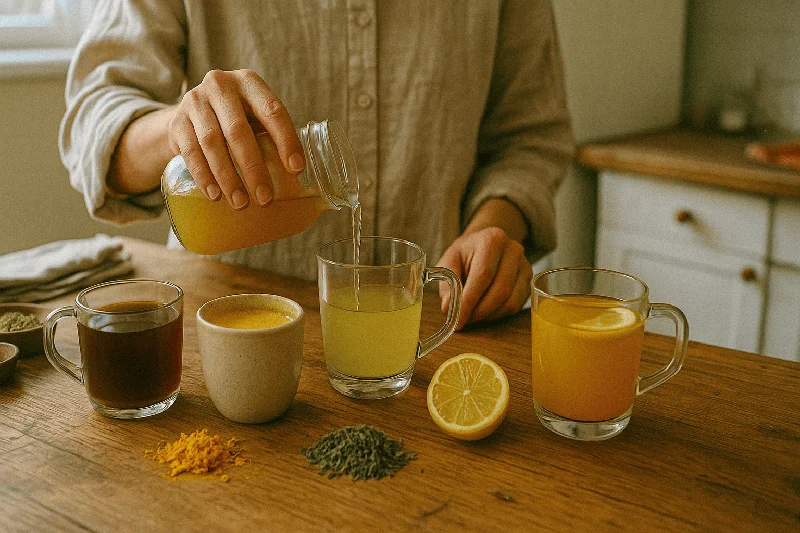
A strong immune system isn't built overnight — it's the result of consistent, daily nourishment. And if you're looking for natural ways to strengthen your body's defences, Ayurvedic drinks for immunity are among the most time-tested solutions available. From turmeric-infused golden milk to potent kadha brewed with tulsi and ginger, these beverages have been used for thousands of years across India to ward off infections, reduce inflammation, and keep the body in balance.
But here's what most articles won't tell you: Ayurveda doesn't see immunity as a single switch you flip on. It's a multi-layered concept rooted in Ojas (vital energy), Agni (digestive fire), and the Beej-Bhumi theory — the idea that your body is like soil, and disease can only take root if the terrain is fertile for it. These ayurvedic immunity-boosting drinks work by strengthening that terrain from the inside out.
In this guide, we cover 12 proven ayurvedic drinks with exact recipes, dosages, contraindications, and scientific evidence — everything the other articles leave out.
How Ayurveda Understands Immunity: Ojas, Agni, and the Beej-Bhumi Theory
- Before diving into recipes, it's worth understanding why these drinks work according to Ayurvedic principles.
- This isn't just folklore — modern immunology is increasingly validating these concepts.
What Is Ojas and Why It Matters
- In Ayurveda, Ojas is the finest by-product of digestion. Think of it as the "essence" extracted from everything you eat and drink over a 30-day metabolic process. When Ojas is strong, your immunity is robust, your skin glows, and your mind stays sharp.
- When it depletes — through stress, poor diet, lack of sleep, or excessive exertion — you become susceptible to infections.
Every ayurvedic immunity drink in this article is designed to either nourish Ojas directly or protect it from depletion.
The Role of Agni (Digestive Fire)
You could consume the most expensive superfoods in the world, but if your Agni is weak, none of it gets properly absorbed. Weak digestion creates Ama (metabolic toxins) that clog channels, suppress immunity, and create the perfect breeding ground for disease.
This is why many ayurvedic immunity drinks include ginger, black pepper, or long pepper — they're not just flavoring agents. They are Agni-kindling ingredients that ensure the medicinal compounds actually reach your cells.
Beej-Bhumi Theory: The Seed and Soil Concept
This is one of the most elegant ideas in Ayurveda and something no competitor article adequately explains. Beej means seed (the pathogen), and Bhumi means soil (your body). Just as a seed cannot sprout in barren or well-maintained soil, a pathogen cannot cause disease in a body with strong immunity.
The goal of ayurvedic immunity drinks isn't to "kill" pathogens — it's to make your internal environment so resilient that disease simply cannot take hold.
How Doshas Affect Your Immunity
Your unique doshic constitution determines how your immunity weakens:
| Dosha | Immunity Pattern | Signs of Weakened Immunity | Best Drinks |
|---|---|---|---|
| Vata | Variable, fluctuating immunity | Anxiety, dry skin, irregular digestion, frequent colds in autumn/winter | Ashwagandha milk, Ginger tea |
| Pitta | Strong but prone to inflammatory conditions | Skin rashes, acid reflux, infections with fever and inflammation | Amla juice, Tulsi-mint tea |
| Kapha | Steady but slow to respond; prone to congestion | Sinus infections, sluggish mornings, excess mucus, spring allergies | Kadha, Turmeric-pepper tea |
Understanding your dominant dosha helps you choose the right immunity drink rather than randomly consuming everything.
12 Best Ayurvedic Drinks for Immunity (With Recipes)
1. Traditional Kadha (The Master Immunity Brew)
Kadha is arguably the most powerful ayurvedic immunity drink — a concentrated herbal decoction that gained massive popularity during the COVID-19 pandemic. The Indian Ministry of AYUSH officially recommended it in 2020 as a preventive measure.
Ingredients:
- 2 cups water
- 4-5 fresh tulsi leaves
- 1-inch fresh ginger, crushed
- 5-6 whole black peppercorns
- 1 small cinnamon stick
- 3-4 cloves
- 1/2 tsp turmeric powder
- 1 tsp jaggery or honey (add honey only after cooling below 40°C)
Method: Combine all ingredients except honey in a saucepan. Boil, then simmer on low heat for 10-12 minutes until the liquid reduces to about 1 cup. Strain and drink warm. When to drink: Morning on an empty stomach, or evening before dinner. Not more than once daily for general prevention.
2. Golden Milk (Haldi Doodh)
Golden milk isn't just an Instagram trend — it's been a staple in Indian households for centuries. The key active compound, curcumin, has been studied extensively. A 2017 systematic review published in the Journal of Medicinal Food found that curcumin modulates the activation of T cells, B cells, macrophages, and natural killer cells, making it a potent immunomodulator.
Recipe:
- 1 cup warm milk (dairy or almond)
- 1/2 tsp turmeric powder
- A pinch of black pepper (increases curcumin bioavailability by 2,000% according to a 1998 study by Shoba et al. in Planta Medica)
- 1/2 tsp ghee
- Sweetener to taste
- Dosage: 1 cup daily, preferably at bedtime.
- The ghee and black pepper are non-negotiable — without them, curcumin absorption is negligible.
3. Tulsi (Holy Basil) Tea
Tulsi is classified as a Rasayana (rejuvenative) in Ayurveda. A 2017 review published in Evidence-Based Complementary and Alternative Medicine examined 24 human studies and found that tulsi demonstrated significant effects on immune function, including enhanced T-helper cell and natural killer cell activity.
Recipe:
- 8-10 fresh tulsi leaves (or 1 tsp dried)
- 1.5 cups water
- 1/2 tsp fresh ginger
- A squeeze of lemon
- Honey to taste (optional, add after cooling slightly)
Method: Boil tulsi leaves and ginger in water for 5-7 minutes. Strain, add lemon and honey.
Tulsi Tea for Children (Age 3+)
Use only 3-4 leaves per cup, reduce ginger to a small pinch, and always add a natural sweetener to improve palatability. Limit to 1/2 cup daily.
4. Ashwagandha Milk (Ashwagandha Ksheerpaka)
Ashwagandha is perhaps the most researched ayurvedic adaptogen. A landmark 2012 randomized, double-blind, placebo-controlled study published in the Indian Journal of Psychological Medicine found that Ashwagandha root extract significantly reduced serum cortisol levels by 27.9% and improved resistance to stress — both directly linked to immune function.
A more recent 2021 study in the Journal of Clinical Medicine demonstrated that ashwagandha extract enhanced both innate and adaptive immune responses by increasing immunoglobulin levels and activating natural killer cells.
Recipe:
- 1 cup warm milk
- 1/2 tsp ashwagandha churna (powder)
- 1/4 tsp cinnamon
- 1 tsp honey or jaggery
Dosage: 300-600 mg of standardized extract daily, or 1/2 to 1 tsp of churna. Take for 8-12 weeks, then take a 2-week break.
5. Amla Juice (Indian Gooseberry)
Amla contains approximately 600-900 mg of vitamin C per fruit — significantly more than oranges. But unlike synthetic vitamin C, amla's ascorbic acid is bound to tannins, which makes it more heat-stable and bioavailable.
Recipe:
- 2 fresh amla fruits, deseeded and chopped
- 1 cup water
- 1 tsp honey
- A pinch of rock salt
- Small piece of ginger (optional)
Method: Blend amla with water, strain, add honey and salt. Drink fresh, as vitamin C degrades with time. When to drink: Early morning on an empty stomach. You can also use 2 tablespoons of store-bought amla juice diluted in water as an alternative.
6. Giloy (Guduchi) Water
Giloy is called Amrita in Sanskrit — literally meaning "the root of immortality." It's one of the three Amrit plants in Ayurveda and a powerful immunomodulator. Research published in the International Journal of Pharma and Bio Sciences (2016) showed that giloy activates macrophages, enhances phagocytic activity, and stimulates the production of cytokines.
Recipe:
- 1 fresh giloy stem (6-8 inches), crushed, or 1/2 tsp giloy powder
- 2 cups water
- 4-5 tulsi leaves
- 1/2 tsp turmeric
Method: Boil the crushed giloy stem in water for 15-20 minutes until reduced to 1 cup. Add tulsi and turmeric in the last 3 minutes. Strain and drink. Dosage: 1 cup daily for up to 4-6 weeks. Not recommended for more than 8 weeks continuously without practitioner guidance.
7. Mulethi (Licorice) Tea
Mulethi is an underrated immunity booster. Its active compound, glycyrrhizin, has demonstrated antiviral properties against several viruses. A 2003 study published in The Lancet found that glycyrrhizin inhibited the replication of SARS-associated coronavirus in vitro. It stimulates lymphocytes and macrophages while soothing the respiratory tract — making it particularly useful during cough and cold season.
Recipe:
- 1 small stick of mulethi or 1/2 tsp powder
- 1 cup hot water
- A pinch of cinnamon
- Honey to taste
Steep for 8-10 minutes, strain, and drink.
8. Lemon, Turmeric & Black Pepper Tea
- This is a budget-friendly, 3-minute immunity drink that anyone can make.
- The combination is surprisingly effective — lemon provides vitamin C, turmeric delivers curcumin, and black pepper's piperine ensures maximum absorption.
Recipe:
- 1 cup hot water
- Juice of 1/2 lemon
- 1/4 tsp turmeric
- 2-3 crushed black peppercorns
- Honey to taste (optional)
When to drink: Morning or mid-afternoon. Avoid late evening as the acidity may disturb sleep for Pitta-dominant individuals.
9. Chamomile and Lavender Sleep Tea
This might seem unusual in an ayurvedic context, but hear me out. Sleep deprivation is one of the fastest ways to destroy immunity. A study published in Sleep (2015) showed that people sleeping fewer than 6 hours per night were 4.2 times more likely to catch a cold compared to those sleeping 7+ hours.
Chamomile has been used in Ayurveda-adjacent Unani traditions for centuries, and its calming properties directly support Ojas restoration during deep sleep.
Recipe:
- 1 tsp dried chamomile flowers
- 1/2 tsp dried lavender
- 1 cup hot water
- Honey to taste
Steep for 5 minutes, strain, and drink 30 minutes before bed.
10. Chyawanprash Drink (Ready-Made Immunity Elixir)
For those who don't have time to brew daily concoctions, Chyawanprash mixed into warm milk or water is the easiest solution. This ancient polyherbal jam contains 40+ herbs with amla as the base ingredient.
- How to take: Dissolve 1-2 teaspoons in a cup of warm milk.
- Drink once daily, morning or evening.
- Children (age 5+): 1/2 to 1 teaspoon.
11. Neem and Turmeric Detox Water
Neem is intensely bitter — but that bitterness is precisely what makes it effective. It purifies the blood, supports liver function, and has documented antimicrobial properties against bacteria, fungi, and parasites.
Recipe:
- 4-5 fresh neem leaves (or 1/4 tsp neem powder)
- 1/4 tsp turmeric
- 1 cup warm water
- 1 tsp honey
Boil neem leaves in water for 5 minutes, strain, add turmeric and honey.
Caution: Not recommended for pregnant women or those trying to conceive, as neem has anti-fertility properties.
12. Triphala Water (Overnight Immunity Soak)
Triphala — a combination of Amalaki, Bibhitaki, and Haritaki — is a classic Ayurvedic formulation that supports gut health. Since approximately 70% of immune cells reside in the gut, maintaining digestive health is directly tied to immunity.
Recipe:
- 1/2 tsp triphala powder
- 1 glass of warm water
Method: Mix triphala in warm water at night. You can either drink it immediately or let it soak overnight and drink first thing in the morning.
Dosage, Safety, and Contraindications (What Nobody Tells You)
This is the section that's missing from virtually every article on ayurvedic immunity drinks — and it's perhaps the most important one. These are potent herbs, not just flavored water.
Complete Dosage and Safety Reference Table
| Herb/Drink | Daily Dose (Adults) | Duration | Key Contraindications | Drug Interactions |
|---|---|---|---|---|
| Tulsi Tea | 1-2 cups | Long-term safe | May lower blood sugar; caution in hypoglycemia | May enhance effect of anti-diabetic drugs |
| Ashwagandha | 300-600 mg extract / 1/2-1 tsp churna | 8-12 weeks, then 2-week break | Hyperthyroidism, autoimmune diseases (Lupus, RA), pregnancy | Interacts with sedatives, thyroid medication, immunosuppressants |
| Turmeric/Golden Milk | 1/2-1 tsp daily | Long-term safe at dietary doses | Gallbladder obstruction, bleeding disorders | Enhances effect of anticoagulants (warfarin), may interact with diabetes medications |
| Giloy | 1/2 tsp powder or 1 stem decoction | 4-6 weeks max | Autoimmune disorders, pre-surgery (2 weeks before) | May lower blood sugar; caution with anti-diabetic drugs |
| Mulethi | 1/2 tsp powder or 1 small stick | 4-6 weeks max | Hypertension, kidney disease, pregnancy, hypokalemia | Interacts with diuretics, corticosteroids, cardiac glycosides |
| Amla | 1-2 fruits or 2 tbsp juice | Long-term safe | Hyperacidity in some individuals | May enhance effect of anticoagulants due to high vitamin C |
| Neem | 4-5 leaves or 1/4 tsp powder | 2-4 weeks max | Pregnancy, trying to conceive, infants | May interact with immunosuppressants and diabetes medication |
| Triphala | 1/2-1 tsp powder | 8-12 weeks, then reassess | Pregnancy, diarrhea (active) | May enhance effect of blood sugar-lowering drugs |
| Kadha | 1 cup | Daily during season; 3-4 times/week otherwise | Hyperacidity, gastric ulcers (reduce pepper and ginger content) | Generally safe, but monitor if on multiple medications |
| Chyawanprash | 1-2 tsp (adults), 1/2-1 tsp (children 5+) | Long-term safe | Diabetics should choose sugar-free variants | Generally safe |
Ayurvedic Drinks During Pregnancy: What's Safe?
This is a question almost no online resource addresses properly, yet it's critical:
- Generally safe: Tulsi tea (in moderation, 1 cup/day), Golden milk, Amla juice, Chamomile tea
- Avoid completely: Ashwagandha, Neem, Mulethi (in medicinal doses), Aloe vera juice
- Use with caution (consult your doctor): Giloy, Triphala, strong Kadha with multiple spices
Rule of thumb: If you're pregnant or breastfeeding, stick to single-herb, food-grade preparations in small quantities and always consult an Ayurvedic practitioner.
Seasonal Guide: Which Immunity Drinks to Prioritize When
Ayurveda recognizes that immunity needs change with the seasons because each season aggravates a different dosha. Yet surprisingly, none of the top-ranking articles provide a seasonal framework for these drinks.
Spring (March-May) — Kapha Season
Kapha accumulates during winter and liquefies in spring, leading to congestion, allergies, and sluggish immunity. This is the time for warming, light, and stimulating drinks.
Priority drinks: Kadha, Ginger-lemon tea, Tulsi tea, Neem-turmeric water
Summer (June-August) — Pitta Season
Heat increases Pitta, which can cause inflammatory immune responses — think skin rashes, burning eyes, and acid reflux. Choose cooling, soothing drinks.
Priority drinks: Amla juice, Chamomile tea, diluted Chyawanprash with cool milk, Triphala water at night
Autumn-Winter (September-February) — Vata Season
Cold, dry weather aggravates Vata, leading to dry skin, anxiety, depleted Ojas, and vulnerability to respiratory infections. Warm, nourishing, oily drinks are ideal.
Priority drinks: Ashwagandha milk, Golden milk, Kadha, Mulethi tea, warm Chyawanprash milk
Ayurvedic Immunity-Boosting Herbs: Key Active Compounds
For those who want to understand the science behind these traditional remedies, here's what research has identified:
How Ashwagandha Boosts Immunity
Ashwagandha's active compounds — withanolides (particularly Withaferin A and Withanolide D) — modulate immunity through multiple pathways. They enhance the proliferation of splenocytes, increase the activity of natural killer cells, and upregulate the production of Th1 cytokines (IL-2 and IFN-gamma), which are essential for cell-mediated immunity.
A 2021 randomized controlled trial with 50 healthy adults published in the Journal of Clinical Medicine showed that those taking 60 mg of Ashwagandha extract daily for 30 days had significantly higher levels of IgA, IgG, IgM, and IgG4 compared to placebo — indicating a broad-spectrum enhancement of humoral immunity.
Why Turmeric Needs Black Pepper
Curcumin on its own has extremely poor bioavailability — less than 1% gets absorbed. Piperine, the active compound in black pepper, inhibits the enzyme glucuronidase in the liver and intestine that normally breaks down curcumin before it can enter the bloodstream. The famous 1998 study by Shoba et al. demonstrated a 2,000% increase in bioavailability when curcumin was co-administered with piperine.
This is exactly why traditional Ayurvedic formulations almost always combine turmeric with black pepper — the ancient practitioners figured this out empirically, and modern science confirmed it millennia later.
Giloy's Immunomodulatory Mechanism
Giloy contains tinosporin, berberine, and polysaccharides that activate macrophages through the NF-κB signaling pathway. This enhances phagocytic activity (the ability of immune cells to "eat" pathogens) and increases the production of reactive oxygen species that destroy intracellular pathogens.
Beyond Drinks: Ayurvedic Lifestyle Practices That Multiply Immunity
Ayurvedic immunity drinks are powerful — but they work best within a supportive lifestyle framework. Ayurveda calls this Dinacharya (daily routine) and Ritucharya (seasonal routine).
Daily Practices (Dinacharya)
- Wake before sunrise (ideally 6:00 AM) — aligns the circadian rhythm with natural cortisol patterns
- Oil pulling (Kavala Graha) — 1 tablespoon of sesame or coconut oil swished for 10-15 minutes reduces oral pathogen load
- Abhyanga (self-oil massage) — warm sesame oil massage before bath stimulates lymphatic drainage and circulation
- Pranayama — Anulom Vilom (alternate nostril breathing) for 10 minutes daily reduces cortisol and enhances parasympathetic tone
- Sleep by 10:00 PM — Kapha time (6-10 PM) transitions to Pitta time (10 PM-2 AM), when the body performs cellular repair and detoxification
Panchakarma for Deep Immune Reset
For those with chronically weakened immunity, a full Panchakarma detox — including Vamana (therapeutic vomiting), Virechana (purgation), Basti (medicated enema), Nasya (nasal administration), and Raktamokshana (blood purification) — can clear deeply lodged Ama from the tissues and fundamentally reset immune function.
This should only be done under the supervision of a qualified Ayurvedic physician and is typically a 7-21 day process.
Ayurvedic Immunity Booster Powders and Tablets: A Quick Guide
- While this article focuses on drinks, many readers also search for ayurvedic immunity boosters in powder and tablet forms.
- Here's a brief overview of the most common formats:
Ayurvedic Immunity Booster Powder
The most popular immunity-boosting powders include Ashwagandha churna, Giloy satva, Amla powder, and Sitopaladi churna. These can be mixed into warm water, milk, or honey to create a quick immunity drink.
Recommended approach: Mix 1/4 to 1/2 teaspoon of your chosen powder into warm water or milk. Start with the lowest dose and increase gradually over a week.
Ayurvedic Immunity Boosting Herbs in Tablet Form
For convenience, most of the herbs discussed above are available in tablet/capsule form. Standardized extracts provide consistent dosing. Look for certifications like GMP, FSSAI, and AYUSH approval when purchasing.
FAQ: Common Questions About Ayurvedic Drinks for Immunity
Q: Can I drink multiple ayurvedic immunity drinks in a single day?
Yes, but don't overdo it. A good rule is to stick with 2-3 different preparations per day. For example, tulsi tea in the morning, amla juice mid-morning, and golden milk at night. Rotating your drinks weekly ensures broader nutritional coverage.
Q: How long does it take for ayurvedic immunity drinks to show results?
Most people notice improved energy and fewer colds within 3-4 weeks of consistent use. However, deep immune rebuilding (at the Ojas level) takes 3-6 months according to classical Ayurvedic texts.
Q: Are ayurvedic immunity drinks safe for men and women equally?
Absolutely. The herbs discussed here are not gender-specific. However, Ashwagandha has additional benefits for men (testosterone support) while Shatavari — though not covered in this article — is a better adaptogenic choice for women's hormonal health.
Q: Can children drink kadha?
Children above 5 years can have a diluted, milder version of kadha — reduce spices by half and use only 1/4 cup. For children 3-5 years, stick to simple tulsi-ginger tea with honey.
Q: What is the best time to drink ayurvedic immunity boosters?
Morning on an empty stomach is ideal for most drinks (kadha, amla juice, giloy water). Ashwagandha milk and golden milk work best at bedtime as they support restorative sleep. Triphala water is most effective when taken at night or first thing in the morning.
Q: Can diabetics take these ayurvedic immunity drinks?
Most are safe, but be cautious with honey-sweetened preparations, regular Chyawanprash (choose sugar-free variants), and monitor blood sugar closely when taking giloy, neem, or amla, as all three can lower blood glucose levels.
Final Thoughts: Build Your Immunity the Ayurvedic Way
Ayurvedic drinks for immunity aren't a quick fix — they're part of a philosophy that treats the body as an interconnected ecosystem. The strongest immunity comes not from a single magic herb, but from consistent daily nourishment of your Ojas through proper digestion (Agni), seasonal awareness, and mindful living.
- Start with one or two drinks from this list that match your dosha and the current season. Be consistent for atleast 4-6 weeks before judging results.
- And remember — these drinks work best when combined with adequate sleep, regular movement, and stress managment.
If you're dealing with chronic immunity issues or autoimmune conditions, consult a qualified Ayurvedic physician who can assess your Prakriti (constitution) and design a personalized protocol. Self-medication with potent herbs like Ashwagandha, Giloy, or Mulethi beyond the recommended durations can cause imbalances.
- Your body has an extraordinary capacity to heal and protect itself.
- Sometimes, it just needs the right support — and a warm cup of kadha certainly helps.
Scientific Sources
- Green gram soup and barley porridge as dietary interventions for management of premenstrual syndrome in adolescent girl: A case report — Abhijeet Shirkande A et al., 2024, Journal of Ayurveda and integrative medicine
- Enhancement of iron, zinc, and calcium bioaccessibility and bioavailability in green gram (Vigna radiata L.) supplemented with buttermilk through phytate reduction: an in vitro dietary evaluation — Varshanath B et al., 2026, Frontiers in nutrition
- Enhancement of Purified Human Colon Cancer-Specific Parasporal Toxin from Bacillus thuringiensis-LDC-501 — Grace JJ et al., 2020, Current microbiology
- Efficacy of traditional Indian diet (Ayush ahara) on muscle strength and Sarcopenia: A scoping review — Katkar R et al., 2026, Journal of Ayurveda and integrative medicine
- Ulcerative colitis: molecular insights and intervention therapy — Liang Y et al., 2024, Molecular biomedicine
- Piperine: A review of its biological effects — Haq IU et al., 2021, Phytotherapy research : PTR
- Complementary and alternative medicine for glycemic control of diabetes mellitus: A systematic review — Setiyorini E et al., 2022, Journal of public health research
- Health Benefits of Culinary Herbs and Spices — Jiang TA, 2019, Journal of AOAC International
- Chasteberry — 2006
- Exploring the potential of Mustard (Brassica spp.) seeds through 'Kolhu' traditional method of extraction and novel identification of an anti-cancer dipeptide, Aurantiamide acetate (Asperglaucide) on ultra-performance liquid chromatography-mass spectrometry coupled with quadrupole time-of-flight (UPLC/MS-QToF) analytical platform — Balkrishna A et al., 2024, Food chemistry
- To evaluate the efficacy and safety of CofNovex plus (EMA) syrup — Ali Z et al., 2017, Pakistan journal of pharmaceutical sciences
- Effects of Hardaliye, a Fermented Grape Drink, on Oxidative Stress, Lipid Profile, and Blood Pressure in Young Soccer Players: A Randomized Controlled Trial — Atan RM et al., 2024, Journal of the American Nutrition Association
- Improvement of Growth performance, Biochemical Blood Profiles, and Meat Peroxidation by the Inclusion of Mustard Seed Extract in Broilers' Drinking Water — Sabah Abdulameer Y et al., 2022, Archives of Razi Institute
- Phytocontact Dermatitis due to Mustard Seed Mimicking Burn Injury: Report of a Case — Yabanoglu H et al., 2012, Case reports in medicine
- Efficacy of a novel extract of fenugreek seeds in alleviating vasomotor symptoms and depression in perimenopausal women: A randomized, double-blinded, placebo-controlled study — Khanna A et al., 2020, Journal of food biochemistry
- Fenugreek Cultivation with Emphasis on Historical Aspects and its uses in Traditional Medicine and Modern Pharmaceutical Science — Sun W et al., 2021, Mini reviews in medicinal chemistry
- Recent Therapeutic Interventions of Fenugreek Seed: A Mechanistic Approach — Idris S et al., 2021, Drug research
- Comparative effectiveness of six herbs in the management of glycemic status of type 2 diabetes mellitus patients: A systematic review and network meta-analysis of randomized controlled trials — Kumar S et al., 2023, Diabetes & metabolic syndrome
- Advances on application of fenugreek seeds as functional foods: Pharmacology, clinical application, products, patents and market — Yao D et al., 2020, Critical reviews in food science and nutrition
- Exploring the potential of curry leaves on mercury-induced hepatorenal toxicity in an animal model — Ijaz M et al., 2022, Food science & nutrition
- Nutritive Importance and Therapeutics Uses of Three Different Varieties (Murraya koenigii, Micromelum minutum, and Clausena indica) of Curry Leaves: An Updated Review — Abeysinghe DT et al., 2021, Evidence-based complementary and alternative medicine : eCAM
- Mini Review: Wound healing potential of edible plants — Muniandy K et al., 2019, Pakistan journal of pharmaceutical sciences
- A Comprehensive Review on Rasam: A South Indian Traditional Functional Food — Devarajan A et al., 2017, Pharmacognosy reviews
- Purification and characterization of approximately 35 kDa antioxidant protein from curry leaves (Murraya koenigii L.) — Ningappa MB et al., 2008, Toxicology in vitro : an international journal published in association with BIBRA
Ask Ayurvedic doctor a question and get a consultation online on the problem of your concern in a free or paid mode.
More than 2,000 experienced doctors work and wait for your questions on our site and help users to solve their health problems every day.
Related articles