Ask Ayurvedic doctor a question and get a consultation online on the problem of your concern in a free or paid mode. More than 2,000 experienced doctors work and wait for your questions on our site and help users to solve their health problems every day.
FREE! Ask Ayurvedic Doctors 24/7

 Fast responses
 1000+ verified doctors
Body DetoxEar, Nose, and Throat DisordersGeriatrics & RejuvenationImmunodeficiencyInfertility TreatmentNutritionOrthopedic DisordersPediatricsRespiratory DisordersSexually Transmitted Diseases (STDs)Surgery RecoveryUrological DisordersVascular DisordersDental DisordersEndocrinological DisordersGastrointestinal DisordersYoga TherapyGeneral MedicineAllergic DisordersCardio DisordersGynecology and ObstetricsCosmetologySkin and Hair DisordersEye DisordersInfectious DiseasesMental DisordersNeurological DisordersOncologyPanchakarmaSexual Health & DisordersSports Medicine
Published on 11/07/24
(Updated on 07/05/26)
star_border 5
6,749
Exploring Coconut Curd in Ayurveda

- Coconut curd is a creamy, plant-based alternative to traditional dairy dahi, made by fermenting full-fat coconut milk with probiotic cultures — or, in Western baking, a rich egg-based spread similar to lemon curd but infused with coconut flavor.
- In India, it's most commonly understood as vegan dahi: a thick, tangy, dairy-free curd that works beautifully in raita, kadhi, buttermilk, and dozens of everyday recipes. Whether you're lactose-intolerant, following a vegan lifestyle, or simply curious about this versatile ingredient, this guide covers everything — from nutrition and Ayurvedic perspective to step-by-step recipes, troubleshooting, and storage tips that no other resource brings together in one place.
What Is Coconut Curd?
The term "coconut curd" actually refers to two completely different products depending on where you are in the world. This is something most articles and product pages fail to clarify, leaving readers confused. Let's fix that.
Fermented Coconut Curd (Vegan Dahi) — Indian Style
This is the version most Indians search for. Fermented coconut curd is made by inoculating thick coconut milk with a starter culture — either a spoonful of existing curd (dairy or plant-based), a probiotic capsule, or a dedicated coconut curd culture. The mixture ferments at warm temperatures (around 38–42°C) for 8–14 hours, resulting in a tangy, creamy dahi that closely mimics the taste and texture of traditional milk curd.
It's naturally dairy-free, lactose-free, cholesterol-free, and vegan. In South Indian and Sri Lankan cuisine, coconut-based fermented foods have a long history — particularly in Kerala, where fresh coconut milk has been used in cooking for centuries. The modern "packaged" version gained mainstream traction with brands entering the Indian market around 2018–2020.
Dessert Coconut Curd (Egg-Based) — Western Style
- In Western baking, "coconut curd" means something entirely different.
- Think of lemon curd — that silky, sweet-tart spread used in tarts, cake fillings, and on scones. Dessert coconut curd replaces the lemon juice with coconut milk and sometimes shredded coconut, while keeping the egg yolks, sugar, and butter base. It's cooked over a double boiler until thick, then chilled. Some recipes add a split vanilla bean for a more complex flavor.
This version is not vegan (it contains eggs and butter), not fermented, and serves a completely different culinary purpose.
Key Differences at a Glance
| Feature | Fermented Coconut Curd (Dahi) | Dessert Coconut Curd |
|---|---|---|
| Base | Coconut milk + culture | Coconut milk + eggs + butter + sugar |
| Process | Fermentation (8–14 hrs) | Cooking on double boiler (15–20 min) |
| Taste | Tangy, slightly sour | Sweet, rich, creamy |
| Vegan | Yes | No (eggs, butter) |
| Primary use | Indian meals, smoothies, marinades | Cake fillings, tarts, biscuit spreads |
| Probiotics | Yes | No |
| Shelf life | 5–7 days refrigerated | 7–10 days refrigerated |
For the rest of this article, we'll focus primarily on fermented coconut curd (vegan dahi), since that's what the majority of Indian users are looking for — but we include a full dessert curd recipe section too.
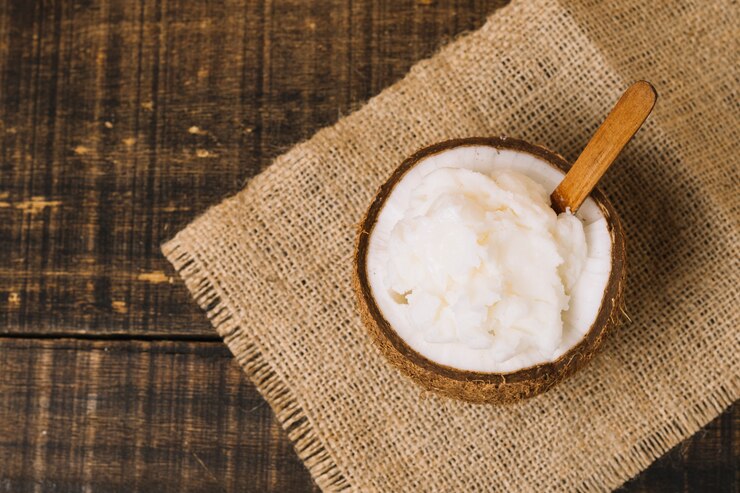
Nutritional Benefits of Coconut Curd
One of the biggest gaps in existing resources is actual nutritional data. Products mention "healthy" and "plant-based" without giving you real numbers. Here's what the science and food composition data actually show.
Calories, Protein, Fat & Carbs Per Serving
Nutritional values vary based on the coconut milk used (full-fat canned vs. fresh-squeezed vs. light). Below is an approximate breakdown per 100 g serving of homemade fermented coconut curd made with full-fat canned coconut milk:
| Nutrient | Per 100 g (Coconut Curd) | Per 100 g (Dairy Dahi, full-fat) |
|---|---|---|
| Calories | 150–180 kcal | 60–70 kcal |
| Protein | 1.5–2.0 g | 3.5–4.0 g |
| Total Fat | 14–17 g | 3.0–3.5 g |
| Saturated Fat (MCTs) | 12–14 g | 2.0 g |
| Carbohydrates | 3–5 g | 4.5–5.0 g |
| Fiber | 0.5–1.0 g | 0 g |
| Cholesterol | 0 mg | 10–15 mg |
| Calcium | 15–20 mg | 130–150 mg |
Important note: Coconut curd is higher in calories and fat than dairy curd, but most of that fat comes from medium-chain triglycerides (MCTs). A 2015 review published in the Journal of the Academy of Nutrition and Dietetics found that MCTs are metabolized differently from long-chain fatty acids — they're absorbed more rapidly and may support energy expenditure rather than fat storage.
However, coconut curd is significantly lower in protein and calcium. If you're relying on it as your primary curd source, you'll want to supplement protein and calcium from other foods.
How Much Protein Is in 100 Grams of Coconut Curd?
This is one of the most asked questions, and the answer might dissapoint some fitness-focused readers: roughly 1.5 to 2.0 g per 100 g. That's less than half the protein in dairy curd. Some commercial brands fortify their coconut curd with pea protein or soy protein to bring this up to 3–4 g per 100 g, so always check the label if protein intake matters to you.
Probiotics & Gut Health
Fermented coconut curd contains live probiotic cultures, though the specific strains depend on your starter. When made with a probiotic capsule, common strains include Lactobacillus acidophilus, L. rhamnosus, and Bifidobacterium lactis. When made with a spoonful of dairy curd as starter, the dominant strain is typically Lactobacillus delbrueckii subsp. bulgaricus along with Streptococcus thermophilus.
A 2019 study in the journal Nutrients demonstrated that plant-based fermented foods can support comparable levels of beneficial bacteria to dairy-based products, provided fermentation conditions are adequate. The key factors are temperature consistency and fermentation duration — we'll cover both in the recipe section.
The probiotics in coconut curd support:
- Digestive health — improved nutrient absorption, reduced bloating
- Immune function — roughly 70% of the immune system resides in the gut (a figure widely cited in immunology literature, including a 2008 review in Clinical and Experimental Immunology)
- Lactose-intolerance relief — since it's dairy-free, it avoids the problem entirely
Coconut Curd vs Dairy Curd vs Soy Yogurt: Full Comparison
| Parameter | Coconut Curd | Dairy Curd (Full-fat) | Soy Yogurt |
|---|---|---|---|
| Calories/100g | 150–180 | 60–70 | 55–65 |
| Protein/100g | 1.5–2 g | 3.5–4 g | 4–5 g |
| Fat/100g | 14–17 g | 3–3.5 g | 2–3 g |
| MCTs | High | Negligible | None |
| Cholesterol | 0 mg | 10–15 mg | 0 mg |
| Probiotics | Yes (varies by starter) | Yes (L. bulgaricus, S. thermophilus) | Yes (L. acidophilus common) |
| Common allergens | Tree nut (coconut*) | Dairy/Lactose | Soy |
| Calcium | Low (15–20 mg) | High (130–150 mg) | Moderate (80–120 mg, often fortified) |
\Note: The U.S. FDA classifies coconut as a tree nut allergen. While botanically it's a drupe, people with tree nut allergies should exercise caution and consult an allergist before consuming coconut products. This is something virtually no competitor mentions.*
What Does Ayurveda Say About Coconut Curd?
Ayurveda has a nuanced view of curd (dahi) in general. Traditional texts like the Ashtanga Hridaya categorize curd as heavy (guru), unctuous (snigdha), and sour (amla rasa). Dairy curd is said to aggravate Kapha and Pitta doshas when consumed in excess — especially at night.
Coconut curd, however, occupies a unique position in Ayurvedic nutrition.
Cooling Properties and Pitta Balance
Coconut is inherently sheeta (cooling) in Ayurveda. When coconut milk is fermented into curd, it retains much of this cooling quality while gaining the sour taste that develops during fermentation. This makes coconut curd particularly beneficial for individuals with a dominant Pitta constitution — those prone to acidity, inflammation, heat-related skin issues, and irritability.
Unlike dairy curd, which Ayurveda recommends avoiding during Pitta-aggravating seasons (summer), coconut curd can actually be supportive during warm weather due to its inherent coolness.
Digestive Fire (Agni) Support
According to Ayurvedic practitioners, the fermented nature of coconut curd kindles agni (digestive fire) gently — making it suitable for people with moderate digestive capacity. It's lighter than dairy curd on the gut, partly because coconut milk contains no casein or whey proteins that some individuals find difficult to digest.
Hydration and Heart Health
- Coconut-based foods are valued in Ayurveda for supporting rasa dhatu (the plasma/fluid tissue). Coconut curd contributes to hydration, and the MCT content supports cardiovascular function.
- Modern research partially backs this: a 2018 study in BMJ Open Diabetes Research & Care found that MCTs from coconut may improve lipid profiles in certain populations, though more research is warranted.
When Ayurveda Recommends Caution
- Coconut curd is not universally recommended.
- For Kapha-dominant constitutions — especially during cold, wet seasons — the heavy, unctuous nature of coconut combined with the sour quality of fermentation can increase congestion and lethargy. Ayurveda suggests consuming it in moderation, preferably during daytime and ideally not as the last meal of the day.
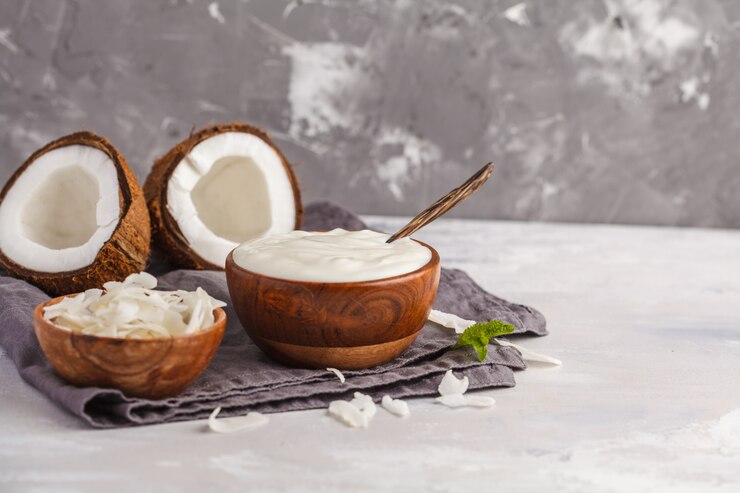
How to Make Fermented Coconut Curd at Home (Vegan Dahi)
- This recipe took considerable testing to get right.
- Many home cooks report failures — curd that won't set, watery separation, or a bitter taste. The method below accounts for all of these issues.
Ingredients
- 400 ml full-fat canned coconut milk (minimum 17–20% fat content; brands like KLF Coconad or Thai Kitchen work well)
- 1 Tbsp (15 g) starter culture — either a spoonful of existing coconut curd, dairy curd, or the contents of 2 probiotic capsules containing Lactobacillus strains
- Optional: 1 tsp tapioca starch — helps achieve a thicker set
Step-by-Step Instructions
- Shake and pour. Shake the coconut milk can vigorously to combine the cream and water layers. Pour into a clean, dry glass or ceramic bowl. Avoid metal containers as they can interfere with fermentation.
- Warm gently. Heat the coconut milk on low flame until it reaches about 40°C (just warm to the touch — not hot). If you overheat it past 45°C, let it cool back down before adding the culture. High temperatures kill probiotic bacteria.
- Add the starter. Stir in your culture gently. If using tapioca starch, whisk it in at this stage to prevent lumps.
- 4. Create the fermentation environment. Pour the mixture into a clean glass jar or ceramic pot.
- Cover with a lid (not airtight — leave slightly loose). Place inside your oven with just the oven light on, or wrap in a thick towel and place in a warm corner of your kitchen. The ideal temperature range is 38–42°C.
- 5. Wait. Let it ferment undisturbed for 10–14 hours.
- Don't keep opening the lid to check — temperature fluctuations will slow or stall fermentation. In hot Indian summers, 8–10 hours may be sufficient. In winter or air-conditioned rooms, you might need up to 16 hours.
- 6. Check and refrigerate. The curd should be set (jiggly like panna cotta, not liquid). A slight tangy smell is perfect.
- Refrigerate for at least 4 hours before serving — it thickens considerably as it cools.
Recipe Hacks & Pro Tips
- Use the THICKEST coconut milk you can find. Light coconut milk (6–9% fat) simply will not set properly. If your canned milk separates into thick cream and thin water, that's actually great — use mostly the cream layer.
- Oven light method works best. Many Indian kitchens are naturally warm enough during summer, but the oven-light trick provides consistent temperature year-round.
- Save 2 tablespoons of each batch as starter for the next. After 5–6 generations, the culture weakens — refresh with a new probiotic capsule or fresh starter.
- Don't add salt or sugar before fermentation. These can inhibit bacterial growth. Season after the curd is set.
Troubleshooting Common Issues
| Problem | Likely Cause | Fix |
|---|---|---|
| Curd didn't set at all | Temperature too low or starter was dead | Ensure 38–42°C; use fresh probiotic capsules |
| Watery layer on top | Natural whey separation — normal! | Stir it back in, or drain it off for thicker curd |
| Grainy/lumpy texture | Coconut fat solidified unevenly | Use room-temperature coconut milk; blend before fermenting |
| Too sour/bitter | Over-fermented | Reduce fermentation time by 2–3 hours; refrigerate promptly |
| Thin, drinkable consistency | Low-fat coconut milk used | Switch to full-fat (17%+ fat); add 1 tsp tapioca starch |
| Pink or off-color spots | Contamination (mold) | Discard the batch. Sterilize all containers with boiling water before next attempt |
How to Make Dessert Coconut Curd (Egg-Based, Western Style)
This is the sweet, spreadable version — perfect for filling cakes, layering in tarts, or spooning over warm biscuits.
Ingredients
- 200 ml full-fat coconut milk (canned)
- 3 large egg yolks
- 100 g caster sugar
- 2 Tbsp unsalted butter, cubed
- 1 Tbsp cornstarch
- Pinch of salt
- ¼ vanilla bean, seeds scraped (or 1 tsp vanilla extract)
Step-by-Step Instructions
- Whisk egg yolks and sugar in a heatproof bowl until pale and slightly thick — about 2 minutes by hand.
- Add coconut milk, cornstarch, and salt. Whisk until smooth.
- Set up a double boiler. Place the bowl over a pot of gently simmering water. The bottom of the bowl should not touch the water.
- Stir continuously for 12–18 minutes. The mixture will gradually thicken.
- You're looking for it to coat the back of a wooden spoon — when you draw a line through it with your finger, the line should hold.
- Remove from heat. Stir in the butter cubes and vanilla seeds until fully incorporated.
- Strain through a fine sieve into a clean jar to remove any cooked egg bits.
- Press cling film directly onto the surface (this prevents a skin from forming). Refrigerate for at least 3 hours.
Pro Tips for Dessert Coconut Curd
- Temperature control is everything. If the water boils too vigorously, you'll scramble the eggs. Keep it at a gentle simmer.
- Don't skip the straining step. Even carefull cooks occasionally get a few bits of cooked egg — straining ensures a perfectly silky result.
- Flavour variations: Replace vanilla with lime zest for a tropical twist, or fold in 2 Tbsp of toasted desiccated coconut after cooling for added texture.
Don't wait or self medicate. Start chat with Doctor NOW
Best Ways to Use Coconut Curd
In Indian Cuisine
Fermented coconut curd works as a direct 1:1 substitute for dairy dahi in most Indian recipes:
- Coconut curd raita — mix with grated cucumber, roasted cumin powder, and a pinch of salt. The cooling coconut base makes this raita exceptionally refreshing with biryani.
- Vegan kadhi — use coconut curd blended with besan (gram flour) for a tangy, silky curry. Adjust sourness by reducing the curd slightly since coconut curd can ferment more intensely.
- Dahi bhalle / Dahi vada — pour chilled coconut curd over soaked vadas with tamarind and green chutney. The texture is almost indistinguishable from dairy-based versions.
- Chaas / Buttermilk — blend coconut curd with water, salt, roasted cumin, and fresh curry leaves for South Indian-style buttermilk.
- Marinades — coconut curd's acidity tenderizes paneer, tofu, and vegetables beautifully for grilling or tandoori preparations.
In Western Baking & Global Recipes
Dessert coconut curd shines in:
- Tart fillings — pour into a pre-baked shortcrust shell, chill, and top with toasted coconut flakes
- Cake layering — spread between sponge layers as an alternative to buttercream
- Cupcake filling — pipe into the center of cupcakes using a bismarck tip
- Breakfast spreads — on toast, pancakes, or waffles alongside fresh berries
Flavour Variations Worth Trying
Nobody seems to talk about this, but coconut curd is an excellent base for creative flavors:
- Mango-coconut curd — blend ripe Alphonso mango pulp into set coconut dahi (add after fermentation, not before)
- Chocolate-coconut curd — stir 1 Tbsp cocoa powder and a drizzle of maple syrup into the finished dahi
- Lime-coconut curd — add fresh lime juice and zest after fermentation for a tangy-tart twist
- Coconut-cardamom curd — fold in a pinch of crushed cardamom — works magic in lassi
Types of Coconut Milk and How They Affect Your Curd
This is a detail that can make or break your homemade coconut curd, yet almost nobody adresses it properly.
| Coconut Milk Type | Fat Content | Best For | Curd Quality |
|---|---|---|---|
| Canned, full-fat | 17–22% | Fermented dahi, dessert curd | Thick, creamy, sets well |
| Canned, light | 6–9% | Smoothies, cooking | Thin, watery curd — not recommended |
| Fresh-squeezed (first press) | 20–25% | Best possible dahi | Exceptionally rich and authentic |
| Fresh-squeezed (second press) | 8–12% | Light cooking, soups | Inconsistent results |
| Tetra-pack (beverage type) | 3–5% | Drinking, cereal | Will not set into curd |
| Coconut cream | 24–30% | Ultra-thick dahi, desserts | May be too thick; dilute slightly |
The rule of thumb: The higher the fat content, the better your curd will set. If your canned milk shows a thick white cream layer at the top when opened — thats actually ideal. Scoop it out, use it as the base, and add just enough of the liquid to reach your desired consistency.
Storage, Shelf Life & Freezing
Refrigerator Storage
- Store fermented coconut curd in an airtight glass container in the refrigerator at 4°C.
- Shelf life: 5–7 days. The curd continues to ferment slowly even in the fridge, becoming more sour over time.
- Dessert coconut curd keeps for 7–10 days refrigerated, as the sugar and cooked eggs act as mild preservatives.
Signs of Spoilage
- Pink, green, or black spots on the surface (mold)
- Strong off-putting smell beyond normal tanginess
- Fizzy or alcoholic taste — indicates over-fermentation by yeast, not probiotic bacteria
- Slimy texture that wasn't present initially
Can You Freeze Coconut Curd?
- Yes, but with caveats. Fermented coconut curd can be frozen for up to 2 months.
- However, the texture changes upon thawing — it becomes slightly grainy as the fat separates. This is fine for cooking (kadhi, marinades) but not ideal for eating plain. Give it a vigorous whisk or a quick blend after thawing.
Dessert coconut curd freezes better due to its sugar and fat content. Freeze in small portions and thaw overnight in the fridge.
Allergens and Safety Considerations
Here's something critically important that almost nobody mentions: coconut is classified as a tree nut allergen by the U.S. FDA. While coconut is botanically a drupe (not a true nut), allergic reactions — though rare — do occur. If you have a diagnosed tree nut allergy, consult your allergist before trying coconut curd.
Other safety considerations:
- Cross-contamination: If using dairy curd as a starter, the final product is technically not 100% dairy-free in the strictest sense. For severe dairy allergies, use a probiotic capsule or dedicated vegan culture instead.
- Histamine sensitivity: All fermented foods contain histamine. People with histamine intolerance may experience headaches, flushing, or digestive discomfort.
- Infant feeding: Coconut curd can be introduced after 8 months of age in small amounts, but it should not replace breast milk or formula as a primary nutrition source.
Frequently Asked Questions
Is coconut curd good for health?
Yes, for most people. It provides beneficial probiotics for gut health, MCT fats for energy, and zero cholesterol. However, it's higher in calories and lower in protein and calcium than dairy curd. It's best viewed as a complement to a balanced diet rather than a complete replacement — especially if you're relying on curd as a protein source.
Can I mix coconut with curd?
- Absolutely. You can add shredded coconut, coconut cream, or coconut milk directly to dairy curd for added flavor and richness.
- This is commonly done in South Indian cuisine — think coconut chutney with a curd base, or coconut-enriched pachadi. Mixing them poses no digestive issues for most people.
Coconut curd vs. milk curd — which is better?
Neither is universally "better." Dairy curd wins on protein (3.5–4 g vs. 1.5–2 g per 100 g) and calcium. Coconut curd wins on cholesterol (zero), MCT content, and suitability for lactose-intolerant or vegan individuals. Your choice should depend on your dietary needs, health goals, and any allergies or intolerances.
How long does homemade coconut curd last?
5 to 7 days in the refrigerator when stored in a clean, airtight glass container. It gets progressively more sour each day due to ongoing slow fermentation.
Can I use coconut curd for face or hair?
While some DIY beauty blogs recommend it, there's limited clinical evidence for topical use. The lactic acid from fermentation can gently exfoliate skin, and coconut fat may moisturize hair — but commercial skincare products offer more controlled formulations. If you try it, do a patch test first.
What's the best starter culture for coconut curd?
For consistent results, use 2 probiotic capsules containing Lactobacillus acidophilus and Bifidobacterium strains. If unavailable, a tablespoon of store-bought vegan yogurt or even fresh dairy dahi works as a starter. Dedicated coconut curd cultures (available online) produce the most authentic flavor and texture.
Final Thoughts: Is Coconut Curd Worth It?
- Coconut curd — whether you make it at home or buy it from brands available online — is a genuinely useful addition to the modern Indian kitchen.
- It's not a perfect 1:1 replacement for dairy curd in every respect (the protein and calcium gaps are real), but for anyone avoiding dairy, managing lactose intolerance, or simply wanting variety in their diet, it delivers beautifully in terms of taste, texture and probiotic benefits.
The Ayurvedic perspective adds another layer: its cooling nature makes it particularly suited for Pitta-dominant individuals and warm climates — which describes a significant portion of India.
Start with the fermented dahi recipe above, experiment with flavors, and see how it fits into your meals. Save two tablespoons from each batch to start the next one. And if you've been struggling with homemade versions that don't set, revisit the coconut milk type and fermentation temperature — those two factors account for about 90% of all failures.
Have a question about coconut curd that we didn't cover? Drop it in the comments below, and our team will update this guide with the answer.
Scientific Sources
- Milk Analog: Plant based alternatives to conventional milk, production, potential and health concerns — Paul AA et al., 2020, Critical reviews in food science and nutrition
- Effects of commercial beverages on the neurobehavioral motility of Caenorhabditis elegans — Zhang W et al., 2022, PeerJ
- Characterization of Physicochemical, Biological, and Chemical Changes Associated with Coconut Milk Fermentation and Correlation Revealed by (1)H NMR-Based Metabolomics — Qadi WSM et al., 2023, Foods (Basel, Switzerland)
- The "Dark Side" of Food Stuff Proteomics: The CPLL-Marshals Investigate — Righetti PG et al., 2014, Foods (Basel, Switzerland)
- Antioxidant potential of green leafy porridges — Senadheera SP et al., 2014, The Ceylon medical journal
Questions from users
What are the potential side effects of eating coconut curd for the first time?
Sofia
8 days ago
Eating coconut curd for the first time could cause digestive issues like bloating or discomfort if you're not used to it. If you have a histamine intolerance, it might lead to headaches or skin flushing. A rare few people might be allergic to coconut, so watch for any skin reactions or trouble breathing. Try small amounts at first to see how you react.
Is it safe to eat coconut curd if I'm allergic to nuts?
Ryan
18 days ago
If you're allergic to nuts, coconuts might still be safe for you since they’re actually considered a fruit, not a nut. But allergies can vary. It's always wise to check with your doctor or an allergist. Better to be safe than sorry, right? Also, coconut curd can be cooling, so keep your body's balance in mind if you're trying it for the first time!
Can I use coconut curd as a dairy-free alternative in creamy sauces?
Lucy
27 days ago
Yeah, coconut curd can actually be a neat dairy-free alternative for creamy sauces! It's rich and can mimic the texture of dairy pretty well. Just keep in mind, the flavor might be a bit different, kind of coconut-y, you know? If that's cool with your dish, it's worth giving it a try!
How to store homemade coconut curd for maximum freshness?
Zachary
36 days ago
Store homemade coconut curd in the fridge for 5 to 7 days using a clean, airtight glass container to keep it fresh. Be sure to not overheat it over 45°C when making. Also, save a bit from each batch to ferment the next one. Remember, freshness depends on storage, so make sure that container is squeaky clean before filling it!
What is the cooling effect of coconut curd on digestion and overall health?
Tucker
49 days ago
Coconut curd has a cooling effect on digestion and can help balance pitta dosha, which is hot by nature. It's soothing for the digestive tract and hydration is a bonus! Since it's rich in nutrients like potassium and magnesium, it helps overall health. Just watch out if you have kapha imbalance, as coconut can be heavy sometimes.
What is the best way to serve coconut curd as a side dish for traditional meals?
Willow
59 days ago
Coconut curd is a great side dish! Serve it chilled with a sprinkle of cumin powder and a pinch of salt for traditional meals. It complements spicy foods well, balancing Pitta dosha. You can even add diced cucumbers for more cooling effect. Just keep it simple, letting the flavors shine, it should taste refreshing and cooling.
Can I use coconut curd for dairy-free baking and what adjustments do I need to make?
Willow
68 days ago
Yes, you can totally use coconut curd for dairy-free baking! It might make your dough a bit wetter, so start by using a little less liquid than usual and adjust as needed. Coconut curd's unique flavor might change the taste a bit, so keep that in mind. Try experimenting and see what works best for you!
Is coconut curd safe for children to eat and what are the benefits for them?
Riley
78 days ago
Coconut curd is safe for children to eat! It can actually be quite beneficial—it's dairy-free and loaded with probiotics that help maintain healthy digestion. Plus, it's hydrating and can support overall well-being by keeping their gut happy, which is always a good thing! Just keep an eye out for any allergies to coconut.
What is the best way to make homemade coconut curd from scratch?
Aaliyah
87 days ago
To make homemade coconut curd, you can start with some fresh coconut milk. Warm it gently without boiling. Add a probiotic capsule or live culture yogurt to it as a starter. Cover and let it ferment in a warm place for about 8-24 hours depending on the warmth. It should thicken, sorta like yogurt. Be mindful of keeping it comfortable but not too hot for those probiotics!
What is the best way to enjoy coconut curd during hot weather for cooling effects?
Stella
97 days ago
Having coconut curd during hot weather is awesome for cooling down! You can enjoy it as a refreshing side dish with your meals, or just have a bowl with a sprinkle of cumin or mint to balance doshas. It's also fun as part of a smoothie or a chilled dessert. Just make sure not to have it too late in the evening, it could upset your digestion.
Related articles

Nutrition
How Much Pumpkin Seeds to Eat Daily: Ayurvedic Guide and Benefits
Exploration of Daily Pumpkin Seed Intake: How Much and Why It Matters for Your Health
6,557
Nutrition
Why Curd Rice Might Just Be the Ayurvedic Secret You Didn’t Know You Needed
If you’ve ever lived in South India — or even just had a friend who swears by their grandmother’s kitchen remedies — you’ve probably heard of curd rice. It’s that humble, creamy, comfort-in-a-bowl dish: cooked rice mixed with yogurt, sometimes with mustar
12,265

Nutrition
How to Make Kitchari: Ayurvedic Recipe, Ingredients, and Benefits
How to make kitchari? Discover a simple kitchari recipe, ingredients, Ayurvedic benefits, and how this rice-lentil dish supports digestion, detox, and balance
5,066

Nutrition
What Is Idiyappam? Traditional Recipe, Benefits, and How to Eat It
What is Idiyappam? Learn how to make this traditional South Indian dish, its health benefits, ingredients, calories, and best ways to enjoy it with coconut milk
13,252

Nutrition
Is Intermittent Fasting Good for Health? Ayurvedic Perspective on Fasting Benefits
Explore the health benefits of intermittent fasting, its Ayurvedic perspective, and whether intermittent fasting is good for health long-term
1,966

Nutrition
How to Eat Munakka: Ayurvedic Benefits, Daily Intake and Recipes
Exploration of Discover the Ayurvedic Benefits and Ways to Eat Munakka
7,967

Nutrition
Is Ghee and Honey Combination Poisonous?
Is mixing ghee and honey really poisonous? Learn the Ayurvedic perspective, potential side effects, and how to safely consume ghee and honey together for health
17,910

Nutrition
Chyawanprash Benefits: What This Ancient Tonic Does for Your Body
Explore the full range of chyawanprash benefits for men, women, and kids. Learn about its Ayurvedic ingredients, uses, and when to eat chyawanprash
7,314
Nutrition
7-Day Meal Plan for Fatty Liver: The Ayurvedic Way (That Actually Feels Doable)
Ayurveda? It sees fatty liver not just as a buildup of fat but as an imbalance in the body’s internal fire — Agni. It’s not burning right. Maybe it’s too low (mandagni), or maybe it's burning in the wrong direction. And when Agni misbehaves, toxins (Ama)
5,311

Nutrition
What Are Healthy Fats: Types, Benefits, and Food Sources
Learn what healthy fats are, their top food sources, and how to include good fats in your Ayurvedic diet. See the best healthy fat foods and daily balance tips
3,038
Related consultations on the topic
Legal
Additional Documents
© 2024 Ask Ayurveda. All rights reserved.