Ask Ayurvedic doctor a question and get a consultation online on the problem of your concern in a free or paid mode. More than 2,000 experienced doctors work and wait for your questions on our site and help users to solve their health problems every day.
FREE! Ask Ayurvedic Doctors 24/7

 Fast responses
 1000+ verified doctors
Body DetoxEar, Nose, and Throat DisordersGeriatrics & RejuvenationImmunodeficiencyInfertility TreatmentNutritionOrthopedic DisordersPediatricsRespiratory DisordersSexually Transmitted Diseases (STDs)Surgery RecoveryUrological DisordersVascular DisordersDental DisordersEndocrinological DisordersGastrointestinal DisordersYoga TherapyGeneral MedicineAllergic DisordersCardio DisordersGynecology and ObstetricsCosmetologySkin and Hair DisordersEye DisordersInfectious DiseasesMental DisordersNeurological DisordersOncologyPanchakarmaSexual Health & DisordersSports Medicine
Published on 11/11/24
(Updated on 06/16/26)
2,445
Finding Your Dosha's Meditation Fit

Dosha meditation is the practice of choosing meditation techniques that specifically match your Ayurvedic constitution — your unique balance of Vata, Pitta, and Kapha energies. Instead of forcing yourself into a one-size-fits-all approach, you select grounding practices for Vata anxiety, cooling techniques for Pitta intensity, or energizing methods for Kapha stagnation. The result is a meditation practice that actually works with your body and mind, not against them.
- If you've ever tried meditation and felt more restless, more agitated, or even sleepier than when you started — your dosha might be the reason. Ayurveda has understood for thousands of years that different people need different approaches to stillness.
- Modern science is catching up: a 2018 study published in Psychoneuroendocrinology found that experienced meditators showed significantly longer telomeres (the protective caps on chromosomes linked to longevity), while research from Rutgers University demonstrated that meditation increases melatonin production by activating the pineal gland, directly improving sleep quality and cellular repair.
This guide goes beyond generic advice. You'll find specific techniques, mantras, mudras, optimal timing, duration recommendations, and even the right sounds and aromas for your dosha — details no other guide covers comprehensively.
What Is Ayurveda Meditation and How Does It Differ?
How Ayurveda Views Meditation
- In classical Ayurvedic texts like the Charaka Samhita, meditation (Dhyana) isn't treated as a separate wellness activity — it's woven into the fabric of daily living (Dinacharya). Ayurveda sees meditation as one of three pillars supporting mental health, alongside proper diet (Ahara) and restorative sleep (Nidra).
- Some texts add a fourth: healthy management of sexual energy (Brahmacharya).
What makes Ayurvedic meditation distinct from, say, generic mindfulness apps is personalization. The same way an Ayurvedic doctor wouldn't prescribe the same herbs to every patient, the tradition doesn't recommend the same meditation to every mind.
Why Your Dosha Matters for Meditation
Your dosha determines how your mind behaves when it's out of balance:
- Vata (Air + Space): The mind races, jumps between thoughts, feels anxious, and can't settle. Sitting still feels like punishment.
- Pitta (Fire + Water): The mind becomes critical, competitive, and irritated. Meditation becomes another task to "win at."
- Kapha (Earth + Water): The mind grows dull, heavy, and resistant. You might fall asleep within minutes of closing your eyes.
Choosing the wrong technique can actually worsen your imbalance. A silent, unstructured meditation can send Vata into a spiral. A heat-building visualization can make Pitta more agitated. And a slow, passive body scan can push Kapha deeper into lethargy.
How to Determine Your Dosha (Quick Overview)
Your Ayurvedic constitution (Prakriti) was set at birth, but your current state (Vikriti) — which doshas are elevated right now — matters more for choosing meditation techniques.
| Feature | Vata | Pitta | Kapha |
|---|---|---|---|
| Body frame | Thin, light | Medium, athletic | Broad, sturdy |
| Skin | Dry, rough | Warm, sensitive, prone to redness | Oily, smooth, cool |
| Mind pattern | Quick, restless, creative | Sharp, focused, intense | Calm, steady, slow to change |
| Under stress | Anxiety, fear, insomnia | Anger, irritability, criticism | Withdrawal, attachment, depression |
| Digestion | Irregular | Strong, fast | Slow, steady |
| Speech | Fast, talkative | Precise, argumentative | Slow, melodious |
Most people have a dual constitution (like Vata-Pitta or Pitta-Kapha). We'll cover specific recommendations for dual and tridoshic types later in this guide — something most resources completely overlook.
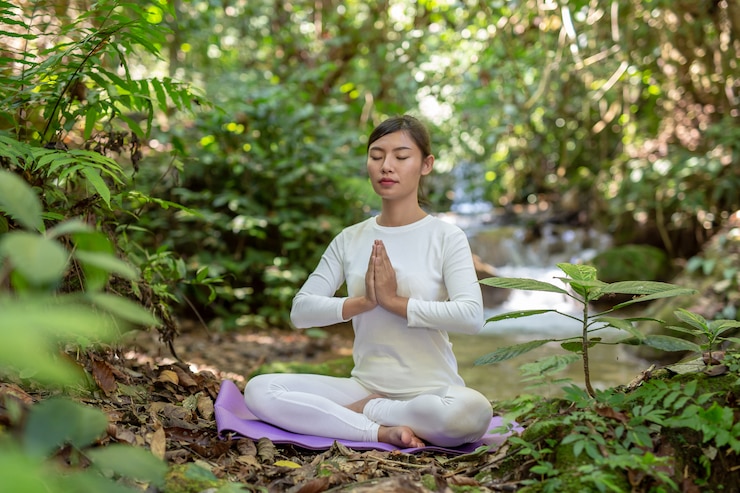
Benefits of Meditation by Dosha
Physical Benefits: What the Research Shows
Meditation isn't just "feeling calm." The physiological effects are measurable:
- Telomere protection: A 2013 study by Jacobs et al. published in Psychoneuroendocrinology found that retreat meditators showed significantly higher telomerase activity — the enzyme that maintains telomere length — compared to controls. Longer telomeres correlate directly with slower biological aging.
- Melatonin boost: Research has shown that meditation practitioners have elevated melatonin levels, likely through stimulation of the pineal gland. This benefits Vata types especially, since insomnia is their most common complaint.
- Blood pressure reduction: A 2019 systematic review in the Journal of the American Heart Association found that Transcendental Meditation lowered systolic blood pressure by approximately 4 mmHg — relevant for Pitta types prone to hypertension.
- Cortisol regulation: Multiple studies confirm meditation reduces cortisol, the primary stress hormone. This is particularly important for Vata imbalances driven by chronic anxiety.
Mental and Emotional Benefits
Each dosha gains different mental benefits:
- Vata gains stability, reduced anxiety, better focus, and improved sleep
- Pitta develops patience, compassion, reduced perfectionism, and emotional cooling
- Kapha experiences motivation, mental clarity, lighter mood, and reduced attachment
Spiritual Benefits in the Ayurvedic Framework
- Ayurveda considers meditation the primary tool for increasing Sattva — the quality of purity, clarity, and harmony in the mind. A sattvic mind, regardless of dosha, makes better decisions, maintains healthier relationships, and experiences deeper contentment.
- Each dosha has its own path to Sattva: Vata through grounding, Pitta through surrender, Kapha through awakening.
Vata Dosha Meditation: Grounding the Restless Mind (Air & Space)
Signs of Vata Imbalance That Meditation Addresses
You know your Vata is aggravated when you experience: racing thoughts that won't stop, difficulty falling or staying asleep, free-floating anxiety without a clear cause, inability to sit still, scattered attention, forgetfulness, and a general feeling of being "ungrounded" — like your mind is floating somewhere above your body.
Best Meditation Techniques for Vata
Mantra Meditation with Mala Beads
This is the single most effective technique for Vata. The repetitive sound anchors the wandering mind, and the physical act of moving beads through your fingers gives the body something to do — satisfying Vata's need for movement without creating more agitation.
How to practice:
- Sit comfortably with a blanket or shawl (Vata needs warmth)
- Hold a mala of 108 beads in your right hand, draped over the middle finger
- Begin repeating your chosen mantra, moving one bead per repetition with your thumb
- When you reach the guru bead (the larger one), pause, take a breath, then reverse direction
- Start with one round (108 repetitions, about 10-12 minutes) and build gradually
Grounding Body-Scan Meditation
Start at the crown of your head and slowly move your awareness downward — forehead, jaw, throat, chest, belly, hips, legs, feet. Spend extra time feeling the weight of your body pressing into the chair or cushion. This draws Vata's scattered upward energy downward.
Meditation in Motion for Severe Vata Imbalance
- When sitting still is genuinly impossible, Vata types can practice mindful daily activities: washing dishes with full sensory attention, walking barefoot on grass while feeling each footstep, or slow cooking while noticing every texture and smell.
- This isn't a lesser practice — it's a bridge to seated meditation.
Recommended Mantras for Vata
| Mantra | Meaning | Why It Works for Vata |
|---|---|---|
| Om Namah Shivaya | I bow to the inner Self | Creates deep grounding and inner stillness |
| Om Gam Ganapataye Namaha | Salutation to Ganesha, remover of obstacles | Stabilizes scattered energy, removes mental blocks |
| Ram (Bija mantra) | Seed sound of fire/solar plexus | Generates warmth and security Vata lacks |
| So Hum | I am That | Simple, rhythmic, easy for beginners |
Mudras for Vata Meditation
- Prithvi Mudra (tip of ring finger touching thumb tip): Increases Earth element, directly countering Vata's excess air
- Vayu Mudra (index finger pressed to base of thumb, thumb gently pressing over it): Specifically reduces excess Vata/air element
- Gyan Mudra (index finger tip to thumb tip): Calms the nervous system, improves concentration
Pranayama for Vata
- Nadi Shodhana (Alternate Nostril Breathing) is the gold standard for Vata. It balances both hemispheres of the brain, calms the nervous system, and creates a rhythmic pattern that soothes Vata's irregularity. Practice 5-10 rounds before seated meditation.
- Avoid Bhastrika or Kapalbhati — these increase air element and can worsen Vata significantly.
Optimal Duration and Timing for Vata
- Duration: 10-15 minutes is ideal. Vata types burn out quickly with longer sessions. Two short sessions beat one long one.
- - Best time: 6:00–10:00 AM (Kapha time) — the natural heaviness and stability of Kapha hours helps counterbalance Vata's lightness.
- The 2:00–6:00 PM Vata hours can be tempting, but the increased Vata energy in the atmosphere can actually make practice harder.
Pitta Dosha Meditation: Cooling the Fiery Mind (Fire & Water)
Signs of Pitta Imbalance That Meditation Addresses
Watch for: sharp irritability over small things, critical inner dialogue directed at yourself or others, perfectionism that paralyzes action, competitive thinking (even during meditation), burning sensations in the body, difficulty "switching off" from work mode, and a tendency to judge your meditation as "good" or "bad."
Best Meditation Techniques for Pitta
Loving-Kindness Meditation (Metta)
This is Pitta's medicine. Where Pitta contracts into judgment, Metta expands into compassion. The structured nature of the practice appeals to Pitta's organized mind while softening its sharp edges.
How to practice:
- Sit comfortably in a cool, dimly lit space
- Bring to mind someone you love easily.
- Silently repeat: "May you be happy. May you be healthy. May you be safe. May you live with ease."
- Extend these wishes to yourself
- Gradually expand to neutral people, then difficult people, then all beings
- Practice for 15-20 minutes
Cooling Waterfall Visualization
Close your eyes and visualize a gentle, cool waterfall cascading over your head and body. Feel the water washing away heat, tension, and intensity. See it carrying away redness, frustration, and sharpness, leaving behind cool blue and silver light. Pitta responds powerfully to visual imagery, making visualization techniques especially effective.
Moon-Gazing Meditation (Chandra Trataka)
On full moon nights, gently gaze at the moon for 2-3 minutes, then close your eyes and hold the after-image. The moon's cooling energy (Soma) is considered the direct antidote to Pitta's solar intensity in Ayurveda.
Recommended Mantras for Pitta
| Mantra | Meaning | Why It Works for Pitta |
|---|---|---|
| Om Shri Dhanvantre Namaha | Salutation to the divine healer | Channels Pitta's intensity toward healing rather than criticism |
| Om Chandraya Namaha | Salutation to the Moon | Directly cools and soothes lunar energy |
| Sham (Bija mantra) | Seed sound of the Moon | Cooling, calming, reduces internal heat |
| Om Shanti Shanti Shanti | Peace, peace, peace | Simple and effective for acute irritability |
Mudras for Pitta Meditation
- Shuni Mudra (middle finger tip touching thumb tip): Promotes patience and discipline — qualities Pitta needs but approaches differently through this mudra's calming influence
- Varuna Mudra (little finger tip touching thumb tip): Increases Water element, cooling Pitta's excess fire
Pranayama for Pitta
- Shitali Pranayama is Pitta's best friend. Roll your tongue into a tube, inhale slowly through the tube, close your mouth, and exhale through your nose. If you can't roll your tongue (it's genetic), use Shitkari — clench your teeth gently, inhale through the gaps, then exhale through the nose. Both techniques literally cool the air entering your body. Practice 10-15 rounds before meditation.
- Avoid Surya Bhedana (right-nostril breathing) — it increases solar/fire energy.
Optimal Duration and Timing for Pitta
- Duration: 15-20 minutes. Pitta has the discipline for longer sits but benefits from learning to stop before the practice becomes another achievement to optimize.
- - Best time: 6:00-10:00 PM (Kapha time, cooling) or moonrise.
- Avoid the 10:00 AM-2:00 PM Pitta peak when internal fire is already highest.
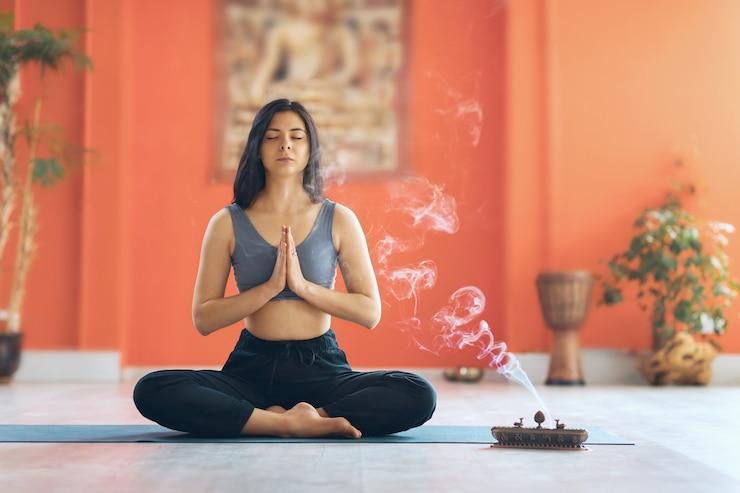
Kapha Dosha Meditation: Awakening the Heavy Mind (Earth & Water)
Signs of Kapha Imbalance That Meditation Addresses
Kapha imbalance shows as: persistent lethargy and low motivation, emotional eating or attachment to comfort, resistance to change, sleeping excessively but still feeling tired, brain fog, mild depression that feels more like "flatness" than sadness, and hoarding — whether objects, relationships, or outdated beliefs.
Best Meditation Techniques for Kapha
Walking Meditation (Chankramanam)
This is the primary recommendation for Kapha. The combination of physical movement and mindful awareness prevents the drowsiness that seated meditation often triggers in Kapha types.
How to practice:
- Choose a straight path of 20-30 steps
- Stand at one end, feet hip-width apart, hands clasped gently behind your back
- Walk slowly, noticing: lifting the foot, moving it forward, placing it down, shifting weight
- At the end of the path, pause, turn mindfully, walk back
- Gradually increase speed if drowsiness persists — brisk mindful walking is perfectly valid
- Practice for 20-30 minutes
Breath-Counting with Energizing Visualization
Sit upright (Kapha must resist the urge to lean back). Inhale deeply, visualize bright golden light entering through the crown. Exhale, visualize dark, heavy, stagnant energy leaving through the feet. Count each breath cycle up to 10, then restart. The upright posture and active visualization keep Kapha's mind engaged.
Kirtan and Chanting Meditation
Group chanting and devotional singing are surprisingly powerful for Kapha. The vibration breaks up emotional stagnation, the social element combats Kapha's tendency toward isolation, and the emotional expression releases the stuck feelings Kapha tends to suppress.
Recommended Mantras for Kapha
| Mantra | Meaning | Why It Works for Kapha |
|---|---|---|
| Om Namah Shivaya | I bow to the inner Self | The transformative energy of Shiva breaks up stagnation |
| Om Aim Saraswatyai Namaha | Salutation to Saraswati | Stimulates creativity and mental flow |
| Hum (Bija mantra) | Seed sound of space/ether | Creates lightness, opens constricted energy |
| Om Sri Maha Lakshmyai Namaha | Salutation to Lakshmi | Energizes and motivates without aggression |
Mudras for Kapha Meditation
- Surya Mudra (ring finger pressed to base of thumb, thumb pressing gently over it): Increases Fire element, directly countering Kapha's heaviness
- Akash Mudra (middle finger tip touching thumb tip): Increases Space element, creating lightness and openness
Pranayama for Kapha
- Kapalabhati (Skull-Shining Breath) is essential for Kapha. The rapid, forceful exhalations generate heat, clear mucus from the respiratory system, and activate the sympathetic nervous system — exactly what sluggish Kapha needs. Practice 3 rounds of 30-60 pumps before meditation.
- Also excellent: Bhastrika (Bellows Breath) and Surya Bhedana (right-nostril breathing).
- Avoid Shitali — cooling an already cold dosha creates more imbalance.
Optimal Duration and Timing for Kapha
- Duration: 20-30 minutes. Kapha actually needs longer sessions to break through initial resistance and reach a state of genuine alertness-within-stillness.
- Best time: 3:00-6:00 AM (Vata time, before Kapha hours begin) — Brahma Muhurta, the traditional pre-dawn meditation window. The lightness of Vata time supports Kapha's practice.
- The worst time is 6:00-10:00 AM or 6:00-10:00 PM (Kapha hours), when heaviness is amplified.
Don't wait or self medicate. Start chat with Doctor NOW
Meditation for Dual Constitutions and Tridoshic Types
This is where most guides stop — and where real life begins. The majority of people aren't purely one dosha. Here's how to adapt.
Vata-Pitta Constitution
- Your mind oscillates between anxiety (Vata) and irritability (Pitta).
- Primary technique: Nadi Shodhana pranayama followed by mantra meditation using cooling but rhythmic mantras like "Om Chandraya Namaha." Duration: 12-15 minutes.
- Key principle: Prioritize whichever dosha is more aggravated today, not your birth constitution.
Pitta-Kapha Constitution
- You may feel simultaneously driven and stuck — intense ambition with heavy resistance.
- Primary technique: Metta meditation followed by 10 minutes of walking meditation.
- Duration: 15-20 minutes.
- Key principle: Start with cooling (for Pitta), then shift to energizing (for Kapha).
Vata-Kapha Constitution
- This combination creates a unique pattern: mental restlessness with physical heaviness.
- Primary technique: Walking meditation with mantra repetition — combines Kapha's need for movement with Vata's need for an anchor.
- Duration: 15-20 minutes. Use warming, grounding mantras like "Ram."
Tridoshic Constitution
If all three doshas are relatively equal, follow the seasonal approach:
- Spring (Kapha season): Energizing practices, Kapalabhati, walking meditation
- Summer (Pitta season): Cooling practices, Shitali, Metta meditation
- Fall/Winter (Vata season): Grounding practices, Nadi Shodhana, mantra with mala
Creating the Ideal Meditation Environment for Your Dosha
No guide has covered this, but it matters tremendously. Your external environment should counterbalance your dosha.
Aromatherapy and Sound by Dosha
| Element | Vata | Pitta | Kapha |
|---|---|---|---|
| Essential oils | Sesame, ashwagandha, lavender, sweet orange | Sandalwood, rose, jasmine, vetiver | Eucalyptus, camphor, rosemary, clove |
| Incense | Frankincense, myrrh | Sandalwood, mogra | Sage, cedar |
| Sound/Music | Low-pitched singing bowls, Raga Bhairavi (evening) | Flute, Raga Malkauns (night), water sounds | Drums, Raga Bhairav (morning), upbeat kirtan |
| Room temperature | Warm (22-25°C) | Cool (18-20°C) | Moderate to slightly warm (20-22°C) |
| Lighting | Warm candlelight | Dim, cool-toned, or moonlight | Bright natural light |
| Colors in space | Warm earth tones, gold, orange | Cool blues, greens, whites | Vibrant reds, yellows, purples |
Pre-Meditation Nutrition by Dosha
What you consume 30-60 minutes before meditation affects your practice:
- Vata: Warm spiced milk with ashwagandha and a pinch of nutmeg. Avoid caffeine.
- Pitta: Room-temperature water with mint, or cooling coconut water. Avoid spicy food for at least 2 hours before.
- Kapha: Ginger-tulsi tea with black pepper and honey. The warmth and spice stimulate alertness. Avoid heavy, sweet, or dairy-heavy foods.
Common Mistakes and Contraindications: What Can Worsen Your Dosha
This is critical information that's absent from virtually every guide on dosha meditation.
Practices That INCREASE Imbalance
| Dosha | Harmful Practice | Why It's Problematic |
|---|---|---|
| Vata | Extended silent retreats (10+ days), dynamic/chaotic meditations, excessive Kapalabhati | Increases air element, can trigger anxiety attacks and dissociation |
| Vata | Meditating in cold, drafty, or noisy rooms | Aggravates all Vata qualities simultaneously |
| Pitta | Heat-building visualizations (fire, sun), competitive group meditation, practicing in direct sunlight | Adds fire to an already overheated system |
| Pitta | Timing meditation to "beat your record" | Turns spiritual practice into another achievement metric |
| Kapha | Long passive body scans, Yoga Nidra without experienced guidance, meditating lying down | Can deepen lethargy, cause excessive sleep, and increase Tamas |
| Kapha | Practicing after heavy meals or in dimly lit, warm rooms | Creates conditions that amplify every Kapha quality |
Progression Path: From Beginner to Advanced
Weeks 1-4 (Foundation): Practice your dosha-specific technique for the recommended minimum duration, 5-6 days per week. Focus only on consistency. Months 2-3 (Deepening): Gradually increase duration by 5 minutes. Add dosha-specific pranayama as a 5-minute warm-up before meditation. Months 4-6 (Expanding): Introduce mudras and environmental elements (aromas, sounds). Begin noticing seasonal shifts and adjusting practice accordingly.
- Month 7+ (Integration): Start incorporating techniques from other doshas based on your current Vikriti.
- This is the tri-doshic approach — choosing your practice based on what you need today rather than rigidly following your birth constitution.
Does Meditation Reduce Vata? Science and Tradition Agree
This is one of the most commonly asked questions, and the answer is a definitive yes — with caveats.
A 2014 study published in JAMA Internal Medicine analyzed 47 trials with 3,515 participants and found that mindfulness meditation programs showed moderate evidence of reducing anxiety (a primary Vata symptom), with effect sizes of 0.38 at 8 weeks. Research from Johns Hopkins also found comparable effects for depression symptoms.
- From an Ayurvedic perspective, the mechanism is clear: meditation increases Ojas (vital essence) and Sattva (mental clarity), both of which are depleted when Vata is aggravated.
- The key caveat: the wrong type of meditation can increase Vata. Unstructured silent sitting, extended solitary retreats, and practices emphasizing emptiness or space can amplify Vata's already excessive air and space elements.
The right approach — grounding, warm, structured, rhythmic practice — absolutley reduces Vata. The wrong approach makes things worse. This is precisely why dosha-specific meditation matters.
Frequently Asked Questions
What is the difference between dosha meditation and regular meditation?
- Regular meditation applies the same technique to everyone. Dosha meditation selects techniques, duration, timing, mantras, and even the meditation enviroment based on your Ayurvedic constitution. For example, a Vata type uses mantra with mala beads for 10-15 minutes in the morning, while a Kapha type practices walking meditation for 20-30 minutes before dawn.
- The core principles of awareness remain identical — only the delivery method changes.
What are the 7 types of meditation relevant to Ayurveda?
The most relevant types for dosha meditation are: (1) Mantra meditation, (2) Loving-kindness/Metta meditation, (3) Walking meditation, (4) Breath-awareness meditation, (5) Visualization meditation, (6) Trataka (gazing meditation), and (7) Chanting/Kirtan meditation. Each type naturally aligns with specific doshas, though any can be adapted with proper guidance.
Can I practice dosha meditation if I don't know my exact dosha?
Yes. Start by observing your current mental state rather than your birth constitution. Feeling anxious and scattered? Use Vata techniques. Feeling irritable and overheated? Try Pitta practices. Feeling sluggish and unmotivated? Apply Kapha methods. This "current state" approach (Vikriti-based) is actually more practical than strict Prakriti-based selection, and many experienced Ayurvedic practitioners recommend it.
How long before I see results from dosha-specific meditation?
- Most practitioners report noticeable shifts in mental clarity and emotional regulation within 2-3 weeks of consistent daily practice. A 2014 meta-analysis in JAMA Internal Medicine showed measurable anxiety reduction at 8 weeks.
- For deeper constitutional balancing — shifts in sleep patterns, digestion, and long-term emotional tendencies — expect 3-6 months of regular practice.
What is dosha massage and how does it complement meditation?
Dosha massage (Abhyanga) involves self-massage with dosha-specific warm oils before bathing. Vata uses heavy sesame oil, Pitta uses cooling coconut oil, and Kapha uses stimulating mustard oil. Practicing Abhyanga before meditation calms the nervous system and grounds the body, creating a more stable foundation for sitting practice. The combination is more effective than either practice alone.
Start Your Dosha Meditation Practice Today
The most important step isn't finding the perfect technique — it's beginning. Choose one practice from your dosha section above and commit to 7 consecutive days. Set a non-negotiable time, prepare your space, and sit (or walk) for even just 10 minutes.
If you're unsure about your dosha or have specific health concerns, consult with a qualified Ayurvedic practitioner who can assess your Prakriti and current Vikriti through pulse diagnosis (Nadi Pariksha). The personalized guidance you'll receive can transform a general practice into a precision tool for your wellbeing.
Your dosha isn't a limitation. It's a roadmap. And dosha meditation is how you follow it home.
Scientific Sources
- Factors that influence patients in Sri Lanka in their choice between Ayurvedic and Western medicine — Glynn JR et al., 1985, British medical journal (Clinical research ed.)
- Origin of spectacles in India — Agarwal RK, 1971, The British journal of ophthalmology
- Akarnan: The Stethoscope and Making of Modern Ayurveda, Bengal, c. 1894-1952 — Mukharji PB, 2019, Technology and culture
- Ayurvedic medicine — Concon AA, 1983, The American journal of Chinese medicine
- An Ayurvedic approach to postpartum depression — Posmontier B et al., 2009, Holistic nursing practice
- Editorial: Special issue on Ayurveda — Mukherjee PK et al., 2017, Journal of ethnopharmacology
- Ayurvedic medicine in Mauritius: Profile of Ayurvedic outlet, use, sale, distribution, regulation and importation — Elaheebocus N et al., 2017, Journal of ethnopharmacology
- Ayurvedic medicine in Sri Lanka. Enjoying a thousand year old healing art at the source(https://pubmed.ncbi.nlm.nih.gov/12619242/) — Seydel W, 2003, MMW Fortschritte der Medizin
- Things do not get better by being left alone.
- The physician and complementary medicine — Perlman AI, 2000, The Journal of rheumatology
- Development of Ayurveda - Tradition to trend — Mukherjee PK et al., 2017, Journal of ethnopharmacology
- Asian therapies for cancer--coming of age — Chang R et al., 2002, Journal of alternative and complementary medicine (New York, N.Y.)
- Retrospective Investigation of a Lead Poisoning Outbreak from the Consumption of an Ayurvedic Medicine: Durban, South Africa — Mathee A et al., 2015, International journal of environmental research and public health
- Reflections from the Far East — Stevensen C, 1998, Complementary therapies in nursing & midwifery
- An update on Shankhpushpi, a cognition-boosting Ayurvedic medicine — Sethiya NK et al., 2009, Zhong xi yi jie he xue bao = Journal of Chinese integrative medicine
- Ayurvedic medicine. Core concept, therapeutic principles, and current relevance — Chopra A et al., 2002, The Medical clinics of North America
- Untouchable healing: a Dalit Ayurvedic doctor from Nepal suffers his country's ills — Cameron MM, 2009, Medical anthropology
- Herbal medicine induced Stevens-Johnson syndrome: a case report — Chowdhury AD et al., 2004, International journal of paediatric dentistry
- Some thoughts on the undergraduate Ayurveda curriculum — Chandra S, 2023, Indian journal of medical ethics
- Ayurved for digestion — Krebs K, 2004, Gastroenterology nursing : the official journal of the Society of Gastroenterology Nurses and Associates
- Ayurvedic gender differences revisited — Rojas A et al., 2012, Journal of alternative and complementary medicine (New York, N.Y.)
Questions from users
Is it safe to drink ginger-tulsi tea before meditation for calming Kapha dosha?
Vance
6 days ago
Yeah, totally! Ginger-tulsi tea is great for calming Kapha dosha. It's warming and reduces the heaviness, helping to balance the dosha before meditation. Just watch out if you're prone to heartburn, cuz ginger can be a bit heating. Otherwise, it should be nice and soothing for your practice.
What is dosha massage and how does it help improve meditation practice?
Brooklyn
15 days ago
Dosha massage, or Abhyanga, uses warm oils tailored to your dosha (body type) for self-massage. This can calm your mind, enhance body awareness, and reduce stress, setting the stage for a more focused meditation. It can, like, balance the body's energy flow, making meditation a deeper experience. If you feel more connected and relaxed, your meditation might just get better!
Can I practice Ayurvedic breathing techniques if I have respiratory issues?
Genesis
25 days ago
Yes, you can practice Ayurvedic breathing techniques even with respiratory issues, but it's important to go easy and listen to your body. Start with gentle techniques like Nadi Shodhana (alternate nostril breathing). Just don’t push too hard, maybe consult with a practitioner if you’re unsure about anything. Keep it soft and steady!
What happens if my meditation practice doesn’t align with my dosha anymore?
James
35 days ago
If your practice doesn’t fit your dosha now, it might be a sign to switch things up! Doshas can shift over time, so let's adapt. If you're finding your practice too stimulating or draining, try styles more aligned with your current state. Maybe vata needs calming, kapha energizing. Your practice should feel nurturing, not stressful. Listen to your body and make tweaks as needed.
Can I use breathing techniques to help with anxiety and stress management?
Henry
45 days ago
Absolutely, breathing techniques can really help with anxiety and stress! In Ayurveda, different techniques work with your dosha. If you’re feeling anxious or heated, try Sitali breath (curling the tongue and inhaling). For Kapha dosha, which can feel sluggish, energizing breaths like Kapalabhati work well. It's all about finding what suits your mood and dosha!
What is the best time of day to practice meditation based on my dosha type?
Jack
54 days ago
Hey there! For best meditation timing, it kinda depends on your dosha. Vata types might find calm in evening sessions; it helps ground their energy before bed. Pitta doshas could benefit from mid-day meditations to cool their fiery nature, and Kapha types might feel more alert with a morning practice to shake off sleepiness. Follow how you feel and adjust accordingly, listen to your body!
Can I practice guided meditation at any time of the day, or are there specific times that work best?
Zachary
64 days ago
You can definitely practice guided meditation at any time that suits you, but some times might be more beneficial. Traditionally, early morning or just before bed are recommended—morning for setting a peaceful tone for the day, and evening to unwind. Ultimately, it's about finding what time fits best with your routine and makes you feel good. Consistency's more important than the exact time, so just go with what works for you!
Is it safe to try new breathing techniques if I'm new to meditation?
Peyton
74 days ago
Totally safe to try new breathing techniques, even if you're new to meditation! Just take it slow and listen to your body. Start with something gentle, like Nadi Shodhana. If anything feels uncomfortable, back off a bit. Breathing techniques can be calming and balancing for your dosha, so it's a great start. Enjoy your journey!
What are the benefits of meditation for each dosha type, particularly for mental health?
Emily
150 days ago
For Vata types, meditation can ground their restless energy, easing anxiety and promoting calmness. Pittas might find balance by cooling down their intense focus and competitiveness, reducing stress. For Kaphas, meditating helps combat their natural tendency to inactivity, boosting motivation and alertness. Each practice can really help refine and balance your own energy flow.
What can I do if I have characteristics of more than one dosha when practicing meditation?
Elijah
159 days ago
If you have charateristics of more than one dosha, it's quite normal! Many of us do, and it's all about finding balance. When meditating, you might mix techniques that cater to both or all of your doshas. Try to observe which dosha is more dominant in you at different times of day - adapt your practice to that. Maybe calming breath work if Pitta is high, or grounding practice if Vata is restless. It's about experimenting and finding what feels good in the moment!
Related articles

Yoga Therapy
What Is Bhujangasana: Meaning, Procedure, and Yoga Benefits
What is Bhujangasana and how is it done? Learn the correct steps, benefits, and procedure of this yoga pose, also known as Cobra Pose, with Ayurvedic insight
6,618
Yoga Therapy
What Is Somatic Yoga? Meaning, Benefits & Poses
Let’s be honest — the name sounds a little technical, right? The word somatic itself comes from the Greek word soma, meaning “the body.” But in practice, somatic yoga is a whole different vibe than what most of us picture when we think about yoga.
2,301

Yoga Therapy
What Is Makarasana: Meaning, Steps, Benefits, and Yoga Practice
Learn what is makarasana and how to do it. Discover makarasana pose benefits, yoga meaning, steps, variations, and precautions for better results
3,955

Yoga Therapy
What Is Ashtanga Yoga: Meaning, Structure, and Yogic Benefits
What is Ashtanga Yoga? Learn its meaning, steps, poses, and benefits. Explore how this eight-limbed path supports health, balance, and inner awareness
6,701

Yoga Therapy
Ayurvedic Treatment for Plantar Fasciitis: Natural Relief for Foot Pain
Plantar fasciitis is characterized by stabbing pain near the heel, especially during the first steps in the morning or after prolonged periods of inactivity.
3,205
Yoga Therapy
Benefits of Including Yoga in Daily Routine
The path to health and well-being is numerous yet essential. It is important to take up the path that provides you with maximum benefit when it comes to building health.
2,804

Yoga Therapy
Discover Abhyanga: A Healing Massage
Abhyanga is a traditional Ayurvedic self-massage practice using warm oils to support holistic physical and mental well-being.
2,428

Yoga Therapy
Does Yoga Help in Weight Loss?
Discover how yoga helps in weight loss through effective poses, simple home routines, and Ayurvedic guidance. Ideal for beginners and women seeking natural results
1,744
Yoga Therapy
Feeling Blocked? How Yoga Poses for Constipation (Plus Ayurvedic Tips) Can Seriously Help
Constipation isn't just annoying — it's exhausting. You sit, you wait, you sigh, you maybe check your phone. Again. And still... nothing. It messes with your mood, your energy, even how your clothes feel. And let’s be real — nobody wants to talk about it.
2,357
Related questions on the topic
Legal
Additional Documents
© 2024 Ask Ayurveda. All rights reserved.