FREE! Ask Ayurvedic Doctors 24/7

 Fast responses
 1000+ verified doctors
Ligament Injury Treatment in Ayurveda: A Holistic Approach to Healing
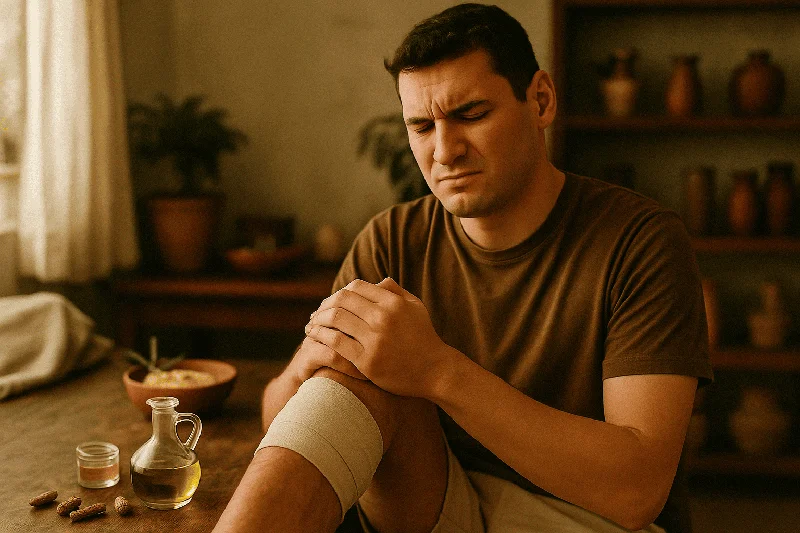
Ligament injury treatment in Ayurveda works by addressing the root cause of tissue damage — primarily aggravated Vata dosha — through a combination of external therapies (Janu Basti, Patra Pinda Sweda, Marma massage), internal herbal medications (Laksha Guggulu, Ashwagandha, Sallaki), and structured rehabilitation including yoga therapy. Unlike surgery, which reconstructs or replaces the damaged ligament, Ayurveda focuses on stimulating the body's own regenerative capacity, reducing inflammation naturally, and restoring full joint stability without the risks of surgical complications. For Grade I and Grade II ligament injuries, Ayurvedic treatment has shown remarkable clinical results, with many patients returning to normal activity within 3 to 12 weeks depending on severity.
Whether you're dealing with a knee ACL tear, an ankle sprain, a shoulder ligament injury, or a wrist strain — this comprehensive guide covers everything you need to know about healing ligaments through Ayurveda, including specific herbs with dosages, treatment timelines, when Ayurveda is appropriate, and when it's not.
How Does Ayurveda Interpret Ligament Trauma?
To understand why Ayurvedic treatment works for ligament injuries, you need to understand how Ayurveda views ligaments in the first place. In Ayurvedic anatomy (Shareera Rachana), ligaments are classified under Snayu — the fibrous connective tissues that bind bones at joints (Sandhi). Snayu is considered a sub-tissue of Mamsa Dhatu (muscle tissue) and is nourished through the Majja Dhatu (bone marrow tissue) metabolic pathway.
The Role of Vata Dosha in Ligament Damage
- Ligament injury is primarily understood as a disorder of Vyana Vata, the sub-type of Vata responsible for circulation, muscular movement, and joint function.
- When trauma occurs — through a fall, a sports collision, or a sudden twisting movement — Vyana Vata becomes severely aggravated at the injury site.
- This leads to:
- Pain (Ruja) — the cardinal sign of Vata aggravation
- Swelling (Shotha) — caused by disrupted local circulation
- Loss of function (Karma Hani) — inability to bear weight or move the joint
- Instability (Sandhi Shaithilya) — looseness of the joint structure
Simultaneously, Shleshaka Kapha — the sub-dosha responsible for joint lubrication and cushioning — becomes depleted or displaced. This dual imbalance (excess Vata + diminished Kapha) is the core pathology that Ayurvedic treatment aims to correct.
Agni, Ama, and Why Some Ligaments Heal Slowly
- Here's something no other guide mentions: the role of Agni (digestive and metabolic fire) and Ama (metabolic toxins) in ligament healing.
- When Agni is weak — due to poor diet, stress, or pre-existing digestive issues — the body produces Ama, which accumulates in channels (Srotas) and blocks nutrient delivery to injured tissues. This is why two people with the same Grade II tear can have vastly different recovery timelines. One has strong Agni and clean Srotas; the other doesn't.
Ayurvedic treatment addresses this by including Deepana-Pachana (digestive-enhancing) herbs alongside direct ligament-healing therapies. It's a detail that makes a real clinical difference.
Sandhi Marma Abhighata: The Ayurvedic Classification
- When a ligament injury involves a Marma point (one of 107 vital energy junctions described in Sushruta Samhita), it is classified as Sandhi Marma Abhighata — trauma to a joint vital point.
- The knee joint contains two critical Marma points: Janu Marma. Injury to these points is considered more serious and requires specialized Marma therapy in addition to standard treatment protocols.
How Does Modern Medicine Classify Ligament Injuries?
Understanding the modern grading system is essential because it directly determines whether Ayurvedic treatment is appropriate, and what recovery timeline to expect.
Grade I (Mild Sprain)
- Pathology: Microscopic tears in ligament fibers; the ligament is stretched but intact
- Symptoms: Mild pain, slight swelling, no joint instability
- Joint stability: Fully maintained
- Ayurvedic prognosis: Excellent — full recovery typically in 2–4 weeks
Grade II (Moderate / Partial Tear)
- Pathology: Significant partial tearing of ligament fibers (30–90% disruption)
- Symptoms: Moderate to severe pain, noticeable swelling, bruising, difficulty bearing weight
- Joint stability: Mildly to moderately compromised
- Ayurvedic prognosis: Very good — recovery in 6–12 weeks with consistent treatment
Grade III (Complete Tear / Rupture)
- Pathology: Complete disruption of the ligament; fibers fully torn
- Symptoms: Severe pain (initially), significant swelling, gross instability, inability to use the joint
- Joint stability: Severely compromised or absent
- Ayurvedic prognosis: Case-dependent — some Grade III injuries respond well; others require surgical evaluation (see contraindications section below)
| Feature | Grade I | Grade II | Grade III |
|---|---|---|---|
| Fiber Damage | < 30% | 30–90% | 100% |
| Swelling | Mild | Moderate | Severe |
| Joint Stability | Stable | Partially unstable | Unstable |
| Weight Bearing | Possible | Difficult | Usually impossible |
| Ayurvedic Treatment | First-line | First-line | Case-by-case evaluation |
| Recovery Timeline (Ayurveda) | 2–4 weeks | 6–12 weeks | 12–24 weeks (if suitable) |
What Are the Best Ayurvedic External Therapies for Ligament Injury?
External therapies (Bahya Chikitsa) form the backbone of Ayurvedic ligament treatment. These are administered daily or in structured Panchakarma protocols, typically in a clinical setting during the initial phase.
Janu Basti (for Knee Ligament Injuries)
A dam made of black gram dough is placed around the knee joint, and warm medicated oil (usually Ksheerabala Taila or Dhanwantharam Taila) is pooled inside for 30–45 minutes. The sustained warmth penetrates deep into the joint capsule, pacifying Vata, improving local circulation, and nourishing the Snayu tissues. This is particularly effective for ACL, PCL, MCL, and meniscal injuries.
Abhyanga (Therapeutic Oil Massage)
Full-limb or localized massage using medicated oils like Murivenna Oil, Pinda Taila, or Mahanarayan Taila. Abhyanga improves lymphatic drainage, reduces edema, and delivers fat-soluble herbal compounds directly through the skin to underlying tissues.
Murivenna Oil for Ligament Tear
- Murivenna is a traditional Kerala formulation specifically designed for traumatic injuries.
- Its key ingredients — Karanja (Pongamia pinnata), Coconut milk, Lime juice, and Aloe vera — have demonstrated anti-inflammatory and analgesic properties. A 2017 observational study published in the Journal of Ayurveda and Integrative Medicine found that Murivenna application significantly reduced pain scores and swelling in musculoskeletal trauma cases within 7 days of treatment.
Patra Pinda Sweda (Leaf Bundle Fomentation)
Fresh medicinal leaves — typically Nirgundi (Vitex negundo), Eranda (Ricinus communis), and Arka (Calotropis) — are fried in medicated oil, bundled into a cloth pouch, and applied to the affected joint in rhythmic strokes. The combined effect of heat, herbal actives, and massage provides:
- Deep pain relief
- Reduction in muscle spasm around the injured joint
- Enhanced tissue pliability
Marma Manipulation and Nadi Sweda
Marma therapy involves gentle, specific pressure on vital points near the injury. For knee injuries, stimulation of Janu Marma and surrounding points (Indrabasti Marma in the calf, Urvi Marma in the thigh) improves neural signaling and blood flow to the damaged ligament. Nadi Sweda (localized steam fomentation) using herbal decoctions is often applied after Marma therapy to enhance its effects. Steam generated from a decoction of Dashamoola (ten roots) is directed at the injured area through a hose for 10–15 minutes.
Ayurvedic Bandaging Techniques (Kettu Mura)
A traditional technique from the Kerala Ayurvedic lineage. Specially prepared herbal pastes (often containing Asthi Shrinkhala/Hadjod, turmeric, and lime) are applied to the injury site and wrapped with cotton bandages soaked in medicated oils.
This provides:
- External stabilization similar to a functional brace
- Continuous transdermal delivery of healing herbs
- Controlled compression to reduce swelling
What Is the Best Ayurvedic Medicine for Ligament Injury?
This is where most guides fall short — they mention "internal medications" without naming a single herb or dosage. Here's a detailed, practical breakdown.
Key Ayurvedic Herbs and Formulations with Dosages
| Medicine | Key Action | Typical Dosage | Duration | Evidence |
|---|---|---|---|---|
| Laksha Guggulu | Bone & ligament healing (contains Laksha/lac resin) | 2 tablets (500mg each) twice daily after meals | 6–12 weeks | Classical reference: Bhaishajya Ratnavali |
| Yogaraj Guggulu | Anti-inflammatory, Vata-pacifying | 2 tablets twice daily after meals | 4–8 weeks | Widely used in Ayurvedic orthopedics |
| Ashwagandha (Withania somnifera) | Tissue regeneration, strength restoration | 500mg standardized extract twice daily | 8–12 weeks | 2015 study in JAIM showed improved muscle recovery |
| Sallaki (Boswellia serrata) | Anti-inflammatory (5-LOX inhibition) | 400mg extract thrice daily | 6–8 weeks | Multiple RCTs; Cochrane-reviewed for osteoarthritis |
| Hadjod (Cissus quadrangularis) | Accelerates connective tissue repair | 500mg twice daily | 6–8 weeks | 2009 study in JMPR showed faster fracture healing |
| Maharasnadi Kashayam | Deep Vata pacification, nerve-muscle support | 15ml with equal water, twice daily before meals | 4–8 weeks | Traditional Kerala Ayurvedic formula |
| Gandha Taila (internal use) | Ligament & bone strengthening | 5ml with warm milk at bedtime | 6–12 weeks | Classical Sushruta Samhita reference |
| Shatavari (Asparagus racemosus) | Tissue nourishment (Rasayana) | 500mg twice daily | 8–12 weeks | Supports Kapha nourishment of joints |
Important note: These dosages are general guidelines for adults. Individual dosages should be adjusted by a qualified Ayurvedic physician (BAMS/MD Ayurveda) based on your Prakriti, Agni status, severity of injury and concurrent medications.
How Internal Medicines Work Synergistically
The Ayurvedic internal treatment strategy typically combines:
- 1.Shamana drugs — to reduce pain and inflammation (Sallaki, Yogaraj Guggulu)
- 2.Sandhana drugs — to promote tissue union and repair (Laksha Guggulu, Hadjod)
- 3.Rasayana drugs — to strengthen and rejuvenate the repaired tissue (Ashwagandha, Shatavari)
- 4.Deepana-Pachana drugs — to enhance Agni and clear Ama, ensuring optimal nutrient absorption (Chitrakadi Vati, Trikatu)
This four-pronged internal approach, combined with external therapies, is what gives Ayurveda its edge in ligament recovery.
Ayurvedic Treatment for Ligament Injuries Beyond the Knee
Almost every online resource focuses exclusively on knee ligaments. But ligament injuries happen everywhere.
Ayurvedic Treatment for Ligament Tear in Ankle
Ankle sprains (usually involving the Anterior Talofibular Ligament) are the most common ligament injury globally.
Ayurvedic treatment includes:
- Gulpha Basti — similar to Janu Basti but adapted for the ankle joint
- Murivenna oil application with compression bandaging
- Laksha Guggulu internally for tissue repair
- Gentle ankle-specific yoga: Ankle circles, toe flexion-extension, supported standing on uneven surfaces (introduced gradually in week 3–4)
Ayurvedic Treatment for Ligament Tear in Shoulder
Shoulder ligament injuries — including rotator cuff strains and acromioclavicular joint sprains — respond well to:
- Greeva-Amsa Basti — oil pooling therapy for the shoulder region
- Pizhichil (oil pouring therapy) — continuous stream of warm medicated oil over the shoulder
- Ashwagandha Churna and Sallaki internally
- Shoulder Marma therapy targeting Amsa Marma and Kshipra Marma
Wrist and Elbow Ligament Injuries
These are common in tennis players, gymnasts, and people who work at computers. Localized Abhyanga with Pinda Taila, gentle fomentation, and Hadjod internally typically yield results within 3–6 weeks for Grade I–II injuries.
What Can a Patient Expect in the First 5–7 Days?
Understanding the treatment timeline helps set realistic expectations.
Days 1–3: Acute Phase Management
- Assessment: Detailed clinical examination; MRI review if available (an evidence-based Ayurveda approach integrates modern diagnostics)
- Dosha assessment and Agni evaluation
- Gentle Abhyanga with Murivenna or Pinda Taila (avoiding direct pressure on the tear site)
- Nadi Sweda for pain management
- Oral medications initiated: Laksha Guggulu, Sallaki, Maharasnadi Kashayam
- Immobilization with Ayurvedic bandaging (Kettu Mura) if needed
- Expected outcome: 30–40% pain reduction; swelling begins to decrease
Days 4–5: Transitional Phase
- Introduction of Janu Basti (or equivalent Basti for the affected joint)
- Patra Pinda Sweda introduced
- Gentle passive range of motion exercises begun
- Expected outcome: Pain reduces by another 20–30%; patient may begin partial weight-bearing
Days 6–7: Active Recovery Begins
- Marma therapy session introduced
- Active range of motion exercises
- Dietary optimization for tissue healing (anti-inflammatory, Vata-pacifying diet)
- Expected outcome: Functional improvement noticeable; most patients can perform daily activities with support
After the initial 7 days, treatment transitions to a longer rehabilitation phase (see the yoga and rehabilitation section below).
Yoga Therapy and Rehabilitation Exercises for Ligament Recovery
Yoga is not a separate "add-on" in Ayurvedic ligament treatment — it's an integral component of the healing process. However, timing matters. Introducing yoga too early can re-injure the healing ligament.
Phase 1 (Weeks 1–2): Breathwork and Gentle Movements
- Pranayama: Nadi Shodhana (alternate nostril breathing), Bhramari — reduces stress hormones that impair healing
- Meditation: 10–15 minutes of guided meditation to manage pain perception
- Isometric exercises: Gentle quadriceps sets (for knee injuries), ankle pumps (for ankle injuries) — contracting muscles without joint movement
Phase 2 (Weeks 3–6): Gentle Asanas
- Supported Supta Padangusthasana (reclined leg stretch with strap)
- Viparita Karani (legs-up-the-wall) — improves venous return, reduces swelling
- Seated knee flexion-extension with controlled range
- Partial weight-bearing balance exercises
Phase 3 (Weeks 7–12): Strengthening and Stability
- Virabhadrasana I and II (warrior poses) — modified with support
- Utkatasana (chair pose) — builds quadricep strength to support the knee
- Single-leg standing balance — progressive proprioceptive training
- Setubandhasana (bridge pose) — hamstring and glute activation
Ayurvedic Treatment vs Surgery: A Structured Comparison
This comparison is for ACL reconstruction specifically, as it's the most commonly discussed surgical option.
| Parameter | Ayurvedic Treatment | ACL Reconstruction Surgery |
|---|---|---|
| Approach | Conservative; enhances natural healing | Surgical graft replacement |
| Anesthesia | None required | General or spinal anesthesia |
| Hospital Stay | 7–21 days (inpatient Panchakarma) or outpatient | 1–3 days post-surgery |
| Total Recovery Time | 8–16 weeks (Grade II); up to 24 weeks (Grade III) | 6–9 months |
| Return to Sports | 3–6 months (depending on grade) | 9–12 months |
| Risks | Minimal (allergic reaction to herbs, rare) | Infection, graft failure, blood clots, nerve damage, arthrofibrosis |
| Cost in India | ₹30,000–₹1,50,000 (full course) | ₹1,50,000–₹4,00,000+ |
| Re-injury Rate | Limited data; clinical reports suggest low recurrence with proper rehab | 6–25% (ACL re-tear or contralateral tear) |
| Insurance Coverage | Some government schemes cover AYUSH hospitals | Widely covered by private insurance |
| Pain Management | Herbal (minimal side effects) | NSAIDs, opioids (side effect risk) |
| Suitability | Best for Grade I–II; select Grade III cases | Standard for Grade III with instability |
Diet and Lifestyle Recommendations (Pathya-Apathya)
Foods That Accelerate Ligament Healing
- Bone broth / Meat soup (Mamsa Rasa): Rich in collagen precursors and glycine — directly nourishes Mamsa and Asthi Dhatus
- Sesame seeds and sesame oil: Vata-pacifying, rich in calcium and healthy fats
- Milk boiled with Ashwagandha and turmeric: Classic Ayurvedic recovery drink
- Dates, almonds, and ghee: Enhance Ojas (vital energy) and support tissue regeneration
- Leafy greens and amla (Indian gooseberry): Vitamin C is essential for collagen synthesis
Foods and Habits to Avoid
- Cold, dry, and raw foods (aggravate Vata)
- Excessive caffeine and carbonated drinks
- Processed foods and refined sugars
- Remaining sedentary for prolonged periods after the acute phase
- Premature return to strenuous activity
When Should You NOT Use Ayurvedic Treatment? (Contraindications and Red Flags)
This is critical and honestly, something no other guide adequately covers.
Seek immediate orthopedic/surgical evaluation if:
- You heard a distinct "pop" sound at the time of injury (suggestive of complete rupture)
- The joint locks or gives way during movement
- You are completely unable to bear weight even after 48 hours
- There is visible joint deformity or abnormal angulation
- The injury involves a concurrent fracture (confirmed or suspected)
- You have multiple ligament injuries in the same joint (e.g., ACL + PCL + MCL)
- There is significant vascular compromise (cold, pale, or blue limb below the injury)
Ayurveda is generally NOT the first-line choice for:
- Complete (Grade III) tears with gross mechanical instability in young, high-performance athletes who need to return to competitive sport
- Ligament injuries associated with joint dislocation
- Cases where MRI shows complete retraction of the torn ligament ends
That said, even in surgical cases, Ayurvedic therapies can be immensely valuable as pre-surgical optimization and post-surgical rehabilitation — reducing recovery time and improving outcomes after reconstruction.
Prevention of Ligament Injuries: The Ayurvedic Perspective
- Daily Abhyanga (self-oil massage): 10–15 minutes with warm sesame oil before bathing strengthens Snayu and maintains tissue flexibility
- Proper warm-up: Always perform 10–15 minutes of dynamic stretching before sports or physical activity
- Strength training: Strong muscles (Mamsa Dhatu) protect the ligaments they surround
- Appropriate footwear: Especially for running, hiking, and court sports
- Seasonal regimen (Ritucharya): Vata season (autumn/early winter) increases vulnerability to ligament injuries — increase warm oil therapy and warm, nourishing foods during this period
- Body weight management: Excess weight places chronic stress on weight-bearing ligaments
Frequently Asked Questions
Is there any treatment for ligament tear in Ayurveda?
Yes, absolutely. Ayurveda offers a well-documented treatment protocol for ligament tears that includes external therapies (Janu Basti, Abhyanga, fomentation), internal herbal medicines (Laksha Guggulu, Ashwagandha, Boswellia), yoga-based rehabilitation, and dietary modifications. Grade I and Grade II tears respond particularly well. Some specialized Ayurvedic hospitals in Kerala now integrate MRI-based monitoring to track ligament healing objectively, bringing an evidence-based approach to traditional treatment.
How to repair a ligament tear naturally?
Natural ligament repair requires three things: reducing inflammation at the injury site, providing the body with raw materials for tissue regeneration, and gradually loading the healing ligament to stimulate proper fiber alignment. Ayurveda achieves this through Vata-pacifying therapies, collagen-supporting herbs like Hadjod (Cissus quadrangularis), and phased yoga-based rehabilitation. Adequate sleep, anti-inflammatory nutrition, and avoidance of re-injury are equally important.
What is the best oil for ligament tear in Ayurveda?
Murivenna Oil is considered the gold-standard Ayurvedic oil for acute ligament trauma, particularly in the Kerala tradition. For chronic ligament weakness or during the later stages of healing, Ksheerabala Taila and Dhanwantharam Taila are preferred as they have deeper Vata-pacifying and tissue-nourishing effects. Pinda Taila is another excellent option specifically for inflammatory conditions of joints and ligaments.
What are the medical perspectives on ligament pathology?
- Modern medicine views ligament pathology through the lens of structural mechanics — the degree of fiber disruption determines the grade (I, II, or III) and treatment approach. Ayurveda adds a metabolic and constitutional dimension, considering factors like Dosha imbalance, Dhatu nutrition status, Agni strength, and Srotas (channel) patency.
- Integrating both perspectives — using MRI for objective diagnosis and Ayurvedic treatment for holistic healing — represents the most comprehensive approach.
How much does Ayurvedic ligament treatment cost in India?
Costs vary significantly by clinic, location, and duration. Outpatient treatment (medicines and periodic therapies) typically ranges from ₹15,000–₹40,000 for a complete course. Inpatient Panchakarma-based treatment at specialized hospitals in Kerala ranges from ₹50,000–₹1,50,000 for a 14–21 day program. Some AYUSH-recognized hospitals accept government health insurance and Ayushman Bharat coverage, making treatment more accessible.
What about recurrence and long-term prognosis?
With proper Ayurvedic treatment followed by disciplined rehabilitation, recurrence rates are low — though large-scale studies are still needed. The key to preventing re-injury is completing the full rehabilitation protocol (not stopping when pain disappears), maintaining regular strengthening exercises, and following seasonal Vata-management practices long-term. Most patients treated with Ayurveda for Grade I–II tears report sustained improvement at 1-year and 2-year follow-ups in clinical case reports.
Final Thoughts: Choosing the Right Path for Your Ligament Recovery
Ligament injury treatment in Ayurveda is not a fringe alternative — it is a structured, systematic approach with centuries of clinical documentation and growing modern validation. For the vast majority of ligament injuries (Grade I and II across all joints), Ayurveda offers a safer, more affordable, and often equally effective path to recovery compared to surgery.
The key is accurate diagnosis first. Get an MRI. Know your grade. Consult with a qualified Ayurvedic physician (BAMS or MD Ayurveda) who has specific experience with orthopedic conditions. And if you fall into the red-flag category, don't avoid surgical consultation out of fear — sometimes the best approach is a combination of both systems.
Your ligaments can heal. Your body has that capacity. Ayurveda simply creates the optimal conditions for it to happen.
If you're dealing with a ligament injury and want personalized Ayurvedic guidance, consult with our verified Ayurvedic doctors who specialize in orthopedic conditions. Get expert advice tailored to your specific injury, grade, and constitution.
Scientific Sources
- Pharmacological evaluation of Ashwagandha highlighting its healthcare claims, safety, and toxicity aspects — Mandlik Ingawale DS et al., 2021, Journal of dietary supplements
- Can Ashwagandha Benefit the Endocrine System?-A Review — Wiciński M et al., 2023, International journal of molecular sciences
- Clinician guidelines for the treatment of psychiatric disorders with nutraceuticals and phytoceuticals: The World Federation of Societies of Biological Psychiatry (WFSBP) and Canadian Network for Mood and Anxiety Treatments (CANMAT) Taskforce — Sarris J et al., 2022, The world journal of biological psychiatry : the official journal of the World Federation of Societies of Biological Psychiatry
- Effects of Withania somnifera (Ashwagandha) on Stress and the Stress- Related Neuropsychiatric Disorders Anxiety, Depression, and Insomnia — Speers AB et al., 2021, Current neuropharmacology
- Plant-derived nootropics and human cognition: A systematic review — Lorca C et al., 2023, Critical reviews in food science and nutrition
- Antioxidant Supplements and Gastrointestinal Diseases: A Critical Appraisal — Khan I et al., 2017, Medical principles and practice : international journal of the Kuwait University, Health Science Centre
- Effect of Sri Lankan traditional medicine and Ayurveda on Sandhigata Vata (osteoarthritis of knee joint) — Perera PK et al., 2014, Ayu
- Efficacy of Guggulu and Shallaki based Ksharasutra with Triphala Guggulu orally in the management of Bhagandara w.s.r. to fistula-in-ano: A open labelled randomized comparative clinical study — Nema A et al., 2020, Ayu
- A Clinical study of Matra Vasti and an ayurvedic indigenous compound drug in the management of Sandhigatavata (Osteoarthritis) — Shah MR et al., 2010, Ayu
- A randomized, double blind, placebo controlled, cross over study to evaluate the analgesic activity of Boswellia serrata in healthy volunteers using mechanical pain model — Prabhavathi K et al., 2014, Indian journal of pharmacology
- Ulcerative colitis: molecular insights and intervention therapy — Liang Y et al., 2024, Molecular biomedicine
- Turmeric and Curcumin: From Traditional to Modern Medicine — Akaberi M et al., 2021, Advances in experimental medicine and biology
- Curcumin (Turmeric) and cancer — Unlu A et al., 2016, Journal of B.U.ON. : official journal of the Balkan Union of Oncology
- The Essential Medicinal Chemistry of Curcumin — Nelson KM et al., 2017, Journal of medicinal chemistry
- Neuroprotective Herbs for the Management of Alzheimer's Disease — Gregory J et al., 2021, Biomolecules
Ask Ayurvedic doctor a question and get a consultation online on the problem of your concern in a free or paid mode.
More than 2,000 experienced doctors work and wait for your questions on our site and help users to solve their health problems every day.
Related articles