Ask Ayurvedic doctor a question and get a consultation online on the problem of your concern in a free or paid mode. More than 2,000 experienced doctors work and wait for your questions on our site and help users to solve their health problems every day.
FREE! Ask Ayurvedic Doctors 24/7

 Fast responses
 1000+ verified doctors
Body DetoxEar, Nose, and Throat DisordersGeriatrics & RejuvenationImmunodeficiencyInfertility TreatmentNutritionOrthopedic DisordersPediatricsRespiratory DisordersSexually Transmitted Diseases (STDs)Surgery RecoveryUrological DisordersVascular DisordersDental DisordersEndocrinological DisordersGastrointestinal DisordersYoga TherapyGeneral MedicineAllergic DisordersCardio DisordersGynecology and ObstetricsCosmetologySkin and Hair DisordersEye DisordersInfectious DiseasesMental DisordersNeurological DisordersOncologyPanchakarmaSexual Health & DisordersSports Medicine
Published on 12/13/24
(Updated on 07/05/26)
5,352
Ayurvedic Permanent Hair Removal Powder
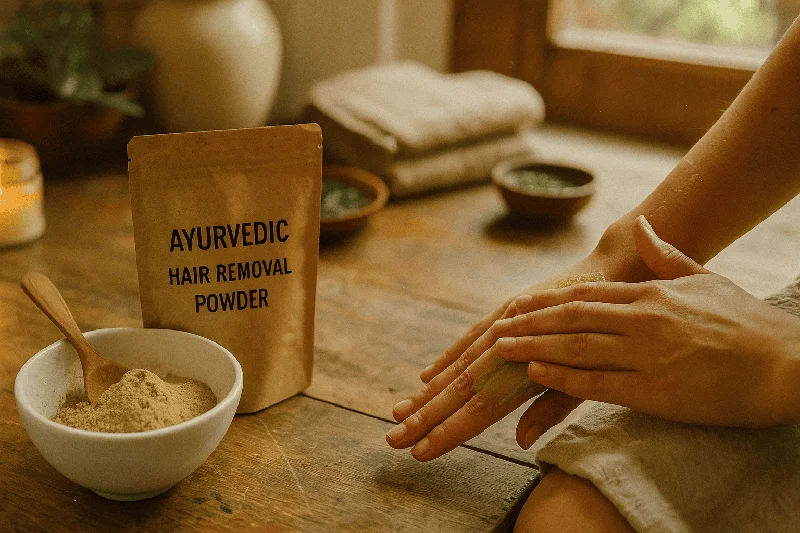
Ayurvedic hair removal powder is a natural, herbal-based formulation — typically made from ingredients like turmeric, neem, sandalwood, and chickpea flour — that dissolves unwanted body hair without razors, hot wax, or harsh chemicals. It works by weakening the hair shaft through mild alkaline and keratolytic action, allowing hair to be wiped away painlessly. Unlike chemical depilatory creams loaded with thioglycolates and calcium hydroxide, these powders draw from centuries-old Ayurvedic traditions and are generally safe for sensitive skin.
But here's the thing most brands won't tell you: no topical powder — Ayurvedic or otherwise — can guarantee permanent hair removal. What it can do is progressively weaken hair follicles with regular use, slow regrowth, and leave your skin smoother and healthier than any razor ever could.
This guide covers everything: the science behind how these powders actually work, classical Ayurvedic references, DIY recipes with exact proportions, realistic expectations, and a full comparison with every other hair removal method available in 2025.
What Is Ayurvedic Hair Removal Powder?
- Ayurvedic hair removal powder is a finely ground herbal blend designed to remove unwanted hair from the face, arms, legs, underarms, and other body areas.
- The concept isn't new — it's rooted in thousands of years of Ayurvedic practice, long before modern depilatory creams existed.
These powders typically combine two types of ingredients: those that weaken or dissolve the hair protein (keratin), and those that soothe, nourish, and protect the skin during the process. The result is a dual-action treatment that removes hair while actually improving skin texture.
- Most commercial ayurvedic hair removal powders are free from artificial fragrances, synthetic dyes, parabens, and the strong-smelling chemicals you'd find in brands like Veet or Nair.
- Some modern formulations come in aromatic variants — chocolate, rose, sandalwood — making the experience considerably more pleasant.
Ancient Roots: Hair Removal in Classical Ayurvedic Texts
Hair removal isn't a modern beauty obsession. Classical Ayurvedic texts have documented practices for "Romaapahaarana" (रोमापहारण) — literally meaning "removal of body hair."
The Sushruta Samhita, one of the foundational texts of Ayurveda (dating back to approximately 600 BCE), describes formulations using Haridra (turmeric), Tankana (borax), and various mineral powders for removing unwanted hair. The Charaka Samhita references the concept of maintaining skin health through natural topical applications, and the Ashtanga Hridaya by Vagbhata mentions beauty-care routines that included herbal depilation as part of daily grooming (Dinacharya).
These weren't just cosmetic procedures. In Ayurvedic philosophy, removing excess body hair was considered part of maintaining hygiene, balancing skin health, and supporting the proper function of sweat glands.
How It Differs from Chemical Depilatory Creams
The fundamental difference lies in the active mechanism and ingredient profile:
| Feature | Ayurvedic Hair Removal Powder | Chemical Depilatory Cream |
|---|---|---|
| Active agents | Natural alkaline minerals, herbal extracts | Thioglycolate salts, calcium hydroxide |
| pH level | Mildly alkaline (8–10) | Highly alkaline (11–13) |
| Odour | Mild, herbal/earthy | Strong, sulphurous chemical smell |
| Skin nourishment | Yes (turmeric, aloe, sandalwood) | Rarely; often causes dryness |
| Preservatives | Minimal or none | Parabens, synthetic stabilisers |
| Risk of chemical burns | Very low | Moderate to high |
| Biodegradable | Yes, fully | No (plastic tubes, chemical runoff) |
Chemical creams work fast — usually in 5–8 minutes — but they achieve this speed through aggressive chemical action that can damage the skin barrier. Ayurvedic powders are gentler, typically requiring 15–25 minutes, but they treat the skin rather than just attacking it.
How Does Ayurvedic Hair Removal Powder Actually Work? The Science Explained
This is where most articles fall short. They'll tell you these powders "naturally remove hair" without explaining the actual mechanism. Let's fix that.
The Keratolytic Mechanism
Human hair is primarily composed of keratin, a tough structural protein held together by disulphide bonds. These bonds are what give hair its strength and structure.
Ayurvedic hair removal powders contain mildly alkaline ingredients — such as calcium carbonate from natural shells, Tankana Bhasma (purified borax), or naturally occuring alkaline minerals — that raise the pH on the skin surface. When the pH exceeds approximately 9, these alkaline agents begin to break the disulphide bonds in keratin.
As these bonds weaken, the hair shaft loses its structural integrity. It becomes soft, fragile, and eventually dissolves or breaks at or just below the skin surface. This is fundamentally the same mechanism that chemical depilatories use — but at a much milder intensity, which is why ayurvedic powders take longer but cause less irritation.
A 2013 study published in the International Journal of PharmTech Research confirmed that herbal formulations containing turmeric and neem demonstrated measurable depilatory activity with significantly lower skin irritation scores compared to synthetic alternatives.
Why Herbal Ingredients Enhance the Process
The genius of Ayurvedic formulations isn't just the alkaline action — it's the synergistic combination of ingredients:
- Turmeric (Curcumin) acts as a mild keratolytic agent while simultaneously providing anti-inflammatory and antibacterial protection. Research published in Phytotherapy Research (2016) confirmed curcumin's ability to inhibit hair follicle growth in vitro.
- Neem contributes antimicrobial properties that prevent post-removal infections
- Sandalwood provides cooling, anti-inflammatory action that reduces redness
- Aloe Vera creates a protective moisture barrier that shields the skin during the alkaline process
- Chickpea flour (Besan) acts as a gentle physical exfoliant and helps the paste adhere uniformly
This combination means you're not just removing hair — you're actively caring for the skin underneath.
The Dosha Connection: Why Ayurveda Links Excess Hair to Pitta
In Ayurvedic philosophy, excessive or unwanted hair growth (known as Romaatisaara) is often attributed to an imbalance in Pitta dosha — the energy governing metabolism, hormones, and transformation.
When Pitta becomes aggravated — through stress, spicy foods, excessive heat exposure, or hormonal fluctuations — it can stimulate excess hair growth, particularly on the face and body areas where hair isn't typically dense.
- Ayurvedic hair removal isn't just about the topical powder.
- Classical practitioners recommended a holistic approach:
- Dietary modifications: reducing Pitta-aggravating foods (excessively spicy, sour, fermented foods)
- Stress management: pranayama, meditation, and yoga
- Detoxification: periodic Panchakarma treatments
- Abhyanga: regular oil massage with cooling oils like coconut or Brahmi
The powder addresses the symptom; the lifestyle modifications address the root cause.
Key Ingredients in Ayurvedic Hair Removal Powder and Their Properties
- Not all ayurvedic hair removal powders are created equal. The effectiveness depends entirely on the ingredient blend and its quality.
- Here are the most important ingredients to look for — and what each one actually does.
Primary Hair-Removing Agents
- Turmeric (Curcuma longa): The star ingredient in most formulations. Beyond its keratolytic properties, turmeric contains curcumin which has been shown to reduce hair regrowth over time by affecting the hair follicle's growth cycle. A study in Molecular and Cellular Biochemistry (2019) demonstrated curcumin's ability to downregulate growth factors associated with hair follicle activity.
- It also brightens skin and fades hyperpigmentation — a common concern after hair removal.
Thanaka Powder (Hesperethusa crenulata): Widely used in Myanmar and parts of Southeast Asia, Thanaka has been traditionally used for centuries as a natural hair growth inhibitor. While clinical studies are limited, ethnobotanical evidence strongly supports its depilatory properties. Calcium Carbonate (from natural shells): Provides the alkaline environment necessary for breaking down keratin bonds. This is the "active" depilatory agent in many formulations.
Skin-Protecting & Nourishing Agents
Neem (Azadirachta indica): Powerful antibacterial and antifungal properties. Prevents the micro-infections that can occur when hair is removed and pores are briefly exposed. A 2020 review in Pharmacognosy Reviews documented neem's extensive dermatological benefits. Sandalwood (Santalum album): Cooling, anti-inflammatory, and mildly astringent. Reduces post-application redness and tightens pores. It's also what gives many premium powders their pleasant fragrance.
- Aloe Vera (Aloe barbadensis): Soothes irritation, provides deep hydration, and creates a protective barrier.
- Contains polysaccharides that promote wound healing — relevant because hair removal is technically a mild form of skin trauma.
Chickpea Flour (Besan): Natural exfoliant rich in zinc. Helps remove dead skin cells alongside hair, leaving skin smoother. Also helps bind the paste together for easier application. Rose Water / Rose Petal Powder: Anti-inflammatory, mildly astringent, and pH-balancing. Often used as the mixing medium instead of plain water.
How to Use Ayurvedic Hair Removal Powder: Step-by-Step Guide
Getting the best results from ayurvedic hair removal powder requires proper technique. Here's a detailed, step-by-step process.
Before Application: Preparation
- 1.Perform a patch test — Apply a small amount of the mixed paste on your inner forearm. Wait 15–20 minutes. If no redness, burning, or itching occurs, proceed. Do this every time you try a new product.
- 2.Cleanse the target area — Wash with a mild, pH-balanced cleanser to remove oils, sweat, and dirt. Pat dry completely.
- 3.Do NOT apply on broken, sunburnt, or irritated skin — Open cuts, active acne, eczema patches, or psoriasis flare-ups are strict no-go zones.
Application Process
- 1.Mix the powder — Take 2–3 tablespoons of powder (adjust based on area size). Add rose water, plain water, or aloe vera gel gradually until you achieve a smooth, thick paste — similar to cake batter consistency. Don't make it too runny.
- 2.Apply against the direction of hair growth — Using a spatula or your fingers, spread the paste in a thick, even layer (approximately 2–3mm thick) against the grain of hair growth.
- 3.Wait 15–25 minutes — This is crucial. For fine facial hair, 10–15 minutes may suffice. For coarser body hair (legs, arms), you may need 20–25 minutes. Do not exceed 30 minutes.
- 4.Test a small section — Before removing all the paste, wipe a small area with a damp cloth. If the hair comes away easily, you're ready to remove. If not, wait 3–5 more minutes.
- 5.Remove with a damp cloth — Wipe the paste off in the direction of hair growth using a warm, damp cloth. Use gentle, firm strokes. Do not scrub aggressively.
- 6.Rinse thoroughly — Wash the area with cool water to remove all residue and close the pores.
After Application: Post-Care
- Apply a gentle, fragrance-free moisturiser or pure aloe vera gel
- Avoid sun exposure for 4–6 hours
- Skip hot showers, saunas, or swimming for at least 12 hours
- Do not apply deodorants, perfumes, or chemical products on the treated area for 24 hours
Frequency and Course for Visible Results
This is information most brands conveniently leave out:
| Usage Timeline | Expected Result |
|---|---|
| First use | Hair removed from surface; regrowth within 5–7 days |
| 2–4 weeks (1–2x/week) | Hair regrows finer and slightly slower |
| 1–3 months (regular use) | Noticeable reduction in hair density; regrowth is softer |
| 3–6 months (consistent use) | Significant hair thinning; some areas may show minimal regrowth |
| 6+ months | Maximum hair reduction achievable with topical treatment |
Important: Results vary significantly based on individual hormonal profiles, hair type, and consistency of use. People with hormonal conditions like PCOS will likely see slower progress.
Does Hair Removal Powder Really Work? Realistic Expectations
Let's be completely honest here — because the internet is full of misleading claims.
Hair Removal vs. Hair Reduction vs. Permanent Removal
These are three very different things, and confusing them leads to disappointment:
- Hair Removal: Temporarily removing visible hair from the skin surface. This is what ayurvedic powders definitely do, and they do it well.
- Hair Reduction: Gradually decreasing the thickness, density, and speed of hair regrowth over time. With consistent use over months, ayurvedic powders can achieve this.
- Permanent Hair Removal: Completely and irreversibly destroying the hair follicle so hair never grows back. Only professional treatments like electrolysis achieve true permanence. Even laser hair removal is technically classified as "permanent hair reduction" by the FDA.
The bottom line: No topical powder — Ayurvedic or otherwise — can guarantee permanent hair removal. Claims of "permanent results" are marketing exaggeration. What ayurvedic powders genuinely offer is effective, gentle hair removal with progressive hair reduction over time.
The Role of Hormonal Conditions
If you experience excessive hair growth (hirsutism), the cause may be hormonal rather than cosmetic:
- PCOS (Polycystic Ovary Syndrome): Affects 8–13% of women of reproductive age (WHO, 2023). Elevated androgens cause increased facial and body hair. No topical treatment can override this hormonal signal.
- Thyroid disorders: Both hypothyroidism and hyperthyroidism can alter hair growth patterns.
- Adrenal hyperplasia: Overproduction of androgens from the adrenal glands.
In these cases, ayurvedic hair removal powder is a symptomatic solution. It manages the visible hair, but addressing the underlying hormonal imbalance — through medical treatment, dietary changes, or Ayurvedic therapies like Shatavari, Ashoka, and Lodhra — is essential for long-term improvement.
Effectiveness by Hair Type and Colour
Something nobody else mentions:
| Hair Type | Effectiveness | Notes |
|---|---|---|
| Fine, light (vellus hair) | ★★★★★ | Excellent — removes quickly, regrowth is minimal |
| Medium thickness | ★★★★☆ | Very good — may need 20+ minutes |
| Coarse, dark (terminal hair) | ★★★☆☆ | Moderate — requires consistent use, longer application times |
| Very coarse/wiry | ★★☆☆☆ | Limited — consider combining with other methods |
Don't wait or self medicate. Start chat with Doctor NOW
Ayurvedic Hair Removal Powder: Complete Comparison with Other Methods
Here's the comprehensive comparison table you won't find on any other site:
| Method | Pain Level | Cost (per session) | Effect Duration | Skin Damage Risk | Chemical Exposure | Eco-Friendly | Best For |
|---|---|---|---|---|---|---|---|
| Ayurvedic Powder | None | ₹50–200 | 5–10 days | Very Low | None | ✅ Yes | Face, arms, legs |
| Shaving | Low | ₹20–50 | 1–3 days | Moderate (cuts, razor burn) | Low | ❌ No (disposable razors) | Legs, underarms |
| Waxing | High | ₹200–800 | 2–4 weeks | Moderate (burns, ingrown hairs) | Low–Moderate | ❌ No (strips, chemicals) | Full body |
| Chemical Creams | Low–Moderate | ₹100–400 | 5–7 days | High (chemical burns) | High | ❌ No | Arms, legs |
| Threading | Moderate | ₹30–100 | 2–3 weeks | Low | None | ✅ Yes | Face only |
| Laser | Moderate | ₹2,000–8,000 | Months–Years | Low–Moderate | None (light-based) | Neutral | All areas |
| Electrolysis | High | ₹1,500–5,000 | Permanent | Low | None | Neutral | Small areas |
| IPL (Home devices) | Low–Moderate | ₹5,000–25,000 (device) | Months | Low | None | Neutral | Legs, arms, face |
DIY Ayurvedic Hair Removal Powder Recipes
Want to make your own at home? Here are three tested recipes with exact proportions.
Recipe 1: Basic Face Hair Removal Powder
- Chickpea flour (Besan): 4 tablespoons
- Turmeric powder (Kasturi/wild turmeric preferred): 1 tablespoon
- Milk or rose water: enough to make paste
- A pinch of camphor powder (optional, for cooling)
Mix into a thick paste. Apply against hair growth. Leave for 15 minutes. Rub off in circular motions when semi-dry. This is particularly suitable for fine upper lip and chin hair.
Recipe 2: Full Body Hair Removal Powder
- Chickpea flour: 3 tablespoons
- Turmeric: 1 tablespoon
- Thanaka powder: 1 tablespoon
- Neem powder: ½ tablespoon
- Aloe vera gel + rose water: for mixing
Apply thickly. Leave for 20–25 minutes. Remove with a damp cloth against hair growth.
Recipe 3: Sensitive Skin Formula
- Oat flour: 3 tablespoons
- Sandalwood powder: 1 tablespoon
- Turmeric: ½ tablespoon
- Fresh cream (malai): 1 tablespoon
- Rose water: for mixing
This gentler version is suitable for sensitive areas and those prone to redness. Leave on for 15 minutes maximum.
Pro tip: Use Kasturi turmeric (Curcuma aromatica) rather than regular kitchen turmeric. It won't stain your skin yellow and has stronger depilatory properties.
Safety, Side Effects, and Contraindications
Ayurvedic hair removal powders are generally safe, but "natural" doesn't automatically mean "risk-free." Here's what you need to know.
Potential Side Effects
- Mild redness: Common and temporary (resolves within 1–2 hours)
- Allergic reaction: Rare but possible, especially to turmeric or neem. This is why patch testing is non-negotiable
- Skin dryness: Alkaline formulations can temporarily disrupt the skin's acid mantle
- Yellow staining: If regular turmeric is used instead of Kasturi turmeric
Who Should Avoid or Use with Caution
- Active eczema, psoriasis, or dermatitis: The alkaline pH can severely aggravate these conditions
- Open wounds or recent surgical scars: Risk of irritation and infection
- Those on retinoid medications (tretinoin, adapalene): Skin is already sensitised
- Those on blood thinners: Increased bruising risk if paste is removed too aggressively
- Pregnant women: Consult your doctor before using any new topical product. While most ayurvedic ingredients are considered safe, individual sensitivities can change during pregnancy
- Children under 9 years: Skin is too delicate; not recommended without pediatric guidance
Is Facial Hair Removal Powder Right for Upper Lip, Chin, and Sideburns?
- Yes — facial hair removal powder is well-suited for delicate areas like the upper lip, chin, and sideburns, provided you use a formulation designed for facial skin.
- Facial skin is thinner and more sensitive than body skin, so:
- Use a shorter application time (10–15 minutes)
- Choose formulations with added soothing agents (sandalwood, aloe)
- Never apply near the eyes, inside the nostrils, or on the lips themselves
The Environmental Advantage Most People Overlook
Here's something worth considering in 2025: the environmental impact of your hair removal method.
Disposable razors contribute an estimated 2 billion units of plastic waste annually in India alone. Wax strips are single-use, non-recyclable mixed materials. Chemical depilatory tubes are plastic waste with chemical residue.
Ayurvedic hair removal powder? It's fully biodegradable. The ingredients return to the earth without polluting waterways. There's no plastic packaging required (many brands use paper or glass). And you can make it at home from kitchen ingredients, creating literally zero waste.
In an era of increasing environmental consciousness, this isn't just a personal care choice — it's an ecological one.
Frequently Asked Questions
Which herbal powder is best for hair removal?
- The most effective herbal powders combine turmeric (preferably Kasturi turmeric), thanaka powder, neem, sandalwood, and chickpea flour. Look for products that list these as primary ingredients rather than fillers.
- The best powder for you depends on your skin type — sensitive skin benefits from sandalwood-heavy formulations, while normal skin can tolerate stronger turmeric-neem blends.
Which powder removes facial hair permanently?
No powder — herbal or chemical — removes facial hair permanently. This is a medical fact, not a product limitation. True permanent hair removal requires destroying the follicle through electrolysis or repeated professional laser sessions. However, consistent use of ayurvedic hair removal powder can progressively thin facial hair and slow regrowth over several months, achieving what dermatologists call "hair reduction."
How does hair removal powder give a close, gentle finish without nicks or burns?
Unlike razors that cut hair at the surface (often causing micro-cuts and razor bumps), ayurvedic powder dissolves the hair slightly below the skin surface through mild alkaline action. This creates a smoother finish without the mechanical trauma of blades. And unlike chemical creams that use highly alkaline compounds (pH 12+), herbal powders operate at a milder pH range, dramatically reducing the risk of burns.
What makes herbal hair removal powder a safer choice for sensitive skin?
Three factors: lower pH than chemical alternatives, the presence of anti-inflammatory ingredients (turmeric, sandalwood, aloe vera) that actively soothe the skin during the process, and the absence of synthetic irritants like thioglycolates, parabens, and artificial fragrances. A 2018 study in the Journal of Cosmetic Dermatology found that plant-based depilatory formulations showed 62% fewer adverse skin reactions compared to conventional chemical depilatories.
How to remove unwanted hair in Ayurveda?
- Ayurveda approaches unwanted hair removal through both topical treatments (herbal depilatory powders, Lepa applications) and internal balance. Topically, formulations containing Haridra (turmeric), Tankana (borax), and Gomaya Kshara (natural alkali) are applied as paste.
- Internally, Ayurveda recommends addressing the root cause — typically Pitta imbalance — through diet modification, Panchakarma detoxification, stress management through yoga and pranayama, and specific herbs like Shatavari and Guduchi for hormonal balance.
Can ayurvedic hair removal powder be used on the bikini area?
Yes, but with extra caution. The bikini area has thinner, more sensitive skin. Use a mild formulation (sandalwood-based), reduce application time to 10–12 minutes, and always perform a patch test on a small area first. Some brands offer specific formulations designed for intimate areas with enhanced soothing ingredients.
Final Thoughts: Is Ayurvedic Hair Removal Powder Worth It?
- Ayurvedic hair removal powder isn't a magic bullet. It won't give you laser-like permanent results, and it requires patience and consistency.
- But what it does offer is genuinely valuable: a painless, chemical-free, skin-nourishing, and environmentally friendly way to manage unwanted hair — backed by thousands of years of traditional knowledge and supported by modern scientific understanding of how natural ingredients interact with hair protein.
For the best results, combine regular use of ayurvedic hair removal powder with the holistic Ayurvedic lifestyle practices mentioned earlier — balanced diet, stress management, and proper skin care. This integrated approach addresses both the symptom and the cause.
- Start with a patch test.
- Be patient.
- Be consistent.
- And most importantly — be realistic about what any topical product can and cannot achieve.
If you experience excessive or sudden changes in hair growth patterns, consult an Ayurvedic practitioner or dermatologist to rule out underlying hormonal conditions before relying solely on topical solutions.
Scientific Sources
- Rosemary and neem: an insight into their combined anti-dandruff and anti-hair loss efficacy — Hashem MM et al., 2024, Scientific reports
- Bangladeshi medicinal plant dataset — Borkatulla B et al., 2023, Data in brief
- Phytotherapy in periodontics as an effective and sustainable supplemental treatment: a narrative review — Gawish AS et al., 2024, Journal of periodontal & implant science
- Formulation and Evaluation of Turmeric- and Neem-Based Topical Nanoemulgel against Microbial Infection — Giri S et al., 2024, Gels (Basel, Switzerland)
- Molecular insights into anti-inflammatory activities of selected Indian herbs — Upadhyay S et al., 2025, Journal of Ayurveda and integrative medicine
Questions from users
Can I combine Ayurvedic hair removal powder with essential oils for added benefits?
Tanner
7 days ago
Yes, you can combine ayurvedic hair removal powder with essential oils for some added skin benefits. Just make sure the oils are safe for your skin and don't irritate in combination with the powder. Start with a small patch test to see how your skin reacts, especially if it's sensitive. Oils like lavender or chamomile can be calming, while tea tree may be a bit harsh. Go with something mellow. Be gentle and watch for any reaction!
Is it normal for Ayurvedic hair removal powder to cause some skin irritation?
Yara
17 days ago
Some irritation can happen, especially if you have sensitive skin. Ayurvedic powders often have natural ingredients that can be potent. If you're getting irritation, try a patch test before using it all over. Maybe it’s staying too long or skin just needs a bit to adjust. Also, check the ingredients - if something looks unfamiliar, do a quick search.
Can I use Ayurvedic hair removal powder alongside other skincare products?
Tanner
26 days ago
Yes, you can use ayurvedic hair removal powder alongside other skincare products, but be mindful of how your skin reacts. Sometimes mixing products can irritate the skin, especially with potent ingredients like turmeric. Maybe do a patch test first. And, hey, if your skin feels good, keep going, otherwise, pause and see what's causing trouble!
What is the best way to apply Ayurvedic hair removal powder for optimal results?
Savannah
35 days ago
For best results with Ayurvedic hair removal powder, apply it thickly against hair growth using a spatula or fingers. Aim for 2-3mm thickness. Let it sit for 15–25 minutes, but make sure to do a patch test first to avoid allergies. Reduce the time on sensitive skin, and don't make it too runny to ensure good coverage.
Can Ayurvedic methods help in naturally balancing hormones to reduce hair growth?
Lindsey
48 days ago
Yes, totally! Ayurveda looks at excessive hair growth often as a sign of hormonal imbalance, particularly excess Pitta. Balancing your doshas can support natural hormone balance. You might find it helpful to incorporate cooling foods, stress reduction practices, and specific herbs like spearmint tea or saw palmetto. But, results can vary, so it could require some patience.
Can Ayurvedic hair removal powder be used safely during pregnancy?
Wesley
58 days ago
Generally, it's best to be cautious when using any new product during pregnancy, even natural ones like Ayurvedic hair removal powder. Hormones are different, so skin might react differently. Chat with your healthcare provider just to be safe and see if there are any specific ingredients to watch out for.
Is Ayurvedic hair removal powder suitable for all hair types and textures?
Aria
68 days ago
Ayurvedic hair removal powders can work for many hair types and textures, but, ya know, it depends on your dosha balance. If you have more Pitta, it might work great 'cause it's thought to balance that. But every individual is different, so it's wise to patch test since it may react differently based on your prakriti.
Can Ayurvedic hair removal powder help with ingrown hairs and skin irritation?
Aaliyah
77 days ago
Ayurvedic hair removal powder might help with ingrown hairs and irritation, but it really depends on your skin and the ingredients. These powders are generally gentle and can soothe skin. If you struggle with these issues, using ayurvedic practices like balancing Pitta and nourishing skin with herbal oils could be beneficial. Test on a small patch first to ensure compatibility with your skin. Skin loves a little trial and error! 😊
Can I use Ayurvedic hair removal powder for facial hair, or is it only for body hair?
Ava
87 days ago
Ayurvedic hair removal powders can generally be used on both facial and body hair, as long as they're gentle and specifically formulated for the face. Some facial skin can be more sensitive, so it's a good idea to do a patch test first. Always check product instructions or consult an Ayurvedic practitioner if you're unsure about its suitability for facial use!
Is it safe to use Ayurvedic hair removal powder on sensitive skin?
Henry
97 days ago
Ayurvedic hair removal powder can generally be gentle but it's good to be cautious with sensitive skin. Maybe try a small patch test first to check for any reaction. Also, be mindful of your doshas—Pitta skin can be more sensitive to irritation. If any signs of irritation occurs, you might want to reconsider or consult with an Ayurvedic practitioner.
Related articles

Skin and Hair Disorders
Which Powder Is Best for Height Growth: Natural and Ayurvedic Options
Discover which powder is best for height growth, from ashwagandha to moringa and camel milk powder. Learn safe ways to support natural height growth
14,593
Skin and Hair Disorders
Psoriatic Arthritis – Natural Ayurvedic Approaches for Joint and Skin Wellness
Explore Ayurvedic insights and natural remedies for managing psoriatic arthritis. Learn about its benefits, herbal treatments, lifestyle modifications, and holistic approaches to support joint and skin health.
3,038

Skin and Hair Disorders
How to Rejuvenate Skin Naturally: Ayurvedic Guide for a Healthy Glow
How to rejuvenate skin naturally? Discover Ayurvedic treatment for skin rejuvenation, how to rejuvenate skin overnight, at home, and restore glow on your face
2,281
Skin and Hair Disorders
Tinea Cruris Treatment in Ayurveda: A Holistic Overview
Discover how Ayurveda addresses tinea cruris, or jock itch, using time-tested remedies, expert insights, and evidence-based herbal approaches.
4,071

Skin and Hair Disorders
Why White Hair Happens — And How Ayurveda Looks at It
Yep, we’re going there. White hair. Those stubborn little strands that show up uninvited, sometimes way too early, and totally ignore how old you feel. While some folks wear them like a badge of wisdom (hello, silver foxes), for others, spotting that firs
3,714

Skin and Hair Disorders
Jatyadi Ghrita Ointment Uses: Exploring the Ayurvedic Approach to Skin and Wound Care
Discover the science, benefits, and practical tips for Jatyadi Ghrita ointment uses, an Ayurvedic remedy that supports natural wound healing.
3,525

Skin and Hair Disorders
Ayurvedic Hair Growth Tips and Remedies for Hair Fall
Hair loss – a phrase dreaded by many, it can shake our confidence and leave us scrambling for solutions.
6,507

Skin and Hair Disorders
Best Ayurvedic Medicine for Fungal Infection – Natural Herbal Solutions
Discover the best Ayurvedic medicines for treating fungal infections. Learn about natural remedies, benefits, dosage, usage, and scientific evidence behind these herbs.
6,067

Skin and Hair Disorders
How to Apply Egg on Hair: Ayurvedic Guide to Benefits & Growth
How to apply egg on hair? Discover egg hair mask recipes, benefits of egg for hair growth, how to use egg white, and possible side effects of applying egg
17,439

Skin and Hair Disorders
What Is Kushta Roga in Ayurveda? Meaning, Symptoms, and Healing
What is Kushta Roga in Ayurveda? Learn about its meaning, types, symptoms, and Ayurvedic treatments for skin disorders traditionally known as Kushta diseases
7,882
Related consultations on the topic
Legal
Additional Documents
© 2024 Ask Ayurveda. All rights reserved.