Ask Ayurvedic doctor a question and get a consultation online on the problem of your concern in a free or paid mode. More than 2,000 experienced doctors work and wait for your questions on our site and help users to solve their health problems every day.
FREE! Ask Ayurvedic Doctors 24/7

 Fast responses
 1000+ verified doctors
Body DetoxEar, Nose, and Throat DisordersGeriatrics & RejuvenationImmunodeficiencyInfertility TreatmentNutritionOrthopedic DisordersPediatricsRespiratory DisordersSexually Transmitted Diseases (STDs)Surgery RecoveryUrological DisordersVascular DisordersDental DisordersEndocrinological DisordersGastrointestinal DisordersYoga TherapyGeneral MedicineAllergic DisordersCardio DisordersGynecology and ObstetricsCosmetologySkin and Hair DisordersEye DisordersInfectious DiseasesMental DisordersNeurological DisordersOncologyPanchakarmaSexual Health & DisordersSports Medicine
Published on 01/20/25
(Updated on 06/18/26)
3,458
Appendix Ayurvedic Medicine: Holistic Solutions for Appendicitis
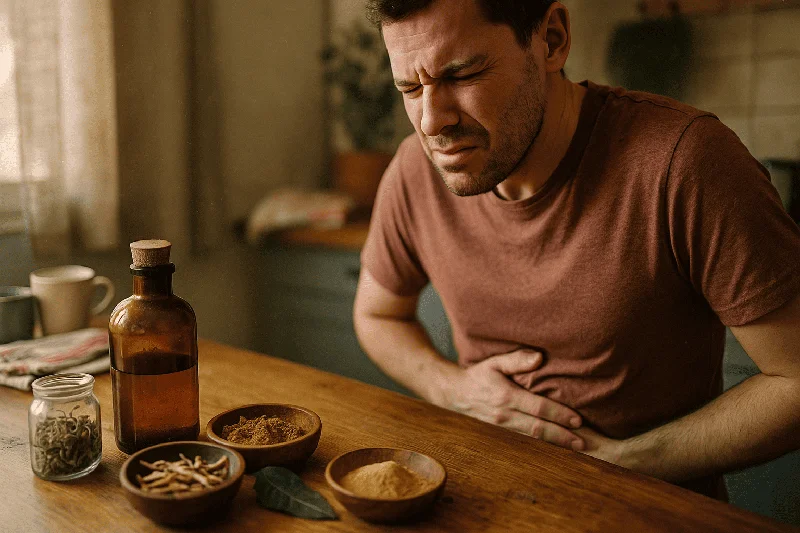
Appendix ayurvedic medicine focuses on reducing inflammation, clearing toxins (Ama), and restoring digestive balance through time-tested herbs like Triphala, Haridra, and Guduchi — combined with Panchakarma therapies, dietary corrections, and lifestyle changes. While acute appendicitis with risk of rupture demands emergency surgery, Ayurveda offers a clinically viable pathway for managing chronic and mild-to-moderate cases, and for preventing recurrence after conventional treatment.
- This guide covers everything you need to know: the Ayurvedic understanding of appendicitis, specific herbal formulations with dosages, Panchakarma protocols, a stage-by-stage treatment algorithm, scientific evidence, home remedies, yoga practices, and critical red flags that signal when you must seek emergency care.
- It's the most comprehensive resource on this topic — built to help you make informed decisions about your health.
What Is Appendicitis?
The appendix is a small, finger-shaped pouch attached to the cecum — the beginning of the large intestine — located in the lower right abdomen. For decades, it was considered a vestigial organ with no real function. However, modern research, including a 2017 study published in Nature Immunology, suggests the appendix serves as a reservoir for beneficial gut bacteria and plays a role in immune function.
Appendicitis occurs when the appendix becomes inflamed, usually due to a blockage in its lumen. If untreated, the inflamed appendix can rupture, leading to peritonitis — a life-threatening infection of the abdominal cavity. Approximately 7–8% of the population in Western countries will experience appendicitis during their lifetime, and it's one of the most common reasons for emergency abdominal surgery worldwide.
Anatomy of the Appendix
The vermiform appendix typically measures 5–10 cm in length and is situated at McBurney's point — roughly one-third of the distance from the right hip bone (anterior superior iliac spine) to the navel. Its exact position can vary, which sometimes makes diagnosis tricky. The appendix contains lymphoid tissue that is most active during childhood and adolescence, which partly explains why appendicitis peaks between ages 10 and 30.
Types of Appendicitis: Acute vs. Chronic
| Feature | Acute Appendicitis | Chronic Appendicitis |
|---|---|---|
| Onset | Sudden, within 24–72 hours | Gradual, recurring over weeks or months |
| Pain intensity | Severe, escalating rapidly | Mild to moderate, intermittent |
| Rupture risk | High (if untreated beyond 48–72 hrs) | Low |
| Typical treatment | Emergency appendectomy | Conservative management possible |
| Ayurvedic management | Limited — stabilize and refer to surgery | Primary treatment opportunity |
This distinction is crucial. Ayurveda's greatest potential lies in managing chronic appendicitis, preventing acute flare-ups, and supporting post-surgical recovery. Acute appendicitis with peritoneal signs is a surgical emergency — no exceptions.
Causes and Symptoms of Appendicitis
Common Causes and Risk Factors
Appendicitis most commonly results from:
- Luminal obstruction — fecaliths (hardened stool), lymphoid hyperplasia, or rarely parasites and tumors block the appendix opening
- Infection — bacterial overgrowth following viral gastrointestinal infections
- Dietary factors — low-fiber, high-fat diets contribute to fecalith formation. A 2012 epidemiological study in World Journal of Gastroenterology showed that populations consuming high-fiber diets have significantly lower appendicitis rates
- Genetic predisposition — family history increases risk by approximately 3x
- Gut dysbiosis — disruption of the intestinal microbiome creates an environment favorable to appendiceal inflammation
Symptoms and Warning Signs
The classic progression of appendicitis symptoms:
- 1.Periumbilical pain — dull ache around the navel (first 6–12 hours)
- 2.Pain migration — shifts to the lower right abdomen (McBurney's point)
- 3.Anorexia — loss of appetite is nearly universal
- 4.Nausea and vomiting — typically follows onset of pain (not before)
- 5.Low-grade fever — 37.5–38.5°C (99.5–101.3°F)
- 6.Abdominal rigidity — guarding and rebound tenderness
- 7.Bowel changes — constipation or diarrhea, bloating, inability to pass gas
In chronic appendicitis, symptoms are milder: recurring dull pain in the right lower abdomen, intermittent bloating, mild nausea, and general digestive discomfort that comes and goes over weeks.
When to Seek Emergency Medical Help (Red Flags)
Go to the emergency room immediately if you experience:
- Sudden severe pain that worsens within hours
- Fever above 38.5°C (101.3°F) combined with abdominal pain
- Pain that suddenly stops and then returns worse — this may indicate rupture
- Rigid, board-like abdomen
- Signs of shock: rapid heartbeat, dizziness, cold clammy skin
- Pain that intensifies with movement, coughing, or jarring
No Ayurvedic remedy, home treatment, or herbal supplement should delay emergency medical evaluation when these signs are present. A ruptured appendix can be fatal within hours.
Ayurvedic Understanding of Appendicitis (The Vidradhi Concept)
The Role of Doshas: Pitta, Kapha, and Vata Imbalance
In Ayurveda, appendicitis correlates most closely with the concept of Vidradhi — a deep-seated abscess formation described in classical texts including Sushruta Samhita and Charaka Samhita.
Vidradhi is classified into two main categories:
- Bahya Vidradhi — external abscess
- Abhyantara (Antar) Vidradhi — internal abscess, which includes appendicitis when located in the unduka (cecal region)
The pathogenesis involves all three doshas but primarily:
- Pitta aggravation — creates inflammation, heat, and infection (Rakta Dushti — blood vitiation)
- Kapha accumulation — produces swelling, mucous blockage, and stagnation in the appendiceal lumen
- Vata disturbance — causes pain, spasms, and disruption of normal peristalsis
The Central Role of Agni (Digestive Fire) and Ama
Perhaps the most important Ayurvedic concept for understanding appendicitis is Mandagni — weakened digestive fire. When Agni is diminished, food is incompletely digested, producing Ama — a toxic, sticky metabolic waste.
Ama accumulates in the gastrointestinal tract, obstructs the Srotas (channels), and creates a breeding ground for infection. In the appendix specifically, Ama accumulation mirrors the modern understanding of fecalith formation and bacterial overgrowth. This is why Ayurvedic treatment for appendicitis fundamentally targets Agni restoration and Ama elimination — not just symptom suppression.
The Ayurvedic pathological sequence (Samprapti):
- Mandagni (weak digestive fire) → 2. Ama production → 3. Srotorodha (channel blockage) → 4. Dosha aggravation (primarily Pitta-Kapha) → 5. Vidradhi formation in Unduka (appendix) → 6. Inflammation, suppuration, and potential rupture
Best Ayurvedic Herbal Medicines for Appendicitis
The following herbs have documented anti-inflammatory, antimicrobial, and digestive properties relevant to appendix management. They form the backbone of most Ayurvedic treatment protocols for appendicitis.
Triphala (The Three-Fruit Formula)
Triphala — a combination of Amalaki (Emblica officinalis), Bibhitaki (Terminalia bellirica), and Haritaki (Terminalia chebula) — is the cornerstone herb for appendix care. A 2012 study in the Journal of Ayurveda and Integrative Medicine confirmed its significant anti-inflammatory and antioxidant properties.
- Action: Mild laxative, detoxifier, Ama-clearing, balances all three doshas
- Dosage: 1–2 teaspoons of Triphala churna with warm water at bedtime
- Mechanism: Prevents fecalith formation, promotes healthy bowel movements, reduces intestinal inflammation
Haridra (Curcuma longa — Turmeric)
Curcumin, the active compound in Haridra, is one of the most extensively researched natural anti-inflammatories. A 2016 meta-analysis in the Journal of Medicinal Food covering 8 randomized controlled trials found curcumin significantly reduced markers of systemic inflammation (CRP, IL-6).
- Action: Powerful anti-inflammatory, antimicrobial, blood purifier (Rakta Shodhak)
- Dosage: 500 mg curcumin extract twice daily with meals, or 1 tsp turmeric powder in warm milk
- Special note: Bioavailability increases dramatically (up to 2000%) when taken with Pippali or black pepper (piperine)
Guduchi/Giloy (Tinospora cordifolia)
Known as "Amrita" (nectar of immortality) in Ayurvedic texts, Guduchi is an immunomodulator and Rasayana (rejuvenating) herb. A 2020 study in Phytomedicine confirmed its anti-inflammatory, antipyretic, and immunomodulatory properties.
- Action: Boosts immunity, reduces fever, clears Ama, balances Pitta
- Dosage: 500 mg Guduchi Satva twice daily, or 2–3 inches of fresh stem boiled as decoction
Pippali (Piper longum — Long Pepper)
Pippali is one of Ayurveda's most respected herbs for kindling Agni without aggravating Pitta excessively. It directly addresses the Mandagni that underlies appendicitis pathology.
- Action: Deepana (appetizer), Pachana (digestive), bioavailability enhancer
- Dosage: 250–500 mg churna twice daily with honey
Additional Important Herbs
| Herb | Latin Name | Primary Action | Dosage |
|---|---|---|---|
| Varun | Crateva religiosa | Anti-inflammatory, reduces abdominal masses | 500 mg twice daily |
| Punarnava | Boerhavia diffusa | Diuretic, reduces swelling and edema | 500 mg twice daily |
| Shigru (Drumstick) | Moringa oleifera | Antimicrobial, wound healing, nutritive | Bark decoction or pods in diet |
| Haritaki | Terminalia chebula | Mild purgative, Vata-balancing, Ama clearing | 1–2 gm at bedtime |
| Kutaj | Holarrhena antidysenterica | Antimicrobial, anti-diarrheal, Pitta-pacifying | 500 mg twice daily |
> Important: These dosages are general guidelines for adults. Individual dosages must be determined by a qualified Ayurvedic practitioner (BAMS/MD Ayurveda) based on your Prakriti, Vikriti, and severity of condition.
Panchakarma Therapies for Appendicitis
Panchakarma — Ayurveda's signature detoxification system — offers several procedures specifically relevant to managing appendicitis and preventing recurrence.
Virechana (Therapeutic Purgation)
Virechana is the primary Panchakarma therapy for appendicitis. It eliminates accumulated Pitta and Ama from the gastrointestinal tract through controlled therapeutic purgation.
- Procedure: After 3–7 days of internal oleation (Snehapana) with medicated ghee and external oleation (Abhyanga), a purgative medicine (typically Trivrit or Avipattikara Churna) is administered
- Benefits: Clears intestinal toxins, reduces inflammation, prevents fecalith formation
- Contraindications: Active acute appendicitis, pregnancy, severe debility, children under 10 years
Basti (Medicated Enema)
Basti is considered the "king of Panchakarma" in Ayurvedic texts. It directly delivers herbal medicines to the colon, which is anatomically adjacent to the appendix.
- Types used: Niruha Basti (decoction enema with Dashamoola or Triphala) and Anuvasana Basti (oil enema with medicated oils)
- Benefits: Pacifies Vata, reduces local inflammation, promotes healing of the intestinal mucosa
Raktamokshan (Bloodletting) and Jalaukavacharana (Leech Therapy)
- For cases with significant Rakta Dushti (blood vitiation) and Pitta predominance, Raktamokshan may be employed.
- Jalaukavacharana — the application of medicinal leeches — is a refined form particularly suited to localized inflammatory conditions.
- Mechanism: Leech saliva contains hirudin (anticoagulant), hyaluronidase (anti-inflammatory), and bacteriostatic compounds
- Application: Leeches applied to the lower right abdominal area over the appendix region
- Evidence: A case report published in International Research Journal of Humanities, Innovation and Scientific Studies (IRJHIS) documented successful management of appendicitis using Ayurvedic intervention including Raktamokshan, with complete resolution of symptoms and normalization of diagnostic markers
> These procedures must only be performed by trained Panchakarma specialists in a clinical setting. Never attempt them at home.
Don't wait or self medicate. Start chat with Doctor NOW
How to Clear Your Appendix Without Surgery: A Stage-by-Stage Treatment Protocol
- This is a practical treatment algorithm that no other resource currently provides.
- It outlines what to do at each stage based on severity — the kind of stepwise approach practitioners actually follow.
Stage 1: Prevention and Early Signs (No Active Inflammation)
Goal: Strengthen Agni, clear Ama, prevent recurrence
- Triphala Churna — 1 tsp at bedtime with warm water
- Haridra (turmeric) — 500 mg with meals
- Pippali — 250 mg twice daily with honey
- Dietary modifications (see Diet section below)
- Daily yoga practice (see Yoga section)
- Duration: Ongoing lifestyle practice
Stage 2: Mild Chronic Appendicitis (Intermittent Symptoms)
Goal: Reduce inflammation, clear partial obstruction, pacify Pitta-Kapha
- All Stage 1 measures plus:
- Guduchi Satva — 500 mg twice daily
- Varun — 500 mg twice daily
- Punarnava — 500 mg twice daily
- Panchakarma: Virechana (one cycle) followed by Basti (8–16 sessions)
- Duration: 4–8 weeks under practitioner supervision
- Monitoring: Repeat ultrasound at 4 weeks to assess appendix size and inflammation
Stage 3: Moderate Chronic Appendicitis (Persistent Symptoms)
Goal: Intensive intervention to prevent progression to acute crisis
- All Stage 2 measures at higher dosages (as prescribed)
- Addition of Kutaj and Shigru preparations
- Raktamokshan or Jalaukavacharana — 2–4 sessions
- Strict dietary protocol
- Duration: 8–12 weeks with bi-weekly practitioner visits
- Critical rule: If at any point symptoms suddenly worsen, fever spikes above 38.5°C, or pain becomes acute — discontinue all Ayurvedic treatment and seek emergency care immediately
Stage 4: Post-Surgical Recovery Support
For patients who have already undergone appendectomy, Ayurveda supports faster recovery:
- Guduchi and Haridra for immune support and wound healing
- Triphala for restoring normal bowel function
- Light Basti therapy after surgical wounds heal (typically 6–8 weeks post-surgery)
- Rasayana therapy for tissue regeneration
Can Ayurveda Prevent Appendectomy (Surgery)?
- This is perhaps the most asked question.
- The honest answer: it depends on the type and severity.
Ayurveda can potentially avoid surgery when:
- The appendicitis is chronic with mild-to-moderate inflammation
- There is no evidence of perforation, abscess, or peritonitis
- Ultrasound shows appendix diameter under 10 mm without fecalith
- Patient responds to conservative treatment within 48–72 hours
Surgery is non-negotiable when:
- Acute appendicitis with peritoneal signs (rebound tenderness, guarding)
- Evidence of perforation or abscess on imaging
- Appendix diameter exceeds 13 mm on ultrasound
- High WBC count (>18,000/μL) with left shift
- Patient is septic or hemodynamically unstable
A 2015 randomized controlled trial published in JAMA (the APPAC trial) showed that even with antibiotics alone, 73% of patients with uncomplicated acute appendicitis avoided surgery at one-year follow-up. This supports the broader principle that not all appendicitis requires immediate surgery — and that conservative approaches, including Ayurvedic ones, deserve serious consideration for appropriate cases.
Ayurveda vs Surgery: A Comparative Overview
| Parameter | Ayurvedic Management | Appendectomy (Surgery) |
|---|---|---|
| Best for | Chronic, mild-to-moderate cases | Acute, complicated cases |
| Treatment duration | 4–12 weeks | 1–2 hours (procedure) + 1–4 weeks recovery |
| Recurrence risk | Possible if lifestyle not maintained | Zero (organ removed) |
| Side effects | Minimal when properly supervised | Surgical risks: infection, adhesions, anesthesia complications |
| Cost (India) | ₹3,000–₹15,000 for full course | ₹40,000–₹1,50,000 (laparoscopic) |
| Addresses root cause | Yes (Agni, Ama, dosha balance) | No (removes the organ entirely) |
| Recovery time | Gradual improvement over weeks | Full recovery 2–6 weeks |
| Suitable for children | With modified dosages, yes (>5 years) | Yes, standard treatment |
Diet and Lifestyle Recommendations for Appendicitis
Appendicitis-Friendly Ayurvedic Diet
Diet is not supplementary in Ayurveda — it is medicine itself. The right dietary approach can address the root cause of appendicitis by strengthening Agni and preventing Ama.
Foods to emphasize:
- High-fiber foods: Whole grains (daliya, oats, barley), green vegetables, papaya, pears
- Light, easily digestible meals: Moong dal khichdi, vegetable soups, steamed vegetables
- Hydration: Warm water throughout the day (minimum 8–10 glasses), cumin-coriander-fennel tea
- Probiotic-rich foods: Buttermilk (chaas/takra — Ayurveda's "nectar for digestion"), fresh homemade yogurt (in moderation)
- Anti-inflammatory spices: Turmeric, ginger, cumin, fennel, coriander
Foods to strictly avoid:
- Fried and deep-fried foods
- Processed and packaged foods
- Excessive red meat and heavy proteins
- Refined sugar and maida (white flour)
- Cold beverages, ice cream
- Spicy, excessively pungent food (aggravates Pitta)
- Seeds, nuts, and popcorn during active flare-ups (can worsen obstruction)
10 Home Remedies for Appendicitis Recovery
These practical home remedies support healing and can be prepared with ingredients available in most Indian kitchens:
- 1.Turmeric milk (Haldi Doodh): 1 tsp turmeric + 1 pinch black pepper in warm milk before bed
- 2.Ginger-honey paste: ½ tsp fresh ginger juice + 1 tsp honey on empty stomach
- 3.Fenugreek seed water (Methi water): Soak 1 tbsp methi seeds overnight, drink the water next morning — prevents constipation and fecalith formation
- 4.Mint tea: 5–6 fresh mint leaves steeped in hot water — relieves nausea and bloating
- 5.Castor oil pack (external): Warm castor oil on flannel cloth applied to right lower abdomen for 20–30 minutes — reduces local inflammation (do NOT use during acute phase)
- 6.Triphala decoction: 1 tsp Triphala boiled in 200 ml water, reduced to half, strained and consumed warm at bedtime
- 7.Buttermilk with roasted cumin: 1 glass buttermilk + ½ tsp roasted cumin powder + pinch of rock salt after lunch
- 8.Drumstick soup: Boil 2–3 drumsticks in water with turmeric and cumin — antimicrobial and nutritive
- 9.Aloe vera juice: 20 ml fresh aloe vera juice on empty stomach — soothes intestinal inflammation
- 10.Warm water with lemon and honey: First thing in the morning — stimulates Agni, promotes detoxification
Yoga Asanas for Appendix Health
- Specific yoga postures support digestive function, improve blood flow to the abdominal organs, and help prevent the stagnation that contributes to appendicitis.
- Practice these daily during prevention and recovery phases — never during acute pain episodes.
- Pawanmuktasana (Wind-Relieving Pose): Lie on back, hug knees to chest — directly releases trapped gas and massages intestines. Hold 30 seconds, repeat 5 times.
- Marjariasana-Bitilasana (Cat-Cow Stretch): On all fours, alternate between arching and rounding the spine — stimulates peristalsis and abdominal circulation. 10–15 repetitions.
- Ardha Matsyendrasana (Half Spinal Twist): Seated spinal twist — compresses and then releases abdominal organs, promoting detox. Hold 30 seconds each side.
- Vajrasana (Thunderbolt Pose): Sit on heels after meals — the only asana recommended immediately after eating. Enhances digestion by directing blood flow to the digestive organs. 5–10 minutes after each meal.
- Bhujangasana (Cobra Pose): Lying face-down, lift chest — stretches abdominal muscles and stimulates Agni. Hold 15–20 seconds, repeat 3 times.
> Consult a qualified yoga instructor if you are new to these practices, especially if you have any existing abdominal condition.
Ayurvedic Medicine for Appendix in Children
Appendicitis peaks in children aged 10–19, and the approach to Ayurvedic treatment requires special consideration.
Dosage Modifications for Children
| Age Group | Dosage (as % of adult dose) | Triphala Example | Guduchi Example |
|---|---|---|---|
| 5–8 years | 25–33% of adult dose | ¼–⅓ tsp | 125–165 mg |
| 9–12 years | 50% of adult dose | ½ tsp | 250 mg |
| 13–16 years | 75% of adult dose | ¾ tsp | 375 mg |
| Above 16 | Full adult dose | 1 tsp | 500 mg |
Safety Considerations for Pediatric Use
- Avoid Virechana in children under 10 — their constitutions are too delicate for strong purgation
- Basti therapy may be used with very mild formulations in children above 8, but only by experienced practitioners
- Haridra (turmeric) in dietary amounts is safe for all ages; concentrated curcumin supplements should be avoided below age 8
- Guduchi is generally considered safe for children and is commonly prescribed in pediatric Ayurvedic practice
- Always rule out acute appendicitis first — children's symptoms can progress faster than adults. A pediatric surgeon's evaluation should always precede or accompany Ayurvedic treatment
For pregnant women: Most Ayurvedic herbs for appendicitis are contraindicated during pregnancy. Triphala, Pippali, and purgative therapies are specifically prohibited. If appendicitis is suspected during pregnancy, immediate surgical consultation is essential.
Contraindications, Risks, and Drug Interactions
This is a critical section that most resources on this topic completely ignore. Ayurvedic medicines are not free from side effects, and responsible practice demands transparency.
When Ayurvedic Treatment Can Be Dangerous
- During acute appendicitis with rupture risk — delaying surgery for alternative treatment can be fatal
- In immunocompromised patients — herbs that modulate immunity may behave unpredictably
- When taken alongside blood thinners — Haridra (curcumin) and Guduchi have mild anticoagulant properties. Combined with warfarin or aspirin, they may increase bleeding risk
- During pregnancy and breastfeeding — many commonly used herbs are uterine stimulants
Known Herb-Drug Interactions
| Herb | Interacting Drug | Risk |
|---|---|---|
| Haridra (Curcumin) | Warfarin, Aspirin, NSAIDs | Increased bleeding risk |
| Guduchi | Immunosuppressants | May counteract immunosuppression |
| Triphala | Diabetic medications | May enhance hypoglycemic effect |
| Pippali | Phenytoin, Propranolol | Increases drug bioavailability, may cause toxicity |
Quality and Contamination Concerns
A 2008 study published in JAMA tested 193 Ayurvedic products purchased online and found that 20.7% contained detectable levels of lead, mercury, or arsenic.
Always:
- Purchase from GMP-certified manufacturers
- Look for FSSAI or AYUSH certification on product labels
- Avoid products that claim to be "proprietary blends" without listing ingredients
- Consult a registered Ayurvedic practitioner rather than self-medicating
Scientific Evidence: What Research Actually Shows
Let's address the evidence question head-on, since this is the biggest gap in existing resources.
Published Case Reports
A clinical case report published in IRJHIS (International Research Journal of Humanities, Innovation and Scientific Studies) documented successful Ayurvedic management of appendicitis. The patient presented with right iliac fossa pain, elevated WBC count, and ultrasound-confirmed appendicitis. Treatment with a combination of Ayurvedic formulations including Triphala, Haridra, and Panchakarma therapies resulted in complete symptom resolution and normalized investigation reports within 6 weeks.
Relevant Pharmacological Studies
While large-scale randomized controlled trials specific to Ayurvedic appendicitis treatment are lacking (an important honest caveat), substantial pharmacological evidence supports the individual components:
- Curcumin: Over 120 clinical trials registered on ClinicalTrials.gov for inflammatory conditions. A 2019 systematic review in Nutrients confirmed significant anti-inflammatory effects comparable to some NSAIDs
- Triphala: A 2012 study in Journal of Ayurveda and Integrative Medicine demonstrated antioxidant, anti-inflammatory, and antimicrobial properties in vitro
- Guduchi: A 2020 randomized controlled trial in India during the COVID-19 pandemic showed significant immunomodulatory effects, supporting its traditional use as an immune booster
- Moringa (Shigru): A 2014 review in Phytotherapy Research confirmed antimicrobial activity against common gut pathogens
What's Needed
The field urgently needs:
- Multicenter randomized controlled trials comparing Ayurvedic protocols to conservative antibiotic management for uncomplicated appendicitis
- Standardized treatment protocols with measurable outcomes
- Long-term follow-up studies on recurrence rates
Until such studies are conducted, Ayurvedic appendicitis treatment should be considered a complementary approach — not a replacement for evidence-based surgical care in acute cases.
Frequently Asked Questions (FAQ)
Can Ayurveda cure appendicitis permanently?
Ayurveda can effectively manage chronic appendicitis and may resolve symptoms permanently — provided the patient maintains dietary and lifestyle modifications long-term. The focus is on removing the root cause (Mandagni and Ama), not just suppressing symptoms. However, if the appendix has structural damage or recurrent acute episodes, surgical removal may still be necessary.
How long does Ayurvedic treatment for appendicitis take?
For chronic appendicitis, noticeable improvement typically occurs within 2–4 weeks, with a full treatment course lasting 8–12 weeks. Prevention and maintenance protocols are ideally lifelong. Post-surgical recovery support with Ayurveda generally spans 4–6 weeks.
Is Ayurvedic treatment for appendix safe for children?
Yes, with appropriate dosage modifications and under qualified practitioner supervision. Children above 5 years can safely take most Ayurvedic herbs at reduced dosages. However, always rule out acute appendicitis through proper medical diagnosis before initiating Ayurvedic treatment in children.
Which Ayurvedic medicine is best for stomach and digestive health overall?
Triphala is universally recommended as the single best Ayurvedic medicine for overall digestive health. It balances all three doshas, promotes regular bowel movements, clears toxins, and strengthens Agni. For best results, take 1 tsp with warm water at bedtime consistently for at least 3 months.
How to treat gut health and microbiome in Ayurveda?
Ayurveda addresses gut health through: strengthening Agni with Deepana-Pachana herbs (Pippali, ginger, cumin), removing Ama through Panchakarma, consuming probiotic-rich foods like Takra (medicated buttermilk), and following a diet suited to your individual Prakriti. Basti therapy is considered the most effective Panchakarma for restoring colonic and gut health.
Is there an appendix syrup available in Ayurveda?
Several Ayurvedic pharmaceutical companies produce liquid formulations relevant to appendix care — typically Guduchi Swaras, Kumaryasava, and Triphala-based syrups. However, these should be selected based on individual assessment rather than self-prescription. Consult a qualified Ayurvedic doctor for the right formulation and dosage for your case.
Conclusion: Making an Informed Decision About Appendix Ayurvedic Medicine
Ayurvedic medicine offers a legitimate, holistic framework for managing appendix-related conditions — particularly chronic appendicitis, prevention of recurrence, and post-surgical recovery. The combination of herbal medicines (Triphala, Haridra, Guduchi, Pippali), Panchakarma therapies (Virechana, Basti), dietary corrections, and yoga practices addresses the disease at its root through Agni restoration and Ama elimination.
- But — and this is non-negotiable — Ayurvedic treatment is not a substitute for emergency surgical care in acute, complicated appendicitis.
- The wisest approach is an integrated one: use Ayurveda's strengths for prevention, chronic management, and recovery, while relying on modern surgery when life is at risk.
Your next step: Consult a qualified Ayurvedic practitioner (BAMS or MD Ayurveda) who can assess your individual constitution, current condition, and design a personalized treatment protocol. If you're currently experiencing symptoms, get a proper diagnosis with blood tests and ultrasound first — then explore Ayurvedic options with full information.
- *Medical Disclaimer: This article is for educational and informational purposes only. It is not intended as a substitute for professional medical advice, diagnosis, or treatment.
- Always seek the advice of a qualified healthcare provider — both Ayurvedic and allopathic — with
Scientific Sources
- Bangladeshi medicinal plant dataset — Borkatulla B et al., 2023, Data in brief
- Extraction, phytochemical characterization and anti-cancer mechanism of Haritaki churna: An ayurvedic formulation — Khan MRUZ et al., 2023, PloS one
- Unique aspect of Tibetan medicine — Dakpa T, 2014, Acupuncture & electro-therapeutics research
- The Ayurvedic medicines Haritaki, Amala and Bahira reduce cholesterol-induced atherosclerosis in rabbits — Thakur CP et al., 1988, International journal of cardiology
- Triphala's characteristics and potential therapeutic uses in modern health — Bairwa VK et al., 2025, International journal of physiology, pathophysiology and pharmacology
- Rosemary and neem: an insight into their combined anti-dandruff and anti-hair loss efficacy — Hashem MM et al., 2024, Scientific reports
- Phytotherapy in periodontics as an effective and sustainable supplemental treatment: a narrative review — Gawish AS et al., 2024, Journal of periodontal & implant science
- Formulation and Evaluation of Turmeric- and Neem-Based Topical Nanoemulgel against Microbial Infection — Giri S et al., 2024, Gels (Basel, Switzerland)
- Traditional Oral Hygiene Practices and Their Effectiveness: A Systematic Review of the Evidence — Shahzad M et al., 2026, Oral health & preventive dentistry
- Can Guduchi (Tinospora cordifolia), a well-known ayurvedic hepato-protectant cause liver damage? — Panneer Selvam K et al., 2023, Journal of Ayurveda and integrative medicine
- Medicinal and Beneficial Health Applications of Tinospora cordifolia (Guduchi): A Miraculous Herb Countering Various Diseases/Disorders and its Immunomodulatory Effects — Dhama K et al., 2017, Recent patents on endocrine, metabolic & immune drug discovery
- Humoral immune and adjuvant responses of mucosally-administered Tinospora cordifolia immunomodulatory protein in BALB/c mice — Aranha I et al., 2020, Journal of Ayurveda and integrative medicine
- Indian Ayurvedic medicine: Overview and application to brain cancer — Newton HB, 2024, Journal of Ayurveda and integrative medicine
- Using Guduchi (Tinospora cordifolia) as an eco-friendly feed supplement in human and poultry nutrition — Saeed M et al., 2020, Poultry science
Questions from users
Can I safely continue Ayurvedic treatments if I have ongoing digestive issues?
Penelope
4 days ago
Generally, you can continue Ayurvedic treatments with digestive issues, but it's crucial to consult a qualified practitioner who can personalize your treatment based on your dosha imbalance and agni. Sometimes, improper digestion causes more ama (toxins), so treatments should focus on balancing digestion. If issues worsen, definitely seek medical advice.
What types of massage techniques are commonly used in Ayurveda to support digestive health?
Jayden
14 days ago
For supporting digestive health in Ayurveda, gentle massage techniques like Abhyanga, using warm medicated oils, are helpful. They focus on improving circulation and easing muscle tension. Massaging the abdomen in circular motions can also be beneficial to encourage proper digestion and elimate discomfort.
Can I use Ayurvedic practices to prevent digestive issues related to my appendix?
Sutton
23 days ago
For preventative care, Ayurveda can be helpful! You might focus on balancing Vata and Pitta by eating warm, lightly spiced meals and using herbs like ginger to support digestion. Keeping Agni strong is key! But if you have acute symtoms, like pain or fever, it's best to see a doctor right away.
What lifestyle habits can help balance Vata and Pitta doshas for better digestive health?
Kendall
33 days ago
To balance Vata & Pitta for better digestion, focus on routine! Eat warm, cooked meals at regular times, avoid fried/spicy foods, and practice gentle yoga or meditation to reduce stress. Stay hydrated, but not with icy drinks, and make sure you get good sleep! Prioritize these habits and you might find your digestion feeling better!
Is it safe to use Ayurvedic herbs for appendix concerns without consulting a practitioner?
Quincy
42 days ago
It's really best to consult an Ayurvedic practitioner before using herbs for appendix issues. The condition can be serious, and you want proper guidance to address it safely. An expert can customize the treatment based on your doshas and symptoms, keeping you out of harm's way! Better safe, you know?
What is the role of toxins (Ama) in appendix issues according to Ayurvedic principles?
Michael
52 days ago
Toxins, or Ama, in Ayurveda, are undigested food or experiences that clog the system, affecting the organs. For appendix issues, ama could add stress on the appendix by blocking the proper digestive flow, contributing to vata and pitta imbalances. So, detoxing and rekindling the digestive fire, Agni, can be key to addressing this. Avoiding heavy foods and embracing a balanced diet helps a lot!
What is Abhyanga and how does it benefit digestive health in Ayurveda?
Nova
61 days ago
Abhyanga is a therapeutic oil massage in Ayurveda. For digestion, it helps by calming Vata and Pitta doshas, which can improve circulation, aid in removing toxins (Ama), and boost the digestive fire (Agni). The warmth and pressure from the massage can also alleviate abdominal discomfort and muscle tension, supporting better digestion overall.
Can I combine Ayurvedic treatments with conventional medicine for appendix health?
Nora
71 days ago
Yes, you can combine Ayurvedic and conventional treatments, but it's important to do so carefully. Ayurveda can complement medical treatments by improving digestion and balancing doshas, but always consult with both your doctor and an Ayurvedic practitioner before mixing treatments. They can help ensure everything works together smoothly!
What are some Ayurvedic detoxification therapies that can help with abdominal inflammation?
Miles
81 days ago
For abdominal inflammation, consider Panchakarma therapies like Virechana (purgation) or Basti (enema). They can help eliminate toxins (ama) and balance doshas. Herbal decoctions, like Triphala, and lifestyle changes that support agni (digestive fire) are also great. Just make sure to consult with an Ayurvedic practitioner for personalized advice!
Is there a specific time of year that is considered best for detoxification therapies in Ayurveda?
Wyatt
159 days ago
Yeah, in Ayurveda, detoxification is often best done during the transition between seasons, especially spring and fall. These times help naturally cleanse and reset your body's balance, kinda like nature's reset button. But hey, it's important to consider your own dosha and current health before diving into detox, maybe chat with an Ayurvedic practitioner?
Related articles

Gastrointestinal Disorders
Mustharishtam Uses, Dose, Ingredients, And Side Effects
Exploration of Mustharishtam Uses, Dose, Ingredients, And Side Effects
1,198

Gastrointestinal Disorders
Kapha Vriddhi Lakshana: Understanding Excess Kapha in Ayurveda
Learn about Kapha Vriddhi Lakshana, its underlying science, research-backed insights, and practical ways to balance excess Kapha for better health.
2,898

Gastrointestinal Disorders
Kayam Tablet
Exploration of Kayam Tablet
9,014

Gastrointestinal Disorders
Kamdhenu Ras: A Scientific Look at Ayurvedic Healing
Explore Kamdhenu Ras from a scientific perspective. Learn its uses, benefits, safety, and the latest research in this comprehensive, evidence-based guide.
2,696
Gastrointestinal Disorders
Narikela Khanda – Ayurvedic Remedy for Digestive Health and Detoxification
Explore the benefits of Narikela Khanda, an Ayurvedic formulation used to treat digestive issues, promote detoxification, and improve overall well-being.
2,326

Gastrointestinal Disorders
Is Coconut Water Good for Acid Reflux and Acidity? Ayurvedic Insights
Exploration of Exploring the Benefits of Coconut Water for Acid Reflux Relief
18,041

Gastrointestinal Disorders
Ponnaavaarai Chooranam
Exploration of Ponnaavaarai Chooranam
1,420

Gastrointestinal Disorders
Shadangodak: An In-Depth Exploration of an Ayurvedic Six-Herb Infusion
Discover Shadangodak, an Ayurvedic six-herb water infusion. Learn its benefits, scientific basis, and practical tips for safe use in daily wellness.
2,768

Gastrointestinal Disorders
Crohn's Disease Ayurveda: Natural Management & Holistic Healing
Discover how Ayurveda approaches Crohn's Disease. Learn about natural remedies, holistic treatments, benefits, and scientific insights for managing Crohn's with Ayurvedic practices.
2,882

Gastrointestinal Disorders
Ayurvedic Approach to SIBO Treatment: Natural Remedies and Insights
Discover how Ayurveda addresses SIBO (Small Intestinal Bacterial Overgrowth) through holistic dietary changes, herbal remedies, and detoxification therapies. Learn about natural treatments and lifestyle tips to restore digestive health.
5,738
Related questions on the topic
Legal
Additional Documents
© 2024 Ask Ayurveda. All rights reserved.