Ask Ayurvedic doctor a question and get a consultation online on the problem of your concern in a free or paid mode. More than 2,000 experienced doctors work and wait for your questions on our site and help users to solve their health problems every day.
FREE! Ask Ayurvedic Doctors 24/7

 Fast responses
 1000+ verified doctors
Body DetoxEar, Nose, and Throat DisordersGeriatrics & RejuvenationImmunodeficiencyInfertility TreatmentNutritionOrthopedic DisordersPediatricsRespiratory DisordersSexually Transmitted Diseases (STDs)Surgery RecoveryUrological DisordersVascular DisordersDental DisordersEndocrinological DisordersGastrointestinal DisordersYoga TherapyGeneral MedicineAllergic DisordersCardio DisordersGynecology and ObstetricsCosmetologySkin and Hair DisordersEye DisordersInfectious DiseasesMental DisordersNeurological DisordersOncologyPanchakarmaSexual Health & DisordersSports Medicine
Published on 01/20/25
(Updated on 07/07/26)
3,193
Bilwadi Lehyam Uses: Traditional Remedy for Digestive Health
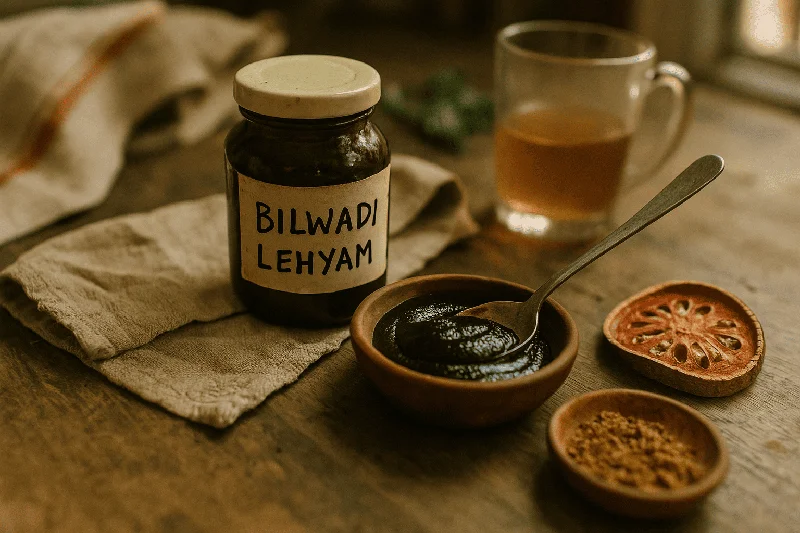
Bilwadi Lehyam is a classical Ayurvedic herbal jam (lehyam) primarily used to treat digestive disorders like indigestion, bloating, gas, nausea, vomiting, food poisoning, and IBS. It also supports respiratory health by relieving chronic cough, bronchitis, and asthma symptoms. This formulation, rooted in the ancient text Sahasrayogam, combines Bilwa (Aegle marmelos), Trikatu, cumin, Chitraka, and other potent herbs in a jaggery-honey base to kindle digestive fire (Agni), eliminate toxins (Ama), and balance Vata-Kapha doshas.
If you've been searching for a natural, time-tested solution for stubborn stomach problems or lingering respiratory issues, this guide covers everything you need to know — from ingredients and mechanism of action to dosage, side effects, drug interactions, and even how to prepare it at home.
What Is Bilwadi Lehyam?
Bilwadi Lehyam (also spelled Vilwadi Lehyam, Bilvadi Leham, or Bilvadhi Legiyam) is a semi-solid herbal preparation classified as a lehyam or avaleha in Ayurvedic pharmacology. It has a jam-like consistency, slightly sweet-spicy taste, and is typically dark brown in color. The formulation centers on the unripe fruit pulp of Aegle marmelos (Bael), one of the most revered medicinal trees in Indian traditional medicine.
Unlike quick-fix antacids or OTC digestive pills, Bilwadi Lehyam works at the root level — strengthening digestive fire, clearing accumulated toxins from the gut, and restoring the natural rhythm of your gastrointestinal system.
Bilwadi vs Vilwadi — Understanding the Name Variations
You'll encounter this product under several different names online, and this can be confusing.
Here's the simple explanation:
- Bilwadi / Bilvadi — derived from the Sanskrit/Hindi name Bilwa for Aegle marmelos
- Vilwadi / Vilwadi — derived from the Malayalam/Tamil name Vilwa for the same plant
- Bilvadhi Legiyam — the Tamil Siddha tradition spelling
- All these names refer to the same classical formulation.
- The variation is purely linguistic — North Indian Ayurvedic pharmacies tend to use "Bilwadi," while Kerala and South Indian manufacturers use "Vilwadi." When purchasing, check the ingredient list rather than relying solely on the name.
Historical Origins & Classical Ayurvedic References
Bilwadi Lehyam finds its earliest documented reference in Sahasrayogam, a comprehensive Ayurvedic text from Kerala that catalogues thousands of formulations. The text classifies it under Leha Prakarana (the chapter on electuaries/herbal jams).
The original Sanskrit shloka describes the formulation's core purpose: balancing Kapha and Anila (Vata) doshas while kindling Agni (digestive fire). Classical Ayurvedic physicians prescribed it for conditions called Ajirna (indigestion), Atisara (diarrhea), Chardi (vomiting), and Kasa (cough) — conditions that remain its primary indications even today.
What makes this formulation historically significant is that it addresses the Ayurvedic principle that most diseases originate in the gut ("Rogah sarve api mandagnau"). By correcting digestive function first, Bilwadi Lehyam creates a cascading effect of improved health across multiple systems.
Key Ingredients & Their Therapeutic Properties
Understanding what goes into Bilwadi Lehyam helps you appreciate why it works. Each ingredient serves a specific pharmacological and Ayurvedic purpose.
Bilwa / Vilwa (Aegle marmelos) — The Star Ingredient
The unripe fruit pulp of Bael is the primary active ingredient. A 2019 review published in the Journal of Traditional and Complementary Medicine confirmed that Aegle marmelos possesses significant anti-diarrheal, antimicrobial, anti-inflammatory, and gastroprotective properties. The key active compounds include marmelosin, marmesin, and aegeline.
In Ayurvedic terms, Bilwa is Kashaya (astringent) and Tikta (bitter) in taste, with Ushna Virya (hot potency) — making it ideal for pacifying Vata and Kapha while stimulating sluggish digestion.
Trikatu — Ginger, Black Pepper & Long Pepper
Trikatu is a synergistic trio of:
- Shunti (dry ginger / Zingiber officinale)
- Maricha (black pepper / Piper nigrum)
- Pippali (long pepper / Piper longum)
This combination acts as a powerful bioavailability enhancer. A 2012 study in Planta Medica showed that piperine from black pepper can increase the bioavailability of other compounds by up to 2000%. In the lehyam, Trikatu ensures that all other herbs are absorbed more efficiently. It also directly stimulates gastric secretions and breaks down Ama (metabolic toxins).
Jeeraka (Cumin) & Dhanyaka (Coriander)
Cumin (Cuminum cyminum) and coriander (Coriandrum sativum) are carminative herbs that specifically target bloating, gas, and abdominal cramps. They have a cooling post-digestive effect (Vipaka), which balances the overall heating nature of the formulation and prevents it from aggravating Pitta dosha excessively.
Chitraka (Plumbago zeylanica)
Chitraka is one of the most potent Deepana (appetizer) and Pachana (digestive) herbs in Ayurveda. Its active compound, plumbagin, has demonstrated significant antimicrobial and anti-inflammatory activity in laboratory studies. It's the ingredient primarily responsible for the lehyam's ability to address food poisoning and stomach infections.
Mustha (Cyperus rotundus) & Karpoora (Camphor)
Mustha (nutgrass) is classified as one of the best herbs for Ama Pachana — digesting and eliminating metabolic toxins. Karpoora (camphor) in small quantities acts as a stimulant for the entire GI tract and provides the characteristic aroma of the lehyam.
Base Ingredients — Jaggery (Guda) & Honey (Madhu)
| Base Ingredient | Role in the Formulation |
|---|---|
| Guda (Jaggery) | Acts as the primary medium (Prakshepa) that binds the herbs together; provides iron and minerals; serves as a natural preservative |
| Madhu (Honey) | Added after cooling; acts as Yogavahi (a carrier that enhances herb delivery to tissues); adds its own antimicrobial properties |
The jaggery base is also why diabetic patients need to exercise caution with this formulation — more on that in the side effects section.
Bilwadi Lehyam Uses & Health Benefits
Digestive Health — Indigestion, Bloating, Gas & IBS
This is the primary and most well-established use of Bilwadi Lehyam.
The formulation works through multiple mechanisms:
- Stimulates Agni (digestive fire): Trikatu, Chitraka, and Bilwa collectively increase gastric acid and enzyme secretion
- Carminative action: Jeeraka, Dhanyaka, and Karpoora help expel trapped gas and reduce abdominal distension
- Regulates peristalsis: Bilwa fruit pulp has a unique dual action — it firms up loose stools while also relieving constipation by regulating intestinal motility
For IBS sufferers specifically, the combination of anti-spasmodic and gut-normalizing herbs can be particularly helpful. The lehyam addresses both IBS-D (diarrhea-predominant) and IBS-C (constipation-predominant) types, which is rare for a single formulation.
Food Poisoning Relief — Nausea, Vomiting & Stomach Pain
Bilwadi Lehyam has a strong traditional reputation for managing Visha (toxic) conditions affecting the stomach. The antimicrobial properties of Chitraka (plumbagin), the gastroprotective action of Bilwa, and the anti-emetic qualities of ginger work together to combat the symptoms of food poisoning — nausea, vomiting, cramping, and diarrhea.
It's worth noting: for severe food poisoning with high fever, bloody stools, or persistent vomiting lasting over 24 hours, seek medical attention immediately. Bilwadi Lehyam is best suited for mild to moderate cases.
Constipation & Bowel Regularity
Unlike harsh laxatives that create dependency, Bilwadi Lehyam promotes regular bowel movements by strengthening the overall digestive process. When your Agni is strong and your food is being digested properly, the downstream effect is well-formed, regular stools. The lehyam's Ushna Virya (hot potency) counters the Vata imbalance that is typically at the root of chronic constipation.
Respiratory Health — Chronic Cough, Asthma & Bronchitis
This benefit surprises many people who think of Bilwadi Lehyam as purely a digestive remedy. But in Ayurveda, the stomach and lungs are intimately connected through Kapha dosha. Excess Kapha produced by weak digestion tends to accumulate in the respiratory tract as mucus and phlegm.
By drying up excess Kapha at its source (the stomach) and through the direct expectorant action of Trikatu and Karpoora, Bilwadi Lehyam helps with:
- Chronic productive cough with thick white/clear mucus
- Bronchial asthma (as adjunct therapy, not replacement)
- Recurrent bronchitis
- Post-nasal drip related to digestive Kapha imbalance
Vilwadi Lehyam for Cough — When Does It Work Best?
It works best for Kapha-type coughs — wet, productive coughs with thick mucus, worse in the morning and after meals. It may not be as effective for dry, irritating Vata-type coughs or hot, infectious Pitta-type coughs with yellow-green sputum. Knowing your cough type matters.
Immunity Boost & General Well-being
A healthy gut is the foundation of strong immunity — modern science and Ayurveda agree on this. Approximately 70% of the immune system resides in the gut-associated lymphoid tissue (GALT). By optimizing digestive function and eliminating Ama, Bilwadi Lehyam indirectly strengthens immune responses. The antioxidant properties of Bilwa fruit (rich in polyphenols and coumarins, as documented in a 2016 study in Pharmacognosy Reviews) provide additional immune support.
How Bilwadi Lehyam Works — Ayurvedic & Scientific Perspective
Dosha Balancing — Vata, Pitta & Kapha
| Dosha | Action | Mechanism |
|---|---|---|
| Vata | Pacifies | Ushna Virya (hot potency) counters Vata's cold, dry quality; regulates downward movement of Apana Vayu |
| Kapha | Reduces excess | Tikshna (sharp) and Ushna properties liquify and expel stagnant Kapha from stomach and lungs |
| Pitta | Mildly increases | The heating nature can slightly increase Pitta — this is balanced by cooling herbs like Jeeraka and Dhanyaka |
The formulation is classified as Kapha-Anilahara in classical texts — meaning its primary action is against Kapha and Vata aggravation. People with predominant Pitta constitution or active Pitta disorders (acid reflux, gastritis, burning sensation) should use it cautiously or under practitioner guidance.
The Science Behind the Ayurvedic Approach
Modern pharmacological research helps explain why this centuries-old formulation works:
- Anti-microbial action: Plumbagin (from Chitraka) and marmelosin (from Bilwa) have demonstrated activity against common gut pathogens including E. coli, Salmonella, and Staphylococcus aureus in vitro studies
- Anti-inflammatory effect: Multiple ingredients reduce NF-κB mediated inflammatory pathways in the gut lining
- Prokinetic action: Ginger and piperine stimulate gastric motility and accelerate gastric emptying
- Antioxidant protection: Bilwa fruit polyphenols scavenge free radicals and protect gastric mucosal cells from oxidative damage
This isn't just folklore — there is a growing body of evidence supporting the individual ingredients, though large-scale clinical trials on the complete Bilwadi Lehyam formulation are still needed.
Bilwadi Lehyam Dosage — How to Take It Correctly
Standard Adult Dosage
- Dose: 10-15 grams (approximately 1 tablespoon) once or twice daily
- Timing: Typically taken before food on an empty stomach for digestive complaints; can be taken after food for respiratory issues
- Adjuvant (Anupana): Warm water or lukewarm milk
Vilwadi Lehyam Before or After Food?
For digestive complaints (gas, bloating, indigestion, food poisoning): Take it before food — this allows the herbs to directly stimulate Agni before the digestive process begins.
For respiratory complaints (cough, bronchitis, asthma): Take it after food — this prevents potential stomach irritation and allows the Kapha-reducing action to work on already-formed Kapha in the system.
Dosage for Children
| Age Group | Dose | Frequency |
|---|---|---|
| 3–5 years | 2.5–5 grams (½ teaspoon) | Once daily |
| 6–12 years | 5–7.5 grams (½ to 1 teaspoon) | Once daily |
| 12+ years | 7.5–10 grams | Once or twice daily |
Is Bilwadi Lehyam safe for children? Generally yes, in appropriate doses. However, for children under 3 years, consult an Ayurvedic physician before administering. The presence of camphor and strong spices makes dosing accuracy important in young children.
How Long Does It Take to See Results?
- Acute conditions (food poisoning, sudden indigestion): Often within 1-3 doses
- Chronic conditions (IBS, recurring bloating, chronic cough): 2-4 weeks of consistent use
- General digestive strengthening: 4-8 weeks
Most Ayurvedic practitioners recommend a course of 1-3 months for chronic issues, followed by reassessment.
Dosage for Specific Groups
For Elderly Individuals
Start with a lower dose (5-7.5 grams) and increase gradually. Elderly patients often have reduced Agni but may also have Pitta sensitivity — monitor for any signs of acidity or burning.
For Athletes & Active Individuals
Bilwadi Lehyam can support nutrient absorption and prevent exercise-induced GI distress. Take 10 grams with warm water 30 minutes before meals. It's not a performance supplement per se, but better digestion means better nutrient utilization.
Don't wait or self medicate. Start chat with Doctor NOW
Bilwadi Lehyam vs Other Popular Lehyams — A Comparison
No competitor has provided this comparison, yet it's one of the most useful things for someone deciding which Ayurvedic lehyam to choose.
| Feature | Bilwadi Lehyam | Chyawanprash | Agastya Rasayanam | Dasamoola Rasayanam |
|---|---|---|---|---|
| Primary Focus | Digestive & respiratory health | General immunity & rejuvenation | Respiratory disorders (primary) | Vata disorders, pain, inflammation |
| Key Ingredient | Bilwa (Bael) | Amla (Indian Gooseberry) | Agastya flower & Haritaki | Ten roots (Dasamoola) |
| Dosha Target | Vata & Kapha | Tridosha (all three) | Kapha & Vata | Primarily Vata |
| Best For | Indigestion, bloating, food poisoning, wet cough | Seasonal immunity, general wellness | Chronic asthma, COPD, severe cough | Joint pain, backache, post-partum recovery |
| Suitable for Diabetics? | No (jaggery base) | Limited (sugar-free versions available) | With caution | With caution |
| Taste | Sweet-spicy-pungent | Sweet-sour-spicy | Sweet-pungent | Sweet-bitter |
Bottom line: Choose Bilwadi Lehyam specifically when your primary concern is digestive dysfunction, especially when accompanied by respiratory symptoms. If you just want general immunity without specific digestive issues, Chyawanprash is a better choice.
Side Effects, Contraindications & Drug Interactions
Known Side Effects
Bilwadi Lehyam is generally safe when taken in recommended doses.
However, possible side effects include:
- Mild burning sensation or acidity — due to the heating nature; more common in Pitta-dominant individuals
- Loose stools — particularly in the first few days, as the body adjusts
- Allergic reactions — rare, but possible if you're allergic to any specific ingredient
Detailed Contraindications
| Condition | Risk Level | Explanation |
|---|---|---|
| Diabetes | High | Jaggery and honey base significantly raises blood sugar. Diabetic patients should avoid unless supervised by a physician |
| Pregnancy & Lactation | Moderate | Chitraka and Trikatu have Ushna Virya which may be contraindicated in pregnancy. Avoid during pregnancy; consult before using during lactation |
| Active Gastric Ulcers | High | The heating and stimulating herbs can aggravate existing ulcers and mucosal erosion |
| Liver Disease | Moderate | Some ingredients undergo hepatic metabolism; compromised liver function may alter processing |
| Hyperacidity / GERD | Moderate-High | May worsen acid reflux due to Pitta-increasing properties |
Interaction with Modern Medications
This is a critical gap that no other resource covers adequately:
- Antidiabetic drugs: Jaggery content may counteract the blood sugar-lowering effect of metformin, glimepiride, or insulin
- Anticoagulants (Warfarin, Aspirin): Ginger and piperine may have mild blood-thinning effects; combined use could potentially increase bleeding risk
- Antacids and PPIs: Taking Bilwadi Lehyam simultaneously with antacids may reduce the efficacy of both — the lehyam tries to increase acid production while the antacid suppresses it
- Immunosuppressants: The immune-stimulating properties may theoretically interfere with drugs designed to suppress immune response (relevant for organ transplant patients)
Always inform your doctor about Ayurvedic medicines you're taking. This is not optional — it's essential for your safety.
Storage, Shelf Life & How to Choose Authentic Products
Shelf Life & Storage Conditions
- Shelf life: Typically 2-3 years from date of manufacture when stored properly
- - Storage: Keep in a cool, dry place away from direct sunlight.
- Use a clean, dry spoon every time — introducing moisture can promote fungal growth
- Refrigeration: Not typically necessary, but can extend freshness in hot, humid climates
- Signs of spoilage: Unusual smell, visible mold, color change, or fermented taste — discard immediately if any of these appear
Choosing Authentic Bilwadi Lehyam
Not all products on the market are created equal.
Here's what to look for:
- 1.GMP Certification — Ensure the manufacturer follows Good Manufacturing Practices as mandated by AYUSH Ministry
- 2.Classical reference cited — Authentic products mention Sahasrayogam or another classical text on the label
- 3.Full ingredient list with botanical names — Vague labels are a red flag
- 4.Reputable manufacturers — Established brands like AVP (Arya Vaidya Pharmacy), Kerala Ayurveda, Kottakkal Arya Vaidya Sala, and Vaidyaratnam have long track records
- 5.Batch number and expiry date — Missing these details suggests poor quality control
Dietary Guidelines During Bilwadi Lehyam Use (Pathya-Apathya)
This is a crucial Ayurvedic concept that no competitor has addressed — the foods you eat during treatment significantly impact how well the medicine works.
Foods to Favor (Pathya)
- Light, warm, freshly cooked meals
- Moong dal khichdi (the gold standard Ayurvedic recovery food)
- Steamed vegetables, especially gourds and leafy greens
- Buttermilk (Takra) — especially at lunch
- Warm water throughout the day
- Small, frequent meals rather than three large ones
Foods to Avoid (Apathya)
- Cold foods and beverages (ice cream, cold water, chilled drinks)
- Heavy, fried, and oily foods
- Raw salads in large quantities (hard to digest when Agni is weak)
- Excessive dairy, especially cold milk and cheese
- Fermented foods in excess (can increase Pitta alongside the lehyam)
- Stale or reheated food (Paryushita Ahara)
Following these dietary guidelines can dramatically improve the effectiveness of the lehyam — many patients who report "it didn't work for me" were not following basic dietary discipline.
Home Preparation of Bilwadi Lehyam
For those who prefer making their own formulations or live in areas where commercial products are unavailable, here is a simplified home preparation method based on the classical process:
Ingredients Needed
- Unripe Bael fruit pulp (Bilwa) — 200 grams
- Dry ginger powder — 20 grams
- Black pepper powder — 10 grams
- Long pepper powder — 10 grams
- Cumin seeds (roasted & powdered) — 15 grams
- Coriander powder — 15 grams
- Chitraka root powder — 10 grams
- Mustha powder — 10 grams
- Jaggery — 400 grams
- Honey — 100 grams
- Edible camphor — 2 grams
- Ghee — 50 ml
Step-by-Step Process
- 1.Prepare the Bael pulp: Scoop out the pulp of unripe Bael fruit. Cook it in 4 times water until it reduces to a soft, mashed consistency. Strain through a coarse cloth.
- 2.Prepare the jaggery syrup: Dissolve jaggery in minimal water and heat until it reaches a single-string consistency (Eka tantri paka).
- 3.Combine: Add the cooked Bael pulp to the jaggery syrup. Stir continuously on low heat until the mixture thickens and starts leaving the sides of the vessel.
- 4.Add ghee: Mix in ghee and continue stirring for 5 more minutes.
- 5.Cool partially: Remove from heat. Once the temperature drops below 40°C (lukewarm), add honey and camphor. Never add honey to hot preparations — Ayurveda considers heated honey toxic (Ama-producing).
- 6.Add herb powders: Mix in all the powdered herbs thoroughly.
- 7.Store: Transfer to a clean, dry glass jar.
Important: Homemade preparations lack standardization. The exact proportions in classical texts (as given in Sahasrayogam) are measured in traditional units (pala, karsha) and require expertise to follow precisely. For therapeutic use in serious conditions, commercially prepared standardized products are recommended.
Frequently Asked Questions (FAQ)
What is Bilwadi Lehyam used for?
Bilwadi Lehyam is primarily used for digestive disorders — indigestion, bloating, excessive gas, food poisoning, nausea, vomiting, diarrhea, and IBS. It is also used for respiratory conditions like chronic wet cough, bronchitis, and as an adjunct in bronchial asthma management.
Can I use Bilwadi Lehyam along with other medications?
You can, but with caution. Maintain a gap of at least 30-60 minutes between Bilwadi Lehyam and any allopathic medicine. Specifically avoid combining it with antacids (conflicting mechanisms) and be cautious with blood thinners and diabetes medications. Always disclose your Ayurvedic medicines to your treating physician.
Where can I purchase authentic Bilwadi Lehyam?
Authentic Bilwadi Lehyam is available from established Ayurvedic pharmacies — both online and offline. Reputable brands include Kerala Ayurveda, Arya Vaidya Pharmacy (AVP), Kottakkal Arya Vaidya Sala, Vaidyaratnam, and SKM Siddha. You can purchase directly from their official websites, Amazon India, or authorized Ayurvedic retail stores. Always check for GMP certification and AYUSH ministry licensing.
How long can I take Bilwadi Lehyam continuously?
For acute conditions, a short course of 1-2 weeks is usually sufficient. For chronic issues, most practitioners recommend 1-3 months of continuous use followed by a reassessment. Extended use beyond 3 months should be supervised by an Ayurvedic physician, particularly because the heating nature of the formulation may gradually increase Pitta over time.
Is Bilwadi Lehyam the same as Bilwadi Churna?
No. Bilwadi Churna is a dry powder formulation that may share some ingredients, but Bilwadi Lehyam is a semi-solid preparation with a jaggery-honey base. The lehyam form generally has better palatability, longer shelf life, and improved bioavailability due to the processing method and the carrier properties of honey and jaggery.
Final Thoughts
Bilwadi Lehyam stands as one of Ayurveda's most practical and effective formulations for everyday digestive and respiratory wellness. It's not a miracle cure, and it's not meant to replace emergency medical care for serious conditions. But for the millions of people dealing with chronic indigestion, recurring bloating, IBS symptoms, or that persistent wet cough that won't go away — it offers a safe, well-documented, time-tested approach.
The key to getting results? Take the right dose, at the right time, with the right diet. Follow the pathya-apathya guidelines. Give it adequate time to work. And if you have any underlying conditions or are on medications, consult a qualified Ayurvedic practitioner before starting.
Your gut health is the foundation of your overall well-being. A formulation that has been strengthening digestive fire for centuries might just be what your body needs.
Scientific Sources
- An Insight of Clinical Evidence of Ayurveda Interventions in the Management of COVID-19 Patients — Maideen NMP et al., 2022, Infectious disorders drug targets
Questions from users
How does Bilwadi Lehyam interact with modern cough medicines?
Kendall
6 days ago
Bilwadi Lehyam, when taken for coughs, primarily targets wet, productive coughs associated with excess mucus. If combined with modern cough medicines, which often aim to suppress cough or thin mucus, the interaction mostly depends on the active compounds in the specific cough medicine. Generally, there may be no significant adverse interactions, but it's crucial to monitor for increased dryness or changes in mucus consistency. If symptoms persist or worsen, consult a healthcare provider to ensure safe and effective management of your respiratory issues.
What is the correct way to prepare Bilwadi Lehyam for best results?
Nora
15 days ago
To prepare Bilwadi Lehyam, start by cooking it in 4 times the volume of water till it's soft, like a mash. The idea is to get it to a thick, paste-like consistency. If you're using it for a long time, remember it's heating in nature, so watch out for any increase in Pitta. Best to check with an Ayurvedic doc if you're planning on extended use! 😊
Can Bilwadi Lehyam help with improving gut health and digestion?
Jayden
25 days ago
Yep, Bilwadi Lehyam can definitely help with gut health and digestion! It’s got those nice astringent and bitter tastes along with hot potency which helps balance Vata and Kapha, plus it stimulates digestion that might be a bit sluggish. It's always good to keep an eye on how your body feels and maybe chat with an Ayurvedic doc to see what works best for you!
Can I take Bilwadi Lehyam if I'm nursing and what should I consider?
Joseph
34 days ago
If you're nursing, it's best to consult with a healthcare provider before taking Bilwadi Lehyam. While it can support digestion and immune function, everybody's constitution is different, and your specific health needs and your baby's should be a priority. Keep their doshas and your digestive fire in mind!
Can I take Bilwadi Lehyam if I have food allergies?
Sierra
44 days ago
It depends on the ingredients and your specific allergies. Bilwadi Lehyam has multiple herbs, and if you're allergic to any of them, it's best to avoid it or consult a practitioner. You might also consider trying an allergy test with a small amount if you’re unsure. Always prioritize your safety and health!
What is the history and origin of Bilwadi Lehyam in Ayurvedic medicine?
Zara
53 days ago
Bilwadi Lehyam's history isn't detailed in your article, but generally, this type of formulation has roots in classical Ayurvedic texts. It's believed to be created for balancing the doshas—especially Vata and Kapha. Much of Ayurvedic wisdom is passed down orally, so pinpointing its exact origin can be bit tricky. It's a product of ancient physician's efforts to use local herbs for healing.
What is the Ayurvedic principle behind using complex mixtures like Bilwadi Lehyam for healing?
Wallace
63 days ago
In Ayurveda, using complex mixtures like Bilwadi Lehyam aims to balance doshas and support different dhatus through synergistic herb combinations. Each ingredient complements others, producing a stronger healing effect than single herbs. It's kind of like a team effort—natural harmony at work boosting digestion, immunity, and overall well-being.
What is the role of jaggery in Bilwadi Lehyam and how does it affect its benefits?
Rowan
73 days ago
Jaggery in Bilwadi Lehyam acts as a sweetener making it easier to intake, but it's more than just that! It's also known for its digestive benefits as it helps enhance agni & improve absorption of herbs in the lehyam. Plus, it helps balance the kaphа dosha. So, it kinda boosts its overall health effects you know!
Can Bilwadi Lehyam improve my overall immune system health?
Presley
82 days ago
Yes, Bilwadi Lehyam can support immune health, though it's not its primary function. It's more known for helping respiratory and digetive issues, but by enhancing digestive fire and balancing doshas, it can indirectly strenghten immunity. Just remember, Ayurveda sees everything as interconnected, so your overall balance matters!
Can Bilwadi Lehyam help with reducing inflammation in the body?
Henry
92 days ago
Yes, Bilwadi Lehyam can indeed help with reducing inflammation! It's got some anti-inflammatory properties. Ayurvedic herbs in it work together to soothe and support your body's systems. Just make sure you're getting it from a good source, quality matters! If inflammation is a big issue for you, maybe checking your diet and stress levels too might help. 😊
Related articles

Gastrointestinal Disorders
Dhanwantara Vati: Ayurvedic Remedy for Holistic Healt
In Ayurveda, the ancient science of natural healing, Dhanwantara Vati holds a significant place for its wide-ranging therapeutic properties.
3,412

Gastrointestinal Disorders
Pilex Tablet
Exploration of Pilex Tablet
4,405

Gastrointestinal Disorders
Ulset Tablet: Effective Ayurvedic Treatment for Ulcers
Learn about Ulset Tablet, an Ayurvedic remedy for ulcers. Discover its benefits, usage guidelines, dosage, and scientific insights for effective ulcer management.
3,015
Gastrointestinal Disorders
How to Stop Diarrhea: Ayurvedic Remedies and Recovery Tips
How to stop diarrhea naturally? Discover Ayurvedic remedies, what to eat during diarrhea, and how to treat chronic or post-meal symptoms holistically
3,612

Gastrointestinal Disorders
Jatamayadi Choornam – Benefits, How to Use, Side Effects and Ingredients
Exploration of Jatamayadi Choornam – Benefits, How to Use, Side Effects and Ingredients
1,734

Gastrointestinal Disorders
Shankh Vati Benefits, Dosage, Ingredients and Side Effects
Exploration of Shankh Vati Benefits, Dosage, Ingredients and Side Effects
3,126

Gastrointestinal Disorders
Sarvatobhadra Ras – Powerful Ayurvedic Formula for Rejuvenation & Healing
Learn about Sarvatobhadra Ras, an Ayurvedic formulation known for its rejuvenating and healing properties. Discover its benefits, ingredients, uses, and how it supports overall health and vitality.
2,837

Gastrointestinal Disorders
Herbolax Capsule
Exploration of Herbolax Capsule
2,601

Gastrointestinal Disorders
Trivrit Lehyam: Benefits, Dose, Side Effects, How to Use, Ingredients
Exploration of Trivrit Lehyam: Benefits, Dose, Side Effects, How to Use, Ingredients
3,167

Gastrointestinal Disorders
Kapardika Bhasma: Seashell-Based Ayurvedic Remedy for Digestive Health
Discover Kapardika Bhasma, an Ayurvedic mineral preparation made from conch shell. Learn about its benefits, traditional uses, dosage guidelines, and safety precautions for holistic health.
2,986
Related consultations on the topic
Legal
Additional Documents
© 2024 Ask Ayurveda. All rights reserved.