Ask Ayurvedic doctor a question and get a consultation online on the problem of your concern in a free or paid mode. More than 2,000 experienced doctors work and wait for your questions on our site and help users to solve their health problems every day.
FREE! Ask Ayurvedic Doctors 24/7

 Fast responses
 1000+ verified doctors
Body DetoxEar, Nose, and Throat DisordersGeriatrics & RejuvenationImmunodeficiencyInfertility TreatmentNutritionOrthopedic DisordersPediatricsRespiratory DisordersSexually Transmitted Diseases (STDs)Surgery RecoveryUrological DisordersVascular DisordersDental DisordersEndocrinological DisordersGastrointestinal DisordersYoga TherapyGeneral MedicineAllergic DisordersCardio DisordersGynecology and ObstetricsCosmetologySkin and Hair DisordersEye DisordersInfectious DiseasesMental DisordersNeurological DisordersOncologyPanchakarmaSexual Health & DisordersSports Medicine
Published on 01/21/25
(Updated on 07/07/26)
3,561
OCD Treatment in Ayurveda: Holistic Solutions for Mental Wellness
Obsessive-Compulsive Disorder (OCD) affects roughly 2–3% of the global population, and India carries one of the highest burdens worldwide. If you're searching for an alternative or complementary path beyond conventional SSRIs, Ayurveda offers a time-tested framework that treats OCD not as an isolated brain malfunction but as a systemic imbalance of mind, body, and consciousness. Ayurvedic treatment for OCD works through herbal formulations that modulate neurotransmitters, Panchakarma detoxification protocols that reset the nervous system, Sattvavajaya Chikitsa (Ayurvedic psychotherapy), and lifestyle recalibration — all aimed at restoring doshic equilibrium and strengthening the mind's capacity to release obsessive thought patterns.
This guide provides what no other resource currently does: a step-by-step treatment roadmap with specific formulations, dosages, timelines, a head-to-head comparison with Western pharmacotherapy, and evidence-based references — so you can make a truly informed decision about your mental health.
What Is OCD? Understanding Obsessions and Compulsions
OCD is a chronic neuropsychiatric disorder defined by two core features:
- Obsessions: Persistent, unwanted, intrusive thoughts, images, or urges that cause marked anxiety. Common themes include contamination fears, harm-related doubts, symmetry needs, and forbidden thoughts.
- Compulsions: Repetitive behaviors or mental acts (handwashing, checking, counting, praying) performed to neutralize the anxiety caused by obsessions.
The disorder typically emerges in late adolescence or early adulthood, though pediatric onset (before age 10) is well-documented. Neuroimaging studies using PET and fMRI consistently show hyperactivity in the cortico-striato-thalamo-cortical (CSTC) circuit — particularly the orbitofrontal cortex, anterior cingulate cortex, and caudate nucleus. Neurochemically, OCD is associated with serotonin dysregulation, though dopamine, glutamate and GABA systems also play significant roles.
Is OCD Genetic?
- Yes, genetics contribute substantially. A 2009 meta-analysis published in Molecular Psychiatry estimated heritability at approximately 40–50%. First-degree relatives of OCD patients have a 4–5 times higher risk.
- However, genetics alone don't determine outcome — environmental stressors, infections (PANDAS), pregnancy, and trauma can all trigger onset.
- This is precisely why Ayurveda's multifactorial model — addressing constitution (Prakriti), mental tendencies (Manas Prakriti), diet, lifestyle, and spiritual health — is so relevant.
Common Symptoms of OCD
| Obsession Type | Typical Compulsion | Example |
|---|---|---|
| Contamination | Excessive washing/cleaning | Washing hands 40+ times daily |
| Harm/doubt | Repeated checking | Checking locks, stove, 15–20 times |
| Symmetry/order | Arranging/organizing | Items must be perfectly aligned |
| Forbidden thoughts | Mental rituals, praying | Repeating prayers to "undo" a thought |
| Hoarding | Inability to discard | Keeping newspapers from years ago |
Risk Factors for OCD
Key risk factors include: age of onset (two peaks — around 10 and 21 years), family history, comorbid conditions (anxiety disorders, depression, tic disorders), high-stress life events, perinatal complications, and in some pediatric cases, streptococcal infections triggering autoimmune neuropsychiatric responses.
The Ayurvedic Understanding of OCD: Atattvabhinivesha and Beyond
- Ayurveda does not use the term "OCD," but classical texts describe conditions that map remarkably well onto it.
- The most precise correlation is Atattvabhinivesha — literally "clinging to unreality" — described by Acharya Charaka in Charaka Samhita (Chikitsa Sthana, Chapter 10). This condition is characterized by persistent false conviction, inability to distinguish real from unreal at the cognitive level, and repetitive behaviors driven by unfounded fear.
Other related Ayurvedic diagnoses include:
- Chittodvega — anxiety disorder with racing, uncontrollable thoughts
- Unmada — broader category of mental derangement (psychosis spectrum)
- Bhutonmada — mental disturbance attributed to unseen influences (sometimes interpreted as inexplicable psychiatric presentations)
Differentiating OCD from Other Manasa Vikaras
This differential diagnosis is critical and, surprisingly, no competing resource addresses it properly:
| Condition | Key Feature | Distinguishing Factor from OCD |
|---|---|---|
| Atattvabhinivesha | Persistent irrational conviction + repetitive acts | Patient often recognizes thoughts are irrational (ego-dystonic) |
| Unmada | Pervasive mental derangement | Loss of reality testing across domains, not limited to specific obsessions |
| Apasmara | Episodic loss of consciousness/memory | Seizure-like episodes, not continuous rumination |
| Chittodvega | Generalized mental restlessness | Diffuse anxiety without structured obsession-compulsion cycles |
An experienced Ayurvedic psychiatrist (Mano Roga Visheshagna) will assess Nidana (causative factors), Purvarupa (prodromal signs), Rupa (presenting symptoms), and Samprapti (pathogenesis) to arrive at the correct diagnosis before initiating treatment.
The Role of Doshas: Prana Vata, Sadhaka Pitta, and Tarpaka Kapha
The pathogenesis (Samprapti) of OCD in Ayurveda is not a simple single-dosha affair.
It involves the disturbance of three key subdoshas:
- 1.Prana Vata (seated in the head): Governs higher cerebral functions — thought, perception, emotions. When vitiated, it produces racing, cyclical, and uncontrollable thoughts. This is the primary driver.
- 2.Sadhaka Pitta (seated in the heart/brain): Responsible for intellect, discrimination (Buddhi), and emotional processing. Its impairment compromises the ability to evaluate obsessive thoughts rationally — the patient knows the fear is irrational but cannot stop the compulsive response.
- 3.Tarpaka Kapha (seated in the brain): Provides nourishment and stability to neurons.
Its depletion leads to neuronal hyperexcitability — correlating with the overactive CSTC circuits seen in neuroimaging.
Rajas, Tamas, and the Concept of Mental Ama
Beyond the tridosha framework, Ayurveda recognizes three mental qualities (Gunas): Sattva (clarity, balance), Rajas (agitation, hyperactivity), and Tamas (inertia, delusion).
OCD represents a Rajasic-Tamasic mind state. Rajas drives the compulsive restlessness and urgency; Tamas maintains the fixed, repetitive patterns and resistance to change. The therapeutic goal is to elevate Sattva.
Additionally, the concept of Manas Ama (mental toxins) deserves attention — something no competitor discusses. Just as improperly digested food creates physical Ama (metabolic toxins), improperly processed experiences and emotions generate mental Ama. These undigested psychological impressions accumulate and manifest as obsessive thought loops. The role of impaired Agni (both Jatharagni/digestive fire and Mano-agni/mental digestive capacity) in this process explains why gut-focused therapies like Basti work on mental disorders — a concept now validated by modern gut-brain axis research.
Three Pillars of Ayurvedic Treatment for OCD
Classical Ayurvedic texts prescribe three therapeutic approaches for Manasa Vikaras (mental disorders):
1. Daivavyapashraya Chikitsa (Spiritual/Divine Therapy)
This includes mantra chanting, wearing specific gemstones (Mani Dharana), fire rituals (Homa), pilgrimage (Tirtha Sevana), and other faith-based practices. While this may seem non-scientific, a 2017 study in the Journal of Religion and Health demonstrated that spiritual practices significantly reduce anxiety and OCD severity in religious populations — likely through activation of the parasympathetic nervous system and reduction in cortisol.
2. Sattvavajaya Chikitsa (Ayurvedic Psychotherapy)
This is Ayurveda's original psychotherapy — described thousands of years before CBT.
It involves:
- Jnana (knowledge/psychoeducation)
- Vijnana (specific analytical insight)
- Dhairya (cultivation of courage and willpower)
- Smriti (memory reconsolidation — reframing traumatic or distorted memories)
- Samadhi (meditative absorption — training the mind to disengage from obsessive loops)
This approach directly parallels Exposure and Response Prevention (ERP), the gold standard Western psychotherapy for OCD, in its emphasis on confronting fears and building tolerance.
3. Yukti Vyapashraya Chikitsa (Rational/Evidence-Based Medical Therapy)
This encompasses herbal medications (Aushadha), Panchakarma detoxification, dietary protocols (Ahara), and lifestyle modifications (Vihara). The bulk of this article focuses on this pillar because it is most actionable.
Panchakarma Protocols for OCD: Detailed Procedures
Panchakarma is not a single therapy — it's a systematic, phased detoxification and rejuvenation program.
For OCD, the following protocols are typically employed:
Purvakarma (Preparatory Phase) — Days 1–7
- Snehapana (Internal oleation): Medicated ghee, most commonly Mahat Panchagavya Ghrita or Kalyanaka Ghrita, is administered in increasing doses over 5–7 days. This saturates tissues with lipophilic herbal compounds that cross the blood-brain barrier. Starting dose is typically 25–30 ml, increasing to 100–150 ml based on Agni and tolerance.
- Abhyanga + Swedana: Full-body oil massage with Kshirabala Taila or Dhanvantaram Taila followed by steam therapy. This calms Vata and prepares the body for purification.
Pradhanakarma (Main Procedures) — Days 8–21
| Procedure | Method | Relevance to OCD |
|---|---|---|
| Virechana (Therapeutic purgation) | Herbal purgatives after oleation | Clears excess Pitta, reduces irritability and obsessive anger |
| Vamana (Therapeutic emesis) | Indicated when Kapha is dominant | Removes Tarpaka Kapha stagnation, clears mental fog |
| Nasya (Nasal administration) | Anutaila or Kshirabala Taila, 6–8 drops per nostril | Direct access to brain via nasal mucosa; calms Prana Vata immediately |
| Basti (Medicated enema) | Ksheera Basti with Dashamoola or Ashwagandha | Acts on gut-brain axis; a 2018 study in Frontiers in Psychiatry confirmed gut microbiome modulation reduces OCD-like behaviors in animal models |
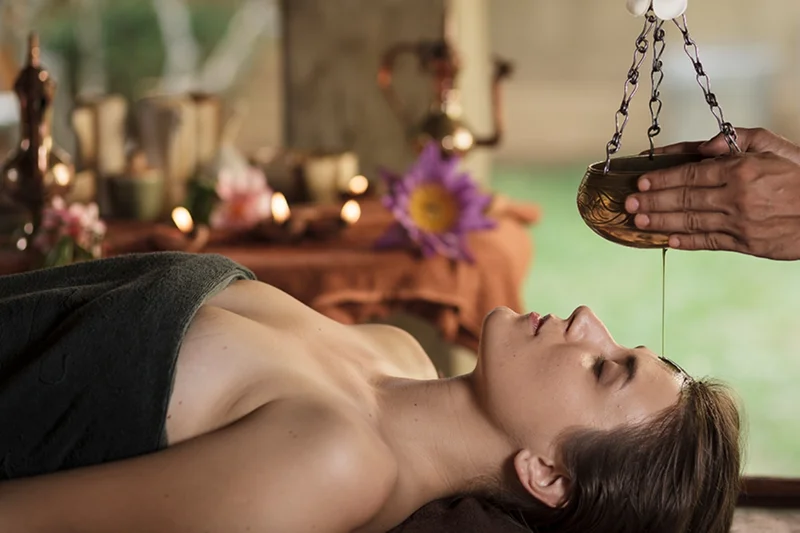
| Shirodhara | Continuous stream of medicated oil/buttermilk on forehead for 45–60 min | Deeply calms the prefrontal cortex; shown to reduce cortisol and increase alpha-wave activity |
Paschatkarma (Post-Treatment Phase) — Days 22–35+
Gradual dietary normalization (Samsarjana Krama), Rasayana (rejuvenation) therapy with brain tonics, and long-term herbal formulations.
Ayurvedic Herbal Formulations for OCD: Medicines, Dosages, and Duration
- Here is something you won't find anywhere else — specific formulations with dosing guidelines.
- Note: All dosages must be individualized by a qualified Ayurvedic practitioner based on your Prakriti, Vikriti, and Agni status.
| Formulation | Form | Typical Adult Dose | Timing | Primary Action |
|---|---|---|---|---|
| Manasamitra Vataka | Tablet/pill | 1–2 tablets (125–250 mg each) twice daily | After food with warm milk | Premier Medhya (nootropic); calms all three subdoshas |
| Saraswatarishta | Liquid (fermented) | 15–20 ml with equal water, twice daily | After food | Enhances Buddhi, reduces anxiety, improves sleep |
| Ashwagandha (Withania somnifera) | Churna/capsule | 3–6 g churna or 500 mg standardized extract | Bedtime with warm milk | Adaptogen; reduces cortisol by 28% (2012, Indian J Psychol Med) |
| Brahmi (Bacopa monnieri) | Churna/tablet | 300–450 mg standardized extract | Morning | Serotonin modulation, anxiolytic |
| Jatamansi (Nardostachys jatamansi) | Churna/tablet | 250–500 mg twice daily | After food | GABAergic activity, sedative, anti-compulsive |
| Shankhapushpi (Convolvulus pluricaulis) | Syrup/churna | 3–6 g churna or 10 ml syrup | Twice daily | Calms Prana Vata, enhances memory |
| Sarpagandha (Rauwolfia serpentina) | Tablet | 250–500 mg at bedtime | Bedtime only | Strong sedative; use under supervision only |
| Yashtimadhu (Glycyrrhiza glabra) | Churna | 3–5 g with ghee | Twice daily | Neuroprotective, supports Tarpaka Kapha |
| Curcumin (standardized Turmeric extract) | Capsule | 500 mg twice daily | With food | Anti-neuroinflammatory; modulates BDNF |
How Long Does Ayurvedic Treatment for OCD Take?
This depends on severity and chronicity.
Here's a general timeline:
- Mild OCD (Y-BOCS score < 16): 3–6 months of herbal therapy + lifestyle changes; many patients report noticeable improvement within 6–8 weeks
- Moderate OCD (Y-BOCS 16–23): 6–12 months; Panchakarma recommended at month 1 and possibly repeated at month 6
- Severe OCD (Y-BOCS > 23) or OCD classified as Mahagada (deeply rooted disease): 12–24 months minimum; integrated approach with conventional medicine is strongly recommended
Recurrence is possible, especially during periods of high stress. Maintenance therapy with low-dose Medhya Rasayana (Brahmi, Shankhapushpi) and daily meditation is advisable for 1–2 years after symptom remission.
Ayurveda vs SSRIs: A Comparative Analysis
No existing resource provides this comparison, which is exactly what patients trying to choose between options need.
| Parameter | Ayurvedic Treatment | SSRIs (Fluoxetine, Fluvoxamine, etc.) |
|---|---|---|
| Mechanism | Multi-target: doshic balance, gut-brain axis, neuroplasticity, Agni correction | Primarily serotonin reuptake inhibition |
| Onset of action | 4–8 weeks for noticeable relief | 4–12 weeks (often 8+ at adequate dose) |
| Side effects | Minimal when properly prescribed; occasional GI discomfort | Sexual dysfunction (40–60%), weight gain, insomnia, emotional blunting |
| Dependency/Withdrawal | No documented dependency; gradual tapering still recommended | Discontinuation syndrome in 20–50% |
| Relapse rate after stopping | Lower when lifestyle changes are maintained (clinical observation) | 50–90% relapse within 2 years of discontinuation |
| Cost (India) | ₹2,000–5,000/month for medicines; ₹15,000–40,000 for Panchakarma cycle | ₹500–3,000/month for medicines; therapy extra |
| Evidence level | Case studies, open-label trials, traditional evidence; limited RCTs | Multiple large RCTs, meta-analyses, FDA-approved |
Can You Combine Ayurveda with Western OCD Medication?
Yes — but with careful medical supervision. An integrative approach is increasingly recommended, especially for moderate-to-severe cases.
Key principles:
- Never stop SSRIs abruptly to start Ayurveda. This causes dangerous discontinuation syndrome.
- Start Ayurvedic herbs alongside SSRIs under dual supervision (psychiatrist + Ayurvedic physician).
- Monitor for interactions: Sarpagandha can potentiate antihypertensive effects. Ashwagandha may have additive sedation with benzodiazepines. Brahmi appears safe with SSRIs based on available data.
- Gradual SSRI tapering can begin after 3–6 months of stable improvement on Ayurvedic protocol — always under the prescribing psychiatrist's guidance.
Don't wait or self medicate. Start chat with Doctor NOW
How Can I Treat OCD Naturally? Yoga, Pranayama, Diet, and Daily Routine
Yoga Asanas for OCD
The following asanas activate the parasympathetic nervous system and reduce cortisol:
- Shavasana (Corpse Pose) — 10–15 minutes daily; promotes deep neurological rest
- Balasana (Child's Pose) — calms frontal lobe activity
- Padmasana (Lotus Pose) — grounding, stabilizes Prana Vata
- Sarvangasana (Shoulder Stand) — increases blood flow to the brain; improves Tarpaka Kapha function
- Viparita Karani (Legs Up the Wall) — excellent for anxiety and insomnia associated with OCD
Pranayama Practices
- Nadi Shodhana (Alternate Nostril Breathing) — 10 minutes, twice daily; balances left and right brain hemispheres
- Bhramari Pranayama (Humming Bee Breath) — stimulates the vagus nerve; a 2017 study in Int J Yoga showed significant reduction in anxiety scores after 12 weeks
- Anuloma Viloma — similar to Nadi Shodhana but with breath retention (Kumbhaka); more advanced practitioners only
Sattvic Diet: What to Eat and What to Avoid
Include:
- Fresh, warm, home-cooked meals
- Ghee (clarified butter) — critical for brain nourishment and fat-soluble herb delivery
- Milk (warm, spiced with nutmeg or turmeric)
- Almonds (soaked), walnuts, dates, figs
- Moong dal, rice, seasonal vegetables
- Tulsi tea, Brahmi tea, warm water with lemon
Strictly Avoid:
- Processed and packaged food (high in preservatives — increase Rajas)
- Excessive caffeine and refined sugar
- Leftover or stale food (increases Tamas)
- Excessive garlic, onion, chili (Rajasic in excess)
- Alcohol, recreational drugs
- Red meat (heavy, Tamasic)
Sample One-Day Sattvic Menu for OCD
| Meal | Items |
|---|---|
| 6:00 AM | Warm water with 1 tsp Triphala churna |
| 7:00 AM (Breakfast) | Poha with vegetables + Brahmi tea |
| 10:00 AM (Snack) | 5 soaked almonds + 2 dates |
| 12:30 PM (Lunch) | Rice + moong dal + ghee + seasonal sabzi + buttermilk |
| 4:00 PM (Snack) | Warm milk with Ashwagandha churna |
| 7:00 PM (Dinner) | Khichdi with vegetables + small amount of ghee |
| 9:00 PM | Warm milk with nutmeg + Jatamansi churna (if prescribed) |
Self-Help Practices at Home
- Oil your feet before bed (Padabhyanga) with Kshirabala Taila — calms Vata almost instantly
- Wake before sunrise (Brahma Muhurta, ~5:30 AM) — the Sattvic quality of this time period supports mental clarity
- 15 minutes of silent meditation — even simple breath awareness (Anapanasati) is effective. Gradually increase to 30 minutes.
- Journaling obsessive thoughts — write down the obsession, rate its intensity 1–10, then consciously set it aside. This is a simplified form of Sattvavajaya.
- Digital detox after 8 PM — screen stimulation aggravates Rajas significantly
OCD Treatment in Children: The Ayurvedic Approach
Pediatric OCD (onset before age 18) accounts for about 25% of all OCD cases. Ayurvedic management for children requires special considerations:
- Dosages are significantly lower: Typically 1/4 to 1/2 adult doses depending on age and weight. Saraswatarishta (5–10 ml) and Brahmi Ghrita (1–2 tsp) are considered safe for children above 5 years.
- Panchakarma is modified: Aggressive Virechana or Vamana is generally avoided in children under 12.
- Shirodhara with medicated milk (Ksheera Dhara) is preferred — it's gentle and well-tolerated. Nasya can be administered with mild formulations like plain Anu Taila in reduced quantity (2–3 drops).
- Sattvic parenting: The household environment matters enormously. Sattvavajaya includes counselling parents on reducing pressure, creating predictable routines, and modeling emotional regulation.
- School integration: An Ayurvedic practitioner should coordinate with the child's school and, if applicable, the child psychologist.
Important: For moderate-to-severe pediatric OCD, conventional treatment (CBT + possibly SSRIs) should remain the first line. Ayurveda serves best as a complementary approach in these cases.
When Ayurveda Is Not Enough: Contraindications and Limitations
Honest discussion of limitations builds trust — and no competitor addresses this transparently.
Seek immediate psychiatric evaluation if:
- OCD symptoms include suicidal ideation or self-harm urges
- The patient cannot perform basic daily functions (eating, bathing, leaving the house)
- Psychotic features are present (true hallucinations, complete loss of reality testing — this may indicate Unmada rather than Atattvabhinivesha)
- The patient is a danger to themselves or others
Limitations of Ayurvedic treatment for OCD:
- No large-scale randomized controlled trials (RCTs) exist comparing Ayurvedic protocols to SSRIs for OCD specifically. The evidence base consists of case studies, open-label trials, and traditional textual authority.
- Sarpagandha (Rauwolfia serpentina) can cause severe depression at high doses — it must never be self-prescribed
- Certain Panchakarma procedures are contraindicated in pregnancy, acute febrile illness, extreme debility, and active GI bleeding
Ayurveda works best for mild-to-moderate OCD as a primary treatment, and as a complementary therapy alongside conventional care for severe OCD.
Clinical Evidence and Case Study
A published case study in the Journal of Ayurveda and Integrated Medical Sciences (2023) documented a 48-year-old male patient with OCD comorbid with Parkinson's disease and depression. The patient had been on conventional medication for years with partial response.
An integrated Ayurvedic protocol was administered:
- Manasamitra Vataka: 2 tablets twice daily
- Saraswatarishta: 15 ml twice daily
- Shirodhara with Kshirabala Taila: daily for 14 days
- Nasya with Anutaila: 6 drops per nostril for 7 days
- Ashwagandha Churna: 5 g at bedtime
After 2 months of treatment, the patient showed significant reduction in obsessive thoughts, improved sleep, reduced tremor severity, and was able to discontinue one of his conventional medications under medical supervision. The Y-BOCS score dropped from 28 (severe) to 14 (mild).
- While a single case study does not constitute definitive proof, it illustrates the potential of a well-designed Ayurvedic protocol.
- More research is urgently needed — a 2021 review in AYU journal called for multi-center RCTs on Medhya Rasayana formulations for anxiety spectrum disorders including OCD.
What Is the Best Way to Stop OCD? A Step-by-Step Ayurvedic Roadmap
Here is the phased treatment plan that no competitor provides:
Phase 1 — Assessment & Preparation (Weeks 1–2)
- Prakriti-Vikriti assessment by qualified Vaidya
- Baseline Y-BOCS scoring (or equivalent symptom assessment)
- Begin Sattvic diet, sleep hygiene, basic Pranayama
- Start Deepana-Pachana (digestive correction) with Trikatu or Chitrakadi Vati
Phase 2 — Panchakarma (Weeks 3–5)
- Snehapana → Abhyanga + Swedana → Virechana/Vamana (as indicated)
- Shirodhara (7–14 days)
- Nasya (7 days)
- Basti (if Vata predominant, 8–15 sessions)
Phase 3 — Shamana (Pacification) Therapy (Months 2–6)
- Oral medications: Manasamitra Vataka + Saraswatarishta + individualized herbs
- Daily Yoga and Pranayama (30–45 minutes)
- Weekly Sattvavajaya sessions (Ayurvedic counselling)
- Monthly follow-up and dose adjustment
Phase 4 — Rasayana (Rejuvenation) & Maintenance (Months 6–18)
- Continue low-dose Medhya Rasayana (Brahmi, Shankhapushpi)
- Seasonal Panchakarma (Ritucharya-based, 1–2 times/year)
- Meditation progression (from 15 to 30+ minutes daily)
- Lifestyle audit every 3 months
Phase 5 — Gradual Discontinuation & Relapse Prevention (Months 18–24)
- Slow tapering of herbs over 2–3 months
- Continue Yoga, meditation, and Sattvic diet indefinitely
- Immediate re-consult protocol if symptoms return
Frequently Asked Questions (FAQ)
Can OCD cause panic attacks?
Yes, and this is more common than many people realize. When an obsessive thought triggers extreme anxiety and the person is unable to perform their compulsive ritual (or the ritual fails to provide relief), a full-blown panic attack can result. In Ayurvedic terms, this represents acute Prana Vata aggravation with Udana Vata involvement. Immediate interventions include Bhramari Pranayama, applying warm sesame oil to the crown of the head (Shiro Abhyanga), and grounding techniques.
How can I treat my OCD naturally without medication?
- For mild OCD, non-pharmacological approaches can be surprisingly effective.
- Focus on: daily Pranayama (especially Nadi Shodhana, 15 minutes twice daily), Sattvic diet, regular Yoga practice, structured daily routine (Dinacharya), adequate sleep (before 10 PM), journaling, and reducing sensory overstimulation. However, if symptoms interfere with your daily functioning, please consult both an Ayurvedic physician and a mental health professional — going completely without treatment for moderate-to-severe OCD is not advisable.
How is OCD classified in Ayurveda — is it considered curable?
- OCD correlates primarily with Atattvabhinivesha, which Charaka classified among the Mahagada (major/difficult-to-treat diseases) when deeply rooted.
- This doesn't mean it's incurable — it means treatment requires sustained, multi-modal effort. Mild-to-moderate cases have excellent prognosis with consistent Ayurvedic treatment. Severe, chronic cases (10+ years duration) are categorized as Yapya (manageable but requiring ongoing support).
Are there any clinical studies supporting Ayurvedic treatment for OCD?
- The evidence base is growing but still limited compared to conventional treatments.
- Key references include: a clinical case study published in JAIMS (2023) showing Y-BOCS reduction from 28 to 14 in 2 months; a 2012 study in Indian Journal of Psychological Medicine confirming Ashwagandha reduces serum cortisol by 28%; research on Bacopa monnieri demonstrating anxiolytic effects comparable to lorazepam in animal models (2002, Phytomedicine); and a 2019 review in AYU journal highlighting the need for multi-center RCTs. This is an area where more rigorous research is sorely needed.
Final Thoughts: Taking the First Step Toward Healing
OCD doesn't have to define your life. Ayurveda offers not just symptomatic relief but a genuine path toward understanding why your mind generates these patterns — and how to transform them at the root level through doshic rebalancing, mental detoxification, and cultivation of Sattva.
But let's be honest: healing from OCD is not quick or easy, regardless of the system of medicine you choose. It requires commitment, patience, and proper guidance.
Your next step: Consult a qualified Ayurvedic physician (BAMS or MD Ayurveda) who has specific experience with Manasa Roga (mental disorders). If you're currently on psychiatric medication, do not stop it — instead, discuss an integrative approach that honors both systems. And if you're in crisis, reach out to a mental health helpline immediately (NIMHANS helpline: 080-46110007 or Vandrevala Foundation: 1860-2662-345).
Your mind deserves the same care, attention, and nourishment that you would give your body. Ayurveda has understood this for thousands of years.
Scientific Sources
- Depression and Its Phytopharmacotherapy-A Narrative Review — Dobrek L et al., 2023, International journal of molecular sciences
- Neuroprotective Herbs for the Management of Alzheimer's Disease — Gregory J et al., 2021, Biomolecules
- Pharmacological attributes of Bacopa monnieri extract: Current updates and clinical manifestation — Fatima U et al., 2022, Frontiers in nutrition
- Meta-analysis of randomized controlled trials on cognitive effects of Bacopa monnieri extract — Kongkeaw C et al., 2014, Journal of ethnopharmacology
- Bacopa monnieri — Walker EA et al., 2026
- Can Ashwagandha Benefit the Endocrine System?-A Review — Wiciński M et al., 2023, International journal of molecular sciences
- Pharmacological evaluation of Ashwagandha highlighting its healthcare claims, safety, and toxicity aspects — Mandlik Ingawale DS et al., 2021, Journal of dietary supplements
- Clinician guidelines for the treatment of psychiatric disorders with nutraceuticals and phytoceuticals: The World Federation of Societies of Biological Psychiatry (WFSBP) and Canadian Network for Mood and Anxiety Treatments (CANMAT) Taskforce — Sarris J et al., 2022, The world journal of biological psychiatry : the official journal of the World Federation of Societies of Biological Psychiatry
- Effects of Withania somnifera (Ashwagandha) on Stress and the Stress- Related Neuropsychiatric Disorders Anxiety, Depression, and Insomnia — Speers AB et al., 2021, Current neuropharmacology
- Plant-derived nootropics and human cognition: A systematic review — Lorca C et al., 2023, Critical reviews in food science and nutrition
- Nardostachys jatamansi: Phytochemistry, ethnomedicinal uses, and pharmacological activities: A comprehensive review — Pathak S et al., 2024, Fitoterapia
- An important Indian traditional drug of ayurveda jatamansi and its substitute bhootkeshi: chemical profiling and antioxidant activity — Pandey MM et al., 2013, Evidence-based complementary and alternative medicine : eCAM
- A review of nardosinone for pharmacological activities — Wen J et al., 2021, European journal of pharmacology
- Nardostachys jatamansi Extract and Nardosinone Exert Neuroprotective Effects by Suppressing Glucose Metabolic Reprogramming and Modulating T Cell Infiltration — Duan C et al., 2025, Cells
- Endoperoxidases in biosynthesis of endoperoxide bonds — Zhang S et al., 2024, International journal of biological macromolecules
Questions from users
How effective is Shirodhara for treating anxiety and OCD symptoms?
Claire
6 days ago
Shirodhara, a traditional Ayurvedic therapy where warm oil is poured over the forehead, may help reduce anxiety and OCD symptoms by promoting relaxation and improving sleep. While there is some anecdotal evidence suggesting its calming effects, scientific evidence is limited, so it's best used as a complementary treatment rather than a primary one. For managing anxiety and OCD, conventional treatments like cognitive-behavioral therapy and medications have the most robust evidence base. Consult a healthcare provider before starting any new treatment, especially if you are considering stopping or changing your current medication regimen.
What is doshic rebalancing and how does it help with OCD treatment in Ayurveda?
Kendall
15 days ago
Doshic rebalancing is all about aligning your body's energy to your unique constitution, or prakriti. In Ayurveda, OCD might be linked to an imbalance, often of the Vata dosha. Rebalancing can help calm the mind through lifestyle changes, diet, herbs and meditation. It's not a quick fix tho—takes time and often works alongside other therapies.
What is Sattvavajaya Chikitsa and how does it help with OCD?
Sofia
25 days ago
Sattvavajaya Chikitsa is like Ayurvedic talk therapy. It helps with OCD by gently guiding the mind through knowledge and insights (jnana and vijnana), building courage (dhairya), reframing challenging memories (smriti), and using meditation (samadhi) to calm those obsessive loops. It's about balancing the mind, sorta like how ERP works in Western therapy!
What is the best way to combine Ayurvedic herbs with conventional treatments for OCD?
William
35 days ago
Combining Ayurvedic herbs with conventional treatments for OCD can be really beneficial! Herbs like Brahmi, Ashwagandha, and Jatamansi help reduce anxiety and support mental balance. It's best to work with both your healthcare provider and an Ayurvedic practitioner so they can tailor a plan for you, ensuring all treatments work safely together. Improvement timelines differ for everyone, so patience is key!
Can I use Pranayama techniques to help reduce anxiety symptoms related to OCD?
Summer
44 days ago
Yes, pranayama can definitely help with anxiety symptoms related to OCD. Techniques like deep breathing and alternate nostril breathing calm your mind and reduce anxiety. Just remember that everyone's different, so it might take some experimenting to see what works best for you. As with any practice, consistency is key!
What lifestyle habits can help support Ayurvedic treatment for OCD?
Michael
54 days ago
For supporting Ayurvedic treatment for OCD, try establishing a consistent daily routine, which can help balance Vata. Regular meditation or yoga might calm the mind, while pranayama (breathing exercises) can bring focus and relaxation. Eating grounding foods - think warm and nourishing meals - can balance Vata and support Agni. It's good to stay away from stimulants like caffeine, as they can aggravate Vata your nerves. Consulting with an Ayurvedic practitioner for a personalized approach is always a great idea!
What is the role of meditation in Ayurveda for improving mental clarity and focus?
Vada
64 days ago
Ah, meditation in Ayurveda is like a magic tool for mental clarity and focus! It helps balance your doshas, especially calming an agitated Vata which often causes a cluttered mind. By focusing on your breath and practicing mindfulness, you improve your prana flow. Think of it like tuning an instrument for a clearer sound. Regular practice makes focus and clarity a natural habit. 🌿
What is the importance of establishing routines in Ayurveda for managing OCD symptoms?
Sage
73 days ago
Establishing routines is super important in Ayurveda for managing OCD 'cause it helps balance Vata dosha, which is often linked to anxiety. Consistent routines, like sleeping & eating at the same times, can stabilize the mind and body. It's all about creating predictability and calm, helping reduce OCD symptoms over time.
What is the significance of lifestyle changes in Ayurvedic treatment for managing OCD?
Makayla
83 days ago
Lifestyle changes in Ayurveda for OCD are really about finding harmony and balance in your life. This includes regular routines, meditation, yoga, and a diet supporting your dosha balance. It helps to strengthen the mind's resilience and improve mental well-being. Ayurveda emphasizes consistency, so gradual changes can lead to significant improvements.
What is the role of mindfulness in Ayurveda for managing OCD symptoms?
Abigail
92 days ago
Mindfulness plays a big role in Ayurveda for managing OCD! It's about calming the mind, balancing Vata by slowing down racing thoughts & Pitta by easing intensity. Daily mindfulness practices like meditation or deep breathing can help pacify these doshas, and improve mental clarity. It's really about creating space and being present in the moment, ya know?
Related articles

Mental Disorders
Ayurvedic Insights on Bipolar Disorder
Ayurveda offers a unique perspective on bipolar disorder, viewing it as a mental imbalance and addressing it through ancient principles and practices.
3,470

Mental Disorders
Achieve Body & Mind Balance through Ayurveda
Body and mind balance plays an important role in one’s life. It helps a person to achieve their utmost potential and lead life in an efficient manner.
2,769

Mental Disorders
Depression and Ayurveda: A Natural Path
Ayurveda views depression as an imbalance in the body's natural energies, influenced by the doshas, rather than just a mental health issue.
2,420

Mental Disorders
Brahmi Drakshadi Kashayam: Improve Mental Clarity with Brahmi Drakshadi Kashayam
Explore Brahmi Drakshadi Kashayam, its benefits, proper dosage, uses, and the scientific evidence supporting this Ayurvedic remedy for cognitive health, stress relief, and overall well-being.
2,966

Mental Disorders
How to Reduce Anxiety Naturally with Ayurvedic and Home-Based Approaches
Discover how to reduce anxiety naturally with Ayurvedic herbs, calming foods, and home self-care. Learn effective anxiety treatments without side effects
3,551

Mental Disorders
Sumenta Tablet
Exploration of Sumenta Tablet
3,625

Mental Disorders
Kalyanaka Ghrita for Sleep: Ayurvedic Insights for Restful Nights
Explore how Kalyanaka Ghrita aids sleep, backed by research and Ayurvedic wisdom. Learn evidence-based tips, usage, and safety considerations.
4,723

Mental Disorders
Stress Management: Techniques and Tips to Help You Cope
Stress is a common experience that everyone goes through at some point in their lives.
2,807

Mental Disorders
Psychological Illnesses
Mental illness is a condition that affects an individual’s thinking, feelings, mood, and behavior. They can be occasional or long-term (chronic).
2,999

Mental Disorders
Dementia Treatment in Ayurveda – Holistic Approach to Cognitive Health
Explore effective dementia treatment in Ayurveda through natural herbal therapies, medhya rasayanas, and detoxification techniques designed to enhance cognitive function, memory, and overall brain health.
3,133
Related consultations on the topic
Legal
Additional Documents
© 2024 Ask Ayurveda. All rights reserved.