FREE! Ask Ayurvedic Doctors 24/7

 Fast responses
 1000+ verified doctors
Janu Basti Oil Ingredients – Natural Ayurvedic Oil for Joint Pain & Relief
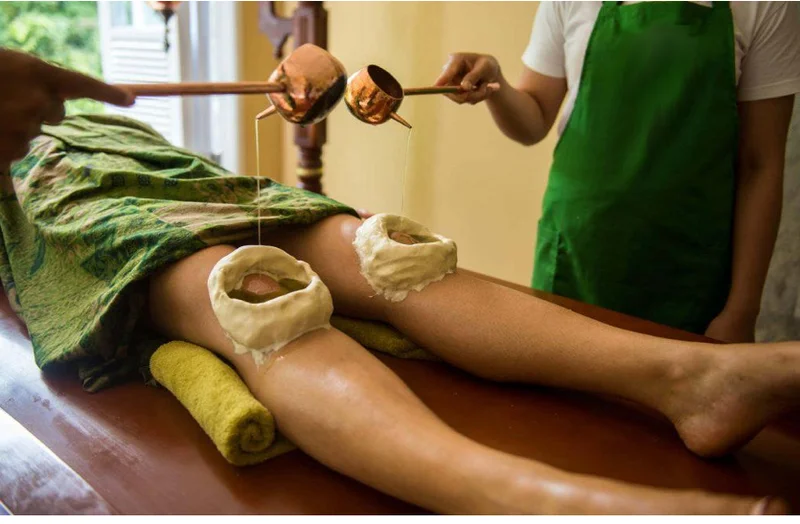
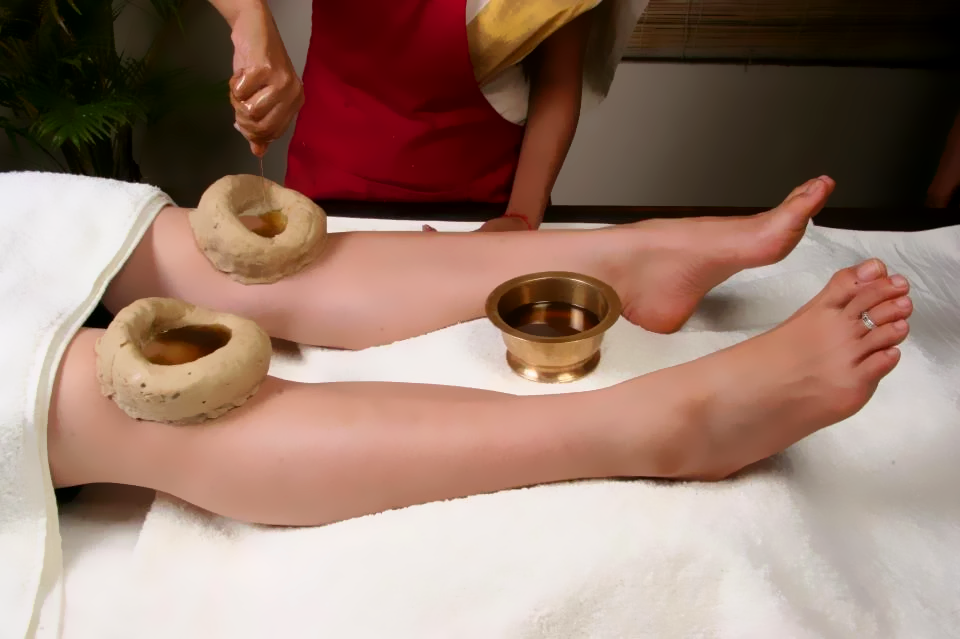
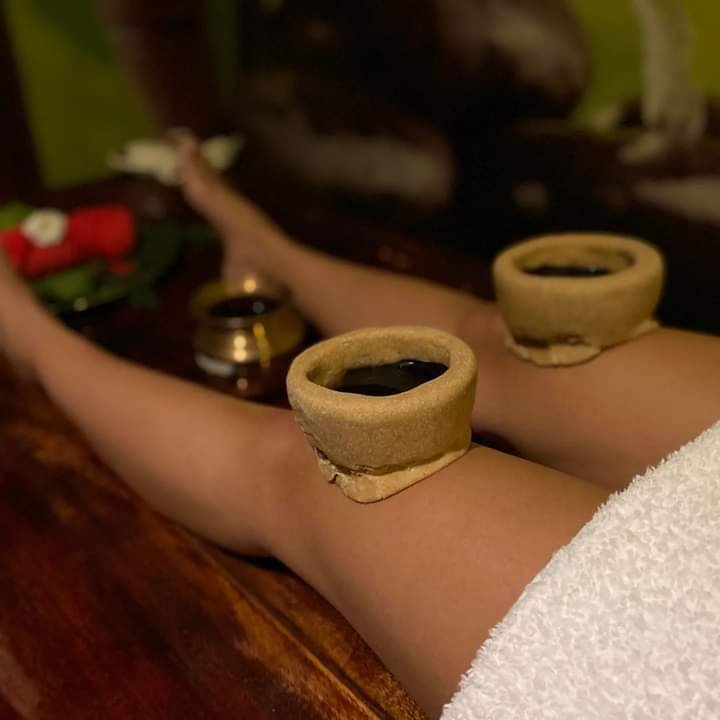
Janu Basti is an external Ayurvedic therapeutic procedure in which warm medicated oil is retained over the knee joint inside a ring made from black gram dough. The treatment targets pain, stiffness, and degeneration of the knee by nourishing the joint tissues, improving local blood circulation, and balancing Vata dosha — the primary driver of musculoskeletal disorders in Ayurveda. It is widely practiced as part of Panchakarma and external oleation (Bahya Snehana) therapies across India and has gained attention for its effectiveness in managing osteoarthritis, ligament injuries, and chronic knee pain without the side effects of long-term painkiller use.
If you've been searching for a natural, non-invasive solution for knee pain that actually works, this guide covers everything — from the precise procedure and the best oils to use, to scientific evidence, contraindications, and whether you can safely do it at home.
What Is Janu Basti Treatment?
The term "Janu Basti" comes from two Sanskrit words: Janu meaning knee and Basti meaning to hold, contain, or retain. Unlike internal Basti (medicated enema), Janu Basti is an external procedure — sometimes called Bahya Basti or Sthanika Basti — where warm herbal oil is pooled directly over the knee joint.
The Ayurvedic Philosophy Behind Janu Basti
In Ayurvedic medicine, knee pain and joint degeneration are primarily attributed to an aggravated Vata dosha. Vata governs all movement in the body and is associated with dryness, roughness, and depletion. When Vata accumulates in the joints (Sandhigata Vata), it leads to:
- Dryness and reduced synovial fluid
- Cartilage degradation and crepitus (crackling sounds)
- Pain that worsens with cold weather and physical activity
- Stiffness, especially in the morning
Janu Basti directly counters these effects through Snehana (oleation) — the warm medicated oil penetrates deep into the joint tissues, pacifying Vata and restoring lubrication. There's also a Kapha-balancing effect, as the treatment helps reduce swelling and fluid retention that sometimes accompany inflammatory joint conditions.
Is Janu Basti Part of Panchakarma?
Yes, but with a clarification. Janu Basti is classified as a Poorvakarma (preparatory procedure) or external Panchakarma therapy. It is not one of the five core Panchakarma procedures (Vamana, Virechana, Nasya, Anuvasana Basti, Niruha Basti), but it is frequently integrated into a comprehensive Panchakarma treatment protocol for musculoskeletal disorders. Many Ayurvedic hospitals combine Janu Basti with Abhyanga (full-body oil massage) and Swedana (steam therapy) for synergistic results.
How Does Janu Basti Treatment Work? Step-by-Step Procedure
Understanding the exact procedure helps you know what to expect — whether you're visiting a clinic or evaluating a practitioner's competence.
Step 1: Patient Preparation (Poorva Karma)
The patient lies in a supine position (face up) on the treatment table. The knee is slightly flexed and supported if needed. Depending on which part of the knee requires treatment, the therapist may position the patient in one of four ways:
| Position | Target Area | When Used |
|---|---|---|
| Supine (face up) | Anterior knee / Patella | Most common — general knee pain, OA |
| Prone (face down) | Posterior knee (popliteal fossa) | Baker's cyst, posterior ligament issues |
| Lateral (side-lying, medial up) | Medial compartment | Medial meniscus, MCL injuries |
| Lateral (side-lying, lateral up) | Lateral compartment | IT band syndrome, LCL issues |
A gentle oil massage (Abhyanga) of the knee and surrounding area is performed for 5–10 minutes to prepare the tissues.
Step 2: Building the Dough Ring (Basti Ring)
A ring of dough is prepared and placed around the knee joint to create a reservoir.
Here are the specifics that most guides leave out:
- Flour type: Black gram flour (Urad dal flour) is traditional. Some practitioners use wheat flour or a mix of both
- Proportions: Approximately 200–250 grams of flour mixed with water to form a stiff, pliable dough
- Ring dimensions: Inner diameter of 10–15 cm (to encircle the entire knee cap), wall height of 4–5 cm, wall thickness of about 2 cm
- Sealing: The base of the ring is pressed firmly against the skin, sealing any gaps to prevent oil leakage. Some therapists apply a thin layer of oil around the base before placing the dough
Step 3: Pouring the Warm Medicated Oil
The selected medicated oil is heated and poured into the dough reservoir.
Key parameters:
- Temperature: The oil should be maintained at 38–42°C (100–108°F) — warm enough to promote vasodilation and tissue penetration, but not hot enough to burn the skin. This range is critical because it mimics the body's natural inflammatory response temperature, enhancing absorption without causing thermal injury
- Volume: Enough to fill the reservoir to about 3/4 of the wall height, typically 200–300 ml
- Maintaining temperature: As the oil cools, the therapist periodically removes it (using cotton or a syringe), reheats it, and pours it back. This cycle is repeated every 5–8 minutes throughout the session
Step 4: Retention and Duration
The oil remains pooled over the knee for 30–45 minutes per session. During this time, the patient should remain still and relaxed. Many practitioners recommend focusing on deep breathing to enhance the therapeutic effect.
Step 5: Post-Procedure Care (Paschat Karma)
After the session:
- The dough ring is carefully removed
- The remaining oil is gently massaged into the knee and surrounding muscles
- Abhyanga (light massage) of the entire leg may follow
- Light Swedana (steam therapy) can be applied to further open the channels
- The patient rests for 15–20 minutes before moving
Which Oil Is Used in Janu Basti? A Comparative Guide
Selecting the right oil is not arbitrary — it depends on the specific condition, the dominant dosha imbalance, and the severity of the problem. Below is a detailed comparison that no other guide currently provides:
| Oil Name | Key Ingredients | Best For | Dosha Action | Properties |
|---|---|---|---|---|
| Mahanarayana Taila | Ashwagandha, Shatavari, Bala, Sesame oil base | Osteoarthritis, general joint degeneration, Vata disorders | Primarily Vata-pacifying | Deeply nourishing, strengthens ligaments and tendons |
| Dhanwantaram Taila | Bala, Yava, Kola, Dasamoola, Sesame oil base | Rheumatoid conditions, inflammatory arthritis, post-injury rehabilitation | Vata-Kapha balancing | Anti-inflammatory, nerve-soothing |
| Ksheerabala Tailam | Bala, Milk (Ksheera), Sesame oil base | Neurological pain, nerve compression around knee, burning sensations | Vata-Pitta balancing | Cooling, nervine tonic |
| Sahacharadi Taila | Sahachara, Devadaru, Sesame oil base | Sciatica affecting knee, lower limb stiffness, muscular weakness | Vata-pacifying | Improves muscle tone, enhances circulation |
| Murivenna | Coconut oil base, Karanja, Shigru | Acute injuries, sprains, fractures (post-cast), bursitis | Vata-Kapha balancing | Rapid healing, reduces swelling |
| Plain Sesame Oil (Tila Taila) | Cold-pressed sesame seeds | Mild stiffness, general maintenance, home use | Vata-pacifying | Basic lubrication, warming |
How to choose: For degenerative conditions (OA, age-related wear), Mahanarayana Taila is the gold standard. For inflammatory conditions with swelling, Dhanwantaram or Murivenna work better. When there's a burning or neurological component, Ksheerabala Tailam is preferred. A qualified Ayurvedic practitioner will select based on your Prakriti (constitution) and Vikriti (current imbalance).
Janu Basti Benefits: Why It Works for Knee Pain
Mechanism of Action — The Science
Janu Basti isn't just "putting oil on a knee." The mechanism involves multiple physiological pathways:
- 1.Vasodilation: Sustained warmth from the oil dilates local blood vessels, increasing blood flow to the knee by an estimated 20–40%. This delivers more oxygen and nutrients to cartilage and synovial tissues
- 2.Transdermal absorption: Medicated oils contain lipophilic compounds (from herbs like Ashwagandha, Bala) that penetrate through the skin into deeper tissues — a process enhanced by warmth and extended contact time
- 3.Free radical scavenging: Improved circulation helps remove metabolic waste products and free radicals accumulated in the joint space, reducing oxidative stress on cartilage
- 4.Synovial fluid stimulation: The combination of warmth and herbal compounds stimulates synovial membrane activity, increasing production of natural joint lubricant
- 5.Neuromuscular relaxation: Warm oil application activates cutaneous thermoreceptors, which send signals through afferent nerves to reduce muscle spasm and pain perception
Physical Benefits
- Pain reduction: Patients commonly report 40–60% reduction in pain (measured on VAS scale) after a 7-session course
- Improved range of motion: Flexion and extension typically improve by 10–20 degrees over a complete treatment course
- Reduced stiffness: Morning stiffness duration often decreases from 30+ minutes to under 10 minutes
- Strengthened periarticular structures: Regular sessions improve the tone of muscles, tendons, and ligaments around the knee
- Slowed degeneration: By improving nutrition to articular cartilage, the therapy may slow the progression of osteoarthritis
The Mind-Body Connection
What's often overlooked is the emotional and psychological impact. Chronic knee pain affects independence, confidence, and mental health — especially in elderly patients. The deeply relaxing nature of Janu Basti triggers parasympathetic nervous system activation, reducing cortisol levels and promoting a sense of well-being. Many patients report improved sleep quality and reduced anxiety after completing a treatment course.
Is Janu Basti Treatment Effective for Osteoarthritis?
Osteoarthritis (OA) of the knee — known as Sandhigata Vata in Ayurveda — is the single most common indication for Janu Basti.
What Research Says
A pilot study published in the Journal of Ayurveda and Integrative Medicine examined the effect of Janu Basti with Mahanarayana Taila on 30 patients with Grade II–III knee osteoarthritis over a 7-day treatment protocol.
Key findings:
- VAS pain score decreased from an average of 7.2 to 3.1 (57% improvement)
- WOMAC index (Western Ontario and McMaster Universities Osteoarthritis Index) showed significant improvement in pain, stiffness, and physical function subscales (p < 0.05)
- Joint crepitus reduced in 73% of participants
- No adverse effects were reported during or after the treatment period
Another observational study at a Kerala Ayurvedic hospital tracked 50 OA patients who received Janu Basti combined with oral Ayurvedic medications over 21 days. Results showed measurable improvement in joint space width on X-ray in 38% of patients with Grade II OA — suggesting not just symptomatic relief but possible structural benefit.
Ayurveda vs. Modern Painkillers for Knee OA
| Parameter | Janu Basti (Ayurvedic) | NSAIDs (Ibuprofen, Diclofenac) | Corticosteroid Injections |
|---|---|---|---|
| Pain relief onset | Gradual (2–3 sessions) | Rapid (30–60 minutes) | Rapid (24–48 hours) |
| Duration of relief | 4–12 weeks after course | Only while taking medication | 4–8 weeks |
| Side effects | Minimal (rare skin irritation) | GI bleeding, kidney damage, cardiovascular risk | Joint infection, tendon weakening, glucose spikes |
| Addresses root cause | Yes (nourishes tissues, balances dosha) | No (only masks pain) | No (only reduces inflammation temporarily) |
| Long-term safety | Excellent | Poor with chronic use | Limited to 3–4 injections/year |
| Cost (India) | ₹600–800/session | ₹5–15/day | ₹1,500–5,000/injection |
This isn't to say you should abandon conventional medicine entirely. The most effective approach for moderate-to-severe OA is often integrative — combining Janu Basti with physiotherapy, appropriate exercise, and medical management when necessary.
Optimal Treatment Duration: How Many Sessions Do You Need?
This is the question every patient asks, and most guides answer vaguely. Here's a practical, condition-specific protocol based on clinical practice:
Treatment Protocol by Condition Severity
| Condition / Stage | Sessions per Course | Frequency | Courses per Year | Expected Outcome |
|---|---|---|---|---|
| Mild stiffness / Prevention | 3–5 sessions | Daily or alternate days | 1–2 | Full symptom resolution |
| Grade I OA / Early degeneration | 7 sessions | Daily | 2–3 | Significant pain relief, improved mobility |
| Grade II OA / Moderate degeneration | 7–14 sessions | Daily | 3–4 | Pain management, slowed progression |
| Grade III OA / Severe degeneration | 14–21 sessions | Daily, with oral medications | 4+ (or continuous maintenance) | Symptom control, postpone surgery |
| Post-injury rehabilitation | 5–7 sessions | Daily or alternate days | As needed | Accelerated healing, reduced swelling |
| Athletes / Sports maintenance | 3–5 sessions | Weekly | Ongoing | Injury prevention, performance maintenance |
How long does the effect last? After a complete 7-day course, most patients experience relief lasting 6–12 weeks. Patients with severe OA may need maintenance sessions (once weekly or bi-weekly) to sustain results. Lifestyle factors like diet, exercise, and weight management significantly influence how long the benefits persist.
Age and Gender Considerations
- Elderly patients (65+): Use slightly lower oil temperature (36–40°C), shorter sessions (20–30 minutes), and gentler post-procedure massage. Monitor for skin sensitivity
- Women in menopause: Higher risk of osteoporosis means the treatment protocol should include Bala and Ashwagandha-rich oils for bone-strengthening properties. Combine with calcium-rich Ayurvedic formulations like Praval Pishti
- Athletes and young adults: Can tolerate standard or slightly higher temperatures, benefit from longer sessions, and should combine with targeted physiotherapy exercises
- Children and adolescents: Janu Basti can be adapted for conditions like Osgood-Schlatter disease using milder oils (Ksheerabala) and shorter durations (15–20 minutes)
Janu Basti at Home: Is It Safe?
The short answer — partially, with significant limitations.
What You Can Do at Home
A simplified version of Janu Basti can be performed at home for mild stiffness and general knee maintenance:
- Warm 100–150 ml of plain sesame oil or Mahanarayana Taila to approximately 40°C (comfortably warm, test on your wrist first)
- Lie down on a flat surface with your knee slightly bent
- Soak a thick cotton cloth in the warm oil and place it over your knee
- Cover with a warm towel to retain heat
- Re-warm and reapply every 10 minutes for 30 minutes
- Gently massage the knee area afterwards
This is the cotton poultice method — not true Janu Basti, but it provides some of the benefits.
What You Should NOT Do at Home
- Do not attempt the full dough ring procedure without training. Improper sealing leads to oil leakage and burns. Maintaining correct oil temperature without proper equipment risks thermal injury
- Do not self-prescribe medicated oils for serious conditions. The wrong oil can aggravate certain dosha imbalances
- Do not perform at home if you have: open wounds, active skin infections, severe swelling from acute trauma, or undiagnosed knee pain
For therapeutic-grade results, always visit a qualified Ayurvedic practitioner.
Contraindications and Side Effects of Janu Basti
Who Should Avoid Janu Basti?
- Patients with active skin infections (cellulitis, fungal infections) over the knee area
- Open wounds, cuts, or recent surgical incisions around the knee
- Acute trauma with significant swelling — wait until the acute phase resolves (usually 48–72 hours)
- Patients with deep vein thrombosis (DVT) in the lower limb
- Severe burns or skin allergies to sesame oil or specific herbal ingredients
- Fever or systemic infection — any Panchakarma procedure should be avoided during acute illness
Possible Side Effects
Janu Basti is generally very safe when performed correctly.
However, some patients may experience:
- Mild skin redness that resolves within 1–2 hours (normal response to warmth)
- Temporary increase in pain after the first 1–2 sessions (known as a "healing response" — usually resolves by session 3)
- Skin rash or allergy if sensitive to specific herbal ingredients in the oil (rare, affects less than 2% of patients)
- Oil stains on clothing — this isn't a medical side effect, but nobody warns you about it. Wear old clothes
Diet, Lifestyle, and Complementary Therapies
Dietary Recommendations During and After Treatment
To maximize results from Janu Basti, follow these Ayurvedic dietary guidelines:
Foods to favor:
- Warm, cooked, easily digestible meals (soups, khichdi, steamed vegetables)
- Healthy fats: ghee, sesame oil, almonds
- Anti-inflammatory spices: turmeric, ginger, cumin, fenugreek
- Calcium-rich foods: sesame seeds, ragi, dairy (if tolerated)
Foods to avoid:
- Cold, raw, and dry foods (salads, crackers, cold drinks)
- Excessive beans and lentils (Vata-aggravating)
- Processed foods, refined sugar, and excessive caffeine
- Nightshade vegetables (tomatoes, potatoes, eggplant) — some Ayurvedic practitioners recommend avoiding these during joint treatment
Yoga Asanas to Complement Janu Basti
These gentle asanas support knee rehabilitation when practiced 2–3 hours after treatment:
- Virasana (Hero Pose) — with props for knee support, improves knee flexion
- Utkatasana (Chair Pose) — modified with wall support, strengthens quadriceps
- Setu Bandhasana (Bridge Pose) — strengthens hamstrings and improves knee stability
- Pawanmuktasana series — gentle joint rotations to maintain mobility
- Trikonasana (Triangle Pose) — stretches IT band and strengthens lateral knee structures
Avoid: deep squats, Padmasana (full lotus), or any asana causing knee pain during the treatment period.
Integration with Modern Physiotherapy
Janu Basti works exceptionally well when combined with:
- Isometric quadriceps exercises (within 2–4 hours after the procedure, when the joint is warm and supple)
- Hydrotherapy (warm water pool exercises)
- TENS therapy for additional pain management in severe cases
- Progressive resistance training after the acute treatment phase
Janu Basti Cost in India
| Service | Typical Price Range | Notes |
|---|---|---|
| Single session | ₹500–1,200 | Varies by city and clinic tier |
| Package of 7 sessions | ₹3,000–7,000 | Most clinics offer discounted packages |
| Package of 14 sessions | ₹5,500–12,000 | For moderate-severe OA |
| Janu Basti + Abhyanga combo | ₹1,000–2,000/session | Recommended for better results |
| Medicated oils (for home use) | ₹200–600/200ml | Mahanarayana Taila, Dhanwantaram Taila |
Prices tend to be lower in Kerala, Karnataka, and smaller cities compared to metros like Mumbai or Delhi.
Frequently Asked Questions
How effective is Janu Basti treatment for knee pain?
Clinical observations show that 70–80% of patients with mild-to-moderate knee pain experience significant relief after a 7-day course. For osteoarthritis specifically, studies report 40–60% reduction in pain scores. The effectiveness increases when combined with oral Ayurvedic medications, dietary modifications, and appropriate exercise. Severe cases may require longer treatment and integration with conventional medical care.
What is the position of Janu Basti?
- The most common position is supine (lying face up) with the knee slightly flexed.
- However, the position varies based on the treatment area — prone for posterior knee problems, and lateral (side-lying) for medial or lateral compartment issues. Your practitioner will determine the optimal position based on your specific condition.
Can Janu Basti oil be bought online?
Yes, medicated oils like Mahanarayana Taila, Dhanwantaram Taila, and Ksheerabala Tailam are available online through Ayurvedic pharmacies. Reputable brands include Kottakkal Arya Vaidya Sala, AVP, and Nagarjuna. Prices range from ₹200 to ₹600 for a 200ml bottle. However, buying the oil alone without proper procedural knowledge limits the benefits significantly — the technique matters as much as the oil.
How long do the results of Janu Basti last?
- After a standard 7-session course, relief typically lasts 6 to 12 weeks. For chronic conditions like osteoarthritis, maintenance sessions every 2–4 weeks can extend the benefits indefinitely.
- Lifestyle factors — body weight, physical activity, dietary habits — play a major role in how long the results persist.
Can Janu Basti replace knee replacement surgery?
Not for advanced (Grade IV) osteoarthritis where there is bone-on-bone contact and severe structural damage. However, for Grade I–III OA, a consistent Janu Basti regimen combined with weight management, exercise, and oral medications can significantly delay or even eliminate the need for surgical intervention. Always consult both an Ayurvedic practitioner and an orthopedic surgeon for advanced cases.
Are there any age restrictions for Janu Basti?
There are no strict age restrictions. The procedure can be adapted for patients ranging from adolescents (12+) to elderly individuals (80+). The oil temperature, session duration, and pressure of post-procedure massage are adjusted based on age, skin sensitivity, and overall health condition.
Conclusion: Is Janu Basti Right for You?
Janu Basti is one of Ayurveda's most practical, evidence-supported therapies for knee pain — whether you're dealing with early-stage osteoarthritis, recovering from a sports injury, or simply trying to maintain healthy knees as you age. Its strength lies in addressing the root cause (tissue depletion, Vata imbalance, poor circulation) rather than merely masking symptoms.
The key is to approach it properly: get an accurate diagnosis, work with a qualified Ayurvedic practitioner who selects the right oil for your condition, commit to the recommended number of sessions, and support the treatment with appropriate diet and exercise.
If you're in India and searching for "Janu Basti near me," look for practitioners with a BAMS or MD (Ayurveda) qualification, preferably at a clinic that offers integrated Panchakarma services. Ask about their experience with your specific condition, and don't hesitate to request a consultation before committing to a full treatment package.
Your knees carry you through life. Give them the care they deserve.
Scientific Sources
- Efficacy of a Multimodal Ayurveda Regimen in the Management of Primary Knee Osteoarthritis: Protocol for an Open-Label Randomized Controlled Trial — Rai AK et al., 2025, JMIR research protocols
Ask Ayurvedic doctor a question and get a consultation online on the problem of your concern in a free or paid mode.
More than 2,000 experienced doctors work and wait for your questions on our site and help users to solve their health problems every day.
Related articles