Ask Ayurvedic doctor a question and get a consultation online on the problem of your concern in a free or paid mode. More than 2,000 experienced doctors work and wait for your questions on our site and help users to solve their health problems every day.
FREE! Ask Ayurvedic Doctors 24/7

 Fast responses
 1000+ verified doctors
Body DetoxEar, Nose, and Throat DisordersGeriatrics & RejuvenationImmunodeficiencyInfertility TreatmentNutritionOrthopedic DisordersPediatricsRespiratory DisordersSexually Transmitted Diseases (STDs)Surgery RecoveryUrological DisordersVascular DisordersDental DisordersEndocrinological DisordersGastrointestinal DisordersYoga TherapyGeneral MedicineAllergic DisordersCardio DisordersGynecology and ObstetricsCosmetologySkin and Hair DisordersEye DisordersInfectious DiseasesMental DisordersNeurological DisordersOncologyPanchakarmaSexual Health & DisordersSports Medicine
Published on 02/03/25
(Updated on 07/10/26)
4,514
Ayurvedic Medicine for Sleep Apnea: Natural Relief for Restful Sleep
Sleep apnea affects over 936 million adults worldwide according to a 2019 Lancet Respiratory Medicine study, and India carries one of the highest burdens with an estimated 7–8% of the adult population affected. If you're searching for ayurvedic medicine for sleep apnea, here's the direct answer: herbs like Ashwagandha, Jatamansi, Shankapushpi, and Sarpagandha — combined with Panchakarma therapies such as Nasya and pranayama — can meaningfully reduce symptoms by addressing the Vata-Kapha imbalance that Ayurveda identifies as the root cause. However, severity matters. Mild sleep apnea (AHI 5–15) responds best to standalone Ayurvedic treatment, while moderate to severe cases should integrate Ayurveda as a complementary approach alongside conventional care.
This guide goes beyond generic advice. You'll find specific dosages, timelines, contraindications, drug interactions, and a severity-based protocol — things no other resource currently covers in one place.
What Is Sleep Apnea? Understanding the Condition Before Treating It
- Sleep apnea is a disorder where your breathing repeatedly stops and restarts during sleep.
- These pauses — called apneas — can last 10 seconds or longer and occur dozens to hundreds of times per night. The result? Your brain and body are starved of oxygen, sleep architecture is destroyed, and daytime functioning suffers.
The Three Types of Sleep Apnea
| Type | Mechanism | Prevalence |
|---|---|---|
| Obstructive Sleep Apnea (OSA) | Physical collapse of the upper airway due to relaxed throat muscles | ~84% of all cases |
| Central Sleep Apnea (CSA) | Brain fails to send proper signals to breathing muscles | ~15% of cases |
| Complex/Mixed Sleep Apnea | Combination of both obstructive and central mechanisms | ~1% of cases |
OSA is by far the most common, and it's the type where Ayurvedic interventions show the most promise — because the underlying causes (obesity, inflammation, tissue congestion, muscular laxity) align closely with what Ayurveda treats as Kapha accumulation and Vata derangement.
Common Symptoms of Sleep Apnea
Recognizing sleep apnea is the first step.
Watch for these signs:
- Loud, chronic snoring — often reported by a bed partner
- Witnessed breathing pauses during sleep
- Gasping or choking upon waking
- Excessive daytime sleepiness despite seemingly adequate sleep hours
- Morning headaches and dry mouth
- Irritability, mood swings, difficulty concentrating
- Nocturia (frequent nighttime urination)
If you experience three or more of these symptoms consistently, a sleep study (polysomnography) is strongly recommended before starting any treatment — Ayurvedic or otherwise.
Who Is Most at Risk?
Key risk factors include obesity (BMI > 30), being male (though post-menopausal women catch up in risk), age over 40, neck circumference greater than 17 inches in men or 16 inches in women, smoking, alcohol use, nasal congestion, and family history. Comorbidities like Type 2 diabetes, hypertension, and hypothyroidism significantly increase risk as well.
How Ayurveda Understands Sleep Apnea: The Doshic Perspective
Ayurveda doesn't have a single term for sleep apnea, but classical texts describe it through overlapping concepts. The condition falls under Urdhvajatrugata Roga (diseases above the clavicle) and Nidra Roga (sleep disorders). The pathophysiology maps onto a Vata-Kapha dual imbalance.
Here's how that works in practice:
- Kapha dosha — when aggravated, produces excess mucus, tissue heaviness, and obstruction in the respiratory passages. This directly correlates with the physical airway blockage seen in OSA.
- Prana Vayu (a sub-type of Vata) — governs respiration and brain function.
- Its disturbance explains the central component — the brain's failure to properly regulate breathing rhythm.
- Shleshaka Kapha — lubricates joints and tissues but when imbalanced, causes water retention and tissue swelling in the throat.
- The Ayurvedic concept of Vyadhi Hetu Sankar (one root cause manifesting as multiple diseases) is particularly relevant here.
- Sleep apnea rarely exists alone — it clusters with obesity, hypertension, and insulin resistance. Ayurveda treats this entire cluster as a single Kapha-Medas (fat tissue) disorder, which is remarkably similar to the modern concept of metabolic syndrome.
This holistic framing is actually one of Ayurveda's greatest strengths. Rather than treating the airway alone, it addresses the entire metabolic-respiratory-neurological axis simultaneously.
Which Ayurvedic Herbs Are Good for Sleep Apnea? Key Medicines With Dosages
This is where most resources fall short — they list herbs without telling you how much to take, for how long, or what to watch out for. Let's fix that.
Ashwagandha (Withania somnifera)
Ashwagandha is arguably the most important herb for sleep apnea management. A 2020 study published in the Journal of Ethnopharmacology found that Ashwagandha root extract improved sleep quality scores by 72% in subjects with sleep disturbances over a 10-week period.
How it helps: Reduces cortisol (the stress hormone that disrupts deep sleep), strengthens respiratory musculature, and possesses anti-inflammatory properties that reduce airway swelling. Dosage: 300–600 mg of standardized root extract (minimum 5% withanolides), taken once at bedtime. Start at 300 mg for the first week. Duration: Minimum 8 weeks for noticeable effects on sleep quality.
Jatamansi (Nardostachys jatamansi)
Known as Indian Spikenard, Jatamansi is a classical Ayurvedic sedative that promotes deep, restorative sleep without morning grogginess.
How it helps: Modulates GABA receptors (similar mechanism to pharmaceutical sleep aids, but gentler), calms Vata dosha, and reduces neurological excitability. Dosage: 250–500 mg of root powder or 1–2 ml of tincture, 30 minutes before bed. Duration: Effects are often felt within 3–5 days, but sustained benefits require 6–8 weeks.
Shankapushpi (Convolvulus pluricaulis)
A renowned Medhya Rasayana (brain tonic) that specifically targets the nervous system.
How it helps: Improves oxygen delivery to brain tissue, reduces anxiety-related sleep disturbances, and supports Prana Vayu function. Dosage: 500–750 mg of whole plant powder, twice daily (morning and evening), or 3–5 ml of liquid extract.
Sarpagandha (Rauwolfia serpentina)
This is a powerful herb that demands respect. Sarpagandha contains reserpine, which has documented antihypertensive and sedative effects.
How it helps: Reduces blood pressure (hypertension is both a cause and consequence of sleep apnea), induces deep sleep, and relaxes smooth muscle tissue in airways. Dosage: 250–500 mg of root powder at bedtime — only under practitioner supervision.
Critical warning: This is the one herb where self-medication is genuinely dangerous. See the contraindications section below.
Additional Herbs Worth Considering
| Herb | Primary Action | Suggested Dosage |
|---|---|---|
| Nirgundi (Vitex negundo) | Anti-inflammatory, decongestant | 2–3 drops oil in each nostril (nasya) |
| Brahmi (Bacopa monnieri) | Neuroprotective, improves oxygen utilization | 300–450 mg standardized extract daily |
| Tulsi (Holy Basil) | Bronchodilator, adaptogenic | 500 mg extract or 2–3 cups tea daily |
| Pippali (Long Pepper) | Opens respiratory channels, reduces Kapha | 250–500 mg with honey, morning |
| Trikatu | Stimulates Agni, reduces Kapha congestion | 500 mg before meals, twice daily |
| Tagara (Valeriana wallichii) | Indian Valerian — sedative, anxiolytic | 300–600 mg at bedtime |
| Punarnava (Boerhavia diffusa) | Reduces fluid retention, anti-inflammatory | 500 mg twice daily |
| Yashtimadhu/Liquorice (Glycyrrhiza glabra) | Soothes respiratory mucosa, anti-inflammatory | 250–500 mg daily (max 6 weeks continuously) |
> Note: All dosages above are for adults (18–65 years) with no contraindicated conditions. Always start at the lower end.
Panchakarma and Nasya Therapy: Does It Help Reduce Snoring and Breathing Pauses?
Yes — and the mechanism is quite logical. Panchakarma detoxification targets Kapha accumulation directly, while Nasya therapy specifically addresses the nasal and pharyngeal passages where obstruction occurs.
Nasya Therapy (Nasal Administration)
Nasya is probably the single most directly relevant Panchakarma procedure for sleep apnea. It involves instilling medicated oils into the nostrils, which lubricate and clear the nasal passages, reduce mucosal inflammation, and strengthen the tissues of the upper airway.
Recommended oils:
- Anu Taila — the classical choice, containing Jivanti, Devadaru, and other herbs in a sesame oil base. 2–4 drops in each nostril, morning.
- Shadbindu Taila — particularly effective when sinusitis accompanies sleep apnea. 2–3 drops per nostril.
- Nirgundi oil — when inflammation is the primary concern.
Protocol: Daily self-administered Nasya can be done at home. Tilt your head back, instill drops, and inhale gently. Professional Nasya (Marsha Nasya) involves higher quantities and should be done at a clinic as part of a Panchakarma program.
Other Key Panchakarma Procedures
- Vamana (Therapeutic Emesis): Specifically designed to eliminate excess Kapha from the body. Particularly beneficial for overweight sleep apnea patients with heavy mucus congestion. Typically done once, followed by a 7-day post-procedure regimen.
- Virechana (Therapeutic Purgation): Addresses the Pitta-Kapha component, helps with associated metabolic issues (insulin resistance, fatty liver). Done 15–30 days after Vamana.
- Basti (Medicated Enema): Targets Vata dosha directly. Dashamoola Niruha Basti is commonly used. A course of 8–15 sessions is standard.
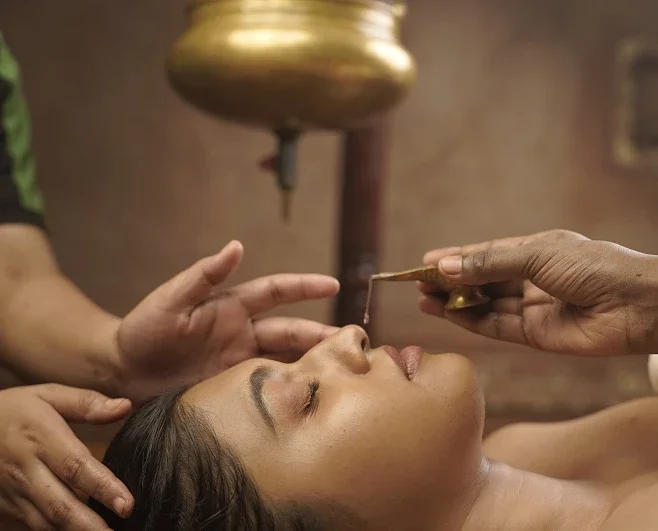
- Shirodhara: Continuous pouring of warm medicated oil on the forehead. Profoundly calms Prana Vayu, reduces stress, and resets disturbed sleep architecture. Typically 7 consecutive days.
- Abhyanga (Full Body Oil Massage): Pacifies Vata, improves circulation, and promotes relaxation. Can be done daily at home with warm sesame or Bala oil.
A complete Panchakarma program for sleep apnea usually spans 14–28 days at a residential clinic, with significant improvements typically observed within the first treatment cycle.
Pranayama and Yoga: Breathing Practices That Directly Target Sleep Apnea
This might be Ayurveda's most evidence-backed contribution to sleep apnea management. A 2022 study in JAMA Network Open found that oropharyngeal exercises (which overlap significantly with certain pranayama techniques) reduced AHI by approximately 50% in mild-to-moderate OSA patients.
Best Pranayama Techniques for Sleep Apnea
Anulom Vilom (Alternate Nostril Breathing)
- Clears both nostrils, balances Ida and Pingala Nadis
- Start with 5 minutes, gradually increase to 15 minutes
- Practice on an empty stomach, morning and evening
Bhramari (Humming Bee Breath)
- The humming vibration strengthens pharyngeal muscles — the exact muscles that collapse during OSA
- 5–10 rounds, focusing on extending the exhalation
- Particularly effective when done 30 minutes before sleep
Ujjayi (Ocean Breath)
- Creates slight constriction in the throat, training the airway muscles to maintain tone
- Practice during yoga asanas and as a standalone 5-minute practice
Nadi Shodhana (Channel Purification Breath)
- More advanced form of alternate nostril breathing with breath retention (kumbhaka)
- Only after mastering Anulom Vilom for at least 4 weeks
Yoga Asanas for Sleep Apnea
Focus on throat-opening, chest-expanding, and forward-bending postures:
- Simhasana (Lion Pose) — directly exercises tongue and throat muscles
- Matsyasana (Fish Pose) — opens the throat and chest
- Bhujangasana (Cobra Pose) — strengthens respiratory muscles
- Setu Bandhasana (Bridge Pose) — opens airways, reduces Kapha in the chest
Practice for 20–30 minutes daily. Consistency matters more than intensity here.
Don't wait or self medicate. Start chat with Doctor NOW
Diet, Lifestyle, and Home Remedies: The Daily Protocol
Ayurvedic treatment doesn't work in isolation. Without dietary and lifestyle modifications, herbs and therapies deliver maybe 40% of their potential. With proper Ahara-Vihara (diet and lifestyle), you unlock the full benefit.
Dietary Guidelines (Ahara)
Foods to favor:
- Warm, cooked, light meals — especially for dinner
- Ginger, black pepper, turmeric, and cumin in cooking (Kapha-reducing spices)
- Honey (raw, unheated) — 1 teaspoon before bed, a classical Kapha remedy
- Moong dal soups, seasonal vegetables, light grains like barley and millet
Foods to avoid or minimize:
- Cold dairy products (milk, ice cream, yogurt at night)
- Heavy, oily, fried foods — especially after 6 PM
- Refined sugar, processed foods
- Bananas, cold drinks, and excessive wheat — all increase Kapha
Meal timing: Eat dinner at least 3 hours before bedtime. Keep it the lightest meal of the day. A heavy dinner is one of the most common aggravating factors.
Sleep Position and Hygiene
- Sleep on your left side — this keeps the tongue from falling backward and obstructing the airway. It also promotes better digestion per Ayurvedic principles (right nostril remains free for Pingala Nadi activity).
- Elevate the head of your bed by 4–6 inches — reduces gravitational collapse of throat tissues.
- Avoid sleeping on your back (supine position) — supine sleeping can double the AHI in many patients.
- Maintain a fixed sleep schedule — go to bed and wake up at the same time daily.
Effective Home Remedies
- 1.Turmeric milk with nutmeg: Warm milk (or almond milk for strict Kapha protocol) with ½ tsp turmeric and a pinch of nutmeg, 30 minutes before bed. The nutmeg is mildly sedative, while turmeric reduces airway inflammation.
- 2.Steam inhalation with eucalyptus: 5–10 minutes before bed, inhale steam with 2–3 drops of eucalyptus or Nirgundi oil. Clears nasal passages remarkably well.
- 3.Jal Neti (Nasal Irrigation): Using a neti pot with warm saline water. Practice daily in the morning. Reduces nasal resistance significantly.
- 4.Warm ginger water: Sip throughout the day. Ginger (Shunti) is the single best everyday Kapha-reducing agent.
- 5.Gargling with Triphala decoction: Strengthens throat tissues and reduces inflammation. Do it every evening.
Ayurveda vs CPAP vs Surgery: A Realistic Comparison
No other resource provides this comparison, but it's exactly what you need to make an informed decision. Let's be honest about what each approach can and cannot do.
| Factor | Ayurvedic Approach | CPAP Therapy | Surgical Options (UPPP, MMA) |
|---|---|---|---|
| Best for | Mild OSA (AHI 5–15); complementary for moderate-severe | All severity levels | Moderate-severe with anatomical obstruction |
| AHI Reduction | 30–50% in mild cases (based on available case reports) | 80–95% while in use | 50–75% long-term |
| Time to effect | 4–12 weeks | Immediate (first night) | 4–8 weeks post-surgery |
| Compliance rate | High (natural, non-invasive) | ~50% at 1 year (many patients abandon CPAP) | N/A (one-time) |
| Side effects | Minimal if guided properly | Mask discomfort, nasal dryness, claustrophobia | Surgical risks, pain, swelling |
| Addresses root cause | Yes (holistic — weight, inflammation, metabolism) | No (symptomatic relief only) | Partially (structural only) |
| Cost (India) | ₹5,000–25,000 for full course | ₹25,000–80,000 for machine + ongoing supplies | ₹1,50,000–5,00,000+ |
| Long-term sustainability | High with lifestyle adherence | Requires lifelong use | Variable; may need revision |
A Severity-Based Protocol
Mild Sleep Apnea (AHI 5–15):
Ayurveda can be the primary treatment. Combine herbs (Ashwagandha + Jatamansi + Pippali), daily pranayama, Nasya therapy, dietary changes, and weight management. Monitor with a home sleep test after 3 months.
Moderate Sleep Apnea (AHI 15–30):
Use Ayurveda as complementary therapy alongside CPAP or a mandibular advancement device. Panchakarma course can reduce CPAP pressure requirements over time. Pranayama and weight loss may eventually allow CPAP discontinuation — but only with physician confirmation via repeat sleep study.
Severe Sleep Apnea (AHI 30+):
CPAP is non-negotiable as primary therapy. Ayurveda supports the process through inflammation reduction, weight management, and stress relief. Do not attempt to manage severe sleep apnea with Ayurveda alone — the cardiovascular risks are too high.
Contraindications, Side Effects, and Drug Interactions
This section is critical and conspicuously absent from every other resource on this topic. Ayurvedic medicines are not "harmless because they're natural." Some have potent pharmacological activity.
Sarpagandha (Rauwolfia serpentina) — The High-Risk Herb
- Contraindicated in: Depression (can worsen it significantly), Parkinson's disease, peptic ulcer disease, pregnancy, breastfeeding
- Side effects: Nasal congestion, drowsiness, bradycardia (dangerously slow heart rate), hypotension
- Drug interactions: Extremely dangerous with antihypertensive medications (additive blood pressure lowering), MAO inhibitors, beta-blockers, and CNS depressants. Can cause life-threatening hypotension if combined with amlodipine or similar calcium channel blockers
Ashwagandha — Generally Safe, But Not for Everyone
- Contraindicated in: Hyperthyroidism (stimulates thyroid function), autoimmune conditions (may overactivate immune system), pregnancy
- Drug interactions: May enhance effects of sedatives, benzodiazepines, and immunosuppressants. Can alter thyroid medication requirements.
Yashtimadhu (Liquorice) — Time-Limited Use Only
- Maximum continuous use: 6 weeks. Longer use can cause pseudoaldosteronism (potassium depletion, sodium retention, hypertension)
- Contraindicated in: Hypertension, kidney disease, hypokalemia
- Drug interactions: Dangerous with diuretics, digoxin, corticosteroids, and warfarin
General Interaction Alert
If you're taking any of the following medication categories, consult both your allopathic physician and an Ayurvedic practitioner before starting herbal treatment:
- Antihypertensives
- Antidiabetics (herbs like Ashwagandha can lower blood sugar)
- Sedatives/hypnotics (additive drowsiness)
- Blood thinners
- Thyroid medications
How Long Does Ayurvedic Treatment for Sleep Apnea Take to Show Results?
Realistic expectations prevent discouragement.
Here's what a typical timeline looks like:
Week 1–2: Improved sleep onset. Reduced nasal congestion. Snoring may decrease in intensity (not frequency yet). Nasya and pranayama effects are the first to appear. Week 3–4: Noticeable reduction in morning headaches and dry mouth. Sleep quality starts improving. Partners may report fewer witnessed apneas. Week 6–8: Significant improvement in daytime alertness. Snoring reduction of 40–60% in mild cases. This is when Ashwagandha and Jatamansi reach their full efficacy. Month 3–6: Weight loss benefits begin compounding with herbal effects. If Panchakarma was done, this is when the deepest structural changes manifest. A repeat sleep study at this point can objectively document AHI improvement. Month 6+: Maintenance phase. Reduced dosages, continued lifestyle practices, and periodic Nasya. Many patients with mild OSA find they no longer meet diagnostic criteria at this stage.
These timelines are based on case reports such as the one published by Sagar et al. in the Journal of Ayurveda and Integrative Medicine (2020), where a patient with OSA + Type 2 diabetes showed significant improvement in AHI, HbA1c, and BMI over a 6-month Ayurvedic protocol.
When to Seek Emergency Medical Help: Red Flags
Ayurvedic treatment is a journey, not an overnight fix.
But certain situations demand immediate medical attention:
- Waking up unable to breathe or with severe chest pain
- Observed prolonged breathing cessation (more than 30 seconds) during sleep
- Sudden onset of confusion, slurred speech, or facial drooping — these may indicate stroke, for which sleep apnea is a major risk factor
- Uncontrolled high blood pressure despite treatment
- Extreme daytime sleepiness causing near-miss accidents while driving
Do not delay conventional medical care in these situations. Ayurveda works best as a sustained, preventive, and complementary approach — not as emergency medicine.
The Role of Sleep Studies in Monitoring Your Progress
A polysomnography (PSG) or home sleep apnea test (HSAT) provides your baseline AHI — the Apnea-Hypopnea Index that quantifies severity. Without this number, you're essentially treating blindly.
The 4% Rule for Sleep Apnea
The 4% rule refers to the oxygen desaturation threshold used in sleep studies. An apnea or hypopnea event is scored when blood oxygen levels drop by 4% or more from baseline. This is the standard criterion used by the American Academy of Sleep Medicine for calculating AHI.
Understanding this matters because it helps you evaluate whether your treatment is working. If a follow-up sleep study shows fewer 4% desaturation events, your Ayurvedic protocol is having a real physiological impact — not just a subjective one.
Recommendation: Get a baseline sleep study before starting treatment, and a follow-up study at 3–6 months. In India, home sleep tests are available for ₹3,000–8,000 and polysomnography for ₹8,000–15,000 at most sleep labs.
Frequently Asked Questions
Can Ayurveda Cure Sleep Apnea Permanently?
"Cure" is a strong word, and honesty matters here. Ayurveda can resolve mild sleep apnea permanently in many cases — particularly when the root cause is Kapha congestion, obesity, or lifestyle-related. In moderate to severe cases, Ayurveda can significantly reduce severity and medication dependence, but calling it a complete cure would be misleading. Structural anatomical issues (like a severely deviated septum or retrognathic jaw) require surgical correction that Ayurveda cannot replace.
Do I Need an Ayurvedic Doctor for Sleep Apnea Diagnosis?
Yes and no. For diagnosis, a sleep study (conducted by a sleep medicine specialist) remains the gold standard — Ayurveda does not have an equivalent diagnostic tool. However, for determining your Prakriti (constitutional type), identifying your specific doshic imbalance, and creating a personalized treatment protocol, a qualified Ayurvedic physician (BAMS or MD Ayurveda) is essential. Self-prescribing herbs like Sarpagandha without professional guidance is risky.
What Is the Best Ayurvedic Treatment for Sleep Apnea in India?
The best approach combines Nasya therapy with internal medicines (Ashwagandha, Jatamansi, and constitution-specific herbs), supported by pranayama and dietary changes. For those who can afford it, a 14–21 day residential Panchakarma program provides the most comprehensive results. Reputable centers include those affiliated with established Ayurvedic universities and hospitals across Kerala, Karnataka, and Rajasthan.
How Can I Treat My Sleep Apnea Naturally?
Beyond Ayurvedic herbs: maintain a healthy weight (even a 10% weight reduction can decrease AHI by 26% according to a study in the American Journal of Respiratory and Critical Care Medicine), sleep on your side, avoid alcohol within 3 hours of bedtime, practice pranayama daily, use nasal saline irrigation, and keep a consistent sleep schedule. These lifestyle measures alone can resolve mild cases.
Which Medicine Is Best for Sleep Apnea?
- In conventional medicine, CPAP remains the gold standard.
- In Ayurveda, there is no single "best" medicine — the optimal prescription depends on your doshic constitution, severity, and comorbidities. That said, the combination of Ashwagandha (for sleep quality and stress), Jatamansi (for deep sleep), and Pippali (for respiratory clearance) forms a well-rounded starting protocol for most patients.
Final Thoughts: Making Ayurveda Work for Your Sleep Apnea
- Ayurvedic medicine for sleep apnea is not a magic pill.
- It's a system — one that works when you commit to the full protocol of herbs, therapies, breathing practices, diet, and lifestyle changes. The science is catching up with what Ayurvedic practitioners have observed clinically for centuries, and early research is genuinely encouraging.
- Start with getting a proper diagnosis. Know your AHI number. Consult a qualified Ayurvedic physician who understands sleep disorders.
- Begin with foundational practices — Nasya, pranayama, and dietary changes — before adding herbs. Track your progress. And most importantly, be patient. The body heals at its own pace.
If you're dealing with sleep apnea and want personalized Ayurvedic guidance, consulting with a BAMS-qualified practitioner who can assess your specific Prakriti and design a tailored protocol is the smartest first step you can take. Don't let another night of broken sleep go unaddressed.
Scientific Sources
- Can Ashwagandha Benefit the Endocrine System?-A Review — Wiciński M et al., 2023, International journal of molecular sciences
- Pharmacological evaluation of Ashwagandha highlighting its healthcare claims, safety, and toxicity aspects — Mandlik Ingawale DS et al., 2021, Journal of dietary supplements
- Clinician guidelines for the treatment of psychiatric disorders with nutraceuticals and phytoceuticals: The World Federation of Societies of Biological Psychiatry (WFSBP) and Canadian Network for Mood and Anxiety Treatments (CANMAT) Taskforce — Sarris J et al., 2022, The world journal of biological psychiatry : the official journal of the World Federation of Societies of Biological Psychiatry
- Effects of Withania somnifera (Ashwagandha) on Stress and the Stress- Related Neuropsychiatric Disorders Anxiety, Depression, and Insomnia — Speers AB et al., 2021, Current neuropharmacology
- Plant-derived nootropics and human cognition: A systematic review — Lorca C et al., 2023, Critical reviews in food science and nutrition
Questions from users
What is the best way to prepare saline solution for nasal irrigation?
Lucas
2 days ago
The best way to prepare a saline solution for nasal irrigation is to mix 1 teaspoon of non-iodized salt and a pinch of baking soda into 2 cups of distilled or boiled and cooled water. This creates an isotonic solution that is gentle on the nasal passages. Use this solution with a neti pot or a nasal irrigation device to help clear nasal congestion, ideally once daily until symptoms improve. Watch for signs of nasal irritation or infection, such as increased burning or persistent drainage, and see a doctor if these occur. While Ayurveda mentions using Jal Neti, consult with a healthcare provider for safety and personalized advice.
Is it safe to use lifestyle practices alongside Ayurvedic treatments for sleep apnea?
Ellie
12 days ago
You can definitely combine lifestyle practices with Ayurvedic treatments for sleep apnea, just be a little cautious. Things like yoga, meditation, and dietary changes can complement treatments like Nasya therapy. Just remember, though, every person is different, so see how your body responds and maybe chat with a healthcare provider, you know, just to be safe!
What is Shirodhara and how can it help with sleep apnea?
Benjamin
21 days ago
Shirodhara, with its warm, continuous oil flow on the forehead, deeply eases the mind. It can help with sleep apnea by calming Prana Vayu, reducing stress, and resetting disturbed sleep patterns. This can promote relaxation, potentially diminishing apnea episodes. Always consult a qualified Ayurvedic doctor to tailor treatment to your unique needs, and combine with other therapies like dietary adjustments and lifestyle changes.
Can pranayama exercises be safely practiced by people with sleep apnea?
Allison
36 days ago
Yes, pranayama can usually be practiced safely by people with sleep apnea. It's real good for strengthening respiratory muscles and improving lung capacity. But, start gently and, ideally, consult a healthcare professional. Focus on calm breathing, like Anulom Vilom, but avoid too forceful ones like Bhastrika unless advised.
What is the role of Guggulu in treating sleep apnea and improving respiratory health?
Olivia
45 days ago
Guggulu is great for its anti-inflammatory and detoxifying effects. It helps clear toxins and reduce inflammation, which can be useful for breathing issues related to sleep apnea. By working with other herbs like Pippali, it can help ease breathing difficulties during sleep. Not a cure by itself, but part of a holistic approach with other treatments!
Is it safe to use calming oils like Brahmi and Sesame oil for sleep apnea relief?
Anthony
54 days ago
Using calming oils like Brahmi and Sesame oil can be safe for sleep apnea relief. They can help relax and promote restful sleep. But keep in mind, they're not a primary treatment. Focus on lifestyle changes like balancing vata and kapha. Always chat with a healthcare pro or Ayurvedic doctor before trying new remedies.
Can I use Pippali to enhance my breathing exercises for better respiratory health?
Wesley
64 days ago
Yes, Pippali can be helpful for respiratory health. It's known to support the respiratory system by reducing mucous build-up. So you can use it alongside your breathing exercises for better effects. Just be mindful of your body type (prakriti) as it can heat things up — consult with an Ayurvedic practitioner if you're unsure!
Can I use herbal teas to improve my sleep quality with sleep apnea?
Owen
74 days ago
Absolutely, herbal teas can help improve sleep quality even with sleep apnea. Try teas with ginger or turmeric, as they help reduce inflammation and support better respiratory function. However, they're not a standalone solution. Stick with your prescribed treatment and maybe consult an Ayurvedic doc for a personalized plan.
Is it safe to combine dietary adjustments with Ayurvedic herbs for treating sleep apnea?
Nora
83 days ago
It's generally safe to combine dietary adjustments with Ayurvedic herbs for sleep apnea, but be cautious and consistent with both! Focus on avoiding heavy, mucus-forming foods while including warm, light, and easily digestible ones to enhance agni. Herbs like Pippali should align with your dosha balance. But, always consider talking with an ayurvedic practitioner to tailor it to your specific needs - we want to address root causes, right!
Can I use Ashwagandha and Jatamansi together for better sleep and managing sleep apnea?
Hudson
93 days ago
Yes, you can use Ashwagandha and Jatamansi together for better sleep and sleep apnea, as they both help calm the nervous system and balance Vata dosha. Just keep in mind, it's best to consult with a healthcare provider before starting any new herbal regimen, especially if you've got other health stuff going on. Enjoy your restful nights! 😊
Related articles

Mental Disorders
Understanding Anxiety through Ayurveda
Ayurveda views anxiety as a disruption in mind-body balance, emphasizing the importance of understanding its root causes.
2,486

Mental Disorders
Ayurvedic Insights on Bipolar Disorder
Ayurveda offers a unique perspective on bipolar disorder, viewing it as a mental imbalance and addressing it through ancient principles and practices.
3,469

Mental Disorders
Dementia Treatment in Ayurveda – Holistic Approach to Cognitive Health
Explore effective dementia treatment in Ayurveda through natural herbal therapies, medhya rasayanas, and detoxification techniques designed to enhance cognitive function, memory, and overall brain health.
3,132
Mental Disorders
Psychological Illnesses
Mental illness is a condition that affects an individual’s thinking, feelings, mood, and behavior. They can be occasional or long-term (chronic).
2,999

Mental Disorders
OCD Treatment in Ayurveda: Holistic Solutions for Mental Wellness
Discover how Ayurveda addresses OCD with holistic therapies, herbal remedies, lifestyle changes, and mind-body practices. Learn about natural treatments for OCD rooted in ancient Ayurvedic wisdom.
3,561

Mental Disorders
How to Manage Stress with Ayurveda
Everybody has dealt with stress in one way or another daily.
2,850

Mental Disorders
Manasamitra Vatakam – Benefits, Dosage, Ingredients, Side Effects
Exploration of Manasamitra Vatakam – Benefits, Dosage, Ingredients, Side Effects
5,481

Mental Disorders
Brahmi Drakshadi Kashayam: Improve Mental Clarity with Brahmi Drakshadi Kashayam
Explore Brahmi Drakshadi Kashayam, its benefits, proper dosage, uses, and the scientific evidence supporting this Ayurvedic remedy for cognitive health, stress relief, and overall well-being.
2,965

Mental Disorders
How to Reduce Stress: Ayurvedic Remedies, Practices, and Natural Relief
SEO descr How to reduce stress naturally? Discover Ayurvedic tips, lifestyle practices, and herbal remedies like calming churna to reduce stress and anxiety at home
2,598
Related consultations on the topic
Legal
Additional Documents
© 2024 Ask Ayurveda. All rights reserved.