FREE! Ask Ayurvedic Doctors 24/7

 Fast responses
 1000+ verified doctors
Ark Makoy: Traditional Herbal Extract for Detox and Rejuvenation
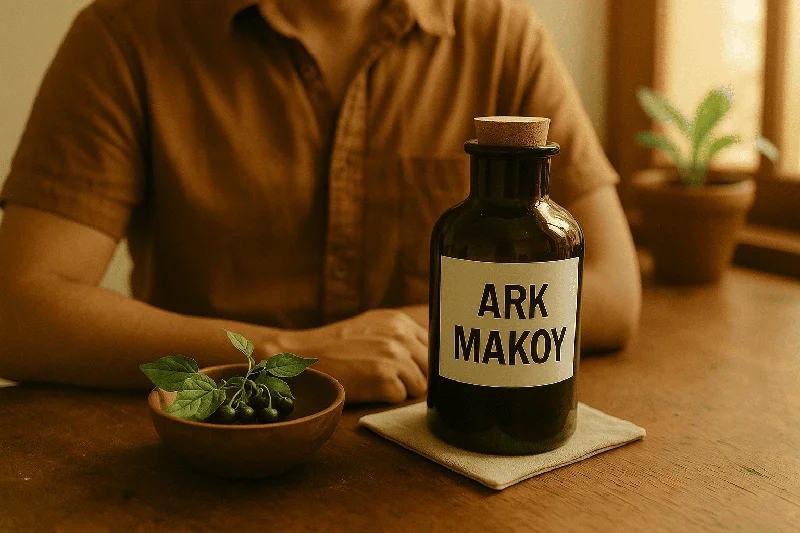
Ark Makoy is an Ayurvedic distilled liquid preparation (ark) made from the Makoy plant — Solanum nigrum, commonly known as Black Nightshade. It is primarily used for liver detoxification, kidney support, and digestive health. Unlike modern supplements that isolate single compounds, Ark Makoy delivers the full spectrum of the plant's bioactive constituents through a traditional steam-distillation process, making it one of the most bioavailable herbal formulations in Ayurveda.
If you've been searching for a natural way to support your liver and kidneys — or you've seen this product on pharmacy shelves and wondered whether it actually works — this guide covers everything. From the botany of the Makoy plant and its chemical composition to dosage instructions, scientific evidence, side effects, and how Ark Makoy compares to popular alternatives like Liv.52 and Kalmegh, we'll leave no question unanswered.
What Is Ark Makoy?
Ark Makoy is a hydro-distillate (Ark or Arq) prepared from the whole plant of Solanum nigrum Linn., a member of the Solanaceae family. In Ayurvedic pharmacology, an "ark" is created by boiling the herb in water and collecting the condensed steam — essentially a process identical to essential oil distillation, except the aqueous distillate itself is the medicine, not the oil fraction.
The result is a clear to slightly yellowish liquid with a mild herbal aroma that contains the water-soluble and volatile active compounds of the Makoy plant in a highly absorbable form.
About the Makoy Plant (Solanum nigrum / Black Nightshade)
- The Makoy plant (मकोय in Hindi) is an annual herbaceous plant that grows 30–120 cm tall.
- It's found abundantly across India — from the plains of Uttar Pradesh and Rajasthan to the hills of Himachal Pradesh — and thrives in wastelands, agricultural fields, and along roadsides.
Botanical profile:
| Feature | Detail |
|---|---|
| Scientific Name | Solanum nigrum Linn. |
| Family | Solanaceae (Nightshade family) |
| Common Names | Makoy (Hindi), Kakmachi (Sanskrit), Black Nightshade (English), Manathakkali (Tamil) |
| Parts Used | Whole plant — leaves, berries, stems, roots |
| Habitat | Throughout India, up to 2,100 m elevation; also found across Asia, Africa, and Europe |
| Flowering Season | October to March |
The plant produces small white flowers and round berries that turn from green to purplish-black when ripe. While the unripe green berries contain higher levels of glycoalkaloids (which can be toxic in large amounts), the ripe berries and the whole plant — when processed correctly through distillation — yield a safe and therapeutically effective preparation.
In classical Ayurvedic texts, Makoy is referred to as Kakmachi (काकमाची). Acharya Charaka classified it under Shaka Varga (vegetable group), while Acharya Bhavaprakash placed it in the Guduchyadi Varga, acknowledging its hepatoprotective significance.
What Does "Ark" Mean in Ayurveda? (Ark vs. Swaras vs. Kwath)
This is something none of the available resources explain properly, and it matters alot for understanding why Ark Makoy is formulated the way it is.
In Ayurvedic pharmaceutics (Bhaishajya Kalpana), there are several dosage forms for herbal medicines:
| Dosage Form | Preparation Method | Shelf Life | Bioavailability |
|---|---|---|---|
| Swaras (Fresh juice) | Crushing fresh plant and extracting juice | 1–2 days | High, but unstable |
| Kwath / Kashaya (Decoction) | Boiling herb in water, reducing to 1/4th | 1 day | Moderate |
| Phanta (Hot infusion) | Steeping herb in hot water | Same day | Low to moderate |
| Ark (Distillate) | Steam distillation, collecting condensed vapour | 6–12 months | High — contains volatile active compounds |
| Asava/Arishta (Fermented) | Self-generated alcohol fermentation | Years | High |
The key advantage of the Ark form is that it captures the volatile compounds — those that would be destroyed by prolonged boiling in a Kwath — while also offering a much longer shelf life than Swaras. The distillation process essentially purifies the extract, removing heavy plant matter and concentrating the therapeutically active fraction.
This is precisely why Ark Makoy is considered more effective for liver and kidney detoxification than simply eating the Makoy plant or drinking its juice. The distillation process concentrates specific hepatoprotective compounds like solasonine and solasodine into a stable, easy-to-absorb liquid.
Key Ingredients and Chemical Composition of Makoy
The phytochemistry of Solanum nigrum has been extensively studied. A 2009 review published in the International Journal of PharmTech Research identified the following major classes of bioactive compounds:
Alkaloids:
- Solanine — a glycoalkaloid with anti-inflammatory and cytotoxic properties
- Solasonine — demonstrates hepatoprotective activity in animal models
- Solasodine — steroidal alkaloid with documented anticancer potential
- Solanigrine and Solaumargine
Glycosides and Flavonoids:
- Quercetin, kaempferol, and their glycosides — potent antioxidants
- Steroidal saponins — contribute to anti-inflammatory action
- Polyphenolic compounds — free radical scavenging activity
Other constituents:
- Riboflavin, nicotinic acid, vitamin C, and citric acid
- Beta-carotene and ascorbic acid in the ripe berries
- Diosgenin — a precursor for steroid synthesis
Some commercial Ark Makoy products also incorporate Gomutra Ark (distilled cow urine) as a co-ingredient. According to Ayurvedic texts like Sushruta Samhita and Ashtanga Hridaya, Gomutra contains 24 minerals and 18 trace elements that are said to enhance the bioavailability of herbal formulations. The Charaka Samhita describes Gomutra as Medhya (intellect-promoting) and Yakrit-Pliha Shodhaka (liver-spleen purifier). Products from brands like Purndhenu specifically highlight this combination.
Health Benefits of Ark Makoy
The therapeutic applications of Ark Makoy span multiple organ systems, but its strongest evidence and traditional usage center around three areas: liver, kidneys, and digestive tract.
Liver Health and Detoxification
This is the primary reason most people use Ark Makoy, and the area with the most scientific backing.
- A landmark study published in Fitoterapia (2000) by Raju et al. demonstrated that Solanum nigrum extract showed significant hepatoprotective activity against carbon tetrachloride (CCl4)-induced liver damage in rats.
- The extract reduced elevated SGPT, SGOT, and ALP levels — key biomarkers of liver damage — to near-normal levels.
More recently, a 2017 study in the Journal of Ethnopharmacology confirmed that the flavonoid-rich fraction of Solanum nigrum protects hepatocytes (liver cells) through multiple mechanisms:
- 1.Antioxidant action — neutralizes free radicals that damage liver cell membranes
- 2.Anti-inflammatory pathway — suppresses NF-κB signaling, reducing hepatic inflammation
- 3.Membrane stabilization — strengthens hepatocyte membranes against toxin penetration
- 4.Enhanced bile secretion — promotes the flow of bile, aiding in the elimination of metabolic waste
In practical terms, Ark Makoy is traditionally indicated for:
- Fatty liver disease (Yakrit Vriddhi)
- Hepatitis and jaundice (Kamala)
- Liver enlargement
- Alcoholic liver damage
- General liver detoxification after prolonged medication use
Kidney Support and Urinary Health
Ark Makoy supports kidney health primarily through its diuretic and nephroprotective properties. The plant's steroidal saponins increase urine output, which helps flush out toxins and reduce the load on the kidneys.
Traditional Ayurvedic practitioners prescribe Ark Makoy for:
- Kidney detoxification and improved filtration
- Mild edema caused by fluid retention
- Supporting kidney function in patients with elevated creatinine
- As an adjunct in managing early-stage kidney concerns (always under medical supervision)
A 2013 study in Pharmacognosy Research reported diuretic activity of Solanum nigrum aqueous extract comparable to furosemide in animal models, with no significant electrolyte imbalance — an important safety advantage over conventional diuretics.

Digestive System Benefits
Ark Makoy acts as a mild laxative and digestive stimulant.
It is indicated for:
- Chronic constipation (Vibandha)
- Abdominal bloating and gas
- Loss of appetite (Agnimandya)
- General digestive weakness
The bitter compounds in Makoy stimulate digestive secretions, including gastric acid and bile, which improves the breakdown and absorption of nutrients. This is why many practitioners recommend it as a pre-meal tonic.
Antioxidant, Anti-inflammatory, and Anticancer Properties
Beyond organ-specific benefits, Makoy demonstrates broad systemic effects:
Antioxidant activity: A 2012 study in Food Chemistry measured the DPPH radical scavenging activity of Solanum nigrum leaf extract at IC50 of 45.2 μg/mL — comparable to standard ascorbic acid. Anti-inflammatory properties: The solanine and solasonine alkaloids inhibit COX-2 and LOX pathways, reducing inflammation throughout the body. This makes Ark Makoy potentially usefull for patients with chronic low-grade inflammation.
- Anticancer potential: Multiple in vitro studies (including a 2004 study in Life Sciences by Son et al.) have shown that solasodine and solasonine induce apoptosis in various cancer cell lines, including HepG2 (liver cancer) and HeLa (cervical cancer).
- However, these are laboratory findings — no human clinical trials have confirmed anticancer effects of Ark Makoy, and it should never be used as a substitute for cancer treatment.
Ayurvedic Classification and Dosha Balancing
Understanding Ark Makoy through the lens of classical Ayurvedic pharmacology helps practitioners prescribe it more accurately.
Rasa Panchaka (Ayurvedic Pharmacological Profile)
| Parameter | Property |
|---|---|
| Rasa (Taste) | Tikta (Bitter), Katu (Pungent) |
| Guna (Quality) | Laghu (Light), Snigdha (Slightly unctuous) |
| Virya (Potency) | Ushna (Hot) |
| Vipaka (Post-digestive effect) | Katu (Pungent) |
| Prabhava (Special action) | Yakrit Shodhaka (Liver purifying) |
| Dosha Karma | Pacifies Kapha and Vata; may aggravate Pitta in excess |
Tridosha Balancing
Due to its bitter taste and hot potency, Ark Makoy effectively pacifies Kapha dosha (reducing congestion, sluggish digestion, and fluid retention) and Vata dosha (through its slightly unctuous quality and ability to promote downward movement of apana vayu).
However, its hot potency means it can aggravate Pitta dosha if used in excess or by individuals with a strong Pitta constitution. This is why dosage control and dietary awareness matter so much.
How to Use Ark Makoy: Dosage and Administration
Standard Dosage Guidelines
| Age Group | Recommended Dose | Frequency | With |
|---|---|---|---|
| Adults (18–60 years) | 15–30 mL | Twice daily | Equal quantity of water |
| Elderly (60+ years) | 10–20 mL | Twice daily | Equal quantity of water |
| Adolescents (12–18 years) | 10–15 mL | Once or twice daily | Equal quantity of water |
| Children (below 12) | Not recommended without physician guidance | — | — |
Timing: Best taken on an empty stomach — 30 minutes before meals, morning and evening. Duration of course: Most Ayurvedic practitioners recommend a course of 4 to 12 weeks for meaningful results in liver and kidney detoxification. For chronic conditions like fatty liver, a 3-month course with a 2-week break is commonly advised. However, continuous use beyond 3 months should always be supervised by a qualified practitioner.
Dietary Restrictions (Parhez) During Use
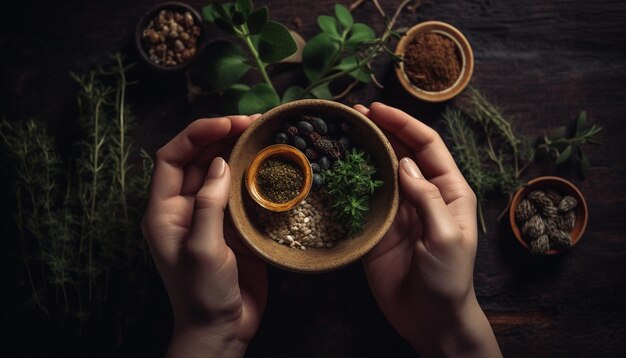
This is a critical detail that most product listings completely ignore. For optimal results with Ark Makoy, traditional Ayurvedic guidelines recommend avoiding:
- Oily and deep-fried foods — burdens the liver, counteracting the detox effect
- Potatoes and bananas — considered heavy and Kapha-aggravating
- Cold water and cold beverages — dampens Agni (digestive fire)
- Rice in excess — especially at night
- Alcohol — obviously counterproductive when detoxifying the liver
- Processed and packaged foods — contain preservatives that stress the liver
Complementary Yoga Practices
Some practitioners recommend performing Bhastrika Pranayama (bellows breathing) for 5–10 minutes after taking Ark Makoy. The rationale is that Bhastrika increases metabolic rate and blood circulation to abdominal organs, potentially enhancing the absorption and distribution of the ark's active compounds. Kapalbhati and gentle Mandukasana (frog pose) are also recommended for liver stimulation.
Ark Makoy vs. Other Liver Support Formulations
One question that comes up frequently: "Why should I choose Ark Makoy when there are so many liver supplements available?" Here's an honest comparison:
| Feature | Ark Makoy | Liv.52 (Himalaya) | Kalmegh (Andrographis) | Kutki (Picrorhiza) |
|---|---|---|---|---|
| Form | Liquid distillate | Tablet/Syrup | Tablet/Powder/Ark | Powder/Tablet |
| Primary Herb | Solanum nigrum | Caper Bush + Chicory | Andrographis paniculata | Picrorhiza kurroa |
| Main Action | Hepatoprotective + Nephroprotective | Hepatoprotective | Hepatoprotective + Immunomodulator | Hepatoprotective + Cholagogue |
| Kidney Benefits | Yes — diuretic action | Minimal | Minimal | Mild |
| Bioavailability | High (liquid, pre-distilled) | Moderate (needs digestion) | Moderate | Moderate |
| Scientific Evidence | Moderate (animal + in vitro studies) | Strong (multiple human trials) | Strong | Moderate to strong |
| Taste | Mildly bitter, easy to take | Neutral (tablet) | Very bitter | Very bitter |
| Approximate Price | ₹80–₹200 for 450 mL | ₹150–₹250 for 100 tablets | ₹100–₹180 | ₹200–₹400 |
| Best For | Combined liver-kidney detox | General liver protection | Liver + immunity | Targeted liver repair |
Key takeaway: Ark Makoy offers a unique combination of liver and kidney support that most competitors don't match. However, for patients with well-documented liver disease and who need the most clinically proven option, Liv.52 has stronger human trial data. The ideal approach, according to many Ayurvedic physicians, is to use Ark Makoy as a detoxification course and Liv.52 or Kutki for ongoing liver maintenance.
Side Effects, Contraindications, and Safety
This is perhaps the biggest information gap across all existing resources on Ark Makoy. None of the top-ranking pages address safety in adequate detail. Here's what you need to know.
Potential Side Effects
When taken at recommended doses, Ark Makoy is generally well-tolerated.
However, some individuals may experience:
- Mild gastric irritation — especially if taken on a completely empty stomach without water
- Loose stools — due to its mild laxative effect; usually resolves within 2–3 days
- Burning sensation in the abdomen — more common in Pitta-predominant individuals
- Allergic reactions — rare, but possible in individuals allergic to Solanaceae family plants (tomatoes, eggplant, peppers)
Contraindications
- Pregnancy: Not recommended. Solanine and related alkaloids may have uterotonic effects. No safety data exists for pregnant women.
- Breastfeeding: Avoid unless specifically prescribed by a qualified Ayurvedic physician — alkaloids may pass into breast milk.
- Children under 5 years: Not recommended due to lack of pediatric safety data.
- Active peptic ulcer or gastritis: The hot potency and bitter taste can aggravate existing ulcers.
- Pitta-aggravated conditions: Use with caution in conditions like hyperacidity, bleeding disorders, or acute inflammatory states.
Drug Interactions
- Hepatotoxic drugs: Ark Makoy may alter liver enzyme activity, potentially affecting the metabolism of drugs processed through the liver (CYP450 pathway). If you're on medication for diabetes, hypertension, or any chronic condition, consult your doctor before starting.
- Diuretics: Combining Ark Makoy with prescription diuretics may lead to excessive fluid loss and electrolyte imbalance.
- Immunosuppressants: The immunomodulatory effects of Solanum nigrum could theoretically interfere with immunosuppressant therapy.
How to Choose the Right Ark Makoy Product
What to Look For
- FSSAI License Number — mandatory for any consumable product in India
- GMP Certification — ensures manufacturing quality standards
- AYUSH License — confirms the product is manufactured under government-recognized Ayurvedic drug licensing
- Batch Number and Expiry Date — always check; Arks typically have a shelf life of 12–18 months
- Single-ingredient vs. combination — some products combine Makoy with Kasni (Chicory), Gomutra, or other herbs. Choose based on your specific need.
Storage Instructions
- Store in a cool, dry place away from direct sunlight. Keep the bottle tightly closed after each use.
- Some brands recommend refrigeration after opening — check the label. Do not use if the liquid appears cloudy, has an off-smell, or has visible particles floating in it.
Popular Pack Sizes and Pricing
Most Ark Makoy products come in 450–500 mL bottles, with MRP ranging from ₹80 to ₹250 depending on the brand, additional ingredients, and whether Gomutra Ark is included. Products with Gomutra tend to be slightly more expesive but are considered more potent in traditional practice.
Mechanism of Action: How Ark Makoy Actually Works
Understanding the "how" behind Ark Makoy's benefits helps you appreciate why it's more than just another herbal tonic.
At the Liver Level (Hepatocytes)
- 1.Free radical scavenging: The flavonoids (quercetin, kaempferol) donate electrons to neutralize reactive oxygen species (ROS) that damage hepatocyte membranes.
- 2.Glutathione restoration: Solanum nigrum extracts have been shown to restore depleted glutathione levels in damaged livers (Raju et al., 2003). Glutathione is the liver's master antioxidant.
- 3.Anti-fibrotic action: By suppressing stellate cell activation and collagen deposition, Makoy may help slow the progression from fatty liver to fibrosis.
- 4.Bile flow enhancement (choleretic effect): Increased bile secretion helps eliminate bilirubin and metabolic toxins more efficiently, reducing jaundice and improving digestion.
At the Kidney Level
- 1.Increased glomerular filtration rate: The diuretic saponins increase blood flow to the kidneys, enhancing filtration.
- 2.Reduced oxidative stress in renal tubules: The same antioxidant compounds that protect the liver also protect kidney cells from oxidative damage.
- 3.Mild anti-urolithiatic action: Some traditional practitioners use Makoy to prevent kidney stone formation, though clinical evidence for this specific application remains limited.
Frequently Asked Questions (FAQ)
What is Ark Makoy used for?
Ark Makoy is primarily used for liver detoxification, kidney support, and improving digestive health. It is indicated in Ayurveda for conditions like fatty liver, hepatitis, jaundice, liver enlargement, kidney detox, constipation, and general body detoxification. It is also used as a supportive tonic for its antioxidant and anti-inflammatory properties.
What is Makoy used for in Ayurveda?
- Makoy (Solanum nigrum) has been used in Ayurveda for thousands of years primarily as a liver tonic (Yakrit Shodhaka).
- The whole plant — leaves, berries, and stems — is used in various formulations. Beyond liver support, traditional uses include treating skin conditions (especially those related to "impure blood"), fever, inflammation, and urinary disorders.
Can I take Ark Makoy if I have diabetes?
Ark Makoy itself does not contain sugar and is genrally compatible with diabetic patients. In fact, some studies suggest Solanum nigrum may have mild hypoglycemic effects. However, if you're on diabetes medication, consult your physician before starting, as it could potentially enhance the blood sugar-lowering effect and lead to hypoglycemia.
How long should I take Ark Makoy to see results?
- Most practitioners recommend a minimum course of 4–6 weeks for noticeable improvements in liver function markers and digestive health. For chronic conditions like fatty liver, a 3-month course is standard.
- Results vary — some people report improved digestion and reduced bloating within the first week, while liver enzyme normalization may take 6–8 weeks.
Is Ark Makoy safe for long-term use?
- Continuous use beyond 3 months without a break is not generally recommended.
- The standard Ayurvedic protocol involves cycles — for instance, 3 months on, 2 weeks off, then reassess. Long-term safety studies in humans have not been conducted, so periodic monitoring of liver and kidney function through blood tests is advisable if you plan extended use.
Can Ark Makoy be taken with Ark Kasni?
- Yes. In fact, the combination of Ark Makoy (liver and kidney detox) with Ark Kasni (Chicory-based liver and digestive tonic) is a classic Ayurvedic pairing.
- They complement each other — Makoy provides stronger hepatoprotective action while Kasni enhances digestive fire and appetite. Many practitioners prescribe them together.
Is Ark Makoy suitable for people with lactose intolerance?
Yes. Ark Makoy is a plant-based distillate and contains no dairy, lactose, or animal-derived ingredients (unless the formulation includes Gomutra, which is technically animal-derived but contains no lactose). Always check the ingredient list on your specific product.
Does Ark Makoy have any effect on skin health?
Indirectly, yes. In Ayurveda, skin conditions like acne, rashes, and dullness are often attributed to liver dysfunction and accumulation of toxins (Ama). By improving liver detoxification, Ark Makoy can lead to clearer skin over time. Solanum nigrum also has traditional topical uses for skin disorders, though the ark form is taken orally.
Final Thoughts: Is Ark Makoy Worth Taking?
- Ark Makoy represents one of Ayurveda's most practical and affordable formulations for liver and kidney health. At ₹80–₹250 for a month's supply, it's accessible to most people.
- The scientific evidence — while primarily from animal and in vitro studies — consistently supports the hepatoprotective, nephroprotective, antioxidant, and anti-inflammatory properties that Ayurvedic texts have described for centuries.
That said, it's not a miracle cure. If you have serious liver disease, kidney failure, or any diagnosed medical condition, Ark Makoy should be used as a complement to medical treatment — not a replacement. Always get proper diagnostic tests, work with qualified healthcare practitioners, and don't rely solely on any single supplement.
For general detoxification, seasonal liver cleansing, or as supportive therapy for mild fatty liver and sluggish digestion, Ark Makoy is a well-tolerated, time-tested option that deserves a place in your wellness routine.
Start with 15 mL twice daily before meals, maintain the dietary guidelines mentioned above, and reassess after 6 weeks. Your liver — and your kidneys — will thank you for it.
Scientific Sources
- Preparation and physicochemical characterization of ingredients of Indian traditional medicine, Mahamrutyunjaya Rasa — Rai P et al., 2017, Journal of Ayurveda and integrative medicine
- Studies on in vivo antithrombotic activity of quercetin, a natural flavonoid isolated from a traditional medicinal plant, African eggplant (Solanum indicum) — Gogoi D et al., 2024, Journal of ethnopharmacology
- Ethnobotany of the Monpa ethnic group at Arunachal Pradesh, India — Namsa ND et al., 2011, Journal of ethnobiology and ethnomedicine
- Experimental antitumor agents from Solanum indicum L — Chiang HC et al., 1991, Anticancer research
- Plants used to manage type II diabetes mellitus in selected districts of central Uganda — Ssenyange CW et al., 2015, African health sciences
- Nanodelivery system of traditional Chinese medicine bioactive compounds: Application in the treatment of prostate cancer — Zou B et al., 2024, Phytomedicine : international journal of phytotherapy and phytopharmacology
- Activation of Nrf2/HO-1 signaling: An important molecular mechanism of herbal medicine in the treatment of atherosclerosis via the protection of vascular endothelial cells from oxidative stress — Zhang Q et al., 2021, Journal of advanced research
- Traditional herbal medicine: Therapeutic potential in rheumatoid arthritis — Wang Y et al., 2021, Journal of ethnopharmacology
- Moringa oleifera: An Updated Comprehensive Review of Its Pharmacological Activities, Ethnomedicinal, Phytopharmaceutical Formulation, Clinical, Phytochemical, and Toxicological Aspects — Pareek A et al., 2023, International journal of molecular sciences
- A Review: The Bioactivities and Pharmacological Applications of Polygonatum sibiricum polysaccharides — Cui X et al., 2018, Molecules (Basel, Switzerland)
- Health Benefits of Culinary Herbs and Spices — Jiang TA, 2019, Journal of AOAC International
- Foeniculum vulgare Mill: a review of its botany, phytochemistry, pharmacology, contemporary application, and toxicology — Badgujar SB et al., 2014, BioMed research international
- Chemical constituents of Panax ginseng and Panax notoginseng explain why they differ in therapeutic efficacy — Liu H et al., 2020, Pharmacological research
- Traditional uses, bioactive composition, pharmacology, and toxicology of Phyllanthus emblica fruits: A comprehensive review — Saini R et al., 2022, Journal of ethnopharmacology
- Anti-ageing active ingredients from herbs and nutraceuticals used in traditional Chinese medicine: pharmacological mechanisms and implications for drug discovery — Shen CY et al., 2017, British journal of pharmacology
- Traditional Chinese medicine: saponins, critical micellar concentrations and partition coefficients — Barthel C et al., 2023, Phytochemical analysis : PCA
- Efficacy and safety of the traditional herbal medication Chai-Ling-Tang (in China), Siryung-tang (in Republic of Korea) or Sairei-To (in Japan) — Bailly C, 2024, Journal of ethnopharmacology
- Network pharmacology-based strategy to investigate the effect and mechanism of α-solanine against glioma — Wang C et al., 2023, BMC complementary medicine and therapies
- α-Solanine attenuates chondrocyte pyroptosis to improve osteoarthritis via suppressing NF-κB pathway — Zhou J et al., 2024, Journal of cellular and molecular medicine
- Solanine induces ferroptosis in colorectal cancer cells through ALOX12B/ADCY4 molecular axis — Ma X et al., 2024, The Journal of pharmacy and pharmacology
- Updated aspects of alpha-Solanine as a potential anticancer agent: Mechanistic insights and future directions — Nandi S et al., 2024, Food science & nutrition
- Alpha-solanine Anti-tumor Effects in Non-small Cell Lung Cancer Through Regulating the Energy Metabolism Pathway — Zou T et al., 2022, Recent patents on anti-cancer drug discovery
Ask Ayurvedic doctor a question and get a consultation online on the problem of your concern in a free or paid mode.
More than 2,000 experienced doctors work and wait for your questions on our site and help users to solve their health problems every day.
Related articles