Ask Ayurvedic doctor a question and get a consultation online on the problem of your concern in a free or paid mode. More than 2,000 experienced doctors work and wait for your questions on our site and help users to solve their health problems every day.
FREE! Ask Ayurvedic Doctors 24/7

 Fast responses
 1000+ verified doctors
Body DetoxEar, Nose, and Throat DisordersGeriatrics & RejuvenationImmunodeficiencyInfertility TreatmentNutritionOrthopedic DisordersPediatricsRespiratory DisordersSexually Transmitted Diseases (STDs)Surgery RecoveryUrological DisordersVascular DisordersDental DisordersEndocrinological DisordersGastrointestinal DisordersYoga TherapyGeneral MedicineAllergic DisordersCardio DisordersGynecology and ObstetricsCosmetologySkin and Hair DisordersEye DisordersInfectious DiseasesMental DisordersNeurological DisordersOncologyPanchakarmaSexual Health & DisordersSports Medicine
Published on 02/05/25
(Updated on 07/10/26)
4,173
Vishagarbha Taila – A Powerful Ayurvedic Oil for Pain Relief and Joint Health
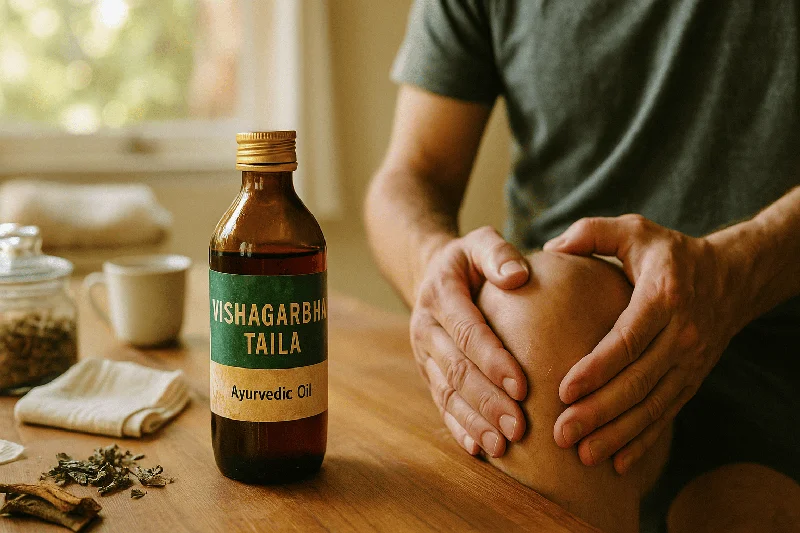
Vishagarbha Taila is a classical Ayurvedic medicated oil used primarily for external application to relieve joint pain, muscle stiffness, and neurological conditions caused by aggravated Vata dosha. Referenced in the ancient text Yogaratnakar, this powerful formulation contains processed toxic herbs (classified as Upavisha in Ayurveda) blended with sesame oil, making it one of the most potent therapeutic oils in the Ayurvedic pharmacopoeia. If you're dealing with arthritis, paralysis, sciatica, or chronic musculoskeletal pain — this guide covers everything you need to know, from ingredients and mode of action to Panchakarma protocols and safety data.
What Is Vishagarbha Taila?
Definition and Ayurvedic Classification
- Vishagarbha Taila (also spelled Vishagarbha Thailam or Vishgarbha Tail) is a medicated oil (Taila) preparation that falls under the category of Visha-yoga — formulations that incorporate toxic botanicals in purified, therapeutically safe doses.
- The name itself reveals the nature of the medicine: "Visha" means poison, "Garbha" means womb or core, and "Taila" means oil. In essence, it's an oil with processed poison at its core.
In Ayurvedic pharmacology, the formulation is classified as a Vatahara (Vata-pacifying) and Shoolahara (pain-relieving) external preparation. Its primary action targets the Vata Vaha Srotas (channels governing nerve impulses and movement), making it uniquely effective for neurological and musculoskeletal disorders.
The classical reference for this formulation comes from Yogaratnakar, a well-known Ayurvedic compendium likely compiled in the 17th–18th century. Some practitioners also reference Bhaishajya Ratnavali and Sahasrayogam for variations of the formula.
Vishagarbha Taila vs Laghu Vishagarbha Taila — What's the Difference?
This is a distinction that most sources online completely overlook, and it causes genuine confusion among practitioners and patients alike.
| Feature | Vishagarbha Taila (Full / Maha) | Laghu Vishagarbha Taila |
|---|---|---|
| Number of ingredients | 20–30+ herbs and processing agents | Fewer ingredients (simplified formula) |
| Potency | Stronger; used for severe, chronic conditions | Milder; suitable for moderate conditions |
| Toxic herb concentration | Higher proportion of Visha/Upavisha dravyas | Reduced proportion of toxic ingredients |
| Classical reference | Yogaratnakar, Bhaishajya Ratnavali | Yogaratnakar (Laghu variant) |
| Primary use | Severe paralysis, advanced arthritis, locked joints | General joint pain, mild-to-moderate stiffness |
| Supervision required | Strictly under qualified Vaidya's guidance | Can be used with basic guidance |
| Availability | Less commonly manufactured commercially | More widely available from brands |
Many online retailers and even some manufacturers use the names interchangeably. When purchasing, always check the ingredient list on the label. If you see a shorter formulation (typically 8–12 herbs), it's likely the Laghu variant. The full Vishagarbha Taila will have a considerably longer list of botanicals and processing steps.
Historical and Textual Origins
The Yogaratnakar text describes Vishagarbha Taila specifically in the context of Vatavyadhi Chikitsa (treatment of Vata disorders). The relevant shlokas mention it as a formulation that should be prepared under strict supervision, with mandatory Shodhana (purification) of all toxic ingredients before incorporation.
Historically, this oil was prepared in-house by Vaidyas (Ayurvedic physicians) who had specialized knowledge of Agadtantra — the Ayurvedic branch dealing with toxicology. The fact that it requires handling of Aconitum, Datura, and other potentially dangerous plants meant it was never a "household" preparation. Even today, its manufacture is regulated and limited to licensed Ayurvedic pharmacies.
Key Ingredients of Vishagarbha Taila
Complete Ingredient List with Roles
The formulation is complex, and the precise ingredients can vary slightly between classical references. Below is the comprehensive ingredient profile based on the Yogaratnakar text:
| Sanskrit Name | Botanical / Common Name | Role in Formula |
|---|---|---|
| Tila Taila (base oil) | Sesame oil (Sesamum indicum) | Carrier oil; penetrates deep into tissues, inherently Vata-pacifying |
| Vatsanabha | Aconitum ferox (processed monkshood) | Primary analgesic and anti-inflammatory; classified as Upavisha |
| Dhatura | Datura metel (thorn apple) seeds | Antispasmodic, nerve-calming; classified as Upavisha |
| Arka | Calotropis procera (crown flower) | Anti-inflammatory, reduces edema |
| Shatahva / Shatapushpa | Anethum sowa (dill) | Carminative, muscle relaxant |
| Rasna | Pluchea lanceolata | Primary Vata-relieving herb; anti-rheumatic |
| Devadaru | Cedrus deodara (Himalayan cedar) | Analgesic, anti-inflammatory, improves circulation |
| Kushtha | Saussurea costus (costus root) | Nerve tonic, anti-inflammatory |
| Sarshapa | Brassica nigra (black mustard) | Warming, counter-irritant, improves local blood flow |
| Haritaki | Terminalia chebula | Balances all three doshas; supports tissue detoxification |
| Shunthi | Zingiber officinale (dry ginger) | Anti-inflammatory, bioavailability enhancer |
| Maricha | Piper nigrum (black pepper) | Penetration enhancer, reduces Kapha/Ama |
| Pippali | Piper longum (long pepper) | Bioavailability enhancer, Vata-Kapha pacifying |
| Saindhava Lavana | Rock salt | Improves absorption through skin, muscle relaxant |
| Go-mutra | Cow urine (purified) | Bioenhancer; helps in Shodhana of toxic herbs |
| Eranda Taila | Castor oil (Ricinus communis) | Vata-pacifying, penetrating carrier |
- Important note: Vatsanabha (Aconitum ferox) and Dhatura (Datura metel) are classified as Upavisha (sub-toxic substances) according to Agadtantra.
- They undergo mandatory purification (Shodhana) — typically processing with cow's urine or cow's milk — before being incorporated into the formula. This purification process neutralizes the lethal alkaloids while retaining the therapeutic properties.
Ayurvedic Pharmacology (Rasa Panchaka) of the Formula
No competitor source has described the overall pharmacological profile of Vishagarbha Taila as a compound formulation.
Here it is:
- Rasa (Taste): Predominantly Katu (pungent) and Tikta (bitter)
- Guna (Qualities): Ushna (hot), Tikshna (sharp/penetrating), Snigdha (unctuous from the oil base)
- Virya (Potency): Ushna (hot)
- Vipaka (Post-digestive effect): Katu (pungent) — though this is more relevant for internal medicines, it indicates the metabolic direction of absorbed compounds
- Prabhava (Special action): Vedanasthapana (pain-relieving) and Vatahara (Vata-destroying) — the unique synergy between toxic and non-toxic herbs creates an effect greater than individual components
This hot, sharp, penetrating profile is precisely what makes it so effective against cold, dry, stiff Vata conditions.
How Does Vishagarbha Taila Relieve Pain? (Mode of Action)
The Ayurvedic Mechanism
According to Ayurvedic principles, most chronic musculoskeletal and neurological conditions arise from aggravated Vata dosha. When Vata accumulates in the joints (Sandhis), muscles (Mamsa), and nerve channels (Vata Vaha Srotas), it causes:
- Pain (Shula)
- Stiffness (Stambha)
- Restricted movement (Sanga)
- Crackling sounds in joints (Atopa)
- Wasting of tissues (Shosha)
- Vishagarbha Taila works through multiple mechanisms simultaneously.
- First, the sesame oil base — which is inherently warm, heavy, and unctuous — directly opposes the cold, light, dry qualities of Vata. Second, the processed toxic herbs (Vatsanabha, Dhatura) have an intensely hot and penetrating action that breaks through even deep-seated Vata obstructions. Third, the supporting herbs like Rasna, Devadaru, and the Trikatu group (Shunthi, Maricha, Pippali) collectively enhance circulation, remove Ama (metabolic toxins), and regenerate affected tissues.
The concept of Ama Pachana (digesting toxins) is particularly relevant here. In chronic arthritis and rheumatic conditions, Ama combines with Vata to create Sama Vata — a stubborn pathological state that's resistant to simple Vata-pacifying treatments. The sharp, hot nature of Vishagarbha Taila penetrates and "burns" through this Ama, restoring normal Vata flow.
The Science Behind the Formula
From a modern pharmacological perspective, sesame oil serves as an excellent transdermal carrier due to its low molecular weight fatty acids and natural antioxidants (sesamol, sesamin). A study published in the Journal of Ayurveda and Integrative Medicine noted that sesame oil can penetrate through all seven layers of skin (Sapta Twak) and reach deeper tissues, which aligns with the Ayurvedic concept of Taila being the best medium for Vata disorders.
Regarding safety, a 2021 study published in PMC/NCBI (Ghosal et al.) assessed the systemic toxicity of Laghu Vishagarbha Taila following OECD protocols (Guidelines 402, 410, and 411) for acute, subacute, and subchronic dermal toxicity in Wistar rats.
The results were reassuring:
- Acute dermal toxicity (OECD 402): LD50 greater than 2000 mg/kg body weight — classified in the lowest toxicity category
- Subacute dermal toxicity (OECD 410): 28-day repeated application showed no treatment-related adverse effects on hematological, biochemical, or histopathological parameters
- Subchronic dermal toxicity (OECD 411): 90-day study established NOAEL (No Observed Adverse Effect Level) at greater than 1000 mg/kg/day
This study is significant because it provides the first modern scientific evidence that traditional purification methods (Shodhana) effectively render the toxic ingredients safe for external therapeutic use. However, it's worth noting that this data is specifically for the Laghu (lighter) variant — the full Vishagarbha Taila has not yet been evaluated in published clinical trials.
Benefits and Therapeutic Uses of Vishagarbha Taila
Joint Disorders and Arthritis
This is the primary therapeutic domain of Vishagarbha Taila.
It is indicated for:
- Sandhivata (Osteoarthritis): Reduces joint pain, swelling, and crepitus, especially in knee, hip, and finger joints
- Amavata (Rheumatoid Arthritis): When combined with appropriate internal medicines and Panchakarma, helps manage morning stiffness and joint inflammation
- Gridhrasi (Sciatica): Applied along the sciatic nerve pathway from lower back to foot
- Kroshtukashirsha (Synovitis of the knee): Local application combined with bandaging (Bandhana)
Neurological and Paralytic Conditions
- Pakshaghata (Hemiplegia/Paralysis): Regular massage on affected limbs helps restore nerve function and muscle tone
- Ardita (Facial Palsy): Gentle application on facial muscles
- Ekanga Vata (Monoplegia): Targeted application on the affected limb
- Manya Stambha (Neck stiffness/Torticollis): Applied to cervical region with gentle massage
Musculoskeletal Pain
- Kati Shula (Low back pain/Lumbago): Applied warm over the lumbar region
- Grudhrasi (Sciatica): Along the nerve pathway
- General muscle stiffness and spasms
- Sports injuries involving muscle strains and ligament sprains (after the acute inflammatory phase)
Detoxification and Tissue Regeneration
One underappreciated benefit is the formulation's ability to remove Ama from deep tissues. By enhancing local circulation and tissue metabolism, it supports the natural regeneration of Asthi (bone), Majja (bone marrow/nerve tissue), and Mamsa (muscle) dhatus. This makes it valuable not just for symptom relief, but for actual tissue repair in chronic degenerative conditions.
How to Use Vishagarbha Taila: Application Methods
Basic Self-Application Technique
- Warm the oil slightly — place the bottle in a bowl of hot water for 3–5 minutes. The oil should be comfortably warm, not hot. Never microwave it.
- Apply generously to the affected area. For joint pain, apply around and over the entire joint surface.
- Massage gently in circular motions over joints, and in long strokes (Anuloma — in the direction of body hair) over muscles.
- Duration: 10–15 minutes per area.
- Leave the oil on for at least 30–45 minutes. For chronic conditions, leaving it overnight yields better results.
- Follow with warm water bath. Hot fomentation (Swedana) after oil application dramatically increases efficacy.
Vishagarbha Taila in Panchakarma Protocols
This oil truly shines when used within structured Panchakarma therapies.
Here's how practitioners use it in clinical settings:
Abhyanga (Full-Body Oil Massage)
Full-body massage using Vishagarbha Taila for 45–60 minutes, followed by steam therapy. Typically performed for 7–14 consecutive days in cases of generalized Vata disorders or paralysis.
Kati Basti (Lower Back Oil Pooling)
A dam made of black gram dough is placed over the lumbar region, and warm Vishagarbha Taila is pooled inside for 30–45 minutes. Exceptionally effective for chronic low back pain and lumbar spondylosis. The oil is kept warm by periodically replacing cooled oil with freshly warmed oil.
Janu Basti (Knee Oil Pooling)
Same technique applied over the knee joint. Used for osteoarthritis of the knee, ligament injuries, and post-surgical rehabilitation.
Greeva Basti (Neck Oil Pooling)
Warm oil pooled over the cervical spine area. Indicated for cervical spondylosis, neck stiffness, and upper limb radiating pain.
Pizhichil (Oil Stream Therapy)
Continuous stream of warm Vishagarbha Taila poured over the body while simultaneously massaging. This is perhaps the most intensive Vata-pacifying therapy in Ayurveda. Reserved for severe cases of paralysis, muscular dystrophy, and advanced neurological conditions.
How Often Should You Use Vishagarbha Taila?
- Acute conditions: Once or twice daily for 7–14 days
- Chronic conditions: Once daily for 21–45 days, followed by a maintenance schedule of 3–4 times per week
- Preventive/maintenance use: 2–3 times per week, especially during Vata season (autumn/early winter)
Best Seasons for Use (Ritucharya Context)
According to Ayurvedic seasonal regimen (Ritucharya), oil application therapies are most beneficial during:
- Varsha Ritu (Monsoon season, July–September): Vata is naturally aggravated during rains. This is the ideal time for intensive Vishagarbha Taila therapy.
- Hemanta and Shishira Ritu (Winter, November–February): Cold weather increases Vata. Regular application provides warmth and prevents stiffness.
- Caution during Grishma Ritu (Summer, May–June): The hot potency of Vishagarbha Taila may aggravate Pitta in summer. Use less frequently or switch to cooler oils like Chandanadi Taila during peak heat.
Vishagarbha Taila vs Other Ayurvedic Oils: Comparison Guide
One of the most common questions patients have is — which Ayurvedic oil should I use for my condition?
Here's a comparative breakdown:
| Parameter | Vishagarbha Taila | Mahanarayan Taila | Dhanvantara Taila | Sahacharadi Taila |
|---|---|---|---|---|
| Primary action | Strong Vata-pacifying, analgesic | Vata-pacifying, nourishing | Vata-pacifying, rejuvenating | Vata-pacifying, nerve tonic |
| Potency | Very hot (Ushna Virya) | Moderately hot | Mildly hot | Moderate |
| Best for | Severe pain, paralysis, locked joints | General joint pain, body ache, weakness | Post-partum care, degenerative conditions, Vata-Pitta | Sciatica, varicose veins, lower limb Vata |
| Contains toxic herbs | Yes (Vatsanabha, Dhatura) | No | No | No |
| Suitability for self-use | Limited — needs supervision for full variant | Good for self-use | Good for self-use | Good for self-use |
| Panchakarma use | Abhyanga, Basti therapies, Pizhichil | Abhyanga, Basti | Pizhichil, Abhyanga | Abhyanga, Kati Basti |
| Can be used on sensitive skin | No — may cause irritation | Generally yes | Yes | Yes |
| Pregnancy safe | Strictly contraindicated | Use with caution | Often used post-partum | Use with caution |
Rule of thumb: If your condition is mild-to-moderate generalized body pain, start with Mahanarayan Taila. For severe, stubborn, or neurological Vata conditions that haven't responded to milder treatments — that's where Vishagarbha Taila becomes the go-to choice.
Don't wait or self medicate. Start chat with Doctor NOW
The Traditional Preparation Process (Taila Paka Vidhi)
No online source currently describes the full preparation method. Here is the classical process based on the Taila Paka Vidhi (oil cooking methodology) described in Ayurvedic pharmaceutical texts:
Step 1: Shodhana (Purification of Toxic Ingredients)
Before anything else, Vatsanabha (Aconitum) is purified by soaking in cow's urine (Go-mutra) for 7 days, changing the liquid daily. Dhatura seeds undergo similar purification. This process removes water-soluble toxic alkaloids (primarily aconitine from Vatsanabha) while retaining the lipid-soluble therapeutic compounds.
Step 2: Preparation of Kalka (Herbal Paste)
All herbs (except the base oil and liquid media) are dried, powdered, and made into a fine paste (Kalka) using a mortar and pestle or wet grinder. The quantity of Kalka is typically 1/4th of the oil quantity.
Step 3: Preparation of Drava Dravya (Liquid Media)
Decoctions (Kashaya) and fresh juices (Swarasa) of specified herbs are prepared. The liquid quantity is typically 4 times the oil quantity.
Step 4: Taila Paka (Oil Cooking)
This is where the actual medicated oil is prepared:
- Sesame oil is heated in a wide, heavy-bottomed vessel
- Kalka (paste) is added and stirred constantly
- Liquid media (decoctions/juices) are added slowly
- The mixture is cooked on medium heat (Madhyama Agni) with continuous stirring
- Cooking continues until all water content evaporates — this is tested by the Varti Pariksha (wick test): a cotton wick dipped in the oil should burn without crackling
Step 5: Determining the Stage of Cooking (Paka)
Ayurveda recognizes three stages of oil cooking:
- Mrudu Paka (soft cooking): Oil still has some moisture; Kalka is soft when rolled between fingers
- Madhyama Paka (medium cooking): This is the desired stage for Vishagarbha Taila. Kalka rolls into a firm wick without sticking; no crackling when a drop of oil is placed on fire
- Khara Paka (hard cooking): Kalka becomes hard and brittle — overcooked, generally avoided for therapeutic oils
Step 6: Filtration and Storage
The finished oil is filtered through clean muslin cloth while still warm. It is stored in glass or food-grade HDPE containers, away from direct sunlight. Shelf life is typically 2–3 years when stored properly.
Side Effects, Contraindications & Precautions
Known Side Effects
When used correctly and under guidance, Vishagarbha Taila is generally safe for external application. The 2021 toxicity study (Ghosal et al., PMC) confirmed no adverse effects at high doses in animal models.
However, potential side effects include:
- Skin irritation or redness at the application site, especially in Pitta-predominant individuals
- Burning sensation if applied to broken skin or open wounds
- Allergic contact dermatitis in individuals sensitive to any of the herbal ingredients
Strict Contraindications
This section is conspicuously absent from most online sources. Here are the conditions where Vishagarbha Taila should not be used:
- Pregnancy and lactation — absolutely contraindicated due to toxic herb content
- Open wounds, cuts, or ulcers — the penetrating herbs can cause severe irritation and systemic absorption of toxic components
- Active skin infections (fungal, bacterial, viral) — oil application can worsen infections by creating a warm, moist environment
- Pitta-type inflammation — hot, red, acutely swollen joints (as in acute gout or septic arthritis) will be aggravated by the hot potency of this oil
- Children under 12 years — safety not established
- Extensive burns or eczematous skin
- Known allergy to sesame or any listed ingredient
Drug Interactions
While no formal interaction studies exist, practitioners should be aware of the following:
- If a patient is on topical NSAIDs or analgesic patches, do not apply Vishagarbha Taila to the same area simultaneously — the penetrating nature of sesame oil may increase drug absorption unpredictably
- Patients on blood thinners (warfarin, heparin) should use cautiously, as some ingredients may have mild blood-thinning properties when absorbed transdermally
- If using alongside other Ayurvedic internal medicines for Vata disorders (like Yogaraja Guggulu or Rasnadi Kashayam), inform your practitioner — the combination is usually synergistic and beneficial, but dosing may need adjustment
How to Choose Authentic Vishagarbha Taila
Quality Indicators to Look For
Given that this formulation contains processed toxic herbs, quality assurance is non-negotiable.
Here's what to check:
- Color: Should be dark brownish-green to dark brown. Very light-colored oil likely lacks adequate herbal extraction.
- Smell: Strong, characteristic herbal aroma with a slightly pungent note. If it smells rancid or purely like plain sesame oil, the preparation may be substandard.
- Consistency: Should be smooth and homogeneous with no particulate matter or sediment. Slightly thicker than plain sesame oil.
- Certifications: Look for GMP (Good Manufacturing Practices) certification, AYUSH license number, and batch number on the label. For commercial products in India, an FSSAI marking may also be present.
- Label clarity: The full ingredient list should be printed clearly. If the label says "Vishagarbha Taila" but only lists 4–5 ingredients, it's likely an incomplete or adulterated product.
- Manufacturing date and expiry: Properly manufactured Taila preparations have a shelf life of 2–3 years. Avoid products without clear date markings.
Storage Recommendations
- Store in a cool, dry place away from direct sunlight
- Keep the cap tightly closed after each use
- Glass bottles are preferred over plastic for long-term storage
- Do not refrigerate — cold temperatures can alter the oil's consistency and potentially affect the herbal compounds
Frequently Asked Questions (FAQ)
What is Mahavishgarbha Tel used for?
Maha Vishagarbha Taila is the "greater" or full-strength version of the formulation, containing a larger number of ingredients and higher proportions of potent herbs compared to Laghu Vishagarbha Taila. It is used for severe Vata disorders including advanced paralysis (Pakshaghata), chronic rheumatoid arthritis, severe sciatica, and conditions that haven't responded to milder oils. It should only be used under direct supervision of a qualified Ayurvedic practitioner.
Can Vishagarbha Taila be used for muscle stiffness?
Yes, absolutely. Muscle stiffness (Mamsa Stambha) caused by Vata aggravation is one of the primary indications. Apply warm oil to the stiff muscles, massage for 10–15 minutes with moderate pressure, and follow with hot fomentation (a hot water bag or steam). This combination typically provides noticeable relief within 3–5 applications.
Is Vishagarbha Taila suitable for sensitive skin?
Generally, no. Due to the hot, penetrating nature of its ingredients (Vatsanabha, Dhatura, mustard), it can cause irritation on sensitive skin. If you have sensitive skin, perform a patch test on a small area of the inner forearm first. Wait 24 hours. If no redness, itching or burning occurs, you can proceed with cautious application. Alternatively, the Laghu (lighter) variant may be better tolerated.
Can Vishagarbha Taila be combined with other Ayurvedic therapies?
Yes, and this is actually how it works best. In clinical Ayurvedic practice, Vishagarbha Taila application is almost always combined with:
- Swedana (steam therapy) after massage
- Internal medicines like Yogaraja Guggulu, Rasnadi Kashayam, or Dashamoola Kwatha
- Panchakarma procedures like Basti (medicated enema), which addresses Vata from within while the oil works from outside
- Dietary modifications — avoiding Vata-aggravating foods (raw salads, cold drinks, beans) during the treatment period
Where can I buy authentic Vishagarbha Taila?
Authentic Vishagarbha Taila is available from established Ayurvedic manufacturers such as Arya Vaidya Shala (Kottakkal), Ayurved Rasashala, Unjha Pharmacy, and other GMP-certified companies. You can purchase from their official websites, authorised Ayurvedic pharmacies, or trusted online platforms like Amazon (verify seller ratings and product reviews). Avoid purchasing from unverified sellers or those offering unusually low prices — this formulation is inherently expensive to manufacture due to the complex preparation process.
What is the reference text for Vishagarbha Taila?
The primary classical reference is Yogaratnakar (Vatavyadhi Chikitsa section). Additional references can be found in Bhaishajya Ratnavali and regional texts like Sahasrayogam. The specific shloka numbers vary between editions, so consult an academic edition if you need the exact verse reference for research or clinical documentation.
Which Ayurvedic medicine is best for urine flow?
This question appears frequently in relation to Vishagarbha Taila searches, but is not directly related. For urinary flow issues (Mutrakrichra), different Ayurvedic formulations are indicated — such as Gokshuradi Guggulu, Chandraprabha Vati, or Punarnava Mandur. Consult an Ayurvedic practitioner for proper diagnosis and treatment of urinary conditions.
Conclusion
Vishagarbha Taila stands as one of Ayurveda's most potent external therapies for Vata disorders — from stubborn joint pain and arthritis to paralysis and neurological conditions. Its unique formulation, incorporating purified toxic herbs in a sesame oil base, gives it a depth of action that gentler oils simply cannot match.
However, this potency comes with responsibility. Always ensure you're using an authenticated product from a reputable manufacturer, consult a qualified Ayurvedic practitioner before starting treatment (especially for the full-strength Maha variant), and follow the specific contraindications outlined above.
If you're currently managing chronic pain, joint degeneration, or post-stroke recovery, ask your Ayurvedic doctor whether Vishagarbha Taila — applied through structured Panchakarma protocols or guided self-massage — could be a valuable addition to your treatment plan. The combination of thousands of years of clinical tradition and emerging modern safety data makes it a formulation that deserves serious consideration.
Disclaimer: This article is for educational purposes only and does not replace professional medical advice. Always consult a qualified Ayurvedic practitioner or healthcare provider before starting any new treatment, especially one containing processed toxic ingredients.
Scientific Sources
- Assessment of the systemic toxicity of Laghu vishagarbha taila, an Ayurvedic medicated oil formulation after dermal exposure — Wanjari MM et al., 2022, Toxicology research
Questions from users
Can Vishagarbha Taila be safely used alongside other pain relief methods?
Aria
2 days ago
Yes, Vishagarbha Taila can often be used alongside other pain relief methods, provided you exercise caution. This Ayurvedic oil is known for its ability to enhance circulation and promote healing in bones, muscles, and nerve tissues. However, due to its warming properties, especially potent in the summer, it can interact with other heat-inducing treatments or medications like NSAIDs. Always consult with a healthcare provider before combining treatments to avoid potential adverse reactions. If symptoms persist or worsen, seek medical advice promptly.
Can Vishagarbha Taila help with chronic headaches or migraines?
Mateo
12 days ago
Vishagarbha Taila might help with chronic headaches or migraines, but it depends on your individual constitution and dosha imbalances. It's mainly used for joint and muscular issues, so consult with a qualified Ayurvedic practitioner first. They can see if it's suitable for your specific headaches and guide you on its use and possible combinations with other treatments.
Is it safe to use Vishagarbha Taila for children with joint pain?
Walter
21 days ago
Vishagarbha Taila is typically more suitable for adults due to its potency. For children, I'd recommended sticking to gentler oils, like Bala Ashwagandha or Sesame oil. It's always a good idea to speak with an Ayurvedic practitioner to assess your child's dosha and get personalized advice. Safety first!
Is it safe to use Vishagarbha Taila during pregnancy for muscle and joint pain relief?
Kayden
38 days ago
It's a bit tricky with Vishagarbha Taila during pregnancy. It's always best to be extra cautious. Some ingredients might be too strong or not suited for pregnant women, so I'd say check in with your ayurvedic practitioner or doctor. They can guide you better based on your specific condition and prakriti. Safety first!
What causes Vata dosha imbalances and how can they affect joint health?
John
48 days ago
Vata dosha imbalance is often caused by factors like irregular routines, too much stress, or cold, dry weather. This can affect joint health by leading to dryness and stiffness in the joints, possibly causing pain or reduced flexibility. To balance Vata, try regular oil massages, warm foods, and stable daily routines. Remember, it's alwayz good to consult an Ayurvedic expert for personalized advice.
What is the main purpose of using Vishagarbha Taila in Ayurvedic treatments?
Maya
58 days ago
Vishagarbha Taila is mainly used to reduce inflammation and relieve pain by supporting blood circulation. It's beneficial for chronic conditions and muscle stiffness. When regularly applied in Abhyanga or Swedana therapy, it rejuvenates tissues and helps joint function! Always consider your individual constitution, though!
Can I use Vishagarbha Taila before exercise to help with joint mobility?
Miles
67 days ago
You can definitely use Vishagarbha Taila before exercise to help with joint mobility! Just rub a small amount onto the joints you feel need it, maybe 30 minutes before you start. However, keep in mind that it's best used with joints that are already accustomed to regular movement or when recovering from a chronic condition. If irritation happens, just stop using it and check with your Ayurvedic practitioner, okay?
Can Vishagarbha Taila help with arthritis, and how should I apply it?
Carter
77 days ago
Yes! Vishagarbha Taila can indeed help with arthritis. It’s great for alleviating joint pain and inflammation. For application, gently massage a small amount on the affected area 2-3 times a week. This helps improve circulation and reduce stiffness. Just be sure to stop if any irritation happens, and talk to a practitioner if needed!
What is the best way to store Vishagarbha Taila to maintain its effectiveness?
Lindsey
86 days ago
Best way to store Vishagarbha Taila? Keep it in a cool, dark place, away from direct sunlight and moisture. A glass bottle with a tight lid works well. Just give it a good shake before use cuz natural sediment might settle. Store it somewhere you won't forget about it! Enjoy your self care routine, hope the taila helps you! 😊
Can I use Vishagarbha Taila for muscle recovery after exercise?
Lily
96 days ago
Yes, you can use Vishagarbha Taila for muscle recovery after exercise! It can help reduce inflammation, ease tension and improve circulation in muscles. Just do a patch test first, and use it gently. Remember, everyone's skin (and muscles) react differently, so see how it feels for you.🧘♀️✌️
Related articles
Orthopedic Disorders
Sandhigata Vata Chikitsa Sutra: A Comprehensive Guide
Explore the science and Ayurvedic principles behind Sandhigata Vata Chikitsa Sutra for joint health. Learn evidence-based strategies for relief.
3,080

Orthopedic Disorders
Trayodashang Guggul – Benefits, Dose, How to Use, Side Effects, Ingredients and Reference
Exploration of Trayodashang Guggul – Benefits, Dose, How to Use, Side Effects, Ingredients and Reference
4,036
Orthopedic Disorders
Kukkutnakhi Guggul: Benefits, Dosage & Science-Backed Insights
Discover the proven benefits, proper dosage, side effects, and scientific research behind Kukkutnakhi Guggul, a powerful Ayurvedic formulation for joint health and inflammation.
3,836
Orthopedic Disorders
Sandhivata Oil: Benefits, Uses, and Science-Backed Insights
Discover the benefits, uses, and science behind Sandhivata Oil for joint pain relief, improved mobility, and holistic arthritis management.
3,081

Orthopedic Disorders
When to Worry About Leg Cramps: Ayurvedic View on Causes and Relief
When should you worry about leg cramps? Learn Ayurvedic causes, night cramp risks, and natural remedies for relief from painful or recurring leg cramps
2,711

Orthopedic Disorders
Vyoshadi Guggulu Benefits, Dosage, How To Use, Side Effects, Ingredients, Reference
Exploration of Vyoshadi Guggulu Benefits, Dosage, How To Use, Side Effects, Ingredients, Reference
2,045

Orthopedic Disorders
Rasayan Churna: Joint Pain Insights
Rasayan Churna is a traditional Ayurvedic formula renowned for its potential to alleviate joint pains, fitting well within the Ayurvedic approach to health.
6,076

Orthopedic Disorders
Sunarin Capsules – Benefits, Dosage, Ingredients, Side Effects
Exploration of Sunarin Capsules – Benefits, Dosage, Ingredients, Side Effects
3,978

Orthopedic Disorders
Lakshadi Oil Benefits, How To Use, Ingredients, Side Effects
Exploration of Lakshadi Oil Benefits, How To Use, Ingredients, Side Effects
2,199

Orthopedic Disorders
How Can Ayurveda Help You in Healing Fractures Faster?
Fractures can be a painful and often slow-healing issue, requiring both time and care to mend effectively.
3,971
Related consultations on the topic
Legal
Additional Documents
© 2024 Ask Ayurveda. All rights reserved.