Ask Ayurvedic doctor a question and get a consultation online on the problem of your concern in a free or paid mode. More than 2,000 experienced doctors work and wait for your questions on our site and help users to solve their health problems every day.
FREE! Ask Ayurvedic Doctors 24/7

 Fast responses
 1000+ verified doctors
Body DetoxEar, Nose, and Throat DisordersGeriatrics & RejuvenationImmunodeficiencyInfertility TreatmentNutritionOrthopedic DisordersPediatricsRespiratory DisordersSexually Transmitted Diseases (STDs)Surgery RecoveryUrological DisordersVascular DisordersDental DisordersEndocrinological DisordersGastrointestinal DisordersYoga TherapyGeneral MedicineAllergic DisordersCardio DisordersGynecology and ObstetricsCosmetologySkin and Hair DisordersEye DisordersInfectious DiseasesMental DisordersNeurological DisordersOncologyPanchakarmaSexual Health & DisordersSports Medicine
Published on 02/14/25
(Updated on 07/05/26)
3,288
Rasnadi Guggulu Uses – Ayurvedic Remedy for Joint Health & Detoxification
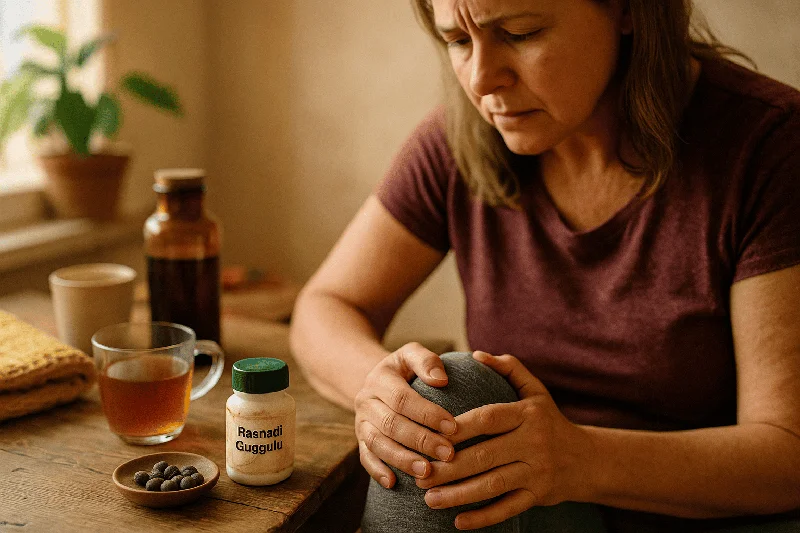
Rasnadi Guggulu is a classical Ayurvedic formulation primarily used to manage joint pain, inflammation, stiffness, and various musculoskeletal disorders including rheumatoid arthritis, osteoarthritis, and sciatica. Referenced in the ancient text Yogaratnakara, this polyherbal tablet combines the deep-penetrating, anti-inflammatory power of Guggulu resin with a carefully balanced synergy of herbs like Rasna, Guduchi, Devdaru, and Triphala. If you're looking for a time-tested Ayurvedic approach to joint health, neurological support, and gentle detoxification — this guide covers absolutely everything you need to know, from ingredients and mechanism of action to dosage, contraindications, and drug interactions that no other resource currently covers.
What Is Rasnadi Guggulu?
- Rasnadi Guggulu (sometimes spelled Rasanadi Guggulu or Rasnadi Guggul) is a Guggulu-based Ayurvedic compound tablet prescribed across India for centuries.
- The word "Rasnadi" derives from Rasna — the primary herb in the formulation — combined with "adi" meaning "and others." The suffix Guggulu indicates that purified oleo-gum resin of Commiphora mukul serves as the binding and potentiating agent.
In simple terms, it's a multi-herb anti-inflammatory tablet where each ingredient plays a specific role in reducing Vata and Kapha aggravation — the two doshas most commonly responsible for pain, swelling, and degeneration in Ayurvedic pathology.
Classical Reference: Yogaratnakara
The formula for Rasnadi Guggulu is documented in Yogaratnakara, a major Ayurvedic compendium believed to have been compiled in the 17th–18th century CE. This text is widely respected as a practical pharmacopeia, and its formulations are still manufactured by companies like Baidyanath, Vyas, Nagarjun, and Basic Ayurveda with minimal modification. The classical Sanskrit verse (shloka) describes the exact proportions, processing method, and therapeutic indications — lending the formulation an unbroken lineage of clinical application spanning several hundred years.
Meaning of the Name
| Component | Meaning |
|---|---|
| Rasna | Pluchea lanceolata — the lead herb, renowned for anti-Vata action |
| Adi | "And others" — indicating additional herbs in the formula |
| Guggulu | Purified resin of Commiphora mukul — the binding and penetrating base |
So the name literally translates to: "The Guggulu formulation led by Rasna and other herbs."
Key Ingredients of Rasnadi Guggulu
Most competitors simply list the ingredients. Here, we break down why each one is included and what role it plays in the formula's overall synergy. Understanding this helps you appreciate why Rasnadi Guggulu works differently from single-herb remedies.
Rasna (Pluchea lanceolata)
Rasna is considered one of the best Vata-shamaka (Vata-pacifying) herbs in the entire Ayurvedic materia medica. It has demonstrated analgesic and anti-inflammatory effects in preclinical studies. A 2012 study published in the Journal of Ethnopharmacology found that Pluchea lanceolata extracts significantly reduced carrageenan-induced paw edema in animal models, supporting its traditional use in inflammatory joint conditions.
Guggulu (Commiphora mukul)
- Guggulu is the backbone of this formulation.
- Its active compounds — primarily guggulsterones (Z and E) — have been studied extensively. A landmark 2003 study in The Journal of Clinical Endocrinology & Metabolism investigated guggulsterones for their lipid-modulating properties, and subsequent research has highlighted their ability to inhibit NF-κB, a key inflammatory signaling pathway.
- In Ayurveda, Guggulu is prized for its Yogavahi property — it penetrates deep into cells and tissues, carrying other herbs along with it and enhancing their bioavailability.
- This is precisely why Guggulu serves as the binding agent: it's not just a binder, it's an amplifier.
Guduchi / Giloy (Tinospora cordifolia)
Guduchi is an immunomodulator and potent anti-inflammatory. It balances the immune system's overreaction that often drives chronic joint inflammation. Research published in Phytotherapy Research (2015) confirmed its ability to modulate cytokine production, particularly TNF-α and IL-6. In the context of Rasnadi Guggulu, Guduchi adds an immunoregulatory dimension that pure analgesics lack.
Devdaru (Cedrus deodara)
Devdaru acts as a natural muscle relaxant and anti-edematous agent. Its essential oils contain himachalol and allohimachalol, which have shown anti-spasmodic activity. It specifically targets the stiffness component of musculoskeletal disorders.
Sonth / Dry Ginger (Zingiber officinale)
Dry ginger improves digestion of the formulation itself (an Ayurvedic concept known as Deepana-Pachana) and has well-documented anti-inflammatory properties. A 2005 meta-analysis in the Journal of Medicinal Food confirmed ginger's efficacy in reducing osteoarthritis symptoms. In this formula, it also counteracts the heaviness of Guggulu resin, improving absorption.
Erand Mool (Ricinus communis Root)
Unlike castor oil (which comes from the seeds), the root of Ricinus communis is specifically anti-Vata. It gently mobilizes accumulated toxins (Ama) from the joints and channels. It also contributes a mild laxative effect that helps rid the srotas (body channels) of metabolic waste — a unique mechanism that 1mg's listing briefly mentions but doesn't elaborate on.
Triphala: Haritaki, Bibhitaki & Amalaki
- The combination of Terminalia chebula (Haritaki), Terminalia bellirica (Bibhitaki), and Emblica officinalis (Amalaki) is the legendary Triphala — arguably Ayurveda's most versatile combination.
- In this formula, Triphala serves a triple purpose:
| Herb | Primary Role in Rasnadi Guggulu |
|---|---|
| Haritaki | Vata regulation, mild laxative, nerve tonic |
| Bibhitaki | Kapha reduction, anti-edematous action |
| Amalaki | Antioxidant protection, tissue rejuvenation (Rasayana) |
Together, these three ensure that the body's detoxification pathways remain open while the other herbs address inflammation directly. It's a cleanup crew working alongside the repair team.
Method of Preparation
Traditionally, the preparation follows a specific sequence outlined in the Yogaratnakara:
- 1.Purification of Guggulu (Shodhana): Raw Guggulu resin is purified by boiling in Triphala kashaya (decoction) or cow's milk. This removes impurities and enhances its therapeutic properties while reducing potential gastrointestinal irritation.
- 2.Preparation of herbal powders: Rasna, Guduchi, Devdaru, Sonth, Erand Mool, and Triphala herbs are individually dried and powdered to a fine consistency.
- 3.Mixing: The purified Guggulu is softened and combined with equal or proportioned parts of the herbal powders while warm.
- 4.Tablet formation: The mixture is rolled into vati (tablets), typically 250–500 mg each, and dried in shade.
Modern manufacturers use standardized machinery but generally follow the same classical proportions.
The key quality indicator is proper Guggulu Shodhana — improperly purified Guggulu can cause skin rashes and gastric irritation.
Pharmacological Properties (Rasa Panchaka)
Understanding the Ayurvedic pharmacodynamics of Rasnadi Guggulu explains why it works the way it does. No competitor currently explains this in detail.
Rasa, Guna, Virya, Vipaka
| Parameter | Property |
|---|---|
| Rasa (Taste) | Tikta (Bitter), Katu (Pungent), Kashaya (Astringent) |
| Guna (Quality) | Laghu (Light), Ruksha (Dry), Tikshna (Penetrating) |
| Virya (Potency) | Ushna (Hot) |
| Vipaka (Post-digestive effect) | Katu (Pungent) |
| Prabhava (Special action) | Vedanasthapana (Pain relief), Shothaghna (Anti-inflammatory) |
Effect on Doshas: Vata-Kapha Shamaka
Rasnadi Guggulu primarily pacifies Vata and Kapha doshas. Aggravated Vata causes pain, cracking joints, nerve compression, and degeneration. Excess Kapha leads to swelling, fluid retention, and heaviness around joints. By targeting both doshas simultaneously, Rasnadi Guggulu addresses the root pathology of most musculoskeletal and rheumatic conditions — not just the symptoms.
It may slightly increase Pitta due to its Ushna Virya, which is why it should be used cautiously in Pitta-predominant individuals or those with active inflammatory conditions accompanied by burning sensations.
Mechanism of Action
Ayurvedic Perspective
According to Ayurvedic theory, most joint disorders begin with Ama (metabolic toxins) accumulating in the Asthi (bone) and Sandhi (joint) dhatus. This Ama combines with aggravated Vata to cause Amavata (rheumatism) or with Vata alone to cause Sandhivata (osteoarthritis).
Rasnadi Guggulu works by:
- Deepana-Pachana: Digesting the Ama at the tissue level (Sonth, Triphala)
- Shothahara: Reducing inflammation and swelling (Rasna, Guggulu, Guduchi)
- Vedanasthapana: Relieving pain (Rasna, Devdaru)
- Srotoshodhana: Clearing blocked channels so nutrients reach the joints (Erand Mool, Guggulu)
- Rasayana: Rejuvenating damaged tissues (Amalaki, Guduchi)
Modern Pharmacological Perspective
From a contemporary pharmacology standpoint, the mechanism involves multiple converging pathways:
- 1.NF-κB Inhibition: Guggulsterones from Guggulu inhibit Nuclear Factor kappa-B, a transcription factor that controls the expression of pro-inflammatory cytokines like TNF-α, IL-1β, and IL-6. A 2009 study in Molecular Pharmacology demonstrated this anti-inflammatory mechanism clearly.
- 2.COX-2 and LOX Inhibition: Several ingredients, particularly Rasna and Sonth, inhibit cyclooxygenase-2 and lipoxygenase enzymes — the same targets that NSAIDs like ibuprofen act upon, but through multiple compounds rather than a single molecule.
- 3.Antioxidant Activity: Triphala, especially Amalaki, provides significant free radical scavenging, protecting joint cartilage from oxidative degradation.
- 4.Immunomodulation: Guduchi regulates T-cell and macrophage activity, preventing the auto-immune component seen in rheumatoid arthritis.
This multi-target approach is sometimes called "network pharmacology" — instead of hitting one target hard (like a conventional drug), the formulation modulates multiple pathways gently but synergistically. That's why side effects are typically minimal compared to long-term NSAID use.
Don't wait or self medicate. Start chat with Doctor NOW
Health Benefits & Therapeutic Uses
Joint Pain, Arthritis & Rheumatism
This is the primary indication.
Rasnadi Guggulu is prescribed across Ayurvedic practice for:
- Sandhivata (Osteoarthritis) — reduces cartilage degeneration symptoms, morning stiffness
- Amavata (Rheumatoid Arthritis) — addresses the Ama-Vata complex, reduces joint swelling
- Gridhrasi (Sciatica) — relieves radiating leg pain caused by Vata compression of the sciatic nerve
- Kroshtukasheersha (Knee effusion/synovitis) — reduces fluid accumulation in knee joints
- General joint stiffness and cracking sounds during movement
Rasnadi Guggulu in Sciatica
This deserves special mention because it's one of the most searched related terms. Sciatica (Gridhrasi) involves Vata aggravation along the path of the sciatic nerve. Rasnadi Guggulu's combination of Rasna (analgesic, anti-Vata) and Erand Mool (nerve-supporting, channel-clearing) makes it particuarly well-suited for this condition. Clinically, Ayurvedic practitioners often combine it with Maharasnadi Kashaya (decoction) as an anupana for enhanced results in sciatica cases.
Neurological Disorders
This is a benefit that only one competitor (Basic Ayurveda) mentions, but it's significant.
Rasnadi Guggulu has traditional applications in:
- Pakshaghata (Hemiplegia/Paralysis) — as an adjunct therapy to restore nerve function
- Peripheral neuropathy — tingling, numbness in extremities
- Chronic headaches rooted in Vata aggravation
- Facial palsy (Ardita) — when combined with appropriate Panchakarma procedures
The neurological action is primarily attributed to Rasna and Guduchi, both of which have demonstrated neuroprotective effects in research. Guggulu's deep tissue penetration (Yogavahi property) ensures these neuroprotective compounds reach nerve tissues effectively.
Sports Injuries & Musculoskeletal Trauma
Sprains, strains, and soft tissue injuries respond well to Rasnadi Guggulu due to its combined anti-inflammatory and tissue-repair properties. Athletes and physically active individuals in India frequently use it during recovery phases.
Fistula and Sinus Tracts
An often-overlooked application — Rasnadi Guggulu is sometimes prescribed as part of a comprehensive protocol for Bhagandara (fistula-in-ano) and chronic sinus tracts, where the anti-inflammatory and channel-clearing actions help reduce chronic discharge and promote healing.
Detoxification & Ama Pachana
The laxative effect of Erand Mool combined with Triphala's colon-cleansing action and Guggulu's deep-penetrating scraping (Lekhana) property helps remove accumulated metabolic waste from tissues and channels. This makes Rasnadi Guggulu not just a pain reliever but a systemic detoxifier.
Dosage & Administration
Standard Dosage
| Parameter | Recommendation |
|---|---|
| Adults | 1–2 tablets (250–500 mg each), twice daily |
| Timing | After meals, or as directed by an Ayurvedic physician |
| Anupana (Vehicle) | Warm water, or Maharasnadi Kashaya for enhanced effect |
| Duration of course | Typically 1–3 months, depending on severity of condition |
Dosage for Specific Conditions
Mild Joint Stiffness
1 tablet twice daily with warm water for 4–6 weeks.
Moderate to Severe Arthritis
2 tablets twice daily, often combined with external application of Mahanarayan Taila and dietary modifications. Course may extend to 3 months.
Sciatica
2 tablets twice daily with Maharasnadi Kashaya as anupana. Some practitioners also prescribe Dashmool Kashaya alongside.
Neurological Conditions
Dosage and adjuvant therapy vary significantly — these cases must be managed under direct Ayurvedic supervision. Self-medication is not advised.
Age Considerations
Rasnadi Guggulu is generally prescribed for adults above 16 years of age. For children aged 12–16, some practitioners may prescribe half the adult dose, but this should strictly be under medical guidance. It is not typically recommended for children under 12.
Side Effects of Rasnadi Guggulu
When taken in recommended doses after proper Guggulu Shodhana (purification), side effects are uncommon.
However, awareness is important:
- Mild gastric irritation — especially if taken on an empty stomach or with improperly purified Guggulu
- Loose stools — due to the laxative properties of Erand Mool and Triphala
- Skin rash or itching — rare, usually indicates sensitivity to Guggulu resin
- Increased Pitta symptoms — heartburn, acidity in Pitta-predominant individuals
- Dryness — Guggulu's Ruksha (dry) quality can cause dryness of skin or mouth with prolonged use
If you experience any persistent discomfort, discontinue and consult your practitioner.
Contraindications
This is a significant gap in existing online resources. No competitor provides a clear list of contraindications. Here it is:
- Pregnancy — Guggulu has uterine stimulant properties; avoid completely during pregnancy
- Lactation — insufficient safety data; best avoided unless specifically prescribed
- Active bleeding disorders — Guggulu may have mild anti-platelet activity
- Hyperthyroidism — Guggulsterones can stimulate thyroid function, potentially worsening hyperthyroid states
- Severe hepatic impairment — the formulation is metabolized through the liver; compromised liver function may impair clearance
- Acute diarrhea or dysentery — the laxative components can aggravate these conditions
- Known allergy to Commiphora species — discontinue immediately if allergic reactions occur
Drug Interactions
Another area completely absent from competitor content. While Ayurvedic formulations are generally safer than synthetic drugs in terms of interactions, awareness matters:
| Medication Type | Potential Interaction |
|---|---|
| Thyroid medications (Levothyroxine) | Guggulsterones may alter thyroid hormone levels; monitoring needed |
| Anticoagulants (Warfarin, Aspirin) | Guggulu may enhance anti-platelet effects; increased bleeding risk |
| Anti-diabetic drugs | Some ingredients may lower blood sugar; dose adjustment may be needed |
| Immunosuppressants | Guduchi's immunomodulatory action may interfere with immunosuppressive therapy |
| Oral contraceptives | Guggulu can potentially affect estrogen metabolism (theoretical concern) |
Always inform your doctor — whether allopathic or Ayurvedic — about all medications and supplements you are taking.
Rasnadi Guggulu vs Other Guggulu Formulations
One of the most common confusions patients have is choosing between various Guggulu preparations.
This comparison table doesn't exist anywhere else online:
| Formulation | Best For | Primary Action | Key Differentiator |
|---|---|---|---|
| Rasnadi Guggulu | Joint pain, sciatica, Vata disorders, neurological support | Anti-inflammatory, analgesic, neuroprotective | Rasna-based; strong Vata-shamaka action |
| Yogaraja Guggulu | Chronic Vata disorders, severe joint degeneration, abdominal conditions | Anti-Vata, digestive, carminative | Broader ingredient list (20+ herbs); more warming |
| Mahayogaraja Guggulu | Severe neurological disorders, paralysis, advanced arthritis | Powerful anti-Vata, contains metal bhasmas | Contains processed metals; needs strict medical supervision |
| Kaishore Guggulu | Gout, Pitta-type joint inflammation, skin disorders | Anti-inflammatory, blood purifying | Pitta-focused; best when inflammation has a burning quality |
| Triphala Guggulu | Obesity, lipoma, benign growths, mild joint pain | Scraping (Lekhana), weight management | Simpler formula; more focused on fat metabolism |
- Quick rule of thumb: If your joint pain is primarily Vata-type (cold, cracking, stiffness, worse in cold weather) — Rasnadi Guggulu is usually the best starting point.
- If there's burning, redness, and heat — consider Kaishore Guggulu instead.
Diet & Lifestyle During Rasnadi Guggulu Course (Pathya-Apathya)
No competitor covers this, yet it's critical for treatment success. In Ayurveda, Pathya (favorable diet/lifestyle) and Apathya (unfavorable) are considered half the treatment.
Foods to Favor (Pathya)
- Warm, freshly cooked meals
- Ghee in moderate quantities (lubricates joints)
- Ginger tea, cumin water
- Green gram (moong dal), barley, aged rice
- Garlic, turmeric, fenugreek seeds
Foods to Avoid (Apathya)
- Cold, refrigerated, and raw foods
- Curd/yogurt (especially at night) — increases Kapha and Ama
- Deep-fried and processed foods
- Excessive salt (aggravates swelling)
- Black gram (urad dal) — heavy and Kapha-aggravating
Lifestyle Recommendations
- Gentle daily movement — avoid complete bed rest unless acute
- Warm sesame oil self-massage (Abhyanga) before bathing
- Avoid exposure to cold drafts and air conditioning directly on affected joints
- Adequate sleep (6–8 hours); avoid daytime sleeping as it increases Kapha
Shelf Life & Storage
- Shelf life: Typically 3 years from date of manufacture (Baidyanath lists 3 years 11 months)
- Storage: Store in a cool, dry place away from direct sunlight. Keep the container tightly closed to prevent moisture absorption, which can degrade Guggulu.
Frequently Asked Questions (FAQ)
What is the use of Rasnadi Guggulu tablet?
Rasnadi Guggulu tablets are primarily used for managing joint pain, arthritis, rheumatism, sciatica, and musculoskeletal stiffness. They also have applications in neurological disorders like paralysis and neuropathy, and support gentle body detoxification by clearing metabolic waste from tissues and channels.
What are the benefits of using Rasnadi Guggulu?
The key benefits include reduction of joint inflammation and swelling, pain relief, improved joint mobility, support for nerve function, and systemic detoxification. It works through multiple pharmacological pathways rather then a single mechanism, which makes it effective for chronic conditions where conventional single-target drugs may fall short.
Who should avoid taking Rasnadi Guggulu?
Pregnant women, lactating mothers, individuals with hyperthyroidism, those on blood-thinning medications, people with severe liver disease, and anyone with known allergy to Guggulu should avoid this formulation. Children under 12 should not take it without specific medical guidance.
Which Guggulu is best for knee pain?
For Vata-type knee pain (stiffness, cracking, worse in cold weather), Rasnadi Guggulu is generally the best choice. For inflammatory knee pain with redness and heat, Kaishore Guggulu may be more appropriate. For severe degenerative knee conditions, Yogaraja Guggulu or Mahayogaraja Guggulu (under strict supervision) may be considered.
Can Rasnadi Guggulu be taken with allopathic medicines?
Yes, in most cases it can be taken alongside conventional medicines. However, caution is needed with anticoagulants, thyroid medications, and immunosuppressants due to potential interactions. Always maintain a gap of atleast 30 minutes between Ayurvedic and allopathic medications, and inform both your doctors.
How long does it take for Rasnadi Guggulu to show results?
Most patients report noticable improvement within 2–4 weeks of regular use. However, chronic conditions like osteoarthritis or sciatica may require 2–3 months of continuous therapy for significant results. Ayurvedic medicine works on root cause correction, so patience and consistency are important.
Is Rasnadi Guggulu available in syrup form?
Rasnadi Guggulu is traditionally and predominantly available in tablet (vati) form. While some manufacturers may offer related formulations in liquid form, the classical preparation as described in Yogaratnakara is a tablet. If you have difficulty swallowing tablets, consult your practitioner about crushing and mixing with warm water or honey.
What is the price range of Rasnadi Guggulu?
- Prices vary by manufacturer and pack size. Generally, a pack of 80 tablets ranges from ₹80 to ₹200 in India, making it one of the more affordable Ayurvedic joint care formulations.
- Price does not always reflect quality — check for proper Guggulu Shodhana certification and GMP compliance.
Final Thoughts
Rasnadi Guggulu represents one of Ayurveda's most elegantly designed formulations — each ingredient serves a specific purpose, and together they create a synergy that addresses joint pain, inflammation, neurological dysfunction, and metabolic toxin accumulation from multiple angles simultaneously. What makes it particuarly relevant today is the growing body of pharmacological evidence supporting the mechanisms that Ayurvedic texts described centuries ago.
That said, no medicine — Ayurvedic or otherwise — works in isolation. Proper diet, lifestyle, and professional guidance are essential for optimal results. If you're considering Rasnadi Guggulu for a specific condition, consult a qualified Ayurvedic practitioner who can assess your Prakriti (constitution), current doshic imbalance, and any medications you may already be taking.
This article is for educational and informational purposes only and should not be considered as medical advice. Always consult a qualified healthcare professional before starting any new supplement or medication.
Scientific Sources
- Can Guduchi (Tinospora cordifolia), a well-known ayurvedic hepato-protectant cause liver damage? — Panneer Selvam K et al., 2023, Journal of Ayurveda and integrative medicine
- Medicinal and Beneficial Health Applications of Tinospora cordifolia (Guduchi): A Miraculous Herb Countering Various Diseases/Disorders and its Immunomodulatory Effects — Dhama K et al., 2017, Recent patents on endocrine, metabolic & immune drug discovery
- Humoral immune and adjuvant responses of mucosally-administered Tinospora cordifolia immunomodulatory protein in BALB/c mice — Aranha I et al., 2020, Journal of Ayurveda and integrative medicine
- Indian Ayurvedic medicine: Overview and application to brain cancer — Newton HB, 2024, Journal of Ayurveda and integrative medicine
- Using Guduchi (Tinospora cordifolia) as an eco-friendly feed supplement in human and poultry nutrition — Saeed M et al., 2020, Poultry science
Questions from users
Can Rasnadi Guggulu help with recovery from sports-related injuries?
Nora
8 days ago
Yes, Rasnadi Guggulu can be helpful for sports-related injuries like sprains and strains! It's got anti-inflammatory properties, helps with tissue repair and targets vata imbalances too. Just remember though, it's not a magic bullet—supportive lifestyle changes, diet, and possibly other treatments can be important too for best results.
What is the role of dry ginger in enhancing the effectiveness of Rasnadi Guggulu?
Aaliyah
18 days ago
Dry ginger (sonth) in Rasnadi Guggulu mainly enhances its effectiveness through improved digestion and absorption (Deepana-Pachana) of the herbs. It also has anti-inflammatory properties, helping with joint conditions and pain management by modulating certain cytokines. Think of it as a two-in-one boost!
Can Rasnadi Guggulu interact with over-the-counter medications?
Valerie
30 days ago
Rasnadi Guggulu could potentially interact with some over-the-counter meds, since it's a potent herbal formula. Best to chat with a healthcare provider or an experienced Ayurvedic practitioner. They can give personalized advice based pathway any meds your taking regularly. It's always good to stay safe and check things out beforehand!
How does Rasnadi Guggulu support overall tissue health beyond joint pain?
Vanessa
39 days ago
Rasnadi Guggulu, besides joint pain relief, helps by enhancing nutrient assimilation, which improves tissue health and repair. It supports overall tissue durability by maintaining healthy dhatus and clearing toxins. Its balancing effect on doshas aids with healthy circulation, promoting vitality at a cellular level. Consider lifestyle and dietary habits for best results!
Is it safe to use Rasnadi Guggulu for long-term treatment of inflammatory conditions?
Raven
48 days ago
Rasnadi Guggulu is generally considered safe for long-term use, but it's best to do so under the guidance of an Ayurvedic practitioner. They can help monitor any side effects and ensure it fits with your dosha and agni balance. If you experience any discomfort, it's important to check in with them or a healthcare provider.
What is the process of detoxification with Rasnadi Guggulu and how does it help inflammation?
Zoey
58 days ago
Detoxification with Rasnadi Guggulu helps by flushing out toxins, known as "ama", which can worsen inflammation. By eliminating these, it helps reduce inflammation and pain. It balances doshas, mainly Vata and Kapha, often linked with joint problems, calming down the issues from the roots. Make sure to check with a professional for personalized advice!
What are the key advantages of using Rasnadi Guggulu over conventional pain medications?
Vesper
68 days ago
Rasnadi Guggulu has some cool perks over regular pain meds! It’s not just about pain relief; it also targets inflammation and boosts detox, which helps in removing toxins from the body. Plus, it's made from natural herbs, so there's typically fewer side effects on your system. Conventional meds might give quick relief, but Rasnadi Guggulu focuses on healing the root cause. Just always check your vendor is trustworthy.
What is the best time of day to take Rasnadi Guggulu for optimal results?
Nova
77 days ago
The best time to take Rasnadi Guggulu is usually either after meals or as directed by an Ayurvedic practitioner. Taking it after meals can help with digestion and absorption, helping it work better on reducing inflammation and improve mobility. Pay attention to your body’s response and consult a practitioner if you have any doubts!
Can I take Rasnadi Guggulu if I have a sensitive stomach?
Joshua
87 days ago
Rasnadi Guggulu can be a bit heating and stimulating to digestion, so if you have a sensitive stomach, it would be good to start with a small dose. Taking it with warm water or something soothing like herbal tea can help balance it out. Watch how your body feels and maybe consult a local ayurvedic doc to tailor it further.
Can Rasnadi Guggulu help with symptoms of autoimmune diseases?
Avery
97 days ago
Rasnadi Guggulu can indeed support symptoms related to autoimmune diseases, especially those affecting the joints. Its anti-inflammatory properties help clear toxins and balance doshas. However, every person's situation is unique, so it's best to consult an Ayurvedic practitioner to tailor it to your specific need or condition.
Related articles

Orthopedic Disorders
How to Dissolve Bone Spurs Naturally: Ayurvedic and Holistic Approach
How to dissolve bone spurs naturally? Explore Ayurvedic and holistic remedies, diet, oils, and lifestyle changes to get rid of bone spurs and support joints
6,045

Orthopedic Disorders
Lumbatone: Your Ultimate Guide to Lumbar Health
Discover how Lumbatone enhances lumbar health, backed by science. Learn key insights, usage tips, and evidence-based research in this comprehensive guide.
2,396

Orthopedic Disorders
Gandharvahasthadi Thailam Benefits, How To Use, Ingredients, Side Effects
Exploration of Gandharvahasthadi Thailam Benefits, How To Use, Ingredients, Side Effects
1,900

Orthopedic Disorders
Calcaneal Spur Ayurvedic Treatment: Natural Relief for Heel Pain
Explore effective Ayurvedic treatments for calcaneal spur, including natural remedies, lifestyle changes, and scientific evidence to alleviate heel pain.
3,184

Orthopedic Disorders
Kokilakshakam Kashayam Uses and Health Benefits Explained
Discover the evidence-based uses of Kokilakshakam Kashayam in Ayurveda for arthritis, muscle pain, and inflammation. Backed by scientific research.
3,000
Orthopedic Disorders
Laksha Rasa – Ayurvedic Remedy for Strengthening Immunity and Treating Joint Disorders
Learn about the therapeutic benefits of Laksha Rasa, an Ayurvedic formulation used to treat joint disorders, strengthen immunity, and promote overall health.
3,641

Orthopedic Disorders
Rasnairandadi Kashayam – Benefits, Dosage, Ingredients and Side Effects
Exploration of Rasnairandadi Kashayam – Benefits, Dosage, Ingredients and Side Effects
1,919

Orthopedic Disorders
Mushak Tail: Discover the Benefits of Mushak Tail for Wellness
Discover Mushak Tail, its benefits, proper dosage, uses, and the scientific evidence supporting this Ayurvedic remedy for joint health, mobility, and overall well-being.
3,187

Orthopedic Disorders
Maharasnadi Kashayam Side Effects – Awareness and Precautions in Ayurveda
Learn about the potential side effects of Maharasnadi Kashayam, an Ayurvedic formulation used for musculoskeletal disorders. Understand its benefits, precautions, and guidelines for safe use.
4,258

Orthopedic Disorders
Best Ayurvedic Medicine for Frozen Shoulder
Frozen shoulder, medically known as adhesive capsulitis, is a condition that causes pain, stiffness, and limited mobility in the shoulder joint.
3,363
Related consultations on the topic
Legal
Additional Documents
© 2024 Ask Ayurveda. All rights reserved.