Ask Ayurvedic doctor a question and get a consultation online on the problem of your concern in a free or paid mode. More than 2,000 experienced doctors work and wait for your questions on our site and help users to solve their health problems every day.
FREE! Ask Ayurvedic Doctors 24/7

 Fast responses
 1000+ verified doctors
Body DetoxEar, Nose, and Throat DisordersGeriatrics & RejuvenationImmunodeficiencyInfertility TreatmentNutritionOrthopedic DisordersPediatricsRespiratory DisordersSexually Transmitted Diseases (STDs)Surgery RecoveryUrological DisordersVascular DisordersDental DisordersEndocrinological DisordersGastrointestinal DisordersYoga TherapyGeneral MedicineAllergic DisordersCardio DisordersGynecology and ObstetricsCosmetologySkin and Hair DisordersEye DisordersInfectious DiseasesMental DisordersNeurological DisordersOncologyPanchakarmaSexual Health & DisordersSports Medicine
Published on 02/17/25
(Updated on 06/16/26)
5,972
Keloid Treatment in Ayurveda – Natural Healing Approaches
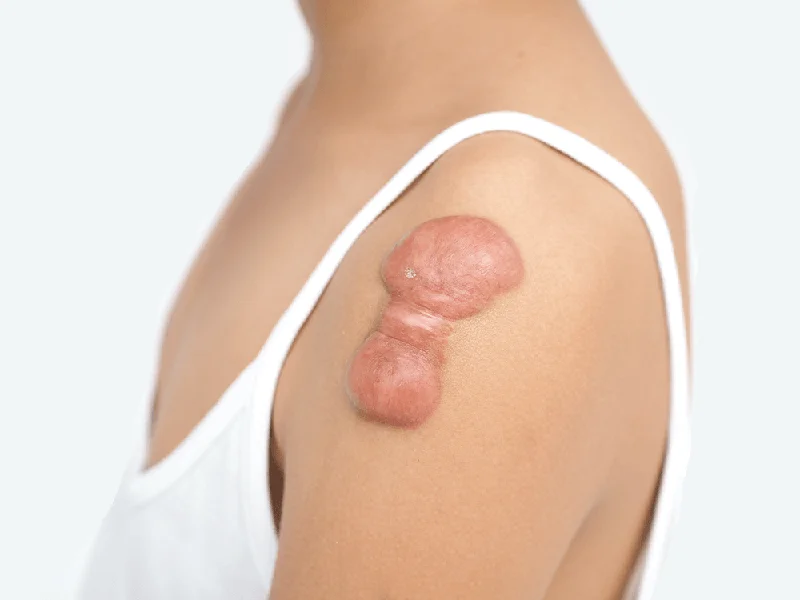
Keloid treatment in Ayurveda works by addressing the root cause of abnormal scar tissue growth — not just the visible lump on your skin. Through a combination of herbal formulations (like Kaishora Guggulu, Manjishthadi Kwatha, and Jathyadi Taila), detoxification therapies such as Panchakarma, and para-surgical procedures like Kshara Karma, Ayurveda offers a multi-layered approach that can reduce keloid size, relieve symptoms like itching and pain, and prevent recurrence. Unlike corticosteroid injections or laser therapy that often come with high recurrence rates (50–80% according to a 2020 review in Dermatologic Surgery), Ayurvedic protocols target the underlying doshic imbalance and tissue-level pathology that drives keloid formation in the first place.
If you've been struggling with a keloid that keeps growing back after conventional treatment — or if you simply want a natural path forward — this guide covers everything from ancient textual references to practical treatment protocols you can discuss with your Ayurvedic practitioner.
What Is a Keloid?
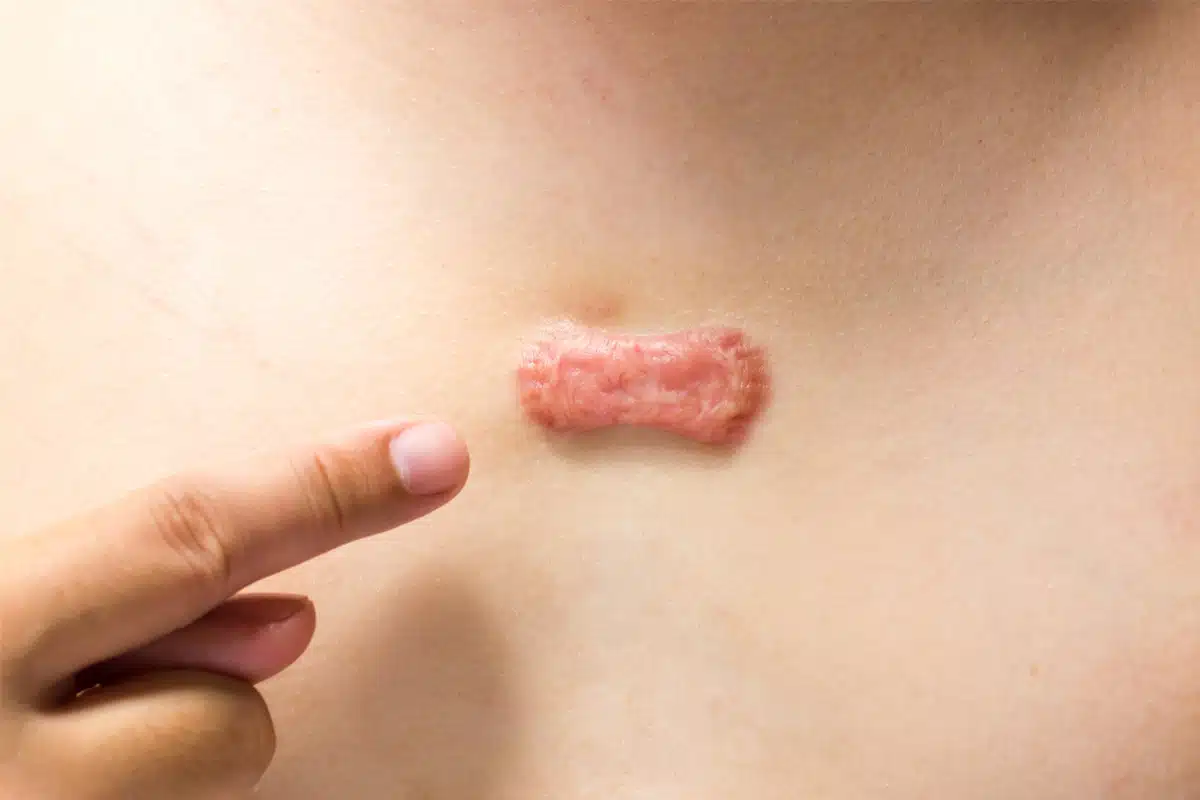
A keloid is a type of raised, thickened scar that grows beyond the boundaries of the original wound. Unlike normal scars that flatten over time, keloids continue to expand, sometimes becoming significantly larger than the initial injury. They result from an overproduction of collagen during the wound-healing process.
How Keloids Differ from Hypertrophic Scars
This distinction matters — a lot. Many people confuse keloids with hypertrophic scars, and the treatment approach is quite different.
| Feature | Keloid | Hypertrophic Scar |
|---|---|---|
| Growth beyond wound | Yes — extends past original borders | No — stays within wound boundaries |
| Spontaneous resolution | Rarely resolves on its own | Often improves within 1–2 years |
| Recurrence after removal | High (50–80%) | Low |
| Common locations | Earlobes, chest, shoulders, upper back | Any wound site |
| Genetic predisposition | Strong | Moderate |
| Pain/itching | Common and persistent | Usually mild |
- If your scar stays within the wound margins and gradually flattens, it's likely hypertrophic.
- If it keeps spreading outward and feels firm or rubbery — that's a keloid.
What Are the Different Types of Keloids?
Keloids can be broadly classified by severity:
- Minor keloids — Small, localized, usually less than 2 cm. Commonly occur on earlobes after piercings. These respond best to topical Ayurvedic treatments and home remedies.
- Major keloids — Large, spreading, often found on the chest, shoulders, or upper back. These typically require a comprehensive protocol combining internal medicines, Panchakarma therapies, and sometimes Kshara Karma.
The location also matters. Chest keloids tend to be more aggressive and resistant to treatment than earlobe keloids, which is why a staged treatment approach (discussed below) is critical.
Common Causes and Risk Factors
Keloids can develop from virtually any skin injury:
- Surgical incisions and C-section scars
- Ear or body piercings
- Acne (especially cystic acne on chest and back)
- Burns and abrasions
- Vaccination sites
- Insect bites (in genetically predisposed individuals)
Risk factors include a family history of keloids, darker skin tones (people of African, Asian, and Hispanic descent have 15–20 times higher prevalence), age between 10–30 years, and areas of high skin tension like the chest and shoulders.
The Ayurvedic Understanding of Keloids (Vrana Granthi)
Ayurveda doesn't simply see a keloid as a skin problem. It views it as a systemic imbalance manifesting at the tissue level. Ancient texts describe a condition remarkably similar to keloids under the concept of Vrana Granthi — a nodular growth arising from improperly healed wounds (Vrana).
Dosha Involvement and Pathology
According to classical Ayurvedic pathology:
- Primary Dosha: Vata (particularly Vyana Vata, which governs circulation and tissue formation)
- Dushya (affected tissues): Rakta Dhatu (blood tissue) and Mamsa Dhatu (muscle/connective tissue)
- Adhishthana (site): Arudh Vrana or Rudh Matra Vrana (partially or fully healed wound site)
- Vyadhi Marga: Bahya (external pathway of disease)
In simpler terms, Ayurveda considers keloid formation as a Rakta and Mamsa Pradoshaja Vikara — a disorder born from vitiated blood and muscle tissue. When Vata dosha becomes aggravated at a wound site, it disrupts the normal healing process, causing excessive fibrotic tissue growth. Pitta's inflammatory component drives the redness and tenderness, while Kapha's heavy, sticky quality contributes to the dense, hard texture of the keloid.
This isn't just theoretical. Understanding which dosha predominates in your specific keloid helps determine the treatment protocol. A highly inflamed, red keloid (Pitta-dominant) requires different herbs than a dense, pale, non-tender one (Kapha-dominant).
References in Classical Ayurvedic Texts
The concept of abnormal wound healing is well-documented in texts like Sushruta Samhita, which is arguably the oldest surgical treatise in the world. Sushruta described various types of Vrana (wounds) and their complications, including granulomatous growths at wound sites. Charaka Samhita also discusses Rakta Dushti (blood vitiation) leading to skin disorders and abnormal tissue growth.
A 2024 review article published in The Pharma Innovation Journal specifically examined these classical references and concluded that Ayurvedic management based on Vrana Granthi pathology offers "a rational and effective framework for keloid management."
How Does Ayurveda Treat Keloids? (Complete Treatment Protocol)
Here's where we get practical. Ayurvedic keloid treatment isn't one-size-fits-all. The approach should be staged based on keloid size, location, age, and symptom severity.
Stage-Based Treatment Algorithm
No competitor in the current literature provides a clear decision framework. Here's what an integrated Ayurvedic protocol looks like in practice:
| Keloid Stage | Characteristics | Recommended Ayurvedic Protocol | Expected Duration |
|---|---|---|---|
| Stage 1: Small/New | < 2 cm, less than 1 year old, earlobe or minor site | Topical oils + herbal pastes + dietary changes | 3–6 months |
| Stage 2: Medium/Growing | 2–5 cm, actively growing, moderate symptoms | External applications + internal medicines (Guggulu formulations, Kashayams) | 6–12 months |
| Stage 3: Large/Established | > 5 cm, years old, chest/shoulder, significant symptoms | Full Panchakarma + internal medicines + Kshara Karma + long-term maintenance | 12–18+ months |
These timelines are general estimates. Individual response varies based on Prakriti (constitutional type), compliance with treatment, and dietary adherence.
Herbal Medicines for Internal Use
Internal medicines work on the systemic doshic imbalance driving keloid formation.
Key formulations include:
- Kaishora Guggulu — Anti-inflammatory, blood purifier. Particularly effective for Pitta-dominant keloids with redness and burning.
- Kanchanara Guggulu — The classical Ayurvedic medicine for abnormal tissue growths (Granthi). Acts on Kapha and Mamsa Dhatu to help reduce dense, fibrotic tissue.
- Manjishthadi Kwatha / Maha Manjishthadi Kashayam — Potent Rakta Shodhaka (blood purifier). Addresses the Rakta Dushti component of keloid pathology.
- Gandhaka Rasayana — Sulphur-based formulation excellent for chronic skin conditions. Improves skin healing and reduces inflammation.
- Arogyavardhini Vati — Balances all three doshas, supports liver function (important because healthy liver function = healthy blood = healthy skin tissue).
- Panchatrikta Ghrita Guggulu — Combines bitter herbs with ghee and Guggulu for deep tissue penetration. Especially useful for stubborn, long-standing keloids.
- Guggulu Thikthakam Kashayam — Bitter decoction that helps reduce fibrosis and excess tissue growth.
- Varanadi Kashayam — Specifically indicated for Granthi (nodular growths) and Medoja Rogas.
Important: These medicines should only be taken under the guidance of a qualified Ayurvedic physician. Self-prescribing Guggulu formulations, for instance, can cause digestive issues if your Agni (digestive fire) isn't assessed properly first.
Topical Ayurvedic Applications
External treatments work directly on the keloid tissue:
Medicinal Oils (Taila)
- Jathyadi Taila — Perhaps the most important Ayurvedic oil for wound healing and scar management. Contains Jathi (Jasminum grandiflorum), Neem, Turmeric, and several other herbs in a sesame oil base. A study on its wound-healing properties showed enhanced epithelialisation and reduced inflammation.
- Pinda Taila — Excellent for discoloration and tissue healing. Contains beeswax and Manjishtha in a sesame oil base.
- Coconut oil with camphor — Simple, accessible remedy. Camphor improves circulation to the scar tissue while coconut oil moisturizes and reduces itching.
- Kumkumadi Taila — Contains saffron (Crocus sativus) as a key ingredient. Helps with hyperpigmentation and improves the overall appearance of keloid scars.
Herbal Pastes (Lepa)
- Turmeric + Neem paste — Both have strong anti-inflammatory and anti-fibrotic properties. Mix equal parts of turmeric powder and neem powder with rose water, apply to the keloid for 30-40 minutes.
- Gotu Kola (Centella asiatica) paste — This is a powerhouse herb for keloids. Research published in Phytomedicine (2013) demonstrated that asiaticoside from Centella asiatica inhibits keloid fibroblast proliferation and reduces collagen synthesis. Apply powdered Gotu Kola mixed with aloe vera gel directly on the keloid.
- Aloe vera gel — Soothing, anti-inflammatory, and helps soften scar tissue. Can be used alone or as a base for other herbal applications.
Panchakarma Therapies for Keloids
Panchakarma addresses the deeper systemic causes:
- Virechana (Therapeutic Purgation) — Eliminates excess Pitta from the body, purifies blood, and is considered essential for skin diseases in Ayurveda. Usually performed as a course of treatment before starting long-term herbal medicines.
- Raktamokshana (Bloodletting) — Specifically indicated for Rakta Dushti disorders. Can be done through Jaloukavacharana (leech therapy) locally on or around the keloid. Leeches release hirudin and other bioactive compounds that reduce inflammation, improve local circulation, and may help break down fibrotic tissue. A 2018 case study published in Journal of Ayurveda and Integrative Medicine reported significant keloid reduction following Raktamokshana.
- Vamana (Therapeutic Emesis) — Indicated when Kapha is the predominant dosha contributing to the dense, heavy nature of the keloid.
Kshara Karma: The Ayurvedic Para-Surgical Approach
This is one of the most under-discussed yet potent Ayurvedic treatments for keloids.
Kshara Karma involves the application of a caustic alkaline substance (Kshara) derived from medicinal plant ashes — most commonly Apamarga Kshara (from Achyranthes aspera) or Snuhi Kshara (from Euphorbia neriifolia). The Kshara acts as a chemical cauterizing agent that gradually destroys the excess keloid tissue.
A 2023 case study published on ResearchGate documented successful keloid management using Kshara Karma. The patient, who had a chest keloid that hadn't responded to conventional treatment, showed significant reduction in keloid size and symptoms after a series of Kshara applications combined with oral Ayurvedic medicines.
This procedure must be performed by a trained Ayurvedic surgeon (Shalya Tantra specialist). It's not a home remedy.
Can Turmeric Cure Keloids?
Let's be honest — turmeric alone probably won't "cure" a keloid completely. But it can genuinely help.
Curcumin, the active compound in turmeric, has demonstrated anti-fibrotic properties in multiple studies. A 2019 study in Molecular Medicine Reports showed that curcumin inhibits TGF-β1 signaling pathway — the same pathway that drives excessive collagen production in keloids. It essentially tells the overactive fibroblasts to slow down.
How to Use Turmeric for Keloids
Topical Application
Mix 1 teaspoon of high-quality turmeric powder with enough raw honey or aloe vera gel to form a thick paste. Apply directly on the keloid, cover with a clean bandage, and leave for 30–45 minutes. Repeat daily. You should see reduced redness and softer texture within 4–6 weeks.
Internal Consumption
Turmeric milk (Haldi Doodh) consumed daily can support the anti-inflammatory process from within. Use 1 teaspoon of turmeric in warm milk with a pinch of black pepper (to enhance curcumin absorption by up to 2000%, as shown in a Planta Medica study).
- But here's the thing.
- Turmeric works best as part of a comprehensive protocol — not as a standalone treatment. Think of it as one instrument in the orchestra.
Does Neem Oil Help Keloids?
Yes, neem has legitimate therapeutic value for keloid management. Neem (Azadirachta indica) possesses anti-inflammatory, anti-bacterial, and immunomodulatory properties. A research paper available on Semantic Scholar specifically examined the local application of neem-based formulations on keloid tissue and reported positive outcomes.
- Neem oil can be applied directly to the keloid, or neem leaf paste can be combined with turmeric for enhanced effect.
- However, pure neem oil is quite potent — always dilute it with a carrier oil like coconut or sesame oil (1:3 ratio) to avoid skin irritation.
Don't wait or self medicate. Start chat with Doctor NOW
Dietary Recommendations for Keloid Prevention and Treatment
Diet plays a surprisingly important role in keloid management. In Ayurveda, what you eat directly influences your Rakta Dhatu (blood tissue) quality — and since keloids are classified as a Rakta Pradoshaja Vikara, dietary modification is non-negotiable.
Foods to Include
- Anti-inflammatory foods: Turmeric, ginger, garlic, green leafy vegetables
- Blood-purifying foods: Bitter gourd (karela), neem flower, pomegranate, beetroot
- Vitamin C-rich foods: Amla (Indian gooseberry), guava, citrus fruits — support healthy collagen synthesis
- Omega-3 rich foods: Flaxseeds, walnuts — help modulate the inflammatory response
- Adequate hydration: 8–10 glasses of water daily to support detoxification
Foods to Avoid
- Excessive dairy and sugar — Increases Kapha, promotes tissue congestion
- Fermented and sour foods — Aggravates Pitta, increases blood heat
- Highly processed foods — Increases Ama (toxins) in the body
- Excessive salt — Aggravates Pitta and Rakta
- Red meat and heavy proteins — Difficult to digest, increases Ama accumulation
Lifestyle Practices (Dinacharya)
- Practice proper wound care immediately after any skin injury
- Keep skin moisturized to reduce tension on healing wounds
- Prioritize quality sleep (7-8 hours) — tissue repair happens during deep sleep
- Manage stress through Yoga and Pranayama — chronic stress elevates cortisol, which disrupts normal wound healing
- Avoid unnecessary piercings or surgeries if you have a known keloid tendency
Modern Medicine vs Ayurveda: Which Is Better for Keloids?
This isn't really an either/or question. Both systems have strengths and limitations.
| Parameter | Modern Medicine | Ayurveda |
|---|---|---|
| Speed of results | Faster (steroid injections show results in weeks) | Slower (months of consistent treatment) |
| Recurrence rate | High (50–80% with surgery alone) | Lower when comprehensive protocol is followed |
| Side effects | Skin atrophy, telangiectasia from steroids; pain from laser | Minimal when prescribed correctly |
| Root cause treatment | Addresses symptoms primarily | Addresses underlying doshic imbalance |
| Cost | Can be expensive (laser, surgery) | Generally more affordable |
| Accessibility | Requires specialized clinics | Many remedies can be prepared at home |
| Best for | Acute symptom relief, very large keloids | Long-term management, prevention, mild-moderate keloids |
The smartest approach? Integrative. Use conventional treatments for immediate symptom relief or rapid size reduction in severe cases, then transition to Ayurvedic management for long-term maintenance and recurrence prevention. Many Ayurvedic hospitals in Kerala already practice this combined model with excellent outcomes.
What Most Effective Herbs for Treating Keloids in Ayurveda?
Here's a consolidated reference of the most important herbs, their actions, and how they're used:
| Herb | Sanskrit/Ayurvedic Name | Key Action on Keloids | Form of Use |
|---|---|---|---|
| Turmeric | Haridra | Anti-fibrotic, reduces collagen overproduction | Paste, internal |
| Neem | Nimba | Anti-inflammatory, blood purifier | Oil, paste, internal |
| Gotu Kola | Mandukparni | Inhibits keloid fibroblasts, modulates collagen | Paste, capsule |
| Indian Madder | Manjishtha | Rakta Shodhaka, reduces discoloration | Kashayam, powder |
| Guggulu | Guggulu | Anti-inflammatory, breaks down fibrotic tissue | Tablet (various formulations) |
| Saffron | Kumkuma | Lightens hyperpigmentation, improves texture | Oil (Kumkumadi Taila) |
| Aloe Vera | Kumari | Soothes, softens scar tissue | Gel (topical) |
| Indian Bdellium | Guggulu | Granthi-dissolving, penetrates deep tissue | Internal formulations |
| Jasmine | Jathi | Wound healing, reduces scar tissue | Oil (Jathyadi Taila) |
Home Remedies You Can Start Today
While comprehensive treatment requires professional guidance, these home remedies are safe to begin immediately:
- 1.Turmeric-Neem Paste: Mix equal parts turmeric and neem powder with rose water. Apply to keloid for 30 minutes daily.
- 2.Aloe Vera + Gotu Kola: Blend fresh aloe vera gel with Gotu Kola powder. Apply twice daily.
- 3.Warm Sesame Oil Massage: Warm pure sesame oil slightly and massage gently around (not aggressively on) the keloid for 5 minutes each night.
- 4.Coconut Oil + Camphor: Dissolve a small piece of camphor in warm coconut oil. Apply to the keloid at bedtime.
- 5.Honey Application: Raw, unprocessed honey applied and left overnight can soften keloid tissue due to its enzymatic activity.
Consistency is everything. These remedies need a minimum of 8-12 weeks of daily application before you can fairly judge their effectiveness.
Keloid Treatment in Ayurveda — Kerala Speciality
Kerala has a unique position in Ayurvedic keloid management due to its unbroken tradition of classical Ayurvedic practice. Many Kerala Ayurvedic hospitals offer specialized Vrana Chikitsa (wound treatment) programs that include Raktamokshana with leeches, customized Kashayam preparations, and Kshara Karma performed by experienced Shalya Tantra specialists.
The University of Kerala's Department of Biotechnology even conducted in vitro studies on Ayurvedic keloid formulations, lending scientific credibility to these traditional approaches. If you're considering intensive Ayurvedic treatment for a stubborn keloid, a 21-28 day residential Panchakarma program at a reputable Kerala clinic is worth considering.
Prevention Tips: How to Stop Keloids Before They Start
If you're genetically predisposed to keloids, prevention is far easier than treatment:
- Avoid elective piercings and tattoos — especially on the earlobes, chest, and shoulders
- Treat acne aggressively — don't let cystic acne heal on its own, seek treatment early
- Use silicone sheets on new scars — even this modern intervention aligns with Ayurvedic principle of Vrana Sandhana (wound protection)
- Apply Jathyadi Taila on any new wound — start within the first week of injury
- Take Turmeric internally during wound healing periods
- Avoid stretching or pulling on healing wounds — pressure and tension increase keloid risk
- Massage healing scars with medicinal oils once the wound has closed (not before)
Frequently Asked Questions
How long does it take to see results from Ayurvedic keloid treatments?
- For small, new keloids (less than 1 year old), you may notice softening and reduced itching within 4-8 weeks of consistent treatment. Visible size reduction typically takes 3-6 months. Large, established keloids (over 5 cm or several years old) require 12-18 months of comprehensive treatment.
- The key variable is consistency — sporadic treatment gives poor results regardless of the method.
How can I reduce my keloid naturally?
The most effective natural approach combines topical application of anti-fibrotic herbs (turmeric, Gotu Kola, neem) with internal blood-purifying medicines and dietary modifications. Applying a paste of turmeric and neem daily, taking Manjishtha or Kaishora Guggulu internally (under medical guidance), and following an anti-inflammatory diet creates a synergistic effect that addresses keloids from multiple angles.
How do you shrink a keloid fast?
Honestly, there's no truly "fast" keloid treatment in any system of medicine. Even corticosteroid injections require multiple sessions over months. That said, Kshara Karma combined with internal medicines and Jathyadi Taila application offers one of the more rapid Ayurvedic approaches — some practitioners report noticeable flattening within 6-8 weeks of the procedure.
Can Ayurvedic oils help reduce keloids?
- Absolutely. Jathyadi Taila and Pinda Taila are the two most evidence-backed Ayurvedic oils for keloid management. They work by reducing local inflammation, improving blood circulation to the scar tissue, and gradually softening the fibrotic tissue.
- Apply them consistently — twice daily for a minimum of 3 months.
Are there any dietary recommendations for preventing keloid formation?
- Yes.
- Focus on blood-purifying (Rakta Shodhaka) foods: bitter gourd, pomegranate, leafy greens, amla, and turmeric. Avoid excess sugar, dairy, fermented foods, and red meat. Adequate hydration and a diet rich in Vitamin C support healthy collagen metabolism and reduce the risk of abnormal scar formation.
Is Ayurvedic treatment safe for keloids on the chest?
Chest keloids are among the most challenging to treat due to constant skin tension and movement. Ayurvedic treatment is safe for chest keloids, but expectations should be realistic — these typically require longer treatment durations and may benefit from a combined approach with Kshara Karma. Internal medicines like Kanchanara Guggulu and Panchatrikta Ghrita Guggulu are particularly indicated for chest keloids due to their deep tissue action.
Take the Next Step Toward Keloid-Free Skin
Keloid treatment in Ayurveda is not a quick fix — it's a systematic, root-cause approach that addresses why your body forms keloids, not just the scar itself. The combination of internal medicines, topical applications, Panchakarma therapies, and dietary modifications creates a comprehensive healing environment that modern medicine alone often cannot achieve.
Start with what you can do today: apply a turmeric-neem paste, begin taking turmeric milk daily, and switch to an anti-inflammatory diet. Then, consult a qualified Ayurvedic practitioner who can assess your Prakriti, identify your predominant dosha imbalance, and create a personalized treatment protocol.
Your keloid didn't form overnight. It won't disappear overnight either. But with consistent, well-guided Ayurvedic treatment, meaningful improvement is absolutely within reach.
Scientific Sources
- Natural Oils for Skin-Barrier Repair: Ancient Compounds Now Backed by Modern Science — Vaughn AR et al., 2018, American journal of clinical dermatology
- Herbal Remedies for Hair Loss: A Review of Efficacy and Safety — Ahmed A et al., 2025, Skin appendage disorders
- The effect of oil pulling with coconut oil to improve dental hygiene and oral health: A systematic review — Woolley J et al., 2020, Heliyon
- African oils in dermatology — Ayanlowo O et al., 2022, Dermatologic therapy
- Coconut Oil and Immunity: What do we really know about it so far? — Joshi S et al., 2020, The Journal of the Association of Physicians of India
- Properties of macerated herbal oil — Kantawong F et al., 2017, BioImpacts : BI
- Kampo herbal ointments for skin wound healing — Paul-Traversaz M et al., 2023, Frontiers in pharmacology
- Daily intranasal sesame oil instillation to improve nasal barrier function and mucosal immunity for respiratory health: A pilot randomized trial in healthy adults — Chaturvedi S et al., 2025, Complementary therapies in medicine
- Role of natural products in alleviation of rheumatoid arthritis-A review — Sharma D et al., 2021, Journal of food biochemistry
- Oil pulling for maintaining oral hygiene - A review — Shanbhag VK, 2017, Journal of traditional and complementary medicine
Questions from users
Is it safe to combine Ayurvedic treatments with over-the-counter scar creams for keloids?
Zuri
6 days ago
Combining Ayurvedic treatments with over-the-counter scar creams can be okay, but it might be best to be cautious. Some creams might contain ingredients that could interfere with the herbs or your skin's response. Maybe try using them separately first or consult with a practitioner to see if they work well together for you. Miss matching that could cause imbalances or skin irritation!
Can Ayurvedic practices help improve my skin's healing process after keloid removal?
Wesley
15 days ago
Ayurvedic practices might help your skin heal better after keloid removal! Things like turmeric, neem, and aloe vera are known for their healing properties. Keep your diet in check by avoiding foods that can aggravate Pitta, and focus on cooling, nourishing foods. And always good to get advice from a qualified Ayurvedic practitioner.
What are the benefits of using organic Ayurvedic products for skin treatments?
Xander
24 days ago
Using organic Ayurvedic products can be really beneficial for skin treatments. They are natural, so they tend to be gentler on the skin and help in balancing your doshas without harsh chemicals. They work holistically, promoting overall skin health by supporting your agni and dhatus. Plus, they are often pretty rich in healing herbs like neem or turmeric!
What foods should I avoid to prevent aggravating Pitta dosha while treating keloids?
Tenley
34 days ago
To prevent aggravating Pitta dosha and help with keloids, try to avoid foods that are spicy, oily, and heavy, like chilies, fried foods, and rich desserts. Instead, stick to cooling, light, and fresh foods like cucumbers, leafy greens, and coconut water. They're gentle on the system and can help balance Pitta. Stay away from too much caffeine and alcohol, too!
What natural practices in Ayurveda can help improve overall skin health to prevent keloids?
Lila
44 days ago
For overall skin health and prevent keloids, focus on balancing pitta and kapha. Daily self-massage with coconut or sesame oil can be great, it nourishes and heals. Try herbs like Neem & Turmeric, they're known for skin benefits. Eating a pitta-pacifying diet, staying hydrated, and managing stress can also keep your skin happier!
Is it safe to use Ayurvedic treatments on keloids during pregnancy or nursing?
Harper
53 days ago
It's generally safe, but it's super important to consult with an Ayurvedic practitioner before starting any treatment during pregnancy or nursing. They can help ensure that the remedies are appropriate for both you and your baby's health. Some herbs or oils might not be suitable, so getting expert advice is key!
Can applying coconut oil daily help improve the appearance of keloids?
Sophia
63 days ago
Yes, applying coconut oil daily can help improve the appearance of keloids to some extent, mainly by keeping the skin moisturized and supporting healing. Just remember, it's not a quick fix, keloid treatments work over time, so you gotta be patient. Also, focus on a balanced diet to avoid increasing Pitta dosha, it can help too.
Can Ayurvedic treatments for keloids help prevent them from coming back after they're removed?
Addison
72 days ago
Ayurvedic treatments might help reduce the risk of keloids coming back after removal. Keeping your Vata and Kapha in balance with diet, using herbs like Triphala and Amalaki, and improving skin & circulation health can all play a part. It's not guaranteed, but it can be supportive! Just keep open to trying different things that work for you.
Can I use Ayurvedic treatments for keloids alongside conventional medicine?
Dylan
82 days ago
Yes, you can use Ayurvedic treatments alongside conventional medicine for keloids! It's best to consult both an Ayurvedic practitioner and your doctor to make sure they complement each other. Herbal oils like coconut or sesame, along with a Vata-Kapha balancing diet, might help, but remember healing takes time!
What should I do if my skin reacts negatively to an Ayurvedic herbal treatment?
Zoey
162 days ago
If your skin's reacting badly, stop using the treatment asap. Sometimes it's cuz of imbalance in doshas or just sensitivity. You could try soothing your skin with aloe vera or coconut oil. And do reach out to an Ayurvedic practitioner—they'll help figure out why it might've happened and how best to adjust your treatment plan! Be gentle with your skin in the meantime!
Related articles

Skin and Hair Disorders
How to Remove Oily Skin Naturally with Ayurvedic and Home Remedies
Learn how to remove oily skin naturally with home remedies and Ayurvedic care. Discover face washes, moisturizers, and tips to control excess oil and glow
3,206
Skin and Hair Disorders
Indraluptha Lepam – Natural Ayurvedic Formulation for Skin Rejuvenation and Wellness
Discover the benefits and uses of Indraluptha Lepam, a traditional Ayurvedic herbal paste designed for skin rejuvenation, pigmentation correction, and overall skin health. Learn about its components, usage guidelines, and precautions.
2,523

Skin and Hair Disorders
Eladi Gana Choornam – Traditional Ayurvedic Powder for Digestive & Respiratory Wellness
Discover Eladi Gana Choornam, a potent Ayurvedic polyherbal powder formulated to enhance digestion, relieve respiratory discomfort, and balance doshas naturally for holistic health.
3,105

Skin and Hair Disorders
What Food to Eat When You Have Skin Allergy: Ayurvedic Dietary Solutions
Discover what food to eat when you have skin allergy: good food for skin allergy, food for skin allergy treatment, and foods to avoid for healthier skin
3,784

Skin and Hair Disorders
How to Use Baheda for Hair: Ayurvedic Remedies and Benefits
Exploration of Discover the Hair Benefits and Uses of Baheda in Ayurvedic Hair Care
2,618

Skin and Hair Disorders
How to Stop Beard Growth Naturally: Ayurvedic Tips
Discover natural ways to stop beard growth using Ayurvedic remedies. Learn how to stop facial hair growth permanently, reduce beard growth, and prevent regrowth
7,879
Skin and Hair Disorders
Nagaradi Lepa Choornam: An Ayurvedic Remedy for Skin Health
Nagaradi Lepa Choornam is a traditional Ayurvedic herbal powder used primarily as a topical application for skin ailments.
3,351

Skin and Hair Disorders
How to Rejuvenate Skin Naturally: Ayurvedic Guide for a Healthy Glow
How to rejuvenate skin naturally? Discover Ayurvedic treatment for skin rejuvenation, how to rejuvenate skin overnight, at home, and restore glow on your face
2,162

Skin and Hair Disorders
How to Prepare Rosemary Water for Hair Growth: Ayurvedic Recipe and Daily Use Guide
How to prepare rosemary water for hair growth? Learn how to make, apply, and use rosemary water for strong hair. Discover its benefits and daily routine tips
5,095

Skin and Hair Disorders
How to Apply Ghee on Hair for Healthy Growth and Shine
Discover how to apply ghee on hair for nourishment, shine, and growth. Learn the benefits, methods, and Ayurvedic tips for healthy, strong hair naturally
7,739
Related questions on the topic
Legal
Additional Documents
© 2024 Ask Ayurveda. All rights reserved.