Ask Ayurvedic doctor a question and get a consultation online on the problem of your concern in a free or paid mode. More than 2,000 experienced doctors work and wait for your questions on our site and help users to solve their health problems every day.
FREE! Ask Ayurvedic Doctors 24/7

 Fast responses
 1000+ verified doctors
Body DetoxEar, Nose, and Throat DisordersGeriatrics & RejuvenationImmunodeficiencyInfertility TreatmentNutritionOrthopedic DisordersPediatricsRespiratory DisordersSexually Transmitted Diseases (STDs)Surgery RecoveryUrological DisordersVascular DisordersDental DisordersEndocrinological DisordersGastrointestinal DisordersYoga TherapyGeneral MedicineAllergic DisordersCardio DisordersGynecology and ObstetricsCosmetologySkin and Hair DisordersEye DisordersInfectious DiseasesMental DisordersNeurological DisordersOncologyPanchakarmaSexual Health & DisordersSports Medicine
Published on 10/10/24
(Updated on 07/09/26)
4,739
Eight Branches of Ayurveda
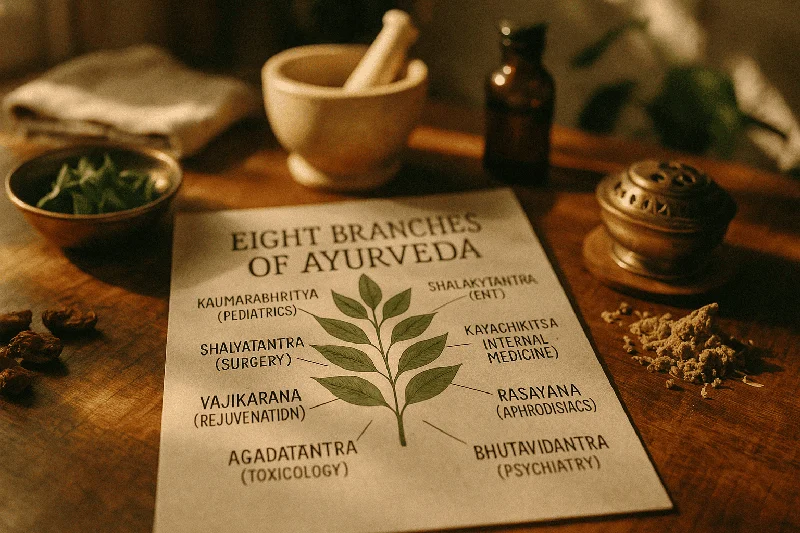
- Ayurveda is built on eight specialized branches of medicine, collectively known as Ashtanga Ayurveda (Ashta = eight, Anga = limbs or branches).
- These eight branches are: Kaya Chikitsa (Internal Medicine), Baala Chikitsa (Pediatrics), Graha Chikitsa (Psychiatry), Urdhvaanga Chikitsa (ENT & Ophthalmology), Shalya Tantra (Surgery), Agada Tantra (Toxicology), Rasayana Chikitsa (Rejuvenation), and Vajikarana Chikitsa (Aphrodisiac Therapy). Together, they form a comprehensive medical system that rivals the specialization depth of modern medicine — and predates it by thousands of years.
Far from being limited to herbal teas and oil massages, Ayurveda has been a fully structured, multi-disciplinary medical science since its codification in classical texts like the Charaka Samhita, Sushruta Samhita, and Ashtanga Hridaya. The fact that ancient Indian physicians recognized the need for separate specialties — from pediatrics to toxicology to surgery — tells us something profound about the sophistication of this system.
Let's explore each branch in detail, including its classical roots, what it treats, and how it remains relevant in 2025.
What Is Ashtanga Ayurveda? Understanding the Classical Framework
The term "Ashtanga Ayurveda" literally translates to "eight-limbed Ayurveda." This framework was formally outlined in the classical texts of Ayurveda, primarily the Charaka Samhita (focused on internal medicine), the Sushruta Samhita (focused on surgery), and the Ashtanga Hridaya by Vagbhata (a synthesis of both).
The Classical Sanskrit Shloka
The original enumeration of all eight branches appears in a well-known shloka (verse) from the Ashtanga Hridaya:
> Kayabalagrahaordhvanga shalyadamshtravishapaha
> Jaravrishannaam iti ashtau angani
This verse lists all eight branches in order, establishing the canonical structure that Ayurvedic education has followed for centuries.
Why Sushruta and Vagbhata List Them Differently
- Interestingly, Sushruta placed Shalya Tantra (Surgery) as the first branch, while Vagbhata began with Kaya Chikitsa (Internal Medicine).
- This wasn't arbitrary.
- Sushruta was a surgeon — his era saw frequent wars and battlefield injuries, making surgical intervention the most urgent medical need. Vagbhata, writing in a more settled period, prioritized internal medicine as the foundation. This difference in ordering reveals how the practical needs of each period shaped the emphasis of medical teaching.
The Six Key Texts: Brihattrayee and Laghutrayee
Ayurvedic knowledge rests on six foundational texts, divided into two groups:
| Group | Texts | Focus |
|---|---|---|
| Brihattrayee (Greater Triad) | Charaka Samhita, Sushruta Samhita, Ashtanga Hridaya | Comprehensive foundational texts |
| Laghutrayee (Lesser Triad) | Madhava Nidana, Sharangdhara Samhita, Bhavaprakasha Nighantu | Diagnostics, formulations, materia medica |
These six texts collectively contain the theoretical and practical knowledge across all eight branches.
- Kaya Chikitsa — Internal Medicine
- Kaya Chikitsa is considered the cornerstone of Ayurvedic practice.
- The word "Kaya" has a dual meaning — it refers to the body as well as to Agni (the digestive and metabolic fire). This is deliberate. In Ayurveda, internal medicine begins and ends with Agni, because impaired digestive fire is seen as the root cause of virtually all disease.
The Central Role of Agni in Metabolism
Agni isn't just digestion in the stomach. Ayurveda describes 13 types of Agni operating at various levels — from the main digestive fire (Jatharagni) to tissue-level fires (Dhatvagni) and elemental fires (Bhutagni). When these fires function properly, food is transformed into healthy tissues and waste is efficiently eliminated. When they don't, Ama (metabolic toxins) accumulates, leading to disease.
Diseases Treated Under Kaya Chikitsa
This branch addresses a vast range of conditions:
- Jwara (fever)
- Atisara (diarrhea) and other GI disorders
- Kasa and Shwasa (cough and respiratory conditions)
- Kushtha (skin diseases)
- Prameha (metabolic disorders including diabetes)
- Vatarakta (gout and joint conditions)
- Asthi-vikara (bone disorders)
The Charaka Samhita is the primary reference text for this branch. It lays out diagnosis, treatment principles, dietary guidelines, and pharmacology in extraordinary detail.
Panchakarma as a Treatment Tool
One of the most powerful interventions within Kaya Chikitsa is Panchakarma — the five purificatory procedures (Vamana, Virechana, Basti, Nasya, and Raktamokshana). These therapies cleanse accumulated toxins from the body and restore doshic balance. Panchakarma is not a standalone branch but rather a therapeutic methodology employed extensively within internal medicine.
Modern Relevance
Kaya Chikitsa aligns closely with modern internal medicine and general practice. Today, it's particularly relevant for managing chronic lifestyle diseases — type 2 diabetes, irritable bowel syndrome, metabolic syndrome, and autoimmune conditions — where conventional medicine often relies on long-term symptom management rather than addressing root causes. A 2015 review published in the Journal of Ayurveda and Integrative Medicine noted that Ayurvedic internal medicine protocols showed promising outcomes in managing chronic inflammatory conditions, particularly when combined with dietary modification.
- Baala Chikitsa (Kaumarbhritya) — Pediatrics and Gynecology
Kaumarbhritya is the branch dedicated to the health of children, pregnant women, and nursing mothers. The name itself comes from "Kumara" (child) and "Bhritya" (nourishment/rearing). This branch uniquely recognizes something that modern pediatrics also acknowledges: children cannot articulate their symptoms the way adults can.
The Kashyapa Samhita: The Pediatric Text
The primary classical text for this branch is the Kashyapa Samhita, attributed to the sage Kashyapa and his student Vriddha Jivaka. This text covers prenatal care, labor and delivery, neonatal care, breastfeeding, childhood diseases, and developmental milestones. The fact that Ayurveda had a dedicated pediatric text thousands of years ago underscores how advanced this system was.
Scope Beyond Pediatrics
- Kaumarbhritya is broader than Western pediatrics.
- It encompasses:
- Prenatal and antenatal care — Garbhini Paricharya (regimen for the pregnant woman)
- Impact of maternal mental health on the developing fetus
- Breastfeeding science — including the qualities of ideal breast milk
- Childhood disorders — teething problems, digestive issues, nutritional deficiencies, childhood fevers
- Gynecological conditions — menstrual disorders, infertility, PCOS-like conditions
This crossover between pediatrics and gynecology makes Kaumarbhritya one of the most practically important branches even today.
Modern Relevance
With rising rates of childhood obesity, ADHD, allergies, and digestive disorders globally, the Ayurvedic emphasis on diet-specific and constitution-specific care for children offers a complementary framework. The branch's insistence that drug dosages and formulations must be fundamentally different for children — not simply scaled-down adult doses — is a principle modern pharmacology has only relatively recently formalized.
- Graha Chikitsa (Bhuta Vidya) — Psychiatry and Psychology
- This is perhaps the most misunderstood branch. The word "Graha" means "seizing" or "possessing," and "Bhuta" translates roughly to "invisible beings." In the ancient context, psychological and psychiatric illnesses were sometimes attributed to supernatural entities.
- But here's the crucial modern interpretation: Bhuta can be understood as invisible causative agents — which correlates with bacteria, viruses, and idiopathic causes of disease that weren't visible to the naked eye.
Treatment Approaches
Graha Chikitsa employs a multi-modal approach:
- Herbal medications — including Brahmi, Jatamansi, Ashwagandha, and Shankhapushpi for cognitive and emotional support
- Mantra therapy — vibrational healing through specific sound patterns
- Pranayama and meditation — breath-based and mindfulness practices
- Yogic techniques — specific asanas for mental balance
- Dhoopana (fumigation) — burning medicinal herbs to disinfect the atmosphere, which ancient texts prescribed for environments where psychological distress was prevalent
Modern Relevance
- The World Health Organization estimates that depression will be the leading cause of global disease burden by 2030.
- Graha Chikitsa's integrated approach — combining herbal pharmacology with breathwork, meditation, and lifestyle modification — is remarkably aligned with modern integrative psychiatry. A 2019 randomized controlled trial published in Phytomedicine found that Ashwagandha root extract significantly reduced stress and anxiety scores compared to placebo, validating one of Bhuta Vidya's key herbs.
- Urdhvaanga Chikitsa (Shalakya Tantra) — ENT and Ophthalmology
"Urdhvaanga" literally means "upper body," and this branch deals with diseases occurring above the clavicle — the eyes, ears, nose, throat, mouth, and head.
Five Sub-specialties
| Sub-specialty | Sanskrit Name | Area |
|---|---|---|
| Ophthalmology | Netra Chikitsa | Eye diseases |
| Otology | Karna Chikitsa | Ear diseases |
| Rhinology | Nasa Chikitsa | Nasal diseases |
| Oral/Laryngology | Mukharoga Chikitsa | Mouth and throat diseases |
| Craniology | Shiroroga Chikitsa | Diseases of the head/skull |
Key Procedures
Classical texts describe specific therapeutic procedures that are still practiced:
- Netradhara — continuous stream of medicated liquid over the eyes
- Karnapoornam — ear-filling therapy with warm medicated oils
- Gandoosham — oral holding of medicated liquids (related to modern oil pulling)
- Nasya — nasal administration of medicines
- Shirolepa — application of medicated pastes to the head
Modern Relevance
Chronic sinusitis, allergic rhinitis, digital eye strain, and tinnitus are increasingly common in today's world. Shalakya Tantra's localized, non-invasive treatment modalities offer genuine therapeutic value as adjuncts to conventional ENT care. Nasya therapy, in particular, has seen growing interest in clinical research for managing chronic sinusitis and migraine headaches.
- Shalya Tantra — Surgery
This is where Ayurveda often surprises people. Acharya Sushruta, the author of the Sushruta Samhita (circa 600 BCE), is globally recognized as the "Father of Surgery." His contributions weren't theoretical — they were rigorously practical.
Sushruta's Surgical Legacy
The Sushruta Samhita documents an astonishing body of surgical knowledge:
- 300+ types of surgical procedures
- 42 distinct surgical processes described in detail
- 125 types of surgical instruments — made from materials including stone, wood, bark, and metal
- Rhinoplasty (nose reconstruction) — the world's first documented plastic surgery
- Cataract surgery, cesarean section, and even cranial surgery
These procedures were performed 3,000 to 5,000 years ago, a fact that has been acknowledged by medical historians worldwide. The "Indian method" of rhinoplasty described by Sushruta was adopted by Western surgeons as recently as the 18th century.
Modern Relevance
While Ayurvedic surgery is not widely practiced in its classical form today due to the advancement of modern surgical technology, the principles laid down by Sushruta — wound management, surgical precision, pre- and post-operative care — remain foundational. Kshara Sutra therapy, an Ayurvedic para-surgical technique for fistula-in-ano, has been validated by modern clinical studies and is recognized by India's Ministry of AYUSH as an effective treatment alternative. A multicenter study coordinated by the Indian Council of Medical Research (ICMR) confirmed its efficacy with a recurrence rate of less than 4%.
- Agada Tantra (Damstra Chikitsa) — Toxicology
Agada Tantra is the science of poisons and their antidotes. "Agada" literally means "antidote." This branch was critically important in ancient India, where exposure to toxic substances — from snake bites to poisoned weapons — was a frequent concern.
Classification of Poisons
Ayurveda classifies toxins into several categories:
- Sthavara Visha — plant-based poisons (e.g., Vatsanabha/Aconitum)
- Jangama Visha — animal-origin poisons (snake venom, scorpion stings, insect bites)
- Dhatu Visha — metallic/mineral poisons (lead, mercury, arsenic)
- Kritrima Visha — artificial or combined poisons
Interestingly, this branch also addressed what we would now call environmental toxicology — contamination of air, water, and food as sources of chronic poisoning.
Modern Relevance
With pesticide exposure, heavy metal contamination in water, industrial pollutants, and food adulteration becoming widespread public health concerns in India and globally, Agada Tantra's principles are arguably more relevant than ever. The branch's emphasis on identifying environmental toxins, understanding cumulative toxicity, and employing specific detoxification protocols parallels the growing field of environmental medicine.
- Rasayana Chikitsa (Jara Chikitsa) — Geriatrics and Rejuvenation
- "Jara" means old age; "Rasayana" means the path of essence (Rasa). This branch focuses on preventing premature aging, enhancing immunity, improving vitality, and promoting longevity.
- It is not merely about treating the elderly — it's about building resilience at any age.
Three Types of Rasayana
Classical texts describe three distinct categories:
| Type | Name | Approach |
|---|---|---|
| Medicinal | Aushadha Rasayana | Herbal and mineral formulations (Chyawanprash, Brahma Rasayana, Amalaki Rasayana) |
| Dietary | Ahara Rasayana | Specific rejuvenative foods (milk, ghee, honey, seasonal fruits) |
| Behavioral | Achara Rasayana | Ethical conduct, truthfulness, non-anger, spiritual practices |
The inclusion of Achara Rasayana — where moral and ethical behavior is classified as a rejuvenation therapy — is one of Ayurveda's most unique contributions. The idea that how you behave directly influences your biological aging is something that modern psychoneuroimmunology is only beginning to validate.
Modern Relevance
The global anti-aging market is projected to reach $93 billion by 2027. Yet much of it focuses on cosmetic interventions. Rasayana offers a systemic, inside-out approach. Substances like Ashwagandha, Amalaki (Indian gooseberry), and Guduchi (Tinospora cordifolia) have been studied for their adaptogenic, antioxidant, and immunomodulatory properties. A 2020 study in Evidence-Based Complementary and Alternative Medicine found that a classical Rasayana formulation significantly improved quality-of-life scores in elderly participants over a 6-month period.
- Vajikarana Chikitsa (Vrsha Chikitsa) — Aphrodisiac Therapy and Reproductive Health
The final branch, Vajikarana, comes from "Vaji" meaning horse — symbolizing vitality, strength, and sexual vigor. But reducing this branch to mere aphrodisiac therapy would be a mistake. It encompasses complete reproductive health for both men and women.
Scope of Treatment
- Erectile dysfunction and premature ejaculation
- Low libido in both genders
- Male and female infertility
- Sperm quality improvement (Shukra Dhatu enhancement)
- Reproductive tissue nourishment
Treatment Modalities
Vajikarana employs a combination of:
- Specialized diet — milk, ghee, Shatavari, Kapikacchu (Mucuna pruriens), Ashwagandha
- Therapeutic formulations — Musali Pak, Vrsha Ghrita, Vanari Gutika
- Lifestyle modifications — sleep hygiene, stress management, appropriate physical activity
- Seasonal and constitutional considerations — treatments are tailored to the individual's Prakriti (constitution) and the season
Modern Relevance
Infertility rates have been rising globally — the WHO estimates that approximately 1 in 6 people worldwide experience infertility at some point. Vajikarana's holistic approach to reproductive health, addressing not just the reproductive organs but overall metabolic function, hormonal balance, and mental wellbeing, provides a framework that complements modern assisted reproductive technologies. Mucuna pruriens, one of Vajikarana's key herbs, has been shown in a 2010 study published in Fertility and Sterility to improve sperm quality and testosterone levels in infertile men.
How the Eight Branches of Ayurveda Connect to Modern Medicine
One thing none of the existing resources adequately address is this: how does each branch map to modern medical specialties? Here's a clear comparison:
| Ayurvedic Branch | Sanskrit Name | Modern Equivalent |
|---|---|---|
| Kaya Chikitsa | काय चिकित्सा | Internal Medicine / General Medicine |
| Kaumarbhritya | कौमारभृत्य | Pediatrics + Obstetrics/Gynecology |
| Graha Chikitsa | ग्रह चिकित्सा | Psychiatry + Psychology |
| Shalakya Tantra | शालाक्य तंत्र | ENT + Ophthalmology |
| Shalya Tantra | शल्य तंत्र | General & Plastic Surgery |
| Agada Tantra | अगद तंत्र | Toxicology + Forensic Medicine |
| Rasayana | रसायन | Geriatrics + Preventive Medicine |
| Vajikarana | वाजीकरण | Andrology + Reproductive Medicine |
- What's remarkable is that Ayurveda established these specializations millennia before modern medicine developed similar divisions.
- The parallel isn't coincidental — it reflects a shared understanding that human health requires specialized knowledge across different domains.
The Parallel Between Ashtanga Ayurveda and Ashtanga Yoga
It's worth noting the structural similarity between the eight branches of Ayurveda and the eight limbs of Yoga (Yama, Niyama, Asana, Pranayama, Pratyahara, Dharana, Dhyana, Samadhi). Both systems use an eightfold framework to organize a complete science — one for the body's health, the other for the mind's liberation. This is not a coincidence but reflects the Vedic worldview that knowledge should be comprehensive yet systematically organized.
In practice, these two systems are deeply intertwined. Yoga is frequently employed as a therapeutic tool within multiple branches of Ayurveda, from Graha Chikitsa (where pranayama and meditation are core treatments) to Rasayana (where Achara Rasayana overlaps with yogic ethical principles).
Frequently Asked Questions
How many branches are in Ayurveda?
Ayurveda has eight branches, collectively called Ashtanga Ayurveda. These were codified in classical texts like the Ashtanga Hridaya by Vagbhata. While "3 branches of Ayurveda" is sometimes mentioned online, this refers to the three main texts (Brihattrayee) or the three doshas (Vata, Pitta, Kapha) — not the branches themselves. The branches have always been eight.
What are the 8 branches of Ayurveda in Sanskrit?
The eight branches in Sanskrit are: 1) Kaya Chikitsa, 2) Kaumarbhritya, 3) Graha Chikitsa (Bhuta Vidya), 4) Urdhvaanga/Shalakya Tantra, 5) Shalya Tantra, 6) Agada Tantra (Damstra), 7) Rasayana (Jara Chikitsa), and 8) Vajikarana (Vrsha Chikitsa).
What is the Ashtanga Ayurveda shloka?
The classical shloka from Ashtanga Hridaya (Sutrasthana, Chapter 1) enumerates all eight branches: "Kayabalagrahaordhvanga shalyadamshtravishapaha | Jaravrishannaam iti ashtau angani." This verse serves as the foundational reference for the eightfold classification.
How many main parts of Ayurveda are there?
Ayurveda can be divided in several ways. By medical specialties, there are 8 branches (Ashtanga). By foundational principles, there are 3 doshas (Vata, Pitta, Kapha). By classical texts, there are 6 major works (Brihattrayee and Laghutrayee). The eight branches represent the most important structural division for understanding Ayurveda as a complete medical system.
What is the difference between the 8 branches and the 3 pillars of Ayurveda?
- The 8 branches (Ashtanga) are medical specialties — different fields of clinical practice.
- The 3 pillars (Tri-Stambha) — Ahara (diet), Nidra (sleep), and Brahmacharya (balanced conduct) — are foundational lifestyle principles that support health across all eight branches. They serve different organizational purposes within the same system.
Final Thoughts: Why the Eight Branches Still Matter
The eight branches of Ayurveda aren't historical curiosities. They represent a systematic, time-tested approach to healthcare that addressed the full spectrum of human disease thousands of years before modern medicine arrived at similar specializations. From Sushruta's surgical innovations to Rasayana's emphasis on preventive care, from Bhuta Vidya's holistic mental health approach to Agada Tantra's environmental awareness — each branch carries practical wisdom that remains applicable today.
- Whether you're a student of Ayurveda, a practitioner, or simply someone curious about this ancient science, understanding these eight branches gives you the complete picture. Ayurveda was never just about turmeric lattes and abhyanga massages.
- It was — and remains — a fully realized medical system, deserving of serious study and respectful integration with modern healthcare.
If you're interested in exploring any of these branches for your specific health concerns, consult a qualified BAMS (Bachelor of Ayurvedic Medicine and Surgery) practitioner who can guide you based on your individual constitution and condition.
Don't wait or self medicate. Start chat with Doctor NOW
Scientific Sources
- Nano-Ayurvedic Medicine Approaches Using Ginkgo biloba-Phytochemicals Functionalized Gold Nanoparticles Against Breast Cancer — Thipe VC et al., 2024, Nanotechnology, science and applications
- Ayurveda therapy in the management of epilepsy — Adiga SH et al., 2024, Epilepsy & behavior : E&B
- Agreement among Ayurvedic practitioners in the identification and treatment of three cases of inflammatory arthritis — Prlic HM et al., 2003, Clinical and experimental rheumatology
- A Scoping Review of Ayurveda Studies in Women with Polycystic Ovary Syndrome — Rao VS et al., 2023, Journal of integrative and complementary medicine
- Focus on Ayurvedic Diet Resolves Persistent Severe Covid-19 Symptoms: Case Report — Adluri USP et al., 2022, Integrative medicine (Encinitas, Calif.)
- Brahmi (Bacopa monnieri): An ayurvedic herb against the Alzheimer's disease — Dubey T et al., 2019, Archives of biochemistry and biophysics
- Methodology for developing and evaluating diagnostic tools in Ayurveda - A review — Edavalath M et al., 2021, Journal of Ayurveda and integrative medicine
- The biology of aging (JARA): an ayurvedic approach — Newton KG, 2001, Bulletin of the Indian Institute of History of Medicine (Hyderabad)
- Integrative Skin Care: Dermatology and Traditional and Complementary Medicine — Bodeker G et al., 2017, Journal of alternative and complementary medicine (New York, N.Y.)
- Ayurvedic Management of Alzheimer's Disease: A Clinical Case Study — Sharma M et al., 2025, Alternative therapies in health and medicine
- Student Perceptions of Concept Mapping as a Teaching Tool in Ayurvedic Education — Parwe S et al., 2024, Journal of pharmacy & bioallied sciences
- Complementary and alternative medicine in the (symptomatic) treatment of acute tonsillitis in children: A systematic review — Büttner R et al., 2023, Complementary therapies in medicine
- Psychoneuroimmunologic effects of Ayurvedic oil-dripping treatment — Uebaba K et al., 2008, Journal of alternative and complementary medicine (New York, N.Y.)
- Ayurvedic research and methodology: Present status and future strategies — Chauhan A et al., 2015, Ayu
- Herbal and Holistic Solutions for Neurodegenerative and Depressive Disorders: Leads from Ayurveda — Sharma R et al., 2018, Current pharmaceutical design
- Ayurvedic Stress Management: Balancing Mind Body in Men Women — Swaroop A, 2025, Advances in mind-body medicine
- Ayurvedic Treatment Protocol for Hereditary Pancreatitis: A Case Report Demonstrating Disease Arrestation — Prakash VB et al., 2023, Cureus
- Ayurvedic Approaches to Holistic Management of Polycystic Ovary Syndrome (PCOS) — Pardhekar AD et al., 2024, Journal of pharmacy & bioallied sciences
- Translating Ayurvedic concepts to modern drug structures: A novel paradigm — Morandi A et al., 2025, Journal of Ayurveda and integrative medicine
- Interlinking diabetes and Alzheimer's disease: A pathway through medicinal plant-based treatments — Pattanaik SK et al., 2025, Journal of ethnopharmacology
Questions from users
How long does a typical Panchakarma treatment last for detoxification?
Ruby
11 hours ago
A typical Panchakarma treatment for detoxification generally lasts about 7 to 21 days. The duration can vary depending on the individual's health condition, specific detox needs, and practitioner recommendations. The process involves stages such as preparation, cleansing, and rejuvenation. It's crucial to undergo this treatment under the supervision of a qualified practitioner to ensure safety and effectiveness. If any adverse symptoms arise during the treatment, it's important to consult a healthcare professional promptly.
What is Nasya therapy and how does it help with chronic sinusitis and migraines?
Lincoln
10 days ago
Nasya therapy involves administering herbal oils and powders through the nose. It's great for sinusitis and migraines because it clears and balances the air passages and mind. By targeting the head region, Nasya helps reduce the Kapha dosha and improves circulation, which might lessen congestion and headache intensity. Give it a try with an expert!
What is the connection between diet and Ayurvedic approaches to managing chronic inflammatory conditions?
Rowan
19 days ago
Ayurveda sees diet as central to managing chronic inflammation. By aligning your diet with your dosha, you support the balance and health of your agni (digestive fire), which is key to reducing inflammation. Foods that aggravate your dosha can lead to imbalances and inflammation. So, for inflammations, diets often focus on anti-inflammatory and agni-balancing foods.
What is Agni in Ayurveda and why is it important for overall health?
Brooklyn
28 days ago
Agni in Ayurveda is like the digestive fire, super crucial for breaking down food and nutrients. It's not just about your stomach, though—it influences metabolism, immunity, and even mental clarity. When Agni's strong, everything works smoothly; when it's weak or imbalanced, toxins build up, causing dis-ease. So keeping Agni balanced means keeping your body and mind healthy!
What is Baala Chikitsa and how does it support the health of children and pregnant women?
Landon
37 days ago
Baala Chikitsa, also known as Kaumarbhritya, focuses on supporting the health of children and pregnant women. It aims to strengthen the child's digestion, boost immunity, and ensure overall wellbeing through specific herbal remedies and dietary recommendations. For pregnant women, it promotes a healthy pregnancy, easing common discomforts and supporting fetal growth. Balancing doshas and nurturing agni are key aspects here. It's about nurturing right from the start. If you're curious about more specific treatments, I'd be happy to help point you in the right direction.
What is the significance of Kshara Karma in Ayurvedic treatment?
Charlotte
52 days ago
Kshara Karma is quite significant in Ayurvedic treatment 'cause it involves using an alkaline substance to manage specific diseases, particularly those involving excess Kapha and Meda like cysts or piles. It's known for its precise and gentle action without much bleeding or pain, making it a meaningful choice for such conditions.
Is it safe to use rasayanas in conjunction with modern medicine?
Landon
62 days ago
It can be safe, but it really depends on the specific medications and rasayanas. Sometimes, using both together can be good, as long as they don't interact badly. It's best to consult with a healthcare provider who's familiar with both ayurveda and modern medicine. They can help you create a balanced plan that works for you.
What is the role of air and water pollution in Ayurvedic health practices?
Peyton
72 days ago
Air and water pollution in Ayurveda can really mess up the balance of doshas and weaken your agni, which can lead to health issues. From an Ayurvedic perspective, it's important to minimize exposure to such pollution to maintain good health. Consider natural purification methods like indoor plants, water filters, and staying hydrated to support your body's ability to cleanse and adapt to environmental stressors. Keep things simple and stay connected to nature!
What is Panchakarma and how does it help with chronic diseases in Ayurveda?
Levi
81 days ago
Panchakarma is basically a detoxifying process that involves 5 main treatments to cleanse the body of toxins. When doshas (vata, pitta, kapha) get imbalanced & chronic diseases set in, panchakarma can help by restoring balance and boosting the body's natural healing capability. It's like a deep clean for the body and mind! Each step targets a different aspect of well-being, enhancing agni and nurturing the dhatus.
Can I use Ayurveda to improve my fertility naturally?
Luke
91 days ago
Yes, Ayurveda can definitely help in boosting fertility naturally! It focuses on balancing your doshas and strengthening reproductive health through Vrishya Chikitsa. You can try Ayurvedic herbs like Ashwagandha, Shatavari, and prescribed dietary changes. Also, regular detox and stress management are crucial in Ayurveda. Consult a practitioner for personalized guidance based on your specific needs!
Related articles
General Medicine
Most Common Diseases
A disease is any detrimental deviation from the normal functional state of the body associated with certain signs and symptoms.
2,752

General Medicine
What Causes Low Blood Sugar Without Diabetes?
What causes low blood sugar without diabetes? Explore non-diabetic hypoglycemia symptoms, causes, and Ayurvedic remedies to restore energy and balance
1,837

General Medicine
Khadiradi Vati
Exploration of Khadiradi Vati
2,669

General Medicine
Yograj Guggul Benefits, Dosage, How to Use, Side Effects, Ingredients, Reference
Exploration of Yograj Guggul Benefits, Dosage, How to Use, Side Effects, Ingredients, Reference
5,310

General Medicine
Chandanasava for Body Heat: Cool Down with Ayurvedic Wisdom
Explore how Chandanasava can balance body heat, its benefits, usage guidelines, potential side effects, and the scientific evidence behind this traditional Ayurvedic remedy.
5,360

General Medicine
Palsinuron Capsules Benefits, Dosage, Ingredients, Side Effects
Exploration of Palsinuron Capsules Benefits, Dosage, Ingredients, Side Effects
3,283

General Medicine
Phalasarpis Benefits – Natural Ayurvedic Rejuvenation & Vitality Booster
Explore the phalasarpis benefits, a traditional Ayurvedic formulation renowned for its rejuvenative, aphrodisiac, and holistic health properties. Enhance vitality and promote overall wellness naturally with phalasarpis.
2,757

General Medicine
Oil Pulling and Its Benefits: Everything You Need to Know!
Forget fancy mouthwashes and electric toothbrushes, for an ancient Ayurvedic secret therapy is making waves in the realm of oral health.
3,214
General Medicine
Vishama Jwara: Ayurvedic & Modern Insights
Explore Vishama Jwara from Ayurvedic roots to modern research. Learn causes, symptoms, and practical management tips for better health.
3,432

General Medicine
Boost Your Energy with Ashwagandhadi Yamakam: An Ayurvedic Solution
Discover Ashwagandhadi Yamakam, its benefits, proper dosage, side effects, and the scientific research supporting its use as an effective Ayurvedic detoxification and wellness formulation.
2,632
Related consultations on the topic
Legal
Additional Documents
© 2024 Ask Ayurveda. All rights reserved.