Ask Ayurvedic doctor a question and get a consultation online on the problem of your concern in a free or paid mode. More than 2,000 experienced doctors work and wait for your questions on our site and help users to solve their health problems every day.
FREE! Ask Ayurvedic Doctors 24/7

 Fast responses
 1000+ verified doctors
Body DetoxEar, Nose, and Throat DisordersGeriatrics & RejuvenationImmunodeficiencyInfertility TreatmentNutritionOrthopedic DisordersPediatricsRespiratory DisordersSexually Transmitted Diseases (STDs)Surgery RecoveryUrological DisordersVascular DisordersDental DisordersEndocrinological DisordersGastrointestinal DisordersYoga TherapyGeneral MedicineAllergic DisordersCardio DisordersGynecology and ObstetricsCosmetologySkin and Hair DisordersEye DisordersInfectious DiseasesMental DisordersNeurological DisordersOncologyPanchakarmaSexual Health & DisordersSports Medicine
Published on 02/24/25
(Updated on 07/06/26)
4,146
Oral Lichen Planus Treatment in Ayurveda
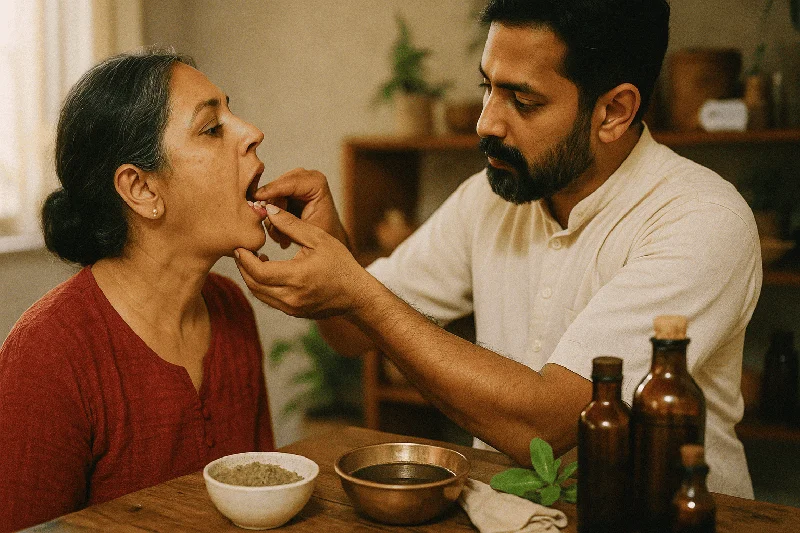
- Oral lichen planus (OLP) is a chronic inflammatory condition that affects the mucous membranes inside your mouth.
- It's driven by an immune system malfunction — specifically, T-cell mediated cytotoxicity against the basal keratinocytes of your oral epithelium — and it cannot be cured, only managed. The condition affects roughly 1–2% of the global population, predominantly women over 50, and while it's not contagious or life-threatening, it carries a small but real risk of malignant transformation that demands ongoing monitoring.
If you've noticed white, lace-like patches on the insides of your cheeks, persistent redness on your gums, or painful ulcers that flare up without obvious reason, this guide covers everything you need to know. From the molecular mechanisms behind OLP to concrete treatment protocols with dosages, dietary recommendations, and a step-by-step decision tree for when first-line therapy fails.
What Is Oral Lichen Planus?
- Oral lichen planus is a chronic, immune-mediated mucocutaneous disease that targets the lining of your mouth.
- The name itself has historical roots: "lichen" comes from the Greek word for tree moss (describing the lesion's appearance), and "planus" is Latin for flat. The condition was first described by British dermatologist Erasmus Wilson in 1869, though oral manifestations were recognized as a distinct entity later.
- Unlike a simple infection or allergy, OLP involves your own immune system attacking the cells of your oral mucosa. CD8+ cytotoxic T-lymphocytes migrate to the epithelial-connective tissue junction and trigger apoptosis (programmed cell death) of basal keratinocytes.
- This process is mediated by inflammatory cytokines — primarily TNF-α and IFN-γ — creating the characteristic patterns of white lines, redness, and ulceration.
Is Oral Lichen Planus Dangerous?
For most people, OLP is more uncomfortable than dangerous. The reticular form (white lines without erosion) may cause zero symptoms and require no treatment at all.
However, OLP becomes a concern in two situations:
- Erosive or ulcerative forms can cause significant pain, difficulty eating, weight loss, and reduced quality of life.
- Malignant transformation risk — a 2020 meta-analysis published in Oral Oncology estimated the malignant transformation rate at approximately 1.1%, though some studies report figures ranging from 0.5% to 2.5% over a follow-up period of 5–10 years.
The World Health Organization classifies OLP as a "potentially malignant disorder." This doesn't mean it will become cancer — it means it requires regular monitoring, typically every 6–12 months, with biopsy of any suspicious changes.
What Can Be Mistaken for Oral Lichen Planus?
Several conditions mimic OLP clinically, and misdiagnosis is not uncommon:
- Oral lichenoid reactions (OLR) — caused by medications, dental restorations (especially amalgam), or oral hygiene products. These look nearly identical to OLP but resolve when the trigger is removed
- Oral leukoplakia — white patches that cannot be rubbed off; higher malignant potential
- Pemphigus vulgaris and mucous membrane pemphigoid — autoimmune vesiculobullous diseases causing blisters and erosions
- Discoid lupus erythematosus — oral lesions of systemic lupus can closely resemble erosive OLP
- Chronic graft-versus-host disease — in transplant patients, oral lichenoid lesions are common
- Oral candidiasis — especially the hyperplastic form, which produces white plaques
A tissue biopsy is the gold standard for distinguishing true OLP from these look-alikes.
Types and Forms of Oral Lichen Planus
OLP doesn't look the same in every patient. Clinicians recognize several distinct clinical forms, and more than one type can be present simultaneously in the same patient.
| Type | Appearance | Symptoms | Prevalence |
|---|---|---|---|
| Reticular | White, lace-like lines (Wickham's striae) on buccal mucosa | Usually asymptomatic | Most common |
| Erosive/Ulcerative | Bright red, raw areas with shallow ulcers surrounded by white striae | Significant pain, burning, bleeding | Second most common |
| Atrophic (Erythematous) | Thin, red, inflamed mucosa, often on attached gingiva | Burning sensation, sensitivity | Common |
| Plaque-like | Broad, irregular white patches resembling leukoplakia | Usually mild or no symptoms | Less common |
| Papular | Small white raised dots, typically early-stage | Usually asymptomatic | Rare, often transient |
| Bullous | Fluid-filled blisters that rupture to form ulcers | Pain after blisters burst | Rarest form |
Visual Guide: How Each Type Looks
Reticular OLP: Look for a bilateral, symmetric network of fine white lines on the inner cheeks — this classic "spider-web" or "fern-leaf" pattern is almost pathognomonic for OLP. Erosive OLP: The eroded areas appear as bright red patches, sometimes with a yellowish fibrin pseudomembrane covering the ulcers. White striae are usually visible at the periphery. Atrophic/Desquamative gingivitis: When OLP targets the gums, it causes diffuse redness, peeling, and soreness — often initially misdiagnosed as poor oral hygiene or periodontal disease. Plaque-like OLP: These lesions can be nearly indistinguishable from leukoplakia on clinical exam alone, making biopsy essential.
What Causes Oral Lichen Planus and What Triggers Flare-Ups?
The Root Cause: Immune Dysregulation
The exact initial trigger remains unknown.
What researchers do know is the pathophysiologic cascade:
- 1.Antigen-specific mechanism: An unknown antigen (possibly a self-antigen from keratinocytes) is presented by Langerhans cells and MHC class I molecules to CD8+ T-cells
- 2.Non-specific amplification: Activated T-cells release cytokines (TNF-α, IL-1, IL-6, IFN-γ) that recruit more inflammatory cells, creating a self-perpetuating cycle
- 3.Basal cell destruction: CD8+ T-cells directly kill basal keratinocytes through granzyme B and perforin-mediated apoptosis
- 4.Basement membrane disruption: Proteases like matrix metalloproteinases (MMP-9) degrade the basement membrane, leading to the clinical signs of erosion and atrophy
A 2023 review in the Journal of Oral Pathology & Medicine highlighted the role of Th1/Th2 imbalance and suggested that regulatory T-cell dysfunction may contribute to chronicity.
What Triggers Oral Lichen Planus Flare-Ups?
While the underlying cause is immunological, specific triggers can provoke new episodes or worsen existing disease:
- Psychological stress — possibly the most commonly reported trigger. Cortisol dysregulation affects immune function
- Medications — NSAIDs, beta-blockers, ACE inhibitors, thiazide diuretics, antimalarials, anticonvulsants, certain antifungals and antiparasitic agents
- Dental materials — amalgam fillings (mercury sensitivity), composite resins, metals in dental prostheses
- Oral hygiene products — sodium lauryl sulfate (SLS) in toothpastes, cinnamon-flavored products
- Infections — Hepatitis C virus (HCV) shows a statistically significant association, particularly in Mediterranean and Asian populations. A 2019 meta-analysis found OLP prevalence was 2–5 times higher in HCV-positive patients
- HPV — some studies suggest Human Papillomavirus, particularly HPV-16 and HPV-18, may play a role, though evidence is not conclusive
- Mechanical trauma — the Koebner phenomenon, where new lesions develop at sites of injury (biting, rough dental work)
The Role of the Microbiome
Emerging research points to dysbiosis — an imbalance in oral and gut microbial communities — as a contributing factor. A 2022 study in Frontiers in Cellular and Infection Microbiology found that OLP patients had significantly altered salivary mycobiomes (fungal communities) compared to healthy controls, with increased Candida species. This dysbiosis may perpetuate local immune activation and impair mucosal healing.
Hormonal and Thyroid Connections
OLP disproportionately affects post-menopausal women, suggesting hormonal influences. Estrogen fluctuations during menopause may modulate mucosal immune responses. Additionally, a 2021 study in Indian Journal of Dermatology found that patients with OLP had significantly elevated TSH levels and lower free T4 compared to controls — hinting at a thyroid dysfunction–OLP link that deserves further investigation.
Symptoms of Oral Lichen Planus
Oral Symptoms
- White, lace-like patches (Wickham's striae) — most commonly on the bilateral buccal mucosa, but also on the tongue, gingiva, palate, and lips
- Red, swollen, tender gum tissue (desquamative gingivitis)
- Painful open sores or ulcers — can be shallow or deep, single or multiple
- Burning or stinging sensation, especially with spicy, acidic, or hot foods
- Altered taste or metallic taste
- Dry mouth
- Difficulty eating — leading to nutritional deficiency in severe cases
- Bleeding gums when brushing or eating crunchy food
Extraoral Manifestations
OLP is not always limited to the mouth.
Some patients develop lesions at other mucosal sites:
- Skin — purple, flat-topped, itchy papules (cutaneous lichen planus), present in about 15% of OLP patients
- Genitalia — vulvovaginal lichen planus in women can cause pain, scarring, and sexual dysfunction. The vulvovaginal-gingival syndrome involves all three sites simultaneously
- Esophagus — a 2017 study found esophageal involvement in over 25% of OLP patients. Symptoms include dysphagia (difficulty swallowing), odynophagia (painful swallowing), and potential stricture formation
- Nails — thinning, ridging, splitting; rarely, permanent nail loss
- Eyes — cicatrizing conjunctivitis (rare)
Oral Lichen Planus Cancer Symptoms: When to Worry
See your healthcare provider urgently if you notice any of these changes in an existing OLP lesion:
- A lump, nodule, or hardened area within or adjacent to the lesion
- An ulcer that doesn't heal within 3 weeks
- Progressive, unexplained pain increase
- Rapid growth or change in the lesion's appearance
- Difficulty opening the mouth (trismus)
- Unexplained numbness in the lip, chin, or tongue
- A red and white mixed lesion that becomes predominantly red
How Is Oral Lichen Planus Diagnosed?
Diagnosis involves two components: clinical evaluation and histopathological confirmation.
Clinical Examination
Your dentist or oral medicine specialist will look for the characteristic bilateral, symmetrical distribution of Wickham's striae on the buccal mucosa. The reticular pattern is often considered clinically diagnostic when classic features are present.
Biopsy and Histopathology
A punch or incisional biopsy is recommended for:
- Confirming the diagnosis
- Ruling out dysplasia or malignancy
- Differentiating OLP from lichenoid reactions and other mimics
Classic histopathological features include:
- Dense band-like (lichenoid) lymphocytic infiltrate at the epithelial-connective tissue interface
- Degeneration of the basal cell layer (civatte bodies — apoptotic keratinocytes)
- Saw-tooth pattern of rete ridges
- Max-Joseph spaces (clefts at the dermal-epidermal junction)
Additional Tests
- Direct immunofluorescence (DIF) — to exclude vesiculobullous diseases like pemphigus or pemphigoid
- Hepatitis C serology — recommended for all newly diagnosed OLP patients, especially in endemic regions
- Patch testing — if a lichenoid drug reaction or contact allergy is suspected
- Thyroid function tests — given the emerging association
Don't wait or self medicate. Start chat with Doctor NOW
How Is Oral Lichen Planus Treated?
There is no cure for OLP. Treatment aims to reduce symptoms, heal erosive lesions, decrease inflammation, and monitor for malignant change. Treatment is typically not needed for asymptomatic reticular OLP.
Step-by-Step Treatment Algorithm (Decision Tree)
This is a practical protocol that no single competitor has laid out clearly:
Step 1 — Topical Corticosteroids (First-Line)
↓ If inadequate response after 4–6 weeks
Step 2 — Topical Calcineurin Inhibitors
↓ If still inadequate
Step 3 — Intralesional Corticosteroid Injections
↓ If resistant or widespread
Step 4 — Systemic Therapy (Oral corticosteroids, immunosuppressants)
↓ If refractory to all above
Step 5 — Biologic Agents or Experimental Therapies
Specific Treatment Protocols with Dosages
| Treatment | Medication | Dosage/Regimen | Notes |
|---|---|---|---|
| Topical corticosteroid (potent) | Clobetasol propionate 0.05% gel | Apply thin layer to lesions 2–3 times/day for 2–6 weeks, then taper | Most widely used first-line agent |
| Topical corticosteroid (moderate) | Triamcinolone acetonide 0.1% paste | Apply 2–3 times/day after meals | Good for milder cases |
| Topical calcineurin inhibitor | Tacrolimus 0.1% ointment | Apply 2 times/day for 4–8 weeks | No risk of mucosal atrophy; bitter taste |
| Topical calcineurin inhibitor | Pimecrolimus 1% cream | Apply 2 times/day | Fewer side effects than tacrolimus |
| Intralesional injection | Triamcinolone acetonide 10–40 mg/mL | Inject 0.5–1 mL per session, every 2–4 weeks, 2–3 sessions | For resistant erosive lesions |
| Systemic corticosteroid | Prednisolone | 40–60 mg/day for 1–2 weeks, then taper over 2–4 weeks | Short courses only; significant side effects |
| Systemic immunosuppressant | Mycophenolate mofetil | 500–1000 mg twice daily | For severe refractory cases |
| Biologic (experimental) | Adalimumab (anti-TNF-α) | Per rheumatology dosing protocols | Case reports show promise; not standard of care |
> ⚠️ Important: These dosages are for reference only. All treatment decisions should be made by your dentist, oral medicine specialist, or dermatologist based on your individual case.
How Long Does Treatment Take to Work?
- Topical corticosteroids: Most patients notice improvement within 2–4 weeks. Full response may take up to 8 weeks
- Intralesional injections: Often 2–3 sessions spaced 2–4 weeks apart
- Systemic therapy: Response typically begins within 1–2 weeks, but side effects limit duration
- Calcineurin inhibitors: May take 4–8 weeks for maximum effect
Natural and Alternative Remedies: What Does the Evidence Say?
This is an area where competitors are largely silent, but clinical research does exist:
- Aloe vera gel (topical): A 2019 randomized controlled trial in Journal of Clinical and Experimental Dentistry found that topical aloe vera gel significantly reduced pain and lesion size in erosive OLP, comparable to triamcinolone acetonide
- - Curcumin (turmeric extract): A 2020 systematic review in Oral Diseases analyzed 6 RCTs and concluded that curcumin showed "promising anti-inflammatory effects" in OLP, though evidence quality was moderate.
- Typical dosage in studies: 500 mg curcumin capsule twice daily, or topical curcumin gel
- Lycopene: A 2018 study in Indian Journal of Dental Research found that lycopene 8 mg/day for 8 weeks reduced burning sensation and lesion size in OLP patients
- Purslane (Portulaca oleracea): A 2015 Iranian RCT showed purslane 235 mg tablets were as effective as prednisolone 5 mg for erosive OLP
- Honey (topical): A 2019 study suggested manuka honey application reduced pain scores, likely through anti-inflammatory and wound-healing properties
These remedies may complement — not replace — conventional therapy. Always discuss them with your doctor.
Diet for Oral Lichen Planus: What to Eat and What to Avoid
No competitor provides a concrete dietary guide.
Here's an evidence-informed approach:
Foods to Avoid
| Category | Specific Items | Why |
|---|---|---|
| Acidic foods | Citrus fruits, tomatoes, vinegar, pickles | Irritate erosive lesions, cause stinging |
| Spicy foods | Chili, black pepper, raw onions, garlic | Trigger burning and pain |
| Crunchy/rough textures | Chips, toast, raw carrots, nuts | Mechanical trauma to fragile mucosa |
| Hot beverages/foods | Very hot tea, coffee, soup | Heat exacerbates inflammation |
| Alcohol | All types | Dries mucosa, irritates lesions |
| SLS-containing products | Most commercial toothpastes | May trigger or worsen flares |
| Cinnamon-flavored items | Chewing gum, candies, some teas | Known contact allergen for OLP patients |
Foods to Include
- Cooling, soft foods: yogurt, smoothies, mashed potatoes, well-cooked rice, bananas, avocados
- Anti-inflammatory foods: fatty fish (salmon, mackerel — rich in omega-3), turmeric with black pepper, green leafy vegetables
- High-antioxidant foods: berries (blueberries, strawberries — unless acidic varieties cause pain), green tea (cooled to room temperature)
- Protein-rich soft foods: eggs, paneer, tofu, lentil soup (dal)
- Hydrating foods: cucumber, watermelon, coconut water
Sample Day's Menu for OLP Patients
- Breakfast: Warm (not hot) oatmeal with mashed banana and a drizzle of honey
- Mid-morning: Room-temperature green tea + a handful of soaked almonds
- Lunch: Soft khichdi with ghee, mild dal, steamed vegetables
- Snack: Smoothie with yogurt, banana, blueberries, and a pinch of turmeric
- Dinner: Mashed sweet potato with steamed fish or paneer, cooled chamomile tea
Oral Lichen Planus in Children
While OLP overwhelmingly affects adults over 40, pediatric cases do occur — and they're underrepresented in the literature. A 2018 review in Pediatric Dermatology noted that childhood OLP accounts for less than 5% of all OLP cases.
Key differences from adult OLP include:
- More likely to present with the reticular form (less erosive disease)
- Lower malignant potential — no documented cases of malignant transformation in children
- May resolve spontaneously more often than in adults
- Treatment approach is similar but with more conservative dosing and preference for topical agents
- Must rule out lichenoid drug reactions and graft-versus-host disease in relevant clinical scenarios
Living with Oral Lichen Planus: Lifestyle & Self-Care
Daily Oral Hygiene Tips
- Use an ultra-soft toothbrush and replace it every 6–8 weeks
- Switch to an SLS-free toothpaste (brands like Biotene, Sensodyne Pronamel, or any SLS-free formulation)
- Avoid alcohol-based mouthwashes — use chlorhexidine 0.12% rinse if recommended by your dentist, or a bland baking soda rinse (½ teaspoon in 250 mL warm water)
- Floss gently. Consider a water flosser if traditional flossing causes bleeding
Stress Management
Given the strong stress–OLP connection, stress management isn't optional — it's therapeutic:
- Regular physical activity (yoga, walking, swimming)
- Mindfulness meditation — even 10 minutes daily has shown measurable effects on inflammatory markers
- Adequate sleep (7–8 hours)
- Counseling or cognitive behavioral therapy if OLP is causing significant psychological distress
When Should You See Your Healthcare Provider?
Schedule a visit if:
- Symptoms are new or worsening despite treatment
- You develop new lesions in the mouth, on skin, or genital area
- An existing lesion changes in appearance, size, or texture
- Pain interferes with eating or daily activities
- You haven't had a monitoring visit in over 12 months
The Interprofessional Team Approach
OLP management often requires coordination among multiple specialists:
- Oral medicine specialist or dentist — primary management and monitoring
- Dermatologist — for cutaneous or genital involvement
- Gastroenterologist — if esophageal symptoms develop, or for HCV screening and management
- Endocrinologist — if thyroid dysfunction is identified
- Psychologist/psychiatrist — for stress management and quality-of-life support
Prognosis: What Can You Expect If You Have Oral Lichen Planus?
OLP is a chronic condition that follows a waxing and waning course.
Here's what the data tells us:
- Reticular OLP often persists for years but may remain entirely asymptomatic
- Erosive OLP tends to have periods of flare and remission. Complete spontaneous resolution is uncommon (approximately 2.5–6% of cases, per a 2014 Italian cohort study)
- Malignant transformation occurs in roughly 1–1.5% of cases, with a mean time of about 5.5 years from diagnosis
- Most patients achieve good symptom control with topical corticosteroids and lifestyle modifications
- OLP does not affect life expectancy in the vast majority of cases
The single most important thing you can do is maintain regular follow-up appointments. Early detection of any dysplastic change dramatically improves outcomes.
Frequently Asked Questions (FAQ)
Can oral lichen planus go away on its own?
- Reticular OLP can remain stable or even spontaneously remit, but erosive forms rarely resolve completely without treatment.
- OLP is considered a chronic condition — most patients experience it for years, with periods where it's better and periods where it flares. True "cure" is not expected, but symptom-free periods are absolutely achievable with proper management.
Is oral lichen planus contagious?
- No.
- OLP is an immune-mediated condition — it's your own immune system causing the problem. You cannot spread it to anyone through kissing, sharing utensils, or any other form of contact.
What is the best treatment for lichen planus in the mouth?
Topical clobetasol propionate 0.05% gel remains the most widely recommended first-line treatment for symptomatic OLP. For patients who don't respond, topical tacrolimus 0.1% ointment is the main second-line option. The "best" treatment ultimately depends on the type and severity of your OLP — asymptomatic reticular OLP may need no treatment at all.
Can oral lichen planus turn into cancer?
Yes, but the risk is low — approximately 1–1.5% over 5–10 years. The erosive form carries higher risk than the reticular form. Regular monitoring with clinical exams and biopsy of suspicious changes is the key preventive strategy. The WHO classifies OLP as a "potentially malignant disorder," not a pre-cancerous condition — an important distinction.
What foods should I avoid with oral lichen planus?
Avoid spicy, acidic, crunchy, and very hot foods. Common triggers include citrus fruits, tomatoes, chili peppers, chips, and alcohol. Everyone's triggers are slightly different, so keeping a food diary can help you identify your personal culprits.
Does stress cause oral lichen planus?
Stress doesn't directly cause OLP, but it is one of the most commonly reported triggers for flare-ups. The mechanism likely involves cortisol-mediated immune dysregulation. Multiple studies have found significantly higher anxiety and depression scores in OLP patients compared to healthy controls.
Final Thoughts — and What to Do Next
- Oral lichen planus can be frustrating to live with, especially the erosive forms that interfere with something as basic as eating a meal.
- But the evidence is clear: with appropriate treatment, regular monitoring, and thoughtful lifestyle changes, most patients achieve meaningful symptom control and live completely normal lives.
If you suspect you have OLP — or you've been diagnosed but aren't getting adequate relief — the most important step is finding an oral medicine specialist or dermatologist experienced with this condition. Don't settle for a diagnosis without a biopsy. Don't ignore changes in your lesions. And don't underestimate the power of soft-bristle toothbrushes, stress management, and a well-planned diet.
Your next step: book an appointment with an oral medicine specialist for a thorough evaluation and, if needed, a biopsy to confirm the diagnosis and rule out dysplasia. Early, proactive management is the best investment you can make in your long-term oral health.
Scientific Sources
- Herbal medicine in oral lichen planus — Ghahremanlo A et al., 2019, Phytotherapy research : PTR
- A systematic review of medicinal plants and herbal products' effectiveness in oral health and dental cure with health promotion approach — Amanpour S et al., 2023, Journal of education and health promotion
- Curcumin and Curcuma longa Extract in the Treatment of 10 Types of Autoimmune Diseases: A Systematic Review and Meta-Analysis of 31 Randomized Controlled Trials — Zeng L et al., 2022, Frontiers in immunology
- Combinatorial Pharmacotherapy of Herbal Medicine and Corticosteroids for Oral Lichen Planus: A Systematic Review — Kot WY et al., 2026, JDR clinical and translational research
- [[Oral lichen planus: syndrome differentiation and types of traditional Chinese medicine and treatment of integrative medicine]](https://pubmed.ncbi.nlm.nih.gov/22931565/) — Zhou ZT, 2012, Zhonghua kou qiang yi xue za zhi = Zhonghua kouqiang yixue zazhi = Chinese journal of stomatology
- Treatment of oral lichen planus-a review(https://pubmed.ncbi.nlm.nih.gov/40664993/) — Abdusalamova K et al., 2025, Dermatologie (Heidelberg, Germany)
- A Comparison of Traditional Chinese Medicine and Multiple Conventional Therapy in Treating Oral Lichen Planus: A Network Meta-analysis — Chu H et al., 2024, Oral health & preventive dentistry
- Traditional Chinese medicine and oral diseases: today and tomorrow — Zheng LW et al., 2011, Oral diseases
- Oral lichen planus and lichenoid lesions: what's new? — Schmidt-Westhausen AM, 2020, Quintessence international (Berlin, Germany : 1985)
- Efficacy of Topical Calcineurin Inhibitors in Oral Lichen Planus — Sotoodian B et al., 2015, Journal of cutaneous medicine and surgery
- Microbiological mechanisms of oral mucosal disease: oral-intestinal crosstalk and probiotic therapy — Zhou Q et al., 2025, Frontiers in oral health
- Efficacy of Herbal Interventions in Oral Lichen Planus: A Systematic Review — Kalaskar AR et al., 2020, Contemporary clinical dentistry
- Efficacy and safety of traditional Chinese medicine for erosive oral lichen planus: A protocol for systematic review and meta analysis — You Y et al., 2020, Medicine
- Interventions for oral lichen planus: A systematic review and network meta-analysis of randomized clinical trials — Sridharan K et al., 2021, Australian dental journal
- Genetic and therapeutic for oral lichen planus and diabetes mellitus: a comprehensive study — Yao M et al., 2024, BMC oral health
- Fraxin alleviates oral lichen planus by suppressing OCT3-mediated activation of FGF2/NF-κB pathway — Peng B et al., 2024, Naunyn-Schmiedeberg's archives of pharmacology
- Oral verrucous xanthoma with oral lichen planus: a case report — Jia T et al., 2023, Hua xi kou qiang yi xue za zhi = Huaxi kouqiang yixue zazhi = West China journal of stomatology
- Global Prevalence and Incidence Estimates of Oral Lichen Planus: A Systematic Review and Meta-analysis — Li C et al., 2020, JAMA dermatology
- Advancement in therapeutic strategies for immune-mediated oral diseases — Patil S et al., 2023, Disease-a-month : DM
- The malignant transformation of oral lichen planus and oral lichenoid lesions: a systematic review — Fitzpatrick SG et al., 2014, Journal of the American Dental Association (1939)
Questions from users
What causes oral lichen planus and how does it affect the mouth?
Connor
7 days ago
Oral lichen planus (OLP) is caused by an immune sysytem issue, where T-cells mistakenly attack your mouth's skin cells. It causes irritation, showing as white patches or red, swollen areas, sometimes painful sores. Keep it mind stress or certain foods can worsen symptoms. Managing stress and diet can help control it!
Can oral lichen planus symptoms get worse during stress or hormonal changes?
River
16 days ago
Yes, stress and hormonal changes can make oral lichen planus symptoms worse. Stress can mess with your immune system, and hormonal shifts like menopause might also have an impact. Both can weaken your body's balance, which can lead to flare-ups. It's good to keep a balanced lifestyle to manage stress and monitor any changes, ya know?
Can I use topical herbal pastes for oral lichen planus at home?
Zuri
32 days ago
Yep, you can use topical herbal pastes for oral lichen planus at home, just make sure they're good quality and traditionally prepared. Clean the affected area properly before applying. It's always a good idea to consult with an Ayurvedic practitioner to get personalized advice based on your specific dosha needs.
What are the benefits of using herbal teas for oral lichen planus treatment in Ayurveda?
Thomas
41 days ago
Herbal teas can be really soothing for oral lichen planus! They typically have anti-inflammatory, astringent, and antioxidant properties, which can reduce inflammation and promote healing by calming the doshas. Plus, sipping herbal teas helps detoxify the body, assisting in managing this condition. Make sure to check how your body reacts to new herbs!
What lifestyle habits can help manage oral lichen planus alongside Ayurvedic treatment?
Landon
51 days ago
For managing oral lichen planus, try avoid spicy, hot, or acidic foods, as they can aggravate Pitta. Practice good oral hygiene, like gentle brushing and using herbal mouth rinses. Stress management through yoga or meditation can help balance Vata too. Always stay hydrated, and focus on a balanced diet to support your overall constitution, like with meals that suit your dosha.
Is it safe to combine herbal remedies with conventional treatments for oral lichen planus?
Michael
61 days ago
Yes, it's generally safe to combine herbal remedies with conventional treatments for oral lichen planus, but it's super important to coordinate with your doctor or a healthcare provider. Herbal remedies can have powerful effects and sometimes interact with medications, so they need be combined carefully. It’s all about finding that balance! 🌿
What is oral lichen planus and how does Ayurveda approach its treatment?
Victoria
70 days ago
Oral lichen planus is a chronic inflammatory condition affecting the mouth. In Ayurveda, it’s tackled through a wholistic approach involving detoxification, balancing doshas, and using healing herbs with properties like anti-inflammatory and antimicrobial effects. Improvements can vary, but some folks start to feel better in weeks, while others might need more time. 😊 Give your body the space to heal.
Can I use Ayurvedic treatments for oral lichen planus if I'm already on prescription medication?
Shayla
80 days ago
Yes, you can typically combine Ayurvedic treatments with your prescription meds, but it's crucial to consult your healthcare providers first. They can help ensure the Ayurvedic herbs and treatments don’t interfere with your meds. Focus on treatments that balance your doshas and enhance your agni, while keeping an eye on any changes.
Can I combine Ayurvedic treatment with other natural therapies for oral lichen planus?
Connor
89 days ago
Yeah, you can definitely combine Ayurvedic treatment with other natural therapies for oral lichen planus, but it’s always smart to chat with a healthcare pro first. It’s good to make sure everything works well together. Ayurvedic focus is on balancing doshas and improving agni, so pairing with calming therapies like yoga might be really helpful too!
Is it safe to use Ayurvedic remedies for oral lichen planus if I have other health conditions?
Zayden
99 days ago
It's always important to be cautious! With other health conditions, it's best to check in with a qualified Ayurvedic practitioner to make sure what you're considering is safe and won't interact badly with your existing meds or issues. They can tailor remedies to your unique prakriti and just make sure you're on the right path.
Related articles

Dental Disorders
How to Use Clove for Toothache: Natural Relief for Pain
Discover how to use clove for toothache relief. Learn clove remedies, how it helps reduce pain, and safe ways to apply clove or clove oil on aching teeth
9,842

Dental Disorders
How to Make Gums Strong at Home Using Natural Methods
Discover how to make gums strong at home using Ayurvedic remedies, vitamins, foods, and gum care practices. Improve your oral health naturally and effectively
5,082

Dental Disorders
Gum Tone Tooth Powder
Exploration of Gum Tone Tooth Powder
2,222

Dental Disorders
What Is Oil Pulling? Ayurvedic Meaning, Method, and Benefits
What is oil pulling? Learn about the meaning, method, benefits, and Ayurvedic technique for teeth cleaning using oils like coconut oil and sesame oil
3,527

Dental Disorders
How to Cure TMJ Permanently: Ayurvedic, Natural, and At-Home Treatments
How to cure TMJ permanently? Discover Ayurvedic methods, self-care techniques, home remedies, and effective exercises for TMJ pain relief and jaw joint healing
4,642

Dental Disorders
How to Remove Alcohol Smell from Mouth Naturally and Effectively
Learn effective ways to remove alcohol smell from mouth using natural remedies, Ayurveda tips, and quick tricks to stay fresh, odor-free, and confident
17,705

Dental Disorders
How to Remove Tartar from Teeth Naturally at Home
Exploration of Effective Home and Ayurvedic Remedies to Remove Tartar from Teeth
4,170

Dental Disorders
How to Get Rid of Bitter Taste in Mouth: Causes, Remedies, and Ayurvedic Treatment
How to get rid of bitter taste in mouth? Discover home remedies, Ayurvedic tips, and how to treat bitter taste after fever or when sick
6,312
Dental Disorders
Best Manjan for Teeth – Ayurvedic Oral Care for a Bright Smile
Discover the best manjan for teeth—a traditional Ayurvedic dental powder that cleans, whitens, and strengthens your teeth while promoting overall oral health.
3,818
Related consultations on the topic
Legal
Additional Documents
© 2024 Ask Ayurveda. All rights reserved.