Ask Ayurvedic doctor a question and get a consultation online on the problem of your concern in a free or paid mode. More than 2,000 experienced doctors work and wait for your questions on our site and help users to solve their health problems every day.
FREE! Ask Ayurvedic Doctors 24/7

 Fast responses
 1000+ verified doctors
Body DetoxEar, Nose, and Throat DisordersGeriatrics & RejuvenationImmunodeficiencyInfertility TreatmentNutritionOrthopedic DisordersPediatricsRespiratory DisordersSexually Transmitted Diseases (STDs)Surgery RecoveryUrological DisordersVascular DisordersDental DisordersEndocrinological DisordersGastrointestinal DisordersYoga TherapyGeneral MedicineAllergic DisordersCardio DisordersGynecology and ObstetricsCosmetologySkin and Hair DisordersEye DisordersInfectious DiseasesMental DisordersNeurological DisordersOncologyPanchakarmaSexual Health & DisordersSports Medicine
Published on 02/24/25
(Updated on 07/06/26)
3,159
Panchnimba Churna – Traditional Ayurvedic Herbal Powder for Detoxification
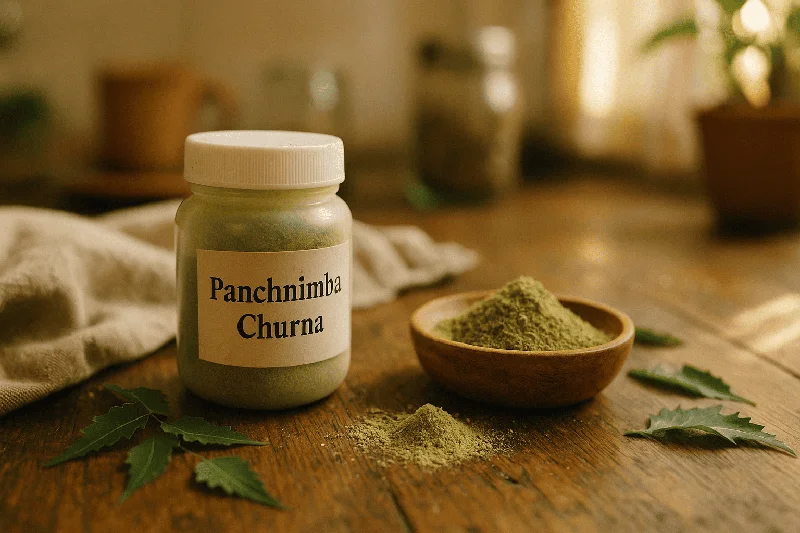
- Panchnimba Churna (also spelled Panchanimba Churna) is a classical Ayurvedic polyherbal powder formulated from five distinct parts of the neem tree (Azadirachta indica) along with supportive herbs like Triphala and Trikatu.
- It is primarily used for chronic skin disorders — acne, eczema, psoriasis, hyperpigmentation — and works by purifying the blood (Rakta Shodhana), balancing Kapha-Pitta doshas, and strengthening the body's natural detoxification pathways. This formulation has its roots in the classical text Bhaisajya Ratnavali (Kushtharogadhikara chapter) and is also listed in the Ayurvedic Formulary of India, Part II, which confirms its pharmacopoeial legitimacy.
If you've been searching for a natural, evidence-informed approach to stubborn skin problems, this guide covers everything — from the molecular pharmacology of neem's active compounds to practical advice on diet, duration of treatment, and how Panchnimba Churna compares to similar Ayurvedic formulas. No fluff, just what you actually need to know.
What Is Panchnimba Churna?
- Panchnimba Churna is a finely powdered Ayurvedic medicine that combines multiple parts of the neem tree with classical herbal adjuncts.
- The name itself breaks down neatly: Pancha (five) + Nimba (neem) = five varieties of neem. In Ayurvedic pharmacology, different parts of the same plant can have distinct therapeutic properties, and this formulation exploits that principle by using the bark, fruits, leaves, root, and flowers of neem together.
Classical References: Bhaisajya Ratnavali & AFI Part II
The original reference for Panchanimba Churna appears in the Bhaisajya Ratnavali, specifically in the chapter on Kushtha Roga (skin diseases). The verse describes its use in Kushtha (dermatoses), Visarpa (herpes/erysipelas), and Rakta Dushti (blood vitiation). Additionally, it is documented in the Ayurvedic Formulary of India (AFI), Part II — a government-recognized compendium — which standardizes the composition and therapeutic claims.
Classical texts including Charaka Samhita (Sutrasthana 4) and Sushruta Samhita (Sutrasthana 46) extensively describe neem as one of the most important Tikta Rasa (bitter taste) drugs in managing skin pathology. Panchnimba Churna essentially concentrates this traditional wisdom into a single compound formulation.
Meaning of "Panchanimba" and the Ayurvedic Logic
Why five parts instead of just neem leaves? Ayurveda recognizes that the bark has stronger Kashaya (astringent) properties for wound healing, while the flowers are more effective as Krimighna (antimicrobial). The fruit pulp acts on the gut, the root addresses deep-seated toxins, and the leaves provide broad-spectrum blood-purifying activity. Combining all five creates what Ayurvedic scholars call Samyoga — synergistic combination that amplifies the overall therapeutic effect beyond what any single part could achieve.
Ayurvedic Properties (Rasa, Guna, Virya, Vipaka)
| Property | Value |
|---|---|
| Rasa (Taste) | Tikta (Bitter), Kashaya (Astringent) |
| Guna (Quality) | Laghu (Light), Ruksha (Dry) |
| Virya (Potency) | Shita (Cold) |
| Vipaka (Post-digestive effect) | Katu (Pungent) |
| Dosha Karma | Kapha-Pitta Shamaka (pacifies Kapha & Pitta) |
| Primary Dhatu | Rakta (Blood tissue) |
The cold potency and bitter taste make it particularly suited for conditions where excess Pitta has vitiated the blood — which in modern terms correlates with inflammatory and infective skin conditions.
Panchnimba Churna Ingredients: Full Composition Explained
Understanding what goes into Panchnimba Churna is crucial because the efficacy of any churna depends on ingredient quality and correct proportions. Here's the complete breakdown based on classical references and commercially available formulations (primarily Vyas Pharmaceuticals):
The Five Parts of Neem
| Neem Part | Sanskrit Name | Key Bioactive Compounds | Primary Action |
|---|---|---|---|
| Bark (Twak) | Nimba Twak | Nimbin, Nimbinin, Tannins | Astringent, wound healing, anti-inflammatory |
| Fruits (Phala) | Nimba Phala | Azadirachtin, Gedunin | Anthelmintic, hepatoprotective, gut cleansing |
| Leaves (Patra) | Nimba Patra | Quercetin, Azadirachtin, Nimbolide | Blood purification, antimicrobial, immunomodulatory |
| Root (Moola) | Nimba Moola | Nimbiol, Beta-sitosterol | Deep tissue detoxification, anti-fever |
| Flowers (Pushpa) | Nimba Pushpa | Nimbosterol, Flavonoids | Antimicrobial, appetite stimulant, Kapha reduction |
Supporting Herbs in the Formulation
Beyond the five neem components, Panchnimba Churna typically includes:
- Triphala (Amalaki, Bibhitaki, Haritaki) — mild laxative action that supports elimination of toxins through the GI tract; rich in vitamin C and gallic acid
- Trikatu (Shunthi, Maricha, Pippali) — bioavailability enhancers that improve absorption of neem's active compounds; also stimulates Agni (digestive fire)
- Vidanga (Embelia ribes) — anthelmintic and Krimighna properties; traditionally used for parasitic infections that can manifest as skin eruptions
- Haridra (Curcuma longa) — curcumin provides additional anti-inflammatory and antioxidant support
The Trikatu component is particularly important. A 2012 study published in the Journal of Ayurveda and Integrative Medicine showed that piperine (from Maricha/black pepper) increases the bioavailability of co-administered herbal compounds by up to 30%, which partly explains why this churna works faster than plain neem powder alone.
Benefits of Neem in Panchnimba Churna
The benefits of Panchnimba Churna extend well beyond what most product labels mention. Here is what the formulation actually does, supported by both traditional knowledge and modern pharmacological research.
Blood Purification and Skin Health
The primary indication is Rakta Shodhana (blood purification). In Ayurvedic pathology, most chronic skin disorders originate from vitiated Rakta Dhatu.
Panchnimba Churna acts on this by:
- 1.Reducing systemic inflammation — Nimbolide and azadirachtin have shown significant anti-inflammatory activity in both in-vitro and animal models. A 2019 study in Phytomedicine demonstrated that nimbolide suppresses NF-κB signaling pathways, which are central to chronic inflammation.
- 2.Antimicrobial action — Neem leaf extracts show activity against Staphylococcus aureus, Propionibacterium acnes, and several dermatophyte fungi. This is relevent for acne and fungal skin infections.
- 3.Antioxidant protection — Quercetin and other flavonoids neutralize free radicals that damage skin cells and accelerate aging.
Acne, Pigmentation, and Dark Spots
- This is probably the most common reason people search for Panchnimba Churna.
- It helps with acne through a multi-pronged mechanism: reducing sebum-related Kapha excess, fighting P. acnes bacteria, and lowering post-inflammatory hyperpigmentation. Users typically report visible improvement in inflammatory acne within 4–6 weeks, with hyperpigmentation taking 8–12 weeks to fade noticeably.
Benefits Beyond Skin: The Broader Therapeutic Spectrum
Classical texts mention several indications that go beyond dermatology:
- Prameha (diabetic conditions) — neem has demonstrated hypoglycemic properties; a 2015 randomized study in Indian Journal of Clinical Biochemistry showed neem leaf extract reduced fasting blood glucose by 14.2% over 8 weeks
- Vatarakta (gouty arthritis) — the anti-inflammatory and Pitta-pacifying properties help manage urate-related inflammation
- Amlapitta (hyperacidity) — the Shita Virya (cold potency) of neem counterbalances excess Pitta in the GI tract
- Krimi Roga (parasitic infections) — Vidanga and neem fruit together provide strong anthelmintic action
- Non-healing wounds and fistula — astringent properties of neem bark support tissue healing
How to Use Panchnimba Churna: Dosage & Administration
Standard Adult Dosage
The generally recommended dose is 2 grams (approximately ½ teaspoon) twice daily, taken after meals with lukewarm water. However, this can be adjusted based on your constitution (Prakriti), the severity of your condition and your Ayurvedic physician's assessment.
Best Anupana (Vehicle) for Different Conditions
Here's something no other guide mentions — the Anupana (carrier substance) you use with the churna can significantly influence its therapeutic direction:
| Condition | Recommended Anupana | Why |
|---|---|---|
| Acne & skin eruptions | Plain lukewarm water | Neutral carrier, allows Tikta Rasa to act directly on Pitta |
| Chronic eczema/psoriasis | Honey (1 tsp) | Honey is Yogavahi — enhances drug penetration and acts as Kapha-reducing agent |
| Blood purification | Warm cow's milk | Milk nourishes Rakta Dhatu while churna purifies it — synergistic effect |
| Digestive detox | Ghee (½ tsp) | Ghee is the best lipophilic carrier, delivers fat-soluble neem compounds deeper into tissues |
| Diabetic skin conditions | Warm water only | Avoids sugar/fat carriers that could spike glucose |
How Often Should One Take Panchnimba Churna?
For most skin conditions, twice daily after meals is standard. In acute flare-ups, some practitioners prescribe three times daily for 1–2 weeks, then reduce to twice daily. For preventive or maintenance use, once daily in the morning is usually sufficient.
Children's Dosage
- No competitor mentions pediatric dosing, but it's an important consideration. Generally, Panchnimba Churna is not recommended for children under 5 years. For children aged 5–12, a reduced dose of 0.5 to 1 gram once daily with honey may be used, but only under the direct supervision of a qualified Ayurvedic practitioner.
- The bitter taste can be challenging for children — mixing with a small amount of jaggery can help with compliance, though this should be avoided in cases of skin infections with Ama.
Expected Duration of Treatment & When to Expect Results
This is a gap almost every competitor leaves unfilled. Here's a realistic timeline based on traditional practice guidelines and practitioner experience:
| Condition | First Visible Improvement | Recommended Course Duration |
|---|---|---|
| Active inflammatory acne | 3–4 weeks | 2–3 months |
| Post-acne hyperpigmentation | 6–8 weeks | 3–4 months |
| Chronic eczema | 4–6 weeks | 3–6 months |
| Psoriasis (mild-moderate) | 6–8 weeks | 4–6 months (with breaks) |
| Blood purification (general) | 2–3 weeks | 1–2 months |
| Parasitic skin infections | 2–3 weeks | 1–2 months |
Important: For chronic conditions like psoriasis, continuous use beyond 3 months should include periodic breaks (typically 1 week off after every 6 weeks on). This prevents the body from developing tolerance and allows the liver to reset.
Don't wait or self medicate. Start chat with Doctor NOW
Panchnimba Churna vs Other Ayurvedic Formulas: Comparison
One question that comes up often — should you choose Panchnimba Churna or something else?
Here's a straightforward comparison:
| Parameter | Panchnimba Churna | Nimbadi Churna | Panchanimbadi Vati | Khadirarishta |
|---|---|---|---|---|
| Form | Powder | Powder | Tablet | Liquid (Arishta) |
| Primary herb | 5 parts of Neem | Neem + Guduchi | 5 parts of Neem | Khadira (Acacia) |
| Best for | Acne, eczema, blood purification | Blood purification, fever | Skin diseases (convenient dosing) | Chronic skin diseases, lymphatic detox |
| Ease of use | Moderate (bitter taste) | Moderate | Easy (swallow tablet) | Easy (liquid) |
| Speed of action | Moderate (2–4 weeks) | Moderate | Moderate | Slower (4–6 weeks) |
| Pitta pacification | Strong | Moderate | Strong | Moderate |
| GI tolerance | Good (with Trikatu) | May cause mild nausea | Good | Very good |
| Classical reference | Bhaisajya Ratnavali | Sahasrayogam | Bhaisajya Ratnavali | Charaka Samhita |
When to choose what: If your primary issue is acne and hyperpigmentation, Panchnimba Churna is the first choice. If you prefer tablets over powder, Panchanimbadi Vati is essentialy the same formula in a more convenient form. Khadirarishta is better suited for chronic, deep-seated conditions like long-standing psoriasis where lymphatic cleansing is also needed.
Diet & Lifestyle During Treatment (Pathya-Apathya)
Taking Panchnimba Churna without dietary adjustments is like mopping the floor while the tap is still running. Ayurveda strongly emphasizes Pathya (favorable diet/lifestyle) and Apathya (things to avoid) during treatment of skin diseases.
Foods to Favor (Pathya)
- Bitter vegetables: bitter gourd (Karela), drum stick, neem flower sabzi
- Green leafy vegetables, especially fresh methi and spinach
- Whole grains: barley (Yava), old rice, ragi
- Fruits: pomegranate, amla, papaya
- Adequate water intake — minimum 2.5 to 3 liters daily
- Cooling beverages: coriander water, cumin water
Foods to Avoid (Apathya)
- Excessive dairy, especially curd/yogurt at night (increases Kapha)
- Fried and oily foods
- Junk food, processed sugar, refined carbohydrates
- Sour foods in excess: pickles, tamarind, vinegar-based dressings
- Fish with milk (a classic Viruddha Ahara — incompatible food combination per Ayurveda)
- Excessive salt
- Alcohol and tobacco
Lifestyle Recommendations
- Regular exercise or yoga — at least 30 minutes daily. Surya Namaskar is particuarly beneficial for skin conditions
- Avoid daytime sleep (Divaswapna) — it aggravates Kapha
- Manage stress through Pranayama, especially Sheetali and Nadi Shodhana
- Use neem-based soap or natural cleansers externally for synergistic effect
Contraindications, Side Effects & Safety Information
Who Should NOT Take Panchnimba Churna?
This is an area where most sources give vague warnings.
Here's a clear list:
- 1.Pregnant women — Neem has documented uterine-stimulant and anti-implantation properties. Multiple animal studies (including a 2003 study in Journal of Ethnopharmacology) showed neem extract has anti-fertility effects. Strictly avoid during pregnancy.
- 2.Lactating mothers — Bitter compounds may pass into breast milk and cause GI disturbance in infants. Use only if specifically prescribed by a physician.
- 3.Children under 5 years — Immature hepatic metabolism may not handle concentrated neem compounds safely.
- 4.Patients with severe hypoglycemia — Neem can lower blood sugar; combining with aggressive anti-diabetic medication may cause dangerous drops.
- 5.People with known neem allergy — Rare, but cross-reactivity with other Meliaceae family plants is possible.
- 6.Severe Vata-predominant constitutions with extreme dryness — The Ruksha (dry) Guna of neem can aggravate Vata. Such patients need concurrent Vata-pacifying measures.
Potential Side Effects
When taken at the recommended dose, side effects are uncommon.
However, some people may experience:
- Mild stomach discomfort or nausea (usually resolves within 2–3 days)
- Loose stools in the first week (due to the mild laxative effect of Triphala)
- Increased skin dryness in Vata-dominant individuals
- Hypoglycemia symptoms if taken concurrently with anti-diabetic drugs
Drug Interactions
| Medication Type | Interaction Level | Notes |
|---|---|---|
| Oral hypoglycemics (Metformin, Glimepiride) | Moderate | Monitor blood glucose more frequently; dose adjustment may be needed |
| Immunosuppressants (Cyclosporine, Azathioprine) | Moderate | Neem's immunomodulatory effects may interfere with immunosuppression |
| Anticoagulants (Warfarin) | Mild | Some neem compounds have mild antiplatelet activity |
| Hepatotoxic drugs | Mild-Moderate | Combined liver load may increase; monitor liver enzymes |
| Other bitter/cooling Ayurvedic medicines | Mild | Excessive Tikta Rasa accumulation may aggravate Vata |
- Always inform your Ayurvedic and allopathic doctors about all medicines you are taking.
- This isn't just a formality — it genuinely matters.
Storage and Shelf Life
- Store in a cool, dry place away from direct sunlight
- Keep in an airtight container to prevent moisture absorption
- Shelf life is typically 2 years from manufacture when stored properly
- Discard if the powder develops an unusual odor or visible moisture/clumping
Comparing Manufacturers: Vyas, Baidyanath, Zandu & Others
| Brand | Pack Size | Approx. Price (INR) | Notable Differences |
|---|---|---|---|
| Vyas Pharmaceuticals | 50g, 100g | ₹75–140 | Most widely referenced; established reputation for classical formulations |
| Baidyanath | 50g, 100g | ₹80–150 | Large-scale GMP-certified production; consistent quality |
| Zandu (Emami) | 60g | ₹90–130 | Well-known FMCG brand; easily available online and offline |
| Krishna Gopal Ayurved Bhavan | 50g | ₹50–80 | Budget-friendly; traditional manufacturing approach |
| Multani | 50g | ₹60–90 | Regional availability; adequate quality for the price |
| Dindayal Aushadhi | Various | ₹65–100 | North India regional brand; follows classical composition |
Key insight: The core composition remains the same across manufacturers since it's a classical formula. The differences lie in sourcing quality of raw herbs, GMP compliance, heavy metal testing, and microbial purity standards. Vyas and Baidyanath tend to be the most rigorously tested, but at a slightly higher price point. If you're buying from any brand, check for the AYUSH license number on the packaging — this confirms regulatory compliance.
Quality Parameters to Look For
According to the Ayurvedic Pharmacopoeia of India, herbal churnas should meet these standards:
- Moisture content: Not more than 8–10%
- Total ash: Within specified limits (typically <10%)
- Acid-insoluble ash: <2%
- Particle size: Should pass through sieve number 85 (fine powder)
- Microbial limits: Total bacterial count <10⁵ CFU/g; no Salmonella or E. coli
- Heavy metals: Lead <10 ppm, Arsenic <3 ppm, Mercury <1 ppm
Most reputable manufacturers include a certificate of analysis (COA) upon request. Don't hesitate to ask for one, especially if you're buying in bulk.
Frequently Asked Questions (FAQ)
Can Panchnimba Churna help with acne?
Yes, it is one of the primary indications. The formulation addresses acne through antimicrobial action against P. acnes, reduction of sebum-related Kapha excess, and anti-inflammatory activity that minimizes redness and swelling. Most users see noticeable improvement in 3–6 weeks with consistent use and proper diet.
Can I take it alongside other medications?
You can, but with caution. Panchnimba Churna may interact with anti-diabetic drugs, immunosuppressants, and blood thinners. Maintain at least a 2-hour gap between the churna and any allopathic medication, and consult both your Ayurvedic and allopathic physicians.
What should I do if I miss a dose?
Simply take the next scheduled dose. Do not double the dose to make up for a missed one. Occasional missed doses do not significantly impact treatment outcomes for chronic conditions, though consistency is important for best results.
Is it safe for pregnant or lactating women?
No, it is not recommended during pregnancy due to neem's documented anti-fertility and uterine-stimulant properties. During lactation, use only under strict medical supervision as bitter compounds may transfer to breast milk.
Is Panchnimba Churna suitable for sensitive skin?
The formulation is taken orally, so direct skin sensitivity isn't usually a concern. However, people with extremely sensitive constitutions (high Vata-Pitta) may experience initial mild aggravation. Starting with half the standard dose for the first week and gradually increasing helps minimize this.
What is the price of Panchnimba Churna?
Prices range from approximately ₹50 to ₹150 for a 50–100g pack, depending on the brand. Vyas Pharmaceuticals and Baidyanath fall in the ₹75–150 range, while smaller regional brands can be more affordable. The churna is widely available on platforms like 1mg, Amazon India, and at Ayurvedic pharmacies.
How is Panchnimba Churna different from plain neem powder?
Plain neem powder typically uses only neem leaves. Panchnimba Churna uses all five parts of neem (bark, fruit, leaves, root, flowers) plus synergistic herbs like Triphala and Trikatu. This broader composition provides a wider therapeutic spectrum and improved bioavailability compared to single-herb neem powder.
Final Thoughts: Is Panchnimba Churna Worth Trying?
Panchnimba Churna stands out as one of Ayurveda's most well-designed formulations for skin health and blood purification. Its strength lies in the intelligent combination of five neem parts — each targeting a different aspect of skin pathology — amplified by bioavailability-enhancing herbs like Trikatu and detoxification-supporting Triphala.
For people dealing with chronic acne, stubborn pigmentation, eczema, or recurrent skin eruptions that haven't responded well to topical treatments alone, this churna offers a systemic, inside-out approach that addresses root causes rather than just symptoms.
That said, it's not a magic cure. It works best when combined with appropriate dietary modifications (Pathya-Apathya), adequate hydration, regular exercise, and — for serious conditions — guidance from a qualified Ayurvedic practitioner who can tailor the dosage, anupana, and treatment duration to your specific needs.
- Ready to start? Begin with 1 gram once daily for the first week to assess tolerance, then increase to the standard 2 grams twice daily. Track your progress with weekly photos, and give it at least 6–8 weeks before evaluating results.
- And always — always — let your doctor know what you're taking.
Disclaimer: This article is for informational and educational purposes only. It does not replace professional medical advice. Consult a qualified Ayurvedic practitioner before starting any new herbal supplement, especially if you have pre-existing health conditions or are taking other medications.
Scientific Sources
- Rosemary and neem: an insight into their combined anti-dandruff and anti-hair loss efficacy — Hashem MM et al., 2024, Scientific reports
- Bangladeshi medicinal plant dataset — Borkatulla B et al., 2023, Data in brief
- Phytotherapy in periodontics as an effective and sustainable supplemental treatment: a narrative review — Gawish AS et al., 2024, Journal of periodontal & implant science
- Formulation and Evaluation of Turmeric- and Neem-Based Topical Nanoemulgel against Microbial Infection — Giri S et al., 2024, Gels (Basel, Switzerland)
- Medicinal plants with traditional use: Ethnobotany in the Indian subcontinent — Rupani R et al., 2018, Clinics in dermatology
- Ayurvedic herbal formulations Haridra Khanda and Manjisthadi Kwath (brihat) in the management of allergic rhinitis: A pharmacological study — Bhowmik R et al., 2024, Heliyon
- Inter relationship of Ayurveda and Astrology — Dwivedi JN, 2013, Ayu
- Effect of Neem oil and Haridra on non-healing wounds — Singh A et al., 2014, Ayu
- Role of Dantabija, Haridra, and Zingiber (DHZ) combination to restore health and immunity in mild to moderate COVID-19 patients — Kumar Y et al., 2022, Journal of family medicine and primary care
- Anti-diabetic formulations of Nāga bhasma (lead calx): A brief review — Rajput D et al., 2013, Ancient science of life
- Can Guduchi (Tinospora cordifolia), a well-known ayurvedic hepato-protectant cause liver damage? — Panneer Selvam K et al., 2023, Journal of Ayurveda and integrative medicine
- Medicinal and Beneficial Health Applications of Tinospora cordifolia (Guduchi): A Miraculous Herb Countering Various Diseases/Disorders and its Immunomodulatory Effects — Dhama K et al., 2017, Recent patents on endocrine, metabolic & immune drug discovery
- Humoral immune and adjuvant responses of mucosally-administered Tinospora cordifolia immunomodulatory protein in BALB/c mice — Aranha I et al., 2020, Journal of Ayurveda and integrative medicine
- Indian Ayurvedic medicine: Overview and application to brain cancer — Newton HB, 2024, Journal of Ayurveda and integrative medicine
- Using Guduchi (Tinospora cordifolia) as an eco-friendly feed supplement in human and poultry nutrition — Saeed M et al., 2020, Poultry science
- Evaluation of antioxidant profile and activity of amalaki (Emblica officinalis), spirulina and wheat grass — Shukla V et al., 2009, Indian journal of clinical biochemistry : IJCB
- Influence of Amalaki Rasayana on telomerase activity and telomere length in human blood mononuclear cells — Guruprasad KP et al., 2017, Journal of Ayurveda and integrative medicine
- Triphala's characteristics and potential therapeutic uses in modern health — Bairwa VK et al., 2025, International journal of physiology, pathophysiology and pharmacology
- Amalaki rasayana, a traditional Indian drug enhances cardiac mitochondrial and contractile functions and improves cardiac function in rats with hypertrophy — Kumar V et al., 2017, Scientific reports
- Ayurvedic formulations amalaki rasayana and rasa sindoor improve age-associated memory deficits in mice by modulating dendritic spine densities — Verma B et al., 2022, Journal of Ayurveda and integrative medicine
Questions from users
What is the ideal time of day to take Panchnimba Churna for best results?
Hannah
6 days ago
The best time to take Panchnimba Churna is generally in the morning on an empty stomach, especially if you're using it for skin issues like acne. This helps the body to absorb it better and assist in detoxification. However, always tailor timing and dosage to your specific body constitution or consult with an Ayurvedic doctor for personalized advice. Every person's body responds differently, so it might take a little experimenting!
What skin conditions can Panchnimba Churna effectively treat beyond acne and eczema?
Mateo
16 days ago
Beyond acne and eczema, Panchnimba Churna may help with conditions like psoriasis, dermatitis, and fungal infections. It's known for its effect on conditions like kushtha (various skin disorders) and visarpa (spreading skin eruptions), both of which stem from imbalances in body tissues and blood impurities. But, always listen to your body!
What is the best way to store Panchnimba Churna to maintain its potency?
Yolanda
34 days ago
store Panchnimba Churna in a cool, dry place, away from direct sunlight n moisture. Maybe, use an airtight container to keep it fresh n potent. Keeping it away from strong odors is also a good idea as it might absorb them. If you're still uncertain, asking ur Ayurvedic practitioner could give more tailored advice!
Can I use Panchnimba Churna while taking other medications?
Nadine
43 days ago
Taking Panchnimba Churna alongside other medications can be fine, but it's important to be cautious. Since Panchnimba Churna affects digestion and detoxification, it might interact with how other meds are absorbed or metabolized. It's best to chat with an Ayurvedic practitioner or your healthcare provider to make sure everything will work well together!
Can I take Panchnimba Churna with meals, or should it be taken on an empty stomach?
Skylar
53 days ago
Panchnimba Churna is usually best taken on an empty stomach, preferably in the morning, to get the most out of its detoxifying benefits. But hey, if your practitioner suggests otherwise, it's cool to follow their advice. Just make sure it's organic and high-quality!
What is the recommended dosage for Panchnimba Churna when starting out?
Chloe
63 days ago
When starting with Panchnimba Churna, it's usually good to start small, about 1 to 2 grams once a day. You can mix it with warm water or honey, ideally before meals. If it feels comfortable after some days, then you may gradually increase to a max of twice a day. But, always consider your dosha and health needs, and consult a practitioner if unsure.
Is it safe to use Panchnimba Churna if I have allergies to certain herbs?
Tristan
72 days ago
If you have allergies, it's always best to be cautious. Panchnimba Churna contains multiple herbs, so there's a chance one might trigger a reaction. Starting with a smal dose to test your tolerance is wise, but definitely consult with an ayurvedic practitioner or doctor, especially if you have known allergies. Better safe than sorry!
What should I know about the history and traditional use of Panchnimba Churna in Ayurveda?
Harper
82 days ago
Panchnimba Churna has an interesting history in Ayurveda; it's traditionally used for detox and to maintain balance between Pitta and Kapha doshas. It's made from a combo of five herbs, often including neem, valued for its cleansing properties. Over time it's became popular for boosting digestion and reducing inflammation. If you're curious about its traditional roles, explore those herbs and their specific benefits. You might find it fascinating how each one contibutes to its holistic effects!
Is it safe to take Panchnimba Churna while pregnant or breastfeeding?
Quincy
91 days ago
Hey there! It's best to err on the side of caution when it comes to taking Panchnimba Churna during pregnancy or breastfeeding. While it's known for its detoxifying and digestive benefits, its effects on pregnant or nursing mothers aren't fully understood yet. I'd recommend chatting with your healthcare provider for personalized advice!
Can I use Panchnimba Churna for skin health and what benefits does it have?
Riley
101 days ago
Yes, you can definitely use Panchnimba Churna for skin health! Neem and Haridra in it are great for reducing inflammation and detoxifying the skin, which might help with acne and other skin issues. Just keep in mind, results depend on your unique body constitution and digestion, aka agni. Drink lots of water and eat balanced meals along with it. 😊
Related articles

Gastrointestinal Disorders
Kayam Tablet
Exploration of Kayam Tablet
9,746
Gastrointestinal Disorders
Amavatari Kashayam: Benefits & Ayurvedic Uses
Discover the benefits, proper dosage, uses, and scientific research behind Amavatari Kashayam, a potent Ayurvedic herbal decoction for health.
2,586

Gastrointestinal Disorders
Ajmodadi Churna Benefits Dosage How To Use Side Effects Ingredients Reference
Exploration of Ajmodadi Churna Benefits Dosage How To Use Side Effects Ingredients Reference
2,626
Gastrointestinal Disorders
Swarn Sutshekhar Ras: Benefits, Dosage & Uses Explained
Explore Swarn Sutshekhar Ras benefits, uses, dosage, and precautions. Learn about its Ayurvedic significance and evidence-based applications for health and vitality.
3,692

Gastrointestinal Disorders
Krimi Mudgar Ras Benefits, Dosage, Ingredients, Side Effects
Exploration of Krimi Mudgar Ras Benefits, Dosage, Ingredients, Side Effects
2,096

Gastrointestinal Disorders
How to Digest Food Faster: Natural Tips and Remedies
Learn how to digest food faster using natural tips, fast-digesting foods, exercises, and Ayurvedic remedies. Improve digestion with simple lifestyle changes
5,570

Gastrointestinal Disorders
Shaddharanam Gulika – Benefits, Uses & Dosage in Ayurveda
Learn about Shaddharanam Gulika, an Ayurvedic remedy known for its detoxifying, digestive, and therapeutic properties, and how it supports overall health.
3,584
Gastrointestinal Disorders
Gandharva Haritaki Tablet Uses: An Ayurvedic Remedy for Holistic Health
Gandharva Haritaki is an herbal preparation widely used in Ayurveda to support digestive health, detoxification, and vitality.
4,141

Gastrointestinal Disorders
Amavatari Capsules – Ayurvedic Digestive and Liver Support
Discover Amavatari Capsules benefits, uses, and dosage. Learn how this Ayurvedic supplement supports health, wellness, and vitality through traditional wisdom.
2,015

Gastrointestinal Disorders
Nephrotic Syndrome Ayurvedic Treatment & Remedies
Explore Ayurvedic treatments for nephrotic syndrome, including benefits, proper dosage, uses, and scientific evidence supporting these natural remedies.
3,235
Related consultations on the topic
Legal
Additional Documents
© 2024 Ask Ayurveda. All rights reserved.