Ask Ayurvedic doctor a question and get a consultation online on the problem of your concern in a free or paid mode. More than 2,000 experienced doctors work and wait for your questions on our site and help users to solve their health problems every day.
FREE! Ask Ayurvedic Doctors 24/7

 Fast responses
 1000+ verified doctors
Body DetoxEar, Nose, and Throat DisordersGeriatrics & RejuvenationImmunodeficiencyInfertility TreatmentNutritionOrthopedic DisordersPediatricsRespiratory DisordersSexually Transmitted Diseases (STDs)Surgery RecoveryUrological DisordersVascular DisordersDental DisordersEndocrinological DisordersGastrointestinal DisordersYoga TherapyGeneral MedicineAllergic DisordersCardio DisordersGynecology and ObstetricsCosmetologySkin and Hair DisordersEye DisordersInfectious DiseasesMental DisordersNeurological DisordersOncologyPanchakarmaSexual Health & DisordersSports Medicine
Published on 02/26/25
(Updated on 07/06/26)
3,590
Gairic Powder – Traditional Ayurvedic Formulation for Holistic Wellness
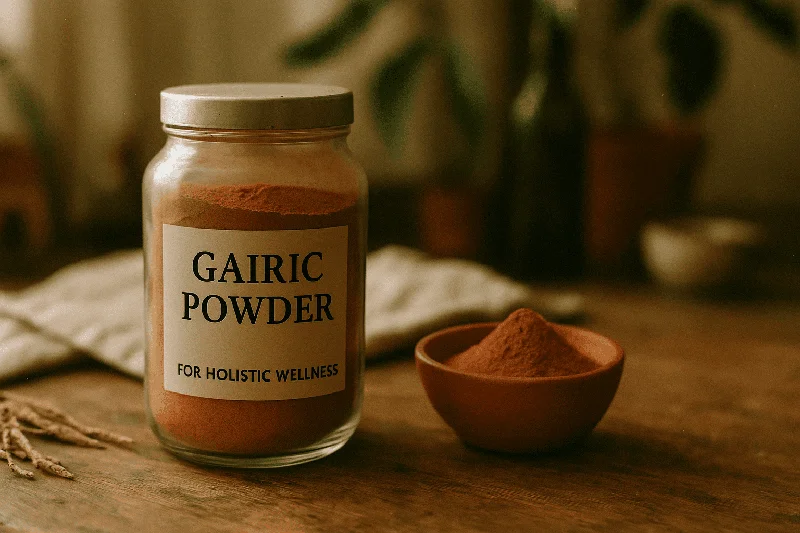
Gairic Powder is the finely processed form of Red Ochre (Geru), a naturally occurring iron oxide mineral used in Ayurveda for thousands of years. Chemically known as Fe₂O₃ (ferric oxide or hematite), it is classified as an Upadhatu (sub-metal) of Loha (iron) in classical Ayurvedic pharmacology. Practitioners have relied on this mineral powder to manage bleeding disorders, skin conditions, fevers, and toxicity — long before modern medicine identified iron oxide's antimicrobial and anti-inflammatory potential.
If you've been searching for a clear, evidence-informed breakdown of what Gairic Powder actually is, how it works, how to use it safely, and where to buy an authentic product — this is the most comprehensive guide you'll find anywhere.
What Is Gairic Powder?
Definition & Chemical Composition (Fe₂O₃)
Gairic Powder is derived from Gairika, a naturally occurring mineral ore whose primary constituent is ferric oxide (Fe₂O₃) — the same compound mineralogists call hematite. The iron content in high-quality Gairik typically ranges from 60–70% Fe₂O₃, with trace amounts of silica (SiO₂), alumina (Al₂O₃), manganese oxide, and sometimes calcium carbonate as impurities.
Unlike plant-based Ayurvedic churnas, Gairic Powder is a mineral preparation. This is an important distinction. Some online sources incorrectly describe Gairic Powder as a "poly-herbal" blend containing Neem, Ashwagandha, or Triphala — that information is misleading. Pure Gairic Powder is a single-mineral formulation, though it may appear as an ingredient within poly-herbal or poly-mineral compound formulas.
| Property | Detail |
|---|---|
| Chemical Formula | Fe₂O₃ (Ferric Oxide) |
| Mineral Name | Hematite / Red Ochre |
| Iron Content | 60–70% |
| Common Impurities | SiO₂, Al₂O₃, MnO, CaCO₃ |
| Colour | Deep red to reddish-brown |
| Taste (Rasa) | Kashaya (Astringent) |
| Post-digestive Effect (Vipaka) | Katu (Pungent) |
| Potency (Virya) | Sheeta (Cooling) |
Synonyms & Alternative Names
Gairic Powder goes by a remarkably long list of names across languages and classical texts. Knowing these helps you identify the correct product when shopping or reading Ayurvedic literature.
- Sanskrit: Gairika, Girika, Girimruttika, Raktadhatu, Lohadhatu, Shuddha Gairika
- Hindi: Geru, Lal Geru
- English: Red Ochre, Red Iron Oxide, Hematite Powder
- Unani: Gile Armani (a closely related preparation)
- Latin (Pharmacological): Ferrum Oxidum Rubrum
Origin & Geographical Availability
High-quality Gairik is mined primarily in Bihar, India — particularly in the Munger and Bhagalpur regions where iron-rich geological formations yield exceptionally pure ochre. Outside India, significant deposits exist in Germany (Harz Mountains), the United States (Michigan, Minnesota), parts of Australia, and Spain.
In India, raw Gairik is harvested as red-coloured earth or stone, then processed through Ayurvedic purification methods before therapeutic use. The Bihar origin is considered superior in classical texts due to its high iron oxide concentration and low heavy-metal contamination.
Historical Significance of Gairik in Ayurveda
References in Classical Texts
Gairik has been documented extensively in foundational Ayurvedic and Rasa Shastra (Ayurvedic alchemy) texts, spanning over 1,000 years of written tradition:
- Rasaratna Samucchaya (13th century CE) — describes Gairik as an Upadhatu of Loha and details its two varieties
- Rasarnava (12th century CE) — mentions purification protocols and therapeutic applications
- Rasatarangini by Sadananda Sharma (19th century) — provides detailed Shodhana (purification) and Marana (calcination) procedures
- Charaka Samhita and Sushruta Samhita — reference Gairik in formulations for Raktapitta (bleeding disorders) and Visarpa (herpes/erysipelas)
The classical Sanskrit shloka from Rasaratna Samucchaya states:
> "Gairikam dvi-vidham proktam — Swarna Gairikam, Pashana Gairikam cha"
> (Gairik is said to be of two types — Swarna Gairik and Pashana Gairik.)
Two Types of Gairika: Swarna vs. Pashana
This classification is clinically significant, and almost no online resource explains it properly.
| Feature | Swarna Gairika | Pashana Gairika |
|---|---|---|
| Appearance | Golden-red, smooth, unctuous | Hard, stony, deep red |
| Texture | Soft, easily crumbled | Dense, requires grinding |
| Iron Purity | Higher Fe₂O₃ concentration | More silica impurities |
| Therapeutic Grade | Preferred for internal use | Typically for external use |
| Availability | Rarer, more expensive | More commonly available |
Swarna Gairika is considered superior for internal medicines and delicate formulations, while Pashana Gairika is more commonly used in external applications like skin pastes and wound management.
How Gairic Powder Is Purified (Shodhana Process)
- Raw Gairik ore is never used directly in Ayurvedic practice.
- It must undergo Shodhana — a systematic purification process that removes toxic impurities, enhances bioavailability, and makes the mineral therapeutically safe.
Classical Shodhana Methods
Several purification protocols are described across different texts.
Here are the four most established methods:
- 1.Bhavana with Cow's Milk (Godugdha Bhavana): Raw Gairik is finely powdered and triturated with fresh cow's milk for 7 cycles (or until the colour and consistency standardize). The milk's casein proteins are believed to chelate heavy metal impurities.
- 2.Roasting with Ghee (Ghrita Bharjana): The powdered mineral is slow-roasted in clarified butter until it becomes homogeneous and free-flowing. This process is thought to reduce silica content and improve gut tolerance.
- 3.Swedana with Kanji (Sour Gruel Steam Processing): Gairik is placed inside a Pottali (cloth bundle) and subjected to steam processing over fermented rice water (Kanji) in a Dolayantra apparatus. The acidic vapour dissolves calcium carbonate and alumina impurities.
- 4.Bhavana with Lemon Juice (Nimbu Swarasa Bhavana): Trituration with fresh citrus juice — the citric acid acts as a natural chelator, binding and removing unwanted metallic contaminants.
Marana and Satwapatana (Advanced Processing)
For certain formulations, purified Gairik undergoes Marana — a calcination process that converts it into Gairik Bhasma (ash). This involves repeated cycles of trituration with herbal juices followed by incineration in sealed earthen crucibles at controlled temperatures.
Satwapatana is the more advanced alchemical process of extracting the metallic essence (Satwa) from the mineral. This yields a bio-assimilable iron extract used in highly specific therapeutic contexts.
> Both these procedures should only be performed by trained Rasa Shastra practitioners — not attempted at home.
Therapeutic Properties & Benefits of Gairic Powder
Ayurvedic Pharmacological Actions
According to classical Ayurvedic pharmacology, Gairic Powder possesses the following key actions:
- Sheeta Virya (Cooling potency) — pacifies Pitta dosha
- Kashaya Rasa (Astringent taste) — promotes healing and contracts tissues
- Raktastambhana — haemostatic (stops bleeding)
- Vishaghna — anti-toxic
- Varnya — improves complexion
- Chakshushya — beneficial for eye health
- Dahaprashamana — alleviates burning sensations
- Chhardinaghna — anti-emetic (controls vomiting)
In terms of dosha balance: Gairic primarily pacifies Pitta and Kapha, while it may slightly aggravate Vata in excess due to its astringent and drying nature.
Skin Health Applications
This is where Gairic Powder has gained the most popularity in recent years, and for good reason.
Acne, Pimples & Inflammatory Skin Conditions
The astringent and cooling properties of Gairic make it effective for managing acne-prone, oily skin. A 2017 in vitro study published in the Journal of Medicinal Chemistry demonstrated that iron oxide nanoparticles exhibit significant antibacterial activity against Propionibacterium acnes — the bacterium primarily responsible for inflammatory acne. While this study used synthetic nanoparticles rather than traditional Gairik, the active compound (Fe₂O₃) is identical.
Hyperpigmentation & Uneven Skin Tone
Gairic's Varnya (complexion-enhancing) property is attributed to its ability to gently exfoliate dead skin cells and promote circulation. Classical texts recommend it specifically for Vyanga (facial melanosis / dark patches).
Burns, Wounds & Scar Tissue
Applied as a paste, Gairic creates a protective mineral layer over damaged skin, reduces oozing, and promotes granulation tissue formation. Its haemostatic action is particularly useful for minor cuts and superficial burns.
Internal Therapeutic Applications
When properly purified and administered under professional supervision, Gairic Powder is used for:
- Raktapitta (Bleeding Disorders): Epistaxis (nosebleeds), bleeding gums, haemoptysis
- Raktarsha (Bleeding Haemorrhoids): One of the classical indications
- Pradar (Menorrhagia): Excessive menstrual bleeding — Gairik appears in the famous Pushyanuga Churna formulation
- Chardi and Hikka (Vomiting and Hiccups): Particularly Pitta-type vomiting with burning sensation
- Jwara (Fever): Pitta-predominant fevers with bleeding tendencies
- Visha (Poisoning/Toxicity): Classical anti-toxic applications including insect bites and mild food poisoning
Mechanism of Action: A Modern Dermatology Perspective
From a modern scientific standpoint, here's how Fe₂O₃ interacts with biological tissues:
- pH Modulation: Iron oxide is mildly alkaline. When applied to skin (typical pH 4.5–5.5), it creates a temporary shift that is unfavorable for bacterial proliferation.
- Astringent Protein Precipitation: Fe₂O₃ interacts with proteins in wound exudate and tissue fluid, causing coagulation — this explains its haemostatic and wound-sealing properties.
- Adsorption of Excess Sebum: The high surface area of finely ground mineral powder physically absorbs oil, which is why Gairik face packs work well on oily skin.
- UV Reflectance: Iron oxide pigments are established photoprotective agents. A 2015 study in Photodermatology, Photoimmunology & Photomedicine confirmed that iron oxides protect against both UV and visible light-induced damage — particularly relevant for melasma patients.
Gairic Powder vs. Other Ayurvedic Iron Preparations
One of the biggest confusions among patients and even some practitioners is the difference between Gairic and other iron-based Ayurvedic medicines.
This comparison table clarifies the distinctions:
| Parameter | Gairic Powder (Red Ochre) | Loha Bhasma (Iron Ash) | Mandura Bhasma (Iron Slag Ash) | Kasisa Bhasma (Green Vitriol Ash) |
|---|---|---|---|---|
| Source | Natural iron oxide ore | Metallic iron | Iron smelting slag | Ferrous sulphate crystal |
| Chemical Base | Fe₂O₃ | Fe (processed to oxide) | Mixed iron oxides + silicates | FeSO₄ (processed) |
| Processing | Shodhana (purification) | Multiple Marana cycles | Multiple Marana cycles | Shodhana + Marana |
| Primary Use | Bleeding, skin, cooling | Anemia, liver disorders | Anemia, spleen enlargement | Skin diseases, eye disorders |
| Potency | Mild | Strong | Moderate-Strong | Moderate |
| Safety Profile | Relatively safer | Requires strict dosing | Requires strict dosing | Higher toxicity risk |
| Dosha Action | Pitta-Kapha shamaka | Tridoshahara | Pitta-Kapha shamaka | Pitta shamaka |
Key takeaway: Gairic Powder is the mildest of these preparations and is primarily used for its cooling, haemostatic, and topical actions. It is not a substitute for Loha Bhasma in treating iron-deficiency anemia.
Don't wait or self medicate. Start chat with Doctor NOW
How to Use Gairic Powder: Dosage & Application
Topical Application (External Use)
For skin conditions, Gairic Powder is typically mixed into a paste.
Here are three clinically tested recipes:
Basic Gairic Face Pack for Acne
- Ingredients: 1 teaspoon Shuddha Gairic Powder + 2 teaspoons Rose Water
- Method: Mix to a smooth paste. Apply evenly on clean, dry face. Avoid eye area.
- Duration: 15–20 minutes or until semi-dry
- Frequency: 2–3 times per week
- Rinse: Lukewarm water, followed by a gentle moisturizer
Gairic + Aloe Vera for Pigmentation
- Ingredients: 1 teaspoon Gairic Powder + 1 tablespoon fresh Aloe Vera gel + ½ teaspoon Chandan (Sandalwood) powder
- Method: Blend thoroughly. Apply to affected areas.
- Duration: 20–25 minutes
- Frequency: 3 times per week for 6–8 weeks
Gairic Paste for Minor Burns & Wounds
- Ingredients: 1 teaspoon Gairic Powder + sufficient Coconut Oil to form paste
- Method: Apply a thin layer on the affected area. Cover loosely with cotton gauze.
- Duration: Reapply every 8–12 hours
- Note: Only for superficial, clean wounds. Deep or infected wounds require medical attention.
Internal Use (Oral Administration)
Internal use of Gairic Powder should always be under qualified Ayurvedic medical supervision.
The typical dosage parameters are:
| Form | Dosage | Anupana (Vehicle) | Frequency |
|---|---|---|---|
| Shuddha Gairic Churna | 250–500 mg | Honey or rice water | 1–2 times daily |
| Gairic Bhasma | 125–250 mg | Honey, ghee, or milk | 1–2 times daily |
| As part of compound formula | As specified by vaidya | Varies | As prescribed |
How Long Does It Take to Notice Effects?
For topical applications, most people report visible improvement in skin texture and acne reduction within 2–4 weeks of consistent use. Internal therapeutic benefits for bleeding disorders typically manifest within 1–2 weeks, though chronic conditions may require 4–8 weeks of treatment.
Side Effects, Precautions & Contraindications
Known Side Effects
Gairic Powder is considered relatively safe when properly purified and appropriately dosed.
However, potential adverse effects include:
- Skin dryness and irritation — especially with prolonged or excessive topical use
- Contact dermatitis — rare, but possible in individuals with iron sensitivity
- Constipation — when taken internally, due to its astringent (Kashaya) property
- Gastric discomfort — if taken on an empty stomach or in unpurified form
Precautions
- Always perform a patch test before applying Gairic paste on the face. Apply a small amount on the inner forearm, wait 24 hours, check for redness or itching.
- Pregnancy and lactation: Internal use is generally avoided unless specifically prescribed by a qualified Ayurvedic doctor. Topical use is considered safer but still warrants caution.
- Children: Not recommended for internal use in children under 12 without professional guidance.
- Never consume raw, unpurified Gairik — it may contain toxic levels of lead, arsenic, or other heavy metals.
Detailed Contraindications
This is an area no competitor has addressed thoroughly:
- Hemochromatosis (Iron Overload Disorder): Absolutely contraindicated — adding exogenous iron oxide can worsen organ damage.
- Chronic constipation or Vata-predominant conditions: The astringent, drying nature of Gairik aggravates these.
- Concurrent use with iron supplements or iron-rich medications: Risk of iron accumulation.
- Viruddha Ahara (Incompatible combinations): Classical texts advise against combining Gairik with fish, sour foods, and salt simultaneously during internal treatment.
- Post-Panchakarma debility: The body is too sensitive for mineral medicines during the immediate post-detox period.
Quality Standards & How to Identify Authentic Gairic Powder
Laboratory Standardization & Certification
Authentic therapeutic-grade Gairic Powder should meet the following criteria:
- AYUSH Premium Mark or GMP certification on the label
- Heavy metal testing: Lead < 10 ppm, Arsenic < 3 ppm, Mercury < 1 ppm (as per API — Ayurvedic Pharmacopoeia of India standards)
- FSSAI compliance if marketed as an internal supplement
- Batch number and expiry date clearly mentioned
How to Distinguish Genuine Gairik from Adulterated Products
Here are practical tests you can perform at home or in a basic lab setting:
- 1.Streak Test: Rub the powder on a white unglazed porcelain tile. Genuine Gairik produces a consistent cherry-red to reddish-brown streak. Bright orange or yellowish streaks suggest adulteration with synthetic dyes or cheaper Limonite (yellow ochre).
- 2.Water Solubility Test: Mix a pinch in water.
- Genuine Gairik should remain largely insoluble — it settles at the bottom as a fine sediment. If the water turns uniformly red or pink, artificial colouring has been added.
- 3.Acid Test: Add a few drops of dilute hydrochloric acid. Genuine Gairik (Fe₂O₃) dissolves slowly with no effervescence. If you see vigorous bubbling, the product contains significant calcium carbonate (chalk) as a filler.
- 4.Magnet Test: While hematite is not strongly magnetic, extremely fine Gairik powder may show slight attraction to a strong neodymium magnet. Complete non-response suggests excessive dilution with non-iron minerals.
Shelf Life
Properly processed and stored Shuddha Gairic Powder has a shelf life of approximately 5 years when kept in an airtight, moisture-free container away from direct sunlight. Improperly dried or unhygienically packaged products may degrade within 1–3 years, losing both potency and developing microbial contamination.
Classical Ayurvedic Formulations Containing Gairik
Gairik is not only used as a standalone powder — it appears as a key ingredient in several classical formulations that have been in continuous clinical use for centuries:
- Pushyanuga Churna — the premier formulation for menorrhagia and uterine bleeding disorders (described in Charaka Samhita)
- Gairikadya Pralepa — external paste formulation for Visarpa (herpes/erysipelas), burns, and inflammatory skin conditions
- Irimedadi Taila — medicated oil used for oral health, bleeding gums, and dental disorders
- Jwarankusha Rasa — a compound mineral formula for managing complex fevers
- Laghusutashekara Rasa — used for hyperacidity, vomiting, and Pitta-aggravated conditions
> These are prescription medicines. Do not self-administer compound mineral formulations without consulting a qualified Vaidya.
Gairic Powder Beyond Ayurveda: A Brief History
The use of red ochre extends far beyond Indian medicine. It's actually one of the oldest pigments known to humanity.
- Prehistoric cave paintings (Lascaux, Altamira, Bhimbetka) dating back 40,000+ years used iron oxide-based red ochre
- Ancient Egypt employed red ochre in cosmetics, burial rituals, and medicinal preparations documented in the Ebers Papyrus (circa 1550 BCE)
- Unani Medicine uses a related preparation called Gile Armani for similar haemostatic and dermatological purposes
- Traditional Chinese Medicine references red ochre as Dai Zhe Shi (代赭石), prescribed for nausea, hiccups, and bleeding — strikingly parallel to Ayurvedic indications
- Modern cosmetics — iron oxides (CI 77491, CI 77492, CI 77499) are FDA-approved colorants found in virtually every foundation, blush, and tinted sunscreen on the market
This cross-cultural consistency across thousands of years and multiple independent medical traditions is, in itself, a powerful form of validation.
Where Can I Purchase Authentic Gairic Powder?
When buying Gairic Powder, prioritize these criteria:
- 1.Source transparency: The manufacturer should clearly state whether the product is Shuddha (purified) Gairik. Avoid products that simply say "Red Ochre Powder" without mentioning Shodhana.
- 2.AYUSH/GMP certification: Non-negotiable for any internally consumed Ayurvedic mineral product.
- 3.Heavy metal test report: Reputable manufacturers make COA (Certificate of Analysis) available on request.
- 4.Single-ingredient product: If you want pure Gairik, ensure the label lists only Gairik — not a multi-herb blend marketed under the same name.
- 5.Reputable Ayurvedic pharmacies: Established brands with decades of track record in mineral preparations are preferable.
Avoid purchasing raw, unprocessed Geru from art supply stores or industrial pigment suppliers — these are not purified for therapeutic use and may contain dangerous levels of heavy metals.
Frequently Asked Questions (FAQ)
What is Gairic Powder used for?
Gairic Powder (Geru / Red Ochre) is used in Ayurveda primarily for bleeding disorders (nosebleeds, bleeding hemorrhoids, heavy menstrual bleeding), skin conditions (acne, pigmentation, burns, wounds), fevers, vomiting, hiccups, and as an anti-toxic agent. Externally, it is widely used in face packs for acne-prone and oily skin.
What does Gairic Powder mean?
- The name "Gairic" comes from the Sanskrit word Gairika, which literally means "pertaining to a mountain" (Giri = mountain).
- This refers to the mineral's origin — it is mined from mountain-based iron oxide deposits. In everyday Hindi, it's simply called Geru (गेरु).
What are the key ingredients in Gairic Powder?
Authentic Gairic Powder is a single-mineral preparation — its only ingredient is purified ferric oxide (Fe₂O₃) derived from natural hematite ore. It is not a herbal blend. Some commercial products may combine Gairik with other ingredients, in which case the full ingredient list should be checked on the label.
Can Gairic Powder be used alongside other Ayurvedic treatments?
Yes, Gairic Powder is commonly combined with other Ayurvedic treatments. However, it should not be taken simultaneously with other iron-based preparations (Loha Bhasma, Mandura Bhasma) without professional dosage adjustment, as this could lead to excessive iron intake.
Are there any side effects associated with Gairic Powder?
When properly purified and dosed, side effects are uncommon. Potential issues include skin dryness (topical), constipation (internal), and rarely, contact dermatitis. Unpurified Gairik poses serious risks due to heavy metal contamination. Always use Shuddha (purified) Gairik and consult a practitioner for internal use.
How does Gairic Powder support overall health?
Gairic Powder supports health through its cooling, astringent, and haemostatic properties. It pacifies Pitta dosha, purifies blood (Rakta Dhatu), manages excessive bleeding, reduces skin inflammation, and provides antitoxic benefits. Its Fe₂O₃ content also contributes mild iron supplementation, though it is not a primary treatment for anemia.
Conclusion: Is Gairic Powder Right for You?
Gairic Powder represents one of Ayurveda's most time-tested mineral medicines — a preparation with documented use spanning over a millennium, validated by cross-cultural medical traditions, and increasingly supported by modern scientific understanding of iron oxide's biological activities.
Whether you're considering it for a persistent skin concern, a bleeding disorder, or as part of a broader Ayurvedic treatment protocol — the key to success lies in three things: authentic sourcing, proper purification, and qualified guidance.
For topical skincare applications, Gairic Powder is accessible and relatively safe for self-use with basic precautions. For internal therapeutic use, always consult a qualified Ayurvedic physician (BAMS or MD Ayurveda) who can assess your Prakriti, current dosha imbalance, and overall health picture before prescribing.
Have specific questions about Gairic Powder for your individual health situation? Consult with our verified Ayurvedic doctors for personalized guidance tailored to your needs.
Scientific Sources
- Rosemary and neem: an insight into their combined anti-dandruff and anti-hair loss efficacy — Hashem MM et al., 2024, Scientific reports
- Bangladeshi medicinal plant dataset — Borkatulla B et al., 2023, Data in brief
- Phytotherapy in periodontics as an effective and sustainable supplemental treatment: a narrative review — Gawish AS et al., 2024, Journal of periodontal & implant science
- Formulation and Evaluation of Turmeric- and Neem-Based Topical Nanoemulgel against Microbial Infection — Giri S et al., 2024, Gels (Basel, Switzerland)
- Medicinal plants with traditional use: Ethnobotany in the Indian subcontinent — Rupani R et al., 2018, Clinics in dermatology
- Can Ashwagandha Benefit the Endocrine System?-A Review — Wiciński M et al., 2023, International journal of molecular sciences
- Pharmacological evaluation of Ashwagandha highlighting its healthcare claims, safety, and toxicity aspects — Mandlik Ingawale DS et al., 2021, Journal of dietary supplements
- Clinician guidelines for the treatment of psychiatric disorders with nutraceuticals and phytoceuticals: The World Federation of Societies of Biological Psychiatry (WFSBP) and Canadian Network for Mood and Anxiety Treatments (CANMAT) Taskforce — Sarris J et al., 2022, The world journal of biological psychiatry : the official journal of the World Federation of Societies of Biological Psychiatry
- Effects of Withania somnifera (Ashwagandha) on Stress and the Stress- Related Neuropsychiatric Disorders Anxiety, Depression, and Insomnia — Speers AB et al., 2021, Current neuropharmacology
- Plant-derived nootropics and human cognition: A systematic review — Lorca C et al., 2023, Critical reviews in food science and nutrition
- Neuroprotective Herbs for the Management of Alzheimer's Disease — Gregory J et al., 2021, Biomolecules
- The antitumor effects of herbal medicine Triphala on oral cancer by inactivating PI3K/Akt signaling pathway: based on the network pharmacology, molecular docking, in vitro and in vivo experimental validation — Hu S et al., 2024, Phytomedicine : international journal of phytotherapy and phytopharmacology
- Role of Triphala in dentistry — Prakash S et al., 2014, Journal of Indian Society of Periodontology
- Indian Ayurvedic medicine: Overview and application to brain cancer — Newton HB, 2024, Journal of Ayurveda and integrative medicine
- Comparison of medicinal preparations of Ayurveda in India and five traditional medicines in China — Li X et al., 2022, Journal of ethnopharmacology
- Anti-Aging Potential of Phytoextract Loaded-Pharmaceutical Creams for Human Skin Cell Longetivity — Jadoon S et al., 2015, Oxidative medicine and cellular longevity
- Terminalia chebula Retz. extract ameliorates the symptoms of atopic dermatitis by regulating anti-inflammatory factors in vivo and suppressing STAT1/3 and NF-ĸB signaling in vitro — Kim HJ et al., 2022, Phytomedicine : international journal of phytotherapy and phytopharmacology
- Potential therapeutic applications for Terminalia chebula in Iranian traditional medicine — Jokar A et al., 2016, Journal of traditional Chinese medicine = Chung i tsa chih ying wen pan
- Comprehensive Review on Fruit of Terminalia chebula: Traditional Uses, Phytochemistry, Pharmacology, Toxicity, and Pharmacokinetics — Wang C et al., 2024, Molecules (Basel, Switzerland)
- Terminalia bellirica (Gaertn.) roxb. (Bahera) in health and disease: A systematic and comprehensive review — Gupta A et al., 2020, Phytomedicine : international journal of phytotherapy and phytopharmacology
- Preventive effect of Terminalia bellirica (Gaertn.) Roxb. extract on mice infected with Salmonella Typhimurium — Kong Q et al., 2022, Frontiers in cellular and infection microbiology
- Terminalia bellirica (Gaertn.) Roxb. fruit mitigates CCl(4) induced oxidative stress and hepatotoxicity in rats — Kuriakose J et al., 2017, Biomedicine & pharmacotherapy = Biomedecine & pharmacotherapie
- Phytochemical Analysis and Antimicrobial Activity of Terminalia bellirica (Gaertn.) Roxb. and Terminalia chebula Retz.Fruit Extracts Against Gastrointestinal Pathogens: Enhancing Antibiotic Efficacy — Tiwana G et al., 2024, Microorganisms
Questions from users
Can Gairic Powder be used for treating skin conditions other than acne, like eczema or psoriasis?
Violet
6 days ago
Gairic Powder can sometimes help with skin conditions like eczema or psoriasis due to its soothing properties, but it's not a guaranteed solution for everyone. Since these conditions can relate to dosha imbalances, a holistic approach is best. Consider consulting an Ayurvedic practitioner to see what suits your prakriti and specific needs!
Is it safe to use Gairic Powder for skin treatments like acne or melasma?
Hailey
16 days ago
Using Gairic Powder for skin conditions like acne or melasma can be safe, as it's traditionally used for its soothing properties in Ayurveda. The iron oxides help with light-induced damage, helpful for melasma. Just make sure it's the pure form, stored properly. Always do a patch test first, tho! Everyone's skin is different!
What is the best way to store Gairic Powder to maintain its potency?
Allison
30 days ago
To keep Gairic Powder potent, store it in a cool, dry place away from direct sunlight and moisture. Airtight containers are best. This helps preserve its properties and effectiveness by maintaining balance and stability. If you notice clumping or a change in color/smell, it might be time to get fresh stock!
Can Gairic Powder help improve energy levels and how long does it take to feel results?
Millie
38 days ago
Gairic Powder can potentially boost energy levels, thanks to its balancing properties for the doshas. It's different for everyone, but you might notice changes in a few weeks. Keep an eye on your body's responses since it can vary. And remember, checking with an Ayurvedic practitioner is always a good idea!
What is the best time of day to take Gairic Powder for optimal health benefits?
Lillian
48 days ago
The best time to take Gairic Powder can depend on your unique dosha balance, but generally it's recommended to take Ayurvedic powders like this in the morning on an empty stomach, it helps with better absorption. However, it might be worth checking with an Ayurvedic doctor to tailor it to your specific needs! 🙌
Is it safe to combine Gairic Powder with other herbal supplements?
Sofia
58 days ago
Combining Gairic Powder with other herbs can be safe, but it's all about balance! Every herb has its own energy and effect, and when mixed, they might either strengthen or reduce each other's benefits, or sometimes even cause issues. I would suggest checking with an ayurvedic practitioner who can consider your unique dosha and health needs to see what's best for you. Better safe than sorry, right?
Can Gairic Powder be used safely during pregnancy or while breastfeeding?
Presley
67 days ago
Using Gairic Powder during pregnancy or while breastfeeding can be tricky. It's really important to consult an Ayurvedic practitioner or your doctor first. While it's designed for balancing doshas and supporting health, everyones body is different and a professional can help you navigate safe options. Better safe than sorry, right?
Is Gairic Powder suitable for children, and what precautions should I take?
Sebastian
77 days ago
Gairic Powder can be suitable for children, but it's super important to be cautious. Start with a small amount to see how they react. Monitor for any allergic reactions or imbalances, as children's doshas can shift quickly. Always consult an Ayurvedic doctor, as they can provide guidance based on your child's unique constitution.
What is the proper dosage of Gairic Powder for adults to reap its health benefits?
Hailey
86 days ago
The exact dosage of Gairic Powder can vary based on individual constitution and needs, so it's crucial to work with an Ayurvedic practitioner for personalized guidance. In general, a common recommendation might be around 500mg to 1g per day, but this can change based on your dosha balance and health goals. It's all about finding that sweet spot for your own balance!
Can Gairic Powder be used alongside prescription medications safely?
Ella
96 days ago
Mixing Gairic Powder with prescription meds isn't always straightforward. It's risky to assume it's safe because herbal and prescription interactions can vary. Best to chat with your doctor or an Ayurvedic practitioner who knows your health history. They'll give you advice that fits your personal needs and dosha balance! 😊
Related articles

Immunodeficiency
How to Increase the Immunity Power: Ayurvedic and Natural Methods
Exploration of Boost Your Immunity Naturally: Tips, Foods, and Ayurvedic Practices
2,370

Immunodeficiency
What Does Vitamin C Do? Ayurvedic Benefits, Foods, and Deficiency
What does vitamin C do? Learn its key benefits, top vitamin C foods, how it helps skin and immunity, and how to spot signs of vitamin C deficiency naturally
2,286

Immunodeficiency
Is Mulethi Good for Cough? Ayurvedic Benefits and Remedies
Discover if mulethi is good for cough, including dry cough. Learn how licorice root helps in cough relief. Explore Ayurvedic uses of mulethi for throat health
8,702

Immunodeficiency
Ayurvedic Treatment for Lupus – Natural Approaches for Managing Lupus Symptoms
Explore Ayurvedic treatment for lupus, including effective herbs, therapies, and lifestyle changes. Discover natural methods to alleviate lupus symptoms and enhance overall well-being.
4,334

Immunodeficiency
How to Check Jaundice at Home: Symptoms and Signs in Adults and Newborns
Learn how to check jaundice at home by spotting early symptoms in adults and newborns. Discover common signs, causes, and home detection tips
3,020

Immunodeficiency
Septilin Tablet
Exploration of Septilin Tablet
12,333

Immunodeficiency
How to Increase Immunity in Kids with Natural and Ayurvedic Methods
Boost immunity in kids with Ayurvedic foods, natural remedies, and lifestyle tips. Learn how to increase immunity in kids naturally for long-term health
2,323

Immunodeficiency
Samshamani Vati Benefits, Dosage, Ingredients, Side Effects
Exploration of Samshamani Vati Benefits, Dosage, Ingredients, Side Effects
4,713

Immunodeficiency
How to Control Autoimmune Disease Naturally with Ayurveda and Lifestyle
Discover how to control autoimmune disease naturally through Ayurvedic lifestyle tips, foods to control autoimmune disease, and immune-balancing remedies
2,402

Immunodeficiency
Septilin Syrup
Exploration of Septilin Syrup
8,368
Related consultations on the topic
Legal
Additional Documents
© 2024 Ask Ayurveda. All rights reserved.