Ask Ayurvedic doctor a question and get a consultation online on the problem of your concern in a free or paid mode. More than 2,000 experienced doctors work and wait for your questions on our site and help users to solve their health problems every day.
FREE! Ask Ayurvedic Doctors 24/7

 Fast responses
 1000+ verified doctors
Body DetoxEar, Nose, and Throat DisordersGeriatrics & RejuvenationImmunodeficiencyInfertility TreatmentNutritionOrthopedic DisordersPediatricsRespiratory DisordersSexually Transmitted Diseases (STDs)Surgery RecoveryUrological DisordersVascular DisordersDental DisordersEndocrinological DisordersGastrointestinal DisordersYoga TherapyGeneral MedicineAllergic DisordersCardio DisordersGynecology and ObstetricsCosmetologySkin and Hair DisordersEye DisordersInfectious DiseasesMental DisordersNeurological DisordersOncologyPanchakarmaSexual Health & DisordersSports Medicine
Published on 03/28/25
(Updated on 06/22/26)
2,985
Rasna Saptaka Kashaya: Ayurvedic Decoction Explained
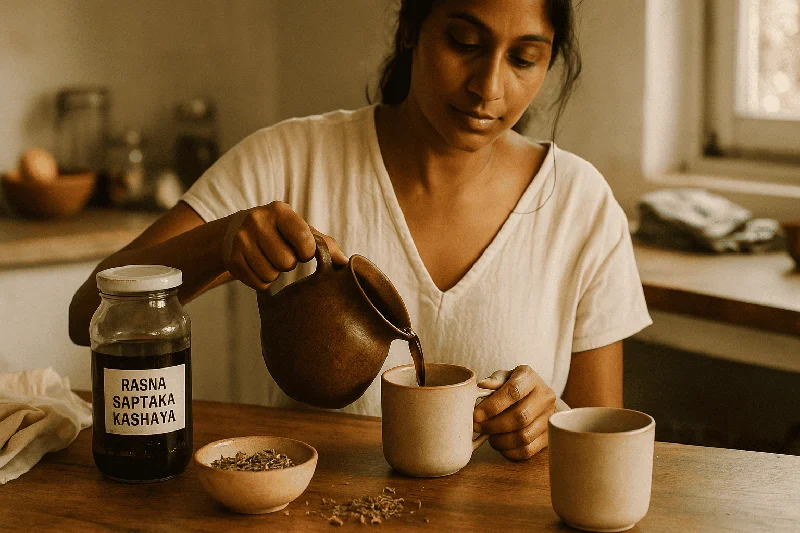
The world of integrative medicine has witnessed an impressive rise in popularity, with many individuals seeking solutions that bridge traditional wisdom and modern scientific insights. According to the World Health Organization (WHO), a significant portion of the global population now relies on herbal remedies as part of their primary healthcare. One such traditional preparation that has garnered attention for its potential health benefits is Rasna Saptaka Kashaya.
Often hailed for its purported ability to support joint health and address various inflammatory conditions, Rasna Saptaka Kashaya has a rich history embedded in Ayurvedic medicine. But beyond its popularity in Ayurveda, it is essential to explore the scientific evidence behind its usage, evaluate its safety profile, and understand its potential role in modern healthcare.
In this comprehensive guide, we will delve into the origins of Rasna Saptaka Kashaya, break down its key ingredients, discuss its potential health benefits, and shed light on current research findings. By the end of this article, you will have a balanced, evidence-based perspective on Rasna Saptaka Kashaya so you can make more informed decisions about its place in your wellness journey.
What Is Rasna Saptaka Kashaya?
A Quick Overview
In Ayurvedic terminology, a kashaya refers to a decoction made by boiling specific herbal ingredients in water until a substantial portion of the liquid evaporates, leaving a concentrated extract. Rasna Saptaka Kashaya is one such formulation that typically comprises seven herbs. Though exact formulations may vary slightly depending on regional or practitioner-specific traditions, the overarching goal remains the same: to harness the synergistic properties of multiple herbs that may promote joint comfort and support overall health.
Ayurvedic Rationale
From an Ayurvedic perspective, Rasna Saptaka Kashaya is believed to help balance the body’s doshas—primarily Vataand Kapha. Ayurvedic texts often describe an imbalance in these doshas as a contributing factor to various musculoskeletal and inflammatory conditions. By targeting these imbalances through specific herbal combinations, practitioners aim to restore harmony within the body’s natural processes.
Key Ingredients in Rasna Saptaka Kashaya
While different classical texts and practitioners may modify the ingredients slightly, a standard Rasna Saptaka Kashaya frequently includes the following herbs:
-
Rasna (Pluchea lanceolata)
-
Known in Ayurveda for its potential anti-inflammatory and analgesic qualities.
-
Often used to support joint mobility and soothe discomfort in muscles.
-
-
Guduchi (Tinospora cordifolia)
-
Revered as a “Rasayana” herb, Guduchi is noted for its immunomodulatory properties.
-
Research suggests it may assist in regulating inflammatory markers and promoting overall immune health.
-
-
Gokshura (Tribulus terrestris)
-
Commonly used to support urinary tract health and maintain fluid balance.
-
May also have mild anti-inflammatory properties, complementing the other herbs.
-
-
Eranda (Ricinus communis)
-
Known for its potential analgesic effects when used in specific Ayurvedic formulations.
-
The root of the castor plant is often included to help reduce joint stiffness.
-
-
Punarnava (Boerhavia diffusa)
-
Celebrated for its rejuvenating characteristics, particularly related to kidney and liver function.
-
May aid in reducing water retention and supporting the body’s natural detoxification processes.
-
-
Devadaru (Cedrus deodara)
-
This Himalayan cedar is traditionally cited for its anti-inflammatory and analgesic properties.
-
Research indicates potential benefits in alleviating minor aches and soothing the respiratory system.
-
-
Shunthi (Zingiber officinale, i.e., dry ginger)
-
Valued for its digestive and anti-inflammatory qualities.
-
Dry ginger is believed to warm the body and help harmonize the formula.
-
Each herb contributes distinct phytochemicals, such as alkaloids, flavonoids, and terpenoids. When combined, these compounds may work in synergy to enhance the overall efficacy of Rasna Saptaka Kashaya.
Potential Health Benefits
1. Joint Health and Inflammation Support
One of the most commonly cited uses for Rasna Saptaka Kashaya is its potential to support joint health. Traditional Ayurvedic texts suggest that it helps alleviate discomfort associated with age-related wear and tear, overuse injuries, or inflammatory conditions such as arthritis.
-
Targeted Anti-Inflammatory Action: The blend of herbs like Rasna, Guduchi, and Devadaru can have a modulatory effect on the body’s inflammatory pathways.
-
Possible Pain Relief: Ingredients like Eranda and Shunthi may help reduce joint stiffness and discomfort.
2. Gastrointestinal Harmony
Several herbs in this formulation, notably Shunthi (dry ginger) and Punarnava, are traditionally believed to aid digestion. By supporting metabolic processes and promoting a healthy gut environment, Rasna Saptaka Kashaya could indirectly contribute to overall well-being.
-
Enhanced Digestive Function: Shunthi is known for improving digestive fire (agni), reducing bloating and gas.
-
Detoxification: Punarnava is believed to help the body eliminate toxins, which may improve digestive comfort.
3. Immune System Modulation
Guduchi (Tinospora cordifolia) has gained significant traction in modern research as an adaptogenic herb that may modulate immune responses. When combined with other supportive herbs, the decoction could offer a mild but broad-ranging immune support.
-
Immunomodulatory Effects: Some studies suggest Guduchi can help regulate cytokines involved in the inflammatory process.
-
Antioxidant Properties: A number of the ingredients contain antioxidants that may help combat oxidative stress.
4. Fluid Balance and Kidney Health
Gokshura and Punarnava both feature in traditional formulas aimed at maintaining healthy urinary tract function and balancing fluids in the body. By supporting the kidneys’ natural filtration processes, these herbs might help in reducing water retention and swelling.
-
Reduced Water Retention: Punarnava is often included in formulations to address edema and other swelling-related issues.
-
Renal Support: Preliminary research hints that Gokshura may aid in maintaining kidney function, although more robust human trials are needed for conclusive evidence.
Don't wait or self medicate. Start chat with Doctor NOW
Scientific Evidence & Research
Literature Reviews and Meta-Analyses
While Rasna Saptaka Kashaya, as a specific combination, has not been as extensively studied in randomized controlled trials as some modern pharmaceuticals, individual herbs within the formulation have been the subject of growing scientific interest:
-
Guduchi (Tinospora cordifolia): A 2019 review in the Journal of Ethnopharmacology highlighted its immunomodulatory and anti-inflammatory potential.
-
Rasna (Pluchea lanceolata): Some preliminary in vitro studies suggest that extracts from Rasna possess anti-inflammatory properties, but large-scale human trials remain limited.
-
Ginger (Zingiber officinale): A 2020 meta-analysis published in Phytotherapy Research found that ginger can help reduce markers of inflammation, particularly in individuals with osteoarthritis.
Ayurvedic Clinical Trials
Some small-scale Ayurvedic clinical trials have reported positive outcomes for polyherbal decoctions containing these ingredients. For instance, case series and observational studies have noted improvements in joint flexibility and reduced discomfort. However, these findings need validation through larger, placebo-controlled clinical trials to establish the efficacy and safety profile definitively.
Ongoing Research
Researchers continue to explore the synergy between various Ayurvedic herbs. Modern techniques such as high-performance liquid chromatography (HPLC) and mass spectrometry are increasingly used to identify and quantify the active compounds in these formulations. Experts believe that understanding the pharmacokinetic interactions of these herbs will open doors for more targeted, evidence-based applications.
How to Use Rasna Saptaka Kashaya
Preparation Steps
-
Measure Ingredients: Traditional guidelines involve taking dried herbal powders in specified ratios. If you’re obtaining a ready-made product, follow the recommended quantity on the packaging.
-
Boil in Water: Typically, two to four teaspoons of the herbal mixture is boiled in about 200–250 mL of water until the volume reduces by half.
-
Strain and Consume: Once reduced, strain the liquid and discard the residual plant matter. The resulting concentrated decoction is usually taken warm.
Dosage and Frequency
-
General Guidelines: Many Ayurvedic practitioners recommend taking 1–2 tablespoons of Rasna Saptaka Kashaya once or twice daily, often on an empty stomach.
-
Professional Advice: Dosage can vary based on age, constitution (prakriti), and specific health conditions. Always consult a qualified Ayurvedic practitioner or healthcare provider for a tailored recommendation.Precautions, Side Effects, and Interactions
-
Potential Allergies
-
Although rare, some individuals may have sensitivities to specific herbs. Discontinue use if you notice symptoms like itching, rash, or gastrointestinal distress.
-
-
Drug Interactions
-
Some herbal components (e.g., ginger) may interact with blood-thinning medications or blood pressure drugs. Consult your doctor if you’re on prescription medications.
-
-
Pregnancy and Breastfeeding
-
Insufficient scientific evidence exists to conclusively determine safety during pregnancy or lactation. It’s best to seek professional medical advice in such cases.
-
-
Underlying Medical Conditions
-
Individuals with existing liver, kidney, or heart conditions should exercise caution and consult a healthcare professional before starting any herbal regimen.
-
Frequently Asked Questions (FAQ)
1. Is Rasna Saptaka Kashaya Safe for Long-Term Use?
Most Ayurvedic practitioners consider it relatively safe when used as directed. However, long-term usage without professional oversight isn’t advised. Regular check-ups and consultations with a qualified healthcare provider are recommended for ongoing use.
2. Can I Make Rasna Saptaka Kashaya at Home?
Yes, if you have access to high-quality herbal ingredients. However, sourcing pure herbs can be challenging, and correct ratios are crucial for effectiveness and safety. Many reputable Ayurvedic pharmacies offer premixed powders or readymade decoctions to ensure consistency.
3. Does It Work for Rheumatoid Arthritis?
While anecdotal reports and small studies suggest it may help reduce joint inflammation, more robust research is needed to confirm its efficacy in autoimmune conditions like rheumatoid arthritis. Consult your rheumatologist for personalized guidance.
4. Is There a Specific Diet to Follow While Taking This Decoction?
Ayurvedic principles often recommend a sattvic (pure and balanced) diet to maximize the benefits of herbal remedies. Emphasizing fresh fruits, vegetables, and easily digestible grains can be helpful. Reduce intake of highly processed foods, sugary snacks, and excessive caffeine.
5. How Soon Can I Expect Results?
Individual responses vary. Some users report noticeable relief in joint discomfort within a few weeks, while others require several months of consistent usage. Factors like overall health, severity of symptoms, and lifestyle choices also influence effectiveness.
Conclusion and Call to Action
Rasna Saptaka Kashaya stands at the intersection of ancient Ayurvedic wisdom and emerging scientific curiosity. Preliminary research on its individual components, coupled with centuries of anecdotal use, suggests potential benefits for joint health, digestion, and immune modulation. However, as with any herbal remedy, it is crucial to adopt a balanced perspective that weighs traditional knowledge against modern clinical evidence.
If you’re considering incorporating Rasna Saptaka Kashaya into your health routine, consult your healthcare providerfor personalized advice—especially if you have pre-existing conditions or are on medication. For those seeking a more holistic approach to wellness, this decoction may serve as a complementary modality alongside a balanced diet and a healthy lifestyle.
Share this article with friends and family, leave a comment with your questions or experiences, and subscribe for more in-depth explorations of herbal and integrative medical topics. By staying informed and engaging in open dialogue, we can collectively advance our understanding of how time-honored traditions can serve our modern health needs.
Disclaimer
This article is for informational purposes only and does not replace professional medical advice, diagnosis, or treatment. Always seek the guidance of a qualified healthcare professional before making any changes to your healthcare regimen.
References & Further Reading
-
World Health Organization (WHO). Traditional, Complementary and Integrative Medicine.
WHO.int -
Journal of Ethnopharmacology. Various articles on Guduchi (Tinospora cordifolia) and Rasna (Pluchea lanceolata).
-
Phytotherapy Research. Meta-analysis on Zingiber officinale (ginger) for osteoarthritis management.
-
CDC. Arthritis-Related Statistics.
CDC.gov
Questions from users
Can Rasna Saptaka Kashaya help with mobility issues related to aging?
Scarlett
9 days ago
Yes, Rasna Saptaka Kashaya can potentially help with mobility issues, especially those related to aging. It is valued in ayurveda for supporting joint health and balancing Vata and Kapha doshas, which are often connected to joint discomfort. Still, it's always good to consult with a practitioner to see if it's right for you!
Can I take Rasna Saptaka Kashaya if I have a sensitivity to certain herbs?
Paisley
18 days ago
If you have sensitivities to certain herbs, it's best to proceed with caution. Rasna Saptaka Kashaya contains 7 different herbs. I’d suggest consulting with a qualified Ayurvedic practitioner who can check the specific ingredients and adapt it for your needs or so you can try a different remedy. Better to be safe!
Can I use Rasna Saptaka Kashaya for boosting my overall energy levels?
Rae
27 days ago
Rasna Saptaka Kashaya is mainly used for joint health and addressing Vata imbalances rather than boosting energy levels. If you're looking to boost energy, consider balancing your agni (digestive fire) and nourishing your dhatus with diet and lifestyle changes. For some people, herbs like Ashwagandha or Shatavari might be more helpful for energy.
What is the historical significance of Rasna Saptaka Kashaya in Ayurvedic medicine?
Nathan
36 days ago
Rasna Saptaka Kashaya has been significant in Ayurveda for helping with joint health and digestion. Historically, it's been used for balancing doshas, especially Vata-related issues. The blend's importance lies in its synergy of herbs like Rasna, which have been trusted for ages in traditional practices. While it's popular, more scientific validation is still needed to confirm its efficacy.
What is the role of Guduchi in reducing inflammation and supporting joint health?
Wallace
46 days ago
Guduchi is pretty amazing for inflammation and joint health! It's known to cool down inflammation 'cause it balances Pitta dosha, which often heats things up in the body. Think of Guduchi like a soothing friend for your joints. It helps calm the body's inflammatory pathways, providing relief and supporting comfortable movement.
Is it safe to combine ginger with other herbs for arthritis relief?
River
55 days ago
Combining ginger with other herbs like Guduchi and Rasna can be generally safe and even beneficial for arthritis relief because they all have anti-inflammatory properties. However, individual responses can vary, and it's wise to consult an ayurvedic practitioner or healthcare provider to ensure it suits your unique constitution and dosha balance. Also, start with small amounts to see how your body reacts!
What are the signs that my doshas might be out of balance affecting my health?
Zuri
65 days ago
If your doshas are outta balance, you might be experiencing things like digestive issues, sleep troubles, low energy, mood swings, or even skin problems. It's kinda like your body's way of saying somethin's off. Checking in with a Ayurvedic practitioner could help pinpoint which doshas might be actin' up!
Is it safe to make Rasna Saptaka Kashaya without prior herbal knowledge?
Violet
75 days ago
It's generally not safe to make Rasna Saptaka Kashaya without prior herbal knowledge. The right proportions and quality of herbs are crucial to avoid any unwanted effects. I'd recommend consulting with an Ayurvedic practitioner to guide you. Safety first, always!
Can I use Rasna Saptaka Kashaya to help manage inflammation naturally?
Zachary
84 days ago
Yes, Rasna Saptaka Kashaya can be useful for managing inflammation due to its blend of herbs that balance Vata and Kapha doshas. But, remember, our bodies are all different. It's a good idea to consult an Ayurvedic practitioner just to make sure it's right for your specific constitution and needs!
What should I know about the preparation process of Rasna Saptaka Kashaya to get the best results?
Jayden
161 days ago
To prepare Rasna Saptaka Kashaya effectively, boil 2-4 teaspoons in 200-250 mL of water until it reduces by half, then strain it. Remember to consume fresh for best results. For holistic benefits, consider a diet that includes fresh fruits, vegetables, and easy-to-digest grains, aiding your body's balance and vitality!
Related articles

Orthopedic Disorders
Mushak Tail: Discover the Benefits of Mushak Tail for Wellness
Discover Mushak Tail, its benefits, proper dosage, uses, and the scientific evidence supporting this Ayurvedic remedy for joint health, mobility, and overall well-being.
3,094

Orthopedic Disorders
Rasnairandadi Kashayam Uses – Traditional Ayurvedic Remedy for Health & Healing
Explore the uses and benefits of Rasnairandadi Kashayam, an Ayurvedic decoction known for its therapeutic effects in treating joint pain, inflammation, and respiratory issues.
2,441

Orthopedic Disorders
Navaka Guggulu Benefits – Natural Detoxification & Joint Health
Discover Navaka Guggulu benefits, uses, and how this Ayurvedic formulation supports joint health, reduces inflammation, and promotes overall wellness.
3,764

Orthopedic Disorders
Amrita Guggulu Uses – Ayurvedic Benefits, Applications & Dosage
Explore the uses and benefits of Amrita Guggulu, an Ayurvedic formulation known for its anti-inflammatory and rejuvenating properties. Learn how it supports joint health, detoxification, and overall well-being.
2,862

Orthopedic Disorders
Kshara Thailam Uses – Powerful Ayurvedic Oil for Health and Healing
Discover the benefits and uses of Kshara Thailam, an Ayurvedic oil known for its therapeutic properties in treating skin conditions, digestive issues, and promoting overall well-being.
2,847

Orthopedic Disorders
An Ayurvedic Guide to Managing Joint and Muscle Pain
Joint and muscle pain is a common problem that affects people of all ages.
3,268

Orthopedic Disorders
Rasnairandadi Kashayam: Benefits, Dosage, Ingredients, Side Effects
Exploration of Rasnairandadi Kashayam: Benefits, Dosage, Ingredients, Side Effects
1,854
Orthopedic Disorders
Sandhivata Oil: Benefits, Uses, and Science-Backed Insights
Discover the benefits, uses, and science behind Sandhivata Oil for joint pain relief, improved mobility, and holistic arthritis management.
2,960

Orthopedic Disorders
Kasisadi Tailam Benefits, How To Use, Ingredients, Side Effects
Exploration of Kasisadi Tailam Benefits, How To Use, Ingredients, Side Effects
1,788

Orthopedic Disorders
Spinal Cord Injury Treatment in Ayurveda: Natural Healing & Recovery
Explore Ayurvedic approaches to spinal cord injury treatment, including holistic therapies, herbal support, rehabilitation methods, and safety considerations for optimal recovery.
3,080
Related questions on the topic
Legal
Additional Documents
© 2024 Ask Ayurveda. All rights reserved.