Ask Ayurvedic doctor a question and get a consultation online on the problem of your concern in a free or paid mode. More than 2,000 experienced doctors work and wait for your questions on our site and help users to solve their health problems every day.
FREE! Ask Ayurvedic Doctors 24/7

 Fast responses
 1000+ verified doctors
Body DetoxEar, Nose, and Throat DisordersGeriatrics & RejuvenationImmunodeficiencyInfertility TreatmentNutritionOrthopedic DisordersPediatricsRespiratory DisordersSexually Transmitted Diseases (STDs)Surgery RecoveryUrological DisordersVascular DisordersDental DisordersEndocrinological DisordersGastrointestinal DisordersYoga TherapyGeneral MedicineAllergic DisordersCardio DisordersGynecology and ObstetricsCosmetologySkin and Hair DisordersEye DisordersInfectious DiseasesMental DisordersNeurological DisordersOncologyPanchakarmaSexual Health & DisordersSports Medicine
Published on 01/13/25
(Updated on 07/06/26)
3,197
Spinal Cord Injury Treatment in Ayurveda: Natural Healing & Recovery

- A spinal cord injury (SCI) is one of the most devastating neurological events a person can experience — and if you're reading this, chances are you or someone you love is looking for answers beyond what conventional medicine has offered.
- Here's the direct answer: Ayurveda cannot reverse primary structural damage to the spinal cord, but it has a clinically documented ability to address secondary injury mechanisms, restore partial neurological function, reduce complications, and significantly improve quality of life. A 2017 case report published in the Journal of Ayurveda and Integrative Medicine (indexed on PubMed) documented a patient with traumatic SCI at T12–L1 who regained motor and sensory function after a structured Ayurvedic protocol involving Panchakarma therapies and internal herbal medicines — moving from wheelchair-bound to assisted walking within months.
This guide covers everything: the Ayurvedic understanding of spinal cord injury, specific therapies and their pharmacological mechanisms, realistic recovery expectations based on injury level and severity, evidence from published research, dietary protocols, contraindications most websites never mention, and a step-by-step rehabilitation framework.
What Is Spinal Cord Injury? Understanding the Condition Before Treatment
A spinal cord injury occurs when trauma or disease damages the spinal cord — the bundle of nerves running through the vertebral column that carries signals between the brain and the rest of the body. The moment the cord is damaged, communication between the brain and body parts below the injury level gets partially or completely disrupted.
Traumatic vs. Non-Traumatic Causes
Traumatic SCI accounts for the majority of cases, especially in India where road traffic accidents are the leading cause, followed by falls from height, sports injuries, and violence. Non-traumatic SCI results from conditions like spinal stenosis, tumors, infections (spinal tuberculosis is particularly common in India), degenerative disc disease, and vascular disorders.
Complete vs. Incomplete Spinal Cord Injury
This distinction is critical because it directly determines what Ayurveda can realistically achieve:
| Type | Definition | ASIA Scale | Ayurvedic Prognosis |
|---|---|---|---|
| Complete SCI | No motor or sensory function below injury level | ASIA A | Limited — focus on complication management, spasticity reduction, bladder/bowel function, quality of life |
| Incomplete SCI | Some motor or sensory function preserved below injury | ASIA B–D | Moderate to good — significant functional improvement possible with sustained Ayurvedic treatment |
Primary vs Secondary Injury: Why This Matters for Ayurveda
- Here's what most Ayurveda websites fail to explain properly.
- Spinal cord damage occurs in two phases:
Primary injury is the immediate mechanical damage — compression, laceration, distraction of the cord. This happens at the moment of impact and is largely irreversible. Secondary injury is the cascade of biological events that follows over hours, days, and weeks: edema, ischemia, inflammation, cytokine production, free radical damage, excitotoxicity, glial scar formation, apoptosis, and necrosis. This secondary cascade often causes more damage than the initial trauma. This is precisely where Ayurveda intervenes. The anti-inflammatory, neuroprotective, antioxidant, and regenerative properties of Ayurvedic herbs and therapies target secondary injury mechanisms — and this is the scientific rationale for why Ayurvedic treatment can produce measurable neurological improvement even weeks or months after the initial injury.
How Ayurveda Interprets Spinal Cord Injury: The Vata-Majja Framework
In Ayurvedic pathophysiology, spinal cord injury is understood through several interconnected concepts:
Vata Dosha Vitiation and Prana Flow Disruption
The spinal cord is considered a primary seat of Vata dosha — the biological energy governing all movement, nerve impulse transmission, and sensory perception. SCI represents a severe vitiation of Vata, specifically Vyana Vayu (governing circulation and motor function) and Apana Vayu (governing pelvic organs, bladder, and bowel function). The disruption of Prana Vayu flow through the Sushumna Nadi (the central energy channel corresponding anatomically to the spinal cord) explains the loss of motor and sensory function below the injury.
Marmabhighata and Majja Dhatu Kshaya
The concept of Marmabhighata — injury to vital energy points — directly applies to SCI. The vertebral column contains multiple Marma points, and their damage leads to catastrophic functional loss. Simultaneously, the injury destroys Majja Dhatu (the tissue layer corresponding to bone marrow and nervous tissue), leading to Majja Kshaya (depletion of nervous tissue).
Therapeutic Logic
Ayurvedic treatment therefore follows a clear logic:
- Pacify aggravated Vata through oleation (internal and external) and warmth therapies
- Nourish and regenerate Majja Dhatu through Rasayana (rejuvenation) herbs
- Clear Srotas (channels) to restore Prana flow through the spinal cord
- Strengthen Asthi Dhatu (bone tissue) to support structural recovery
- Address complications — bladder dysfunction, spasticity, pressure sores, depression
Panchakarma Therapies for Spinal Cord Injury: The Core Treatment Protocol
Panchakarma — Ayurveda's five-fold purification and rejuvenation system — forms the backbone of SCI treatment. These are not generic wellness treatments; in SCI management, specific Panchakarma procedures are selected and sequenced based on the injury level, completeness, duration since injury, and the patient's overall constitution.
Basti (Medicated Enema): The Most Important Therapy for SCI
Basti is considered the most powerful treatment for Vata disorders in classical Ayurveda, and it is the single most important Panchakarma therapy for spinal cord injury.
Two types are used:
Matra Basti — a small-volume oil enema (typically 60–80 ml of medicated oil like Sahacharadi Taila or Dhanwantaram Taila) administered daily, usually for the first 15 days of treatment. It nourishes Vata, lubricates the colon (the primary seat of Vata), and has a systemic neuroprotective effect through transrectal absorption of lipid-soluble medicinal compounds. Yapana Basti — a specialized nourishing enema designed for chronic and debilitating conditions. The published PubMed case report used Mustadi Yapana Basti administered for 16 consecutive days, followed by a 7-day rest period, then repeated. This specific Basti protocol showed measurable improvement in neurological function.
Abhyanga and Specialized Oil Therapies
- Abhyanga — full-body warm oil massage using Vata-pacifying oils (Dhanwantaram, Ksheerabala, or Mahamasha Taila). Performed daily, it improves circulation, reduces spasticity, prevents muscle atrophy, and supports sensory recovery.
- Kati Basti — a dam of warm medicated oil retained over the lumbar/thoracic region for 30–45 minutes. Particularly effective for thoracolumbar injuries.
- Pizhichil — a Kerala specialty where warm medicated oil is continuously poured over the entire body while simultaneously being massaged in. Often called the "royal treatment," it provides deep nourishment to muscles and nerves.
Swedana (Therapeutic Sweating)
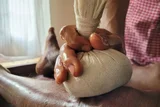
Navarakizhi (Shashtika Shali Pinda Sweda) is the most commonly used Swedana for SCI — boluses of medicated rice cooked in milk and herbal decoctions are applied warm over the body. This therapy simultaneously provides warmth (Swedana), nourishment (through transdermal absorption), and gentle pressure that stimulates proprioceptive nerve pathways. It's particularly effective for improving muscle tone and reducing wasting. Patra Pinda Sweda uses boluses of warm medicated leaves and is preferred when inflammation is more prominent.
Treatment Duration and What to Expect
| Phase | Duration | Focus | Expected Outcomes |
|---|---|---|---|
| Intensive Phase | 21–45 days (inpatient) | Daily Panchakarma, internal medicines, stabilization | Reduced spasticity, improved bladder/bowel function, initial sensory changes |
| Intermediate Phase | 3–6 months (outpatient with periodic inpatient stays) | Continued Basti cycles, herbal medicines, physiotherapy integration | Motor improvements, increased sensation, functional gains |
| Long-Term Maintenance | 6–24 months | Periodic Panchakarma courses (every 2–3 months), daily oral medicines, yoga | Continued progressive improvement, complication prevention, independence maximization |
Most reputable Ayurvedic hospitals in India require a minimum stay of 21 days for the initial intensive phase. Shorter durations are generally insufficient for meaningful neurological change.
Ayurvedic Medicines for Spinal Cord Injury: Pharmacology and Evidence
- This is where we go beyond the typical "Ashwagandha is good for nerves" advice.
- Understanding why these herbs work — at the molecular level — is crucial for both patients and practitioners.
Ashwagandha (Withania somnifera)
Active compounds: Withanolides (withaferin A, withanolide D)
- Mechanism in SCI: Withanolides have demonstrated neuroprotective effects in multiple studies. A 2013 study in PLOS ONE showed that withaferin A promotes neurite outgrowth and regeneration of both axons and dendrites.
- It reduces NF-κB-mediated neuroinflammation — directly addressing the secondary injury cascade. Additionally, Ashwagandha reduces cortisol levels, combating the chronic stress response that impairs healing.
Clinical dosage in SCI (from published protocol): 3 g powder twice daily with warm milk
Guggulu (Commiphora mukul)
Active compounds: Guggulsterones (Z-guggulsterone, E-guggulsterone) Mechanism in SCI: Guggulsterones are potent anti-inflammatory agents that inhibit NF-κB activation and reduce pro-inflammatory cytokines (TNF-α, IL-1β, IL-6) — the very same cytokines that drive secondary spinal cord damage. Guggulu also has lipid-regulating properties that improve blood flow to compromised spinal tissue. Commonly used formulations: Yogaraja Guggulu, Simhanada Guggulu, Triphala Guggulu
Bala (Sida cordifolia)
Active compounds: Ephedrine alkaloids, phytosterols, mucilage Mechanism: Bala literally means "strength" in Sanskrit. It acts as a Balya (strengthening) and Brimhana (nourishing) agent for muscles and nerves. The phytosterols support myelin sheath repair, while its anti-inflammatory properties reduce neural edema.
Key Formulations from Published Clinical Protocols
| Medicine | Dosage (from PubMed case report) | Primary Action |
|---|---|---|
| Brhadvātacintāmaṇi Rasa | 125 mg twice daily | Potent Vata-pacifying Rasa Shastra preparation; neuroprotective |
| Ashwagandha Churna | 3 g twice daily | Neuroprotection, nerve regeneration, stress reduction |
| Dashamula Kwatha | 40 ml twice daily | Anti-inflammatory, Vata-pacifying decoction of ten roots |
| Sahacharadi Taila | External application and Basti | Nourishes nerves, reduces spasticity |
| Dhanwantaram Taila | External application | Deep tissue nourishment, Vata pacification |
| Ksheerabala 101 (Avarti) | Internal — 10 drops with milk | Powerful nervine tonic, crosses blood-brain barrier with repeated processing |
> Important note: Rasa Shastra preparations like Brhadvātacintāmaṇi Rasa contain processed minerals and metals. They must ONLY be prescribed and monitored by a qualified Ayurvedic physician. Self-medication with these formulations is dangerous.
Can Paralysis Be Cured in Ayurveda? Realistic Recovery Expectations by Injury Level
This is the section no other website gives you honestly. Let's break down what's actually realistic.
Cervical Injuries (C1–C7): Tetraplegia/Quadriplegia
These are the most severe injuries. Complete cervical injuries (ASIA A) have the most limited prognosis regardless of treatment modality.
Ayurveda can help with:
- Spasticity management (significant improvement commonly seen)
- Pain reduction
- Bladder and bowel regulation
- Prevention of pressure sores and respiratory complications
- Partial sensory recovery in incomplete injuries
For incomplete cervical injuries (ASIA B–D), Ayurvedic treatment has shown ability to improve hand function, grip strength, and upper limb motor control — the most meaningful functional gains for these patients.
Thoracic Injuries (T1–T12): Paraplegia
The published PubMed case report involved a T12–L1 injury and documented recovery from complete paraplegia to assisted ambulation. Thoracic-level incomplete injuries generally respond better to Ayurvedic treatment because:
- The lower motor neuron pool for the legs may be partially intact
- Neuroplasticity potential is higher with preserved spinal circuits
- Basti therapy directly influences the neural plexuses in the lower abdomen
Lumbar Injuries (L1–L5): Lower Limb and Pelvic Function
Lumbar Spine Treatment in Ayurveda
Lumbar injuries often affect the cauda equina (nerve roots rather than the cord itself), and these peripheral nerves have inherently better regenerative capacity than central cord tissue. Ayurvedic treatment for lumbar injuries often produces the best outcomes:
- Kati Basti is specifically designed for this region
- Nerve root compression responds well to anti-inflammatory Ayurvedic protocols
- Bladder and sexual function recovery is most achievable at this level
What "Cure" Actually Means
Be wary of any practitioner — Ayurvedic or otherwise — who promises complete cure of spinal cord injury.
What Ayurveda can realistically deliver:
- Improvement in ASIA grade (e.g., ASIA A → B, or B → C) in some patients with incomplete injuries
- Significant reduction in spasticity and neuropathic pain
- Improved bladder and bowel function — reducing dependence on catheters
- Enhanced quality of life metrics — better sleep, reduced depression, increased independence
- Slowed progression in degenerative spinal conditions
Don't wait or self medicate. Start chat with Doctor NOW
Diet and Lifestyle (Ahara-Vihara) for Spinal Cord Injury Recovery
Vata-Balancing Diet Protocol
Since SCI represents extreme Vata vitiation, the dietary approach is aggressively Vata-pacifying:
Foods to Emphasize:
- Warm, cooked, unctuous (oily) foods — ghee is considered essential
- Sweet, sour, and salty tastes predominate
- Root vegetables (sweet potatoes, beets, carrots)
- Whole grains (rice, wheat, oats — cooked soft)
- Warm milk with Ashwagandha and turmeric at bedtime
- Sesame oil in cooking and as condiment
- Bone broths or well-spiced dals for protein
- Anti-inflammatory spices: turmeric, ginger, cumin, fenugreek, cinnamon
Foods to Avoid:
- Cold, raw, dry foods (salads, raw vegetables, crackers, dry cereals)
- Caffeine and stimulants — they further aggravate Vata
- Carbonated beverages
- Processed and frozen foods
- Excessive bitter and astringent tastes (they increase Vata)
- Alcohol — neurotoxic and dehydrating
Yoga, Pranayama, and Meditation as Rehabilitation Tools
Adapted Yoga for SCI Patients
Yoga practice must be carefully adapted based on functional ability. Chair yoga and bed yoga sequences are used for patients with limited mobility.
Key benefits:
- Pranayama (breathing exercises): Nadi Shodhana (alternate nostril breathing) and Bhramari directly influence the autonomic nervous system, reduce spasticity, and improve respiratory function — a common concern in cervical injuries. A 2015 study in Spinal Cord journal demonstrated that pranayama improved forced vital capacity in SCI patients.
- Gentle asanas: Cat-Cow variations (adapted for seated or supine position), supported twists, and passive stretching preserve joint range of motion and reduce contractures.
- Meditation: Reduces pain perception, anxiety, and depression — all extremely common in SCI patients. Regular meditation practice has been shown to influence neuroplasticity positively.
When Ayurveda Should NOT Be the First Line: Contraindications and Safety
This is the section every other Ayurveda website conveniently skips. But honesty builds trust, and trust is what you need when making medical decisions.
Absolute Contraindications for Primary Ayurvedic Treatment
- Acute SCI with spinal instability: If the vertebral fracture is unstable, surgical stabilization MUST come first. Panchakarma therapies involving body manipulation on an unstable spine can cause catastrophic worsening.
- Active spinal cord compression requiring decompression: Tumors, large disc herniations, or bone fragments compressing the cord need urgent surgical decompression. Delay can mean permanent additional damage.
- Acute phase (first 24–72 hours): The immediate post-injury period requires emergency medical management — airway protection, hemodynamic stabilization, imaging, and surgical assessment. Ayurveda enters the picture after medical stabilization.
- Active infection (spinal abscess, discitis): Requires antibiotics and possibly surgical drainage before Ayurvedic rehabilitation begins.
Precautions During Ayurvedic Treatment
- Patients on anticoagulants need careful monitoring — some Ayurvedic herbs have blood-thinning properties
- Rasa Shastra (mineral-based) preparations require liver and kidney function monitoring
- Panchakarma intensity must be calibrated to the patient's strength — debilitated patients need gentler protocols
- Autonomic dysreflexia risk in injuries above T6 — Ayurvedic therapists must be trained to recognize this life-threatening complication
The Integrative Approach: Ayurveda + Modern Medicine
The best outcomes in SCI are seen when Ayurveda is integrated with — not substituted for — conventional care:
- Surgical stabilization (when needed) → Ayurvedic rehabilitation starting 2–4 weeks post-surgery
- Physiotherapy combined with daily Panchakarma procedures
- Intermittent catheterization protocols maintained while Ayurvedic bladder function recovery proceeds
- Imaging follow-up (MRI) to monitor structural changes alongside clinical improvement
Scientific Evidence: What Research Actually Shows
Published Studies and Case Reports
Beyond the frequently cited PubMed case report (2017), here is what the research landscape looks like:
- Ashwagandha neuroprotection: A 2020 study in Neurochemistry International demonstrated that withanolide A promoted axonal regeneration and functional recovery in rat spinal cord injury models. While animal studies don't directly translate to humans, they provide mechanistic evidence for the traditional use.
- Basti therapy mechanisms: A 2018 review in AYU Journal examined the pharmacokinetics of rectal drug absorption in Basti therapy, confirming that lipid-soluble medicinal compounds achieve significant systemic bioavailability through this route — bypassing first-pass liver metabolism.
- Panchakarma in neurological conditions: A 2019 observational study across multiple Ayurvedic hospitals in Kerala documented functional improvement in 67% of patients with various neurological conditions (including SCI) who underwent minimum 21-day Panchakarma protocols.
Limitations of Current Evidence
- It would be dishonest not to acknowledge: there are no randomized controlled trials (RCTs) specifically on Ayurvedic treatment for SCI. The evidence consists of case reports, case series, observational studies, and preclinical research.
- This doesn't mean Ayurveda doesn't work for SCI — it means the formal research infrastructure hasn't caught up with centuries of clinical observation. Multi-center RCTs are needed, and several Indian research institutions are currently planning them.
Best Ayurvedic Treatment for Spine in India: Choosing the Right Center
What to Look For
- NABH accreditation — ensures minimum quality and safety standards
- Physicians with MD (Ayurveda) in Kayachikitsa or Panchakarma — not just BAMS
- In-house physiotherapy — integrated rehabilitation, not just Ayurveda in isolation
- Diagnostic capabilities — ability to order and interpret MRI, X-rays, blood work
- Minimum recommended stay of 21 days — beware of centers promising results in 7 days
- Transparent about limitations — centers that promise "guaranteed cure" should raise red flags
Spinal Cord Injury Treatment in Kerala
Kerala has the most developed infrastructure for Ayurvedic neurological rehabilitation, partly because of the unique Kerala Panchakarma tradition that includes therapies like Pizhichil, Navarakizhi, and Dhara which are not part of classical North Indian Panchakarma. Several hospitals in Thrissur, Ernakulam, and Thiruvananthapuram have decades of experience treating SCI patients, with treatment costs significantly lower than comparable conventional rehabilitation programs.
Home Remedies and Self-Care for Spinal Cord Injury Support
> Disclaimer: These are supportive measures only. They do not replace professional Ayurvedic treatment or medical care for spinal cord injury.
- Daily self-massage (Abhyanga) with warm sesame oil on accessible body parts — improves circulation, skin integrity (preventing pressure sores), and provides sensory stimulation
- Warm Epsom salt baths — magnesium absorption reduces muscle spasms and spasticity
- Castor oil packs over the lower abdomen — supports bowel function (a common SCI complication)
- Turmeric golden milk before bed — anti-inflammatory, promotes sleep
- Ashwagandha tea (1 tsp powder in warm milk with honey) — neuroprotective daily tonic
Frequently Asked Questions
How long does spinal injury treatment take in Ayurveda?
The initial intensive phase requires minimum 21–45 days of inpatient treatment. However, meaningful neurological recovery is a long-term process. Most patients undergo 3–4 intensive Panchakarma courses over 12–18 months, with daily oral medicines and home practices in between. Some patients continue periodic maintenance treatments for 2+ years.
Can you walk again after spinal cord injury rehabilitation?
It depends entirely on the injury level and completeness. Patients with incomplete injuries (ASIA B, C, or D), particularly at thoracic and lumbar levels, have the best chance of regaining some ambulatory function. Complete injuries (ASIA A) at cervical levels are unlikely to regain walking ability with any treatment modality. Ayurveda can improve functional independence even without full walking recovery.
What is the Ayurvedic name for spinal cord?
The spinal cord is referred to as Majja Dhatu (nervous tissue) running through Asthi Dhatu (vertebral column). The functional energy channel corresponding to the spinal cord is called Sushumna Nadi. Spinal cord injury may be classified under Marmabhighata (injury to vital points) and Vatavyadhi (diseases of Vata dosha).
Is Ayurvedic treatment safe alongside conventional medication?
Yes, when managed by a qualified Ayurvedic physician who is informed about all conventional medications the patient is taking. Some herb-drug interactions exist (e.g., Guggulu with thyroid medications, Ashwagandha with sedatives), so transparency with both your Ayurvedic and allopathic doctors is essential.
When does rehab start after a spinal cord injury?
In the Ayurvedic framework, gentle interventions can begin as early as 2 weeks after medical stabilization and surgical fixation (if performed). Initial treatment focuses on internal medicines and gentle external oleation, progressing to full Panchakarma procedures as the patient's strength improves. The earlier Ayurvedic rehabilitation begins, the better the outcomes — ideally within the first 3–6 months after injury, before chronic changes become entrenched.
Can Ayurveda help with nerve compression in the spine?
Nerve compression (from disc herniation, stenosis, or spondylolisthesis) responds particularly well to Ayurvedic treatment because the nerve is not severed — it's compressed. Kati Basti, Basti therapy, and anti-inflammatory herbs like Guggulu and Rasna can reduce the compression, inflammation, and swelling around the nerve, often avoiding the need for surgery. Multiple studies from Kerala Ayurvedic hospitals have documented significant improvement in nerve compression syndromes.
Take the First Step Toward Recovery
Spinal cord injury is life-altering, but it does not have to be life-limiting. Ayurveda offers a systematic, evidence-informed approach to SCI rehabilitation that addresses what modern medicine often cannot — the progressive, long-term restoration of neurological function through natural healing mechanisms.
The key is to begin with honest expectations, choose a qualified treatment center, commit to the full duration of therapy, and integrate Ayurvedic care with appropriate conventional medical management. Whether you're 3 weeks or 3 years post-injury, Ayurvedic intervention can still make a meaningful difference in function, comfort, and quality of life.
If you're considering Ayurvedic treatment for spinal cord injury, consult with a qualified Ayurvedic physician who specializes in neurological conditions. Bring your MRI reports, medical history, and current medication list to your first consultation — this allows for a personalized treatment plan based on your specific injury profile.
Scientific Sources
- Promising traditional Indian medicinal plants for the management of novel Coronavirus disease: A systematic review — Singh RS et al., 2021, Phytotherapy research : PTR
- Biotechnological production of bacosides from cell and organ cultures of Bacopa monnieri — Murthy HN, 2022, Applied microbiology and biotechnology
- Scientific validation of the ethnomedicinal properties of the Ayurvedic drug Triphala: a review — Baliga MS et al., 2012, Chinese journal of integrative medicine
- Can Ayurveda medicine supplement modern medical treatments in chronic disease management? — Ravindran V et al., 2024, The journal of the Royal College of Physicians of Edinburgh
- Terminalia arjuna in cardiovascular diseases: making the transition from traditional to modern medicine in India — Maulik SK et al., 2010, Current pharmaceutical biotechnology
- Add-on Ayurveda Treatment for Early Stage COVID-19: A Single Center Retrospective Cohort Study From Gujarat, India — Thakar A et al., 2021, Journal of evidence-based integrative medicine
- Exploring scientific validation of Triphala Rasayana in ayurveda as a source of rejuvenation for contemporary healthcare: An update — Ahmed S et al., 2021, Journal of ethnopharmacology
- Pueraria tuberosa: a review on its phytochemical and therapeutic potential — Maji AK et al., 2014, Natural product research
- Clinical evaluation of purified Shilajit on testosterone levels in healthy volunteers — Pandit S et al., 2016, Andrologia
- Editorial: complementary and Alternative Medicine (CAM), Ayurvedic medicine, and research into behavioral and mind/body interventions in headache — Tepper SJ, 2014, Headache
- Ayurvedic interventions for osteoarthritis: a systematic review and meta-analysis — Kessler CS et al., 2015, Rheumatology international
- Bacopa monniera, a reputed nootropic plant: an overview — Russo A et al., 2005, Phytomedicine : international journal of phytotherapy and phytopharmacology
- Whole Medical Systems the Rehabilitation Setting (Traditional Chinese Medicine, Ayurvedic Medicine, Homeopathy, Naturopathy) — Drake DF et al., 2020, Physical medicine and rehabilitation clinics of North America
- Interlinking diabetes and Alzheimer's disease: A pathway through medicinal plant-based treatments — Pattanaik SK et al., 2025, Journal of ethnopharmacology
- Bacopa monnieri: Preclinical and Clinical Evidence of Neuroactive Effects, Safety of Use and the Search for Improved Bioavailability — Gościniak A et al., 2025, Nutrients
- Exploring the Role of Mentha in Gut Microbiota: A Modern Perspective of an Ancient Herb — Arora S et al., 2023, Recent advances in food, nutrition & agriculture
- Withania somnifera Dunal (Ashwagandha): potential plant source of a promising drug for cancer chemotherapy and radiosensitization — Devi PU, 1996, Indian journal of experimental biology
- Foundations of clinical logagogy — Bühler KE, 2003, Medicine, health care, and philosophy
- Combined Ayurveda and Yoga Practices for Newly Diagnosed Type 2 Diabetes Mellitus: A Controlled Trial — Datey P et al., 2018, Complementary medicine research
- Recapitulation of Ayurveda constitution types by machine learning of phenotypic traits — Tiwari P et al., 2017, PloS one
Questions from users
What are the main principles of the Vata-Majja framework in Ayurveda for understanding spinal cord injury?
Nova
7 days ago
The Vata-Majja framework sees the spinal cord as a key site for Vata dosha, which is all about movement and communication in the body. In an injury, Vata gets disturbed, impacting prana (life force) flow. Because Vata controls nerve signals, its disruption can lead to serious nerve damage. Ayurveda looks to balance Vata and support the nervous system through herbs and therapies to help healing.
Is it safe to use heated rice packs for pain relief after a spinal cord injury?
Daniel
16 days ago
It's generally safe to use heat therapy like rice packs, but after a spinal cord injury, it's super important to be cautious and get guidance from a healthcare pro. Some people might have reduced sensation, so they might not feel if the pack's too hot, which can cause burns. An Ayurvedic doctor can help tailor safe practices for you!
Can I use Mustadi Yapana Basti for treating nerve issues at home?
Michael
26 days ago
Using Mustadi Yapana Basti at home for nerve issues is not recommended. This treatment requires precise knowledge and should be supervised by a qualified Ayurvedic practitioner to ensure safety and effectiveness. Nerve issues are complex, and a professional can tailor the treatment to your unique dosha balance and health condition. If you're looking for something to try at home, gentle yoga or meditation might help support your overall well-being without the complexities of such specific therapy.
Can Ayurvedic treatments help manage chronic pain from nerve damage effectively?
Paige
40 days ago
Yes, Ayurveda can help manage chronic pain from nerve damage! Herbal formulations with turmeric, ashwagandha, and guduchi are known for their, like, anti-inflammatory and analgesic properties. Treatment is personalized based on dosha imbalances and health status, aiming for holistic healing. Just remember, it's about supporting the body—combo it with whatever else you're doing!
Can Ayurvedic treatments help reduce inflammation after a spinal cord injury?
Serenity
50 days ago
Yes, Ayurvedic treatments can help reduce inflammation after a spinal cord injury by restoring balance and strengthening the nervous system. You could try herbs with anti-inflammatory properties like turmeric (Curcuma longa) or ashwagandha (Withania somnifera). But, keep in mind that these are supportive therapies and it’s best to consult with an Ayurvedic practitioner for personalized advice – especially considering dosha imbalances and individual constitution. And just watch for any allergic reactions too, they happen sometimes!
What is Brahmi and how does it support nerve health in Ayurvedic medicine?
Avery
60 days ago
Brahmi (Bacopa monnieri) is a well-loved herb in Ayurveda known for its ability to support nerve health. It helps balance the Vata dosha, which is linked to the nervous system. Brahmi enhances cognitive function and can improve memory and focus, plus it helps reduce stress levels, which is super important for nerve health!
What is Abhyanga and how does it help with recovery after a spinal cord injury?
Isabella
69 days ago
Abhyanga is a therapeutic massage that uses warm medicated oils suited to your dosha. It improves circulation, which is crucial for tissue repair and, it can help ease stiffness. After a spinal cord injury, this increased blood flow can support healing. Remember, it should complement, not replace, conventional medical care!
What is Majja Vardhaka and how does it support nerve health in Ayurvedic treatments?
Isaac
79 days ago
Majja Vardhaka refers to herbs that nourish and support the nervous system according to Ayurveda. They help maintain nerve health by strengthening neural pathways and boosting overall neurological function. Think of them as nourishment for your brain and nerves, enhancing recovery and regeneration. Try to keep a balanced diet and lifestyle too, as they help in maximizing these herbs' effectiveness!
Can Ayurvedic treatments improve sleep quality for those recovering from spinal cord injuries?
Tiffany
88 days ago
Ayurvedic treatments can definitely help improve sleep quality after a spinal cord injury by balancing the nervous system, reducing stress and supporting overall well-being. Try incorporating calming herbs like ashwagandha or jatamansi, practices like abhyanga (oil massage), or meditation to calm the mind. Also focus on warm, easily digestible foods to keep your agni strong.
Is it safe to use Ayurvedic treatments alongside physical therapy for spinal cord injuries?
Tiffany
98 days ago
It's generally safe to use Ayurvedic treatments alongside physical therapy, as long as you involve professionals in both fields to coordinate care. Keep communication open, share all your treatments with your primary doctors, and watch out for any new symptoms. Ayurvedic therapies can be supportive, but they won't replace the need for conventional care for something like spinal cord injuries.
Related articles

Orthopedic Disorders
Amritadi Guggulu: Traditional Roots, Modern Evidence
Discover how amritadi guggulu supports holistic well-being, backed by both ancient Ayurvedic wisdom and emerging scientific research.
2,629

Orthopedic Disorders
Migroset Tablet: Ayurvedic Relief for Migraine and Chronic Headaches
Learn about Migroset Tablet’s benefits, proper dosage, side effects, and scientific research. Discover how this medication supports bone health and prevents osteoporosis.
2,629

Orthopedic Disorders
Ayurvedic Treatment for Ligament Tear
Ligaments are tough, fibrous tissues that connect bones and stabilize joints. A ligament tear occurs when the ligament is stretched beyond its limit, causing partial or complete rupture.
3,843

Orthopedic Disorders
Simhanada Guggulu – Benefits, Dosage, How to Use, Side Effects, Ingredients and Reference
Exploration of Simhanada Guggulu – Benefits, Dosage, How to Use, Side Effects, Ingredients and Reference
3,563

Orthopedic Disorders
Vatagajankusha Rasa: Ayurvedic Insights and Modern Evidence
Explore Vatagajankusha Rasa in-depth—its Ayurvedic roots, modern studies, benefits, precautions, and usage. Gain scientific insight and expert perspectives.
2,188

Orthopedic Disorders
Rasnadi Guggulu: Uses, Dose, Side Effects
Exploration of Rasnadi Guggulu: Uses, Dose, Side Effects
4,897

Orthopedic Disorders
Pravala Panchamrita Rasa – Ayurvedic Formulation for Rejuvenation and Balance
Discover Pravala Panchamrita Rasa, a traditional Ayurvedic medicine combining calcined coral and a blend of five potent ingredients for detoxification, rejuvenation, and overall wellness. Learn about its benefits, usage guidelines, and precautions.
2,552

Orthopedic Disorders
Shaddharanam Tablet Benefits, Dosage, Side Effects, Ingredients
Exploration of Shaddharanam Tablet Benefits, Dosage, Side Effects, Ingredients
2,507

Orthopedic Disorders
What Is Marma Chikitsa in Ayurveda: Points, Healing, and Benefits
What is Marma Chikitsa in Ayurveda? Discover its meaning, benefits, key points, and how this ancient healing method supports pain relief and energy flow
4,068
Orthopedic Disorders
Vatarakta Treatment in Ayurveda – Holistic Approach for Joint & Blood Disorders
Discover the Ayurvedic approach to treating Vatarakta, a condition marked by joint pain, inflammation, and blood imbalances. Learn about herbal therapies, detoxification, and lifestyle changes for effective management.
2,475
Related consultations on the topic
Legal
Additional Documents
© 2024 Ask Ayurveda. All rights reserved.