FREE! Ask Ayurvedic Doctors 24/7

 Fast responses
 1000+ verified doctors
Kshara Thailam Uses – Powerful Ayurvedic Oil for Health and Healing
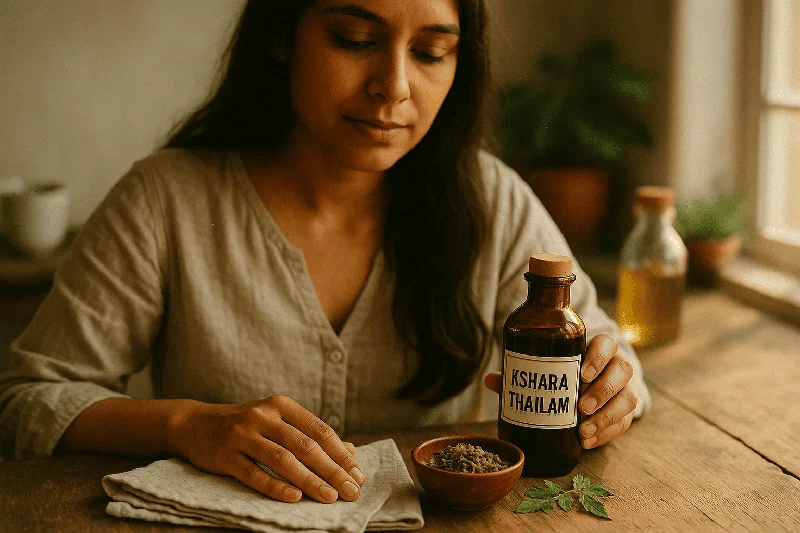
Kshara Thailam is a classical Ayurvedic medicated oil formulated primarily with Kshara (alkaline herbal ash) and Tila Thaila (sesame oil), used for treating ear diseases like tinnitus, chronic ear discharge, and hearing loss, as well as hemorrhoids, fistula, non-healing wounds, and certain skin disorders. Rooted in ancient texts such as the Sushruta Samhita and Bhaishajya Ratnavali, this polyherbal oil combines the caustic-yet-healing nature of Kshara with the deep-penetrating qualities of sesame oil to dissolve morbid tissue, reduce inflammation, and promote regeneration.
If you've been searching for a reliable, time-tested remedy for persistent ear problems or anorectal conditions, this guide covers everything — from ingredients and mechanism of action to a step-by-step usage technique, expected timelines, children's dosages, and comparisons with other Ayurvedic oils. We've gone deeper than any other resource available so you can make an informed decision.
What Is Kshara Thailam?
Kshara Thailam (also spelled Kshara Taila or Kshara Tailam) is a medicated oil preparation classified under Taila Kalpana in Ayurvedic pharmaceutics. The word "Kshara" derives from the Sanskrit root kṣar, meaning "to melt away" or "to dissolve." This directly hints at its primary action — dissolving abnormal or morbid tissue without damaging healthy surrounding structures.
"Thailam" simply means oil, specifically sesame oil in most classical formulations.
Meaning and Etymology
In Ayurvedic literature, Kshara is considered a para-surgical agent. Acharya Sushruta described it as one of the most versatile tools available to the Ayurvedic surgeon — capable of performing the actions of cutting, scraping, and cauterizing without an actual blade. When this alkaline preparation is processed into an oil medium, it becomes gentler for topical and cavity application while retaining its therapeutic potency.
Classical Ayurvedic References (Sushruta Samhita, Bhaishajya Ratnavali)
The formulation of Kshara Thailam can be traced through a rich chronological lineage:
- Sushruta Samhita (circa 1st–2nd century CE): Sushruta first detailed Kshara therapy in the Kshara Pavidyam chapter, establishing alkaline preparations as essential for managing Arsha (hemorrhoids), Bhagandara (fistula-in-ano), and Karna Roga (ear diseases).
- Ashtanga Hridaya by Vagbhata (7th century CE): Vagbhata refined Kshara-based formulations and expanded their use in ear conditions, specifically chronic otorrhea and tinnitus.
- Bhaishajya Ratnavali (18th century CE): This later compendium codified the exact ingredients, proportions, and processing method that most manufacturers follow today, with some regional modifications.
The original Sanskrit shloka from Bhaishajya Ratnavali describes the oil's preparation process, where Kshara is boiled with sesame oil and specific herbal decoctions (Kashaya) until the oil achieves Siddhi Lakshana — signs of proper completion such as the absence of moisture, a characteristic aroma, and the ability to form a clean wick when rolled between fingers.
Ingredients of Kshara Thailam
Complete Ingredient List with Botanical Names
The exact composition varies slightly between manufacturers (Kottakkal Arya Vaidya Sala, Vaidyaratnam, etc.), but the classical formulation includes:
| Ingredient | Botanical / Chemical Name | Part Used | Primary Role |
|---|---|---|---|
| Tila Thaila (Sesame Oil) | Sesamum indicum | Seed oil | Base oil, deep tissue penetration |
| Yava Kshara | Alkali of Hordeum vulgare (Barley) | Ash/alkali | Caustic, dissolves morbid tissue |
| Apamarga Kshara | Alkali of Achyranthes aspera | Whole plant ash | Anti-inflammatory, ksharana action |
| Snuhi Kshira | Euphorbia neriifolia | Latex | Irritant laxative, wound debridement |
| Haridra | Curcuma longa (Turmeric) | Rhizome | Antimicrobial, anti-inflammatory |
| Daruharidra | Berberis aristata (Indian Barberry) | Stem | Berberine source, antibacterial |
| Haritaki | Terminalia chebula | Fruit | Tridoshahara, wound healing |
| Karanja | Pongamia pinnata | Seed | Antifungal, anti-parasitic |
| Nimba | Azadirachta indica (Neem) | Leaf/bark | Broad-spectrum antimicrobial |
| Chitraka | Plumbago zeylanica | Root | Deepana, penetration enhancer |
| Arka Kshira | Calotropis procera | Latex | Caustic, anti-edematous |
| Gomutra | Cow's urine | — | Bio-enhancer, alkaline medium |
Note: Some manufacturers add Palasha Kshara (Butea monosperma ash) or Kadali Kshara (Musa paradisiaca ash) depending on regional textual traditions.
Role of Key Active Compounds
- Kshara (Alkaline Ash): The backbone of this formulation. Kshara acts through its high pH (typically 10–12), which helps debride necrotic tissue, dissolve fibrous growths, and create an environment hostile to bacterial colonization.
- Ricinoleic acid analogs in Sesame Oil: Sesame oil contains linoleic acid and sesamin, which offer anti-inflammatory and antioxidant effects. It also acts as a lipophilic carrier that drives herb molecules deep into tissue layers (Dhatu).
- Berberine (from Daruharidra): A well-studied alkaloid with proven antibacterial activity against Staphylococcus aureus and Pseudomonas aeruginosa — two organisms commonly implicated in chronic ear infections.
- Chebulinic acid (from Haritaki): Demonstrates wound-healing and astringent properties, helping to contract and close open wound margins.
Ayurvedic Pharmacology (Rasa, Virya, Vipaka)
From the classical pharmacological perspective:
- Rasa (Taste): Predominantly Katu (pungent) and Tikta (bitter), with some Lavana (salty) from the Kshara component
- Virya (Potency): Ushna (hot)
- Vipaka (Post-digestive effect): Katu (pungent)
- Prabhava (Special action): Ksharana — the unique ability to dissolve and drain morbid matter
- Dosha action: Primarily pacifies Kapha and Vata; may aggravate Pitta in excess due to its Ushna Virya
How Kshara Thailam Works — Mechanism of Action
Ayurvedic Perspective (Dosha, Dhatu, Srotas)
According to Ayurvedic pharmacodynamics, Kshara Thailam operates on multiple levels:
- Srotas (Channels): It primarily acts on Karna Srotas (ear channels), Raktavaha Srotas (blood channels), and Annavaha Srotas (GI tract channels). Its Ushna and Tikshna (sharp) qualities help clear Srotorodha — channel blockages caused by accumulated Kapha and vitiated Pitta.
- Dosha: The Kshara component is inherently Kapha-Vata shamaka. It liquefies thick, mucoid Kapha accumulations (as seen in chronic otorrhea) and counters the obstructive, dry quality of Vata (as seen in tinnitus and hearing loss).
- Direction of action (Gati): Kshara Thailam has Adho-gati (downward movement) when used in anorectal conditions, helping drain fistulous tracts and shrink hemorrhoidal masses. In ear application, it works through Tiryak-gati (lateral movement) to penetrate the tympanic membrane region.
Modern Pharmacological Explanation
From a contemporary science lens, the mechanism involves:
- pH-mediated tissue debridement: The alkaline Kshara component creates a local environment (pH 9–11) that softens and dissolves biofilm, necrotic debris, and cerumen (earwax). A 2020 study conducted in Kerala and published in the Journal of Ayurveda and Integrative Medicine observed significant reduction in ear discharge within 14 days of Kshara Thailam application.
- Anti-biofilm activity: Berberine and curcumin synergistically disrupt bacterial biofilm, which is the primary reason chronic ear infections resist conventional antibiotic ear drops.
- Anti-inflammatory cascade: Sesamin and curcuminoids inhibit COX-2 and NF-κB pathways, reducing local inflammation without the side effects of steroid-based ear drops.
- Granulation tissue promotion: Haritaki and sesame oil promote fibroblast proliferation, accelerating wound closure — relevant for both ear drum perforations and anorectal wounds.
Benefits of Kshara Thailam
For Ear Diseases (Tinnitus, Ear Discharge, Hearing Loss)
This is the most widely recognized application.
Specific conditions include:
Tinnitus (Karna Nada)
Kshara Thailam helps address tinnitus caused by Vata vitiation or Kapha blockage in the ear canal. The warm oil pacifies Vata and clears the channel, often reducing the phantom ringing or buzzing. Patients typically report noticeable improvement within 2–3 weeks of consistent use.
Chronic Ear Discharge (Karna Srava)
For persistent, foul-smelling ear discharge — especially cases that have not responded to antibiotic ear drops — Kshara Thailam's alkaline and antimicrobial properties offer a different approach. One patient testimonial documented improvement in discharge and partial hearing restoration within 14 days of use.
Conductive Hearing Loss
When hearing loss results from cerumen impaction, eustachian tube blockage, or chronic middle ear inflammation, Kshara Thailam can help dissolve obstructions and reduce mucosal swelling. It is not effective for sensorineural hearing loss caused by nerve damage.
Cerumen (Earwax) Impaction
The alkaline Kshara component softens hardened earwax more effectively than plain oil, making it a useful pre-treatment before ear syringing or manual wax removal.
For Hemorrhoids (Piles) and Fistula
Kshara Thailam is applied externally over hemorrhoidal masses and fistulous tracts as part of Kshara Karma therapy. Its caustic action chemically cauterizes the pile mass, leading to gradual shrinkage without surgical excision. A study published in Ancient Science of Life noted that Kshara-based treatments showed comparable results to surgical haemorrhoidectomy for grade II hemorrhoids, with significantly less post-operative pain.
For Wounds, Ulcers, and Skin Disorders
- Non-healing ulcers: The combination of debridement (Kshara) and tissue regeneration (Haritaki, sesame oil) makes it suitable for chronic, sloughy wounds.
- Psoriasis and eczema patches: External application has shown benefit in softening plaques and reducing scaling, though this is considered an adjunct rather than primary therapy.
- Warts and skin tags: Small case reports in Ayurlog: National Journal of Research in Ayurved Science describe successful resolution of warts with local Kshara Thailam application over 4–6 weeks.
For Oral Cavity Diseases
Though less commonly discussed, Kshara Thailam has traditional use in Danta Roga (dental conditions) — specifically gum abscess, bleeding gums, and oral ulcers. It is applied directly to the affected area using a cotton swab.
How to Use Kshara Thailam — Step-by-Step Guide
As Ear Drops (Karna Purana Technique)
Here's a detailed, step-by-step process that no other guide provides:
Step 1: Warm the oil. Place the Kshara Thailam bottle in a bowl of warm water for 3–5 minutes. The oil should reach approximately body temperature (37°C / 98.6°F). Never heat directly on flame or microwave. Step 2: Lie on your side. The affected ear should face upward. If both ears need treatment, start with the more severely affected one. Step 3: Straighten the ear canal. For adults, gently pull the pinna (outer ear) upward and backward. This straightens the ear canal and allows the oil to reach deeper. Step 4: Instill the drops. Using a clean dropper, place 4–6 drops into the ear canal. Avoid touching the dropper tip to the ear. Step 5: Remain in position. Stay lying on your side for 10–15 minutes. Gently press the tragus (the small flap in front of the ear canal) 2–3 times to help the oil travel inward. Step 6: Drain excess oil. Place a clean cotton ball loosely at the ear opening and sit up. Allow excess oil to drain out naturally. Do not use cotton buds (Q-tips) inside the canal. Step 7: Repeat for the other ear if bilateral treatment is needed. Frequency: Typically twice daily (morning and before bed) for 14–28 days, or as prescribed by your Ayurvedic physician.
For External Application on Skin / Anorectal Area
- Clean the area thoroughly with lukewarm water.
- Apply a thin layer of Kshara Thailam using a sterile cotton swab or gauze.
- For hemorrhoids, apply after each bowel movement and at bedtime.
- Cover with light gauze if needed; avoid airtight bandaging.
Dosage for Adults
| Application | Dose | Frequency | Duration |
|---|---|---|---|
| Ear drops | 4–6 drops per ear | Twice daily | 14–28 days |
| External (hemorrhoids) | Thin application | 2–3 times daily | 21–42 days |
| External (wounds/ulcers) | Sufficient to cover wound bed | Once or twice daily | Until healing |
| Oral cavity | 2–3 drops on cotton swab | Twice daily | 7–14 days |
Dosage for Children and Elderly
For Children (ages 5–12)
- Use 2–3 drops per ear (half the adult dose)
- Dilute with equal quantity of plain sesame oil (1:1 ratio) for children under 8 years
- Always perform a patch test on the child's forearm before first use — wait 30 minutes to check for irritation
- Duration should not exceed 14 days without practitioner supervision
For Children Under 5
Kshara Thailam is generally not recommended for children below 5 years due to the caustic nature of Kshara. Consult a qualified pediatric Ayurvedic practitioner before considering use.
For the Elderly (65+)
- Standard adult dosage is usually appropriate
- If skin is thin or fragile (common in elderly), dilute with sesame oil in a 2:1 ratio for external application
- Monitor for any burning sensation; discontinue if persistent
How Long Does It Take to Work? (Expected Timeline & Course Duration)
This is something most resources fail to address clearly, so here's what to realistically expect:
| Condition | Initial Improvement | Significant Benefit | Recommended Full Course |
|---|---|---|---|
| Ear discharge | 5–7 days | 14–21 days | 28 days |
| Tinnitus | 7–14 days | 21–30 days | 42–60 days |
| Earwax softening | 2–3 days | 5–7 days | 7–10 days |
| Hemorrhoids (Grade I–II) | 7–10 days | 21–28 days | 42 days |
| Fistula-in-ano | 14–21 days | 30–45 days | 60–90 days (with adjunct Kshara Sutra) |
| Non-healing wounds | 7–14 days | 21–30 days | Until complete epithelialization |
Important: These timelines are approximate and based on clinical observation. Individual response depends on chronicity of the condition, dosha constitution, and adherence to the complete treatment protocol (including dietary and lifestyle modifications).
If no improvement is seen after 2 weeks, do not simply increase the dose. Consult your Ayurvedic practitioner for reassessment.
Kshara Thailam vs Other Ayurvedic Ear Oils — Comparison
No competitor resource provides a direct comparison, so here's a practical guide to help you choose the right oil:
| Parameter | Kshara Thailam | Bilva Thailam | Anu Thailam | Nirgundi Oil |
|---|---|---|---|---|
| Primary action | Alkaline debridement, antimicrobial | Anti-inflammatory, Vata-shamaka | Nasya (nasal), secondary ear benefit | Analgesic, anti-inflammatory |
| Best for | Chronic ear discharge, tinnitus, cerumen, hemorrhoids | Ear pain, Vata-type tinnitus | Sinusitis-related ear fullness | Ear pain with headache |
| Dosha affinity | Kapha-Vata | Vata-Pitta | Tridoshahara | Vata-Kapha |
| Caustic/alkaline | Yes | No | No | No |
| Can dissolve wax | Yes (effectively) | Partially | No | No |
| Safe for perforated eardrum | No (requires doctor guidance) | Generally no | Not applicable (nasal use) | No |
| Anorectal use | Yes | No | No | Occasionally (pain relief) |
| Classical reference | Sushruta Samhita, Bhaishajya Ratnavali | Ashtanga Hridaya | Ashtanga Hridaya | Sharangdhara Samhita |
Key takeaway: If the problem involves discharge, infection, or tissue buildup — Kshara Thailam is the strongest option. If it's pure pain without discharge, Bilva Thailam or Nirgundi Oil may be more appropriate.
Side Effects, Safety & Contraindications
Known Side Effects
- Mild burning sensation at the site of application — this is expected due to Kshara's alkaline nature and usually subsides within 5–10 minutes
- Temporary increase in discharge from the ear during the first 2–3 days — this is considered a positive sign as the oil is clearing accumulated debris
- Skin irritation or redness if used on sensitive skin without dilution
Contraindications
- Active ear drum perforation with active bleeding — do not instill any oil drops
- Known allergy to any ingredient (especially latex-based components like Snuhi or Arka)
- Deep or tunneling wounds — requires direct practitioner supervision
- Post-surgical ears — wait at least 6 weeks after any ear surgery before using oil drops
Safety During Pregnancy and Lactation
Kshara Thailam is for external use only, so systemic absorption is minimal.
However:
- During pregnancy: Use for ear drops is generally considered safe. Avoid anorectal application during pregnancy unless specifically prescribed, as the caustic components could cause unnecessary discomfort. Always consult your obstetrician and Ayurvedic doctor.
- During lactation: Ear drops are considered safe. Avoid application near the breast area.
Compatibility with Other Medications
This is an area no competitor has addressed.
- With allopathic antibiotic ear drops: Maintain a gap of at least 2 hours between Kshara Thailam and any antibiotic/steroid ear drops. Do not mix them.
- With oral Ayurvedic medicines: Kshara Thailam complements oral formulations like Chiruvilwadi Kashayam (for ear diseases) or Arshakuthar Ras (for hemorrhoids). No known negative interactions.
- With blood thinners: If you're on anticoagulants (Warfarin, Aspirin), inform your practitioner before anorectal application — the caustic action could theoretically increase localized bleeding risk.
Storage, Shelf Life & How to Identify Authentic Product
Storage Guidelines
- Store in a cool, dry place away from direct sunlight
- Keep the bottle tightly closed after each use
- Do not refrigerate — cold oil is less effective and harder to instill
- Use a clean dropper every time; avoid contaminating the bottle
Shelf Life
- Sealed bottle: 3 years from date of manufacture (as per most Ayurvedic pharmacopeial standards)
- After opening: Use within 6 months for optimal potency
- Signs of expiration: Rancid smell, change in color from dark amber to very dark brown/black, unusual sediment
How to Identify Genuine Kshara Thailam
With increasing demand, counterfeit or substandard products have entered the market.
Here's what to look for:
- 1.Manufacturer credentials: Buy from GMP-certified Ayurvedic pharmacies — Kottakkal Arya Vaidya Sala, Vaidyaratnam Oushadhasala, and SNA Oushadhasala are among the most reputable.
- 2.Label requirements: Must display Ayurvedic drug license number, batch number, manufacturing date, expiry date, and complete ingredient list.
- 3.Color and consistency: Authentic Kshara Thailam is typically a dark amber to brown oil with a characteristic pungent-alkaline smell. If it smells purely like sesame oil with no medicinal notes, it's likely not properly processed.
- 4.Price check: Be wary of prices significantly below market average (₹80–150 for 10ml is the typical range from reputed brands). Extremely cheap options may use inferior Kshara preparation.
Kshara Thailam for Specific Ear Conditions — Detailed Guidance
For Chronic Otitis Media (COM)
- Chronic otitis media with persistent mucopurulent discharge is one of the strongest indications.
- The alkaline pH disrupts bacterial biofilm — something conventional drops often struggle with.
- A study published in Ayurlog: National Journal of Research in Ayurved Science reported significant symptomatic relief in 78% of chronic otitis media patients treated with Kshara Thailam over a 28-day period.
For Tinnitus — What to Realistically Expect
Tinnitus has many causes. Kshara Thailam works best when the tinnitus is associated with:
- Earwax blockage
- Chronic middle ear infection
- Eustachian tube dysfunction
- Kapha or Vata imbalance in the ear
It is less likely to help with tinnitus caused by noise-induced nerve damage, ototoxic medication, or Meniere's disease. Be honest with yourself about the cause before expecting results.
For Nasal Application (Kshara Thailam for Nose)
Some practitioners recommend Kshara Thailam as Nasya (nasal drops) for nasal polyps or chronic sinusitis. This is an off-label use not strongly supported by classical texts and should only be done under direct supervision of an experienced Ayurvedic ENT specialist. The nasal mucosa is more sensitive than the ear canal, and undiluted Kshara Thailam can cause significant irritation.
Frequently Asked Questions (FAQ)
Q: What is the use of Kshara Thailam?
A: Kshara Thailam is primarily used for ear diseases (chronic ear discharge, tinnitus, hearing loss due to blockage, earwax impaction), hemorrhoids, fistula-in-ano, non-healing wounds, and certain skin conditions. It works through the alkaline (Kshara) debridement action combined with the healing properties of medicated sesame oil.
Q: What is the use of Kshara in Ayurveda?
A: Kshara refers to alkaline preparations obtained from the ash of medicinal plants. It is one of Sushruta's Anushastra (para-surgical instruments) used for cutting, scraping, and cauterizing diseased tissue without a blade. Its applications span from hemorrhoids and fistula to warts, skin tags, and ear conditions.
Q: What is Apamarga Kshara Taila used for?
- A: Apamarga Kshara Taila is a variant where Apamarga (Achyranthes aspera) is the primary Kshara source. It is especially indicated for chronic ear discharge, tinnitus, and dental conditions.
- The difference from standard Kshara Thailam is subtle — Apamarga Kshara has a slightly milder pH, making it more suitable for sensitive patients.
Q: Can Kshara Thailam be used for hair growth?
A: Kshara Thailam is not a hair growth oil. If you're looking for an Ayurvedic Thailam for hair, consider Neelibhringadi Thailam or Kayyunyadi Thailam instead. These are specifically formulated for scalp health and hair growth.
Q: How should I use Kshara Thailam ear drops?
A: Warm the oil to body temperature, lie on your side with the affected ear facing up, instill 4–6 drops, remain in position for 10–15 minutes, then drain. See the detailed step-by-step guide above for the complete Karna Purana technique.
Q: Is Kshara Thailam safe for daily use?
A: Yes, for the duration of a prescribed course (typically 14–42 days). Long-term daily use beyond 60 days is not recommended without practitioner oversight, as the alkaline nature may cause mucosal thinning with prolonged exposure.
Q: Can I use Kshara Thailam if I have a perforated eardrum?
A: This requires caution. Small, chronic dry perforations may tolerate diluted Kshara Thailam under medical supervision. Active perforations with bleeding are a strict contraindication. Always get a tympanic membrane assessment before starting ear drops of any kind.
Conclusion — Is Kshara Thailam Right for You?
Kshara Thailam remains one of Ayurveda's most potent topical formulations — a rare preparation that bridges the gap between medicine and surgery. Its centuries-old formulation, backed by emerging clinical evidence, makes it a legitimate therapeutic option for chronic ear diseases, anorectal conditions, and stubborn wounds.
- That said, it's not a casual over-the-counter remedy.
- The alkaline nature demands respect — proper technique, correct dosage, and ideally, guidance from a qualified Ayurvedic practitioner.
If you're dealing with chronic ear discharge that hasn't responded to conventional treatment, persistent tinnitus, early-stage hemorrhoids, or non-healing wounds — Kshara Thailam deserves serious consideration. Start with a consultation, get a proper diagnosis and confirm the right formulation for your specific condition.
Disclaimer: This article is for educational purposes only and does not replace professional medical advice. Always consult a qualified Ayurvedic practitioner or healthcare provider before starting any new treatment.
Scientific Sources
- Herbal medicinal oils in traditional Persian medicine — Hamedi A et al., 2013, Pharmaceutical biology
- Impact force measurement in Shirodhara — Meenraj S et al., 2019, Journal of Ayurveda and integrative medicine
- Acclimatization through thermal diffusivity tuning of coconut oil - A mode mismatched dual-beam thermal lens study — Raj V et al., 2022, Journal of Ayurveda and integrative medicine
- Acute anti-inflammatory and anti-nociceptive activities of crude extracts, alkaloid fraction and evolitrine from Acronychia pedunculata leaves — Ratnayake WMKM et al., 2019, Journal of ethnopharmacology
- Decipherment and annotation of a manuscript of Tibetan medicine in Dunhuang scroll (Part II)-on prescription(https://pubmed.ncbi.nlm.nih.gov/27760675/) — Liu YH et al., 2016, Zhonghua yi shi za zhi (Beijing, China : 1980)
Ask Ayurvedic doctor a question and get a consultation online on the problem of your concern in a free or paid mode.
More than 2,000 experienced doctors work and wait for your questions on our site and help users to solve their health problems every day.
Related articles