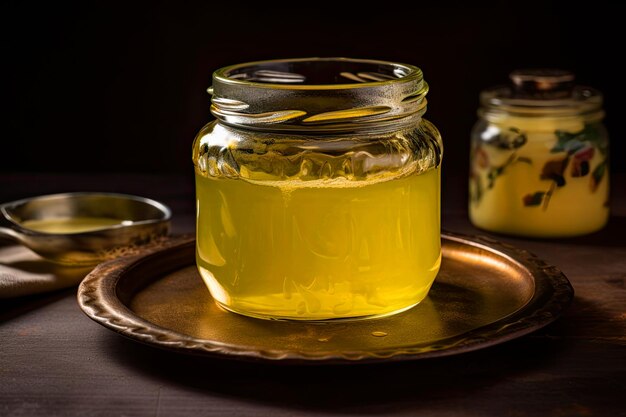
आयुर्वेदिक डॉक्टर से प्रश्न पूछें और निःशुल्क या भुगतान मोड में अपनी चिंता की समस्या पर ऑनलाइन परामर्श प्राप्त करें। 2,000 से अधिक अनुभवी डॉक्टर हमारी साइट पर काम करते हैं और आपके प्रश्नों का इंतजार करते हैं और उपयोगकर्ताओं को उनकी स्वास्थ्य समस्याओं को हल करने में प्रतिदिन मदद करते हैं।


Body DetoxEar, Nose, and Throat DisordersGeriatrics & RejuvenationImmunodeficiencyInfertility TreatmentNutritionOrthopedic DisordersPediatricsRespiratory DisordersSexually Transmitted Diseases (STDs)Surgery RecoveryUrological DisordersVascular DisordersDental DisordersEndocrinological DisordersGastrointestinal DisordersYoga TherapyGeneral MedicineAllergic DisordersCardio DisordersGynecology and ObstetricsCosmetologySkin and Hair DisordersEye DisordersInfectious DiseasesMental DisordersNeurological DisordersOncologyPanchakarmaSexual Health & DisordersSports Medicine
पर प्रकाशित 02/06/25
(को अपडेट 08/08/26)
3,935
Varunadi Ghrita – Ayurvedic Ghee for Joint Health, Detoxification & Rejuvenation
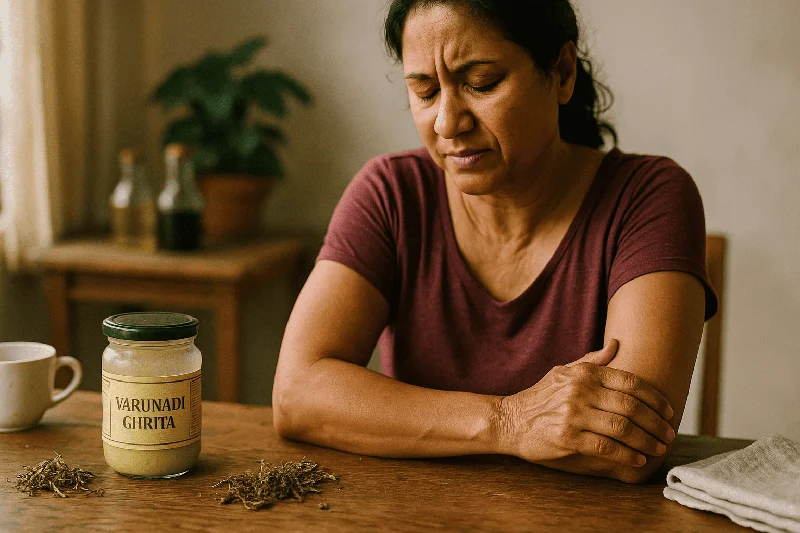
Varunadi Ghrita is a classical Ayurvedic medicated ghee (ghrita) formulation primarily used for joint disorders, urinary tract conditions, abdominal lumps, and detoxification. Rooted in ancient texts like Ashtanga Hridaya and Vangasena Samhita, this polyherbal compound combines the therapeutic properties of clarified butter with potent herbs such as Varuna (Crataeva nurvala), Pippali, Shunthi, and Guduchi. If you've been searching for a comprehensive, evidence-based breakdown of this formulation — including what it actually does, how to use it, and what science says — you're in the right place.
What makes Varunadi Ghrita particularly interesting is that it's not just one formula. Multiple classical texts describe variations under similar names, which creates genuine confusion among practitioners and patients alike. In this guide, we'll untangle the differences, walk through clinical evidence, compare it with similar ghrita formulations, and give you actionable advice on dosage, preparation, storage, and safety.
What Is Varunadi Ghrita and Where Does It Come From?
Varunadi Ghrita literally translates to "medicated ghee with Varuna as the primary herb." The formulation belongs to the Sneha Kalpana (medicated fat preparations) category in Ayurvedic pharmacology. Ghee serves as the lipid base, which enhances bioavailability of fat-soluble phytochemicals and enables the medicine to penetrate deeper tissues (dhatus) according to Ayurvedic pharmacokinetics.
Historical Origins and Classical References
The earliest references to Varunadi Ghrita appear in Ashtanga Hridaya (Chikitsa Sthana), composed by Acharya Vagbhata around the 7th century CE. The formulation is also described in Vangasena Samhita (approximately 13th century), with slight variations in composition. Later Kerala Ayurvedic traditions (13th–18th century) further adapted the formula, sometimes transitioning it from a kashaya (decoction) form to ghrita, reflecting the regional practice of sneha-predominant therapeutics common in southern India.
This historical evolution matters because it explains why you'll find different ingredient lists from different manufacturers — they're often drawing from different textual sources.
The Concept of Srotoshodhana: How Varunadi Ghrita Works
In Ayurvedic pharmacodynamics, Varunadi Ghrita operates primarily through the mechanism of Srotoshodhana — the cleansing of micro-channels (srotas) in the body. When srotas become blocked by ama (metabolic toxins) or aggravated doshas, disease manifests.
The formulation:
- 1.Deepana-Pachana — Kindles digestive fire (agni) and digests ama
- 2.Mutrala — Promotes healthy urinary function through its diuretic action
- 3.Shothahara — Reduces inflammation (shotha) in joints and tissues
- 4.Lekhana — Scrapes away accumulated kapha and fatty deposits
The ghee base specifically allows the active compounds to cross lipid barriers and reach Asthi Dhatu (bone tissue) and Majja Dhatu (marrow), which is why it's so effective for osteoarticular conditions.
Doshic Compatibility: Vata, Pitta, and Kapha
Varunadi Ghrita primarily balances Vata and Kapha doshas. The warming herbs (Shunthi, Pippali) address Vata's cold and dry qualities, while the scraping (lekhana) action of Varuna counters Kapha accumulation. However, individuals with a strong Pitta constitution or active Pitta conditions (acid reflux, skin inflammations) should exercise caution, as some ingredients can aggravate Pitta if used in excess.
Varunadi Ghrita Ingredients: Complete Composition and Pharmacological Analysis
- One of the most confusing aspects of Varunadi Ghrita is that different sources list different ingredients.
- This isn't an error — it reflects genuinely different formulas from different classical texts.
Ashtanga Hridaya Version (Primary Classical Formula)
| Ingredient (Sanskrit) | Botanical Name | Part Used | Rasa (Taste) | Virya (Potency) | Key Action |
|---|---|---|---|---|---|
| Varuna | Crataeva nurvala | Bark | Tikta, Kashaya | Ushna | Lithotriptic, anti-inflammatory |
| Pippali | Piper longum | Fruit | Katu | Ushna | Deepana, Rasayana |
| Shunthi | Zingiber officinale | Rhizome | Katu | Ushna | Anti-inflammatory, digestive |
| Guduchi | Tinospora cordifolia | Stem | Tikta, Kashaya | Ushna | Immunomodulator, antipyretic |
| Shatavari | Asparagus racemosus | Root | Madhura, Tikta | Sheeta | Rejuvenative, adaptogen |
| Haritaki | Terminalia chebula | Fruit | Pancharasa | Ushna | Mild laxative, Rasayana |
| Go Ghrita | Clarified cow butter | — | Madhura | Sheeta | Yogavahi (carrier), nourishing |
Kerala Tradition / Sahasrayogam Variation
Some Kerala-based manufacturers include additional herbs like Guggulu (Commiphora wightii), Ashwagandha (Withania somnifera), and Punarnava (Boerhaavia diffusa). This variation tends to emphasize musculoskeletal and adaptogenic properties more heavily.
Why Do Ingredient Lists Differ? Clearing Up the Confusion
Here's what nobody else is telling you: the names "Varunadi Ghrita," "Varanadi Ghrita," and "Varanadi Ghritam" are often used interchangeably, but they can refer to formulas from different classical texts with different compositions.
For example:
- Varanadi Ghrita from Ashtanga Hridaya focuses on urinary and abdominal conditions
- Varunadi Ghrita from Sahasrayogam often includes more joint-specific herbs
- The NCBI-studied version used in cancer immunomodulation research contained Semecarpus anacardium, Moringa oleifera, Aegle marmelos, and Plumbago rosea — a distinctly different composition
Always check which textual reference your specific product follows. Reputable manufacturers will mention the source text on their packaging or product literature.
What Are the Benefits of Varunadi Ghrita?
Joint Health and Arthritis Management
This is perhaps the most well-known application. Varunadi Ghrita addresses joint disorders through multiple pathways:
- Anti-inflammatory action of Varuna bark, which contains lupeol — a triterpenoid shown in studies to inhibit inflammatory mediators
- Cartilage nourishment via the ghee base, delivering lipid-soluble nutrients to Asthi and Sandhi (joint) tissues
- Vata pacification, since Vata dosha is the primary driver of degenerative joint conditions in Ayurvedic pathology
Practitioners commonly prescribe it for osteoarthritis (Sandhivata), rheumatoid arthritis (Amavata), and gouty arthritis (Vatarakta). Typical clinical protocol involves internal administration alongside external therapies like Janu Basti.
Can Varunadi Ghrita Be Used for Detoxification?
Yes. The formulation is a recognized Shodhana Dravya (purificatory medicine) in Ayurveda.
Its detoxification benefits operate on several levels:
- Liver support: Guduchi and Haritaki are well-established hepatoprotective herbs
- Urinary detox: Varuna promotes healthy urinary flow, traditionally used for renal calculi (Ashmari) and urinary retention (Mutraghata)
- Digestive cleansing: Shunthi and Pippali enhance agni, helping burn accumulated ama
In Panchakarma contexts, Varunadi Ghrita can be used during Snehapana (therapeutic internal oleation) as part of Poorvakarma, preparing the body for main procedures like Virechana (purgation).
Immunomodulation: What Clinical Research Shows
- A randomized controlled study published in the Journal of Ayurveda and Integrative Medicine (2014), indexed on PubMed (PMC4279323), investigated Varunadi Ghritha's efficacy as an immunomodulator in patients who had completed treatment for head and neck squamous cell carcinoma.
- The results showed:
- Significant improvement in CD3+ T-lymphocyte counts
- Enhanced CD16+ Natural Killer cell activity
- Modulation of CD19+ B-lymphocyte levels
These findings suggest genuine immunomodulatory potential, though the study used a specific formulation variant. More research is clearly needed, but this represents one of the few rigorous clinical investigations into any ghrita preparation.
Is Varunadi Ghrita Helpful in Reducing Stress?
Formulations containing Ashwagandha and Shatavari (particularly the Kerala variations) do exhibit adaptogenic properties. Ashwagandha is one of the most researched adaptogens globally, with multiple clinical trials demonstrating cortisol reduction. Shatavari supports the neuroendocrine system. Combined with ghee's inherent Medhya (brain-nourishing) property, these variants can indeed help manage stress-related symptoms — though Varunadi Ghrita is not primarily prescribed as a stress remedy.
Anticancer Properties of Individual Components
Beyond the clinical immunomodulation data, several individual components have demonstrated anticancer potential in preclinical studies:
- Semecarpus anacardium — cytotoxic activity against various cancer cell lines
- Terminalia chebula — apoptosis induction in colon and breast cancer cells
- Moringa oleifera — anti-proliferative effects documented in multiple in-vitro studies
- Plumbago rosea — plumbagin, its key compound, is a known anti-tumor agent
These are promising but preliminary. No one should use Varunadi Ghrita as a standalone cancer treatment.
How Should Varunadi Ghrita Be Consumed for Best Results?
Standard Dosage Guidelines
| Patient Category | Dosage | Frequency | Anupana (Vehicle) |
|---|---|---|---|
| Adults (general use) | 5–10 g (1–2 teaspoons) | Twice daily | Warm water or warm milk |
| Adults (Snehapana/Panchakarma) | Escalating dose, 30–150 ml | Once daily, morning | Warm water |
| Elderly patients | 3–5 g | Once or twice daily | Warm milk |
| Children (above 5 years) | 2–3 g | Once daily | Warm milk with honey |
Important: Snehapana dosing should ONLY be done under direct supervision of a qualified Ayurvedic physician. Self-administering high doses of medicated ghee can cause serious digestive disturbances.
Timing, Seasonality, and Anupana
- Best time: Early morning on an empty stomach (for therapeutic purposes) or before meals
- Seasonal consideration: Ideal during Hemanta and Shishira Ritu (winter months) when Agni is naturally strong and can handle the heavy quality of ghee. Avoid high doses during Greeshma (summer) and Varsha (rainy season) when digestion tends to be weaker
- Anupana selection: Warm water for detox and urinary benefits; warm milk for joint nourishment and tissue building; honey-water combination for Kapha-predominant conditions (never heat honey above 40°C)
Topical (External) Application
While primarily an internal medicine, some practitioners recommend applying Varunadi Ghrita topically to inflamed joints. This is done as a thin layer massage before warm fomentation (Swedana). The ghee base facilitates absorption of herbal compounds through the skin, providing localized relief. This approach is particularly common in Kerala Ayurvedic practice.
How Long Does It Take to See Results?
For chronic conditions like osteoarthritis, most practitioners report noticeable improvement within 4–6 weeks of consistent use. For detoxification purposes, a Snehapana course typically runs 3–7 days. Immunomodulatory benefits, as suggested by the PMC-published study, were observed over a 90-day intervention period. Individual results vary significantly based on disease severity, constitution, diet, and adherence.
Varunadi Ghrita in Panchakarma: Detailed Protocol
This is an area no competitor has fully addressed. Here's how Varunadi Ghrita fits into a complete Panchakarma cycle:
Poorvakarma (Preparatory Phase)
- 1.Deepana-Pachana (Days 1–3): Digestive preparation with Trikatu or Chitrakadi Vati to ensure strong Agni
- 2.Snehapana (Days 4–10): Graduated internal oleation with Varunadi Ghrita
- Day 1: 30 ml on empty stomach
- Day 2: 60 ml (if previous dose digested well)
- Continue increasing until signs of adequate oleation appear (oleaginous stools, aversion to ghee, skin lustre)
- 3.Abhyanga + Swedana (Days after Snehapana): External oleation and steam therapy
Pradhanakarma (Main Procedure)
Depending on the condition, the main procedure following Varunadi Ghrita snehapana is typically Virechana (therapeutic purgation) for Pitta-Kapha conditions or Basti (medicated enema) for Vata-dominant joint disorders.
Paschatkarma (Post-procedure Care)
Samsarjana Krama (graduated diet) over 3–7 days, starting with rice water (peya) and progressing to normal diet. Varunadi Ghrita may be reintroduced in maintenance doses after the digestive fire is fully restored.
स्वयं दवा न लें और प्रतीक्षा न करें। अभी डॉक्टर से चैट शुरू करें
Varunadi Ghrita vs. Similar Ayurvedic Ghrita Formulations
This comparison is something patients frequently need but can rarely find.
| Parameter | Varunadi Ghrita | Guggulutiktaka Ghrita | Rasnadi Ghrita | Varanadi Kashayam |
|---|---|---|---|---|
| Primary Herb | Varuna (Crataeva nurvala) | Guggulu (Commiphora wightii) | Rasna (Pluchea lanceolata) | Same herbs, decoction form |
| Form | Medicated ghee | Medicated ghee | Medicated ghee | Liquid decoction or tablet |
| Main Indication | Urinary disorders, joint pain, abdominal lumps | Skin diseases, bone/joint disorders, fistula | Vata disorders, sciatica, facial palsy | Obesity, Kapha disorders, abdominal tumors |
| Doshic Action | Vata-Kapha shamana | Tridosha (mainly Vata-Kapha) | Primarily Vata shamana | Kapha-Meda shamana |
| Tissue Penetration | Deep (Asthi, Majja dhatu) | Deep (Asthi, Rakta dhatu) | Moderate (Mamsa, Asthi dhatu) | Moderate (works more on Rasa, Meda dhatu) |
| Use in Snehapana | Yes | Yes | Less common | No (not a sneha preparation) |
| Lipid Profile Caution | Moderate | Moderate (Guggulu may improve lipids) | Moderate | Low (no ghee base) |
Key takeaway: If your primary concern is joint pain with urinary symptoms, Varunadi Ghrita is often preferred. For skin diseases with bone involvement, Guggulutiktaka Ghrita is usually the better choice. For pure Vata conditions like sciatica, Rasnadi Ghrita tends to be more specific.
How to Prepare Varunadi Ghrita at Home: Step-by-Step Classical Method
While commercially manufactured products ensure standardization, some practitioners and patients prefer home preparation.
Here's the classical Sneha Paka Vidhi method:
Ingredients and Proportions (Ashtanga Hridaya Reference)
- Cow ghee: 1 part (e.g., 500 ml)
- Varuna bark coarse powder: 1/4 part (125 g)
- Water for decoction: 16 parts of herb weight (2 liters), reduced to 1/4 (500 ml)
- Kalka (fine paste) of Pippali, Shunthi, Guduchi, Shatavari, Haritaki: 1/4 part of ghee (125 g total, equal portions)
Preparation Steps
- 1.Prepare the Kashaya (decoction): Boil Varuna bark in 2 liters of water. Reduce to 500 ml. Strain thoroughly.
- 2.Prepare the Kalka (herbal paste): Grind the remaining herbs into a fine paste using a mortar and pestle with small amounts of water.
- 3.Combine: Place ghee in a heavy-bottomed vessel. Add the kalka paste. Add the kashaya liquid.
- 4.Cook on low flame: Maintain a gentle simmer. Stir regularly to prevent sticking. The process takes 6–8 hours on very low heat.
- 5.Test for completion (Sneha Siddhi Lakshana):
- Kalka rolls into a wick without sticking (Varti lakshana)
- No crackling sound when a drop of water is added
- Pleasant aroma develops
- Ghee becomes clear with a slightly greenish-golden color
- 6.Strain: Filter through clean muslin cloth while still warm. Store in glass or food-grade stainless steel container.
Caution: Home preparation lacks the quality control of licensed Ayurvedic manufacturing facilities. If you're making this at home, use authenticated, organically sourced herbs and high-quality cow ghee.
Side Effects, Contraindications, and Drug Interactions
Are There Any Side Effects of Using Varunadi Ghrita?
At recommended doses under professional guidance, side effects are uncommon.
However, potential issues include:
- Digestive discomfort: Nausea, loose stools, or heaviness — especially in individuals with weak Agni
- Weight gain: Ghee is calorie-dense (approximately 120 calories per tablespoon). Prolonged high-dose use without adequate physical activity can contribute to weight gain
- Aggravation of Pitta: Warming herbs like Pippali and Shunthi may cause hyperacidity in Pitta-constitution individuals
- Allergic reactions: Rare, but possible with any multi-herb formulation
Contraindications
- Pregnancy and lactation (unless specifically prescribed by an Ayurvedic obstetrician)
- Acute pancreatitis or acute hepatitis
- Severe hyperlipidemia (very high cholesterol/triglycerides)
- Known allergy to any ingredient
- Ama condition (heavy coating on tongue, loss of appetite, body ache) — ghee should not be given when Agni is severely compromised
Interactions with Modern Medications
This is a critical gap in existing literature.
Based on pharmacological analysis of the ingredients:
| Medication Class | Potential Interaction | Clinical Significance |
|---|---|---|
| Anticoagulants (Warfarin, Heparin) | Pippali and Shunthi may have mild antiplatelet effects | Moderate — monitor INR |
| Antidiabetic drugs (Metformin, Glimepiride) | Guduchi has hypoglycemic properties | Moderate — monitor blood sugar |
| Immunosuppressants (Cyclosporine, Tacrolimus) | Immunomodulatory herbs may counteract immunosuppression | High — consult both physicians |
| Statins (Atorvastatin) | High-fat ghee base may affect absorption | Low-Moderate — separate timing |
| Antihypertensives | Varuna has mild diuretic effect | Low — monitor blood pressure |
Always inform your allopathic doctor if you're taking Varunadi Ghrita alongside conventional medications.
Laboratory Monitoring and Biomarkers for Long-Term Use
For patients using Varunadi Ghrita beyond 3 months, periodic monitoring is prudent:
- Lipid profile (total cholesterol, LDL, HDL, triglycerides) — every 3 months, given the ghee base
- Liver function tests (ALT, AST, ALP, bilirubin) — baseline and every 3 months
- Renal function (serum creatinine, BUN) — especially if used for urinary conditions
- ESR and CRP — to track inflammatory markers in arthritis patients
- Complete blood count — general safety monitoring
- Fasting blood sugar — if diabetic or pre-diabetic
This monitoring approach is not standard practice in most Ayurvedic clinics, but integrating it bridges the gap between traditional and modern medicine and ensures patient safety.
Storage, Shelf Life, and Signs of Spoilage
Surprisingly, no major competitor addresses this practical concern.
- - Storage: Cool, dry place away from direct sunlight. Glass jars with airtight lids are ideal.
- Avoid plastic containers — ghee can absorb chemicals from plastic over time
- Shelf life: Properly prepared and stored ghrita has a shelf life of 12–24 months. Some classical texts claim aged ghrita (Purana Ghrita) becomes more potent with time, but this applies to plain ghee, not necessarily medicated preparations where herb potency may degrade
- Signs of spoilage: Rancid smell, change in color to dark brown or grey, visible mold, sour taste, separation of layers. Discard immediately if any of these are present
- Temperature: Room temperature in most Indian climates is fine. Refrigeration isn't necessary but won't harm the product. In very hot climates (above 40°C), store in the coolest part of your home
Dietary Recommendations (Pathya-Apathya) During Varunadi Ghrita Course
Foods to Favor (Pathya)
- Warm, freshly cooked meals
- Mung dal, rice, barley
- Cooked vegetables — bottle gourd, ridge gourd, drumstick
- Ginger tea, cumin water
- Light, easily digestible foods during Snehapana days
Foods to Avoid (Apathya)
- Cold foods, ice cream, cold beverages
- Heavy, fried, and processed foods
- Curd/yogurt (especially at night)
- Incompatible food combinations (Viruddha Ahara) — fish with milk, fruit with meals
- Excess salt and sour foods (can aggravate pitta)
- Alcohol — interferes with liver metabolism of herbal compounds
Where Can I Purchase Authentic Varunadi Ghrita?
Look for products from GMP-certified Ayurvedic manufacturers. Reputable brands include Arya Vaidya Sala Kottakkal, Vaidyaratnam, Sitaram Ayurveda, and Birla Ayurveda. The product is available as traditional ghee in glass/tin containers and increasingly as soft gel capsules (like Varunadi Ghritam Saptavarti 600 mg capsules from Sahasrayogam), which are more convenient for those who dislike the taste or texture of plain ghrita.
When purchasing, check for:
- Manufacturing and expiry dates
- Batch number and manufacturing license
- Reference to classical text source
- GMP or ISO certification marks
Frequently Asked Questions
What is the use of Varunadi Ghritam?
Varunadi Ghritam is used primarily for joint disorders (arthritis, gout), urinary conditions (renal calculi, urinary retention), abdominal lumps and growths, detoxification, and immune modulation. It balances Vata and Kapha doshas and is also employed as a preparatory medicine in Panchakarma therapy.
What is Varunadi Ghritam Sapta Avarti?
Sapta Avarti means "processed seven times." In this method, the ghee undergoes seven cycles of cooking with the herbal decoction and paste, resulting in a more concentrated and potent formulation. This multi-processing technique is believed to enhance the therapeutic efficacy and bioavailability of the active compounds.
Which is the best Ayurvedic medicine for prostate?
While Varunadi Ghrita is beneficial for urinary conditions including benign prostatic hyperplasia (BPH) due to Varuna's known antiurolithiatic and prostate-supportive properties, other formulations like Gokshuradi Guggulu, Chandraprabha Vati, and Shilajit are also commonly prescribed. The best choice depends on individual constitution, severity, and associated symptoms — consult a qualified Ayurvedic practitioner.
What is Varuna good for?
Varuna (Crataeva nurvala) is renowned in Ayurveda for its Bhedana (splitting/dissolving) and Lekhana (scraping) properties. It's primarily indicated for Ashmari (urinary calculi), Mutraghata (urinary retention), Gulma (abdominal tumors), and Shotha (inflammation). Modern pharmacological research has confirmed its anti-inflammatory, lithotriptic, and hepatoprotective activities.
Can Varunadi Ghrita be used during pregnancy?
Generally, it's not recommended during pregnancy unless specifically prescribed by an Ayurvedic obstetrician who can assess the individual case. Some ingredients like Pippali in higher doses may not be suitable during certain stages of pregnancy.
Is Varunadi Ghrita the same as Varanadi Kashayam?
No. They share some common herbs, but Varanadi Kashayam is a water-based decoction (or tablet), while Varunadi Ghrita is a ghee-based preparation. The ghee base provides deeper tissue penetration and is better suited for Vata conditions and Snehapana therapy, while the Kashayam form is lighter and more appropriate for Kapha and Meda (fat tissue) conditions like obesity.
Conclusion: Making the Most of Varunadi Ghrita
Varunadi Ghrita represents one of Ayurveda's most versatile medicated ghee formulations — bridging joint care, urinary health, detoxification, and immune support in a single preparation. The emerging clinical evidence, particularly the immunomodulation study published in the Journal of Ayurveda and Integrative Medicine, adds a layer of scientific credibility to centuries of traditional use.
However, this is not a self-medication formula. The variations in composition across different classical texts, the potential interactions with modern drugs, and the need for proper dosing make professional guidance essential. Whether you're considering it for chronic joint pain, as part of a Panchakarma program, or for its immune-supportive properties — start by consulting a qualified Ayurvedic physician who can evaluate your Prakriti, Vikriti, and Agni status before prescribing.
If you found this guide helpful, share it with someone navigating Ayurvedic options for joint health or detoxification. And if you have specific questions about your individual case, consulting with a BAMS-certified Ayurvedic doctor is always the best next step.
Scientific Sources
- Festivals of Ayurveda: Scope and challenges — Bhavana KR, 2023, Ayu
- A prospective, randomized, controlled study to evaluate the efficacy and tolerability of Ayurvedic formulation "varuna and banana stem" in the management of urinary stones — Patankar S et al., 2008, Journal of alternative and complementary medicine (New York, N.Y.)
- Urolithic property of Varuna (Crataeva nurvala): An experimental study — Agarwal S et al., 2010, Ayu
- JWARA (fever)- a medico historical perspective — Prasad PV, 2001, Bulletin of the Indian Institute of History of Medicine (Hyderabad)
- A randomised, double-blind, placebo-controlled clinical trial assessing the efficacy of bedtime buddy® for the treatment of nocturnal enuresis in children — Schloss J et al., 2019, BMC pediatrics
- Health benefits of ghee: Review of Ayurveda and modern science perspectives — Kataria D et al., 2024, Journal of Ayurveda and integrative medicine
- From tradition to science: Possible mechanisms of ghee in supporting bone and joint health — Falahatzadeh M et al., 2024, Prostaglandins & other lipid mediators
- Panchgavya: A precious gift to humankind — Bajaj KK et al., 2022, Journal of Ayurveda and integrative medicine
- Preparation and physicochemical characterization of ghee and mūrcchita ghŗ̥ta — Lamsal B et al., 2020, Journal of Ayurveda and integrative medicine
- Further observations on ghee as a risk factor for neonatal tetanus — Bennett J et al., 1995, International journal of epidemiology
उपयोगकर्ताओं के प्रश्न
What preparation methods enhance the efficacy of Varunadi Ghrita?
Client_5d3a2d
25 दिनों पहले
To enhance the efficacy of Varunadi Ghrita, it should be prepared following traditional Ayurvedic methods under controlled conditions, ideally in a licensed facility to ensure quality. A crucial step is the use of high-quality, properly dried herbs. Fresh batches should avoid spoilage signs like a rancid smell or color changes. Typical applications involve both internal use and external therapies like Janu Basti. While classical texts may recommend aging ghee for increased potency, this doesn't always apply to medicated formulations such as Varunadi Ghrita. For personalized guidance, consult a healthcare professional, especially if integrating external therapies or managing specific health conditions.
How does Varunadi Ghrita influence mental clarity and focus?
Client_691b25
30 दिनों पहले
Varunadi Ghrita is traditionally used in Ayurveda for its potential benefits on kidney health and urinary functions, but there is no strong scientific evidence specifically supporting its influence on mental clarity and focus. Ingredients like Shatavari and Guduchi in the preparation might support neurotransmitter balance and stress resilience, which can indirectly affect focus. However, results are subjective and vary widely. If considering Varunadi Ghrita for cognitive issues, consult a healthcare professional, especially if symptoms persist or deteriorate.
What ingredients are commonly used to prepare Varunadi Ghrita?
Client_9edf5f
35 दिनों पहले
Varunadi Ghrita is typically prepared using ingredients like Varuna (Crataeva nurvala), Punarnava (Boerhavia diffusa), Gokshura (Tribulus terrestris), and Musta (Cyperus rotundus) blended with ghee. Some variations may include other herbs depending on the specific formulation referenced in classical texts. These ingredients are often chosen for their potential benefits in supporting kidney health and managing conditions like arthritis. When selecting Varunadi Ghrita, ensure the product has no signs of spoilage, such as a rancid smell or visible mold. If symptoms persist or worsen, consulting a healthcare professional is advised.
What lifestyle changes enhance the effectiveness of Snehapana detoxification?
Client_a47349
40 दिनों पहले
To enhance the effectiveness of Snehapana detoxification, lifestyle changes such as maintaining a light and easily digestible diet, staying well-hydrated, and getting adequate rest can be beneficial. Avoid heavy, greasy, or spicy foods, and refrain from consuming alcohol or caffeine. Gentle physical activities like walking or yoga can support detoxification without overstraining the body. It's also crucial to manage stress, as it can impact digestion and detoxification. Consult a healthcare practitioner if you experience any adverse symptoms, as ongoing monitoring is important during this detox process.
What does clinical research say about Varunadi Ghrita's effectiveness?
Client_978519
45 दिनों पहले
To date, clinical research on the effectiveness of Varunadi Ghrita is limited, and there is a lack of robust scientific evidence to firmly establish its benefits. Varunadi Ghrita is traditionally used in Ayurveda for various health issues, but its claims of therapeutic effectiveness rely primarily on historical texts rather than modern clinical trials. If you are interested in trying Varunadi Ghrita, consult with a healthcare provider, particularly if you have underlying health issues or are taking other medications. Watch for potential allergic reactions and discontinue use if any adverse effects occur.
How does Varunadi Ghrita interact with conventional medications?
Client_b8cc94
50 दिनों पहले
Varunadi Ghrita, an Ayurvedic medicated ghee, can interact with conventional medications. Due to its detoxifying properties and use in treating urinary and joint conditions, it may alter drug metabolism and absorption. Specific interactions depend on individual health conditions and the medications being taken. Always consult a healthcare provider before combining Varunadi Ghrita with conventional drugs to avoid potential adverse effects. It's crucial for patients using blood thinners, blood pressure medications, or anti-inflammatory drugs to seek medical advice beforehand.
How does Varunadi Ghritam support liver health and detoxification?
Client_c985f2
55 दिनों पहले
Varunadi Ghritam may support liver health and detoxification through its combination of herbs known for their hepatoprotective and detoxifying properties. This traditional Ayurvedic formulation is thought to enhance liver function by balancing the Vata and Kapha doshas. While specific results can vary, herbal supplements like Varunadi Ghritam typically take about 4–6 weeks to show potential benefits. It is crucial to watch for any allergic reactions or gastrointestinal discomfort and consult a healthcare provider to ensure this remedy is appropriate for your specific health needs.
What are the potential side effects of using Varunadi Ghritam?
Client_1814ce
60 दिनों पहले
The potential side effects of using Varunadi Ghritam are generally mild but can include digestive issues such as nausea or diarrhea, especially if taken in large amounts. As it is used for various conditions like joint disorders and urinary issues, misuse can exacerbate symptoms if not suited for the condition. If an individual is allergic to dairy, they may experience an allergic reaction. It is important to follow dosage instructions and consult a healthcare provider, especially if symptoms of adverse effects persist. Varunadi Ghritam may not be a standalone remedy for serious health conditions, and ongoing health concerns should be evaluated by a healthcare professional.
What is the role of Varunadi Ghrita in boosting immune function?
Client_f3fa58
65 दिनों पहले
Varunadi Ghrita may play a role in boosting immune function through its combination of herbs and ghee, enhancing the absorption of bioactive compounds. While scientific evidence directly linking Varunadi Ghrita to improved immune function is limited, some herbs like Shatavari included in this formulation are traditionally believed to support immune and neuroendocrine health. Typically, effects on immunity from such herbal preparations might take several weeks to notice. Always consult a healthcare provider for personalized advice, particularly if you have underlying health conditions or are taking medication.
What is the process for making Varunadi Ghrita in Ayurveda?
Client_7a9973
70 दिनों पहले
The process of making Varunadi Ghrita involves preparing a medicated ghee using Ayurveda principles. This typically includes extracting active compounds from Varuna (Crataeva nurvala) and other herbs through a decoction process, then combining it with ghee. Continuous heating allows for the absorption of the herbal properties into the ghee. For Sapta Avarti, this process is repeated seven times for increased potency. It is essential to ensure the absence of moisture and that only the highest quality ingredients are used. Consulting a qualified Ayurvedic practitioner for preparation methods is advisable, especially for those not experienced in Ayurvedic formulations.
संबंधित आलेख

Orthopedic Disorders
Gandharvahasthadi Thailam Benefits, How To Use, Ingredients, Side Effects
Exploration of Gandharvahasthadi Thailam Benefits, How To Use, Ingredients, Side Effects
2,620

Orthopedic Disorders
Kshara Thailam Uses – Powerful Ayurvedic Oil for Health and Healing
Discover the benefits and uses of Kshara Thailam, an Ayurvedic oil known for its therapeutic properties in treating skin conditions, digestive issues, and promoting overall well-being.
3,665

Orthopedic Disorders
सिंहनाद गुग्गुलु – फायदे, खुराक, उपयोग कैसे करें, साइड इफेक्ट्स, सामग्री और संदर्भ
सिंहनाद गुग्गुलु की खोज – फायदे, खुराक, उपयोग कैसे करें, साइड इफेक्ट्स, सामग्री और संदर्भ
4,739

Orthopedic Disorders
सैंधवाड़ी तेल
सैंधवाड़ी तैल का अन्वेषण
2,739

Orthopedic Disorders
त्रयोदशांग गुग्गुल – फायदे, खुराक, उपयोग करने का तरीका, साइड इफेक्ट्स, सामग्री और संदर्भ
त्रयोदशांग गुग्गुल की खोज – फायदे, खुराक, उपयोग करने का तरीका, साइड इफेक्ट्स, सामग्री और संदर्भ
5,520

Orthopedic Disorders
How to Cure Lower Back Pain Naturally: Causes, Exercises, and Remedies
Learn how to cure lower back pain with exercises, home remedies, and Ayurvedic treatments. Discover causes, symptoms, stretches, and the best ways for relief
2,709
Orthopedic Disorders
Kukkutnakhi Guggul: Benefits, Dosage & Science-Backed Insights
Discover the proven benefits, proper dosage, side effects, and scientific research behind Kukkutnakhi Guggul, a powerful Ayurvedic formulation for joint health and inflammation.
4,516

Orthopedic Disorders
विस्कोवास कैप्सूल – उपयोग, खुराक, सामग्री और साइड इफेक्ट्स
विस्कोवास कैप्सूल की खोज – उपयोग, खुराक, सामग्री और साइड इफेक्ट्स
3,273

Orthopedic Disorders
Maharasnadi Kashayam – Benefits, Dose, Side Effects, Ingredients, Reference
Exploration of Maharasnadi Kashayam – Benefits, Dose, Side Effects, Ingredients, Reference
4,940
Orthopedic Disorders
Yograj Guggulu Easy Ayurveda – Simple Ayurvedic Formula for Health & Wellness
Discover Yograj Guggulu Easy Ayurveda, a simplified Ayurvedic formulation known for its detoxifying, anti-inflammatory, and metabolic benefits, promoting overall health and wellness naturally.
4,170
विषय से संबंधित परामर्श
अतिरिक्त दस्तावेज़
© 2026 Ask Ayurveda. सर्वाधिकार सुरक्षित।