आयुर्वेदिक डॉक्टर से प्रश्न पूछें और निःशुल्क या भुगतान मोड में अपनी चिंता की समस्या पर ऑनलाइन परामर्श प्राप्त करें। 2,000 से अधिक अनुभवी डॉक्टर हमारी साइट पर काम करते हैं और आपके प्रश्नों का इंतजार करते हैं और उपयोगकर्ताओं को उनकी स्वास्थ्य समस्याओं को हल करने में प्रतिदिन मदद करते हैं।
मुफ्त! आयुर्वेदिक डॉक्टरों से पूछें 24/7

 तेज़ प्रतिक्रियाएँ
 1000+ सत्यापित डॉक्टर
Body DetoxEar, Nose, and Throat DisordersGeriatrics & RejuvenationImmunodeficiencyInfertility TreatmentNutritionOrthopedic DisordersPediatricsRespiratory DisordersSexually Transmitted Diseases (STDs)Surgery RecoveryUrological DisordersVascular DisordersDental DisordersEndocrinological DisordersGastrointestinal DisordersYoga TherapyGeneral MedicineAllergic DisordersCardio DisordersGynecology and ObstetricsCosmetologySkin and Hair DisordersEye DisordersInfectious DiseasesMental DisordersNeurological DisordersOncologyPanchakarmaSexual Health & DisordersSports Medicine
पर प्रकाशित 03/19/25
(को अपडेट 06/23/26)
3,348
Jeerakadyarishta Benefits: A Comprehensive Ayurvedic Guide
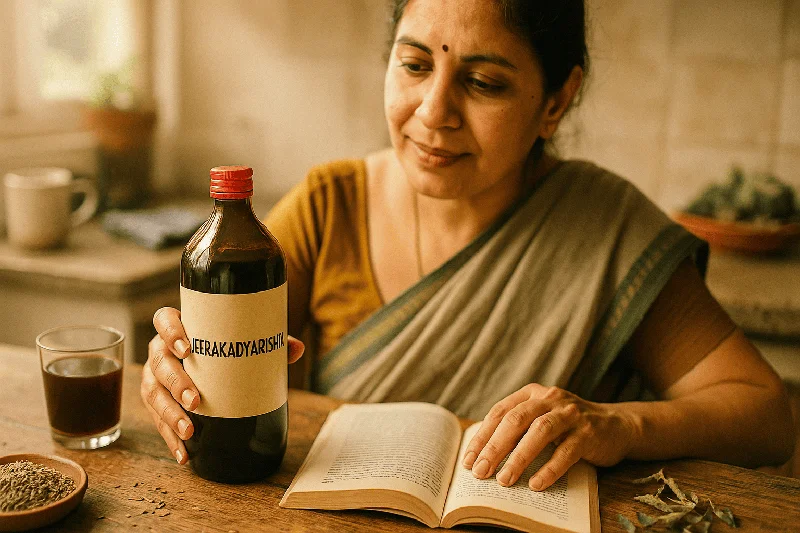
Jeerakadyarishta (also spelled Jeerakarishtam or Jirakadyarishta) is a classical Ayurvedic fermented liquid medicine prepared with Jeeraka (cumin seeds) as the primary ingredient. It is traditionally prescribed for digestive disorders, postpartum recovery, loss of appetite, and general debility. Referenced in the ancient text Bhaishajya Ratnavali, this arishta has been used for centuries to strengthen the digestive fire (Agni), balance Vata and Kapha doshas, and support lactation in new mothers.
- But here's what most guides miss — Jeerakadyarishta is not just a "women's tonic." It offers significant benefits for men, children, and the elderly when used properly.
- This guide covers everything: from the detailed pharmacology of each ingredient to brand comparisons, contraindications, and the dietary guidelines (Pathya-Apathya) you should follow while taking it.
What Is Jeerakadyarishta? (Ayurvedic Medicine Overview)
Jeerakadyarishta belongs to the Arishta category of Ayurvedic preparations — medicines made through natural fermentation of herbal decoctions with jaggery or sugar. Unlike asavas (which use raw herbal juices), arishtas use boiled decoctions, which changes the extraction profile of active compounds.
The word itself breaks down as: Jeeraka (cumin, Cuminum cyminum) + Adya (chief/primary) + Arishta (fermented preparation). So it literally means "the fermented medicine where cumin is chief."
How Jeerakadyarishta Works in Ayurveda
According to Ayurvedic pharmacology, Jeerakadyarishta works primarily by kindling Agni (digestive fire). When Agni is weak, food remains undigested and produces Ama (toxins), which leads to bloating, gas, heaviness, and eventually systemic disease.
The formulation has these Ayurvedic properties:
- Rasa (Taste): Predominantly Katu (pungent) and Tikta (bitter)
- Guna (Quality): Laghu (light), Ruksha (dry)
- Virya (Potency): Ushna (hot)
- Vipaka (Post-digestive effect): Katu (pungent)
- Dosha Karma: Pacifies Vata and Kapha; may mildly increase Pitta in excess doses
The natural fermentation process generates approximately 5–10% self-generated alcohol, which acts as a bioavailability enhancer — helping the body absorb active phytochemicals more efficiently than raw herb powders. This is an intentional part of the formulation design, not a side effect.
Historical and Textual References
The formulation is documented in Bhaishajya Ratnavali, one of the most respected Ayurvedic pharmacopoeia texts composed by Govind Das Sen in the 18th century. Some variations also appear in Sahasrayogam, a compilation widely followed in Kerala Ayurvedic tradition. The original Sanskrit shloka describes it specifically in the context of Sutika Roga (postpartum disorders) and Agnimandya (weak digestive fire).
Jeerakadyarishta Ingredients: A Complete Breakdown
While competitors often list ingredients in passing, understanding why each component is included changes how you think about this medicine. Here is a detailed monograph-style breakdown of all key ingredients:
| # | Ingredient (Sanskrit) | Botanical Name | Part Used | Primary Role in Formulation |
|---|---|---|---|---|
| 1 | Jeeraka | Cuminum cyminum | Seeds | Chief ingredient; carminative, digestive stimulant, galactagogue |
| 2 | Dhataki | Woodfordia fruticosa | Flowers | Fermentation initiator; astringent, haemostatic |
| 3 | Sunthi | Zingiber officinale | Rhizome | Deepana (appetizer); anti-inflammatory, anti-nausea |
| 4 | Jatiphala | Myristica fragrans | Seed (nutmeg) | Carminative; improves absorption, mild sedative |
| 5 | Musta | Cyperus rotundus | Tuber | Digestive, antipyretic; regulates bowel movements |
| 6 | Elaichi | Elettaria cardamomum | Seeds | Aromatic digestive; relieves gastric spasm |
| 7 | Tvak | Cinnamomum zeylanicum | Bark | Warming; improves circulation, balances blood sugar |
| 8 | Nagakeshara | Mesua ferrea | Stamens | Anti-haemorrhagic; supports uterine health |
| 9 | Yavani | Trachyspermum ammi | Seeds | Potent carminative; relieves colic and flatulence |
| 10 | Kankola | Piper cubeba | Fruit | Expectorant, digestive; enhances flavor profile |
| 11 | Lavanga | Syzygium aromaticum | Flower buds | Antimicrobial, analgesic; reduces bloating |
| 12 | Gudda (Jaggery) | Saccharum officinarum | Processed juice | Fermentation substrate; provides iron and minerals |
| 13 | Pippali | Piper longum | Fruit | Bioenhancer; strengthens Agni, respiratory support |
Pharmacological Actions of Key Ingredients
Cumin (Jeeraka): A 2019 study published in the Journal of Ethnopharmacology confirmed cumin's significant carminative and antispasmodic activity. It stimulates secretion of pancreatic enzymes, improving fat and protein digestion. Cumin also demonstrates antioxidant properties through its active compound cuminaldehyde.
- Dhataki (Woodfordia fruticosa): This is the "secret engine" of all arishta preparations. Dhataki flowers harbour natural yeasts that initiate fermentation without adding any external yeast culture.
- Research indexed in PubMed (PMID: 22538118) has documented its antioxidant and hepatoprotective properties.
Sunthi (Ginger): A meta-analysis published in Complementary Therapies in Clinical Practice (2020) validated ginger's anti-emetic and prokinetic actions, supporting its traditional use in digestive formulations. Musta (Cyperus rotundus): Often called the best Ayurvedic herb for Ama Pachana (toxin digestion). Studies in the Indian Journal of Traditional Knowledge have documented its anti-diarrheal and anti-inflammatory properties.
Jeerakadyarishta Benefits and Uses
Digestive Health Benefits
This is the primary indication. Jeerakadyarishta directly stimulates Jatharagni (stomach fire) and helps in:
- Chronic indigestion (Agnimandya): Relieves heaviness after meals, incomplete digestion
- Flatulence and bloating: The carminative herbs collectively reduce gas formation
- Loss of appetite (Aruchi): Cumin and ginger stimulate taste buds and gastric secretion
- Constipation: Mild laxative action through improved peristalsis
- Anal and rectal irritation: Some practitioners specifically recommend it for haemorrhoid-related discomfort due to its Vata-pacifying and bowel-regulating action
Postpartum Recovery and Lactation Support
This remains the most well-known use. After delivery, a woman's body is in a state of Vata aggravation — the "empty space" created after birth allows Vata to dominate.
Jeerakadyarishta directly addresses this by:
- Restoring digestive strength (which is typically very weak postpartum)
- Supporting uterine involution through ingredients like Nagakeshara
- Promoting healthy lactation — cumin is a well-documented galactagogue
- Providing iron and minerals through jaggery to counter postpartum anaemia
- Reducing postpartum gas, bloating, and abdominal discomfort
Jeerakadyarishta for Postpartum Depression?
While not a primary anti-depressant, the formulation contains Jatiphala (nutmeg) which has mild anxiolytic properties. Combined with improved digestion and nutrition, some practitioners report improved mood and energy in postpartum women. However, this should not replace professional mental health support.
Metabolic and Weight Management Benefits
This is a benefit most guides completley overlook.
The mechanism works through multiple pathways:
- Lipid metabolism: Cumin has demonstrated hypolipidemic effects — reducing LDL cholesterol and triglycerides in clinical studies
- Insulin sensitivity: Cinnamon (Tvak) has well-documented effects on improving insulin sensitivity
- Thermogenic action: The overall Ushna Virya (hot potency) of the formulation increases basal metabolic rate
A study in the Journal of Ethnopharmacology showed that cumin supplementation led to significant reductions in body weight, BMI, and waist circumference over an 8-week period. While Jeerakadyarishta delivers cumin in a different format, the active compounds remain bioavailable.
Immune Support and Anti-inflammatory Effects
Several ingredients — clove, cardamom, ginger, and long pepper — possess documented immunomodulatory and anti-inflammatory properties. The fermentation process itself generates beneficial metabolites that support gut microbiome health, which is now understood to be directly linked to immune function.
Benefits for Men and General Population
Contrary to popular perception, Jeerakadyarishta is not gender-specific.
For men, it offers:
- Relief from chronic digestive issues, IBS-like symptoms, and appetite loss
- Metabolic support for individuals with sedentary lifestyles
- Post-illness recovery tonic (after fever, gastroenteritis, or prolonged medication use)
- General Rasayana (rejuvenative) effects due to improved nutrient absorption
How to Use Jeerakadyarishta: Dosage & Administration
Standard Adult Dosage
| Parameter | Recommendation |
|---|---|
| Dose | 12–24 mL (approximately 3–6 teaspoons) |
| Frequency | Twice daily, after meals |
| Adjuvant (Anupana) | Equal quantity of lukewarm water |
| Duration | 1–3 months, or as directed by an Ayurvedic physician |
| Best time | After lunch and after dinner |
Always shake the bottle before use, as natural sedimentation occurs in fermented preparations.
Dosage for Children
This is an area no competitor has adequately covered. Here are general guidelines followed in clinical Ayurvedic practice:
| Age Group | Dose | Frequency |
|---|---|---|
| 5–8 years | 3–5 mL | Twice daily with water |
| 8–12 years | 5–10 mL | Twice daily with water |
| 12–16 years | 10–15 mL | Twice daily with water |
Important: Children below 5 years should generally not be given arishta preparations due to the alcohol content. Always consult a qualified Ayurvedic doctor before administering to children.
Dosage for Elderly
Elderly patients with weak digestion often respond very well to Jeerakadyarishta. Start with 10–12 mL twice daily and increase gradually. The warming nature of the tonic can be especially benificial during cold weather months.
How Long Does It Take to Show Results?
Most patients report noticeable improvement in appetite and digestion within 1–2 weeks. For postpartum recovery and lactation support, benefits typically become apparent within 5–7 days. For metabolic effects (weight management, lipid improvement), consistent use for 2–3 months is generally needed.
Jeerakadyarishta Side Effects and Contraindications
Known Side Effects
When taken in recommended doses, Jeerakadyarishta is generally safe.
However, potential side effects include:
- Gastric burning/acidity: Due to its Ushna Virya, it may aggravate Pitta in Pitta-dominant individuals
- Loose stools: In some sensitive individuals, especially at higher doses
- Mild headache: Rarely reported, usually self-limiting
- Allergic reactions: Extremely rare; discontinue if rash or itching occurs
Detailed Contraindications
This is where most guides fall seriously short.
Here are the specific contraindications:
Diabetes: Jeerakadyarishta contains jaggery as a fermentation substrate. While most sugars are consumed during fermentation, residual sugars can affect blood glucose levels. Diabetic patients should either avoid this formulation or use it only under strict medical supervison with blood sugar monitoring. Pregnancy: Unlike postpartum use (which is recommended), use during pregnancy is generally contraindicated. The Ushna Virya ingredients and uterine-stimulating herbs like Nagakeshara could potentially cause complications. Active gastric ulcers or severe hyperacidity: The heating potency may worsen active ulcerative conditions. Alcohol sensitivity or liver disease: The 5–10% self-generated alcohol content, while medicinal, may be problematic for individuals with liver disorders, alcoholism history, or religious/personal restrictions against alcohol consumption.
Drug Interactions to Be Aware Of
| Drug Category | Interaction Risk | Notes |
|---|---|---|
| Anti-diabetic medications | Moderate | Combined hypoglycemic effect; monitor blood sugar |
| Anticoagulants (Warfarin etc.) | Mild to Moderate | Cumin and clove may have mild blood-thinning effects |
| Antacids/PPIs | Mild | May counteract the Agni-stimulating action |
| Sedatives | Mild | Nutmeg may potentiate sedative effects |
| Antibiotics | Low | Fermented preparations may affect gut flora being targeted |
Always inform your physician about Ayurvedic medicines you're taking alongside allopathic drugs.
स्वयं दवा न लें और प्रतीक्षा न करें। अभी डॉक्टर से चैट शुरू करें
About Alcohol Content in Jeerakadyarishta
This is an important point that no competitor adequatly addresses. All Arishta preparations contain self-generated alcohol produced through natural fermentation — typically between 5% and 10% v/v.
- This alcohol is not added externally. It is generated by the action of natural yeasts from Dhataki flowers on the sugars in jaggery.
- In Ayurvedic philosophy, this alcohol serves as a Yogavahi — a carrier that enhances the absorption and delivery of herbal compounds to target tissues.
For individuals who avoid alcohol for religious, medical, or personal reasons, this is an important consideration. Discuss with your Ayurvedic doctor about alternative non-fermented formulations like Jeeraka Churna or Jeeraka Kashayam that provide similar (though not identical) benefits.
How Jeerakadyarishta Is Made: The Complete Manufacturing Process
Understanding the preparation method helps you appreciate why authentic formulations differ from substandard ones.
Step-by-Step Process
- 1.Kwatha (Decoction) preparation: Coarsely ground cumin seeds and other herbs are boiled in water (typically 8 parts water reduced to 1/4) to extract active compounds.
- 2.Cooling: The decoction is cooled to room temperature and filtered through clean muslin cloth.
- 3.Adding sweetener: Jaggery (Guda) is dissolved into the decoction. The proportion is typically equal to or slightly less than the decoction volume.
- 4.Prakshepa Dravya (Fine herbs): The aromatic spices — cardamom, cinnamon, nutmeg, clove, etc. — are added in fine powder form. These contribute both therapeutic value and flavor.
- 5.Dhataki flowers: Added as the fermentation initiator, carrying natural yeast organisms.
- 6.Fermentation (Sandhana): The mixture is sealed in a clean earthen or steel vessel and stored in a cool, dry place. Traditional methods specify covering the vessel mouth with mud-sealed cloth.
- 7.Maturation period: Fermentation continues for 25–30 days. The formation of bubbles stops when fermentation is complete.
- 8.Filtration and storage: The mature liquid is filtered multiple times and stored in clean glass or food-grade containers.
The entire process requires strict hygiene. Authentic manufacturers follow the proportions specified in Bhaishajya Ratnavali and adhere to GMP (Good Manufacturing Practices) standards.
Jeerakadyarishta vs Dasamoolajeerakadyarishtam vs Other Arishtas
This is probably the most frequently asked — yet never answered — comparison question.
| Feature | Jeerakadyarishta | Dasamoolajeerakadyarishtam | Dashamoolarishta |
|---|---|---|---|
| Primary herb | Jeeraka (Cumin) | Jeeraka + Dashamoola (10 roots) | Dashamoola (10 roots) |
| Main focus | Digestion, general wellness | Postpartum recovery (enhanced) | Vata disorders, inflammation, pain |
| Uterine tonic action | Moderate | Strong | Moderate to Strong |
| Digestive action | Strong | Moderate | Mild |
| Lactation support | Yes | Yes (enhanced) | Not primary |
| Suitable for men | Yes | Primarily for women | Yes |
| Classical reference | Bhaishajya Ratnavali | Sahasrayogam | Multiple texts |
| When to prefer | General digestive issues, mild postpartum care | Complicated postpartum recovery, severe uterine disorders | Joint pain, Vata disorders, general debility |
Dasamoolajeerakadyarishtam is essentially Jeerakadyarishta fortified with the Dashamoola group (ten roots including Bilva, Agnimantha, Shyonaka, Patala, Gambhari, etc.). This makes it a more potent uterine and anti-inflammatory tonic, but it's heavier and may be less suitable for simple digestive complaints.
Comparing Popular Brands of Jeerakadyarishta
Another gap no one fills.
Here's an honest comparison based on available data:
| Brand | Pack Sizes | Price Range (approx.) | Tradition/School | Key Differentiator |
|---|---|---|---|---|
| Kottakkal (Arya Vaidya Sala) | 200 mL, 500 mL | ₹90–₹180 | Kerala Ayurveda | Highly trusted; traditional methods; wide availability |
| Dhootapapeshwar | 200 mL, 450 mL | ₹85–₹170 | Maharashtra tradition | GMP certified; consistent quality; well-packaged |
| Baidyanath | 450 mL | ₹110–₹160 | North Indian tradition | Widely available; affordable; good for general use |
| AVP (Arya Vaidya Pharmacy) | 200 mL, 500 mL | ₹80–₹175 | Kerala Ayurveda | Hospital-backed formulation; research-oriented |
| Vaidyaratnam | 450 mL | ₹95–₹165 | Kerala tradition | Traditional preparation methods; heritage brand |
| Kerala Ayurveda (SD Pharmacy) | 200 mL, 435 mL | ₹80–₹155 | Kerala Ayurveda | Good value for money; authentic formulation |
How to choose: If you value traditional preparation methods, Kottakkal and Vaidyaratnam are excellent choices. For consistent quality with modern packaging, Dhootapapeshwar stands out. Baidyanath offers good accessibility across North India. Always purchase from authorized retailers or verified online platforms to ensure authenticity.
Diet and Lifestyle During Jeerakadyarishta Use (Pathya-Apathya)
For maximum therapeutic benefit, Ayurveda strongly recommends following specific dietary and lifestyle guidelines during any medication course. This concept is called Pathya-Apathya.
Foods to Favor (Pathya)
- Warm, freshly cooked meals — rice, moong dal, khichdi
- Light soups and broths
- Cumin, ginger, and ajwain in daily cooking
- Warm water throughout the day
- Seasonal fruits (avoid overly sour ones)
- Cow's ghee in moderate quantities
Foods to Avoid (Apathya)
- Cold, refrigerated, and leftover foods
- Heavy, fried, and processed foods
- Excessive dairy (especially cold milk, ice cream)
- Raw salads in large quantities (hard to digest)
- Carbonated drinks and excessive caffeine
- Extremely spicy or sour foods (may aggravate Pitta alongside the medicine)
Lifestyle Recommendations
- Eat meals at regular times
- Avoid sleeping immediately after meals (wait at least 1.5 hours)
- Light walking after dinner aids digestion
- Adequate sleep (7–8 hours) supports postpartum recovery
- Avoid suppressing natural urges (bowel, urine, etc.)
Jeerakadyarishta Price and Where to Buy
Jeerakadyarishta is widely available across India — both offline and online. Price typically ranges from ₹80 to ₹200 depending on brand and pack size.
Where to buy authentic products:
- Authorized Ayurvedic pharmacies
- Brand-specific online stores (shop.aryavaidyasala.com, baidyanathayurved.com)
- Verified e-commerce platforms (1mg, Netmeds, Amazon — check for "sold by" authorized sellers)
- AyurCentral outlets
Red flags for fake products: Unusually low prices, missing manufacturing date/batch number, broken seal, unusual smell or taste, and sellers without proper drug license.
Frequently Asked Questions (FAQ)
Is Jeerakadyarishta safe for long-term use?
Yes, when taken in recommended doses under medical guidance, Jeerakadyarishta can be used for 2–3 months continuously. For chronic digestive issues, some practitioners recommend cyclical use — 2 months on, 1 month off. Long-term use beyond 3 months should only be done under supervision of a qualified Ayurvedic doctor.
Can I take Jeerakadyarishta during pregnancy?
Generally, no. Jeerakadyarishta is primarily a postpartum medicine, not a prenatal one. The heating potency of its ingredients and the presence of uterine-stimulating herbs make it unsuitable during pregnancy. Always consult your obstetrician and Ayurvedic doctor before taking any medication during pregnancy.
Does Jeerakadyarishta help in weight loss?
It can support weight management as part of a comprehensive approach. The formulation improves metabolism, reduces Ama (metabolic toxins), and enhances fat digestion. However, it is not a standalone weight loss medicine. Combine it with appropriate diet, exercise, and lifestyle modifications for best results.
What is the difference between Jeerakadyarishta and Jeerakadi Churna?
Jeerakadi Churna is a dry powder formulation with similar ingredient base but without fermentation. It lacks the alcohol-based bioenhancement of the arishta form. Churna is preferred for those who cannot consume fermented preparations. However, Jeerakadyarishta generally has better bioavailability and longer shelf life.
Can men take Jeerakadyarishta?
Absolutely. While traditionally associated with postpartum care, Jeerakadyarishta's digestive, metabolic, and immunomodulatory benefits apply to all genders. Men with chronic indigestion, poor appetite, or post-illness weakness can benefit significantly.
What is Manasamitra Vatakam, and is it related?
Manasamitra Vatakam is an entirely different Ayurvedic formulation used for neurological and mental health conditions. It is not related to Jeerakadyarishta in composition or indication. They may sometimes be prescribed together in complex cases by an experienced physician.
Conclusion
Jeerakadyarishta is one of Ayurveda's most versatile fermented tonics — rooted in classical texts, supported by emerging scientific evidence, and validated by centuries of clinical use. Whether you're a new mother seeking postpartum recovery support, someone dealing with chronic digestive issues, or simply looking to improve your metabolic health, this formulation offers genuine therapeutic value.
The key is using it correctly: right dose, right timing, right diet, and ideally under the guidance of a qualified Ayurvedic practitioner. Don't self-medicate for serious conditions, and always disclose Ayurvedic medicines to your primary care physician if you're on other medications.
Ready to start your Ayurvedic wellness journey? Consult with a certified Ayurvedic doctor to determine if Jeerakadyarishta is right for your specific constitution and health needs.
Scientific Sources
- Polycystic ovaries and herbal remedies: A systematic review — Manouchehri A et al., 2023, JBRA assisted reproduction
- Nutritional and herbal interventions for polycystic ovary syndrome (PCOS): a comprehensive review of dietary approaches, macronutrient impact, and herbal medicine in management — Muhammed Saeed AA et al., 2025, Journal of health, population, and nutrition
- Efficacy of herbal medicine (cinnamon/fennel/ginger) for primary dysmenorrhea: a systematic review and meta-analysis of randomized controlled trials — Xu Y et al., 2020, The Journal of international medical research
- Dietary supplements for dysmenorrhoea — Pattanittum P et al., 2016, The Cochrane database of systematic reviews
- Fennel — 2006
- Chinese herbal medicine-derived extracellular vesicles as novel biotherapeutic tools: present and future — Zhang J et al., 2024, Journal of translational medicine
- A critical review of Ginger's (Zingiber officinale) antioxidant, anti-inflammatory, and immunomodulatory activities — Ayustaningwarno F et al., 2024, Frontiers in nutrition
- Ayurvedic Herbal Medicines: A Literature Review of Their Applications in Female Reproductive Health — Patibandla S et al., 2024, Cureus
- Zingiber officinale var. rubrum: Red Ginger's Medicinal Uses — Zhang S et al., 2022, Molecules (Basel, Switzerland)
उपयोगकर्ताओं के प्रश्न
Is it safe to combine Jeerakadyarishta with other Ayurvedic herbs?
Titus
11 दिनों पहले
Yes, you can generally combine Jeerakadyarishta with other Ayurvedic herbs, but it really depends on your individual body constitution (prakriti) and health needs. It's a good idea to consult with an Ayurvedic practicioner to make sure the combo aligns well with your dosha balance and doesn't interfere with the benefits of Jeerakadyarishta.
What is the best time of day to take Jeerakadyarishta for optimal results?
Sutton
20 दिनों पहले
For taking Jeerakadyarishta, morning or early afternoon is usually best. Ayurvedic remedies often work with your natural rhythms, so taking it before meals can help boost digestion. But it's good to listen to your body too. If you're unsure, consult a practitioner to tailor timing to your constitution. 😊
What is the best way to store Jeerakadyarishta to maintain its benefits?
Tristan
29 दिनों पहले
Store Jeerakadyarishta in a cool, dark place away from direct sunlight, preferably in a glass bottle with a tight lid. Keep it at room temperature, like in a pantry or cupboard, not the fridge. This helps maintain its potency and natural health benefits. If you notice any changes in smell or taste, check for spoilage!
Can I use cumin or ginger if I'm on blood thinners?
Isaac
39 दिनों पहले
It’s best to err on the side of caution when using cumin or ginger if you're on blood thinners. They might interact with your meds, so definitely chat with your doctor first to be sure it's safe for you. Alternative could be there, but a healthcare professional's guidance is really important here!
What is the recommended way to use cumin in postpartum recovery for better health?
Emma
48 दिनों पहले
So, cumin can be pretty helpful in postpartum recovery! You can add it to soups or herbal teas—it helps with digestion which is key to nutrient absorption. Toast some seeds and sprinkle them over meals. The warmth is great for balancing vata, often elevated after childbirth. Consider making cumin-based drinks to support lactation and digestion.
What are the main health benefits of using Jeerakadyarishta for postpartum recovery?
Wyatt
58 दिनों पहले
Jeerakadyarishta is awesome post-birth as it really supports digestion, which is key for recovery. It also helps boost metabolism and improves overall strength. Its ingredients like cumin and ginger can encourage healthy digestion and help balance doshas. Just make sure to chat with a healthcare provider to see if it's right for you.
What is the role of fermentation in enhancing the benefits of herbal formulations like Jeerakadyarishta?
Wade
67 दिनों पहले
Fermentation in herbal formulations like Jeerakadyarishta helps boost the bioavailability of its active compounds. This process makes the nutrients more accessible for your body to absorb, potentially enhancing its therapeutic effects. It's kinda like a natural enhancement tool, further unlocking the herbs' powers.
Can I use Jeerakadyarishta to help with nausea after meals?
Tristan
77 दिनों पहले
Yes, Jeerakadyarishta might help with nausea after meals since it stimulates digestive enzymes and aids food breakdown. But everyone's digestion is unique. If nausea persists, I'd suggest talking with an ayurvedic practitioner—they can guide you on dosage or suggest alternatives based on your dosha balance. 👌
Can Jeerakadyarishta help with milk production in breastfeeding mothers?
Henry
87 दिनों पहले
Yes, Jeerakadyarishta is often used in Ayurveda to support postpartum care and is believed to help enhance milk production in breastfeeding mothers. But remember, it's always best to check with a healthcare professional to make sure it suits your individual needs and constitution! Just watch out if there's any allergy or sensitivity to its ingredients.
Could Jeerakadyarishta be beneficial for enhancing immunity, or is there limited evidence on this?
Savannah
169 दिनों पहले
Jeerakadyarishta might boost immunity due to its ingredients like cumin, ginger, and fennel, but scientific evidence is still limited. Traditional beliefs hold it's beneficial, tho, so it could be worth trying after talking with an Ayurvedic doctor first. Always good to get expert advice tailored to your unique situation.
संबंधित आलेख

Gynecology and Obstetrics
सुकुमार घृत के फायदे, खुराक, उपयोग करने का तरीका, साइड इफेक्ट्स, सामग्री, संदर्भ
सुकुमार घृत के फायदे, खुराक, उपयोग करने का तरीका, साइड इफेक्ट्स, सामग्री, संदर्भ की खोज
2,726

Gynecology and Obstetrics
Raja Pravartini Vati Benefits, Dosage, Ingredients and Side Effects
Exploration of Raja Pravartini Vati Benefits, Dosage, Ingredients and Side Effects
4,588

Gynecology and Obstetrics
फेमिप्लेक्स टैबलेट
फेमिप्लेक्स टैबलेट की खोज
2,359

Gynecology and Obstetrics
Ayurvedic Medicine for Uterus Problems: A Comprehensive Guide
Discover how Ayurvedic medicine for uterus problems can support women’s reproductive health. Learn evidence-based treatments, tips, and more.
3,266

Gynecology and Obstetrics
Ayurvedic Medicine for Abortion: Science, Safety & Insights
Discover the facts about Ayurvedic medicine for abortion. Explore scientific evidence, safety considerations, and expert guidelines for informed decisions.
4,023

Gynecology and Obstetrics
कुमारी आसव नंबर 3
कुमारी आसव नंबर 3 की खोज
3,136

Gynecology and Obstetrics
Ayurvedic Postpartum Wellness Guide and Recovery Tips
Childbirth is a significant event for both body and mind. Childbirth brings a new soul into the world and starts the journey for two others.
3,547

Gynecology and Obstetrics
गर्भपाल रस के फायदे, खुराक, सामग्री, साइड इफेक्ट्स
गर्भपाल रस के फायदे, खुराक, सामग्री, और साइड इफेक्ट्स की जानकारी
3,151
Gynecology and Obstetrics
Ashoka Vati: Benefits, Uses, and How It Supports Women’s Health Naturally
Discover the proven benefits, proper dosage, side effects, and scientific research behind Ashoka Vati, the powerful Ayurvedic remedy for women's health.
4,530

Gynecology and Obstetrics
गर्भावस्था के दौरान कब्ज से तुरंत राहत कैसे पाएं
गर्भावस्था के दौरान कब्ज सिर्फ "थोड़ी असुविधा" नहीं होती। यह दर्दनाक, निराशाजनक और कभी-कभी डरावना भी हो सकता है। मेरे कुछ दोस्तों ने कहा कि उन्होंने बाथरूम में रोया। कुछ ऐसे भी थे जो चेकअप के दौरान इस बारे में बात करने में शर्माते थे। और कुछ ने तो...
3,803
विषय पर संबंधित प्रश्न
पेरिमेनोपॉज से लेकर मेनोपॉज तक नागकेसर चूर्ण कितने समय तक सुरक्षित रूप से लिया जा सकता है?
11 दिनों पहले
अगर आंवला जूस और विटामिन C लेने के बाद मेरी पीरियड्स 50 दिन लेट हो जाएं तो क्या करें?
11 दिनों पहले
अगर होम्योपैथिक दवा लेने के बावजूद मेरी पीरियड्स 6 महीने से नहीं आई हैं तो मुझे क्या करना चाहिए?
11 दिनों पहले
अतिरिक्त दस्तावेज़
© 2024 Ask Ayurveda. सर्वाधिकार सुरक्षित।