Our Team of Ayurvedic Experts
Convenient search allows you to find good specialists based on the following parameters: doctor’s rating, work experience, patient reviews, specialization, academic degree, and online presence.
On the page, you can get an individual consultation with a doctor. Many doctors provide online consultations in a consilium format (questions and answers from multiple doctors).
Currently online
With reviews only
Ayurvedic doctors
6
Consultations:

Dr. Snehal Vidhate
star_border
5
28,048
373 reviews
I am Dr. Snehal Vidhate, born n brought up in Maharashtra—and honestly, for as long as I remember I’ve felt this pull towards Ayurveda. Not the fancy version ppl throw around, but the deep, real kind that actually helps ppl. I did my BAMS from YMT Ayurvedic Medical College in Kharghar. That’s where I got my basics strong—like really studied the shastras, understood prakriti, doshas, the whole deal. Not just crammed theory but started to see how it shows up in real lives.
After finishing BAMS, I got into this one-year certificate course at Rashtriya Ayurveda Vidyapeeth, Delhi—honestly a turning point. I was super lucky to learn Kerala Ayurveda from my Guru, Prof. Dr. G.G. Gangadharan. He’s got this way of seeing things... simple but deep. That time with him taught me more than any textbook ever could. It kinda reshaped how I look at health, healing n how precise Ayurveda can be when you respect its roots.
Right now I’m doing my MD in Panchakarma from SDM Ayurveda College, Bangalore. This place is like a hub for serious Ayurveda work. The Panchakarma training here? Super intense. We go deep into detoxification & rasayana therapy—not just theory again, but hands-on. I’m learning to blend classical techniques with today’s clinical demands.. like how to make Vamana or Basti actually doable in modern patient setups.
My current practice is really about merging tradition with logic. Whether it’s chronic skin issues, gut problems, stress burnout or hormone stuff—my goal is to get to the root, not just hush the symptoms. I use Panchakarma when needed, but also a lot of ahara-vihara tweaks, medhya herbs, sometimes just slowing ppl down a bit helps. I really believe Ayurveda’s power is in its simplicity when done right.
I don’t try to fix ppl—I work *with* them. And honestly, every patient teaches me something back.

Dr. Manjula
star_border
5
4,623
200 reviews
I am an Ayurveda practitioner who’s honestly kind of obsessed with understanding what really caused someone’s illness—not just what hurts, but why it started in the first place. I work through Prakruti-Vikruti pareeksha, tongue analysis, lifestyle patterns, digestion history—little things most ppl skip over, but Ayurveda doesn’t. I look at the whole system and how it’s interacting with the world around it. Not just, like, “you have acidity, take this churna.”
My main focus is on balancing doshas—Vata, Pitta, Kapha—not in a copy-paste way, but in a very personalized, live-and-evolving format. Because sometimes someone looks like a Pitta imbalance but actually it's their aggravated Vata stirring it up... it’s layered. I use herbal medicine, ahar-vihar (diet + daily routine), lifestyle modifications and also just plain conversations with the patient to bring the mind and body back to a rhythm. When that happens—healing starts showing up, gradually but strongly.
I work with chronic conditions, gut imbalances, seasonal allergies, emotional stress patterns, even people who just “don’t feel right” anymore but don’t have a name for it. Prevention is also a huge part of what I do—Ayurveda isn’t just for after you fall sick. Helping someone stay aligned, even when nothing feels urgent, is maybe the most powerful part of this science.
My entire practice is rooted in classical Ayurvedic texts—Charaka, Sushruta, Ashtanga Hridayam—and I try to stay true to the system, but I also speak to people where they’re at. That means making the treatments doable in real life. No fancy lists of herbs no one can find. No shloka lectures unless someone wants them. Just real healing using real logic and intuition together.
I care about precision in diagnosis. I don’t rush that part. I take time. Because one wrong assumption and you’re treating the shadow, not the source. And that’s what I try to avoid. My goal isn’t temporary relief—it’s to teach the body how to not need constant fixing. When someone walks away lighter, clearer, more in tune with their system—that’s the actual win.
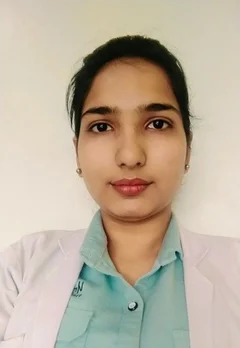
Dr. Anjali Sehrawat
star_border
5
1,999
390 reviews
I am Dr. Anjali Sehrawat. Graduated BAMS from National College of Ayurveda & Hospital, Barwala (Hisar) in 2023—and right now I'm doing my residency, learning a lot everyday under senior clinicians who’ve been in the field way longer than me. It’s kind of intense but also really grounding. Like, it makes you pause before assuming anything about a patient.
During my UG and clinical rotations, I got good hands-on exposure... not just in diagnosing through Ayurvedic nidan but also understanding where and when Allopathic tools (like lab reports or acute interventions) help fill the gap. I really believe that if you *actually* want to heal someone, you gotta see the whole picture—Ayurveda gives you that depth, but you also need to know when modern input is useful, right?
I’m more interested in chronic & lifestyle disorders—stuff like metabolic imbalances, stress-linked issues, digestive problems that linger and slowly pull energy down. I don’t rush into giving churnas or kashayams just bcz the texts say so... I try to see what fits the patient’s prakriti, daily habits, emotional pattern etc. It’s not textbook-perfect every time, but that’s where the real skill grows I guess. I do a lot of thinking abt cause vs symptom—sometimes it's not the problem you see that actually needs solving first.
What I care about most is making sure the treatment is safe, ethical, practical, and honest. No overpromising, no pushing meds that don’t fit. And I’m always reading or discussing sth—old Samhitas or recent journals, depends what the case demands. My goal really is to build a practice where people feel seen & understood, not just “managed.” That's where healing actually begins, right?

Dr. Hemanshu Mehta
star_border
5
2,204
241 reviews
I am Dr. Hemanshu—right now a 2nd year MD scholar in Shalya Tantra, which basically means I’m training deep into the surgical side of Ayurveda. Not just cutting and stitching, btw, but the whole spectrum of para-surgical tools like Agnikarma, Viddhakarma, and Kshara Karma... these aren’t just traditional, they’re super precise when done right. I’m not saying I know everything yet (still learning every day honestly), but I do have solid exposure in handling chronic pain issues, muscle-joint disorders, and anorectal conditions like piles, fissures, fistulas—especially where modern treatments fall short or the patient’s tired of going through loops.
During clinical rounds, I’ve seen how even simple Kshara application or well-timed Agnikarma can ease stuff like tennis elbow or planter fasciatis, fast. But more than the technique, I feel the key is figuring what matches the patient’s constitution n lifestyle... like one-size-never-fits-all here. I try to go beyond the complaint—looking into their ahar, sleep, stress levels, digestion, and just how they feel in general. That part gets missed often.
I honestly believe healing isn’t just a “procedure done” kind of thing. I try not to rush—spend time on pre-procedure prep, post-care advice, what diet might help the tissue rebuild faster, whether they’re mentally up for it too. And no, I don’t ignore pathology reports either—modern diagnostic tools help me stay grounded while applying ancient methods. It’s not this vs that, it’s both, when needed.
My aim, tbh, is to become the kind of Ayurvedic surgeon who doesn't just do the work but understands why that karma or technique is needed at that point in time. Every case teaches me something new, and that curiosity keeps me moving.

Dr. Ravi Chandra Rushi
star_border
5
2,097
319 reviews
I am working right now as a Consultant Ayurvedic Ano-Rectal Surgeon at Bhrigu Maharishi Ayurvedic Hospital in Nalgonda—and yeah, that name’s quite something, but what really keeps me here is the kind of cases we get. My main focus is managing ano-rectal disorders like piles (Arsha), fistula-in-ano (Bhagandara), fissure-in-ano (Parikartika), pilonidal sinus, and rectal polyps. These are often more complex than they look at first, and they get misdiagnosed or overtreated in a lotta places. That’s where our classical tools come in—Ksharasutra therapy, Agnikarma, and a few other para-surgical techniques we follow from the Samhitas...they’ve been lifesavers honestly.
My work here pushes me to keep refining surgical precision while also sticking to the Ayurvedic core. I do rely on modern diagnostics when needed, but I won’t replace the value of a well-done Nadi Pariksha or assessing dosha-vikruti in depth. Most of my patients come with pain, fear, and usually after a couple of rounds of either incomplete surgeries or just being fed painkillers n antibiotics. And I totally get that frustration. That’s why I combine surgery with a whole support plan—Ayurvedic meds, diet changes, lifestyle tweaks that actually match their prakriti. Not generic stuff off a handout.
Over time, I’ve seen that when people follow the whole protocol, not just the procedure part, the recurrence drops a lot. I’m quite particular about follow-up and wound care too, ‘cause we’re dealing with delicate areas here and ignoring post-op can ruin outcomes. Oh and yeah—I care a lot about educating folks too. I talk to patients in OPD, sometimes give community talks, just to tell people they do have safer options than cutting everything out under GA!
I still study Shalya Tantra like it’s a living document. I try to stay updated with whatever credible advancements are happening in Ayurvedic surgery, but I filter what’s fluff and what’s actually useful. At the end of the day, my aim is to offer respectful, outcome-based care that lets patients walk out without shame or fear. That’s really what keeps me grounded in this field.

Dr. Anirudh Deshmukh
3,376
0 reviews
I am Dr Anurag Sharma, done with BAMS and also PGDHCM from IMS BHU, which honestly shaped a lot of how I approach things now in clinic. Working as a physician and also as an anorectal surgeon, I’ve got around 2 to 3 years of solid experience—tho like, every day still teaches me something new. I mainly focus on anorectal care (like piles, fissure, fistula stuff), plus I work with chronic pain cases too. Pain management is something I feel really invested in—seeing someone walk in barely managing and then leave with actual relief, that hits different.
I’m not really the fancy talk type, but I try to keep my patients super informed, not just hand out meds n move on. Each case needs a bit of thinking—some need Ksharasutra or minor para surgical stuff, while others are just lifestyle tweaks and herbal meds. I like mixing the Ayurved principles with modern insights when I can, coz both sides got value really. It’s like—knowing when to go gentle and when to be precise.
Right now I’m working hard on getting even better with surgical skills, but also want to help people get to me before surgery's the only option. Had few complicated cases where patience n consistency paid off—no shortcuts but yeah, worth it.
The whole point for me is to actually listen first, like proper listen. People talk about symptoms but also say what they feel—and that helps in understanding more than any lab report sometimes. I just want to stay grounded in my work, and keep growing while doing what I can to make someone's pain bit less every day.
Latest reviews

Allison
7 hours ago
Thank you so much for this advice! Simple tips but they really helped manage the pain better. Relief at last!
Thank you so much for this advice! Simple tips but they really helped manage the pain better. Relief at last!
FAQ
How to ask ayurvedic doctor a question?
keyboard_arrow_down
What should be done to consult on the site?
keyboard_arrow_down
What does the doctor’s rating depend on?
keyboard_arrow_down
© 2024 Ask Ayurveda. All rights reserved.