Ask Ayurvedic doctor a question and get a consultation online on the problem of your concern in a free or paid mode. More than 2,000 experienced doctors work and wait for your questions on our site and help users to solve their health problems every day.


Body DetoxEar, Nose, and Throat DisordersGeriatrics & RejuvenationImmunodeficiencyInfertility TreatmentNutritionOrthopedic DisordersPediatricsRespiratory DisordersSexually Transmitted Diseases (STDs)Surgery RecoveryUrological DisordersVascular DisordersDental DisordersEndocrinological DisordersGastrointestinal DisordersYoga TherapyGeneral MedicineAllergic DisordersCardio DisordersGynecology and ObstetricsCosmetologySkin and Hair DisordersEye DisordersInfectious DiseasesMental DisordersNeurological DisordersOncologyPanchakarmaSexual Health & DisordersSports Medicine
Published on 05/13/25
(Updated on 08/10/26)
2,870
Feeling Blocked? How Yoga Poses for Constipation (Plus Ayurvedic Tips) Can Seriously Help

Constipation isn't just annoying — it's exhausting. You sit, you wait, you sigh, you maybe check your phone. Again. And still... nothing. It messes with your mood, your energy, even how your clothes feel. And let’s be real — nobody wants to talk about it.
But maybe we should. Because what if the solution wasn’t just more fiber, or another glass of water, or some chalky supplement? What if the answer started on your yoga mat — and ended in your kitchen, with warm foods, herbal teas, and a slower, more intentional daily rhythm?
In this guide, we’re diving deep — like, “ancient Ayurvedic philosophy meets bathroom reality” deep — into how yoga poses for constipation, paired with Ayurvedic diet and lifestyle tweaks, can do way more than just get you “regular.” They can actually transform how you feel in your body. And yeah, even how you think.
So Why Are We Even Talking About Yoga Poses for Constipation?
Let’s not overcomplicate this. You want things to move. But not just once — consistently. Predictably. Peacefully, even.
Turns out, your gut isn’t just a plumbing system. It’s deeply connected to your nervous system, your hormones, your mental state. The colon’s like a sensitive artist: it needs the right conditions to perform.
That’s where yoga comes in — not just the movement, but the breathwork, the mindfulness. Certain poses literally massage your intestines. Others calm your nervous system so your body exits “fight-or-flight” and re-enters “rest-and-digest.”
But yoga alone isn’t the full story. Ayurveda — the 5,000-year-old science of living in sync with nature — shows us that what you eat, when you eat, how you breathe, sleep, move, everything impacts elimination. Especially for folks with a Vata imbalance, which we’ll get into next.
So if you’re here for:
-
Practical yoga routines that don’t require Cirque du Soleil-level flexibility
-
Ayurvedic food tips that don’t taste like cardboard
-
And a real, human conversation about poop, without the shame
...then you’re in the right place.
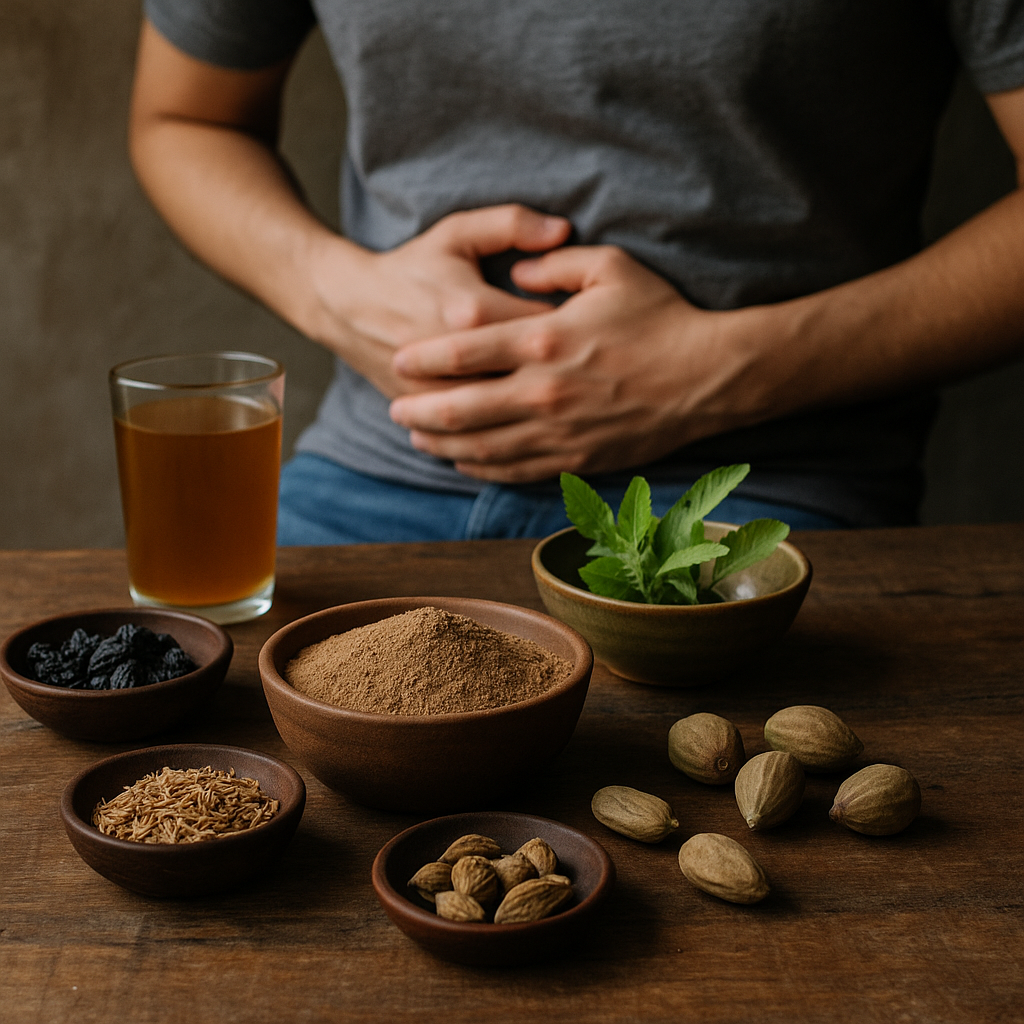
Ayurveda and Constipation: What the Ancient Texts (and Your Body) Are Trying to Say
What Ayurveda Says About Constipation
Ayurveda doesn’t just look at constipation as a digestive hiccup. It sees it as a Vata imbalance — the dosha (or elemental energy) made up of air and space. When Vata’s healthy, it supports movement — thoughts, breath, elimination. When it’s out of balance, everything goes haywire.
Think: dryness, irregularity, tightness, unpredictability. Classic constipation symptoms, right?
The ancient texts call this condition “Vibandha”, and it's often linked to:
-
Eating cold, raw, or dry foods
-
Skipping meals
-
Late nights, overstimulation, or anxiety
-
Lack of routine or grounding habits
-
Too much travel or screen time (yep, they saw that one coming)
Basically, if your life is scattered, rushed, or ungrounded — so is your poop.
How Ayurvedic Lifestyle & Diet Impact Constipation
Here's something Ayurveda really gets right: digestion is a process, not just a moment. It's affected by everything you do — not just what you eat.
Imagine this: you’re eating a salad at 3 p.m., multitasking on your phone, slouched at your desk, after having skipped breakfast and chugged a cold smoothie for lunch. No wonder your gut’s confused.
Ayurveda encourages:
-
Warm, cooked meals at regular times
-
Spiced herbal teas to stoke digestion (called Agni)
-
Taking time to chew and actually be with your food
-
Moving your body gently before and after meals
-
Morning routines that support elimination before the day even starts
And it works. It’s not flashy. It’s not instant. But it’s deeply, biologically intelligent.
The Importance of Individualized Ayurvedic Approaches for Constipation
Maybe the most compassionate thing Ayurveda offers is this: you’re not like anyone else.
Some people need more oils in their diet. Others need more movement. Some need to cool down (Pitta types), others need to warm up (Vata types), and some — bless them — just need to get up off the couch (Kapha types).
There’s no one miracle food, no perfect yoga pose that works for everyone. That’s why Ayurveda asks:
-
What’s your constitution?
-
What’s your current imbalance?
-
What’s your environment like?
This is why Ayurvedic advice can feel slow, subtle... but it lasts. It’s not about forcing your body to do something. It’s about creating the conditions where it naturally knows what to do.
What Ayurveda Says You Should (and Definitely Shouldn’t) Eat If You’re Constipated
Look, if your colon’s acting like a stubborn old man who refuses to budge, it might be time to audit your plate.
Food is medicine in Ayurveda — but not in the sterile, calorie-counting kind of way. It’s about energetics. Is your food warm or cold? Heavy or light? Moist or dry? That all matters when you’re trying to get things moving again.
Let’s break it down.
🍲 Foods Recommended by Ayurveda for Constipation Relief
-
Warm, moist, slightly oily foods. Think: khichdi with ghee, vegetable stews, cooked apples with cinnamon.
-
Ripe bananas — not green ones (they’ll clog you up).
-
Soaked raisins or prunes in the morning — grandma was right.
-
Ghee. Yes, that golden stuff. A spoonful in warm milk at bedtime is practically a digestive lullaby.
-
Cooked greens, like spinach or methi, with a pinch of hing (asafoetida) and cumin.
-
Mung dal soup — gentle, nourishing, and a good friend to the colon.
These foods don’t just pass through your system. They nudge it. They say: “Hey buddy, time to go.”
🚫 Foods Ayurveda Suggests Avoiding for Constipation
-
Raw vegetables (sorry, salad lovers) — too rough and drying for a sluggish colon.
-
Cold foods and drinks, especially straight from the fridge.
-
Dry snacks — crackers, chips, popcorn. Basically the opposite of juicy.
-
Overly spicy or pungent foods — these can irritate and further disrupt Vata.
-
Red meat, processed stuff, anything microwaved — not because Ayurveda is trendy, but because those things kill digestive fire.
There’s also a mindset to this: don’t eat while angry. Or distracted. Or scrolling. Even the most Ayurvedic meal can clog you up if you’re tense and rushing.
⏰ Meal Planning & Timing Tips (Because Constipation Hates Chaos)
-
Eat your main meal at lunchtime — that’s when your digestive fire (Agni) is strongest.
-
No late-night dinners. Your gut needs sleep too.
-
Regularity matters. Eating at the same time daily helps train your colon.
-
Don’t skip meals. Ever. (Yes, intermittent fasters — this means you.)
Your colon loves predictability. Be boring. Be rhythmic. Your bowel movements will thank you.
💧 Hydration & What You Should Be Drinking
Water’s important — but not just any water.
-
Start your day with a mug of warm water. Add lemon or a few soaked raisins if you’re feeling fancy.
-
Sip cumin-coriander-fennel tea through the day. Great for digestion, not boring at all.
-
Avoid iced drinks, smoothies, or anything that gives your stomach a cold shock.
-
Add a pinch of mineral salt and a drop of lime to your water if you feel dry inside — yes, your colon can get thirsty too.
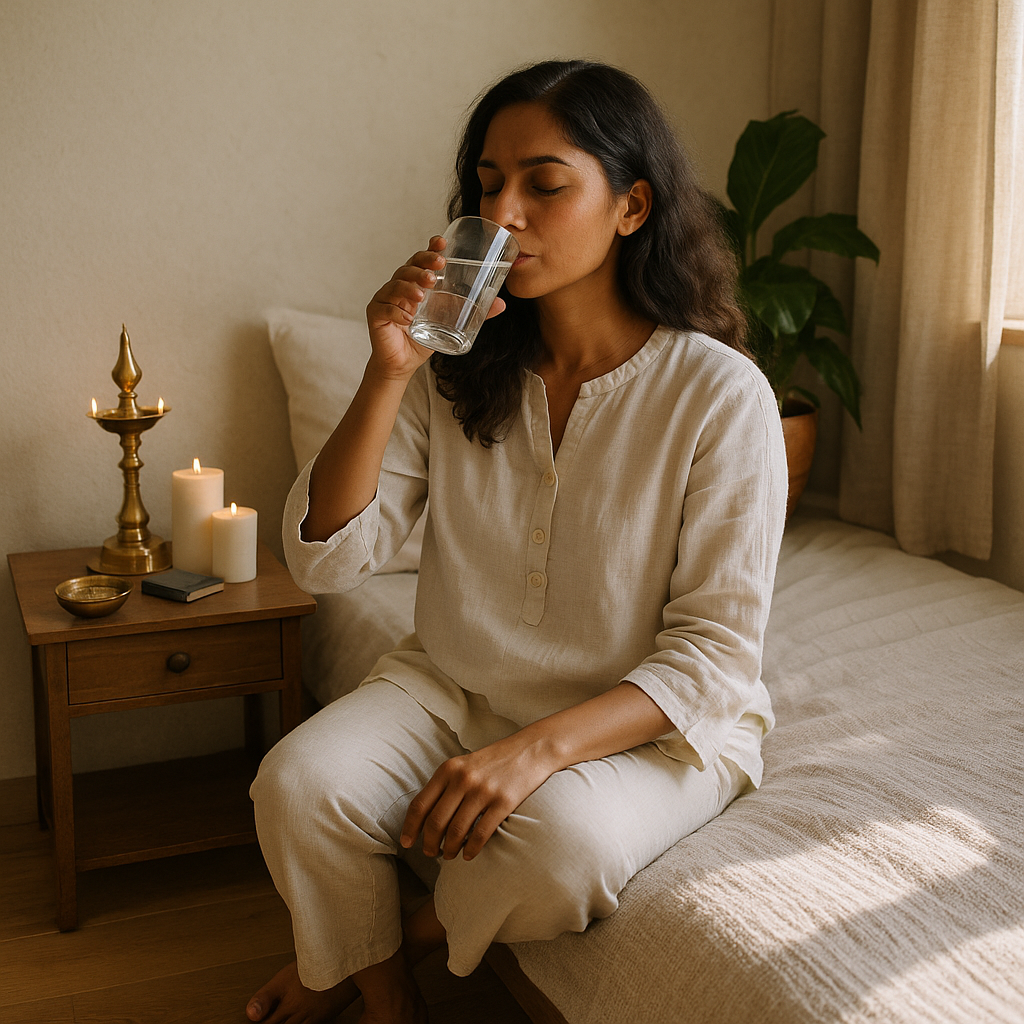
Living Ayurveda: Daily Routines That Gently Nudge You Back Into Flow
Constipation doesn’t begin in your colon. It begins when your day has no rhythm, no pause, no warmth. Ayurveda's answer? Dinacharya — a daily flow that restores natural cycles. Think of it as the playlist your body wants on repeat.
☀️ Daily Ayurvedic Routines (Dinacharya) to Beat Constipation
-
Wake before sunrise. That’s when Vata time ends and your gut's ready to do its thing.
-
Drink warm water immediately upon waking — even before checking your phone (you can do it).
-
Self-massage with warm sesame oil (Abhyanga). Not just for spa days — this grounds Vata and stimulates the lymphatic and digestive systems.
-
Gentle movement — a short walk, yoga, or a few Surya Namaskars.
-
Bowel training. Yes, sit on the toilet at the same time each morning, even if you don’t feel the urge. It’s not weird — it’s training.
😴 Sleep Patterns That Don’t Disrupt Digestion
-
Be in bed by 10 p.m. — not midnight.
-
Avoid late-night snacks or heavy meals.
-
Create a wind-down ritual: herbal tea, dim lights, maybe a little light reading (preferably not on a glowing screen).
Your colon is kind of a diva. It wants peace and quiet to do its job well.
💆 Ayurvedic Personal Care Habits to Support Elimination
-
Tongue scraping. Helps detox the system and kickstarts digestion.
-
Nasya (nasal oil drops) — sounds odd, but can calm an overactive Vata and help the whole gut-brain axis.
-
Triphalā at bedtime — the holy trinity of Ayurvedic herbs that’s gentle, effective, and not habit-forming. Take with warm water.
Breathe, Stretch, Let Go: Yoga & Pranayama for Constipation Relief
Here’s the beautiful thing about yoga: it literally massages your intestines. And breathwork? It chills your nervous system so digestion doesn’t shut down under pressure.
Forget contortionist-level stuff. These poses are doable, even if your hamstrings are still negotiating peace talks.
🧘 Yoga Asanas That (Actually) Help with Constipation
-
Pawanmuktasana (Wind-Relieving Pose): Name says it all.
-
Malasana (Yogic Squat): Opens hips and aligns rectum — like nature intended.
-
Supta Matsyendrasana (Supine Twist): Twists wring out your insides like a sponge.
-
Cat-Cow (Marjaryasana-Bitilasana): Warms the spine, massages the gut.
-
Balasana (Child’s Pose): Not just for emotions — it relaxes your whole lower belly.
Do them slowly. Breathe through them. Even five minutes a day makes a difference.
🌬️ Breathing Exercises (Pranayama) That Work Wonders
-
Nadi Shodhana (Alternate Nostril Breathing): Balances your nervous system and gets Vata under control.
-
Bhramari (Humming Bee Breath): Sounds silly, feels amazing — quiets your mind and gut.
-
Kapalabhati (Shining Skull Breath): Only if your constipation isn’t from dryness — this one’s heating and activating.
Start small — 5 to 7 minutes is enough. Breath is subtle medicine. Don’t overdo it.
📅 How Often Should You Practice?
-
Yoga: Daily, even just 10–15 minutes.
-
Pranayama: Morning is best — on an empty stomach.
-
Consistency matters more than intensity. Your colon doesn’t need bootcamp. It needs rhythm, space, and support.
The Poop-Stress Connection Is Real: Here’s How to Break It
You’re constipated, so you get anxious. Then the anxiety tightens your gut, and that — you guessed it — worsens the constipation. Rinse and repeat. Welcome to the gut-brain feedback loop nobody wants to be stuck in.
Ayurveda says: to relax the colon, calm the mind. Which sounds obvious. But we rarely take it seriously.
🕉️ Ayurvedic Techniques to Reduce Stress
-
Abhyanga (self-massage) with warm oil in the morning or before bed — grounding as heck.
-
Brahmi or Ashwagandha teas — adaptogens that help reduce cortisol and calm the nerves.
-
Walking in nature (Vata loves earthiness). 20 minutes barefoot on grass? Magic.
🧘♂️ Meditation & Mindfulness Practices That Actually Help
-
Start with just 2 minutes of sitting quietly after meals. No phone. Just breathing.
-
Try Trataka (candle-gazing) — great for Vata minds that bounce around.
-
Use mantra repetition — even something simple like “Let go” on the exhale. Literally.
The point isn’t perfection. It’s presence. A calmer mind equals a more responsive gut.
❤️ Emotional & Psychological Considerations in Ayurveda
This might sound “woo,” but constipation isn’t just about the body. It’s about holding on — to stress, emotions, rigidity, control.
Ayurveda suggests looking at constipation as a message. What are you resisting? Where are you clenching, emotionally or mentally? Healing this can be as important as food or yoga.
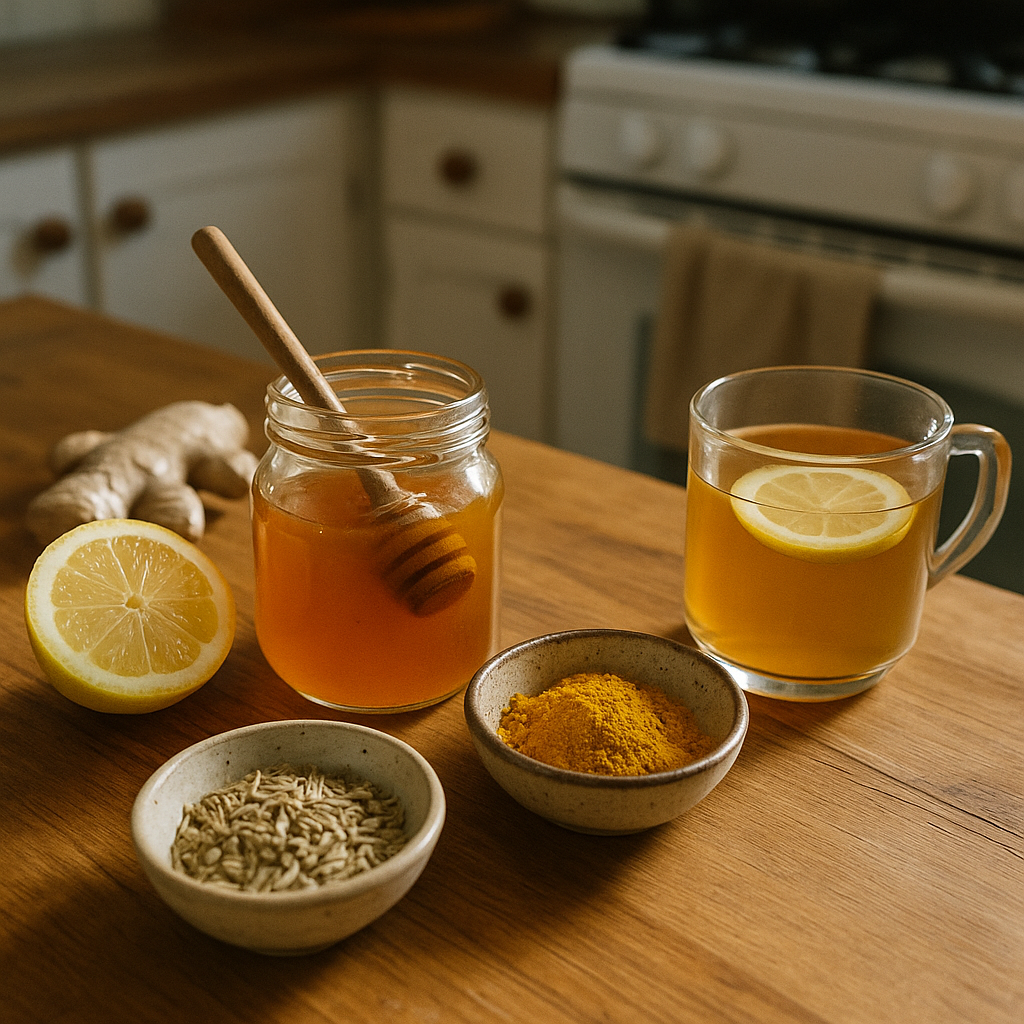
Home Remedies That Feel Like a Hug for Your Gut (Yes, Ayurveda Gets Cozy Too)
Ayurveda isn’t all herbs and Sanskrit. Sometimes it’s just what your grandmother did — with better explanations. Home remedies are where ancient wisdom meets your kitchen shelf. And the best part? You probably already have most of what you need.
🍯 Simple Ayurvedic Remedies That Actually Work
-
Ghee + Warm Milk Before Bed
1 tsp of ghee in a cup of warm milk — this is practically a lullaby for your colon. Add a pinch of nutmeg if sleep’s also being a jerk. -
Soaked Raisins in the Morning
Soak 5–7 black raisins overnight. Eat them first thing, with the water. Sweet, effective, gentle. -
Triphala Churna
The MVP of Ayurvedic digestion. ½ tsp of the powder in warm water at night. It's not a laxative; it’s a cleanser — soft, slow, and sustainable. -
Castor Oil (But Careful!)
For serious, dry-type constipation, 1 tsp of food-grade castor oil in warm milk or ginger tea can work. But ask a practitioner — this one’s strong.
🫕 Ayurvedic Recipes That Love Your Belly
-
Khichdi (The Classic)
Made with white rice, yellow mung dal, ghee, cumin, ginger. Soft, warm, easy to digest, and honestly kind of addictive once you get into it. -
Stewed Apple with Spices
Cook an apple with a splash of water, cardamom, cinnamon, and a tiny bit of ghee. Eat it warm in the morning — feels like a hug from inside. -
Hearty Beet-Carrot Soup
With hing, black pepper, a dash of lemon, and a bit of ghee. Balancing, sweet-earthy, and colon-friendly.
🔧 Tips for Preparation That Actually Matter
-
Always cook with intention. Ayurveda believes your mental state infuses your food.
-
Favor fresh — no reheating yesterday’s sad leftovers.
-
Add digestive spices: cumin, fennel, ginger, coriander.
-
Avoid microwaving. Your colon knows the difference.
You’re Doing What Now? Common Mistakes People Make with Ayurveda for Constipation
Let’s be real — Ayurveda on Instagram is not the same as Ayurveda in practice. A lot of people mess this up by either overdoing it, cherry-picking, or misunderstanding how deep and personalized this system really is.
🧂 Myth #1: “Ayurveda = Spices + Herbs”
Nope. It’s a lifestyle — not just turmeric lattes. Skipping meals, living in chaos, scrolling past midnight — no amount of cumin will fix that.
❌ Mistake #1: Treating It Like a Quick Fix
Ayurveda isn’t fast. That’s the point. It’s not a band-aid; it’s a system reset. If you’re looking for an overnight miracle, you’ll be disappointed.
💊 Mistake #2: Overusing Laxatives or Herbal Powders
People hear about Triphala and start taking it daily forever. Not how it works. Ayurveda encourages monitoring your body’s response, not building dependency.
⚖️ Mistake #3: Not Knowing Your Dosha or Imbalance
What works for one person might mess you up. The same food that helps a Vata type might aggravate Kapha. That’s why self-diagnosing with memes is risky.
🛑 How to Avoid All This?
-
Start simple. Warm food. Regular meals. Breath. Movement.
-
Observe, don’t obsess.
-
Work with an Ayurvedic practitioner if you’re serious.
-
Listen to your body. It’s whispering. Don’t wait until it starts yelling.
It Worked for Them — Why Not You? Real-Life Gut Wins with Ayurveda & Yoga
We’re all skeptical until we see someone like us find relief. Here are a few real (ish) stories that show how Ayurvedic wisdom and yoga poses for constipation can be... well, life-changing.
💬 Saanvi, 29 – Freelancer in Delhi
“Working late, eating at odd hours, living off coffee... my digestion was wrecked. I thought it was normal. Then an Ayurvedic doctor put me on a basic routine: early dinners, warm meals, Triphala, and child’s pose every morning. Within two weeks — magic. I could finally poop like a normal person.”
💬 Mark, 42 – IT Professional in Toronto
“I started yoga for back pain but noticed something else — I was going to the bathroom more regularly. Turns out, those twists do more than stretch muscles. I now do a 10-minute flow every morning, and I haven't been constipated in months.”
💬 Real-Life Results (Not Sponsored, Just Satisfied Guts)
-
Better sleep
-
Less bloating
-
Calmer mornings
-
Improved mood (seriously)
-
And yes — actual daily bowel movements, without effort or strain
But Is There Science? Yep — Here’s the Research on Yoga, Ayurveda & Constipation
Let’s not pretend this is all vibes and incense. The science is starting to catch up with what Ayurveda’s known for centuries.
🧪 Research on Diet & Constipation
-
Diets rich in warm, cooked vegetables, good fats, and spices like turmeric and cumin are linked with better bowel regularity.
-
Studies show highly processed, cold, or dry foods slow gut transit time — exactly what Ayurveda warns against.
📊 Clinical Studies on Yoga & Gut Health
-
A 2015 study in the Journal of Yoga found that a 12-week yoga protocol improved constipation symptoms significantly compared to controls.
-
Twisting postures and abdominal pressure do increase peristalsis — yoga’s not just woo.
🧠 Experts Say…
-
Dr. David Frawley, an Ayurvedic scholar, calls Triphala "one of the most important formulas for internal cleansing and digestive harmony."
-
Functional medicine practitioners now frequently recommend yoga and breathwork as part of gut-brain axis regulation.
So, What Should You Do Next? (Besides Breathe and Maybe Poop)
Alright. You made it this far — so now what?
If you’re dealing with constipation that’s not just physical but energetic, emotional, and chaotic... Ayurveda and yoga give you tools, not just hacks. They give you a way to realign your life with your body’s needs.
✅ Recap of Key Takeaways
-
Constipation isn’t just about food — it’s about flow.
-
Yoga poses for constipation work best when paired with breath, warmth, and regularity.
-
Ayurveda isn’t a diet — it’s a rhythm. A gentle nudge back toward balance.
-
You need to find what works for you, not just copy trends.
🌱 Final Word
Give your gut some grace. Start small — a warm drink, a morning stretch, a quieter dinner. Track what shifts. And remember: you’re not broken. You’re just out of sync. Let Ayurveda bring you back.
Want help figuring out your Ayurvedic constitution or getting a personalized plan? [Connect with a certified Ayurvedic practitioner on our site →]
FAQ: Yoga Poses & Ayurvedic Lifestyle for Constipation (You’re Not the Only One Wondering…)
Q: Which yoga pose is best for quick constipation relief?
A: Pawanmuktasana (wind-relieving pose) is your go-to. Combine it with deep breathing and hold for 30 seconds on each side.
Q: Can I use Triphala every day?
A: Short-term, yes — it’s generally safe. But don’t rely on it long-term without understanding your dosha and needs.
Q: Is salad bad in Ayurveda?
A: Not “bad,” but raw, cold foods are tough on digestion — especially for Vata types. Lightly cooked veggies are usually better.
Q: Does Ayurveda believe in fiber?
A: Yes, but not in isolation. It prefers fiber within whole, moist, cooked foods — not from dry powders or bars.
Q: How long before Ayurveda starts working for constipation?
A: Some see results in days; for others, it takes a few weeks. It’s about consistency, not quick fixes.
Questions from users
Can I combine yoga with deep breathing for better digestion?
Client_9d413f
2 days ago
Yes, you can combine yoga with deep breathing exercises to aid digestion. Specific yoga poses, like seated twists or the downward-facing dog, help stimulate the digestive organs. Deep breathing enhances the benefits by increasing oxygen flow and calming the nervous system, which can improve digestion over time. Practicing these techniques regularly, such as 15-30 minutes daily, can show improvements within a few weeks. If you experience persistent digestive issues, consult a healthcare provider to rule out underlying conditions.
How does sleep quality affect digestion and gut health?
Client_54c34d
7 days ago
Sleep quality significantly impacts digestion and gut health. Poor sleep can alter gut microbiome balance and slow digestion, leading to issues such as constipation or indigestion. To support digestive health, aim to establish a regular sleep schedule by getting to bed by 10 p.m. and avoiding late-night meals. Developing a calming bedtime routine, like having herbal tea and dimming lights, may improve both sleep and digestive processes. If sleep issues persist, leading to ongoing digestive problems, consult a healthcare provider for guidance.
What ingredients in khichdi promote digestive health in Ayurveda?
Client_790c76
12 days ago
The ingredients in khichdi that promote digestive health include white rice, yellow mung dal, ghee, cumin, and ginger. White rice and yellow mung dal are easy to digest and provide energy without burdening the digestive system. Ghee acts as a lubricant for the gut, aiding smooth digestion and nutrient absorption. Cumin helps in reducing bloating and stimulating digestive enzymes, while ginger can alleviate nausea and enhance gut motility. For persistent digestive issues, it's advisable to consult a healthcare professional to rule out more serious conditions.
How does a balanced diet affect digestive health in Ayurveda?
Client_e0e3dd
17 days ago
A balanced diet significantly influences digestive health by ensuring that your body receives a variety of nutrients essential for proper digestive function. Eating a range of fruits, vegetables, whole grains, and lean proteins can promote healthy digestion by providing the fiber needed to prevent constipation and support gut health. Ayurveda may emphasize the importance of eating according to one's dosha but primarily highlights the benefits of meals that are warm, cooked, and easy to digest. To optimize digestive health, avoid overusing laxatives and opt for sustainable dietary changes. If digestive issues persist for more than a few weeks, it's advisable to consult a healthcare provider.
How can herbal teas improve digestion and relieve constipation?
Client_6eee80
27 days ago
Herbal teas such as peppermint, ginger, and dandelion can improve digestion and relieve constipation by stimulating the digestive system and hydrating the intestines. Peppermint tea helps relax gastrointestinal muscles, potentially easing bowel movements. Ginger tea can enhance gastric motility, and dandelion tea may act as a natural laxative. Typically, improvements might be noticed within a few days when consumed regularly. If constipation persists for over two weeks, consult a doctor to rule out underlying conditions.
How can yoga poses help relieve constipation naturally?
Client_125c43
37 days ago
Yoga can help relieve constipation naturally by stimulating digestion and encouraging bowel movements through specific poses. Poses like the seated forward bend, wind-relieving pose, and spinal twists gently massage the intestines, enhancing peristalsis. Practicing these poses regularly can assist in alleviating constipation. Results might be noticeable in a few days to a couple of weeks when combined with a fiber-rich diet and proper hydration. If constipation persists for more than three weeks or is accompanied by severe discomfort, consulting a doctor is advisable.
How does hydration influence digestive health in Ayurveda?
Client_7b4739
47 days ago
Hydration is crucial for digestive health because it helps to regulate bowel movements by softening the stool and promoting smooth passage through the intestines. Adequate water intake can prevent constipation, a common digestive issue. Though Ayurveda emphasizes warm water and herbal teas for enhanced digestion, the basic principle remains that staying hydrated supports your gastrointestinal tract. Aim to drink sufficient fluids daily—about 8 cups for most adults. If you experience digestive issues despite good hydration, consult a healthcare professional to rule out underlying conditions.
What lifestyle changes can help reduce nighttime scrolling and improve digestion?
Client_d8d0ca
56 days ago
To reduce nighttime scrolling and improve digestion, establish a regular evening routine that promotes relaxation and reduces screen time. Avoid screens at least an hour before bed to help your body transition to sleep mode, which also aids in digestion. Instead, try reading a book or practicing deep breathing exercises. Consuming a light dinner at least two to three hours before bed can also support digestion. If issues persist or worsen, consult a healthcare professional for personalized advice.
What is the importance of mindful eating for digestive health in Ayurveda?
Client_6bad86
66 days ago
Mindful eating's super important for digestive health in Ayurveda. It helps harmonize your agni (digestive fire) by making you more in tune, u know, with hunger signals and the type of food your body needs. Chewing well, focusing on the meal, shapes how efficiently your body processes nutrients, reducing ama (toxins), so definitely worth a try! 🙂
What is the best time to drink warm water for digestive health according to Ayurveda?
Client_1d6c31
75 days ago
Drinking warm water right after waking up is super beneficial. It helps kickstart your digestive fire, or agni, and can help your body flush out toxins. Think of it like giving your system a gentle alarm clock. Drinking it on an empty stomach is generally best, though you can experiment with different times to see what works for ur body.
Related articles

Yoga Therapy
What Is Makarasana: Meaning, Steps, Benefits, and Yoga Practice
Learn what is makarasana and how to do it. Discover makarasana pose benefits, yoga meaning, steps, variations, and precautions for better results
4,758

Yoga Therapy
Yoga Therapy: Daily Practice for Healing and Well-Being
Explore yoga therapy and its daily benefits. Improve posture, flexibility, mental clarity, and reduce chronic pain through this holistic healing practice
2,613

Yoga Therapy
What Is Somatic Yoga? Meaning, Benefits & Poses
Let’s be honest — the name sounds a little technical, right? The word somatic itself comes from the Greek word soma, meaning “the body.” But in practice, somatic yoga is a whole different vibe than what most of us picture when we think about yoga.
2,807

Yoga Therapy
Finding Your Dosha's Meditation Fit
Understanding your dosha (Vata, Pitta, or Kapha) is essential for tailoring Meditation and Pranayama practices to your unique physical and mental state.
3,081

Yoga Therapy
Yoga Nidra Meditation for Sleep – Benefits and How to Do It
In today’s fast-paced world, where stress and anxiety reign supreme, sleep often becomes a casualty.
3,037

Yoga Therapy
Does Yoga Help in Weight Loss?
Discover how yoga helps in weight loss through effective poses, simple home routines, and Ayurvedic guidance. Ideal for beginners and women seeking natural results
2,231

Yoga Therapy
What Is Ashtanga Yoga: Meaning, Structure, and Yogic Benefits
What is Ashtanga Yoga? Learn its meaning, steps, poses, and benefits. Explore how this eight-limbed path supports health, balance, and inner awareness
7,834

Yoga Therapy
Ayurvedic Treatment for Plantar Fasciitis: Natural Relief for Foot Pain
Plantar fasciitis is characterized by stabbing pain near the heel, especially during the first steps in the morning or after prolonged periods of inactivity.
3,833

Yoga Therapy
What Is Bhujangasana: Meaning, Procedure, and Yoga Benefits
What is Bhujangasana and how is it done? Learn the correct steps, benefits, and procedure of this yoga pose, also known as Cobra Pose, with Ayurvedic insight
7,797
Related consultations on the topic
Legal
Additional Documents
© 2024 Ask Ayurveda. All rights reserved.