Ask Ayurvedic doctor a question and get a consultation online on the problem of your concern in a free or paid mode. More than 2,000 experienced doctors work and wait for your questions on our site and help users to solve their health problems every day.


Body DetoxEar, Nose, and Throat DisordersGeriatrics & RejuvenationImmunodeficiencyInfertility TreatmentNutritionOrthopedic DisordersPediatricsRespiratory DisordersSexually Transmitted Diseases (STDs)Surgery RecoveryUrological DisordersVascular DisordersDental DisordersEndocrinological DisordersGastrointestinal DisordersYoga TherapyGeneral MedicineAllergic DisordersCardio DisordersGynecology and ObstetricsCosmetologySkin and Hair DisordersEye DisordersInfectious DiseasesMental DisordersNeurological DisordersOncologyPanchakarmaSexual Health & DisordersSports Medicine
Published on 12/18/24
(Updated on 08/09/26)
4,172
Swarn Sutshekhar Ras: Benefits, Dosage & Uses Explained
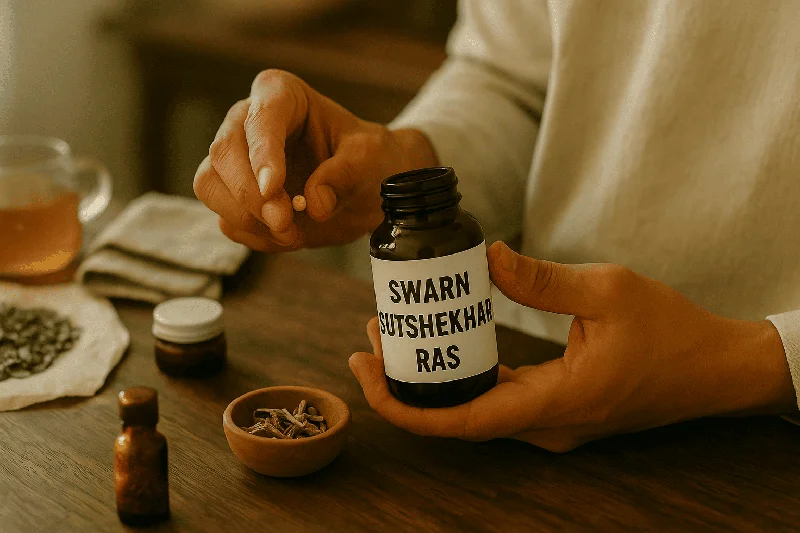
Swarn Sutshekhar Ras is a classical Ayurvedic herbomineral formulation containing purified gold (Swarna Bhasma), mercury, sulphur, and a precise combination of medicinal herbs — primarily used to treat hyperacidity, chronic gastritis, nausea, and Pitta-related disorders. Originally described in authoritative Rasa Shastra texts like Rasa Ratna Samuchaya and Bhaishajya Ratnavali, this medicine has been prescribed by Ayurvedic physicians for centuries to pacify aggravated Pitta dosha and restore digestive fire (Agni) without suppressing it.
If you've been searching for a reliable, in-depth guide that goes beyond surface-level ingredient lists — covering the actual science behind each component, the critical difference between the gold and non-gold versions, proper Anupana selection, course duration, and safety for specific populations — you're in the right place.
What Is Swarn Sutshekhar Ras?
Meaning and Ayurvedic Classification
The name breaks down simply: Swarn (gold), Sut (mercury/Parada), and Shekhar (crown or chief). Literally, it translates to "the crowned formulation of mercury with gold." In Ayurvedic pharmacology (Rasa Shastra), it falls under the category of Khalviya Rasayana — a class of mercurial preparations processed with herbal juices and mineral Bhasmas.
It's classified as a Pitta Shamaka (Pitta-pacifying) formulation with secondary action on Vata dosha. The primary pharmacological action according to Rasa Shastra is:
| Parameter | Description |
|---|---|
| Rasa (Taste) | Madhura (sweet), Tikta (bitter), Kashaya (astringent) |
| Guna (Quality) | Laghu (light), Snigdha (unctuous) |
| Virya (Potency) | Sheeta (cooling) |
| Vipaka (Post-digestive effect) | Madhura (sweet) |
| Dosha Karma | Pitta Shamaka, Vata Anulomaka |
This pharmacological profile explains exactly why it works for acid-related disorders — the cooling potency directly counteracts the hot, sharp qualities of aggrevated Pitta.
Historical Origin and Textual References
The formula finds mention in multiple classical Ayurvedic texts, though the most authoritative references come from:
- Rasa Ratna Samuchaya (13th century CE) — one of the foundational texts of Indian alchemy and mineral medicine
- Bhaishajya Ratnavali — the comprehensive Ayurvedic pharmacopoeia that details the exact preparation methodology
- Yoga Ratnakara — which describes therapeutic applications in Amlapitta (hyperacidity) and Grahani (IBS-like conditions)
Gold has held a special place in Ayurvedic medicine for over 2,500 years. Ancient Acharyas considered Swarna Bhasma a Rasayana (rejuvenative) that enhances Ojas (vital essence) and Medha (intellect). The addition of gold to the Sutshekhar Ras formula elevates it from a digestive remedy to a formulation with systemic rejuvenative, cardioprotective, and neuroprotective actions.
Swarn Sutshekhar Ras vs Sutshekhar Ras: With Gold vs. Without Gold
This is one of the most commonly asked questions — and surprisingly, no other source answers it properly.
| Feature | Swarn Sutshekhar Ras (With Gold) | Sutshekhar Ras (Without Gold) |
|---|---|---|
| Contains Swarna Bhasma | Yes | No |
| Price range | ₹300–700+ for 10 tablets | ₹80–200 for 10–30 tablets |
| Primary action | Digestive + Rejuvenative + Cardioprotective + Neuroprotective | Primarily digestive and anti-emetic |
| Indicated for | Chronic/complex Pitta disorders, gastritis with anxiety, cardiac involvement | Straightforward acidity, nausea, mild gastritis |
| Potency | Stronger; broader systemic action | Effective but narrower scope |
| Typical course | Often 4–8 weeks under supervision | 2–6 weeks for acute conditions |
| Rasayana (rejuvenative) effect | Significant due to Swarna Bhasma | Minimal |
Bottom line: If your condition involves chronic gastritis complicated by stress, anxiety, tachycardia, or general debility, the Swarn (gold) version is the better choice. For simple, uncomplicated acidity, the standard Sutshekhar Ras without gold is often sufficient — and far more affordable.
Ingredients and Composition: What's Actually Inside?
Complete Ingredient List with Individual Roles
Most sources simply list ingredients. Here's what each component actually does in the formulation and why it's there:
| Ingredient (Sanskrit) | English/Common Name | Quantity (approx. per classical reference) | Role in Formulation |
|---|---|---|---|
| Shuddha Parada | Purified Mercury | 1 part | Base of Rasa preparation; acts as a Yogavahi (bioavailability enhancer) — carries other ingredients deep into tissues |
| Shuddha Gandhaka | Purified Sulphur | 1 part | Combines with Parada to form Kajjali; anti-inflammatory, antimicrobial; Pitta-pacifying |
| Swarna Bhasma | Gold calx | 1/8 to 1/4 part | Rejuvenative, cardioprotective, immunomodulatory; enhances Ojas; key differentiator of the "Swarn" version |
| Tamra Bhasma | Copper calx | 1 part | Hepatoprotective; aids digestion; particularly effective in liver-related Pitta disorders |
| Shuddha Vatsanabha | Purified Aconite (Aconitum ferox) | Trace amount | Deepana (appetizer), analgesic; after purification (Shodhana) its toxicity is eliminated while retaining therapeutic action |
| Shuddha Dhatura | Purified Datura (Datura metel) seeds | As per text | Antispasmodic, reduces abdominal cramping and colic; toxic raw, safe after Shodhana |
| Shunthi | Dry Ginger (Zingiber officinale) | Equal part | Carminative, Agni-deepana; paradoxically cools Pitta when combined with Sheeta Virya drugs |
| Nagkeshar | Mesua ferrea | Equal part | Anti-emetic (directly addresses nausea and vomiting); astringent, helps in bleeding disorders |
| Ela | Cardamom (Elettaria cardamomum) | Equal part | Aromatic, carminative; reduces bloating; natural Pitta-pacifier |
| Dalchini | Cinnamon (Cinnamomum zeylanicum) | Equal part | Improves circulation, mild analgesic, supports Agni without aggravating Pitta |
| Tejpatra | Indian Bay Leaf (Cinnamomum tamala) | Equal part | Digestive stimulant, reduces Ama (metabolic toxins) |
| Bilva | Bael (Aegle marmelos) | For Bhavana | Grahi (absorbent); specific action on Grahani; reduces diarrhea and dysentery |
| Bhavana Dravya (processing medium) | Bhringraj Swarasa / Datura Patra Swarasa | Sufficient quantity | Potentiates the formulation through multiple levigations |
A 2011 study published in the Journal of Ayurveda and Integrative Medicine confirmed that properly prepared Rasa Shastra formulations containing Parada and Gandhaka, when subjected to classical Shodhana and Marana processes, show particle sizes in the nanometer range — which partly explains their high bioavailability and low toxicity at therapeutic doses.
The Shodhana (Purification) Process: Why It Matters
This is perhaps the most critical aspect that no competitor discusses, yet it's what separates a safe medicine from a dangerous one.
- Parada Shodhana (Mercury Purification): Raw mercury undergoes multiple cycles of trituration with fresh garlic, brick powder, herbal decoctions, and acidic media.
- This process — repeated 7 to 18 times depending on the tradition — transforms elemental mercury into a therapeutically active, organically-bound form. Research from Banaras Hindu University (BHU) has demonstrated that Shuddha Parada shows dramatically reduced free mercury content compared to raw mercury.
Gandhaka Shodhana (Sulphur Purification): Sulphur is melted and poured through a cloth into cow's milk or ghee, repeated 3–7 times. This removes arsenic and other impurities naturally present in raw sulphur. Vatsanabha Shodhana (Aconite Purification): Perhaps the most critical. Raw Vatsanabha contains lethal levels of aconitine alkaloids. Through Swedana (steaming) in cow's urine (Gomutra) for 3 days, followed by drying, the toxic alkaloids are reduced by up to 90% according to pharmacological studies, while the therapeutically useful components are retained. Dhatura Shodhana: Seeds are soaked in cow's milk for 12 hours and then dried — this process neutralizes the dangerous tropane alkaloids (atropine, scopolamine) to sub-toxic levels.
> Quality checkpoint: Always buy from reputable manufacturers who follow classical Shodhana protocols. Licensed pharmacies under AYUSH standards (GMP-certified) are your safest bet.
Benefits and Therapeutic Uses of Swarn Sutshekhar Ras
Hyperacidity, Gastritis, and Acid Reflux (Amlapitta)
This is the primary indication. Swarn Sutshekhar Ras works not by neutralizing acid (like antacids) or blocking acid production (like PPIs), but by correcting the root cause — aggravated Pitta disturbing the normal function of Pachak Pitta and Saman Vayu.
Clinical experience shows significant relief from:
- Burning sensation in chest and epigastrium
- Sour/bitter eructations (belching)
- Chronic heartburn unresponsive to antacids
- Gastric ulcer-related discomfort
A 2018 observational study published in International Journal of Ayurvedic Medicine involving 60 patients with Amlapitta showed that classical Sutshekhar Ras formulations produced statistically significant improvement in symptoms within 30 days, with a response rate of approximately 73%.
Nausea, Vomiting, and Morning Sickness (Chardi)
- The anti-emetic action is largely attributed to Nagkeshar and the Kajjali (mercury-sulphur compound).
- Traditionally, it has been prescribed for:
- Persistent nausea
- Bilious vomiting
- Morning sickness during pregnancy (only under strict medical supervision)
- Post-meal nausea in gastritis patients
Digestive Disorders: IBS, Flatulence, and Abdominal Pain
The carminative herbs (Shunthi, Ela, Dalchini) combined with the Grahi action of Bilva make this formulation effective for:
- Irritable bowel syndrome (Grahani)
- Chronic flatulence and bloating
- Colicky abdominal pain
- Alternating constipation and diarrhea
Cardioprotective Action and Tachycardia
- This benefit is less well-known but clinically significant.
- Swarna Bhasma has documented cardioprotective properties — a 2014 in vivo study in AYU Journal demonstrated that gold Bhasma reduced isoproterenol-induced myocardial damage markers in experimental models. Clinically, Vaidyas (Ayurvedic physicians) prescribe Swarn Sutshekhar Ras for Pitta-type palpitations and stress-related tachycardia.
Hepatoprotective Action and Hepatitis Support
- Tamra Bhasma in the formulation provides hepatoprotective action.
- Some Ayurvedic practitioners — notably those following the Baidyanath tradition — include Hepatitis B and C as therapeutic indications, though this should be understood as supportive therapy alongside proper medical management, not a standalone treatment.
Detoxification and Blood Purification
The Shodhit Parada and Gandhaka together exert a subtle detoxifying action on Rasa and Rakta Dhatus (plasma and blood tissues). Swarn Sutshekhar Ras helps clear Ama (metabolic toxins) from the GI tract, which in Ayurveda is considered the root of most chronic diseases.
Stress Relief, Mental Clarity, and Adaptogenic Properties
- Swarna Bhasma is classifed as a Medhya Rasayana — a substance that enhances cognitive function and emotional resilience.
- Patients taking Swarn Sutshekhar Ras often report:
- Reduced anxiety alongside improved digestion
- Better sleep quality
- Enhanced mental clarity and focus
This makes the formulation particularly valuable for the modern presentation of "stress-induced acidity" — where psychological stress directly aggravates Pitta and disrupts digestion.
Metabolic Support and Weight Management
By optimizing Agni (digestive fire) and clearing Ama, Swarn Sutshekhar Ras indirectly supports healthy metabolism. It's not a weight-loss supplement per se, but restoring proper digestive function is a foundational step in Ayurvedic weight management protocols.
Dosage, Anupana, and Course Duration
Standard Dosage
| Patient Group | Dosage | Frequency |
|---|---|---|
| Adults | 1 tablet (125 mg) or as prescribed | Twice daily, before meals |
| Elderly | 1 tablet (125 mg) | Once or twice daily based on strength |
| Children (above 5 years) | ½ tablet (62.5 mg) only under physician supervision | Once daily |
| Children below 5 | Generally not recommended | — |
Important: This is a Rasa Shastra preparation containing processed heavy minerals. Self-medication is strongly discouraged. Always consult a qualified Ayurvedic practitioner (BAMS/MD Ayurveda) before starting.
Anupana (Adjuvant/Vehicle) Selection by Condition
- This is where most guides fail.
- The choice of Anupana isn't random — it directs the medicine's action toward specific tissues and conditions.
| Condition | Recommended Anupana | Why This Works |
|---|---|---|
| Hyperacidity / Acid reflux | Honey + warm water, or Prawal Pishti with water | Honey is Pitta-pacifying; Prawal adds cooling alkaline action |
| Nausea / Vomiting | Ginger juice + honey | Ginger's anti-emetic action synergises with the formulation |
| Gastritis with burning | Cold milk or ghee | Milk and ghee are Sheeta Virya, directly soothing to inflamed mucosa |
| Stress-related acidity | Brahmi Swarasa or lukewarm milk | Brahmi adds Medhya (cognitive) support |
| General wellness / Rasayana | Warm milk with ghee | Enhances the rejuvenative properties of Swarna Bhasma |
| IBS / Grahani | Takra (medicated buttermilk) | Takra is specifically indicated for Grahani in all classical texts |
How Long Does It Take for Swarn Sutshekhar Ras to Show Results?
Onset depends on the condition:
- Acute acidity/nausea: Often within 3–5 days
- Chronic gastritis: 2–4 weeks for noticable improvement
- IBS/Grahani: 4–8 weeks for stable results
- Stress-related conditions: 4–6 weeks
Recommended Course Duration
| Condition | Typical Course | Notes |
|---|---|---|
| Acute hyperacidity | 2–4 weeks | Discontinue once symptoms resolve |
| Chronic gastritis | 6–8 weeks | May need repeat courses with gaps |
| Grahani/IBS | 8–12 weeks | Combined with Pathya (dietary regimen) |
| Cardiac Pitta symptoms | 4–8 weeks | Under cardiologist + Ayurvedic physician co-management |
| Rasayana (rejuvenation) | 4–6 weeks | Usually seasonal — Sharad Ritu (autumn) is ideal |
Never exceed 12 weeks continuously without physician reassessment. Periodic liver and kidney function tests are advisable for courses exceeding 8 weeks.
Comparison with Other Ayurvedic Antacids
This comparison doesn't exist anywhere else online, but it's exactly what patients need to make an informed descision.
| Parameter | Swarn Sutshekhar Ras | Kamdudha Ras (Moti Yukta) | Avipattikar Churna | Prawal Panchamrit |
|---|---|---|---|---|
| Form | Tablet (Khalviya Rasa) | Tablet (Khalviya Rasa) | Powder (Churna) | Tablet/Powder |
| Contains metals/minerals | Yes (Gold, Mercury, Copper) | Yes (Pearl, Mercury) | No — purely herbal | Yes (Coral, Pearl) |
| Primary action | Pitta Shamaka + Rasayana | Pitta Shamaka + cooling | Pitta Rechaka (purgative) + Shamaka | Pitta Shamaka + Calcium source |
| Best for | Chronic gastritis, stress-related acidity, systemic Pitta disorders | Burning sensation, Raktapitta (bleeding disorders), excessive heat | Constipation-predominant acidity, mild cases | Mild acidity, calcium deficiency, pregnancy-related heartburn |
| Contra-indication | Renal impairment, unsupervised use | Similar to Swarn Sutshekhar | Diarrhea-predominant conditions | Few — generally very safe |
| Can be used long-term? | Short to medium-term only | Medium-term | Yes, relatively safer for long-term | Yes |
| Rejuvenative effect | Strong (due to Swarna Bhasma) | Moderate | Minimal | Minimal |
Don't wait or self medicate. Start chat with Doctor NOW
Side Effects, Precautions, and Drug Interactions
Potential Side Effects
When taken in correct dosage under qualified supervision, Swarn Sutshekhar Ras is considered safe.
However, possible side effects include:
- Heavy feeling in the stomach (usually in the first 2–3 days, self-resolving)
- Metallic taste in the mouth (rare)
- Constipation (if Anupana is not appropriate)
- Allergic reaction in individuals sensitive to heavy metals (extremely rare with properly purified formulations)
Overdose or prolonged unsupervised use may lead to cumulative heavy metal toxicity — this is the primary safety concern.
Contraindications for Specific Groups
Is Swarn Sutshekhar Ras Safe for Women?
Generally yes, but with cautions:
- Pregnant women: Only under direct physician supervision, and usually only for specific indications like intractable vomiting. Many practitioners prefer safer alternatives like Prawal Panchamrit during pregnancy.
- Lactating mothers: Use with caution — trace metals may pass into breast milk.
- Women trying to conceive: Short courses are typically fine; prolonged use is not recommended.
Can Children Take Swarn Sutshekhar Ras?
Children above 5 years may take half the adult dose strictly under medical supervision. Below 5 years, it's generally avoided because developing kidneys may not efficiently process mineral Bhasmas.
Elderly Patients
Reduced doses are advisable. Kidney function should be assessed before starting, especially if the patient is on other medications.
Patients with Renal Impairment
Contraindicated in patients with known kidney disease or significantly reduced GFR. The mineral content (particularly mercury and copper Bhasmas) requires adequate renal function for safe elimination.
Interaction with Allopathic (Modern) Medications
| Medication Type | Interaction Risk | Recommendation |
|---|---|---|
| Proton pump inhibitors (PPIs) | Low, but may alter absorption | Maintain 1-hour gap |
| Antacids (aluminium/magnesium) | May reduce Bhasma absorption | Avoid simultaneous intake |
| Blood thinners (Warfarin, Aspirin) | Tamra Bhasma may have mild blood-thinning effect; theoretical additive risk | Use under dual medical supervision |
| Immunosuppressants | Swarna Bhasma has immunomodulatory action — may interfere | Avoid combination or use under specialist care |
| Hepatotoxic drugs (statins, certain antibiotics) | Additive liver load | Monitor liver function tests |
| Anti-epileptics | Possible interaction with Vatsanabha component | Avoid without neurologist approval |
General rule: Maintain a gap of at least 30–60 minutes between Swarn Sutshekhar Ras and any allopathic medication. Always inform both your Ayurvedic and allopathic doctors about all medicines you're taking.
How to Identify a Quality Product: Avoiding Substandard Preparations
Since Swarn Sutshekhar Ras contains processed heavy metals and gold, quality control is not just a matter of efficacy — it's a matter of safety.
Here's what to check:
- 1.GMP Certification: Only buy from manufacturers with AYUSH GMP (Good Manufacturing Practices) certification. This ensures classical Shodhana and Marana processes are followed.
- 2.License Number: Every legitimate Ayurvedic medicine in India carries a manufacturing license number issued by the state AYUSH department. Verify it exists on the label.
- 3.Batch-wise assay reports: Premium manufacturers (like Dhootapapeshwar, Baidyanath, SDM Pharmacy) provide batch-specific heavy metal assay reports on request. Ask for them.
- 4.Gold content verification: The label should specify the quantity of Swarna Bhasma per tablet. If a product claims to be "Swarn Sutshekhar Ras" but is priced suspiciously low (below ₹200 for 10 tablets), the gold content may be negligible or absent.
- 5.Bhasma quality tests (traditional): Properly prepared Bhasma should be Varitara (floats on water), Rekhapurna (so fine it fills finger creases), and Niruttha (irreversible — cannot be converted back to metal). These tests are described in classical texts and are still used by quality Rasa Shastra pharmacies.
Storage and Shelf Life
- Store in a cool, dry place away from direct sunlight
- Keep in an airtight container (Bhasma preparations are hygroscopic and can absorb moisture, altering potency)
- Shelf life is typically 5 years from manufacturing when stored properly, as mineral Bhasmas do not degrade like herbal preparations
- Once the strip/container is opened, use within 6 months for optimal potency
Frequently Asked Questions (FAQ)
Can I take Swarn Sutshekhar Ras daily?
Yes, but only for the duration prescribed by your Ayurvedic doctor — typically 4 to 8 weeks. It's not meant for indefinite daily use like a supplement. Periodic breaks and physician reassessment are essential due to the mineral content.
Is Sutshekhar Ras good for acidity?
Absolutely — it's one of the most effective classical Ayurvedic formulations for acidity (Amlapitta). It works by cooling aggravated Pitta and strengthening digestive fire simultaneously, rather than simply neutralizing acid. The Swarn (gold) version is preferred for chronic or stress-related acidity.
Does Swarn Sutshekhar Ras interact with other medications?
Yes, potential interactions exist — particularly with blood thinners, immunosuppressants, and hepatotoxic drugs. A 30–60 minute gap between Ayurvedic and allopathic medicines is recommended. Always disclose all medications to both your doctors.
What is the price range of Swarn Sutshekhar Ras?
Prices vary by manufacturer and gold content. Expect to pay approximately ₹300–800 for 10 tablets from reputable brands like Baidyanath, Dhootapapeshwar, or SDM. Products priced significantly below this range may have minimal or no actual Swarna Bhasma — buyer beware.
How is Swarn Sutshekhar Ras different from Sutshekhar Ras No. 1?
"Sutshekhar Ras No. 1" is often the manufacturer's designation for the standard (non-gold) version. The numbering system varies between brands and isn't standardized. Always check whether the product contains Swarna Bhasma on the ingredient label rather then relying on the name alone.
What is Swarna Sekhara Rasa used for?
Swarna Sekhara Rasa is simply another transliteration of Swarn Sutshekhar Ras — it's the same formulation. The spelling varies because of different romanization conventions for Sanskrit terms. It's used for hyperacidity, gastritis, nausea, vomiting, digestive disorders, and as a Pitta-pacifying Rasayana.
Conclusion: Is Swarn Sutshekhar Ras Right for You?
Swarn Sutshekhar Ras remains one of Ayurveda's most potent formulations for Pitta-dominant digestive disorders — and with the added benefits of Swarna Bhasma, it extends its therapeutic reach into cardioprotection, stress management, and systemic rejuvenation.
But potency demands respect. This is not a casual over-the-counter antacid. It's a sophisticated Rasa Shastra preparation that requires proper diagnosis, correct Anupana selection, appropriate dosage, and a defined treatment duration under expert guidance.
If you're dealing with chronic acidity, stress-related digestive issues, or persistent gastritis that hasn't responded well to conventional treatment, consult a qualified Ayurvedic physician (BAMS or MD in Rasa Shastra) to evaluate whether Swarn Sutshekhar Ras is appropriate for your specific constitution and condition. Your digestive health is foundational to every other aspect of your well-being. Treat it with the precision it deserves.
Scientific Sources
- Turmeric and its bioactive constituents trigger cell signaling mechanisms that protect against diabetes and cardiovascular diseases — Zhang HA et al., 2021, Molecular and cellular biochemistry
- Ayurnutrigenomics: Ayurveda-inspired personalized nutrition from inception to evidence — Banerjee S et al., 2015, Journal of traditional and complementary medicine
- Genome-wide DNA methylation profiling after Ayurveda intervention to bronchial asthmatics identifies differential methylation in several transcription factors with immune process related function — Bhat S et al., 2023, Journal of Ayurveda and integrative medicine
- Efficacy of traditional Indian diet (Ayush ahara) on muscle strength and Sarcopenia: A scoping review — Katkar R et al., 2026, Journal of Ayurveda and integrative medicine
- Role of Yoga in Distinctly Targeting Modifiable Risk Factors in Type 2 Diabetes to Improve Immuno-Metabolic Axis — Joshi HB et al., 2025, Journal of evidence-based integrative medicine
- Modulation of gut microbiota with Ayurveda diet and lifestyle: A review on its possible way to treat type 2 diabetes — Chauhan A et al., 2022, Ayu
- Integrative approach to lifestyle management: Implications for public health research & practice in the context of SDG-3 — Jayanna K, 2023, Journal of Ayurveda and integrative medicine
- Chrononutrition and Diabetes: Mapping the Scientific Landscape Through Bibliometric Insights — Kumar S et al., 2025, Cureus
- Investigating Ayurvedic Strategies: An In-Depth Examination of Managing Diabetes across Different Types — Balkrishna A et al., 2025, Current diabetes reviews
- The use of integrative therapy based on Yoga and Ayurveda in the treatment of a high-risk case of COVID-19/SARS-CoV-2 with multiple comorbidities: a case report — Mishra A et al., 2021, Journal of medical case reports
- Management of Pandu (Iron Deficiency Anaemia) through Ayurveda — Davkare M et al., 2025, Journal of pharmacy & bioallied sciences
- Integrated Management Strategies for Diabetes Mellitus and Hypertension: A Systematic Review — Nampalliwar A et al., 2026, Cureus
- Polycystic Ovary Syndrome: A Disorder of Reproductive Age, Its Pathogenesis, and a Discussion on the Emerging Role of Herbal Remedies — Zeng LH et al., 2022, Frontiers in pharmacology
- Chronic inflammation: Cross linking insights from Ayurvedic Sciences, a silver lining to systems biology and personalized medicine — Nair PP et al., 2024, Journal of Ayurveda and integrative medicine
- Diet and lifestyle-related factors associated with Apathyanimittaja Prameha (type 2 diabetes): A cross-sectional survey study — Shukla A et al., 2018, Ayu
- Intermittent Fasting and Vitamin E Supplementation Attenuates Hypothyroidism-Associated Ophthalmopathy — Kumar N et al., 2024, Molecular nutrition & food research
- Government policies and initiatives for development of Ayurveda — Katoch D et al., 2017, Journal of ethnopharmacology
- Effect of Heartfulness meditation based integrative therapy on infertility outcomes: A retrospective case series evaluation — Deshpande S et al., 2023, Journal of Ayurveda and integrative medicine
- Integrative approach combining Ayurveda, counselling, Yoga and meditation with conventional management of Ankylosing Spondylitis - A case report — Sushma NS et al., 2022, Journal of Ayurveda and integrative medicine
- Paradox in treatment seeking: an experience from rural Sri Lanka — Weerasinghe MC et al., 2011, Qualitative health research
Questions from users
Can Swarn Sutshekhar Ras be used for enhancing energy levels?
Client_41b05a
3 days ago
Swarn Sutshekhar Ras is not primarily known for enhancing energy levels. It is traditionally used in Ayurveda to address issues related to digestive health by balancing aggravated Pitta and strengthening the digestive fire. While there may be indirect benefits to energy due to improved digestion and metabolism, it is not advisable to use this formulation specifically for boosting energy. It contains processed metals, so its usage must be cautious and strictly supervised by a qualified healthcare professional. If you're experiencing persistent low energy, it’s important to consult a doctor for a full evaluation to rule out underlying health issues.
How can I verify the quality of Swarn Sutshekhar Ras before purchasing?
Client_e4e4e7
8 days ago
To verify the quality of Swarn Sutshekhar Ras before purchasing, first check the price; a product priced below ₹200 for 10 tablets likely lacks genuine gold content. For better assurance, verify if the product has been tested for Bhasma qualities: it should float on water (Varitara), fill fine creases (Rekhapurna), and not revert to metal (Niruttha). Purchasing from reputable sources or consulting an Ayurvedic practitioner may provide added reliability. Be cautious of using it in patients with renal impairment, and consult a doctor for safety in elderly or young patients.
How does Swarn Sutshekhar Ras support weight loss and metabolism?
Client_5f0ede
13 days ago
Swarn Sutshekhar Ras supports weight loss and metabolism indirectly by optimizing Agni (digestive fire) and clearing Ama (metabolic toxins) from the gastrointestinal tract. While these effects can potentially improve digestion and metabolic efficiency, concrete evidence on direct weight loss benefits is limited. For weight management, lifestyle factors like a balanced diet and regular exercise are crucial. Consult a healthcare provider before using Swarn Sutshekhar Ras, especially if you have existing health conditions. Self-medication and prolonged use without guidance are discouraged.
What are the key ingredients in Swarn Sutshekhar Ras?
Client_0eb7b1
18 days ago
Swarn Sutshekhar Ras typically contains Swarna Bhasma (gold ash), Shuddha Gandhak (purified sulfur), Shankha Bhasma (conch shell ash), and other minerals or herbal ingredients essential for its intended medicinal uses, primarily addressing issues like gastritis and hyperacidity. Swarna Bhasma is a crucial component, historically valued in Ayurveda for potency. Check for GMP certification when buying to ensure quality. Due to its potent mineral content, use under professional guidance is crucial to avoid side effects. Regular consultation with a healthcare provider is crucial for safety.
How does Swarn Sutshekhar Ras interact with allopathic medicines?
Client_6a9dc5
28 days ago
Swarn Sutshekhar Ras can interact with allopathic medicines, so it's essential to keep a gap of at least 30–60 minutes between taking any Ayurvedic and allopathic medications. This precaution helps prevent any adverse interactions due to the mineral content in Swarn Sutshekhar Ras. Given that this formulation contains complex minerals like gold and other potentially reactive components, periodic breaks and physician reassessment are crucial to monitor its effects and side effects. Consult a healthcare professional before combining it with any other medication, especially if you have underlying health conditions.
What are the side effects of Swarn Sutshekhar Ras usage?
Client_05b46b
38 days ago
Swarn Sutshekhar Ras can have side effects if not used properly, given that it contains processed mercury and sulphur. Potential side effects include digestive upset, nausea, or in rare cases, more serious toxicity if taken inappropriately or without supervision. It is essential to consult a qualified Ayurvedic physician before starting treatment, as the formulation must be carefully tailored to your individual health needs. Watch for unusual symptoms and seek medical advice if they occur. Regular monitoring and adherence to prescribed dosage and duration are crucial to minimize health risks.
How should I store Swarn Sutshekhar Ras for maximum potency?
Client_94181d
47 days ago
To store Swarn Sutshekhar Ras for maximum potency, keep it in a cool, dry place, away from direct sunlight, and ensure it is in an airtight container. This is because the Bhasma preparations in the Ras are hygroscopic and can absorb moisture, which might alter their potency. When unopened, the shelf life is about 5 years, but once opened, it's best to use the contents within 6 months. If you notice any change in color or consistency, it might be compromised, so consult your healthcare provider. Always follow the guidance of an Ayurvedic practitioner when using this product.
What precautions should I take when using Swarn Sutshekhar Ras?
Client_23d2b6
57 days ago
When using Swarn Sutshekhar Ras, it is essential to first consult a healthcare professional, as self-medication is strongly discouraged. Swarn Sutshekhar Ras is an Ayurvedic formulation that may interact with blood thinners, immunosuppressants, and hepatotoxic drugs. Be cautious of products priced below the typical range of ₹300–800 for 10 tablets; they may lack authentic Swarna Bhasma. Always ensure the product comes from reputable brands to avoid impurities. If you experience any adverse effects, consult a doctor immediately.
What are the main benefits of using Swarn Sutshekhar Ras for digestion?
Client_26e23a
67 days ago
Swarn Sutshekhar Ras is essentially known for strengthening agni, or the digestive fire, which helps in better digestion and absorption of nutrients. It can also help with balancing doshas, which could support overall digestive health. Remember, it’s not for everyday long-term use and is best taken under the guidance of an Ayurvedic practitioner.
Can Pregnant women safely use Swarn Sutshekhar Ras for nausea?
Client_e7d60f
76 days ago
It's best for pregnant women to avoid Swarn Sutshekhar Ras for nausea, because it contains processed heavy metals. Safer options, like Prawal Panchamrit or other herbal teas, are usually recommended during pregnancy. But talk to your healthcare provider first for what's best for you.
Related articles

Gastrointestinal Disorders
Pilex Tablet
Exploration of Pilex Tablet
5,437
Gastrointestinal Disorders
Kapikachu Choornam: Benefits, Dosage & Scientific Insights
Learn about the benefits, correct usage, dosage, and scientific studies supporting Kapikachu Choornam, a trusted Ayurvedic herbal powder for digestive and respiratory health.
4,930

Gastrointestinal Disorders
Gulma Chikitsa: Ayurvedic Approach to Abdominal Distention and Discomfort
Explore Gulma Chikitsa, an Ayurvedic approach to treating Gulma conditions. Learn about its causes, herbal remedies, dietary guidelines, and holistic therapies for effective management.
3,910

Gastrointestinal Disorders
Digestion from the view of Ayurveda
Healthy digestion is the fundamental aspect of wellness in Ayurveda.
225,437
Gastrointestinal Disorders
Amorex Tablet: Ayurvedic Benefits and How It Supports Well-being
Discover the uses, benefits, proper dosage, and scientific research behind Amorex Tablet, a potent pharmaceutical formulation for enhancing health and well-being.
4,589
Gastrointestinal Disorders
Changeryadi Gulika
Changeryadi Gulika is a time-tested Ayurvedic remedy that offers a natural approach to managing digestive and respiratory issues. With its unique blend of herbs, it not only alleviates symptoms but also addresses the root cause of imbalances in the body.
2,278

Gastrointestinal Disorders
Kolakulathadi Choornam Benefits, Ingredients, Side Effects
Exploration of Kolakulathadi Choornam Benefits, Ingredients, Side Effects
2,115

Gastrointestinal Disorders
Ayurvedic Treatment for Gastritis: A Real Talk on Gut Healing
Let’s not sugarcoat it—gastritis sucks. Whether it hits you like a slow burn or drops you with sudden, stabbing upper-abdominal pain, it’s no walk in the park. Technically speaking, gastritis is inflammation of the stomach lining. But if you’ve dealt with
3,668

Gastrointestinal Disorders
Hepatitis C Ayurvedic Treatment: An Evidence-Based Guide
Learn about hepatitis C Ayurvedic treatment, scientific insights, natural remedies, and clinical evidence to manage HCV effectively.
4,063
Gastrointestinal Disorders
Shubhra Bhasma: The Ayurvedic Wonder for Holistic Healing
Shubhra Bhasma is primarily used in treating respiratory issues, skin disorders, and digestive ailments.
4,033
Related consultations on the topic
Legal
Additional Documents
© 2024 Ask Ayurveda. All rights reserved.