Ask Ayurvedic doctor a question and get a consultation online on the problem of your concern in a free or paid mode. More than 2,000 experienced doctors work and wait for your questions on our site and help users to solve their health problems every day.


Body DetoxEar, Nose, and Throat DisordersGeriatrics & RejuvenationImmunodeficiencyInfertility TreatmentNutritionOrthopedic DisordersPediatricsRespiratory DisordersSexually Transmitted Diseases (STDs)Surgery RecoveryUrological DisordersVascular DisordersDental DisordersEndocrinological DisordersGastrointestinal DisordersYoga TherapyGeneral MedicineAllergic DisordersCardio DisordersGynecology and ObstetricsCosmetologySkin and Hair DisordersEye DisordersInfectious DiseasesMental DisordersNeurological DisordersOncologyPanchakarmaSexual Health & DisordersSports Medicine
Published on 12/20/24
(Updated on 08/09/26)
6,473
Sukshma Triphala Vati: Benefits, Dosage & Ayurvedic Insights
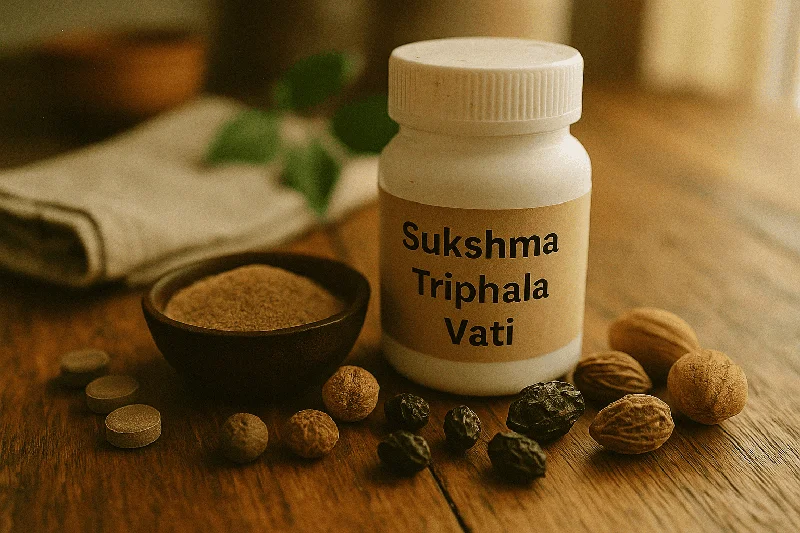
Sukshma Triphala Vati is a classical Ayurvedic Rasa Shastra formulation that combines the time-tested Triphala blend with Kajjali (purified mercury-sulfur compound) to create a potent, micro-fine medicine primarily used for ENT disorders, eye infections, oral hygiene issues, and digestive complaints. Unlike regular Triphala Vati, the "Sukshma" (meaning subtle or micro) version is processed through a specialized Bhavana technique that enhances bioavailability and allows the medicine to penetrate deeper tissues — making it more effective for acute conditions like tonsillitis, conjunctivitis, and sinusitis.
- If you've been searching for a clear, evidence-based guide that covers everything from ingredients and preparation to dosage, side effects, and contraindications, you're in the right place.
- This article fills the gaps that most resources miss — including the critical difference between Sukshma and regular Triphala Vati, the safety profile of Kajjali, and specific drug interactions you should know about.
What Is Sukshma Triphala Vati?
Sukshma Triphala Vati belongs to the Rasa Shastra branch of Ayurveda — the classical discipline that deals with mineral and metallic preparations. It is a herbomineral formulation, meaning it combines herbal ingredients (Triphala) with purified mineral compounds (Kajjali, Gandhak) to achieve therapeutic effects that neither category could deliver alone.
The word "Vati" means tablet, indicating this medicine is prepared in pill form for easy oral administration. It has been referenced in several classical Ayurvedic texts and remains a staple in clinical Ayurvedic practice across India, particularly for conditions affecting the ears, nose, throat, eyes, and mouth.
Meaning of "Sukshma" in Ayurveda
In Ayurvedic pharmacology, "Sukshma" translates to subtle, fine, or micro-penetrating. When applied to a formulation, it indicates that the medicine has been processed to achieve an extremely fine particle size — allowing it to reach the Sukshma Srotas (micro-channels) of the body.
This is not just a marketing term. The Sukshma quality (Sukshma Guna) is one of the 20 fundamental qualities (Vimshati Gunas) described in Ayurveda. A medicine with Sukshma Guna can penetrate tissues that coarser formulations simply cannot, which is why Sukshma Triphala Vati is preferred for conditions involving delicate tissues — the conjunctiva of the eye, the tonsils, nasal mucosa, and gum tissue.
- Sukshma Triphala Vati vs Regular Triphala Vati — Key Differences
- This is probably the most common question people have, and surprisingly, almost no resource online answers it properly.
- Here's a direct comparison:
| Feature | Regular Triphala Vati | Sukshma Triphala Vati |
|---|---|---|
| Composition | Three fruits only (Haritaki, Bibhitaki, Amalaki) | Triphala + Kajjali + Gandhak + Shunthi + Pippali |
| Category | Herbal (Kashtha Aushadhi) | Herbomineral (Rasa Aushadhi) |
| Processing | Simple drying and tableting | Multiple Bhavana (levigation) cycles with Triphala Kashaya |
| Particle Size | Standard | Micro-fine (Sukshma) |
| Bioavailability | Moderate | High — due to Kajjali as a drug carrier |
| Primary Focus | Digestive health, mild detox, constipation | ENT, eyes, oral health, fevers, acute infections |
| Onset of Action | Gradual | Relatively faster |
| Dosage | Higher (2–4 tablets) | Lower (1–2 tablets) due to concentrated potency |
| Classical Category | Kashtha Yoga | Rasa Yoga |
The key takeaway: regular Triphala Vati is a gentle, everyday supplement for digestion. Sukshma Triphala Vati is a more targeted, clinically potent medicine for specific conditions — and should ideally be used under practitioner guidance.
Historical Roots & Classical References (Rasa Shastra)
Triphala itself has over 3,000 years of documented use in Ayurveda, with references in the Charaka Samhita and Sushruta Samhita. The Sukshma formulation, however, belongs to the later Rasa Shastra tradition — the alchemical branch of Ayurveda that developed sophisticated methods for purifying and combining minerals with herbs.
The formulation is referenced in texts like Rasa Tarangini and Rasa Yoga Sagara, which describe the specific Bhavana process and therapeutic indications. The concept of using Kajjali as a Yogavahi (bioenhancer) to carry herbal actives deeper into tissues is a cornerstone principle of Rasa Shastra — and Sukshma Triphala Vati is a classic example of this principle in action.
Key Ingredients & Composition
Understanding what goes into Sukshma Triphala Vati helps explain why it works the way it does. Each ingredient serves a specific pharmacological purpose.
Triphala — Haritaki, Bibhitaki, Amalaki
The foundation remains Triphala, the synergistic combination of three fruits:
- Haritaki (Terminalia chebula) — Called the "King of Medicines" in Ayurveda. It balances all three doshas (Vata, Pitta, Kapha), supports bowel regularity, and has demonstrated significant anti-inflammatory and antimicrobial properties. A 2017 study published in the Journal of Ayurveda and Integrative Medicine confirmed its broad-spectrum antimicrobial activity against common pathogens.
- Bibhitaki (Terminalia bellirica) — Particularly effective for Kapha disorders. It has a strong affinity for the respiratory tract and mucous membranes, making it valuable for sinusitis, cough, and throat infections.
- Amalaki (Emblica officinalis) — One of the richest natural sources of Vitamin C with powerful antioxidant activity. A 2012 study in the International Journal of Food Sciences and Nutrition found that Amalaki's antioxidant activity was largely heat-stable, meaning processing doesn't destroy its benefits.
Together, Triphala is classified as a Tridoshahara (balancing all three doshas) and Rasayana (rejuvenative) formulation.
Kajjali (Purified Mercury-Sulfur Compound) — Role & Safety
Here's where most people raise concerns — and rightfully so. Kajjali is a black powder prepared by triturating purified mercury (Shuddha Parada) with purified sulfur (Shuddha Gandhak) until no free mercury particles remain.
Why is it safe in Ayurvedic preparations?
The key lies in the purification process called Shodhana. Raw mercury is toxic, no question. But Ayurvedic Shodhana involves treating mercury through multiple stages — washing with specific herbal juices (Nimbu Swarasa, Kumari Swarasa, Chitraka Kwatha, etc.), followed by grinding with sulfur for hours until it achieves a state called Nishchandra — meaning no metallic lustre remains visible even under magnification.
A 2015 study published in the Journal of Ayurveda and Integrative Medicine analyzed Kajjali prepared through traditional Shodhana and found that mercury was converted into mercuric sulfide (HgS, also known as cinnabar) — an extremely insoluble compound with negligible bioavailability and very low toxicity. The same study found that properly prepared Kajjali did not cause hepatotoxicity or nephrotoxicity in animal models.
The role of Kajjali in the formula: It acts as a Yogavahi — a bioenhancer and drug carrier. It doesn't contribute its own therapeutic action so much as it dramatically amplifies the absorption and tissue-penetration of the herbal ingredients. This is what makes Sukshma Triphala Vati "sukshma" in the first place.
Additional Herbs — Shunthi, Pippali, Gandhak
Beyond Triphala and Kajjali, the formulation includes:
- Shunthi (Zingiber officinale / Dry Ginger) — A powerful bioenhancer on its own, Shunthi improves the digestive fire (Agni), reduces inflammation, and has proven antiemetic properties.
- Pippali (Piper longum / Long Pepper) — Another classical Yogavahi. Pippali contains piperine, which has been shown to enhance bioavailability of co-administered compounds by up to 2000% in some cases (Shoba et al., 1998, Planta Medica). In Ayurveda, it is specifically indicated for Kapha and respiratory disorders.
- Gandhak (Purified Sulfur) — Has anti-microbial and anti-parasitic properties. In Ayurveda, it's considered a powerful Krimighna (anti-infective) and is especially useful for skin and blood-related conditions.
Complete Ingredient Table with Proportions
Based on classical formulations (per 250 mg tablet, approximate):
| Ingredient | Sanskrit Name | Latin/Chemical Name | Approximate Quantity |
|---|---|---|---|
| Haritaki | Haritaki | Terminalia chebula | 50 mg |
| Bibhitaki | Bibhitaki | Terminalia bellirica | 50 mg |
| Amalaki | Amalaki / Dhatri | Emblica officinalis | 50 mg |
| Kajjali | Kajjali | Mercury-Sulfur compound (HgS) | 25 mg |
| Purified Sulfur | Shuddha Gandhak | Sulfur | 25 mg |
| Dry Ginger | Shunthi | Zingiber officinale | 25 mg |
| Long Pepper | Pippali | Piper longum | 25 mg |
Note: Exact proportions may vary slightly between manufacturers. Always check the label of your specific product.
How Sukshma Triphala Vati Is Prepared (Bhavana Process)
The preparation method is what truly sets this formulation apart, and it's worth understanding even if you're not making it yourself.
Bhavana is a pharmaceutical process unique to Ayurveda where a fine powder is repeatedly triturated (ground) with a specific liquid medium until the liquid is completely absorbed.
For Sukshma Triphala Vati, the process goes like this:
- 1.Shodhana of Parada and Gandhak — Mercury and sulfur are individually purified through classical methods involving herbal juices and heat.
- 2.Kajjali Preparation — Purified mercury and sulfur are ground together in a stone mortar (Khalva Yantra) for several hours until the mixture turns pitch-black and achieves Nishchandra state.
- 3.Addition of herbal powders — Fine powders of Triphala, Shunthi, and Pippali are added to the Kajjali.
- 4.Bhavana with Triphala Kashaya — The entire mixture is then levigated with Triphala decoction (Kashaya).
- This step is repeated multiple times — sometimes 7, 14, or even 21 cycles — with fresh Triphala Kashaya each time.
- 5.Tablet formation — The final paste is rolled into uniform tablets (typically 250 mg each) and dried in shade.
Each Bhavana cycle reduces particle size further and increases the homogeneity of the mixture.
This is the literal source of the "Sukshma" quality — the medicine becomes finer with each cycle, enabling deeper tissue penetration.
Health Benefits & Therapeutic Uses
Sukshma Triphala Vati has a remarkably wide therapeutic range. Below are its primary clinical applications.
ENT Support — Tonsillitis, Sinusitis, Sore Throat
This is arguably the most important indication for Sukshma Triphala Vati. Its combination of antimicrobial herbs and bioenhancers makes it particularly effective for:
- Tonsillitis (Tundikeri) — Reduces inflammation and infection of the tonsils. Ayurvedic practitioners frequently prescribe it as a first-line treatment for recurrent tonsillitis.
- Uvulitis — Swelling and infection of the uvula responds well to this formulation.
- Sinusitis (Pratishyaya) — The Sukshma quality allows the medicine to act on the nasal and paranasal mucosa.
- Pharyngitis / Sore Throat — The anti-inflammatory action of Triphala combined with the antimicrobial action of Gandhak and Kajjali provides relief from acute and chronic sore throats.
Eye Health — Conjunctivitis, Ocular Infections
Sukshma Triphala Vati has a traditional reputation for supporting eye health. In Ayurveda, Triphala is considered one of the best formulations for Netra Roga (eye diseases) — Amalaki in particular is said to be Chakshushya (beneficial for vision).
Clinical applications include:
- Conjunctivitis (Abhishyanda) — Both allergic and infectious types
- Ocular inflammation — General inflammation and redness of the eyes
- Early-stage cataracts — Some practitioners use it as supportive therapy, though evidence is limited
Sukshma Triphala Vati Uses for Skin
- While ENT and eye conditions are the primary focus, the formulation also benefits skin health. The Gandhak (sulfur) component is a well-known dermatological agent in both Ayurveda and modern medicine. The Triphala base provides antioxidant support and blood purification (Raktashodhaka) action.
- Clinical uses include:
- Acne and pimples (due to antimicrobial and anti-inflammatory action)
- Chronic skin infections
- Allergic dermatitis
- Eczema (as adjuvant therapy)
Oral Hygiene — Gum Infections, Oral Ulcers
Sukshma Triphala Vati is highly effective for dental and oral conditions:
- Gingivitis and gum infections (Dantamoola Roga) — The antimicrobial properties target oral pathogens
- Oral ulcers / Aphthous stomatitis — Reduces pain and accelerates healing
- Halitosis (bad breath) — By addressing the root cause: toxins (Ama) and oral infections
A 2016 study in the Journal of Clinical and Diagnostic Research found that Triphala mouthwash was comparable to chlorhexidine in reducing oral bacteria, without the staining side effects.
Digestive Health & Detoxification
True to its Triphala heritage, Sukshma Triphala Vati supports digestive health through multiple mechanisms:
- Stimulation of Agni (digestive fire) — Shunthi and Pippali are classic Agni-enhancers
- Ama Pachana (toxin digestion) — Helps clear accumulated metabolic waste
- Mild laxative action — Haritaki promotes bowel regularity without causing dependency
- Enzyme stimulation — Research has shown that Triphala stimulates the secretion of digestive enzymes including lipase, amylase, and trypsin
Immune System Support & Fever
The Rasayana (rejuvenative) properties of Triphala combined with the antimicrobial action of Kajjali and Gandhak make this formulation useful for:
- Viral fevers (Jwara) — Commonly prescribed for Pratishyaya Jwara (cold-associated fever)
- Recurrent infections — Helps break the cycle of frequent colds and throat infections
- General immunomodulation — A 2005 study in the Indian Journal of Experimental Biology demonstrated that Triphala significantly enhanced NK cell activity and cytokine production in animal models
Dosage, Anupana & How to Take for Best Results
Standard Dosage
| Patient Category | Dosage | Frequency | Duration |
|---|---|---|---|
| Adults | 1–2 tablets (250 mg each) | 2–3 times daily | As directed by physician, typically 2–8 weeks |
| Children (above 5 years) | ½–1 tablet | 1–2 times daily | Only under physician supervision |
| Elderly | 1 tablet | 2 times daily | With careful monitoring |
Important: Because this is a Rasa Aushadhi (herbomineral preparation), self-medication is not recommended. Always consult a qualified Ayurvedic practitioner for personalized dosage.
Anupana — What to Take It With (and Why It Matters)
In Ayurveda, Anupana refers to the vehicle or adjuvant used to take a medicine. The right Anupana can significantly enhance the effectiveness of Sukshma Triphala Vati by directing it toward specific tissues and conditions:
| Condition | Recommended Anupana | Rationale |
|---|---|---|
| Sore throat / Tonsillitis | Warm water with honey | Honey is Kaphahara and enhances throat-coating action |
| Digestive issues / Constipation | Warm water | Stimulates Agni and aids peristalsis |
| Eye conditions | Ghee (small amount) + warm water | Ghee has affinity for nerve and eye tissues (Netra-Medhya) |
| Fever | Triphala Kadha (decoction) | Enhances antipyretic action |
| General wellness / Detox | Lukewarm milk | Nourishing, balances Vata |
| Skin conditions | Neem or Turmeric water | Enhances Rakta Shodhaka (blood purifying) action |
Tips for Optimal Absorption
- Take on an empty stomach or 30 minutes before meals for acute conditions
- Take after meals if you have a sensitive stomach
- Maintain consistency — Ayurvedic medicines work best when taken regularly at the same times each day
- Support with a balanced diet: reduce processed foods, excess sugar, and cold beverages during treatment
- Drink adequate warm water throughout the day to support detoxification
Don't wait or self medicate. Start chat with Doctor NOW
Side Effects, Contraindications & Drug Interactions
This section is critically important and almost completely missing from competitor resources. Let's fix that.
Potential Side Effects
When taken in prescribed doses under professional guidance, Sukshma Triphala Vati is generally well-tolerated.
However, possible side effects include:
- Mild gastric irritation — Especially if taken on empty stomach by Pitta-predominant individuals
- Loose stools — Due to the laxative property of Haritaki; usually self-limiting
- Metallic taste in mouth — Rare, may occur due to the Kajjali component
- Nausea — Uncommon, more likely at higher doses
- Allergic reactions — Extremely rare, but possible in sensitive individuals
If any side effects persist beyond 2–3 days, discontinue use and consult your practitioner.
Contraindications
Sukshma Triphala Vati should NOT be used in the following situations:
- Pregnancy — Herbomineral formulations are generally avoided during pregnancy due to the presence of Kajjali
- Lactation — Not recommended unless specifically prescribed by an experienced Ayurvedic physician with careful risk-benefit analysis
- Children under 5 years — Rasa Aushadhi medicines require mature metabolic pathways for safe processing
- Severe hepatic (liver) impairment — The liver processes mineral components; compromised liver function increases risk
- Severe renal (kidney) impairment — Impaired kidney function may affect excretion of mineral metabolites
- Known mercury allergy or sensitivity — Though Kajjali is HgS (not free mercury), individuals with known sensitivity should avoid it
- Acute diarrhea — The mild laxative action may worsen the condition
Drug Interactions
No extensive clinical studies exist on drug interactions specific to Sukshma Triphala Vati, but based on its composition, the following precautions apply:
- Anticoagulant medications (Warfarin, Heparin) — Triphala may have mild blood-thinning properties; concurrent use could potentiate the effect
- Antidiabetic medications — Triphala can lower blood sugar levels; concurrent use may cause hypoglycemia
- Antihypertensive drugs — Theoretical interaction; monitor blood pressure
- Other mercury-containing Ayurvedic medicines — Do not combine multiple Kajjali-based formulations without expert guidance, as cumulative mercury exposure must be managed
- Immunosuppressants — Triphala's immunomodulatory action may interfere with immunosuppressive therapy
Storage Conditions & Shelf Life
Something no competitor mentions but every buyer wants to know:
- Storage: Keep in a cool, dry place away from direct sunlight. Store in an airtight container
- Temperature: Below 30°C (86°F)
- Shelf Life: Typically 3–5 years from the date of manufacture when stored properly. Rasa Aushadhi preparations generally have a longer shelf life than purely herbal formulations due to their mineral content
- Signs of degradation: Changes in color, unusual smell, crumbling of tablets — discard if any of these are observed
How to Choose a Quality Sukshma Triphala Vati Product
Not all Sukshma Triphala Vati products are created equal.
Here's what to look for:
Certifications & Quality Markers
- AYUSH License Number — This is mandatory for all Ayurvedic medicines manufactured in India. The license number should be clearly printed on the packaging
- GMP Certification — Good Manufacturing Practice certification ensures standardized production
- Third-Party Lab Testing — Reputable manufacturers test for heavy metal levels, microbial contamination, and potency
- Classical Reference — Check if the product mentions the classical text it's based on (e.g., Rasa Tarangini, Bhaishajya Ratnavali)
Red Flags to Avoid
- No AYUSH license number on the label
- Vague or missing ingredient list
- Unusually low pricing (Rasa Aushadhi preparation is labor-intensive; very cheap products may cut corners on Shodhana)
- No batch number or manufacturing date
Frequently Asked Questions
What is the difference between Triphala and Sukshma Triphala?
Regular Triphala is a purely herbal formulation containing just three fruits — Haritaki, Bibhitaki, and Amalaki. Sukshma Triphala is a herbomineral preparation that adds Kajjali, Gandhak, Shunthi, and Pippali to the Triphala base, then processes the mixture through multiple Bhavana cycles. The result is a more potent, faster-acting medicine with deeper tissue penetration, suited for acute conditions like ENT infections and eye disorders — rather than just digestive support.
Can Sukshma Triphala Vati help with constipation?
Yes, it can — thanks to the Haritaki component which is a well-known mild laxative. However, if constipation is your primary concern, regular Triphala Churna or Triphala Vati would be a more appropriate and cost-effective choice. Sukshma Triphala Vati is somewhat overkill for simple constipation, as its added mineral components are designed for more complex conditions.
What is Sukshma Triphala Vati used for?
The primary indications include tonsillitis, sinusitis, pharyngitis, conjunctivitis, gum infections, oral ulcers, recurrent fevers, and general immune support. Secondary uses include digestive support, detoxification, skin conditions, and respiratory infections. It's a versatile formulation, but its real strength lies in ENT and oral-ocular conditions.
How should I take Sukshma Triphala Vati for best results?
Take 1–2 tablets (250 mg each), 2–3 times daily, with an appropriate Anupana. For sore throat use warm water with honey; for eye conditions use it with ghee and warm water; for digestive issues use plain warm water. Take before meals for acute conditions, after meals if you have a sensitive stomach. Follow your practitioner's specific recommendations.
Are Ayurvedic herbomineral medicines safe for daily use?
Sukshma Triphala Vati is typically prescribed for a defined duration — usually 2 to 8 weeks — rather than as a lifelong daily supplement. Unlike purely herbal formulations, Rasa Aushadhi medicines contain mineral components that should not be taken indefinitely without medical oversight. Periodic courses with breaks in between are the standard approach.
What is the classical reference for Sukshma Triphala Vati?
The formulation finds references in classical Rasa Shastra texts including Rasa Tarangini by Sadananda Sharma and Rasa Yoga Sagara. Some manufacturers also cite Bhaishajya Ratnavali. The specific chapter and verse may vary depending on which manufacturer's formulation you are using, as minor variations in composition exist between classical references.
Final Thoughts
Sukshma Triphala Vati is a remarkably sophisticated Ayurvedic formulation that bridges traditional wisdom and practical clinical efficacy. Its unique Bhavana-based preparation, the synergy between Triphala and Kajjali, and its ability to target delicate tissues make it a genuinely distinctive medicine — quite different from the regular Triphala tablets most people are familiar with.
That said, this is a herbomineral medicine that contains processed mercury and sulfur. While the classical purification processes have been validated by modern analytical studies showing conversion to insoluble, low-toxicity HgS, this is still a medicine that demands respect. Don't self-prescribe. Work with a qualified Ayurvedic practitioner who can assess your Prakriti (constitution), evaluate your specific condition, and determine the right dosage, Anupana, and duration for you.
If you found this guide helpful, consult with a certified Ayurvedic doctor to determine whether Sukshma Triphala Vati is appropriate for your specific health needs. Proper professional guidance ensures you get the maximum benefit with minimal risk — exactly as the classical texts intended.
Scientific Sources
- Evaluation of antioxidant profile and activity of amalaki (Emblica officinalis), spirulina and wheat grass — Shukla V et al., 2009, Indian journal of clinical biochemistry : IJCB
- Influence of Amalaki Rasayana on telomerase activity and telomere length in human blood mononuclear cells — Guruprasad KP et al., 2017, Journal of Ayurveda and integrative medicine
- Triphala's characteristics and potential therapeutic uses in modern health — Bairwa VK et al., 2025, International journal of physiology, pathophysiology and pharmacology
- Amalaki rasayana, a traditional Indian drug enhances cardiac mitochondrial and contractile functions and improves cardiac function in rats with hypertrophy — Kumar V et al., 2017, Scientific reports
- Ayurvedic formulations amalaki rasayana and rasa sindoor improve age-associated memory deficits in mice by modulating dendritic spine densities — Verma B et al., 2022, Journal of Ayurveda and integrative medicine
- Therapeutic Uses of Triphala in Ayurvedic Medicine — Peterson CT et al., 2017, Journal of alternative and complementary medicine (New York, N.Y.)
- Evaluation of the anti-hyperlipidemic effects of Triphala in high fat diet fed rats: Studies with two combinations — Rana S et al., 2022, Ayu
- Scientific validation of the ethnomedicinal properties of the Ayurvedic drug Triphala: a review — Baliga MS et al., 2012, Chinese journal of integrative medicine
- Effect of Triphala on dextran sulphate sodium-induced colitis in rats — Rayudu V et al., 2014, Ayu
- Bangladeshi medicinal plant dataset — Borkatulla B et al., 2023, Data in brief
- Extraction, phytochemical characterization and anti-cancer mechanism of Haritaki churna: An ayurvedic formulation — Khan MRUZ et al., 2023, PloS one
- Unique aspect of Tibetan medicine — Dakpa T, 2014, Acupuncture & electro-therapeutics research
- The Ayurvedic medicines Haritaki, Amala and Bahira reduce cholesterol-induced atherosclerosis in rabbits — Thakur CP et al., 1988, International journal of cardiology
Questions from users
Can Sukshma Triphala Vati be used for skin health benefits?
Client_52a805
2 days ago
Sukshma Triphala Vati might offer some benefit for skin health due to its components. Triphala, traditionally used for its antioxidant properties, may help in combatting oxidative stress, which is a factor in skin aging and related conditions. However, Sukshma Triphala Vati contains mineral components like kajjali, which necessitate caution due to potential toxicity. Its safety and efficacy for skin health aren't well-studied, so it’s essential to consult a healthcare professional, especially if you're considering long-term use or have underlying health conditions.
How should I choose an appropriate Anupana for Sukshma Triphala Vati?
Client_d7c0bb
7 days ago
Selecting an appropriate Anupana, or carrier substance, for Sukshma Triphala Vati largely depends on the specific health conditions you are addressing. Generally, warm water is commonly recommended as it aids in digestion and absorption. However, if you're targeting respiratory issues, pairing it with honey might be beneficial. In cases focusing on digestive health, using ginger tea or a warm herbal infusion could enhance benefits. Always consult a qualified healthcare provider for personalized advice, especially since implications involve both efficacy and safety concerns related to the formulation’s components.
How to verify the authenticity of Sukshma Triphala Vati products?
Client_ae0fbf
12 days ago
To verify the authenticity of Sukshma Triphala Vati products, first check for an AYUSH License Number, which is required for all Ayurvedic medicines manufactured in India. This number ensures the product meets specific safety and quality standards set by the government. Look for certifications such as GMP (Good Manufacturing Practices) or ISO to ensure quality production processes. Inspect the packaging for signs of tampering or degradation, such as changes in color or unusual scents. If in doubt, consult a healthcare provider for advice on the product's authenticity and safety.
What ingredients are in Sukshma Triphala Vati and their benefits?
Client_31cac7
17 days ago
Sukshma Triphala Vati typically includes the primary ingredients of Triphala: Haritaki, Bibhitaki, and Amalaki. These herbs are renowned in traditional medicine for their antioxidant properties and digestive benefits, supporting overall health and detoxification. Additionally, it often contains Pippali, which enhances the bioavailability of these herbs by improving absorption. Due to the inclusion of minerals, careful manufacturing processes are essential, ensuring safety and efficacy. Always consult a healthcare professional before starting any new supplement, especially if you have existing health conditions.
What are the potential side effects of using Sukshma Triphala Vati?
Client_965253
27 days ago
Sukshma Triphala Vati might cause side effects like gastrointestinal discomfort, nausea, or diarrhea, particularly when taken in excessive doses. The product includes mineral components and should not be self-prescribed due to potential toxicity, especially given its use of processed sulfur and mercury compounds, which, while typically safe in recommended doses, can pose risks if misused. Intended for conditions like respiratory disorders and infections, it is crucial to follow a healthcare provider's advice. Watch for any allergic reactions or unusual symptoms and seek medical advice if they occur.
How does Sukshma Triphala Vati enhance digestion and gut health?
Client_1b7bc4
37 days ago
Sukshma Triphala Vati is not specifically noted for directly enhancing digestion and gut health. Instead, its benefits are highlighted in respiratory and eye health, as well as conditions like tonsillitis, uvulitis, sinusitis, and pharyngitis due to its anti-inflammatory and antimicrobial properties. While Triphala, a key component, is known in other contexts to support digestion, Sukshma Triphala Vati itself isn't primarily used for this purpose. For digestive issues, consider seeking advice from a healthcare provider to explore more targeted treatments.
What are the alternative uses of Amalaki besides antioxidant support?
Client_0db978
47 days ago
Amalaki, or Emblica officinalis, is used for more than just its antioxidant properties. It is beneficial for managing sore throats, sinusitis, coughs, and throat infections due to its positive effects on the respiratory tract and mucous membranes. For digestive issues, consuming Amalaki with warm water can be helpful. Additionally, it is used in combination with ghee for eye conditions. If you are considering using Amalaki for a specific health concern, it is advisable to consult a healthcare professional, especially if symptoms persist or worsen.
How does Sukshma Triphala Vati support immune health during seasonal changes?
Client_a96954
56 days ago
Sukshma Triphala Vati supports immune health during seasonal changes primarily through its anti-inflammatory and antimicrobial properties. These traits make it effective against common seasonal ailments such as sore throats, sinusitis, and uvulitis by reducing inflammation and fighting infections. Typical improvements in symptoms like sore throat or sinus issues can be seen within a few days to a week of regular use, though this varies. If symptoms persist or worsen, consult a healthcare provider as it could indicate a more serious condition. While Ayurveda mentions it, the focus here is on its broad application for respiratory and eye health.
What is the role of Kajjali in Sukshma Triphala Vati and how does it enhance its effectiveness?
Client_9e0e5c
66 days ago
Kajjali in Sukshma Triphala Vati acts like a bioenhancer, helping the herbs to get absorbed deeply into the tissues. This makes the formula more effective, especially for ENT and digestive issues. It's like providing a turbo boost to the other ingredients, ensuring they work more effectively and quickly.
What other eye conditions can Triphala help with besides conjunctivitis and cataracts?
Client_9562ac
76 days ago
Triphala is often used for general eye health, including issues like strain from digital screens and improving overall vision. It can be beneficial in reducing dryness and soothing tired eyes. Its detoxifying properties can help maintain healthy eyes, but results can vary. Always good to check with an Ayurvedic practitioner before trying.
Related articles

Gastrointestinal Disorders
Hingutriguna Tailam Uses: Natural Relief for Vata Disorders
Discover the uses and benefits of Hingutriguna Tailam, an Ayurvedic oil made with asafoetida. Learn how it supports digestion, respiratory health, and overall well-being through traditional applications.
3,151

Gastrointestinal Disorders
Shivakshar Pachan Churna Benefits, Dosage, Ingredients, Side Effects
Exploration of Shivakshar Pachan Churna Benefits, Dosage, Ingredients, Side Effects
2,424

Gastrointestinal Disorders
Amritarishta – Uses, Ingredients, Dose and Side Effects
Exploration of Amritarishta – Uses, Ingredients, Dose and Side Effects
4,039
Gastrointestinal Disorders
Hutabhugadi Churnam: Powerful Ayurvedic Powder for Optimal Health
Learn about the benefits, proper dosage, uses, and scientific evidence behind Hutabhugadi Churnam, a powerful Ayurvedic herbal powder for holistic health.
2,638

Gastrointestinal Disorders
Amorex Tablet: Ayurvedic Benefits and How It Supports Well-being
Discover the uses, benefits, proper dosage, and scientific research behind Amorex Tablet, a potent pharmaceutical formulation for enhancing health and well-being.
4,585

Gastrointestinal Disorders
Best Ayurvedic Medicine for Stomach Ulcer
Best Ayurvedic Medicine for Stomach Ulcer
4,096

Gastrointestinal Disorders
Ajmodadi Churna Benefits, Dosage, How To Use, Side Effects, Ingredients, Reference
Exploration of Ajmodadi Churna Benefits, Dosage, How To Use, Side Effects, Ingredients, Reference
5,996

Gastrointestinal Disorders
Gulma Chikitsa: Ayurvedic Approach to Abdominal Distention and Discomfort
Explore Gulma Chikitsa, an Ayurvedic approach to treating Gulma conditions. Learn about its causes, herbal remedies, dietary guidelines, and holistic therapies for effective management.
3,908

Gastrointestinal Disorders
High Creatinine Treatment in Ayurveda – Natural Remedies for Kidney Health
xplore Ayurvedic treatments for high creatinine levels, focusing on natural remedies, lifestyle changes, and herbs that support kidney function and overall health.
6,314

Gastrointestinal Disorders
How to Get Rid of a Stomach Ache in 5 Minutes: Quick Ayurvedic Relief
Get rid of a stomach ache in 5 minutes: discover Ayurvedic remedies, yoga poses, essential oils, and quick tips for gas pain, IBS, and stomach cramps relief
3,994
Related consultations on the topic
Legal
Additional Documents
© 2024 Ask Ayurveda. All rights reserved.