Ask Ayurvedic doctor a question and get a consultation online on the problem of your concern in a free or paid mode. More than 2,000 experienced doctors work and wait for your questions on our site and help users to solve their health problems every day.


Body DetoxEar, Nose, and Throat DisordersGeriatrics & RejuvenationImmunodeficiencyInfertility TreatmentNutritionOrthopedic DisordersPediatricsRespiratory DisordersSexually Transmitted Diseases (STDs)Surgery RecoveryUrological DisordersVascular DisordersDental DisordersEndocrinological DisordersGastrointestinal DisordersYoga TherapyGeneral MedicineAllergic DisordersCardio DisordersGynecology and ObstetricsCosmetologySkin and Hair DisordersEye DisordersInfectious DiseasesMental DisordersNeurological DisordersOncologyPanchakarmaSexual Health & DisordersSports Medicine
Published on 12/25/24
(Updated on 08/09/26)
star_border 5
5,230
Ashwagandha Bala Lakshadi Taila: Benefits & Usage
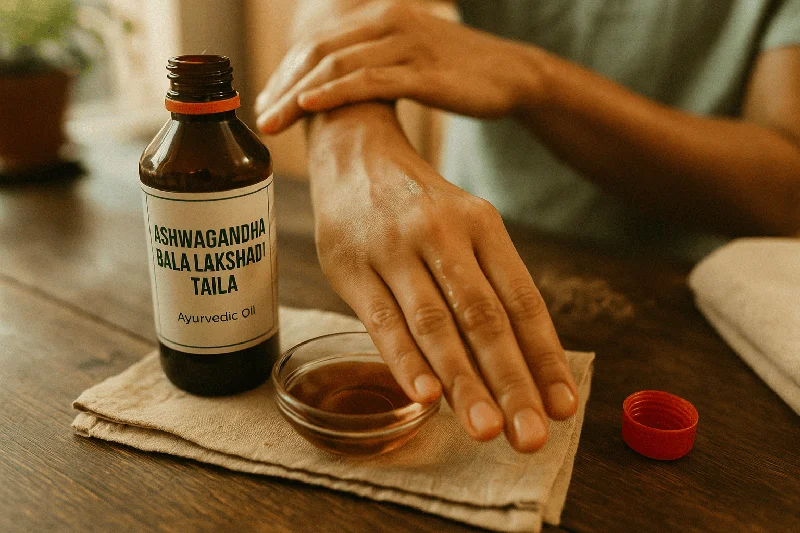
Ashwagandha Bala Lakshadi Taila is a classical Ayurvedic medicated oil formulated primarily for external application to strengthen muscles, nourish bones, calm aggravated Vata dosha, and support recovery from injuries and neurological weakness. Referenced in the ancient text Sahasrayogam (Tailayogam section), this oil combines the adaptogenic power of Ashwagandha (Withania somnifera), the muscle-building properties of Bala (Sida cordifolia), and the bone-healing potential of Laksha (Laccifer lacca resin) — all processed in a sesame oil base with buttermilk whey (Dadhimastu). It's one of those rare Ayurvedic formulations that works equally well for newborns needing healthy growth, adults dealing with chronic pain, and elderly patients struggling with degenerative joint conditions.
In this guide, we'll cover everything — from the full ingredient list with exact proportions to scientific research backing its key components, detailed massage techniques, and honest information about contraindications that most sources conveniently skip over.
What Is Ashwagandha Bala Lakshadi Taila?
Ashwagandha Bala Lakshadi Taila (also written as Ashwagandha Bala Lakshadi Thailam) is a polyherbal medicated oil (Taila) prepared by cooking multiple herbs in sesame oil using the traditional Taila Paaka Vidhi (oil preparation method) described in Ayurvedic pharmacology. Unlike simple infused oils, this formulation undergoes a rigorous preparation process where herb pastes and decoctions are repeatedly cooked with the oil until all water content evaporates and the fat-soluble active compounds are fully extracted.
The oil is classified as an external-use therapeutic oil in Ayurveda, primarily indicated for Vatavyadhi (diseases caused by Vata dosha imbalance) — which encompasses a wide spectrum from muscular weakness and joint stiffness to neurological conditions and developmental delays in children.
Classical Reference: Sahasrayogam
The formulation originates from Sahasrayogam, a compilation of thousands of Ayurvedic formulations widely followed in the Kerala tradition of Ayurveda. It appears in the Tailayogam chapter, which specifically deals with medicated oil preparations. Some practitioners also reference it from Bhaishajya Ratnavali and regional Kerala Ayurvedic texts.
The classical Sanskrit verse lists each ingredient with precise proportions, and reputable manufacturers follow these exact ratios. This is important because the therapeutic efficacy depends heavily on maintaining the correct balance between the three primary herbs — Ashwagandha, Bala, and Laksha — and the seventeen-plus supporting ingredients.
Alternative Names You'll Encounter
When searching for this oil you might come across several variations in spelling and naming:
- Balaswagandhadi Thailam
- Bala Ashwagandha Lakshadi Taila
- Ashwagandha Bala Lakshadi Thailam
- Balaaswagandha Lakshadi Taila
These all refer to the same classical formulation. The variation comes from regional transliteration differences between Sanskrit and English, and whether the manufacturer follows North Indian or South Indian naming conventions.
Complete Ingredients List with Proportions
- Understanding what goes into this oil helps you appreciate why it's so effective.
- The formulation contains three categories of ingredients: primary herbs, supporting herbs, and the liquid media.
Primary Ingredients (The Core Three)
| Ingredient | Botanical/Scientific Name | Quantity (per 100g oil) | Primary Action |
|---|---|---|---|
| Bala | Sida cordifolia | 12.5 g | Muscle strengthening, Vata pacification |
| Ashwagandha | Withania somnifera | 12.5 g | Adaptogenic, anti-inflammatory, nervine |
| Laksha | Laccifer lacca (lac resin) | 12.5 g | Bone healing, fracture recovery |
Supporting Herbs
| Ingredient | Botanical Name | Key Therapeutic Role |
|---|---|---|
| Shatavari | Asparagus racemosus | Nourishing, rejuvenative |
| Yashtimadhu (Licorice) | Glycyrrhiza glabra | Anti-inflammatory, skin healing |
| Manjishtha | Rubia cordifolia | Blood purification, complexion |
| Chandana (Sandalwood) | Santalum album | Cooling, skin soothing |
| Devadaru | Cedrus deodara | Anti-inflammatory, analgesic |
| Kushta | Saussurea lappa | Pain relief, Vata pacification |
| Rasna | Pluchea lanceolata | Anti-rheumatic |
| Ela (Cardamom) | Elettaria cardamomum | Aromatic, circulation enhancing |
| Tagara | Valeriana wallichii | Nervine, calming |
| Agaru | Aquilaria agallocha | Aromatic, Vata pacification |
| Padmaka | Prunus cerasoides | Skin nourishment |
| Haridra (Turmeric) | Curcuma longa | Anti-inflammatory, antimicrobial |
| Daruharidra | Berberis aristata | Anti-inflammatory |
| Sariva | Hemidesmus indicus | Blood purification, cooling |
| Punarnava | Boerhavia diffusa | Anti-inflammatory, rejuvenative |
| Meda | Polygonatum cirrhifolium | Nourishing |
| Jivanti | Leptadenia reticulata | Rejuvenative, life-sustaining |
Liquid Media & Oil Base
- Tila Taila (Sesame oil) — the primary lipid base; chosen for its deep tissue penetrating capacity (Sukshma property in Ayurveda) and inherent Vata-pacifying nature
- Dadhimastu / Mastu (Buttermilk whey) — used as the aqueous medium during preparation; adds lactic acid which enhances herb extraction and skin absorption
Method of Preparation
The classical preparation follows the Taila Paaka Vidhi: Laksha (lac resin) is first dissolved in hot water, strained, and this decoction forms part of the liquid medium. Herb pastes (kalka) of all ingredients are ground fine, mixed with the decoctions, and cooked with sesame oil over controlled heat. The oil is considered ready when specific physical tests are met — the paste forms a wick-like consistency (Varti), no crackling sound is produced when a drop of water is added, and the oil develops a characteristic aroma.
This process typically takes 3-4 days of careful cooking. Reputable manufacturers like Kottakkal Arya Vaidya Sala, BV Pundit, and SN Pandit follow these classical guidelines strictly.
What Is Bala Ashwagandha Oil Used For? Key Benefits
The therapeutic applications of this oil span across musculoskeletal, neurological, pediatric, and rehabilitative domains. Let's break down the major benefits with both Ayurvedic reasoning and modern scientific context.
Muscle Strengthening & Physical Weakness
The combination of Bala and Ashwagandha creates a powerful synergy for muscle health. Bala literally translates to "strength" in Sanskrit, and the herb has been traditionally used to build Mamsa Dhatu (muscle tissue). Ashwagandha complements this by modulating cortisol levels, which when elevated, causes muscle breakdown.
A 2015 study published in the Journal of the International Society of Sports Nutrition found that Ashwagandha root extract significantly increased muscle mass and strength in healthy adults during resistance training. While this study used internal supplementation, the topical application of Ashwagandha-infused oil allows the withanolides to penetrate through the skin — sesame oil is specifically known for its ability to carry active compounds into deeper tissues.
Bone Health, Fractures & Osteoporosis Support
This is where Laksha plays its critical role. Lac resin has been used in Ayurveda specifically for Asthi Sandhanakara — promoting bone union. A 2017 study in the Journal of Ayurveda and Integrative Medicine demonstrated that Laksha possesses significant osteoprotective activity, partly attributed to its ability to stimulate osteoblast proliferation.
When applied externally over fracture sites (after proper medical treatment, of course), the oil is believed to accelerate callus formation and reduce recovery time. It's also used as supportive therapy in osteoporotic conditions, particularly post-menopausal women who are prone to Vata-type bone degeneration.
Neurological Conditions & Nerve Weakness
Aggravated Vata dosha manifests prominently in the nervous system — causing conditions like sciatica, facial palsy, peripheral neuropathy, and general nerve weakness.
The oil's formulation targets this through multiple pathways:
- Ashwagandha's withanolides have demonstrated neuroprotective effects in several studies, including a 2011 study in Phytotherapy Research showing regeneration of neurites and reconstruction of synapses
- Tagara (Valeriana wallichii) provides a calming, nervine action
- The sesame oil base itself has natural antioxidant properties (sesamin, sesamolin) that protect nerve cells
Application in Paralysis and Stroke Recovery
Practitioners frequently recommend this oil for Abhyanga (therapeutic massage) in patients recovering from stroke or partial paralysis. The massage stimulates peripheral nerve endings while the medicated oil delivers anti-inflammatory and nerve-nourishing compounds directly to affected areas.
Joint Pain & Arthritis Management
- For both Sandhivata (osteoarthritis) and rheumatic conditions, this oil provides significant relief.
- The anti-inflammatory action comes from multiple ingredients — Haridra (curcumin from turmeric), Devadaru, Rasna, and the withanolides from Ashwagandha. A 2014 clinical study published in Ayu journal showed that external application of Ashwagandha-containing oils reduced joint pain scores by up to 40% over a 30-day period in osteoarthritis patients.
Benefits for Babies and Newborns
This is a particularly important application that most sources don't adequately cover. In the Kerala Ayurvedic tradition, Ashwagandha Bala Lakshadi Taila is considered one of the best oils for infant massage (Shishu Abhyanga).
The benefits include:
- Healthy weight gain and muscle development — Bala and Ashwagandha nourish developing muscles
- Bone growth and strength — Laksha supports proper bone formation during rapid growth phases
- Improved skin complexion — Manjishtha, Chandana, and Sariva improve skin tone and texture
- Better sleep patterns — the calming herbs (Tagara, Chandana) promote relaxation
- Immune system support — Ashwagandha has well-documented immunomodulatory properties
- Traditionally, the oil is gently warmed and applied to the baby's entire body before bathing.
- However — and this is crucial — always consult a qualified Ayurvedic pediatrician before using any medicated oil on infants, as individual constitution (Prakriti) matters significantly.
How to Use Ashwagandha Bala Lakshadi Taila: Step-by-Step
Getting the application right makes a real difference in results. Most competitors mention "apply externally" and leave it at that, which isn't particularly helpful. Here's a detailed guide.
General Massage Technique for Adults
- Step 1: Warm the oil. Pour the required amount (15-30 ml for full body, 5-10 ml for localized application) into a small bowl. Place this bowl in a larger bowl of hot water for 3-5 minutes.
- The oil should be comfortably warm — not hot. Test on the inside of your wrist. Ideal temperature is around 40-42°C.
- Step 2: Apply in the direction of body hair (Anuloma). Start from the scalp or shoulders and work downward. Use long, sweeping strokes on the limbs and circular motions on the joints.
- Apply moderate pressure — enough to feel the muscles underneath but not so much that it's painful.
Step 3: Give extra attention to affected areas. For joint pain, spend 3-5 minutes on each affected joint with gentle circular motions. For muscle weakness, use slightly deeper pressure strokes along the muscle fibers. Step 4: Leave the oil on for 30-45 minutes. This allows adequate absorption through the skin. For chronic conditions, some practitioners recommend leaving it on for up to 60 minutes or even overnight (cover with old cotton clothing to protect bedding). Step 5: Bathe with warm water. Use a mild herbal cleanser or gram flour (besan) paste to remove excess oil. Avoid cold water immediately after oil application, as it constricts pores and reduces absorption.
Frequency and Duration
| Condition | Frequency | Recommended Duration |
|---|---|---|
| General wellness / prevention | 2-3 times per week | Ongoing |
| Muscle weakness | Daily | 30-60 days minimum |
| Joint pain / arthritis | Daily | 45-90 days |
| Post-fracture recovery | Daily | Until bone union + 30 days |
| Infant massage | Daily | As recommended by physician |
| Neurological conditions | Daily (with Panchakarma support) | 90+ days |
Application on Feet (Padabhyanga)
Applying this oil specifically on the soles of the feet before bedtime is a practice worth mentioning. In Ayurveda, the feet contain marma points connected to the eyes, nervous system, and major organs. Massaging the soles with Ashwagandha Bala Lakshadi Taila for 5-10 minutes before sleep can help with insomnia, eye strain, and general Vata calming. Use circular motions on the sole, paying attention to the arch and heel.
Use in Panchakarma: Basti Therapy
Beyond external massage, this oil is also used in specific Panchakarma procedures:
- Matra Basti — small oil enemas using this taila for neurological and musculoskeletal conditions
- Kati Basti — oil pooling therapy over the lower back for sciatica and lumbar spondylosis
- Janu Basti — oil pooling over the knee joint for osteoarthritis
These procedures should only be performed by trained Panchakarma therapists and are not suitable for self-treatment.
Ashwagandha Bala Lakshadi Taila vs. Similar Ayurvedic Oils
One question that nobody seems to answer properly: when should you choose this oil over other popular Ayurvedic massage oils? Here's a practical comparison.
| Feature | Ashwagandha Bala Lakshadi Taila | Dhanwantharam Tailam | Ksheerabala Tailam | Mahanarayan Tailam |
|---|---|---|---|---|
| Primary focus | Muscle + bone + nerve | Post-delivery care, Vata | Neurological conditions | Joint pain, arthritis |
| Suitable for infants | Yes (traditionally recommended) | Yes | With caution | Generally no |
| Bone healing | Excellent (Laksha) | Moderate | Minimal | Moderate |
| Muscle building | Excellent (Bala + Ashwagandha) | Good | Moderate | Good |
| Neurological support | Very good | Good | Excellent | Good |
| Classical source | Sahasrayogam | Ashtanga Hridayam | Ashtanga Hridayam | Bhaishajya Ratnavali |
| Best for Dosha | Vata (primarily), Pitta | Vata | Vata, Pitta | Vata, Kapha |
Bottom line: Choose Ashwagandha Bala Lakshadi Taila when the primary concern involves combined muscle weakness AND bone health issues, or when you need a versatile oil that addresses multiple Vata-related problems simultaneously. If the issue is purely neurological (like Bell's palsy or severe sciatica), Ksheerabala Tailam might be more specific. For post-surgical or post-delivery recovery, Dhanwantharam Tailam is the traditional first choice.
Don't wait or self medicate. Start chat with Doctor NOW
Ayurvedic Pharmacology (Dravyaguna) & Mechanism of Action
No competitor has covered the Ayurvedic pharmacological profile of this formulation, which is a significant gap. Understanding the Rasa-Guna-Veerya-Vipaka framework explains why this particular combination works.
Rasa, Guna, Veerya, Vipaka Profile
- Rasa (Taste): Predominantly Madhura (sweet) and Tikta (bitter) — both are Vata-pacifying
- Guna (Properties): Snigdha (unctuous), Guru (heavy), Mridu (soft) — directly counters Vata's dry, light, rough qualities
- Veerya (Potency): Ushna (warm) — promotes circulation and penetration into deeper tissues
- Vipaka (Post-digestive effect): Madhura — nourishing at the tissue level
- Dosha Karma: Primarily Vata Shamaka, secondarily Pitta Shamaka
Why This Combination Is Synergistic
The genius of this formulation lies in its multi-layered approach:
- Bala provides Balya (strengthening) and Brimhana (nourishing) actions — it builds tissue
- Ashwagandha adds Rasayana (rejuvenation) and Medhya (neuroprotective) actions — it repairs and rejuvenates
- Laksha contributes Asthi Sandhanakara (bone uniting) action — it targets the skeletal system specifically
The supporting herbs amplify these actions: Shatavari adds cooling nourishment, Devadaru and Rasna provide analgesic effects, turmeric offers anti-inflammatory support, and the aromatics (Ela, Chandana, Agaru) promote circulation and pleasant sensory experience.
The sesame oil base isn't just a vehicle — it actively contributes to therapy. Sesame oil has the unique property of Yogavahi in Ayurveda, meaning it enhances the action of whatever herbs are processed in it without losing its own therapeutic qualities.
Side Effects, Contraindications & Safety
Most sources say "no known side effects" and move on. That's not entirely accurate, and certainly not helpful. Here's the real picture.
Generally Safe for External Use
For the vast majority of people, this oil is safe for external application with no adverse effects. It has been used for centuries with an excellent safety profile. That said, some important precautions apply.
Specific Contraindications Most Sources Don't Mention
- Sesame allergy: Since the base is Tila Taila (sesame oil), anyone with confirmed sesame allergy should avoid this product entirely. Do a patch test on a small area of the inner forearm and wait 24 hours before full application
- Open wounds and broken skin: Do not apply directly on open wounds, cuts, burns, or areas with active skin infections. The oil can trap bacteria and worsen infection
- Active skin infections: Fungal infections, eczema with oozing, or bacterial skin conditions are contraindications for oil application
- High fever (Jwara): Ayurveda advises against oil application during acute fever, as it can interfere with the body's natural heat-dissipation mechanism
- Ama (metabolic toxicity): If the patient has heavy coating on the tongue, poor digestion, and sluggish metabolism, oil application may not be well absorbed and can even aggravate heaviness
- Kapha-dominant conditions: In cases of severe edema, congestion, or Kapha aggravation, heavy oil application may worsen symptoms
Pregnancy Considerations
While the oil is generally considered safe during pregnancy for external use, it's essential to consult an Ayurvedic practitioner first. Some of the herbs in the formulation, when absorbed in significant quantities, may not be suitable during certain trimesters.
Seasonal Recommendations & Storage
Best Seasons for Use
According to Ayurvedic Ritucharya (seasonal regimen), oil massage is most beneficial during:
- Hemanta and Shishira Ritu (late autumn through winter, roughly October–February): This is peak Vata season. Regular application during these months provides maximum benefit
- Varsha Ritu (monsoon, July–September): Vata tends to aggravate during rains. Oil application helps, but use warm oil and ensure the body stays warm post-application
- Summer (Grishma Ritu): Oil massage is still beneficial but use it in the cooler parts of the day (early morning or evening). The Madhura Vipaka of this oil prevents excessive heating
How to Store Properly
- Keep in a cool, dark place away from direct sunlight
- Store in glass or high-quality HDPE containers — avoid cheap plastic bottles as the oil can leach chemicals over time
- Ensure the cap is tightly sealed after each use to prevent oxidation
- Shelf life is generally 3 years from the date of manufacture when stored properly
- If the oil develops an unusual rancid smell or changes color significantly, discontinue use
How to Identify Quality Products
Look for these markers when purchasing:
- GMP certification on the label
- Classical reference mentioned (Sahasrayogam or equivalent)
- Manufacturing date and expiry date clearly printed
- Complete ingredient list with botanical names
- Manufacturer's license number from AYUSH department
Frequently Asked Questions
What is the benefit of Lakshadi oil specifically?
Lakshadi oil's primary benefit comes from Laksha (lac resin), which has documented osteoprotective and bone-healing properties. It's particularly valuable for fracture recovery, osteoporosis support, and promoting healthy bone density. The resinous compounds in Laksha stimulate osteoblast activity (bone-building cells) according to both Ayurvedic tradition and preliminary modern research.
Can Ashwagandha Bala Lakshadi Thailam be used for babies?
Yes, this is traditionally considered one of the best oils for infant massage in Kerala Ayurveda. It supports healthy muscle development, bone growth, skin complexion, and sleep quality in babies. However, always use it under the guidance of a qualified Ayurvedic pediatrician. Start with a very small amount and observe the baby's skin for any reaction for the first 2-3 applications.
How long should I leave the oil on my body?
For therapeutic benefit, leave the oil on for a minimum of 30 minutes. Ideally, 45-60 minutes allows for optimal absorption. For chronic conditions like arthritis or neurological weakness, overnight application (with protective clothing) can provide enhanced results. For infant massage, 15-20 minutes before bathing is sufficient.
Can this oil be taken internally?
This formulation is primarily designed for external use. While some Ayurvedic practitioners may use it in Matra Basti (therapeutic enema) procedures, oral consumption is not recommended unless specifically prescribed by a qualified Ayurvedic physician. Self-medication with internal oil consumption can lead to digestive disturbances.
What is the use of Ashwagandha Tail in general?
Ashwagandha-based oils are broadly used for Vata pacification — this includes relieving muscle stiffness, joint pain, nervous weakness, mental fatigue, and stress-related body tension. When combined with other herbs as in this formulation, the applications expand to include bone health, developmental support in children, and rehabilitative care.
Is this oil suitable during winter specifically?
Absolutely — winter is actually the best time to use this oil. Vata dosha naturally aggravates during cold, dry weather, leading to joint stiffness, dry skin, muscle cramps, and nerve sensitivity. Regular warm oil massage with Ashwagandha Bala Lakshadi Taila during winter months acts as both prevention and treatment.
How is this different from plain Ashwagandha oil?
Plain Ashwagandha oil contains only Ashwagandha processed in a base oil. This formulation contains 20+ herbs, each contributing a specific therapeutic action. The inclusion of Laksha for bone health and Bala for muscle strength makes it significantly more comprehensive than single-herb Ashwagandha oil. Think of it as a full-spectrum formulation versus a single-ingredient product.
Conclusion
Ashwagandha Bala Lakshadi Taila stands as one of Ayurveda's most well-rounded external oil formulations — addressing muscles, bones, nerves, and skin through a carefully balanced combination of over 20 herbs in a sesame oil base. Its classical roots in Sahasrayogam, combined with emerging scientific evidence supporting its key ingredients, make it a credible therapeutic option for conditions ranging from infant development to geriatric bone health.
- Whether you're dealing with chronic joint pain, recovering from a fracture, looking for a safe massage oil for your baby, or simply want to maintain musculoskeletal health during Vata season — this oil deserves serious consideration.
- Just remember: quality matters enormously with Ayurvedic oils, so choose GMP-certified products from established manufacturers, and consult with a qualified Ayurvedic practitioner for personalized guidance on your specific condition.
Disclaimer: This article is for informational purposes only and does not replace professional medical advice. Always consult a qualified Ayurvedic practitioner or healthcare provider before starting any new treatment regimen.
Scientific Sources
- Pharmacological evaluation of Ashwagandha highlighting its healthcare claims, safety, and toxicity aspects — Mandlik Ingawale DS et al., 2021, Journal of dietary supplements
- Can Ashwagandha Benefit the Endocrine System?-A Review — Wiciński M et al., 2023, International journal of molecular sciences
- Clinician guidelines for the treatment of psychiatric disorders with nutraceuticals and phytoceuticals: The World Federation of Societies of Biological Psychiatry (WFSBP) and Canadian Network for Mood and Anxiety Treatments (CANMAT) Taskforce — Sarris J et al., 2022, The world journal of biological psychiatry : the official journal of the World Federation of Societies of Biological Psychiatry
- Effects of Withania somnifera (Ashwagandha) on Stress and the Stress- Related Neuropsychiatric Disorders Anxiety, Depression, and Insomnia — Speers AB et al., 2021, Current neuropharmacology
- Plant-derived nootropics and human cognition: A systematic review — Lorca C et al., 2023, Critical reviews in food science and nutrition
- Confirmation of pain-related neuromodulation mechanism of Bushen Zhuangjin Decoction on knee osteoarthritis — Tan X et al., 2024, Journal of ethnopharmacology
- Sida cordifolia L.: Ethnobotany, Phytochemistry, Phytonanotechnology, and Commercial Application — Kumar S et al., 2024, Current pharmaceutical biotechnology
- A review on the concept of aging in Ayurveda literature — Yamuna Sisupalan A et al., 2022, Journal of complementary & integrative medicine
- Pathophysiology of Covid-19 and host centric approaches in Ayurveda — Pandkar PD et al., 2022, Journal of Ayurveda and integrative medicine
- Importance of Ayu Pareeksha for the Management of Diseases — Agrawal M et al., 2017, Journal of clinical and diagnostic research : JCDR
- Antiarthritic and chondroprotective activity of Lakshadi Guggul in novel alginate-enclosed chitosan calcium phosphate nanocarriers — Samarasinghe RM et al., 2014, Nanomedicine (London, England)
- Role of nanostructures in improvising oral medicine — Ghosh S et al., 2019, Toxicology reports
- Eighteen months of non-union of an upper third tibial fracture treated with Ayurvedic herbal medicines and Panchakarma: A case report — Sardeshmukh SP et al., 2025, Journal of Ayurveda and integrative medicine
- Preclinical Evaluation on Rabbit of Lakshadi Anjana Drops: Physico-Chemical, Histopathological, and Anti-Inflammatory Insights for Ocular Therapeutic Applications — Nair PP et al., 2025, Zhongguo ying yong sheng li xue za zhi = Zhongguo yingyong shenglixue zazhi = Chinese journal of applied physiology
- Management of juvenile spondyloarthropathy through Ayurveda:- a case report — Verma J et al., 2021, Journal of Ayurveda and integrative medicine
Questions from users
What is the role of sesame oil in Ashwagandha Bala Lakshadi Taila?
Client_f11a05
3 days ago
Sesame oil in Ashwagandha Bala Lakshadi Taila acts primarily as a carrier oil, enhancing the delivery of active compounds from the herbs into the skin and deeper tissues. Its molecular structure allows it to penetrate effectively, improving absorption and maximizing the benefits of withanolides from ashwagandha, as well as other compounds present in the formulation. When using this oil for massage, it's important to monitor for any skin irritation; discontinue if this occurs and consult a healthcare professional if necessary. Sesame oil also provides additional nourishment and moisturizing properties, making it valuable in preventing dry skin during the winter months.
What are the key ingredients in Ashwagandha Bala Lakshadi Taila for inflammation relief?
Client_98b48d
8 days ago
Ashwagandha Bala Lakshadi Taila contains key ingredients like Ashwagandha, Bala, and Laksha, each contributing to inflammation relief. Ashwagandha is well-known for its anti-inflammatory properties due to its withanolides, while Bala supports muscle strength. Laksha is beneficial for bone health. Secondary ingredients like Haridra (turmeric), Devadaru, and Rasna also enhance the oil's effectiveness. Use of this oil may provide relief from joint pain and arthritis; however, consult a doctor for persistent or severe inflammation.
What are the benefits of Ashwagandha for muscle strength?
Client_cd4cb0
13 days ago
Ashwagandha has been shown to benefit muscle strength by reducing cortisol levels, which can otherwise lead to muscle breakdown. In a 2015 study published in the Journal of the International Society of Sports Nutrition, Ashwagandha root extract was found to significantly increase muscle mass and strength in healthy adults who were undergoing resistance training. Individuals typically see results over a period of several weeks, depending on factors such as dosage and training consistency. Always consult a healthcare professional before starting any new supplement, especially if you have existing health conditions.
What are the guidelines for using Ashwagandha Bala Lakshadi Taila on infants?
Client_971aa4
18 days ago
Ashwagandha Bala Lakshadi Taila can be used for infant massage by applying it gently on the skin for 15-20 minutes before bathing. This helps in promoting muscle strength and overall relaxation. It's important to perform a patch test first to ensure no allergic reactions occur. Always opt for reputable, quality products, as infants have delicate skin. If seeing irritation or an allergic reaction, discontinue use immediately and consult a healthcare provider. While Ayurvedic in principle, it should not replace pediatric advice for infant health and wellness.
How long does it take for Ashwagandha Bala Lakshadi Taila to show results for joint pain?
Client_f7231b
28 days ago
Ashwagandha Bala Lakshadi Taila may take a few days to several weeks to show results for joint pain, depending on the severity of the condition and how regularly the oil is applied. Generally, applying the oil daily and allowing it to absorb for 45-60 minutes can offer anti-inflammatory benefits and relief over time. Look for a reduction in pain and improved joint mobility as indicators of effectiveness. If you experience no improvement after a few weeks or if symptoms worsen, it's advisable to consult a healthcare professional for further evaluation.
What ingredients in Ashwagandha Bala Lakshadi Taila aid bone density?
Client_09e58a
38 days ago
The ingredients in Ashwagandha Bala Lakshadi Taila that aid bone density include Ashwagandha and Bala. Ashwagandha is known for its adaptogenic properties and might support bone health by reducing stress and inflammation, which could indirectly benefit bone density. Bala is traditionally valued in Ayurveda for its strengthening properties, which can support bone tissue and recovery from fractures. While no scientific consensus exists on their measurable impact on bone density, regular use through massage might promote overall bone health. For personalized advice, consider consulting a healthcare provider or an Ayurvedic specialist.
How does Ashwagandha Bala Lakshadi Taila contribute to overall wellness?
Client_a11a77
47 days ago
Ashwagandha Bala Lakshadi Taila is primarily used topically to support muscle strength and bone health, contributing to overall wellness by addressing joint stiffness, dry skin, and muscle cramps often aggravated during cold weather. Its formulation includes Ashwagandha for stress relief, Bala for enhancing muscle strength, and Laksha for bone health, making it more comprehensive than single-herb oils. It is most suitable for use in winter when Vata dosha is naturally heightened. Always consult a healthcare professional before use, particularly if you have a chronic condition or are pregnant.
How can Ashwagandha Bala Lakshadi Taila support recovery from sports injuries?
Client_e47416
57 days ago
Ashwagandha Bala Lakshadi Taila, an Ayurvedic oil blend, may aid sports injury recovery primarily by alleviating pain and promoting muscle relaxation. These benefits are largely attributed to the anti-inflammatory properties of Ashwagandha and supportive herbs like Bala. When applied to affected areas, users may observe pain reduction over a 30-day period, similar to studies involving joint pain. However, individual response varies and relief may not be immediate. Consult a healthcare provider for injuries that persist beyond 2 weeks or if severe. Always perform a patch test to rule out skin reactions before use.
Can Ashwagandha Bala Lakshadi Taila be used to enhance athletic performance?
Client_96ba86
67 days ago
Yes, Ashwagandha Bala Lakshadi Taila could help with athletic performance. Thanks to Ashwagandha, it modulates cortisol, aids muscle strength, and recovery. Bala supports stamina and Laksha is good for bone health. Massaging with the oil might benefit your training, though it's good to check with an Ayurvedic expert first.
Can Ashwagandha Bala Lakshadi Taila help improve bone health in older adults?
Client_701624
76 days ago
Yeah, Ashwagandha Bala Lakshadi Taila can be quite beneficial for bone health in older adults, especially during the vata season when joints can get stiff. The ingredients are known to support joint strength, flexibility, and reduce discomfort. Just make sure you go for a good quality product and maybe check with an Ayurvedic doctor to suit your specific needs!
Related articles

General Medicine
Pratishyaya Chikitsa – Ayurvedic Treatment for Common Cold and Respiratory Disorders
Explore the Ayurvedic approach to Pratishyaya Chikitsa (treatment for the common cold and respiratory disorders), including natural remedies, therapies, and lifestyle tips for fast relief.
3,906

General Medicine
Dasamoola Rasayanam – Benefits, Dose, Side Effects, Ingredients
Exploration of Dasamoola Rasayanam – Benefits, Dose, Side Effects, Ingredients
3,535

General Medicine
Bolabaddha Rasa Benefits, How To Use, Side Effects, Ingredients
Exploration of Bolabaddha Rasa Benefits, How To Use, Side Effects, Ingredients
1,693

General Medicine
Gut Health Probiotic: Top 10 Strains and How to Use Them
The top 10 gut health probiotic strains, 7 signs of an unhealthy gut, best probiotic foods and drinks, timing with antibiotics, and who should be careful.
108
General Medicine
Headache Thailam: Natural Headache Relief Oil
Explore the benefits, proper dosage, side effects, and scientific research behind Headache Thailam, a potent Ayurvedic herbal oil for relieving headaches and migraines.
3,799
General Medicine
Chandanasava for Body Heat: Cool Down with Ayurvedic Wisdom
Explore how Chandanasava can balance body heat, its benefits, usage guidelines, potential side effects, and the scientific evidence behind this traditional Ayurvedic remedy.
6,081

General Medicine
Zigma Corn Foot Cream: Fast Relief from Corns with Zigma Corn Foot Cream
Discover Zigma Corn Foot Cream, its benefits, proper dosage, uses, and the scientific evidence supporting this Ayurvedic cream for treating corns, calluses, and promoting overall foot health.
3,562

General Medicine
Can We Take Allopathy and Ayurvedic Medicines Together Safely?
Explore the difference between ayurveda and allopathy, their benefits, and when combining both systems is safe. Learn if ayurveda is better than allopathy
7,380

General Medicine
Sahacharadi Thailam Benefits How To Use Ingredients Side Effects
Exploration of Sahacharadi Thailam Benefits How To Use Ingredients Side Effects
3,555

General Medicine
Ayurvedic Treatments for Interstitial Lung Disease
Discover Ayurvedic treatments for interstitial lung disease, their benefits, proper dosage, and scientific evidence. Learn how Ayurveda supports respiratory health.
4,301
Related consultations on the topic
Legal
Additional Documents
© 2024 Ask Ayurveda. All rights reserved.