Ask Ayurvedic doctor a question and get a consultation online on the problem of your concern in a free or paid mode. More than 2,000 experienced doctors work and wait for your questions on our site and help users to solve their health problems every day.


Body DetoxEar, Nose, and Throat DisordersGeriatrics & RejuvenationImmunodeficiencyInfertility TreatmentNutritionOrthopedic DisordersPediatricsRespiratory DisordersSexually Transmitted Diseases (STDs)Surgery RecoveryUrological DisordersVascular DisordersDental DisordersEndocrinological DisordersGastrointestinal DisordersYoga TherapyGeneral MedicineAllergic DisordersCardio DisordersGynecology and ObstetricsCosmetologySkin and Hair DisordersEye DisordersInfectious DiseasesMental DisordersNeurological DisordersOncologyPanchakarmaSexual Health & DisordersSports Medicine
Published on 12/26/24
(Updated on 08/09/26)
4,012
Vasantha Kusumakaram: Benefits, Dosage & Scientific Insights
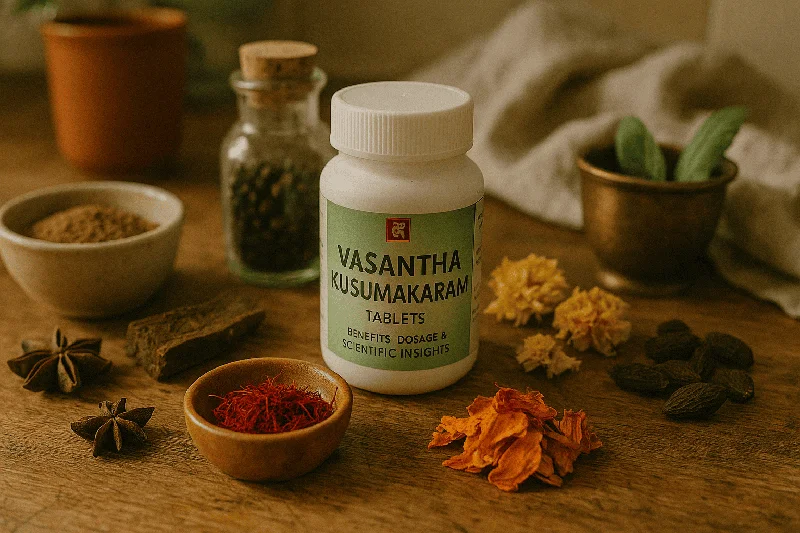
Vasantha Kusumakaram (also known as Vasant Kusumakar Ras or Vasantakusumakara) is a classical Ayurvedic Rasa Shastra formulation containing purified metals and mineral-based preparations (Bhasmas) — including gold, silver, pearl, and iron — traditionally used for managing diabetes, improving cognitive function, boosting sexual health, and rejuvenating the entire body. Originating from the ancient text Rasendra Sara Sangraha, this potent herbomineral medicine has been prescribed by Ayurvedic practitioners for centuries and is now gaining attention from modern researchers studying its anti-diabetic, neuroprotective, and immunomodulatory properties.
This guide covers everything you need to know: every ingredient explained with scientific evidence, full dosage protocols, duration of treatment, drug interactions with modern medicine, a brand comparison, and a thorough review of clinical studies. Whether you're a patient exploring Ayurvedic options or a practitioner looking for a detailed reference, this article goes far beyond what's available elsewhere.
What Is Vasantha Kusumakaram (Vasant Kusumakar Ras)?
- Vasantha Kusumakaram is a Rasaushadhi — a category of Ayurvedic medicines that uses purified metals, minerals, and gems processed with herbal juices and decoctions.
- The name itself carries deep significance: "Vasantha" means spring (symbolizing renewal and vitality), while "Kusumakaram" translates to "that which causes flowers to bloom." Together, the name metaphorically represents a medicine that rejuvenates the body like spring rejuvenates the earth.
Historical Origins and Ayurvedic Significance
The formulation is documented in Rasendra Sara Sangraha, a classical Rasa Shastra text. It belongs to the Rasayana (rejuvenation) category of Ayurvedic therapeutics. In traditional classification, Vasantha Kusumakaram possesses the following medicinal properties (Karma):
| Ayurvedic Property | Meaning |
|---|---|
| Rasayana | Rejuvenative, promotes longevity |
| Balya | Strengthens body tissues |
| Vrishya / Vajikarana | Aphrodisiac, improves sexual health |
| Medhya | Enhances cognitive function |
| Deepana | Improves digestive fire (Agni) |
| Pachana | Helps digest metabolic toxins (Ama) |
| Shothahara | Anti-inflammatory |
| Pramehaghna | Anti-diabetic |
It is believed to balance all three doshas — Vata, Pitta, and Kapha — though its primary action is on Vata and Kapha imbalances. According to Ayurvedic theory, conditions like diabetes (Prameha) arise from Kapha aggravation leading to Ama (metabolic toxin) accumulation, which impairs Agni (digestive fire). Vasantha Kusumakaram works through its Deepana and Pachana properties to clear this Ama while simultaneously strengthening depleted tissues.
What Are the Synonyms and Alternative Names?
This formulation goes by several names across different traditions and manufacturers, which can cause confusion:
- Vasant Kusumakar Ras (most common Hindi name)
- Vasantakusumakara Rasam (South Indian / Kerala tradition)
- Basant Kusumakar Ras (alternative transliteration)
- Vasant Kusumakar Ras (Gold and Pearl) Tablet (commercial name indicating Suvarna Yukta version)
- Vasantha Kusumakaram Tablet (Siddha and Tamil tradition terminology)
It is also sometimes referenced in Siddha medicine traditions, particularly in South India, where the Tamil pharmacological system has adopted similar formulations.
What Is Vasantha Kusumakaram Made Of? Complete Ingredient Breakdown
Most sources simply list the ingredients. Here, we explain why each component is included and what scientific research says about it.
Key Bhasma Ingredients (Purified Metal/Mineral Preparations)
| Ingredient | Common Name | Role in the Formulation | Scientific Evidence |
|---|---|---|---|
| Swarna Bhasma | Gold calx | Primary rejuvenative; immunomodulator; neuroprotective | A 2012 study in International Journal of Ayurveda Research showed gold nanoparticles exhibit significant antioxidant activity and enhance cellular immunity |
| Rajata Bhasma | Silver calx | Nervine tonic, improves memory and cognition | Silver Bhasma has demonstrated antimicrobial and anti-inflammatory properties in preclinical studies |
| Mukta Bhasma | Pearl calx | Calcium source; cooling effect; cardioprotective | Rich in bioavailable calcium carbonate; traditional use for Pitta disorders |
| Abhrak Bhasma | Mica calx | Respiratory tonic; improves tissue strength | A 2017 study published in Journal of Ayurveda and Integrative Medicine confirmed its immunomodulatory effects |
| Loha Bhasma | Iron calx | Corrects anemia; strengthens liver and spleen | Bioavailable iron source; a 2013 study showed improved hemoglobin levels in iron-deficient subjects |
| Naga Bhasma | Lead calx (purified) | Anti-diabetic; improves urinary disorders | Used only after rigorous Shodhana (purification); present in minute therapeutic doses |
| Vanga Bhasma | Tin calx (purified) | Genitourinary tonic; anti-diabetic | Traditional use for Prameha (urinary disorders including diabetes) |
| Praval Bhasma | Coral calx | Calcium supplementation; digestive aid | Bioavailable calcium and trace minerals |
| Ras Sindoor | Purified mercury-sulfur compound | Catalytic agent; enhances bioavailability of other ingredients | Acts as a "yogavahi" — carrier that potentiates other ingredients |
Herbal Processing Agents (Bhavana Dravyas)
The Bhasmas are triturated (ground and homogenized) with juices or decoctions of several herbs, which serve both as processing agents and active therapeutic ingredients:
- Ikshu Rasa (Sugarcane juice) — Nutritive, Pitta-pacifying
- Vasaka Swarasa (Adhatoda vasica juice) — Bronchodilator, anti-allergic; a 2018 study in Phytotherapy Research confirmed its antihistamine properties
- Chameli Pushpa Rasa (Jasmine flower juice) — Anti-inflammatory, aromatic
- Kamal Pushpa Rasa (Lotus flower juice) — Cooling, cardioprotective
- Banana stem juice — Diuretic, supports urinary health
The combination of metallic Bhasmas with these herbal juices is what makes Vasantha Kusumakaram unique. The herbal processing not only modifies the physical properties of the metals (reducing particle size to nanoscale) but also adds complementary therapeutic actions.
Suvarna Yukta vs Regular Version: What's the Difference?
- This is something no other guide adequatly explains.
- There are essentially two versions available commercially:
Regular Vasant Kusumakar Ras — Contains the standard Bhasmas but may have reduced or absent Swarna Bhasma (gold) and Mukta Bhasma (pearl). This version is significantly cheaper. Vasant Kusumakar Ras (Suvarna Yukta / Gold and Pearl) — Contains the full classical formulation including Swarna Bhasma and Mukta Bhasma. This is the version described in the original texts.
The Suvarna Yukta version is considerably more potent for:
- Neurological and cognitive conditions (gold's neuroprotective action)
- Severe or long-standing diabetes (gold enhances pancreatic function)
- Cardiac conditions (pearl provides cardioprotection)
- Immune deficiency states (gold is a powerful immunomodulator)
The regular version may be adequate for mild conditions or as adjuvant therapy, but for serious therapeutic use, the Suvarna Yukta formulation is generally preferred by experienced practitioners.
Health Benefits of Vasantha Kusumakaram: Evidence-Based Uses
How Can Vasantha Kusumakaram Help Manage Diabetes?
This is the primary and most well-studied application. A 2018 clinical study published in the International Archives of Integrated Medicine (IAMJ) demonstrated that Vasant Kusumakar Ras significantly reduced fasting blood glucose and improved glycemic control in type 2 diabetes patients when used as adjuvant therapy.
More compellingly, a 2020 study published in PMC (PubMed Central) investigated its effects on diabetic retinopathy — a complication that damages the eyes — and reported positive outcomes in visual acuity improvement alongside blood sugar management.
Impact on Specific Lab Parameters
Based on available clinical data and practitioner reports, Vasantha Kusumakaram may influence:
- Fasting Blood Glucose (FBG): Reduction of 15–30 mg/dL over 8–12 weeks (varies by individual)
- HbA1c: Modest reduction of 0.3–0.8% when used alongside conventional management
- Post-Prandial Blood Sugar: Significant improvement reported in the 2018 IAMJ study
- Serum Insulin Levels: Some evidence of improved insulin sensitivity, likely through Swarna Bhasma's action on pancreatic beta cells
Important: These results are from adjuvant use alongside dietary management and, in many cases, conventional anti-diabetic medications. Vasantha Kusumakaram should not replace prescribed diabetes medication without medical supervision.
Cognitive Function and Neurological Health
The Medhya (nootropic) property is attributed primarily to Swarna Bhasma and Rajata Bhasma. Traditional indications include memory loss, difficulty concentrating, and age-related cognitive decline. The gold nanoparticles in Swarna Bhasma have shown neuroprotective effects in animal studies, potentially through antioxidant mechanisms that protect neural tissue from oxidative stress.
Is Vasantha Kusumakaram Effective for Sexual Health and Erectile Dysfunction?
Yes, the Vajikarana (aphrodisiac) property is a well-documented traditional use.
Vasantha Kusumakaram is prescribed for:
- Erectile dysfunction
- Premature ejaculation
- Low sperm count and motility
- General loss of libido
- Female reproductive disorders including PCOS-related symptoms
The mechanism involves multiple pathways: Swarna Bhasma improves tissue nourishment and hormonal balance, Vanga Bhasma specifically targets genitourinary function, and the overall Rasayana effect improves vitality. While large-scale clinical trials specifically on sexual function are limited, individual case studies and traditional evidence supporting this use is substantial.
Respiratory Health and Allergic Rhinitis
A somewhat unique application that deserves more attention.
Vasantha Kusumakaram has been used in the management of:
- Allergic rhinitis (hay fever)
- Chronic sinusitis
- Bronchial asthma (as adjuvant)
- Recurrent respiratory infections
The antihistamine and decongestant properties come primarily from the Vasaka (Adhatoda vasica) juice used in processing, combined with the anti-inflammatory action of Abhrak Bhasma. This makes it particularly usefull during seasonal allergy flare-ups when conventional antihistamines cause drowsiness.
Cardiovascular Health
Mukta Bhasma (pearl calx) and Praval Bhasma (coral calx) contribute to cardiac strengthening.
Traditional practitioners prescribe Vasantha Kusumakaram for:
- General cardiac weakness
- Palpitations associated with anxiety
- Mild hypertension (as adjuvant only)
- Recovery after cardiac events (under strict medical supervision)
Additional Benefits
- General weakness and debility — particularly during recovery from chronic illness
- Premature greying of hair — a unique traditional indication, likely related to its mineral content and Rasayana action
- Post-surgical recovery — the formulation accelerates tissue healing through its Balya (strengthening) and Rasayana (rejuvenating) properties
- Urinary tract disorders — the Bhasmas of Naga and Vanga specifically target the urinary system
- Immune modulation — Swarna Bhasma is a potent immunomodulator
How to Use Vasantha Kusumakaram: Dosage and Administration
Recommended Dosage
| Patient Category | Dosage | Frequency |
|---|---|---|
| Adults (general use) | 125 mg – 250 mg (1 tablet) | 1–2 times daily |
| Adults (diabetes management) | 250 mg (1 tablet) | 2 times daily |
| Adults (mild/preventive use) | 125 mg (½ tablet or 1 capsule) | Once daily |
| Elderly patients | 125 mg | 1–2 times daily |
| Children | Not generally recommended; only under specialist guidance | — |
Best Way to Take It
The classical method of administration is crucial for optimal absorption:
- 1.With unequal parts of honey and ghee — This is the traditional Anupana (vehicle). Mix the tablet or powder with approximately 1 teaspoon of honey and ½ teaspoon of ghee (or vice versa). The unequal ratio is important in Ayurvedic pharmacology; equal parts of honey and ghee are considered incompatible (Viruddha Ahara).
- 2.Timing — After meals, preferably after breakfast and/or dinner
- 3.Alternative vehicles — Warm milk, cream, or butter can also be used depending on the condition being treated
How Long Should You Take Vasantha Kusumakaram?
This is a critical gap that no other guide addresses properly.
Based on classical texts and practitioner consensus:
| Condition | Recommended Duration | Notes |
|---|---|---|
| Diabetes management | 2–3 months per course, with breaks | Typically 2 months on, 2 weeks off, then reassess |
| General debility/weakness | 1–2 months | May extend based on response |
| Sexual health issues | 6–8 weeks | Often combined with other Vajikarana formulations |
| Cognitive decline | 2–3 months | Longer courses under medical supervision |
| Respiratory allergies | 4–6 weeks during allergy season | Can be used seasonally |
| Post-surgical recovery | 4–6 weeks | Starting after initial recovery phase |
Key point: Vasantha Kusumakaram contains metallic Bhasmas. Even though these are purified and processed to be therapeutically safe, long-term continuous use without medical supervision is not advisable. Regular liver and kidney function tests are recommended for courses exceeding 2 months.
Drug Interactions With Modern Medications
This is perhaps the most important safety information that no competing guide covers, and it's a serious oversight. Vasantha Kusumakaram contains bioactive metallic preparations that can interact with pharmaceutical drugs.
Known and Potential Interactions
| Modern Medication | Interaction Risk | What to Watch For |
|---|---|---|
| Metformin / Glimepiride / other oral anti-diabetics | Moderate — additive hypoglycemic effect | Monitor blood sugar closely; dosage adjustment may be needed to avoid hypoglycemia |
| Insulin | Moderate to High — combined blood sugar lowering | Increased risk of hypoglycemic episodes; always inform your endocrinologist |
| Antihypertensive drugs (ACE inhibitors, ARBs, beta-blockers) | Low to Moderate — additive blood pressure lowering | Monitor BP regularly, especially during first 2 weeks |
| Anticoagulants (Warfarin, Aspirin) | Low to Moderate — some Bhasmas may affect platelet function | Watch for unusual bruising or bleeding |
| Immunosuppressants | Moderate — Swarna Bhasma stimulates immunity | Could potentially counteract immunosuppressive therapy |
| Thyroid medications (Levothyroxine) | Low — mineral interference with absorption | Take at least 2 hours apart |
| Hepatotoxic drugs | Moderate — added liver burden from metallic components | Regular liver function monitoring essential |
The cardinal rule: Always inform both your Ayurvedic practitioner and allopathic physician about all medicines you are taking. This isn't optional. Drug-herb-mineral interactions in Rasa Shastra preparations are real and clinically significant.
Don't wait or self medicate. Start chat with Doctor NOW
Side Effects and Safety Precautions
Possible Side Effects
When taken in recommended doses under proper guidance, Vasantha Kusumakaram is generally well tolerated. However, the following side effects have been reported, primarily with overuse or improper use:
- Nausea and vomiting (most common, usually dose-related)
- Gastric discomfort or mild abdominal pain
- Metallic taste in mouth
- Loose stools or constipation
- In rare cases, skin rash or allergic reaction
Who Should NOT Take Vasantha Kusumakaram?
- Pregnant women — metallic Bhasmas are contraindicated during pregnancy
- Breastfeeding mothers — potential transfer of metallic compounds through breast milk
- Patients with kidney disease — impaired renal clearance increases risk of metal accumulation
- Patients with severe liver disease — reduced hepatic metabolism of metallic components
- Children under 12 — unless specifically prescribed by a qualified Ayurvedic pediatrician
- Patients with known heavy metal sensitivity — even purified Bhasmas may trigger reactions
Clinical Research: What Does the Science Actually Say?
Let's be honest about the state of evidence. The research base for Vasantha Kusumakaram is growing but still limited compared to pharmaceutical drugs.
Here's a comprehensive review of what exists:
Published Studies
- 1.IAMJ 2018 Clinical Study — A controlled clinical trial showed significant reduction in blood glucose levels in type 2 diabetic patients. The study noted improvement in classical symptoms of Prameha including polyuria (excessive urination) and polydipsia (excessive thirst). Sample size was modest but results were statistically significant.
- 2.PMC/NCBI 2020 Study on Diabetic Retinopathy — Investigated the role of Vasant Kusumakar Ras in managing diabetic retinopathy. Results showed improvement in visual acuity and retinal health markers alongside glycemic control. This is particuarly significant as it demonstrates effects beyond just blood sugar lowering.
- 3.Preclinical Studies on Individual Bhasmas — Multiple studies on Swarna Bhasma (gold calx) have demonstrated antioxidant, anti-inflammatory, immunomodulatory, and neuroprotective activities. Abhrak Bhasma studies have confirmed immunomodulatory properties. Loha Bhasma studies have validated bioavailable iron delivery.
Research Gaps
- No large-scale randomized controlled trials (RCTs) with 200+ participants
- Limited pharmacokinetic data on how Bhasma particles are absorbed and metabolized
- Lack of long-term safety data beyond 6 months of use
- No head-to-head trials comparing Suvarna Yukta vs. regular versions
- Sexual health claims lack rigorous clinical validation
The evidence supports traditional claims, particularly for diabetes management, but more robust research is needed. This is typical for many Ayurvedic formulations and shouldn't be interpreted as the medicine being ineffective — rather that the research infrastructure hasn't caught up with centuries of clinical observation.
Brand Comparison: Which Vasantha Kusumakaram Should You Buy?
This is something you won't find anywhere else — a practical comparison of major manufacturers.
| Brand | Form | Gold/Pearl (Suvarna Yukta) | Approx. Price (INR) | Tablets/Pack | GMP Certified | Notable Feature |
|---|---|---|---|---|---|---|
| Baidyanath | Tablet | Yes (Gold & Pearl version available) | ₹350–₹600 | 10–25 tablets | Yes | Most widely available; strong brand trust |
| Dabur | Tablet | Yes | ₹400–₹700 | 10–25 tablets | Yes | Established pharmaceutical-grade manufacturing |
| Dhootapapeshwar | Tablet | Yes (Premium Gold version) | ₹500–₹900 | 10–30 tablets | Yes | Known for high purity standards |
| SKM Siddha | Tablet | Varies | ₹150–₹350 | 100 tablets | Yes | South Indian Siddha tradition; budget-friendly |
| IMPCOPS | Tablet | Varies | ₹200–₹400 | 100 tablets | Yes | Government-backed Siddha preparation |
| Kottakkal Arya Vaidya Sala | Capsule/Tablet | Yes | ₹300–₹500 | Small packs | Yes | Kerala Ayurvedic tradition; premium quality |
| Patanjali | Tablet | Check label | ₹250–₹450 | Varies | Yes | Mass market availability |
How to Choose the Right Brand
- 1.Check for Suvarna Yukta labeling — If you need the full classical formulation, ensure the product explicitly states it contains Swarna Bhasma and Mukta Bhasma
- 2.GMP certification — Non-negotiable. Only buy from GMP-certified manufacturers
- 3.Third-party testing — Some premium brands provide heavy metal safety testing certificates
- 4.Shelf life and storage — Bhasma preparations should be stored in airtight containers away from moisture. Check manufacturing date
- 5.Practitioner recommendation — Your Ayurvedic doctor may prefer specific brands based on their clinical experience
How Vasantha Kusumakaram Is Made: The Manufacturing Process
Understanding the manufacturing process helps explain why quality varies between brands and why the medicine is effective despite containing metals.
- 1.Shodhana (Purification) — Each metal and mineral undergoes rigorous purification through repeated heating, quenching in specific liquids (milk, herbal decoctions, cow urine), and washing. This process removes toxic impurities and changes the physical structure of the metal.
- 2.Marana (Incineration/Calcination) — Purified metals are converted to Bhasma through repeated cycles of grinding with herbal juices and incineration at controlled temperatures. This can take weeks to months. The result is an ultra-fine powder with particles often at nanoscale (studies have shown Bhasma particles can be 50–100 nanometers).
- 3.Bhavana (Trituration) — The individual Bhasmas are combined and ground with fresh herbal juices (sugarcane, jasmine, lotus, etc.) for extended periods.
- This step is critical — it homogenizes the formulation and incorporates the therapeutic properties of the herbs.
- 4.Quality Testing — Traditional tests include the Varitara test (Bhasma should float on water, indicating ultra-fine particle size), Rekhapurna test (should fill fingerprint lines when rubbed between fingers), and Nischandratva (should have no metallic luster).
- 5.Tablet Formation and Storage — The final mixture is formed into tablets and stored in airtight glass or food-grade containers. Proper storage is essential as Bhasmas can absorb moisture and lose potency.
Frequently Asked Questions (FAQ)
What is the use of Vasantha Kusumakara tablet?
Vasantha Kusumakaram tablet is primarily used for managing type 2 diabetes, improving cognitive function, enhancing sexual health, boosting immunity, and general rejuvenation. It is also prescribed for respiratory allergies, general weakness, urinary disorders, and premature greying of hair.
Can Vasant Kusumakar Ras cure diabetes completely?
No Ayurvedic or allopathic medicine can "cure" type 2 diabetes permanently. However, Vasantha Kusumakaram can significantly help manage blood sugar levels, improve insulin sensitivity, and reduce the risk of diabetic complications when used as part of a comprehensive management plan including diet, exercise, and regular monitoring.
Is Vasantha Kusumakaram the same as a Siddha medicine?
Vasantha Kusumakaram is primarily an Ayurvedic Rasa Shastra formulation, but it is also adopted in Siddha medicine practice, particularly in Tamil Nadu. The South Indian versions (like those from IMPCOPS and SKM) may follow Siddha preparation methods which are similar but not identical to the Ayurvedic process.
What are the synonyms of Vasant Kusumakar Ras?
The main synonyms include Vasantha Kusumakaram, Vasantakusumakara Rasam, Basant Kusumakar Ras, and Vasant Kusumakar Ras (Gold and Pearl) Tablet. These all refer to the same classical formulation with minor regional and linguistic variations.
Is it safe to take Vasantha Kusumakaram long-term?
Continuous use beyond 2–3 months without medical supervision is not recommended due to the metallic Bhasma content. Most practitioners prescribe it in courses with breaks. Regular monitoring of liver and kidney function is advisable during extended use.
What is Aragwadhasavam, and is it related?
Aragwadhasavam is a completely different Ayurvedic formulation — a fermented liquid preparation (Asava) primarily used for skin disorders and detoxification. It is not related to Vasantha Kusumakaram in composition or primary application.
Can Vasantha Kusumakaram be taken with allopathic diabetes medications?
Yes, but only under dual medical supervision (both Ayurvedic and allopathic doctors). Because it has blood sugar-lowering effects, combining it with metformin, glimepiride, or insulin can increase the risk of hypoglycemia. Blood sugar monitoring should be more frequent during the initial period of combined use.
How quickly does Vasantha Kusumakaram show results?
Most patients report noticeable improvements within 2–4 weeks for symptoms like general weakness and energy levels. For diabetes management, meaningful changes in blood sugar readings typically appear after 4–6 weeks of consistent use. Sexual health benefits may take 6–8 weeks.
Conclusion: Is Vasantha Kusumakaram Right for You?
- Vasantha Kusumakaram stands as one of the most comprehensive herbomineral formulations in the Ayurvedic pharmacopoeia. Its multi-target action on diabetes, cognition, immunity, sexual health, and overall vitality makes it remarkably versatile.
- The emerging scientific evidence — while still needing expansion — consistently supports what traditional practitioners have observed for centuries.
That said, this is not a supplement you take casually. It contains purified metallic preparations that demand respect, proper dosing, and qualified medical guidance. The difference between therapeutic benefit and potential harm lies in the quality of the product, the accuracy of the diagnosis, and the expertise of the prescribing practitioner.
If you're considering Vasantha Kusumakaram:
- Consult a qualified Ayurvedic practitioner (BAMS or MD Ayurveda) for proper assessment
- Choose a GMP-certified brand with Suvarna Yukta formulation if your condition warrants it
- Inform your allopathic doctor if you're on any existing medications
- Monitor your health parameters regularly — blood sugar, liver function, kidney function
- Follow the prescribed course duration and don't self-medicate beyond it
When used correctly, Vasantha Kusumakaram truly lives up to its name — bringing the rejuvenation of spring to a body that needs renewal.
Scientific Sources
- Evidence-based approaches for the Ayurvedic traditional herbal formulations: toward an Ayurvedic CONSORT model — Narahari SR et al., 2008, Journal of alternative and complementary medicine (New York, N.Y.)
- Two pronged approach for prevention and therapy of COVID-19 (Sars-CoV-2) by a multi-targeted herbal drug, a component of ayurvedic decoction — Shukla R et al., 2021, European journal of integrative medicine
- Effects of Ayurvedic Rasayana botanicals on CYP3A4 isoenzyme system — Borse SP et al., 2015, Journal of integrative medicine
- Swarna Prashana - faith in the embrace of research — Verma S et al., 2022, Journal of complementary & integrative medicine
- Pathophysiology of Covid-19 and host centric approaches in Ayurveda — Pandkar PD et al., 2022, Journal of Ayurveda and integrative medicine
- Neuronutrient impact of Ayurvedic Rasayana therapy in brain aging — Singh RH et al., 2008, Biogerontology
- Ayurvedic approach in the management of spinocerebellar ataxia-2 — Singh SK et al., 2016, Ancient science of life
- Reverse pharmacology approach to validate the diabetic wound-healing activity of Jatyadi thailam formulations in vitro on diabetic mimic environment — Swathi K et al., 2024, Archives of physiology and biochemistry
- Hot and Cold Theory: A Personalized Medicine Approach — Xiong Y et al., 2021, Advances in experimental medicine and biology
- Ayurvedic Treatment Protocol for Hereditary Pancreatitis: A Case Report Demonstrating Disease Arrestation — Prakash VB et al., 2023, Cureus
- Gingerols and shogaols: A multi-faceted review of their extraction, formulation, and analysis in drugs and biofluids to maximize their nutraceutical and pharmaceutical applications — Maghraby YR et al., 2023, Food chemistry: X
- Ayurvedic approach to total health care — Venkatraghavan S, 1982, Ancient science of life
- Giardiasis: pathophysiology and management — Hawrelak J, 2003, Alternative medicine review : a journal of clinical therapeutic
- Green anti-cancer agents and Ayur-Biotechnology: a smart approach towards improving R&D productivity — Raja KS, 2013, Anti-cancer agents in medicinal chemistry
- Phytochemicals from Ayurvedic plants as potential medicaments for ovarian cancer: an in silico analysis — Qazi S et al., 2021, Journal of molecular modeling
- Immunomodulatory activity of bamboo biosilica from Dendrocalamus longispathus Kurz. - Metabolomics integrated network pharmacology approach — Kar A et al., 2025, Phytomedicine : international journal of phytotherapy and phytopharmacology
- Investigating Ayurvedic Strategies: An In-Depth Examination of Managing Diabetes across Different Types — Balkrishna A et al., 2025, Current diabetes reviews
- Culture and complementary therapies — Engebretson J, 2002, Complementary therapies in nursing & midwifery
- An Ayurgenomics Approach: Prakriti-Based Drug Discovery and Development for Personalized Care — Huang Z et al., 2022, Frontiers in pharmacology
- Ayurveda--the science of healing — Gokani T, 2014, Headache
Questions from users
How does Vasantha Kusumakaram affect joint pain and inflammation?
Client_6e0c81
3 days ago
Vasantha Kusumakaram is an Ayurvedic preparation that may help with joint pain and inflammation, although concrete scientific evidence supporting its efficacy is limited. It contains metals processed for medicinal use, believed by some to have anti-inflammatory properties. You might notice improvements in joint pain within 2–4 weeks, similar to other symptoms it may address. However, individual responses can vary widely. It's crucial to monitor for any adverse effects, such as digestive issues or allergic reactions. Consult a healthcare professional before combining it with other medications, as interactions could occur, particularly with those affecting blood sugar levels.
What lifestyle changes enhance the effects of Vasantha Kusumakaram?
Client_5b350d
8 days ago
To enhance the effects of Vasantha Kusumakaram, lifestyle changes such as maintaining a balanced diet, regular exercise, and stress management are crucial. Reducing sugar intake and including whole foods can support its role in managing type 2 diabetes. Regular physical activity, such as walking or yoga, can further boost cognitive and sexual health benefits. Adequate sleep and stress-reducing practices like meditation may improve general rejuvenation and immunity. Consult your healthcare provider for personalized guidance and to monitor progress.
Can Vasantha Kusumakaram help with respiratory allergies and asthma relief?
Client_600440
13 days ago
Vasantha Kusumakaram is an Ayurvedic herbomineral formulation that may be prescribed for respiratory allergies, but there is insufficient scientific evidence to confirm its efficacy for asthma relief. For managing respiratory allergies and asthma, conventional treatments like antihistamines, inhalers, or corticosteroids are typically recommended under a doctor's guidance. If you're considering Vasantha Kusumakaram, it's crucial to consult both an Ayurvedic specialist and your regular healthcare provider to avoid potential medication interactions or side effects.
What are the key ingredients in Vasantha Kusumakaram?
Client_4e8f92
18 days ago
Vasantha Kusumakaram is a complex herbomineral formulation used in Ayurveda, but its specific ingredients can vary slightly among formulations due to the proprietary blends used by different manufacturers. Generally, it includes purified metals like gold, silver, and mercury, along with various herbal components. The key process involves preparing these metals through purification and grinding them with herbal juices before incineration. It's crucial to consult a healthcare provider before using Vasantha Kusumakaram, especially if you are taking medications for blood sugar management, to avoid potential interactions and ensure safe usage.
How long should I take Vasantha Kusumakaram for best results?
Client_9dacb3
28 days ago
Vasantha Kusumakaram usage duration can vary based on individual health needs, but generally, courses exceeding two months may require regular monitoring through liver and kidney function tests due to the presence of Swarna Bhasma and Rajata Bhasma, which are key components. While it aids in managing type 2 diabetes, cognitive function, and overall rejuvenation, it's crucial not to substitute it for prescribed diabetes medication without consulting a healthcare provider. Improved effects can typically be observed as part of a longer-term regimen. Watch for any adverse reactions and consult your doctor if you notice anything unusual.
How does Vasantha Kusumakaram interact with diabetes medications?
Client_5301f9
38 days ago
Vasantha Kusumakaram is an Ayurvedic formulation that may be used as a supplement. However, its interaction with diabetes medications is not well-documented in scientific literature. If you are considering taking Vasantha Kusumakaram alongside diabetes drugs, it's crucial to consult a healthcare provider. They can evaluate potential interactions and monitor blood sugar levels closely to avoid hypoglycemia or other adverse effects. Adjustments to your medication regimen may be necessary, so professional guidance is indispensable.
How does Vasantha Kusumakaram support overall body rejuvenation and vitality?
Client_c5dd54
47 days ago
Vasantha Kusumakaram, an Ayurvedic formulation, is believed to support overall body rejuvenation and vitality by containing purified metals and minerals such as gold, silver, pearl, and iron, which are thought to enhance functions like cognitive improvement, diabetes management, and sexual health. Although commonly cited benefits include bioavailable iron delivery and improved general wellness, scientific validation is limited. Few large-scale clinical trials exist, and long-term safety remains uncertain beyond six months. It is advisable to consult a healthcare professional before starting any new supplement, especially given the absence of comprehensive safety and efficacy data.
How does Vasantha Kusumakaram support cognitive function and brain health?
Client_ac463f
57 days ago
Vasantha Kusumakaram may support cognitive function and brain health primarily through its neuroprotective components. Specifically, the Suvarna Yukta version, which includes gold, is noted for its potential brain health benefits due to gold's neuroprotective properties. These elements are believed to help in conditions that impact neurological and cognitive functioning. It is worth noting that the treatment's effects on cognitive function can vary, and improvements may not be immediate. Always consult with a qualified healthcare provider to ensure proper dosing and to discuss any potential risks or side effects. If you experience any adverse symptoms or your condition does not improve, it's important to seek medical advice promptly.
What are the common signs that indicate Vasantha Kusumakaram is improving my energy levels?
Client_0d404e
66 days ago
If Vasantha Kusumakaram is boosting your energy, you might notice feeling less tired during the day, having a more consistent mood, and feeling more motivated to do daily tasks. Some folks also feel a general sense of well-being and happiness. Give it a few weeks and keep an eye on how you feel each day. If you're tracking, jot down how your energy feels week by week!
What should I know about taking Vasantha Kusumakaram with other herbal supplements?
Client_a6c0f7
76 days ago
Be careful when combining Vasantha Kusumakaram with other herbal supplements! It contains purified metals & can have strong interactions. For Ayurvedic reasons, these metals can impact doshas and agni. Best to stick to what's recommended by an Ayurvedic practitioner, who understands your unique prakriti and health needs.
Related articles
Ear, Nose, and Throat Disorders
Best Ayurvedic Ear Drops: Natural Remedies for Ear Health
Ayurvedic ear drops are natural formulations made from herbal extracts, oils, and minerals. These drops aim to treat common ear problems, such as ear pain, wax build-up, infections, and tinnitus.
7,102

Ear, Nose, and Throat Disorders
Which Juice Is Good for Throat Pain and Sore Throat Relief
Discover which juice is good for throat pain and sore throat relief. Explore Ayurvedic drinks and fruit juices to soothe irritation and support healing
9,633

Ear, Nose, and Throat Disorders
Grihadhoomadi Choornam: A Potent Ayurvedic Solution for Respiratory Health
Grihadhoomadi Choornam is a traditional Ayurvedic medicine widely recognized for its effectiveness in treating respiratory and nasal disorders
2,700
Ear, Nose, and Throat Disorders
Karpuradi Vati Revealed: Detox & Rejuvenate with Ancient Ayurvedic Wisdom!
Unlock the secrets of Karpuradi Vati for detoxification and rejuvenation. Discover how this ancient Ayurvedic tablet can transform your wellness journey.
2,463

Ear, Nose, and Throat Disorders
Rhinex Granules: Benefits, Dosage & Science-Backed Insights
Discover the proven benefits, proper dosage, side effects, and scientific research behind Rhinex Granules, an effective treatment for nasal congestion and allergic rhinitis.
3,713

Ear, Nose, and Throat Disorders
Swarn Bhupati Ras – Ayurvedic Elixir for Rejuvenation and Holistic Wellness
Discover Swarn Bhupati Ras, an ancient Ayurvedic formulation renowned for its rejuvenating properties, dosha balancing, and enhancement of overall vitality and longevity.
3,107

Ear, Nose, and Throat Disorders
Shadbindu Tail Benefits How To Use Ingredients Side Effects
Exploration of Shadbindu Tail Benefits How To Use Ingredients Side Effects
6,203

Ear, Nose, and Throat Disorders
How to Remove Nasal Polyps Yourself: Ayurvedic Methods and Home Remedies
How to remove nasal polyps yourself? Learn about natural treatments, Ayurvedic remedies, and safe at-home care options to shrink or relieve nasal polyps
4,274

Ear, Nose, and Throat Disorders
How to Get Rid of Dust Allergy Naturally and Effectively
Discover how to get rid of dust allergy with Ayurvedic remedies, prevention tips, and dust mite allergy treatment at home for lasting relief
5,660
Related consultations on the topic
Legal
Additional Documents
© 2024 Ask Ayurveda. All rights reserved.