Ask Ayurvedic doctor a question and get a consultation online on the problem of your concern in a free or paid mode. More than 2,000 experienced doctors work and wait for your questions on our site and help users to solve their health problems every day.


Body DetoxEar, Nose, and Throat DisordersGeriatrics & RejuvenationImmunodeficiencyInfertility TreatmentNutritionOrthopedic DisordersPediatricsRespiratory DisordersSexually Transmitted Diseases (STDs)Surgery RecoveryUrological DisordersVascular DisordersDental DisordersEndocrinological DisordersGastrointestinal DisordersYoga TherapyGeneral MedicineAllergic DisordersCardio DisordersGynecology and ObstetricsCosmetologySkin and Hair DisordersEye DisordersInfectious DiseasesMental DisordersNeurological DisordersOncologyPanchakarmaSexual Health & DisordersSports Medicine
Published on 10/09/24
(Updated on 08/12/26)
star_border 4
5,416
Ayurvedic Tips To Improve Hearing
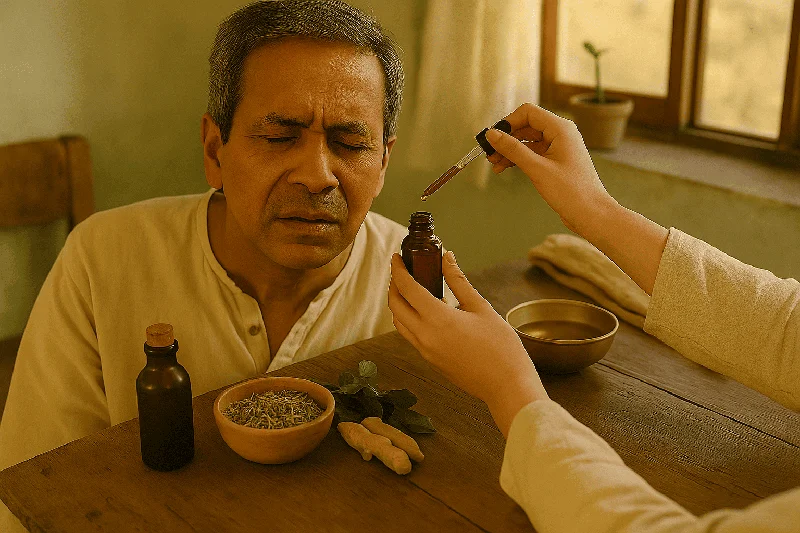
Hearing loss affects over 460 million people worldwide, according to the World Health Organization — and India alone accounts for a significant share of that number. If you've been noticing muffled sounds, struggling to follow conversations, or dealing with persistent ringing in your ears, Ayurveda offers a time-tested, holistic framework to support and restore your hearing naturally. This guide covers specific ayurvedic treatments, herbal remedies with actual dosages, yoga techniques, dietary plans, marma points, and realistic timelines — everything the other guides leave out.
The short answer? Ayurveda views hearing loss (Karna Badhirya) as primarily a Vata dosha imbalance affecting the ear's subtle channels. Treatments like Karna Purana (warm oil ear therapy), Nasya (nasal oil administration), specific herbs such as Ashwagandha and Sarivadi Vati, along with targeted yoga practices like Bhramari Pranayama can meaningfully improve hearing — especially when the loss is mild-to-moderate and not caused by structural nerve damage.
Let's dive into exactly how, step by step.
What Is Hearing Loss? (Badhirya in Ayurveda)
Hearing loss — medically defined as a reduced ability to perceive sounds at thresholds of 20 decibels or more — is one of the most common sensory impairments globally. In Ayurveda, it is described as Karna Badhirya (कर्ण बाधिर्य), a condition referenced extensively in the classical texts of Charaka Samhita and Sushruta Samhita.
Unlike modern medicine, which focuses primarily on the anatomical site of damage, Ayurveda traces the root cause to disruptions in the body's fundamental energies, channels, and metabolic waste.
How Ayurveda Explains Hearing Loss (Vata Dosha, Ama, and Srotas)
In the Ayurvedic framework, hearing is governed by Akash Mahabhuta (the space element) and facilitated by Vata dosha — specifically its subtype Prana Vayu, which controls sensory perception. When Vata becomes aggravated or obstructed, the auditory channels (srotas) lose their capacity to transmit sound vibrations properly.
Here's the mechanism Ayurveda describes:
- 1.Vata Aggravation: Excessive exposure to cold, dry foods, irregular routines, stress, and aging all elevate Vata. This dries out the delicate tissues of the inner ear.
- 2.Ama (Toxin) Accumulation: Poor digestion creates metabolic waste called Ama, which clogs the subtle channels (srotas) leading to the ear.
- 3.Kapha Blockage: In some cases — particularly with ear infections or fluid buildup — excess Kapha dosha creates a physical obstruction in the ear canal or middle ear.
- 4.Dhatu Kshaya (Tissue Depletion): Prolonged Vata imbalance depletes the Majja dhatu (nervous tissue), weakening the auditory nerve's function.
- This is why Ayurvedic treatment doesn't just target the ear.
- It addresses the entire chain — digestion, toxin clearance, nervous system nourishment, and dosha balance.
Types of Hearing Loss: Conductive, Sensorineural, and Mixed
Understanding your type of hearing loss determines which ayurvedic strategies will be most effective.
| Type | What Happens | Ayurvedic Correlation | Ayurvedic Treatability |
|---|---|---|---|
| Conductive | Sound blocked in outer/middle ear (wax, fluid, infection) | Kapha dosha blockage in ear srotas | High — responds well to Karna Purana, Nasya |
| Sensorineural | Damage to inner ear hair cells or auditory nerve | Vata aggravation + Majja dhatu depletion | Moderate — depends on severity and duration |
| Mixed | Combination of both | Vata-Kapha dual imbalance | Moderate — requires comprehensive Panchakarma approach |
Important: Congenital hearing loss and complete sensorineural deafness due to nerve destruction generally do not respond to ayurvedic treatment alone. Be honest with yourself about expectations, and always get an audiometric assessment first.
Common Causes of Hearing Loss
Age-Related Hearing Loss (Presbycusis)
Presbycusis — gradual hearing loss with aging — is the single most common cause, affecting roughly 1 in 3 adults over age 65. In Ayurveda, aging is naturally a Vata-dominant phase of life (Vata kala), which explains why hearing deterioration accelerates in later years. The tissues dry out, nerve conduction slows, and the body's regenerative capacity diminishes.
Noise Exposure, Infections, and Medications
- Noise-induced hearing loss: Prolonged exposure to sounds above 85 dB (construction sites, loud headphones, concerts) damages the delicate hair cells in the cochlea. This damage is often irreversible in modern medicine, though Ayurveda aims to support remaining cell function.
- Ear infections: Chronic otitis media is extremely common in India, especially among children. The resulting fluid accumulation and inflammation correspond to Kapha-Pitta vitiation.
- Ototoxic medications: Certain antibiotics (aminoglycosides), chemotherapy drugs, and even high-dose aspirin can damage hearing. Ayurveda considers this a form of Visha (toxin)-induced Vata disturbance.
Ayurvedic Perspective: Dosha Imbalances Behind Hearing Loss
| Dosha Imbalance | Associated Symptoms | Common Triggers |
|---|---|---|
| Vata (primary) | Tinnitus, sudden hearing changes, dry ear canal, sensitivity to wind | Stress, irregular sleep, cold/dry climate, aging, excessive travel |
| Kapha | Muffled hearing, fluid in ear, heaviness, ear congestion | Dairy-heavy diet, sedentary lifestyle, spring season, sinus congestion |
| Pitta | Ear infections, inflammation, sharp ear pain | Spicy foods, hot climate, anger, alcohol |
Symptoms of Hearing Loss You Should Not Ignore
Early Warning Signs
- Recognizing hearing loss early dramatically improves treatment outcomes — whether through ayurvedic or modern approaches.
- Watch for these signals:
- Frequently asking people to repeat themselves
- Difficulty understanding speech in noisy environments
- Turning up TV or phone volume higher than others find comfortable
- Persistent ringing, buzzing, or hissing in one or both ears (tinnitus)
- Feeling that people are "mumbling"
- Difficulty hearing high-pitched sounds (doorbells, birds, children's voices)
Hearing Loss Signs in Children (By Age)
- Parents often miss early signs.
- Here's what to look for:
- Infants (0–12 months): No startle response to loud sounds, doesn't turn toward voice by 6 months, no babbling by 9 months
- Toddlers (1–3 years): Delayed speech, doesn't respond to name consistently, needs TV very loud
- School-age (4–12 years): Difficulty following instructions, poor academic performance, frequently says "what?"
When to See a Doctor vs. When Ayurveda Can Help
This is a critical distinction that most ayurvedic articles completely avoid. Let me be direct.
See an ENT doctor immediately if:
- Sudden hearing loss in one or both ears (within 72 hours — this is a medical emergency)
- Hearing loss accompanied by dizziness, vertigo, or balance problems
- Bloody or pus-like discharge from the ear
- Hearing loss after head trauma
- Complete deafness in one ear
Ayurveda can meaningfully help when:
- Hearing loss is gradual and mild-to-moderate
- Associated with aging, chronic congestion, or tinnitus
- Caused by wax buildup or chronic ear infections (alongside medical treatment)
- Modern treatment has plateaued and you want complementary support
- Prevention is the goal — you want to protect your hearing long-term
Ayurvedic Treatments and Therapies for Hearing Improvement
Karna Purana: Step-by-Step Home Guide
Karna Purana — the practice of filling the ear canal with warm medicated oil — is the single most important ayurvedic therapy for hearing. It pacifies Vata, lubricates the ear canal, softens impacted wax, and nourishes the auditory nerve.
What You Need:
- Bilva Taila, Kshara Taila, or pure sesame oil (cold-pressed)
- A small bowl for warming
- Cotton balls
- A clean dropper
Step-by-Step Procedure:
- 1.Warm the oil: Place 2 tablespoons of medicated oil in a small steel bowl. Heat it in a warm water bath until it reaches body temperature (approximately 37–38°C).
- Test on your inner wrist — it should feel comfortably warm, never hot.
- 2.Position yourself: Lie on your side with the affected ear facing up. Place a towel under your head.
- 3.Apply the oil: Using a clean dropper, instill 4–5 drops of warm oil into the ear canal. For full Karna Purana (clinical setting), the ear is filled completely, but at home, 4–5 drops is sufficient and safe.
- 4.Gentle massage: With your fingertip, gently press and release the tragus (the small cartilage flap in front of the ear canal) 10–15 times. This helps the oil penetrate deeper.
- 5.Rest: Stay on your side for 10–15 minutes. You can gently pull the earlobe downward and backward to straighten the canal.
- 6.Drain and clean: Turn over and let the oil drain onto the towel. Gently wipe the outer ear with a cotton ball. Do NOT insert anything into the ear canal.
- 7.Repeat: Do the same for the other ear.
Frequency: Daily for 7–14 days during active treatment, then 2–3 times per week for maintenance. Best performed in the morning before bathing. Which oil works best? A 2016 study published in the Ayu journal found that Bilva Taila showed significant improvement in hearing thresholds compared to plain sesame oil in patients with sensorineural hearing loss.
Nasya Therapy (Nasal Oil Administration)
Ayurveda states that "Nasa hi shiraso dwaram" — the nose is the gateway to the head. Nasya delivers medicated oils directly to the cranial region, benefiting the ears, eyes, and brain.
Home Nasya Procedure:
- Lie down with your head slightly tilted back (place a pillow under your shoulders)
- Instill 2–3 drops of Anu Taila or Shadbindu Taila into each nostril
- Inhale gently so the oil moves inward
- Rest for 5 minutes, then spit out any oil that drains to the throat
- Perform daily in the morning on an empty stomach
Best suited for: Hearing loss associated with chronic sinusitis, nasal congestion, or Kapha blockage.
Shirodhara and Shiropichu
These are clinical Panchakarma therapies — not DIY home remedies.
- Shirodhara: Continuous streaming of warm medicated oil over the forehead for 30–45 minutes. Deeply calms Vata, reduces stress-related hearing issues, and nourishes the nervous system.
- Shiropichu: A cotton pad soaked in warm oil placed on the crown of the head for 30–60 minutes. Particularly useful for tinnitus.
These should only be performed by trained Panchakarma therapists. A typical course involves 7–14 consecutive sessions.
Gentle Steam Treatment (Dhumapan)
Herbal steam inhalation using a decoction of Dashmoola (ten roots formula) helps clear Kapha blockage from the ear-nose-throat passages.
Method: Boil 2 tablespoons of Dashmoola powder in 1 liter of water for 10 minutes. Remove from heat, drape a towel over your head, and inhale the steam through your nose for 5–8 minutes. Keep eyes closed. Perform 2–3 times per week.
Which Herbs and Medicines Improve Hearing?
Best Ayurvedic Herbs for Hearing Loss
| Herb | Action | Dosage (General Adult) | How to Take |
|---|---|---|---|
| Ashwagandha (Withania somnifera) | Nervine tonic, Vata pacifier, supports auditory nerve | 500 mg twice daily | With warm milk, after meals |
| Sarivadi Vati | Classical formulation for ear diseases | 250–500 mg twice daily | With honey or warm water |
| Guduchi (Tinospora cordifolia) | Immunomodulator, anti-inflammatory | 500 mg twice daily | With warm water |
| Brahmi (Bacopa monnieri) | Cognitive and nerve support, reduces tinnitus | 300–450 mg daily | With ghee, after breakfast |
| Turmeric (Curcuma longa) | Anti-inflammatory, antioxidant | 500 mg curcumin extract daily | With black pepper and warm milk |
| Neem (Azadirachta indica) | Antibacterial, blood purifier | 500 mg twice daily | With water, on empty stomach |
Note: These dosages are general guidelines for adults. Consult a qualified Ayurvedic physician for individualized dosing, especially if you are on other medications.
A study published in Evidence-Based Complementary and Alternative Medicine (2013) demonstrated that Bacopa monnieri exhibits neuroprotective effects on auditory pathways, supporting its traditional use in hearing disorders.
Bitter Taste Therapy (Tikta Rasa)
This is a lesser-known but powerful Ayurvedic strategy. Bitter-tasting herbs, when combined with ghee, help clear Kapha-type blockages and purify the blood supply to the ears.
Recipe: Mix 1/4 teaspoon of bitter herb powder (Neem, Kutki, or Guduchi) with 1 teaspoon of warm ghee. Consume once daily on an empty stomach for 21 days. This practice balances Kapha dosha and helps clear Ama from the auditory channels.
Which Oil Is Best for Hearing Loss?
| Oil | Best For | Key Ingredients |
|---|---|---|
| Bilva Taila | Sensorineural hearing loss, tinnitus | Bael root, sesame oil base |
| Kshara Taila | Conductive loss, wax buildup | Alkaline herbs, sesame oil |
| Sarshapa Taila (Mustard oil) | Kapha-type ear congestion | Mustard seed extract |
| Anu Taila | Nasya therapy for ear-nose-throat | 20+ herbs in sesame/goat milk base |
Ayurvedic Diet to Improve Hearing (Pathya-Apathya)
No other article gives you a concrete dietary plan for hearing health. Here it is.
Vata-Pacifying Foods for Better Hearing
Favor these:
- Warm, cooked, moist foods — soups, stews, porridges
- Healthy fats — ghee (2 tsp daily), sesame oil, almonds, walnuts
- Sweet fruits — ripe bananas, cooked apples, mangoes, grapes
- Cooked vegetables — sweet potato, pumpkin, beets, carrots, asparagus
- Warming spices — ginger, cumin, fennel, cinnamon, turmeric
- Warm milk with a pinch of turmeric and nutmeg before bed
- Adequate hydration — warm water throughout the day
Avoid these:
- Cold, raw, and dry foods — salads, crackers, raw vegetables in excess
- Caffeine and carbonated drinks — they aggravate Vata and deplete minerals
- Excessive salt — contributes to fluid imbalance (relevant for Meniere's disease)
- Processed and fried foods — increase Ama (toxin) production
- Iced beverages — suppress digestive fire (Agni), increasing Ama
Seasonal Recommendations (Ritucharya)
| Season | Risk to Hearing | Ayurvedic Recommendation |
|---|---|---|
| Winter (Hemanta/Shishira) | Vata aggravation, ear dryness | Daily Karna Purana with warm sesame oil, favor warm oily foods |
| Spring (Vasanta) | Kapha accumulation, sinus/ear congestion | Nasya therapy, light diet, avoid dairy, use Dashmoola steam |
| Summer (Grishma) | Pitta flare-up, ear infections | Use cooling oils (coconut), avoid excessive sun exposure to head |
| Monsoon (Varsha) | Peak Vata aggravation, humidity-related infections | Protect ears from water entry, regular oil massage, avoid cold drafts |
Yoga and Pranayama for Hearing Improvement
Bhramari Pranayama (Bee Breathing) — The Most Important Practice
Bhramari is arguably the single most effective yoga technique for hearing. The vibration produced during the humming exhalation stimulates the auditory nerve, improves blood flow to the inner ear, and reduces tinnitus. A 2018 study in the International Journal of Yoga reported that regular Bhramari practice significantly reduced tinnitus severity scores in participants after just 3 months.
Technique:
- Sit comfortably with spine erect. Close your eyes.
- Place your index fingers on the tragus of each ear (gently pressing to close the ear canal).
- Inhale deeply through the nose.
- While exhaling, produce a steady, low-pitched humming sound — like a bee.
- Focus on the vibration in your head, especially around the ears.
- Repeat 7–11 rounds.
- Practice twice daily — morning and evening.
Shanmukhi Mudra (Six-Gate Seal)
This mudra closes all sensory gates, directing awareness inward and stimulating the auditory centers.
Technique:
- Sit in Padmasana or any comfortable position
- Raise both hands to your face
- Place thumbs on the ear tragus (closing ears), index fingers lightly on closed eyelids, middle fingers on nostrils (partially), ring fingers above the upper lip, little fingers below the lower lip
- Release pressure on nostrils slightly to breathe
- Hold for 2–5 minutes while practicing slow, deep breathing
- Practice once daily
Supportive Asanas
- Viparita Karani (Legs up the wall): Improves blood flow to the head region. Hold for 5–10 minutes.
- Sarvangasana (Shoulder stand): Enhances circulation to ears and brain. Hold for 1–3 minutes if comfortable. Avoid if you have neck problems or hypertension.
- Trikonasana (Triangle pose): Opens the neck and ear region, facilitating better energy flow.
Acupressure and Marma Points for Hearing
This is an area that virtually no competing article covers, yet it's profoundly practical.
Key Marma Points You Can Stimulate at Home
- 1.Vidhura Marma: Located just behind the earlobe, in the depression between the mastoid process and the jawbone. Gently massage in small circular motions for 2–3 minutes on each side. This is the primary marma point for ear disorders.
- 2.Phana Marma: Located at the sides of the nostrils. Stimulating this point helps clear nasal and ear congestion. Press gently for 1–2 minutes.
- 3.Shankha Marma: At the temple region, above the ear. Massage with warm sesame oil for 3–5 minutes. Supports overall head and ear circulation.Technique: Use the pad of your middle finger. Apply moderate pressure — firm but not painful. Massage each point in clockwise circular motions. Best done after applying a small amount of warm sesame oil to the fingertip. Practice daily, ideally in the morning.
Realistic Timelines: When to Expect Results
- Nobody tells you this, and that's a disservice.
- Here's what to realistically expect:
| Condition | Treatment Approach | Expected Timeline |
|---|---|---|
| Wax-related hearing reduction | Karna Purana + dietary changes | 1–2 weeks |
| Mild age-related hearing loss | Full protocol (oil therapy + herbs + yoga + diet) | 6–12 weeks for noticeable improvement |
| Chronic tinnitus | Bhramari pranayama + Sarivadi Vati + Karna Purana | 8–16 weeks for reduction in intensity |
| Moderate sensorineural loss | Comprehensive Panchakarma + ongoing home practice | 3–6 months for partial improvement |
| Hearing loss post-infection | Nasya + Karna Purana + anti-inflammatory herbs | 4–8 weeks |
Honest caveat: Severe sensorineural hearing loss, congenital deafness, and hearing loss from complete nerve damage will likely not be reversed by Ayurveda alone. In such cases, Ayurveda serves as a complementary approach alongside hearing aids or cochlear implants — not a replacement.
- Ayurvedic vs Modern Treatments: When to Use What
| Factor | Ayurvedic Approach | Modern Medicine |
|---|---|---|
| Best for | Mild-moderate loss, prevention, tinnitus, wax issues | Severe loss, structural damage, emergencies |
| Mechanism | Dosha balance, tissue nourishment, toxin clearance | Surgical correction, amplification devices |
| Side effects | Minimal when guided by qualified practitioner | Potential surgical risks, device dependency |
| Cost | Generally affordable | Can be expensive (hearing aids: ₹15,000–₹3,00,000+) |
| Timeline | Gradual, 4–16 weeks | Often immediate (hearing aids) or post-surgical recovery |
| Sustainability | Addresses root cause, long-term benefits | Hearing aids require maintenance and replacement |
The ideal approach? Combine both. Get a proper audiometric evaluation. Use hearing aids if prescribed for severe loss. Simultaneously, follow ayurvedic protocols to support whatever natural hearing capacity remains and prevent further deterioration.
Lifestyle Changes to Protect Your Hearing
- Headphone rule: Follow the 60/60 rule — no more than 60% volume for no more than 60 minutes at a stretch. Use over-ear headphones instead of in-ear buds when possible.
- Sleep hygiene: Poor sleep aggravates Vata dosha. Aim for 7–8 hours, sleeping by 10 PM.
- - Stress management: Chronic stress directly worsens tinnitus and hearing issues.
- Daily meditation — even 10 minutes — makes a measurable difference.
- Screen time: Excessive screen time before bed disrupts Vata. Set a digital curfew 1 hour before sleep.
- Ear protection: Wear earplugs in loud environments (concerts, construction sites, fireworks). Exposures above 85 dB cause cumulative damage.
- Abhyanga (self-oil massage): Weekly full-body massage with warm sesame oil pacifies Vata systemically. Pay special attention to the head, neck and ear region.
Frequently Asked Questions
How can Ayurveda improve hearing?
Ayurveda improves hearing by balancing Vata dosha (the primary energy governing hearing), clearing toxins (Ama) from the auditory channels, nourishing the auditory nerve through medicated oils and herbs, and strengthening the nervous system. Key therapies include Karna Purana, Nasya, Bhramari Pranayama, and nervine herbs like Ashwagandha and Sarivadi Vati.
Which Ayurvedic medicine is best for ear problems?
Sarivadi Vati is the most widely recommended classical Ayurvedic formulation specifically for ear disorders including hearing loss and tinnitus. It is typically taken as 250–500 mg twice daily with honey or warm water. Other effective medicines include Ashwagandha churna, Dashmool kwath, and Bilva Taila for external application.
Which herb improves hearing?
Ashwagandha (Withania somnifera) is considered the best single herb for hearing improvement due to its Vata-pacifying and nerve-nourishing properties. Brahmi (Bacopa monnieri) is a close second, with research suggesting neuroprotective effects on auditory pathways.
Are there Ayurvedic treatments for congenital hearing loss?
Ayurveda has limited effectiveness for congenital hearing loss, particularly when it involves structural abnormalities of the inner ear or auditory nerve. However, in cases where congenital hearing loss is partial, ayurvedic therapies may support residual hearing function and overall neurological development — always as a complement to, not substitute for, modern medical intervention.
What is the Ayurvedic approach to senile deafness?
- Age-related hearing loss (senile deafness or presbycusis) is viewed as a natural consequence of the Vata-dominant phase of life. The Ayurvedic approach includes daily Karna Purana with Bilva Taila, regular Nasya, Vata-pacifying diet rich in ghee and warm foods, Ashwagandha supplementation, and Bhramari pranayama.
- Consistency is key — these practices work best as ongoing daily routines rather than short-term treatments.
How do I improve my hearing naturally?
Natural hearing improvement involves a multi-pronged approach: practice Karna Purana 2–3 times weekly, perform Bhramari pranayama daily, eat a Vata-pacifying diet, take supportive herbs (Ashwagandha, Brahmi), protect ears from loud noise, manage stress through meditation, exercise regularly, and ensure adequate sleep. Results typically appear within 6–12 weeks with consistent practice.
Is Kerala Ayurvedic treatment effective for hearing loss?
Kerala's Panchakarma tradition offers specialized treatments like Karnapooranam (a variant of Karna Purana using specific medicated oils), Thalam, and Nasyam that can be particularly effective for hearing loss. Kerala's tradition emphasizes longer treatment durations (typically 14–21 days of intensive therapy) which allows for deeper tissue-level healing. Many patients report meaningful improvement, particularly for conductive hearing loss and tinnitus.
Final Thoughts: Start Today, Be Consistent
Ayurveda doesn't promise overnight miracles for hearing loss — and you should be skeptical of anyone who does. What it offers is a comprehensive, side-effect-minimal approach that works with your body's natural healing intelligence rather than against it.
- Start with the simplest interventions: warm oil in your ears three times a week, Bhramari pranayama every morning, and a Vata-pacifying diet. Add herbs like Ashwagandha or Sarivadi Vati under professional guidance.
- Track your progress honestly — ideally with periodic audiometric tests.
- If you've been experiencing hearing changes, don't ignore them.
- Early intervention — whether ayurvedic, modern, or both — gives you the best chance of preserving and improving your hearing for years to come.
Always consult a qualified Ayurvedic physician (BAMS or MD Ayurveda) before starting any treatment protocol, especially if you are pregnant, nursing, on medication, or dealing with severe hearing loss. This article is for informational purposes and does not replace professional medical advice.
Scientific Sources
- Psychoneuroimmunologic effects of Ayurvedic oil-dripping treatment — Uebaba K et al., 2008, Journal of alternative and complementary medicine (New York, N.Y.)
- Impact force measurement in Shirodhara — Meenraj S et al., 2019, Journal of Ayurveda and integrative medicine
- The effect of Shirodhara on essential hypertension: Systematic review and meta-analysis — Khapre M et al., 2025, Journal of education and health promotion
- Pharmaco-physio-psychologic effect of Ayurvedic oil-dripping treatment using an essential oil from Lavendula angustifolia — Xu F et al., 2008, Journal of alternative and complementary medicine (New York, N.Y.)
- Ayurvedic Stress Management: Balancing Mind Body in Men Women — Swaroop A, 2025, Advances in mind-body medicine
Questions from users
How long should I stay on my side after ear oil treatment?
Client_a133ba
25 days ago
After ear oil treatment, you should stay on your side for 10–15 minutes. This duration helps the oil penetrate deeper into the ear canal. While traditional Ayurvedic practices, like those from Kerala, may suggest extended treatment durations over days for certain conditions, the initial side-lying rest period typically remains 10–15 minutes. If you experience discomfort, persistent pain, or hearing changes, consult a healthcare provider promptly. Avoid using hot oil or if you have ear infections without medical advice.
What lifestyle changes can support ear health according to Ayurveda?
Client_d6bfaa
35 days ago
Lifestyle changes for ear health, according to Ayurveda, include practicing regular ear care such as Karna Purana, which involves gently pouring warm oil into the ears. Nasya, the application of herbal oils or powders into the nasal passages, may support ear health by clearing congestion. Engaging in Bhramari Pranayama, a type of breathing exercise, can potentially ease stress and indirectly benefit ear wellness. While Ayurvedic herbs like Ashwagandha and Sarivadi Vati are often recommended, it's crucial to pair these practices with modern medical diagnostics if you experience symptoms like hearing loss or tinnitus. For persistent issues, a professional audiometric evaluation is advisable.
What are some common hearing protection strategies recommended in Ayurveda?
Client_38a9a4
45 days ago
In Ayurveda, some common hearing protection strategies include lifestyle changes such as adhering to the 60/60 headphone rule—limiting volume to no more than 60% and usage to no more than 60 minutes at a time. This helps protect auditory health. Herbal supplements like Brahmi (Bacopa monnieri) are also mentioned due to their potential neuroprotective effects on auditory pathways. While these practices may offer support for maintaining hearing health, they are no substitute for proper medical evaluation and treatment. It’s crucial to get an audiometric evaluation if you experience noticeable hearing changes and consult a doctor for conditions such as congenital hearing loss, which Ayurveda does not effectively address.
How does warm sesame oil massage improve ear health over time?
Client_47aba3
54 days ago
Warm sesame oil massage can be part of Ayurvedic practices for supporting ear health, and it is thought to increase circulation and promote relaxation. While there is limited scientific evidence directly linking warm sesame oil massage to improved ear health, proponents suggest massaging the area around the ears for 3-5 minutes daily may help. Improvements, if any, in conditions like age-related hearing loss would likely be subtle and gradual, typically requiring consistent application for 14-21 days, as seen in some traditional therapies. However, it's essential to manage expectations and have an audiometric assessment before attributing any improvement to massage alone. If you experience ear pain, sudden hearing loss, or persistent issues, consult a healthcare provider promptly.
What is Nasya therapy and how does it help with hearing health in Ayurveda?
Client_56ffca
64 days ago
Nasya therapy is a practice in Ayurveda where medicated oils are administered through the nose. It helps clear the nasal passages and cleanse the sinuses, which can support hearing by balancing Vata dosha and improving circulation in and around the ear area. It's kinda like ensuring the pathways to the head are free, promoting overall ear health. But, just please remember, it's more like a complementary approach to maintain hearing health, not a substitute for medical treatments!
Can I use Bhramari Pranayama to help with ear health and hearing issues?
Client_15a8ac
73 days ago
Yes, Bhramari Pranayama can definitely help with ear health and hearing issues, especially tinnitus. The calming humming sound you make can soothe the mind and reduce stress, which often helps with ear-related issues. Be consistent with practice, aim for about 5-10 mins daily and see how it feels! If you’ve concerns, it’s always good to check with a practitioner too.
How does Abhyanga massage benefit ear health and overall well-being in Ayurveda?
Client_90dba4
82 days ago
Abhyanga massage, especially with warm sesame oil, can really benefit ear health by pacifying Vata dosha and improving circulation around the head and ears. It's super for overall well-being too, as it calms the nervous system, nurtures the tissues (dhatus) and enhances agni (digestive fire). Do it weekly for best results—just take it easy, don’t overdo the pressure 🙂
Is it possible to reverse hearing loss with Ayurvedic Panchakarma treatments?
Client_c4abe3
92 days ago
Reversing hearing loss completely with Panchakarma is not a gurantee, but there can be improvement, espially in cases of conductive hearing loss. Treatments like Karnapooranam and Nasyam can help by improving circulation and reducing blockages. It's essential to work with experienced Ayurvedic practitioners, and be patient.
Is it safe to combine Ayurvedic treatments with conventional medicine for hearing loss?
Client_e5428e
104 days ago
Combining Ayurvedic treatments with conventional medicine is generally safe, but it's always best to consult with both your Ayurvedic practitioner and your conventional doctor. They can provide personalized guidance and ensure there's no conflict between treatments. Everyone's unique, so what's best can vary. Take care!
What is mixed hearing loss and how can Ayurveda address it?
Client_94d3ff
114 days ago
Mixed hearing loss is a combo of conductive and sensorineural hearing issues. In Ayurveda, while there aren't specific definitions for these, focus on balancing doshas, improving prana (vital energy), and nourishing ear and nervous health might help. Consult an Ayurvedic doctor who can look at your unique constitution and offer tailored advice.
Related articles
Ear, Nose, and Throat Disorders
Natural Ways to Reduce Acoustic Neuroma
Understanding the basics of acoustic neuroma is essential for exploring natural remedies and how they can be integrated into daily life.
3,714

Ear, Nose, and Throat Disorders
Parnayavani – Ayurvedic Herb for Digestion, Detoxification, and Overall Health
Explore the benefits and uses of Parnayavani, a valuable Ayurvedic herb known for its role in improving digestion, detoxifying the body, and supporting overall health and vitality.
2,555

Ear, Nose, and Throat Disorders
Talisadi Churna: Ayurvedic Remedy for Dry Cough and Respiratory Health
Discover Talisadi Churna for dry cough, its benefits, proper dosage, side effects, and the scientific research supporting its use as an effective Ayurvedic remedy.
4,052

Ear, Nose, and Throat Disorders
Karnapooranam – Natural Ayurvedic Relief for Ear Health
Discover Karnapooranam, an Ayurvedic approach to ear health. Learn about its benefits, techniques, and traditional practices for holistic ear care.
3,258

Ear, Nose, and Throat Disorders
Best Ayurvedic Nasal Drops for Sinusitis: Natural Remedies & Benefits
Discover the best Ayurvedic nasal drops for sinusitis. Learn how Anu Taila, Shadbindu Taila, and other herbal oils can alleviate sinusitis symptoms naturally. Explore benefits, usage tips, and expert insights based on traditional Ayurvedic wisdom.
7,172
Ear, Nose, and Throat Disorders
Alopecia Areata Ayurvedic Treatment – Natural Remedies for Hair Regrowth & Scalp Health
Explore holistic Ayurvedic treatment for alopecia areata. Discover natural remedies that detoxify, balance doshas, and nourish the scalp to promote hair regrowth and scalp health.
4,058

Ear, Nose, and Throat Disorders
Karpuradi Vati Revealed: Detox & Rejuvenate with Ancient Ayurvedic Wisdom!
Unlock the secrets of Karpuradi Vati for detoxification and rejuvenation. Discover how this ancient Ayurvedic tablet can transform your wellness journey.
2,463

Ear, Nose, and Throat Disorders
Tundikeri: A Comprehensive Guide to Its Medicinal Uses
Explore Tundikeri’s origins, health benefits, scientific research, and practical uses. Learn how this herbal remedy supports well-being and cautious usage.
2,384

Ear, Nose, and Throat Disorders
AYURVEDIC REMEDIES FOR SINUSITIS
Sinusitis, a condition characterized by inflammation of the sinus cavities, can be a persistent source of discomfort for many. From the pressure in the forehead to the congestion in the nasal passages, its symptoms can significantly impact one’s quality o
4,361
Related consultations on the topic
Legal
Additional Documents
© 2024 Ask Ayurveda. All rights reserved.