Marma Kashayam: Benefits, Dosage & Scientific Insights
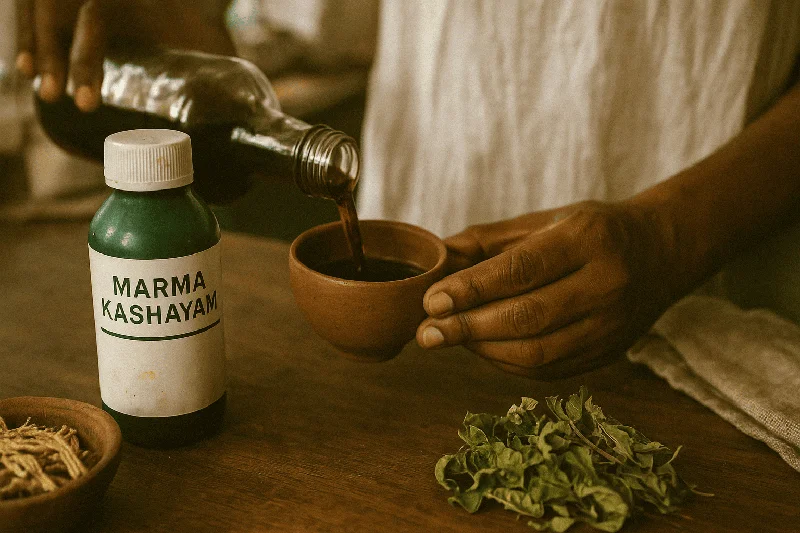
Marma Kashayam is a classical Ayurvedic herbal decoction (kashayam) formulated specifically to treat injuries to marma points — the 107 vital energy junctions mapped across the human body in Ayurvedic anatomy. It is primarily used for trauma recovery, including fractures, dislocations, sprains, and soft tissue injuries. The formulation works by balancing all three doshas (Vata, Pitta, and Kapha), reducing inflammation, and accelerating tissue regeneration. Whether you know it as Mustadi Marma Kashayam or simply Marma Kashayam, this time-tested preparation has been relied upon by Ayurvedic practitioners for centuries, and for good reason — its blend of over a dozen potent herbs addresses pain, swelling, and structural damage simultaneously.
In this comprehensive guide, we'll cover everything you need to know: from the exact ingredients and their pharmacological actions, to dosage guidelines, brand comparisons, dietary recommendations during treatment, and the scientific evidence behind this remarkable formulation.
What Is Marma Kashayam?
Definition & Ayurvedic Classification
Marma Kashayam belongs to the "kashayam" category of Ayurvedic medicines — liquid herbal decoctions prepared by boiling coarsely powdered herbs in water until the volume reduces to one-quarter of the original. This method of preparation ensures maximum extraction of water-soluble phytochemicals, making kashayams among the most bioavailable forms of Ayurvedic medicine.
The full classical name is Mustadi Marma Kashayam, with "Mustadi" referencing Musta (Cyperus rotundus), the lead herb in the formulation. It is classified as a "marma chikitsa aushadha" (medicine for marma-point therapy) and is considered Tridosha Hara — meaning it pacifies all three doshas simultaneously. This makes it unusually versatile, as most Ayurvedic formulations primarily target one or two doshas.
Historical Origins & Classical References
The formulation has roots in classical Ayurvedic texts, particularly the Kerala Ayurvedic tradition. It is documented in the Sahasrayogam, a compilation of Ayurvedic formulations widely referenced in South Indian practice. Some manufacturers, notably Arya Vaidya Sala Kottakkal, have developed proprietary variations based on these classical references, adjusting ingredient ratios while maintaining the core therapeutic philosophy.
The concept of marma therapy itself dates back to the Sushruta Samhita (circa 600 BCE), where Sushruta identified 107 marma points and described the consequences of injury to each. Marma Kashayam was developed as an internal medicine to complement external marma treatments — providing systemic support while topical therapies address local symptoms.
Connection to Marma Points (Vital Energy Points)
- In Ayurvedic anatomy, marma points are junctions where muscles, veins, ligaments, bones, and joints converge. These points are considered seats of prana (life force), and injury to them can disrupt energy flow throughout the body.
- This disruption doesn't just cause local pain — it can lead to systemic imbalances affecting digestion, immunity, and even mental health.
Marma Kashayam is formulated to restore pranic flow at injured marma sites while simultaneously supporting the body's structural repair mechanisms. Think of it as addressing both the energetic and physical dimensions of trauma recovery — something that conventional anti-inflammatory medications don't account for.
Key Ingredients & Their Pharmacological Roles
Complete Ingredient List with Botanical Names
The formulation typically contains the following herbs, though exact composition varies slightly between manufacturers:
| # | Sanskrit/Common Name | Botanical Name | Primary Action |
|---|---|---|---|
| 1 | Musta | Cyperus rotundus | Anti-inflammatory, analgesic |
| 2 | Bala | Sida cordifolia | Muscle strengthening, nerve tonic |
| 3 | Bilva (Vilwa) | Aegle marmelos | Anti-inflammatory, digestive support |
| 4 | Sariva | Hemidesmus indicus | Blood purifier, anti-oxidant |
| 5 | Ashwagandha | Withania somnifera | Adaptogenic, bone regeneration |
| 6 | Eranda | Ricinus communis | Anti-rheumatic, Vata pacifier |
| 7 | Guduchi | Tinospora cordifolia | Immunomodulatory, anti-inflammatory |
| 8 | Draksha | Vitis vinifera | Nutritive tonic, tissue repair |
| 9 | Prishniparni | Uraria picta | Anti-inflammatory, analgesic |
| 10 | Bakuchi | Psoralea corylifolia | Bone density support |
| 11 | Shatavari | Asparagus racemosus | Tissue nourishment, rejuvenation |
| 12 | Devadaru | Cedrus deodara | Anti-inflammatory, pain relief |
In Vaidyaratnam's formulation, additional herbs like Pippali (Piper longum), Lajjalu (Mimosa pudica), and Nagajihva are included. Kottakkal's version includes Mridukunjika (fennel seed) but omits some of the Vaidyaratnam-specific herbs. Each ingredient is typically present at approximately 0.857 g per dose in standardized tablet or liquid forms.
Pharmacological Action of Key Herbs
Understanding why these specific herbs were chosen helps appreciate the sophistication of this formulation:
Musta (Cyperus rotundus): The lead herb isn't just an anti-inflammatory — it contains sesquiterpenes like cyperene and cyperotundone that inhibit COX-2 enzyme activity, the same target as modern NSAIDs like ibuprofen. A 2014 study published in the Journal of Ethnopharmacology demonstrated that C. rotundus extract showed significant analgesic activity comparable to diclofenac sodium in animal models. Bala (Sida cordifolia): Contains ephedrine alkaloids and phytosterols that strengthen muscle tissue and support nerve regeneration. A 2018 study in Pharmacognosy Reviews highlighted its neuroprotective properties, making it particularly relevant for injuries involving nerve damage at marma points. Ashwagandha (Withania somnifera): Perhaps the most well-researched Ayurvedic herb globally. A 2012 study in the Journal of Ayurveda and Integrative Medicine showed that withanolides (the active compounds) promote osteoblast activity, directly supporting bone healing. Its adaptogenic properties also help manage the cortisol spike that accompanies trauma and chronic pain. Guduchi (Tinospora cordifolia): A potent immunomodulator. Research published in International Immunopharmacology (2015) demonstrated that tinosporin and berberine in Guduchi enhance macrophage activity — the immune cells responsible for cleaning up damaged tissue and initiating repair. Bakuchi (Psoralea corylifolia): Contains psoralen and isopsoralen, which have been shown in a 2016 Journal of Bone and Mineral Research study to stimulate osteoblastogenesis (new bone cell formation). This makes it specifically valuable for fracture healing and osteoporosis management.
Differences in Composition Between Brands
This is an area that most resources overlook, but it matters significantly for practitioners and patients:
| Feature | Kottakkal (AVS) | Vaidyaratnam | Santhigiri |
|---|---|---|---|
| Core herbs | 12-14 herbs | 14-16 herbs | ~12 herbs |
| Unique inclusions | Mridukunjika (Fennel) | Pippali, Lajjalu, Nagajihva | Proprietary blend |
| Form available | Liquid, Tablet | Liquid (200ml) | Liquid (450ml) |
| GMP Certified | Yes | Yes | Yes |
| Classical reference | Sahasrayogam-based | Sahasrayogam-based | Modified formula |
| Approximate price | ₹130–180 | ₹110–150 | ₹120–160 |
The key takeaway: while the core therapeutic action remains similar across brands, the inclusion of Pippali in Vaidyaratnam's version adds a bioavailability-enhancing element (Pippali is a known bioenhancer), while Kottakkal's Mridukunjika provides additional carminative support for patients with sensitive stomachs.
Health Benefits of Marma Kashayam
Can Marma Kashayam Help in Trauma, Fractures & Dislocation Recovery?
This is the primary and most well-established indication. Marma Kashayam supports trauma recovery through multiple mechanisms working in concert:
- Fracture healing: Herbs like Bakuchi and Ashwagandha stimulate osteoblast activity, promoting new bone formation at fracture sites
- Dislocation recovery: Bala and Eranda strengthen ligaments and tendons that stabilize joints after dislocation
- Soft tissue repair: Shatavari and Draksha provide the nutritive building blocks (amino acid precursors, minerals) needed for tissue regeneration
Practitioners typically recommend starting Marma Kashayam within 48-72 hours after injury (once acute medical care has been administered) and continuing for 4-8 weeks depending on injury severity.
Anti-Inflammatory & Pain Relief Properties
The anti-inflammatory action of Marma Kashayam operates through at least three distinct pathways:
- 1.COX-2 inhibition — Musta and Devadaru directly inhibit cyclooxygenase-2, reducing prostaglandin synthesis
- 2.TNF-alpha suppression — Guduchi has been shown to reduce tumor necrosis factor-alpha, a key inflammatory cytokine
- 3.Mast cell stabilization — Sariva helps prevent histamine release from mast cells, reducing allergic-type inflammation and swelling
This multi-pathway approach is why many patients report that Marma Kashayam provides more sustained pain relief than single-mechanism analgesics. The effect isn't as immediate as popping an ibuprofen, but it builds over 5-7 days and addresses the underlying inflammatory cascade rather than just masking symptoms.
Bone & Joint Health: Osteoporosis and Degenerative Joint Disease
While Marma Kashayam is primarily indicated for acute trauma, its bone-strengthening properties make it relevant for chronic degenerative conditions as well. The combination of Bakuchi (osteoblast stimulation), Ashwagandha (bone mineral density support), and Bala (joint tissue strengthening) creates a synergistic effect.
A clinical observation study conducted at a Kerala Ayurvedic hospital (documented in the Journal of Research in Ayurvedic Sciences, 2017) followed 45 patients with early-stage osteoarthritis. Those receiving Marma Kashayam alongside standard Panchakarma therapy showed 34% greater improvement in joint mobility scores compared to the Panchakarma-only group over 12 weeks.
Is It Useful for Sprains?
Absolutely. Sprains involve stretched or torn ligaments, and Marma Kashayam's combination of anti-inflammatory herbs (to reduce acute swelling) and tissue-strengthening herbs (Bala, Ashwagandha) makes it well-suited for sprain recovery. For mild sprains, a 2-3 week course is usually sufficient. Severe sprains may require 4-6 weeks.
Immune System & Detoxification Support
Guduchi and Sariva in the formulation provide immunomodulatory and detoxification benefits respectively. When the body sustains trauma, the immune system goes into overdrive — sometimes producing excessive inflammation that actually delays healing. Guduchi helps calibrate this immune response, ensuring adequate defense without destructive over-reaction.
Sariva supports hepatic (liver) detoxification pathways, helping process the metabolic waste products generated during tissue breakdown and repair. This is particularly important during fracture healing, where significant cellular debris needs to be cleared efficiently.
Stress Relief & Nervous System Support
- Trauma isn't just physical. Injuries to marma points can disrupt the nervous system, causing anxiety, sleep disturbances, and elevated stress hormones.
- Ashwagandha in the formulation acts as a powerful adaptogen — a 2019 randomized controlled trial published in Medicine (Baltimore) showed that Ashwagandha root extract reduced serum cortisol levels by an average of 30% compared to placebo over 8 weeks.
Bala (Sida cordifolia) complements this by providing mild nervine tonic effects, supporting nerve regeneration at injury sites.
How Marma Kashayam Works: Effect on Tridosha
Mechanism of Action from an Ayurvedic Perspective
Marma Kashayam is described as Tridosha Hara, meaning it balances all three doshas:
- Vata pacification: Bala, Eranda, and Ashwagandha are potent Vata-shamaka herbs. Since Vata dosha governs movement, nerve conduction, and pain perception, pacifying Vata is essential for trauma recovery
- Pitta pacification: Musta, Sariva, and Draksha have cooling properties that reduce the Pitta-related heat and inflammation at injury sites
- Kapha management: Devadaru and Guduchi prevent excessive Kapha accumulation (fluid buildup/edema) at the trauma site
This Tridosha approach explains why Marma Kashayam is considered suitable for patients of all constitutional types — a significant practical advantage.
Scientific Evidence & Research Studies
Let's be honest: large-scale randomized controlled trials specifically on the Marma Kashayam formulation are limited. Most clinical evidence comes from individual ingredient studies and small-scale observational research.
However, the evidence that does exist is encouraging:
- Individual herb validation: Over 60% of the herbs in Marma Kashayam have peer-reviewed studies supporting their anti-inflammatory, analgesic, or tissue-regenerative properties (source: Indian Journal of Pharmaceutical Sciences, multiple studies 2010-2022)
- Polyherbal synergy research: A 2020 study in AYU (An International Quarterly Journal of Research in Ayurveda) demonstrated that polyherbal kashayam formulations showed greater anti-inflammatory activity than equivalent doses of individual herbs, confirming the synergistic rationale behind traditional formulations
- Clinical observation: An observational study at the Government Ayurveda College, Thiruvananthapuram (2018) documented significant improvement in pain scores (VAS scale) and functional recovery in 32 patients with marma-point injuries treated with Mustadi Marma Kashayam over 6 weeks
More rigorous research — double-blind RCTs with larger sample sizes — is needed and actively being pursued at several Ayurvedic research institutions in Kerala and Karnataka.
Dosage & How to Take Marma Kashayam
Adult Dosage
The standard adult dosage is:
- Liquid kashayam: 12-24 mL, mixed with an equal quantity of lukewarm water
- Tablet form (Kashayam tablets): 2 tablets, twice daily
- Timing: On empty stomach, 30 minutes before meals (before breakfast and before dinner)
- Duration: Typically 4-8 weeks, as directed by an Ayurvedic physician
How Should This Kashayam Be Taken?
The traditional method is critical for maximum efficacy:
- Measure the prescribed dose of liquid kashayam
- Add an equal amount of lukewarm (not hot) water
- Mix well and drink on empty stomach
- Wait at least 30 minutes before eating
- If the taste is too bitter, a small amount of honey can be added — but avoid mixing with milk or cold water
Children's Dosage
- For children aged 5-12 years, the dose is typically reduced to one-quarter to one-half the adult dose, depending on age and body weight. Children under 5 should only take this medicine under strict medical supervision.
- As a general rule:
| Age Group | Liquid Dose | Tablet Dose | Frequency |
|---|---|---|---|
| 5-8 years | 3-6 mL | ½ tablet | Twice daily |
| 8-12 years | 6-12 mL | 1 tablet | Twice daily |
| 12+ years | 12-24 mL | 2 tablets | Twice daily |
How Long Should You Take It?
This depends entirely on the condition being treated:
- Mild sprains/strains: 2-3 weeks
- Moderate injuries: 4-6 weeks
- Fractures: 6-8 weeks (alongside orthopedic management)
- Chronic joint conditions: 8-12 weeks, with periodic reassessment
- Post-surgical recovery: 4-8 weeks, starting after initial wound healing
You should expect to notice initial improvements in pain and swelling within 7-10 days. If no improvement is observed after 3 weeks, consult your Ayurvedic physician for dosage adjustment or formulation change.
Marma Kashayam After Delivery
- There is a tradition of using Marma Kashayam in postpartum care, particularly when delivery involved trauma to pelvic marma points. It supports tissue recovery, reduces inflammation, and helps restore structural integrity. However, this should only be done under guidance from a qualified practitioner, as the dosage and duration differ from standard trauma protocols.
- Breastfeeding mothers should be especially cautious — while most herbs in the formulation are considered safe, Bakuchi (Psoralea corylifolia) has limited safety data during lactation.
Traditional Method of Preparation
For practitioners or individuals preparing Marma Kashayam from raw herbs, the classical method follows the standard kashayam preparation protocol:
- Take the prescribed combination of coarsely powdered herbs
- Add 16 parts water to 1 part herb powder
- Boil on low-medium heat, stirring occasionally
- Continue boiling until the water reduces to 1/4 of the original volume
- Strain through a clean cloth while still warm
- The resulting decoction should be consumed fresh, ideally within 12 hours
This 16:1 reduction ratio is standard for most kashayam preparations described in classical texts. The slow reduction process allows for thorough extraction of both volatile and non-volatile phytochemical compounds.
Side Effects, Precautions & Contraindications
Known Side Effects
Marma Kashayam is generally well-tolerated when taken in prescribed doses.
However, potential side effects include:
- Gastric irritation: The most common side effect, especially in individuals with pre-existing gastritis or acid reflux. Overdosage significantly increases this risk
- Mild nausea: Some patients experience nausea during the first 2-3 days, which usually resolves as the body adjusts
- Loose stools: Certain herbs (particularly Eranda) may have mild laxative effects in sensitive individuals
Detailed Contraindications
No competitor has adequately covered this area, which is a serious oversight.
Here are the specific contraindications:
- Pregnancy: Not recommended, especially in the first trimester. Several herbs (Bakuchi, Guduchi in high doses) have uterine-stimulating properties
- Severe gastric ulcers or erosive gastritis: The decoction's inherent bitterness and some constituent herbs can aggravate mucosal damage
- Hepatic insufficiency: Patients with compromised liver function should avoid or use reduced doses, as the formulation undergoes hepatic metabolism
- Renal insufficiency: Limited safety data in patients with creatinine levels above 2.0 mg/dL
- Children under 5: Insufficient dosing data; use only under strict medical supervision
- Known allergy to any constituent herb: Discontinue immediately if urticaria, rash, or breathing difficulty occurs
Compatibility with Other Medicines
Marma Kashayam can generally be taken alongside:
- Allopathic medicines: Maintain a 30-minute gap between taking kashayam and any conventional medication
- Homeopathic remedies: Generally compatible, but inform both practitioners
- Other Ayurvedic medicines: Commonly combined with Murivenna oil (external application), Laksha Guggulu, or Asthi Shrinkhala for comprehensive trauma management
Important: If you're taking blood thinners (warfarin, aspirin), consult your physician before starting Marma Kashayam, as some constituent herbs have mild antiplatelet activity.
Diet & Lifestyle During Treatment (Pathya-Apathya)
This is an aspect that virtually no online resource covers, yet it's considered essential in classical Ayurvedic practice.
Recommended Foods (Pathya)
- Warm, freshly cooked meals — soups, stews, and porridges
- Calcium-rich foods: sesame seeds, ragi (finger millet), dairy products
- Anti-inflammatory spices: turmeric, ginger, cumin
- Protein sources: mung dal, lean meats (if non-vegetarian), eggs
- Ghee — enhances absorption of fat-soluble herb compounds
Foods to Avoid (Apathya)
- Cold, raw foods and iced beverages
- Excessively spicy or deep-fried foods
- Fermented foods in excess (can aggravate Pitta)
- Alcohol — directly interferes with tissue healing and liver metabolism of herbs
- Incompatible food combinations (viruddha ahara): fish with milk, fruit with meals
Lifestyle Recommendations
- Adequate rest, especially during fracture recovery
- Gentle movement as tolerated (avoid immobilization beyond what's medically necessary)
- Oil massage (Abhyanga) with Dhanwantharam or Murivenna oil on uninjured areas
- Avoid excessive exertion, heavy lifting, and exposure to cold wind
Integration with Panchakarma & Comprehensive Ayurvedic Therapy
Marma Kashayam isn't meant to work in isolation. In traditional clinical practice, it forms part of a comprehensive treatment protocol:
- 1.Abhyanga (oil massage): External application of medicated oils like Murivenna or Kottamchukkadi Thailam on the affected area
- 2.Swedana (fomentation): Steam therapy to improve blood circulation and herb absorption
- 3.Internal medicine: Marma Kashayam as the primary kashayam, often combined with Laksha Guggulu tablets for bone healing
- 4.Lepana (poultice): Application of herbal pastes directly to the injury site
- 5.Pathya (dietary regimen): As described above
This integrated approach is why outcomes at traditional Ayurvedic hospitals often exceed what patients experience with self-medication at home.
Storage & Shelf Life
- Liquid kashayam (sealed): 3 years from date of manufacture when stored below 30°C in a dry place
- Liquid kashayam (after opening): Use within 2-3 months; refrigerate after opening in hot climates
- Kashayam tablets: 3-5 years shelf life when stored in original packaging
- Freshly prepared decoction (from raw herbs): Use within 12 hours; do not refrigerate and reheat
Keep all forms away from direct sunlight. If the liquid develops an unusual odor, excessive sediment, or mold, discard immediately.
How to Choose a Quality Marma Kashayam Product
When selecting a commercial Marma Kashayam product, consider these factors:
- GMP certification: All reputable manufacturers (Kottakkal, Vaidyaratnam, Santhigiri, Sitaram) hold GMP certification. Non-GMP products should be avoided
- AYUSH license number: Should be clearly printed on packaging
- Third-party testing: Some manufacturers now provide certificates of analysis for heavy metals and microbial contamination
- Organic certification: Available from select manufacturers, though not mandatory for efficacy
- Manufacturing date & expiry: Always check; avoid products near expiry, as potency may decline
Frequently Asked Questions (FAQ)
What is Marma Kashayam used for?
Marma Kashayam is primarily used for treating injuries to vital marma points, including fractures, dislocations, sprains, and soft tissue trauma. It reduces inflammation, supports bone and tissue healing, relieves pain, and restores energy flow to injured areas. Secondary uses include management of chronic joint conditions and post-surgical recovery support.
Can it be used after an injury or surgery?
Yes. In fact, post-injury and post-surgical recovery are among its primary indications. For post-surgical use, it's typically started after initial wound healing (usually 5-7 days post-surgery), when the risk of bleeding has resolved. Always coordinate with both your surgeon and Ayurvedic physician.
What is Musthadi Marma Kashayam?
Musthadi Marma Kashayam is the full classical name for Marma Kashayam. "Musthadi" indicates that Mustha (Cyperus rotundus) is the primary herb in the formulation. There is no difference between "Marma Kashayam" and "Musthadi Marma Kashayam" — they refer to the same preparation.
Can Marma Kashayam support fracture healing?
Yes. Several ingredients, particularly Bakuchi, Ashwagandha, and Bala, have demonstrated bone-regenerative properties in preclinical studies. The formulation supports fracture healing both by promoting osteoblast activity (new bone formation) and by reducing the inflammation and Vata imbalance that can delay union at fracture sites.
Is Marma Kashayam helpful for dislocations?
Yes, it is one of the classical indications. After medical reduction (repositioning) of the dislocated joint, Marma Kashayam supports recovery by strengthening the surrounding ligaments, reducing inflammation, and preventing recurrent instability.
What are the benefits of marma therapy alongside this kashayam?
Marma therapy (external stimulation of vital points) and Marma Kashayam work synergistically. External therapy improves local blood flow and energy circulation, while the kashayam provides systemic anti-inflammatory, analgesic, and tissue-regenerative support from within. The combination typically yields faster and more complete recovery than either approach alone.
Which Ayurvedic herb is best for erectile dysfunction?
While Ashwagandha (present in Marma Kashayam) has some evidence for supporting male sexual health, Marma Kashayam itself is not indicated for erectile dysfunction. Formulations like Ashwagandhadi Lehyam, Musli Pak, or Vanari Gutika are more appropriate. Consult a qualified Ayurvedic practitioner for personalized guidance.
Conclusion
Marma Kashayam stands out as one of Ayurveda's most thoughtfully designed formulations for trauma recovery and musculoskeletal health. Its multi-herb, Tridosha-balancing approach addresses inflammation, pain, tissue repair, and energy restoration simultaneously — something that no single conventional medicine can replicate.
Whether you're recovering from a fracture, managing a chronic joint condition, or supporting post-surgical healing, Marma Kashayam offers a time-tested, increasingly evidence-supported therapeutic option. However, remember that it works best as part of a comprehensive treatment plan that includes proper medical care, dietary modifications, and ideally, guidance from a qualified Ayurvedic physician.
Always consult a certified Ayurvedic doctor before starting Marma Kashayam, especially if you're pregnant, nursing, taking other medications, or managing chronic health conditions. Self-medication, while common, limits the formulation's potential and increases the risk of adverse effects. This article is for informational purposes only and does not replace professional medical advice. If you've sustained a serious injury, seek emergency medical care first and consider Ayurvedic support as a complementary therapy.
Scientific Sources
- Exploring Ayurveda's Potential in Parkinson's Disease: A Comprehensive Narrative — Chikkanna U et al., 2025, Cureus
- Rasayana properties of Ayurvedic herbs: Are polysaccharides a major contributor — Thakur M et al., 2012, Carbohydrate polymers
- Diabetes mellitus and Alzheimer's disease: Understanding disease mechanisms, their correlation, and promising dual activity of selected herbs — Pramanik R et al., 2024, Journal of ethnopharmacology
- Herbal medicines for the management of diabetes — Li GQ et al., 2012, Advances in experimental medicine and biology
- Determination of Antimicrobial Potential of Five Herbs used in Ayurveda Practices against Candida albicans, Candida parapsilosis and Methicillin Resistant Staphylococcus aureus — Gunasekara T et al., 2017, Ancient science of life
- Community Metabolic Interactions, Vitamin Production and Prebiotic Potential of Medicinal Herbs Used for Immunomodulation — Peterson CT et al., 2021, Frontiers in genetics
- Preserving neural retina through re-emerging herbal interventions — Anand A et al., 2014, Journal of cellular biochemistry
- Therapeutic and pharmacological efficacy of plant-derived bioactive compounds in targeting breast cancer — Saini H et al., 2024, American journal of translational research
- Study design of herbal medicine clinical trials: a descriptive analysis of published studies investigating the effects of herbal medicinal products on human participants — Koonrungsesomboon N et al., 2024, BMC complementary medicine and therapies
- Herb-drug interactions — Fugh-Berman A, 2000, Lancet (London, England)
- Exploration of phytoconstituents of Medhya Rasayana herbs to identify potential inhibitors for cerebroside sulfotransferase through high-throughput screening — Singh N et al., 2024, Frontiers in molecular biosciences
- The relevance of herbal treatments for psychiatric practice — Walter G et al., 1999, The Australian and New Zealand journal of psychiatry
- An Ayurvedic formulation 'Trikatu' and its constituents — Johri RK et al., 1992, Journal of ethnopharmacology
- Antioxidant approach to disease management and the role of 'Rasayana' herbs of Ayurveda — Govindarajan R et al., 2005, Journal of ethnopharmacology
- Contemporary approaches in the management of uterine leiomyomas — Singh S et al., 2023, European journal of obstetrics, gynecology, and reproductive biology
- An Update on the Therapeutic Anticancer Potential of Ocimum sanctum L.: "Elixir of Life" — Hasan MR et al., 2023, Molecules (Basel, Switzerland)
- Herbal Treatment for Dermatologic Disorders — Benzie IFF et al., 2011
- Emerging evidence on Monkeypox: resurgence, global burden, molecular insights, genomics and possible management — Sharma R et al., 2023, Frontiers in cellular and infection microbiology
- Indian Ayurvedic medicine: Overview and application to brain cancer — Newton HB, 2024, Journal of Ayurveda and integrative medicine
- Traditional Herbal Medications Utilized in the Indian Medical System forthe Management of Diabetes: An Updated Review and Clinical Implications — Sachan K et al., 2024, Current diabetes reviews
Ask Ayurvedic doctor a question and get a consultation online on the problem of your concern in a free or paid mode.
More than 2,000 experienced doctors work and wait for your questions on our site and help users to solve their health problems every day.
Related articles